Diphenhydramine Injection 50 mg
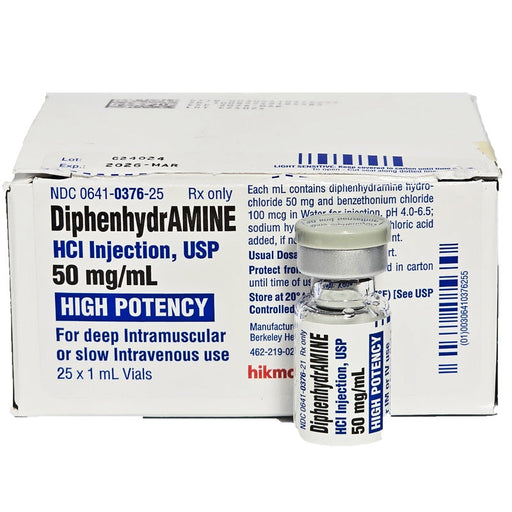
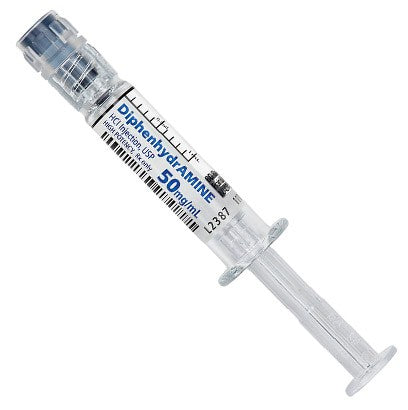
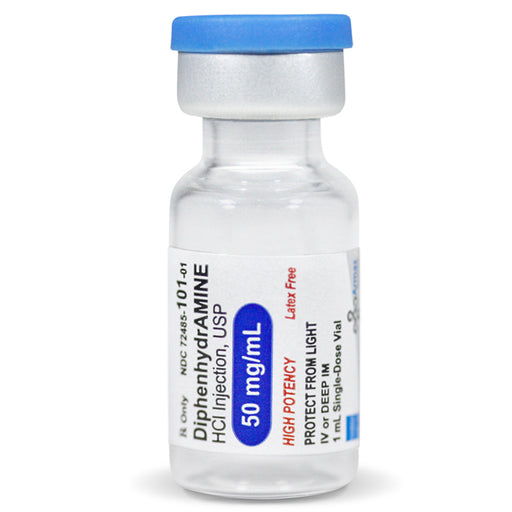
Diphenhydramine injection is the injectable form of diphenhydramine hydrochloride (Benadryl), a first-generation H₁-antihistamine. It is supplied as a sterile, pyrogen-free solution at 50 mg per 1 mL (each 1 mL ampule contains 50 mg diphenhydramine HCl). As an antihistamine, it blocks H₁ receptors and has strong anticholinergic (drying) and sedative effects. The injection is given intravenously (IV) or intramuscularly (IM) when rapid effect is needed or when a patient cannot take oral medication. (In practice the brand “Benadryl” injection has been discontinued, but generic diphenhydramine injections are available
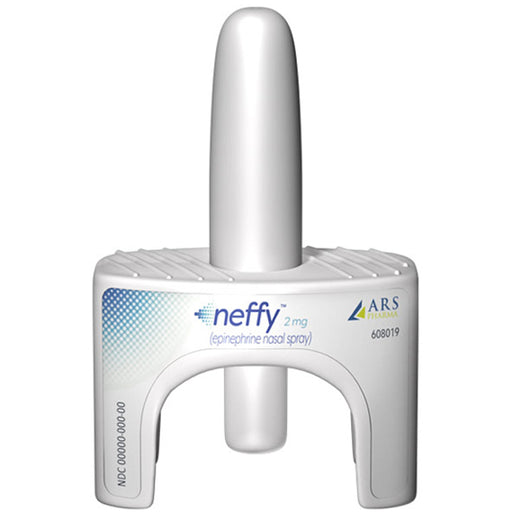
Diphenhydramine injection is used mainly for acute allergic reactions, especially in emergency settings. It is given as an adjunct to epinephrine and other therapies in severe allergies (anaphylaxis). It also relieves symptoms of allergic and cold-related reactions (e.g. hives, hay fever, nasal and eye symptoms) when the patient cannot take pills. In practice it is often used for motion sickness, nausea or vomiting when oral medications can’t be taken. Because of its anticholinergic action, it can also control certain extrapyramidal/withdrawal symptoms – for example, abnormal movements in Parkinsonian syndromes or drug-induced dystonia when oral treatment is not feasible. In short, common indications include:
-
Severe allergic reactions (anaphylaxis): as part of emergency treatment (along with epinephrine).
-
Allergic relief: for acute allergic or “cold” symptoms (nasal congestion, hives, itching) when oral meds aren’t practical.
-
Motion sickness/dizziness: to treat nausea, vomiting or vertigo from motion sickness when oral antiemetics cannot be used.
-
Parkinsonian or extrapyramidal symptoms: for mild cases of Parkinson’s‐type muscle spasms or drug-related movement disorders when other medications can’t be taken.
(Diphenhydramine injection may be used “off label” for other purposes as directed by a doctor, but these are the primary FDA-approved and common uses.)
Dosage and Administration
The drug comes as a 50 mg/mL solution for injection. Adults are typically given 10–50 mg by IV or IM. For IV use, the infusion rate should generally not exceed ~25 mg/min; larger single doses (up to 100 mg IM) may be used if needed. (Maximum total daily doses are around 300–400 mg in adults.) Pediatric dosing is weight-based (e.g. 5 mg/kg/day divided into multiple doses). Treatment can be repeated as necessary under medical supervision. Because diphenhydramine can cause significant sedation, injections are usually given in a healthcare setting (hospital/clinic) or at home only after proper instruction
Patients or caregivers should be shown how to administer the injection (IM or slow IV push) and advised not to exceed recommended rates. The solution should be inspected to ensure it is clear and the correct concentration (50 mg/mL) before use. (Each ampule/container is labeled for 1 mL fill = 50 mg USP). Unused solution should be discarded according to guidelines.
Side Effects and Precautions
Diphenhydramine (especially by injection) commonly causes central nervous system and anticholinergic effects. Patients often feel drowsy, dizzy or lightheaded. Other frequent effects include blurred vision or double vision, headache, dry mouth, difficulty urinating, stomach upset, and tremor. Because of these effects, patients should not drive or operate machinery until they know how the drug affects them. Alcohol or other sedatives (sleeping pills, narcotics, etc.) should be avoided or limited, as they can greatly increase drowsiness or confusion.
Serious side effects are rare but can include fast/irregular heartbeat, severe confusion or agitation, seizures, or difficulty breathing. These require immediate medical attention. Elderly patients are particularly sensitive to the sedating and anticholinergic effects; lower doses may be needed. Patients with glaucoma, enlarged prostate, or certain heart problems should use diphenhydramine cautiously because it can worsen these conditions.
Because diphenhydramine crosses the placenta and passes into breast milk, women who are pregnant or nursing should discuss risks with their doctor. Generally, the doctor will weigh the benefits of treatment against any potential risks to a baby. In pregnancy, diphenhydramine is used if clearly needed (category B). Breastfeeding is usually avoided while on diphenhydramine due to risk of infant sedation.
How It Works
Diphenhydramine is a histamine H₁-receptor antagonist. Normally, exposure to allergens causes the body to release histamine, which triggers itching, swelling, redness, and mucus production. Diphenhydramine blocks histamine at its receptors, preventing or reducing these allergic symptoms. Its strong anticholinergic (muscarinic receptor blocking) properties also dry up mucus and reduce vomiting/dizziness in motion sickness. Because it is an older “first-generation” antihistamine, it readily penetrates the brain, causing a sedating effect (hence its use as a short-term sleep aid in oral form).
Product Details
-
Brand: Avet Pharmaceuticals
-
Strength: 50 mg/mL
-
Form: Single-dose sterile injection
-
Volume per vial: 1 mL
-
Pack size: 25 vials per carton
-
NDC: 23155-0264-41
-
UPC: 323155264418
-
Route: Intravenous (IV) or intramuscular (IM) injection
Diphenhydramine 50 mg injection is a high-strength antihistamine given by injection when immediate relief is needed or oral therapy is not possible. It rapidly relieves acute allergy symptoms and related conditions through histamine blockade, but it also causes notable drowsiness and anticholinergic side effects. Like all medications, it should be used exactly as prescribed by a healthcare professional, with awareness of the potential side effects and precautions noted above.
NDC: 23155-0264-41 UPC: 323155264418 Brand: Avet Pharmaceuticals
Order Diphenhydramine Injection 50 mg/mL 1 mL x 25/Pack by Avet Pharmaceuticals for Reliable Emergency Allergy Treatment!
Trust Avet Pharmaceuticals Diphenhydramine Injection for immediate, hospital-grade allergy and anaphylaxis management. Order today for clinical peace of mind in emergencies—ensuring your facility is prepared for any acute allergic crisis!