
Filters
Availability
Price
$
-
$
$0
$465
Vendor
Collection
Tags
- 5% Dextrose (2)
- Adrenergic Receptors (1)
- Cardiogenic Shock (1)
- Cardiovascular Function (1)
- doctor-only (4)
- Dopamine (4)
- Dopamine Hydrochloride (4)
- Dopaminergic Receptors (1)
- Heart Failure (2)
- Hemodynamic Imbalances (1)
- Increase Blood Pressure (2)
- IV Bag (2)
- Iv Bags (2)
- Low blood pressure (4)
- Renal Perfusion (1)
- Septic Shock (1)
- Treat Heart failure (2)
- Treat Low Blood Pressure (4)
- Vasopressor (2)
- Blood Flow (1)
- Blood Pressure Medicine (2)
- Cardiac output (2)
- cardiovascular (1)
- Critical care (2)
- Heart Attack (1)
- Improve Blood Flow to Heart (1)
- Treat Heart Attack (2)
- Treat Shock (2)
- Acute heart failure (1)
- Adrenergic receptors (1)
- Cardiovascular function (1)
- Dopamine receptors (1)
- Heart attack (1)
- Inotropic agent (1)
- trauma (1)
Dopamine Injection & Dopamine IV Bags
Dopamine Injection and IV Infusions
Dopamine is a potent catecholamine vasopressor/inotrope given by IV infusion in hospitals. It acts on dopamine, β₁ and α receptors in a dose-dependent manner – at low doses it dilates renal/mesenteric vessels, at moderate doses it strengthens heart contractility, and at high doses it causes vasoconstriction and raises blood pressure. Clinicians use dopamine injections when patients are in acute shock or low-output states. For example, it’s used to support blood pressure and cardiac output in cardiogenic or septic shock, severe heart failure, trauma, surgery, or other critical conditions. (Cleveland Clinic notes dopamine “helps your heart beat stronger” and is used in heart failure or low perfusion states.
Formulation: Dopamine for injection is supplied as dopamine hydrochloride concentrate (often 40 mg/mL) in small vials. For instance, a common strength is 200 mg per 5 mL (40 mg/mL) (brand name Intropin). (In some markets 10 mL vials of 400 mg (80 mg/mL) or 800 mg are available.) This concentrate must be diluted in IV fluids before use. Typical diluents include normal saline or dextrose solutions. For example, withdrawing 5 mL (200 mg) into a 500 mL bag yields a 0.4 mg/mL (400 µg/mL) infusion, which is then delivered by infusion pump. (Dopamine is unstable in alkaline solutions, so do NOT mix it with bicarbonate.)
Administration & Dosing: Dopamine is given only by IV infusion (not rapid push). It is titrated to effect (often to raise blood pressure or increase urine output). Infusion rates are weight-based. A typical starting dose is about 2–5 micrograms/kg/min, which primarily increases renal perfusion and heart contractility. In more severe shock, dosing is increased in steps of 5–10 µg/kg/min up to 20–50 µg/kg/min. (Some protocols allow higher rates, but >50 µg/kg/min should be used cautiously.) Each patient’s response (blood pressure, heart rate, urine output) is monitored and the rate is adjusted. Importantly, dopamine has a very short half-life (~2 minutes), so its effects begin and end quickly when the infusion is turned on or off.
Indications: Dopamine infusions are indicated for acute hypotension/shock and low cardiac output. It is used, for example, in cardiogenic shock (e.g. after myocardial infarction), septic shock (if other vasopressors aren’t enough), post‐operative low-output states, and in ICU settings where inotropic support is needed. It may also be used (particularly at low doses) to improve kidney perfusion in oliguria, though modern practice focuses on cardiac output rather than the old “renal-dose” concept. By improving cardiac contractility, dopamine increases blood flow to vital organs.
Special formulations: Beyond plain dopamine, other IV lipid emulsions (like Omegaven) are for specialized uses in TPN, and are unrelated. There is also a “Dopamine IV bag” concept: this simply means an IV fluid bag that has been premixed with dopamine to a specific concentration for infusion. In practice, pharmacy often prepares the dopamine infusion bag from the concentrated vials.
Precautions and Side Effects: Dopamine can cause serious side effects if not carefully managed. Arrhythmias (rapid or irregular heartbeats) and ischemia (reduced limb or gut perfusion) are common concerns. Extravasation (leakage) of dopamine infusion can cause severe tissue necrosis and sloughing, so it should be given via a secure IV line (preferably central venous) and the site monitored. If leakage occurs, treatments like local phentolamine may be required. Because dopamine constricts blood vessels (especially at higher doses), it must be used cautiously in patients with peripheral vascular disease or stroke risk. Other side effects include headache, nausea, or chest pain. Dopamine should not be used if there is uncorrected tachyarrhythmia or certain endocrine tumors (e.g. pheochromocytoma). It is also used with caution in pregnancy and with some anesthetics. Finally, dopamine use requires continuous monitoring of blood pressure and heart rate; infusion is usually done with a precision pump.
Dopamine injection is essentially a hospital-grade inotropic vasopressor (dopamine hydrochloride) given via IV infusion. It is supplied in concentrated injection vials (e.g. 200 mg/5 mL) that are diluted into standard IV fluids. Medical staff start the infusion at a low rate (2–5 µg/kg/min) and increase as needed (up to 20–50+ µg/kg/min) to maintain adequate blood pressure and organ perfusion in critical patients. Dopamine’s use is guided by its strong but short-lived cardiovascular effects – it “makes your heart beat more powerfully” and constricts vessels to raise blood pressure. All administration must be done in a controlled setting (ICU/OR) by trained staff, because of the risks of arrhythmia and tissue injury.
-
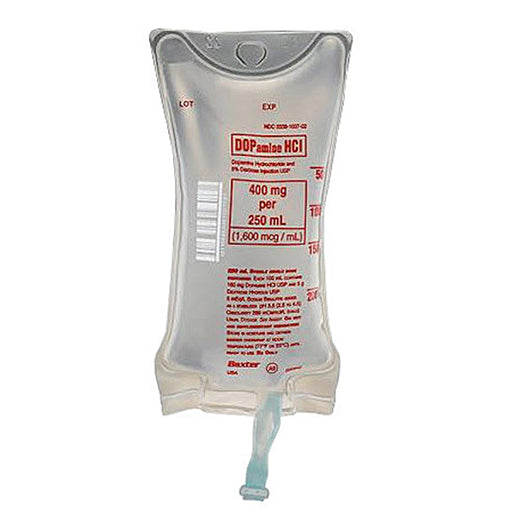 Sale 25%
Original price $ 599.95Current price $ 449.00
Sale 25%
Original price $ 599.95Current price $ 449.00IV Bags, DOPamine Hydrochloride and 5% Dextrose Injection 250 mL IV Bags, 18/Case
No reviewsDopamine Hydrochloride and 5% Dextrose Injection 250 mL IV Bags are used to increase blood pressure in patients with low blood pressure, to increas...
View full details🔒 Medical License Required -
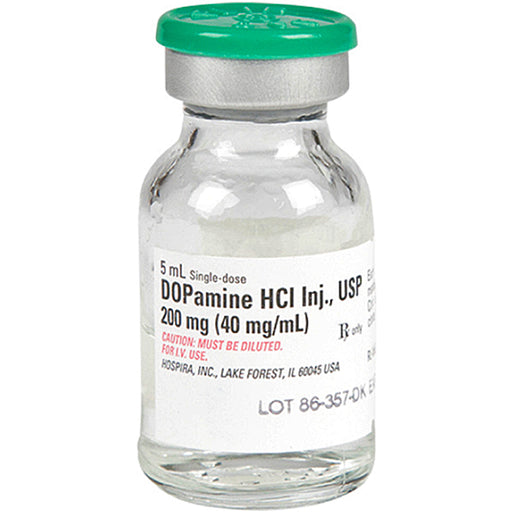 Sale 13%
Original price $ 229.95Current price $ 199.95
Sale 13%
Original price $ 229.95Current price $ 199.95Dopamine Hydrochloride Injection 40 mg/mL Single-Dose Vials 5 mL, 25/Box by Pfizer (RX)
No reviewsDopamine Hydrochloride Injection is used to treat conditions like shock or low blood pressure due to heart attack, trauma, or surgery. It functions...
View full details🔒 Medical License Required -
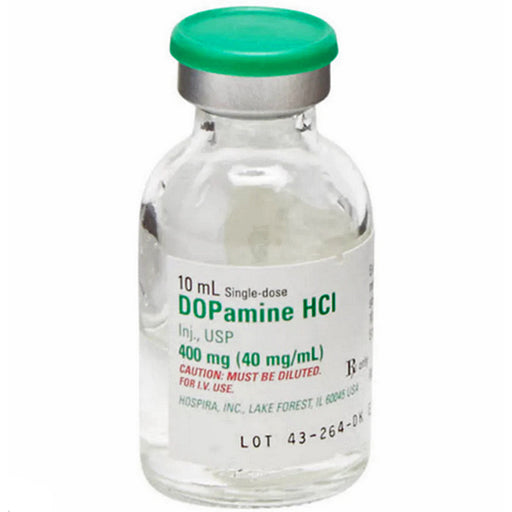 Sale 15%
Original price $ 199.95Current price $ 169.95
Sale 15%
Original price $ 199.95Current price $ 169.95Dopamine Hydrochloride Injection 40 mg/mL Single-Dose Vials 10 mL, 10/Box by Pfizer (RX)
No reviewsDopamine Hydrochloride Injection is utilized to address acute heart failure, shock, and low blood pressure. As an inotropic agent, it increases car...
View full details🔒 Medical License Required -
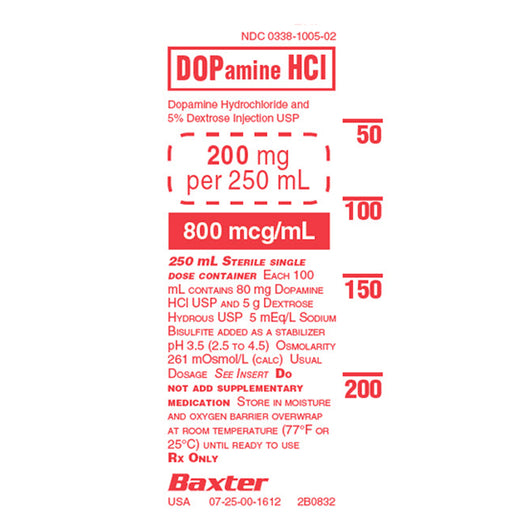 Sale 22%
Original price $ 599.95Current price $ 465.00
Sale 22%
Original price $ 599.95Current price $ 465.00IV Bags, Dopamine and 5% Dextrose IV Bags Injection IV infusion Dose 500 mL , 12/Case
No reviewsHospital-Grade Critical Care Vasopressor & Inotropic Support for Shock, Hypotension, and Cardiac Emergencies Take rapid control of hemodynamic ...
View full details🔒 Medical License Required
People Also Searched For
Dopamine Hydrochloride
Injectable Medications
Prescription Medications & Prescription Drugs
Emergency Medical Supplies (EMS Supplies)
EMS Supplies and Trauma Supplies
Baxter IV Solutions and Injection Vials
Dextrose IV Bags
Dextrose IV Bags, Vials and Prefilled Syringes
IV Bags, IV Sets and Injection Medication Vials
IV Bags, IV Sets, IV Start Kits
Dopamine Injection and IV Infusions
Dopamine is a potent catecholamine vasopressor/inotrope given by IV infusion in hospitals. It acts on dopamine, β₁ and α receptors in a dose-dependent manner – at low doses it dilates renal/mesenteric vessels, at moderate doses it strengthens heart contractility, and at high doses it causes vasoconstriction and raises blood pressure. Clinicians use dopamine injections when patients are in acute shock or low-output states. For example, it’s used to support blood pressure and cardiac output in cardiogenic or septic shock, severe heart failure, trauma, surgery, or other critical conditions. (Cleveland Clinic notes dopamine “helps your heart beat stronger” and is used in heart failure or low perfusion states.
Formulation: Dopamine for injection is supplied as dopamine hydrochloride concentrate (often 40 mg/mL) in small vials. For instance, a common strength is 200 mg per 5 mL (40 mg/mL) (brand name Intropin). (In some markets 10 mL vials of 400 mg (80 mg/mL) or 800 mg are available.) This concentrate must be diluted in IV fluids before use. Typical diluents include normal saline or dextrose solutions. For example, withdrawing 5 mL (200 mg) into a 500 mL bag yields a 0.4 mg/mL (400 µg/mL) infusion, which is then delivered by infusion pump. (Dopamine is unstable in alkaline solutions, so do NOT mix it with bicarbonate.)
Administration & Dosing: Dopamine is given only by IV infusion (not rapid push). It is titrated to effect (often to raise blood pressure or increase urine output). Infusion rates are weight-based. A typical starting dose is about 2–5 micrograms/kg/min, which primarily increases renal perfusion and heart contractility. In more severe shock, dosing is increased in steps of 5–10 µg/kg/min up to 20–50 µg/kg/min. (Some protocols allow higher rates, but >50 µg/kg/min should be used cautiously.) Each patient’s response (blood pressure, heart rate, urine output) is monitored and the rate is adjusted. Importantly, dopamine has a very short half-life (~2 minutes), so its effects begin and end quickly when the infusion is turned on or off.
Indications: Dopamine infusions are indicated for acute hypotension/shock and low cardiac output. It is used, for example, in cardiogenic shock (e.g. after myocardial infarction), septic shock (if other vasopressors aren’t enough), post‐operative low-output states, and in ICU settings where inotropic support is needed. It may also be used (particularly at low doses) to improve kidney perfusion in oliguria, though modern practice focuses on cardiac output rather than the old “renal-dose” concept. By improving cardiac contractility, dopamine increases blood flow to vital organs.
Special formulations: Beyond plain dopamine, other IV lipid emulsions (like Omegaven) are for specialized uses in TPN, and are unrelated. There is also a “Dopamine IV bag” concept: this simply means an IV fluid bag that has been premixed with dopamine to a specific concentration for infusion. In practice, pharmacy often prepares the dopamine infusion bag from the concentrated vials.
Precautions and Side Effects: Dopamine can cause serious side effects if not carefully managed. Arrhythmias (rapid or irregular heartbeats) and ischemia (reduced limb or gut perfusion) are common concerns. Extravasation (leakage) of dopamine infusion can cause severe tissue necrosis and sloughing, so it should be given via a secure IV line (preferably central venous) and the site monitored. If leakage occurs, treatments like local phentolamine may be required. Because dopamine constricts blood vessels (especially at higher doses), it must be used cautiously in patients with peripheral vascular disease or stroke risk. Other side effects include headache, nausea, or chest pain. Dopamine should not be used if there is uncorrected tachyarrhythmia or certain endocrine tumors (e.g. pheochromocytoma). It is also used with caution in pregnancy and with some anesthetics. Finally, dopamine use requires continuous monitoring of blood pressure and heart rate; infusion is usually done with a precision pump.
Dopamine injection is essentially a hospital-grade inotropic vasopressor (dopamine hydrochloride) given via IV infusion. It is supplied in concentrated injection vials (e.g. 200 mg/5 mL) that are diluted into standard IV fluids. Medical staff start the infusion at a low rate (2–5 µg/kg/min) and increase as needed (up to 20–50+ µg/kg/min) to maintain adequate blood pressure and organ perfusion in critical patients. Dopamine’s use is guided by its strong but short-lived cardiovascular effects – it “makes your heart beat more powerfully” and constricts vessels to raise blood pressure. All administration must be done in a controlled setting (ICU/OR) by trained staff, because of the risks of arrhythmia and tissue injury.