 Skip to content





Filters
Filters
Gentamicin Sulfate IV Bags for Sodium Chloride
-

 Sale 11%
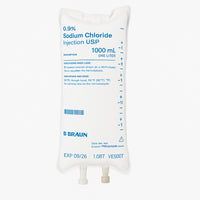
IV Bags, Gentamicin Sulfate in 0.9% Sodium Chloride IV Solution Bags Injection 100 mg in 100 mL VIAFLEX Plus Bags, 24/Case
Original price $ 289.95Current price $ 259.00🔒 Medical License Required -
 Sale 16%
IV Bags, Gentamicin Sulfate in 0.9% Sodium Chloride IV Solution Bags Injection 120 mg in 100 mL VIAFLEX Plus Bags, 24/Case
Original price $ 289.95Current price $ 245.00🔒 Medical License Required -
 Sale 17%
IV Bags, Gentamicin Sulfate in 0.9% Sodium Chloride IV Solution Bags Injection 80 mg in 50 mL VIAFLEX Plus Bags, 24/Case
Original price $ 289.95Current price $ 240.00🔒 Medical License Required -
 Sale 22%
IV Bags, Gentamicin Sulfate in 0.9% Sodium Chloride IV Solution Bags Injection 60 mg in 50 mL VIAFLEX Plus Bags, 24/Case
Original price $ 289.95Current price $ 225.00🔒 Medical License Required -

 Sale
Sale
IV Bags, IV Fluid Solution for Intravenous & Infusion IV Therapy (Rx)
 $ 8.10615 reviews🔒 Medical License Required


People Also Searched For
Gentamicin Sulfate IV Bags
Gentamicin is a broad-spectrum aminoglycoside antibiotic. It is most often administered intravenously (IV) or by deep intramuscular injection. In hospital settings it is commonly supplied as gentamicin sulfate in 0.9% saline IV bags. These premixed sterile bags contain a ready-to-use isotonic solution of gentamicin sulfate (with 9 mg/mL NaCl) for IV infusion. Gentamicin is bactericidal and highly effective against many aerobic Gram-negative bacteria. Because it is poorly absorbed by mouth, IV infusion is the standard route for serious systemic infections. Topical and ophthalmic gentamicin preparations also exist for certain local infections, but “IV bags” specifically refer to the injectable solution form.)
Gentamicin acts by inhibiting bacterial protein synthesis. It binds the 30S ribosomal subunit of susceptible bacteria, causing misreading of mRNA and production of faulty proteins. This mechanism is bactericidal. Its activity is concentrated against aerobic Gram-negative rods (e.g. Pseudomonas aeruginosa, Proteus spp., Escherichia coli, Klebsiella, Enterobacter, Serratia, Citrobacter), and it also covers some Gram-positive cocci (e.g. staphylococci). Because gentamicin’s uptake by bacteria requires oxygen, it is less active against anaerobes. In clinical practice, gentamicin is often used in combination with a beta-lactam antibiotic for severe infections, especially when synergy is needed (e.g. for enterococcal or staphylococcal endocarditis or other difficult cases), although its primary use is against Gram-negatives.
Purpose
- Combat Severe Bacterial Infections: Deliver fast, accurate therapy for multi-drug-resistant and hospital-acquired gram-negative pathogens.
- Support Critical Care & Sepsis Protocols: Gentamicin is a frontline IV antibiotic in many sepsis, infection, and emergency management regimens.
- Facilitate Hospital Pharmacy & ICU Workflow: Ready-to-infuse IV bags ensure sterile, reliable, and time-saving medication delivery for acute care settings.
- Precision Dosing: Offers rapid peak serum concentrations for therapeutic efficacy while minimizing dosing errors.
Medical Uses
Gentamicin sulfate IV is indicated for serious systemic infections caused by bacteria susceptible to aminoglycosides. Typical indications include bacteremia/sepsis, complicated urinary tract infections, hospital-acquired pneumonia, abdominal (peritoneal) infections, meningitis (as adjunct), bone and joint infections, skin/soft-tissue infections (including burns), and neonatal sepsis. For example, the label notes gentamicin is effective against Pseudomonas, Proteus, E. coli, Klebsiella-Enterobacter-Serratia, and Staphylococcus species causing such infections. It has been widely used in treating neonatal gram-negative sepsis, serious adult UTIs, respiratory infections, intra-abdominal infections, and bloodstream infections. Because of its toxicity, gentamicin is typically reserved for life-threatening or difficult infections, or when first-line drugs cannot be used. In moderate infections or uncomplicated cases, less toxic antibiotics are preferred.
Uses
- Septicemia & Hospital-Acquired Sepsis
- Severe Pneumonia & Lower Respiratory Infections
- Complicated Urinary Tract Infections (pyelonephritis, urosepsis)
- Bacterial Endocarditis (with other antibiotics)
- Intra-abdominal Infections (peritonitis, abscesses)
- Bone & Joint Infections (osteomyelitis, septic arthritis)
- Wound & Post-Surgical Infections
- Neonatal & Pediatric Severe Infections (as per pediatric protocols)
- Empiric Broad-Spectrum Antibiotic Coverage in ICU/Emergency Settings
Side Effects and Precautions
Gentamicin’s toxicities limit its use. The two most serious adverse effects are nephrotoxicity and ototoxicity. Nephrotoxicity manifests as acute tubular necrosis (elevated creatinine, decreased urine output) and is usually reversible if detected early. Ototoxicity includes both vestibular (balance) and cochlear (hearing) damage. It can cause tinnitus, hearing loss, or permanent deafness. These inner-ear effects are often irreversible so hearing (and sometimes vestibular function) should be monitored during extended therapy. Gentamicin can also rarely cause neuromuscular blockade (leading to respiratory muscle weakness) and severe allergic reactions (rash, anaphylaxis), so resuscitation equipment should be available when infusing the drug.
Because of these risks, gentamicin is avoided (or used very cautiously) in certain situations: for example, patients on other nephrotoxins or ototoxins (like loop diuretics) the elderly, dehydrated patients, and those with existing kidney or ear disorders. It is contraindicated for intrathecal or epidural use. In pregnancy gentamicin can cross the placenta and may harm fetal hearing (it is usually avoided unless clearly needed). Because of the narrow therapeutic window, patient weight and renal function are always used to calculate dose, and clinicians follow levels closely
Popular Brands:
- Hospira (Pfizer) Gentamicin IV Bags
- Baxter Gentamicin IV Solution
- Fresenius Kabi
- B. Braun
- APP Pharmaceuticals
- ICU Medical
- West-Ward
- Hospital and pharmacy-compounded generics (USP compliant)
Strengths
- Gentamicin Sulfate Concentration: Typically 40 mg/100 mL, 80 mg/100 mL, or 120–160 mg/100–250 mL, depending on protocol and patient size
- Bag Sizes: 50 mL, 100 mL, 250 mL (for adult, pediatric, and neonatal dosing)
- Custom strengths: Available for precise mg/kg dosing (especially in neonatal/pediatric ICUs)
- Compatible Carriers: 0.9% Sodium Chloride, 5% Dextrose in Water
Precautions
- Renal Considerations: Gentamicin is nephrotoxic—dose adjust for impaired kidney function, elderly, neonates, and monitor serum levels (peak/trough).
- Ototoxicity Risk: Can cause hearing loss and vestibular toxicity, especially with high or prolonged doses—monitor for hearing/balance changes.
- Narrow Therapeutic Window: Therapeutic drug monitoring (TDM) is essential.
- Pregnancy & Neonatal Use: Use with caution and expert guidance; monitor drug levels closely.
- Drug Interactions: Increased toxicity risk with other nephrotoxic medications (e.g., vancomycin, amphotericin B, NSAIDs, loop diuretics).
- Infusion Route Only: Do not administer intrathecally, subcutaneously, or by rapid IV push; must infuse over recommended time period.
- Allergy/Anaphylaxis: Discontinue if hypersensitivity, rash, or swelling occurs.
- Proper Storage: Store as recommended. Do not use if bag is cloudy, leaking, discolored, or expired.
- Not for Routine Outpatient Use: Reserved for severe, culture-proven, or suspected gram-negative infections in monitored settings.
Gentamicin sulfate IV is a powerful IV antibiotic (an aminoglycoside) used for serious Gram-negative and some Gram-positive infections. It is provided as a sterile saline solution ready for IV infusion. Mechanistically, it binds bacterial ribosomes and stops protein synthesis. Dosing is weight-based and drug levels are monitored. Its efficacy is counterbalanced by potential kidney and ear toxicity, so it is reserved for severe infections under careful medical supervision.