 Skip to content

Filters
- 1 mL insulin syringe (2)
- 30 Gauge (1)
- 30 gauge insulin syringe (1)
- 328411 (1)
- Aesthetic Supplies MedSpa Supplies & Cosmetic Surgery Supplies (2)
- BD Insulin Syringes (6)
- best insulin syringes (1)
- blood sugar management (1)
- Diabetes Supplies (2)
- diabetic syringes (2)
- Embecta insulin syringes (1)
- home diabetes care (1)
- insulin needles (2)
- PRP Injections (1)
- safe insulin delivery (1)
- sterile syringe (1)
- U-100 Insulin Syringes (6)
- ultra-fine needle (2)
- Ultrafine (1)
- Untra Fine Needle (1)
- 1 cc Syringes (1)
- 29 g (1)
- 29 gauge (1)
- 329424 (1)
- Fine Needles (1)
- Micro Fine (1)
- Micro Needle (1)
- Microfine Syringes (1)
- Ultra fine (1)
- 31 g (1)
- 31 Gauge (3)
- 324906 (1)
- BD Needles (1)
- bd syringes (3)
- BD Veo (1)
- Ultra Fine (1)
- Ultra Fine Insulin Syringes (1)
- 31g insulin needles (1)
- 328418 insulin syringe (1)
- 8mm insulin syringes (1)
- diabetes syringes (1)
- diabetic injection (1)
- ltra-fine insulin injection (1)
- safe insulin shot (1)
- U-100 insulin syringe (1)
- 3/10 mL insulin syringe (1)
- 31 gauge syringes (1)
- 324910 (1)
- BD Ultra-Fine (1)
- Blood Sugar Management (1)
- Diabetes Care (1)
- EasyTouch (1)
- Embecta syringes (1)
- hort needle insulin syringes (1)
- hypoallergenic needle (1)
- Insulin Injection (2)
- Insulin Syringes 31 gauge (1)
- monoject (1)
- NovoFine (1)
- painless insulin syringe (1)
- safe insulin injection (1)
- True Comfort (1)
- 31 Gauge x 1/2 (1)
- 324911 (1)
- Disposable Syringe (1)
- Pet Insulin Syringes (1)
- Safety Syringes (1)
- Veterinary Insulin Syringe (1)
Filters
- 1 mL insulin syringe (2)
- 30 Gauge (1)
- 30 gauge insulin syringe (1)
- 328411 (1)
- Aesthetic Supplies MedSpa Supplies & Cosmetic Surgery Supplies (2)
- BD Insulin Syringes (6)
- best insulin syringes (1)
- blood sugar management (1)
- Diabetes Supplies (2)
- diabetic syringes (2)
- Embecta insulin syringes (1)
- home diabetes care (1)
- insulin needles (2)
- PRP Injections (1)
- safe insulin delivery (1)
- sterile syringe (1)
- U-100 Insulin Syringes (6)
- ultra-fine needle (2)
- Ultrafine (1)
- Untra Fine Needle (1)
- 1 cc Syringes (1)
- 29 g (1)
- 29 gauge (1)
- 329424 (1)
- Fine Needles (1)
- Micro Fine (1)
- Micro Needle (1)
- Microfine Syringes (1)
- Ultra fine (1)
- 31 g (1)
- 31 Gauge (3)
- 324906 (1)
- BD Needles (1)
- bd syringes (3)
- BD Veo (1)
- Ultra Fine (1)
- Ultra Fine Insulin Syringes (1)
- 31g insulin needles (1)
- 328418 insulin syringe (1)
- 8mm insulin syringes (1)
- diabetes syringes (1)
- diabetic injection (1)
- ltra-fine insulin injection (1)
- safe insulin shot (1)
- U-100 insulin syringe (1)
- 3/10 mL insulin syringe (1)
- 31 gauge syringes (1)
- 324910 (1)
- BD Ultra-Fine (1)
- Blood Sugar Management (1)
- Diabetes Care (1)
- EasyTouch (1)
- Embecta syringes (1)
- hort needle insulin syringes (1)
- hypoallergenic needle (1)
- Insulin Injection (2)
- Insulin Syringes 31 gauge (1)
- monoject (1)
- NovoFine (1)
- painless insulin syringe (1)
- safe insulin injection (1)
- True Comfort (1)
- 31 Gauge x 1/2 (1)
- 324911 (1)
- Disposable Syringe (1)
- Pet Insulin Syringes (1)
- Safety Syringes (1)
- Veterinary Insulin Syringe (1)
Insulin Syringes for Syringes by Embecta
-
 Sale 24%
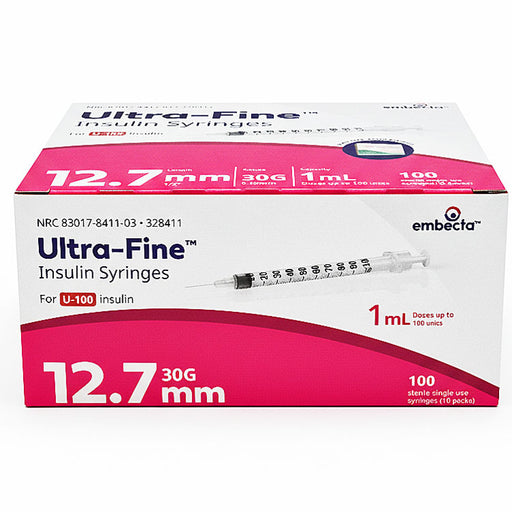
30 gauge x 1/2" Insulin Syringes 1 mL with Ultra-Fine Needle 1 mL, 100 Count
Original price $ 105.00Current price $ 79.95 -

 Sale 34%
Insulin Syringes 28 Gauge x 1/2 inch, 1 mL Micro-Fine Needle U-100 Embecta 329424 Sterile 100/Box
Original price $ 67.95Current price $ 45.002 reviews -

 Sale 23%
BD Insulin Syringes 31 gauge x 3/10 mL Ultra-Fine Needle 6mm, Sterile 90/box
 Original price $ 64.00Current price $ 49.001 review
 -

 Sale 24%
Insulin Syringes 31 g x 8 mm, 1 mL with Ultra-Fine Needle 100/box Embecta 328418
Original price $ 105.00Current price $ 79.951 review -

 Sale 19%
Insulin Syringes 31 gauge x 3/10 mL with Ultra-Fine Needle 6mm x 31 G by Embecta 100/box
Original price $ 89.95Current price $ 72.951 review -

 Sale 21%
BD Insulin Syringes 31 Gauge x 1/2" with Ultra-Fine Needle 6mm Sterile 100/box
Original price $ 99.95Current price $ 78.90


Insulin Syringes
An insulin syringe is a medical syringe specifically designed for injecting insulin – the hormone used to control blood sugar – under the skin. It consists of a small plastic barrel (marked with graduated lines), a plunger, and a very fine needle. The syringe is filled by drawing insulin (from a vial or cartridge) into the barrel, and the plunger is then depressed to inject the insulin into the fatty tissue just under the skin (a subcutaneous injection) to enter the bloodstream. As one source explains, an insulin syringe’s “primary function [is] to draw up and inject insulin subcutaneously (under the skin) to help manage blood sugar levels.”. Because insulin doses are small, these syringes hold very small volumes (typically 1 milliliter or less) and have especially fine needles (usually 28–31 gauge) to minimize pain. The barrel is calibrated in insulin units (not just milliliters), so that each increment corresponds to a precise dose – for example, on a U-100 syringe each “unit” mark equals 0.01 mL of insulin.
Design and Features
Insulin syringes differ from general-purpose syringes mainly in scale and needle size. They come in only very small volumes and have extra fine needles. Common insulin syringe capacities are 0.3 mL, 0.5 mL, and 1.0 mL, corresponding to 30, 50, and 100 “units” of U-100 insulin (U-100 means 100 units per mL). Manufacturers typically color-code or label the plungers or packaging to indicate these sizes (for example, 0.3 mL syringes often have orange markings, 0.5 mL purple, etc.) for easy recognition. The needle is very thin – most often 28-, 29-, 30- or 31-gauge (a larger gauge number means a thinner needle) – and short (typically about 4–12 mm long) because insulin is delivered just under the skin. These dimensions strike a balance between comfort and effective delivery.
- Volume (capacity): Typically 0.3 mL (30 units), 0.5 mL (50 units), or 1.0 mL (100 units). Smaller syringes (e.g. 0.3 mL) are used for low-dose needs; larger (1 mL) for high-dose needs.
- Needle Gauge: Very fine – usually 28–31 gauge. A finer needle causes less discomfort.
- Needle Length: Generally 4–12 mm, just long enough to reach the fatty subcutaneous tissue. Shorter needles reduce the chance of injecting into muscle.
- Calibrations: The barrel is marked in insulin units (each line = 1 unit, etc.) rather than plain milliliters. This ensures that patients can measure out exactly the prescribed number of insulin units.
Because of these features, any two insulin syringes of the same type (e.g. U-100 “1 mL”) are interchangeable in function. In fact, manufacturers note there is “no mechanical difference between children’s and adult’s nebulizers,” and similarly no special “pediatric” insulin syringe – they all work the same, though pediatric syringes may have smaller volume and fun designs.
Uses in Diabetes Management
Insulin syringes are the standard tool for people with diabetes who must inject insulin. As a UK diabetes guide notes, “direct subcutaneous insulin injection remains the most common form of delivery, using a needle and syringe.”. Patients (or caregivers) use them to self-administer insulin at home or in clinics, usually injecting into fatty areas like the abdomen, thigh, buttock or upper arm. Several medical resources emphasize that insulin syringes are engineered for accurate self-dosing: their fine graduations and user-friendly design help patients draw up the exact prescribed dose. For example, one diabetes resource explains that these syringes “allow patients to measure and inject the exact amount of insulin needed,” which makes blood sugar control much more precise. In practice, the user inserts the needle under the skin and slowly depresses the plunger; the insulin mist is then absorbed over minutes, as shown in usage diagrams.
Insulin syringe injections are typically quick (just a few seconds) and almost painless due to the thin needle. Because of their design, patients can reliably administer insulin multiple times a day. This method gives rapid but controlled insulin uptake to match blood glucose needs. Compared to oral medications, injectable insulin via syringe works more quickly to lower blood sugar with minimal systemic side effects. And compared to newer devices like insulin pen injectors or pumps, syringes remain widely used because they are simple, low-cost and readily available. (Patients choosing syringe vs pen or pump often depend on personal preference, age, dexterity, cost and insulin type.)
Care and Safety
Insulin syringes are disposable and sterile. They come individually wrapped and should be discarded after use. Guidelines strongly emphasize safe use: only the intended user should touch the syringe. A diabetes care guide advises that it’s “advisable to use disposable syringes” and never to share one between people. (Some patients may reuse their own syringe up to a few times if needed, but it must never be shared or used by someone else.) After injection, the used syringe should be placed in a proper sharps/needle container for safe disposal – this prevents needlestick injuries or hygiene issues. Practicing good injection technique (rotating sites, using fresh syringes, proper disposal) maximizes the benefits of insulin therapy.
In summary, insulin syringes are essential medical tools for diabetics. They are simply miniature syringes optimized for insulin: very small (≤1 mL), with very fine short needles, and calibrated in insulin units. By turning liquid insulin into a precise, inhalable dose under the skin, they enable people with diabetes to control blood glucose effectively. With correct use and hygiene, insulin syringes provide a safe, convenient, and accurate way to maintain blood sugar control as prescribed by healthcare providers