
Filters
Availability
Price
$
-
$
$0
$369
Collection
Tags
- Acute asthma (1)
- Anticonvulsant (2)
- Cardiac arrhythmias (1)
- Critical care (1)
- doctor-only (4)
- Eclampsia (2)
- Emergency (1)
- Magnesium deficiency (2)
- Magnesium Deficiency Treatment (2)
- Magnesium Sulfate 50% (2)
- Magnesium Sulfate for Injection (2)
- Muscles (1)
- Nerves (1)
- Obstetric (1)
- Pre-eclampsia (1)
- Preterm labor (1)
- Seizures (1)
- Treat Seizures (1)
- Hypocalcemia (1)
- hypomagnesemia (1)
- low magnesium (1)
- magnesium injection (1)
- Magnesium Sulfate injection (1)
- magnesium sulfate injection side effects (1)
- magnesium sulfate injection uses (1)
- Magnesium Sulfate IV (1)
- Treatment of acute Symptomatic Hypocalcemia (1)
- Bronchodilator (1)
- Bronchodilators (1)
- Magnesium Sulfate in Water (1)
- Magnesium Sulfate Injection (2)
- Treat Acute Asthma Attacks (1)
- Treat Eclampsia (1)
- Treat Magnesium Deficiency (1)
- Treat Preeclampsia (1)
- 31722-0394-32 (1)
- acute care magnesium (1)
- electrolyte replacement injection (1)
- Electrolytes (1)
- emergency magnesium injection (1)
- hospital magnesium shot (1)
- injectable electrolytes (1)
- injectable magnesium sulfate (1)
- IV Electrolytes (1)
- IV magnesium sulfate (1)
- magnesium ampoule (1)
- magnesium deficiency (1)
- Magnesium Injection (1)
- magnesium injection for seizures (1)
- magnesium IV (1)
- magnesium sulfate for arrhythmia (1)
- magnesium sulfate for eclampsia (1)
- magnesium sulfate for preeclampsia (1)
- magnesium sulfate vial (1)
- Preservative Free (1)
- preservative free magnesium sulfate (1)
Magnesium Sulfate Injection
Magnesium Sulfate Injection
Magnesium sulfate injection is a medication containing the mineral magnesium (as magnesium sulfate) in a sterile water solution. It is given by injection – usually as a slow intravenous (IV) infusion (sometimes intramuscularly) – under medical supervision. In effect, it is an IV form of magnesium used to raise blood magnesium levels quickly. (Magnesium is a naturally occurring electrolyte important for nerve and muscle function). According to the official prescribing information, “Magnesium Sulfate Injection…is a sterile, nonpyrogenic, concentrated solution of magnesium sulfate heptahydrate in Water for Injection. It is administered by the intravenous (IV) or intramuscular (IM) routes as an electrolyte replenisher or anticonvulsant”. In other words, this injectable form of magnesium is used to replace magnesium when levels are dangerously low and to act as an anticonvulsant in certain emergencies.
Uses & Indications
Magnesium sulfate injection has several important uses, mainly to replenish magnesium and prevent seizures in specific conditions. Key indications include:
- Hypomagnesemia (magnesium deficiency): It is used to treat very low blood magnesium levels when oral supplements are insufficient or not possible. For example, it can correct acute hypomagnesemia due to dialysis, severe vomiting/diarrhea, or other causes of magnesium loss.
- Eclampsia/Preeclampsia (pregnancy): It is routinely used as an anticonvulsant in pregnant patients with preeclampsia or eclampsia (pregnancy-related high blood pressure with risk of seizures). In this setting, magnesium sulfate injection prevents and treats seizures (“eclamptic fits”). For example, the Cleveland Clinic notes it “may be used to prevent and treat seizures during pregnancy in people with high blood pressure disorders, such as preeclampsia or eclampsia” and patient guides likewise state it is given to “prevent seizures (fits)…caused by eclampsia”.
- Other acute uses (cardiac, respiratory): In acute care, IV magnesium sulfate can also be used for severe cases of certain heart rhythm disturbances (e.g. torsades de pointes ventricular arrhythmia) and as a muscle relaxant in life-threatening asthma exacerbations, though these uses are less common. (Its role as a bronchodilator and antiarrhythmic comes from its effect on neuromuscular and cardiac cells.) Note: These uses are specialized and would be administered in a monitored setting.
In summary, magnesium sulfate injection is essentially IV magnesium. It rapidly raises serum magnesium and is thus used whenever a quick correction is needed (for example, in intensive care or emergency settings). Common official drug guides list hypomagnesemia and eclampsia-related seizures as the primary indications.
Administration
Magnesium sulfate injection is given only under medical supervision, usually in a hospital or clinic. It is typically administered as a diluted IV infusion over minutes to hours, depending on the situation. (Undiluted concentrations are too strong for direct injection.) Dosing and infusion rates vary by indication. For example, in eclampsia a common regimen is a 4–6 gram IV loading dose followed by a maintenance infusion, with close monitoring of blood pressure, reflexes and urine output. Because high magnesium levels can cause side effects (like low blood pressure, slowed breathing, or lethargy), patients on magnesium sulfate infusions are carefully monitored in a hospital.
Magnesium sulfate injection is a prescription IV medication that provides soluble magnesium. It is used to replace magnesium in the body (especially when levels are very low) and to act as an anticonvulsant in conditions like preeclampsia/eclampsia. It must be given slowly in a healthcare setting. As the official label states, it is an “electrolyte replenisher or anticonvulsant” given IV/IM.
-
 Sale
from $ 5.95
Sale
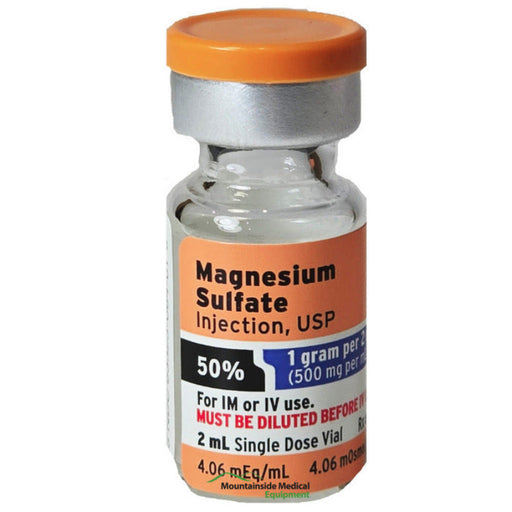
from $ 5.95Magnesium Sulfate Injection 50%, 1 Gram Per 2 mL Single-Dose Vials (Rx)
Fresenius USA2 reviewsMagnesium Sulfate Injection 50% delivers rapid and reliable magnesium supplementation, crucial for acute medical emergencies and specialized OB/GYN...
View full details🔒 Medical License Required -
 Sale 14%
Original price $ 429.00Current price $ 369.00
Sale 14%
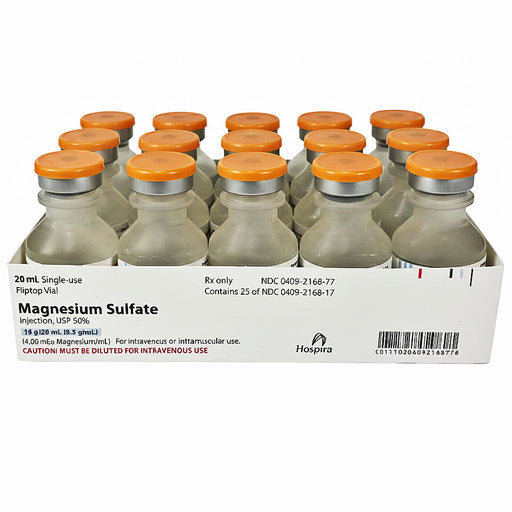
Original price $ 429.00Current price $ 369.00Magnesium Sulfate Injection 50% Single Use Vial 10 gram/20mL (0.5/mL) 20mL , 25/pack (Rx)
Pfizer InjectablesNo reviewsMagnesium Sulfate Injection Magnesium sulfate injection is a sterile, liquid medication that delivers magnesium (in the form of magnesium sulfate) ...
View full details🔒 Medical License Required -
Sale 25%
Original price $ 8.95Current price $ 6.75
Magnesium Sulfate Injection 50% Single Dose Vial 10 mL, EACH (Rx)
Fresenius USANo reviewsMagnesium Sulfate in Water for Injection 50% is a sterile solution that is used to maintain magnesium levels in the body. It is typically given int...
View full details🔒 Medical License Required -
 Sale 20%
Original price $ 84.95Current price $ 68.00
Sale 20%
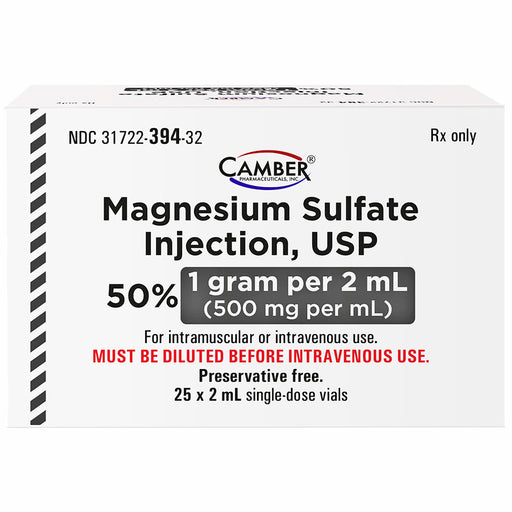
Original price $ 84.95Current price $ 68.00Magnesium Sulfate Injection 1 Gram (500 mg per vial) Single Dose, Preservative Free 2 mL x 25/Pack (RX)
Camber PharmaNo reviews#1 Hospital-Grade Magnesium Sulfate Injection — Fast, Reliable IV & IM Magnesium Replenishment Restore critical magnesium levels quickly and sa...
View full details🔒 Medical License Required
Magnesium Sulfate Injection
Magnesium sulfate injection is a medication containing the mineral magnesium (as magnesium sulfate) in a sterile water solution. It is given by injection – usually as a slow intravenous (IV) infusion (sometimes intramuscularly) – under medical supervision. In effect, it is an IV form of magnesium used to raise blood magnesium levels quickly. (Magnesium is a naturally occurring electrolyte important for nerve and muscle function). According to the official prescribing information, “Magnesium Sulfate Injection…is a sterile, nonpyrogenic, concentrated solution of magnesium sulfate heptahydrate in Water for Injection. It is administered by the intravenous (IV) or intramuscular (IM) routes as an electrolyte replenisher or anticonvulsant”. In other words, this injectable form of magnesium is used to replace magnesium when levels are dangerously low and to act as an anticonvulsant in certain emergencies.
Uses & Indications
Magnesium sulfate injection has several important uses, mainly to replenish magnesium and prevent seizures in specific conditions. Key indications include:
- Hypomagnesemia (magnesium deficiency): It is used to treat very low blood magnesium levels when oral supplements are insufficient or not possible. For example, it can correct acute hypomagnesemia due to dialysis, severe vomiting/diarrhea, or other causes of magnesium loss.
- Eclampsia/Preeclampsia (pregnancy): It is routinely used as an anticonvulsant in pregnant patients with preeclampsia or eclampsia (pregnancy-related high blood pressure with risk of seizures). In this setting, magnesium sulfate injection prevents and treats seizures (“eclamptic fits”). For example, the Cleveland Clinic notes it “may be used to prevent and treat seizures during pregnancy in people with high blood pressure disorders, such as preeclampsia or eclampsia” and patient guides likewise state it is given to “prevent seizures (fits)…caused by eclampsia”.
- Other acute uses (cardiac, respiratory): In acute care, IV magnesium sulfate can also be used for severe cases of certain heart rhythm disturbances (e.g. torsades de pointes ventricular arrhythmia) and as a muscle relaxant in life-threatening asthma exacerbations, though these uses are less common. (Its role as a bronchodilator and antiarrhythmic comes from its effect on neuromuscular and cardiac cells.) Note: These uses are specialized and would be administered in a monitored setting.
In summary, magnesium sulfate injection is essentially IV magnesium. It rapidly raises serum magnesium and is thus used whenever a quick correction is needed (for example, in intensive care or emergency settings). Common official drug guides list hypomagnesemia and eclampsia-related seizures as the primary indications.
Administration
Magnesium sulfate injection is given only under medical supervision, usually in a hospital or clinic. It is typically administered as a diluted IV infusion over minutes to hours, depending on the situation. (Undiluted concentrations are too strong for direct injection.) Dosing and infusion rates vary by indication. For example, in eclampsia a common regimen is a 4–6 gram IV loading dose followed by a maintenance infusion, with close monitoring of blood pressure, reflexes and urine output. Because high magnesium levels can cause side effects (like low blood pressure, slowed breathing, or lethargy), patients on magnesium sulfate infusions are carefully monitored in a hospital.
Magnesium sulfate injection is a prescription IV medication that provides soluble magnesium. It is used to replace magnesium in the body (especially when levels are very low) and to act as an anticonvulsant in conditions like preeclampsia/eclampsia. It must be given slowly in a healthcare setting. As the official label states, it is an “electrolyte replenisher or anticonvulsant” given IV/IM.
Magnesium Deficiency (Hypomagnesemia)
Magnesium Sulfate Types & Concentrations
Magnesium Sulfate Injection Side Effects
Magnesium deficiency (hypomagnesemia) is usually due to either insufficient magnesium intake/absorption or excessive losses/shifts of magnesium from the body. In practical terms, common causes include:
-
Poor intake or absorption: Inadequate dietary magnesium (malnutrition, starvation, anorexia, chronic illness) or alcoholism (poor diet) can lead to deficiency. Gastrointestinal disorders that reduce absorption – for example celiac disease, Crohn’s/colitis, short-bowel or bypass surgery – also cause magnesium loss. Even lifestyle factors can contribute: for instance, chronic proton-pump inhibitor use (omeprazole, etc.) impairs stomach absorption of Mg. Critically ill patients on prolonged total parenteral nutrition (TPN) without adequate magnesium may likewise develop deficiency. (Pregnancy and lactation increase magnesium requirements and are associated with modest Mg depletion if intake is not increased).
-
Gastrointestinal (GI) losses: Conditions that cause chronic GI fluid loss drain magnesium. Examples include persistent diarrhea or laxative abuse, severe vomiting or nasogastric suction, and fat-malabsorption (steatorrhea). These losses rapidly deplete body magnesium. (For example, chronic diarrhea is a well-known cause, as highlighted in clinical reviews.
-
Renal (kidney) wasting: Many kidney-related issues cause excessive urinary Mg loss. High-dose diuretics (loop diuretics like furosemide, thiazides such as hydrochlorothiazide) markedly increase Mg excretion. Other causes of renal loss include endocrine disorders (e.g. hyperparathyroidism or hyperaldosteronism lead to more Mg in urine) and metabolic factors (e.g. uncontrolled diabetes causes osmotic diuresis). Certain kidney tubule disorders (for example, Gitelman’s or Bartter’s syndrome) inherently waste magnesium. Nephrotoxic drugs (cisplatin, amphotericin B, calcineurin inhibitors like cyclosporine/tacrolimus, aminoglycoside antibiotics) also cause renal magnesium wasting.
-
Medications and toxins: Beyond diuretics, several drugs interfere with magnesium. As noted, proton-pump inhibitors reduce absorption. Other offending agents include aminoglycoside antibiotics (gentamicin, etc.), cisplatin chemotherapy, and cardiac glycosides (digoxin). Laxative abuse is another iatrogenic cause (though often grouped with GI losses).
-
Redistribution or “shift” into cells/bone: Certain conditions shift magnesium out of blood into cells or bone. For example, insulin administration (as in treating diabetic ketoacidosis) drives Mg into cells, and refeeding after starvation or alcohol withdrawal causes a similar intracellular shift. “Hungry bone syndrome” after parathyroidectomy draws Mg (and calcium) into healing bone, acutely lowering serum levels. Acute pancreatitis and correction of acidosis are other examples where Mg is redistributed and serum Mg falls.
-
Chronic diseases: Diseases like chronic kidney disease or long-term malabsorption also predispose to gradual Mg depletion. Notably, alcoholism is a common risk factor, since it combines poor intake with increased renal losses. Likewise, patients with poorly controlled type 2 diabetes often run through Mg via urinary excretion.
In summary, any factor that reduces magnesium intake/absorption or increases its loss can cause deficiency. Because magnesium is intracellular, deficiency often coexists with low potassium/calcium, and recognizing the underlying cause is key to treatment. (The principal causes and risk factors are well documented in clinical sources.
Magnesium Sulfate Types and Concentrations
Concentrations: Magnesium sulfate for injection is supplied in several strengths. The most common is 50% w/v (500 mg/mL), typically in small vials or pre-filled syringes (e.g. 5 g in 10 mL or 10 g in 20 mL). There are also lower concentrations used for IV infusions – for example, 10% (100 mg/mL) and 20% (200 mg/mL) solutions. These may be provided as separate products or are prepared by diluting the 50% concentrate. (For instance, a 10% solution might come as a 10 mL ampoule containing 1 g of MgSO₄).
Premixed infusions: Some products combine magnesium sulfate with a carrier fluid. For example, “Magnesium Sulfate in 5% Dextrose” is a premixed IV solution (usually 1 g MgSO₄ in 100 mL, i.e. 1%) used for eclampsia prevention or treatment. Similarly, formulations with sodium chloride (e.g. “Magnesium Sulfate–Sodium Chloride injection”) exist for IV use. These provide a known dose of Mg²⁺ in a larger infusion volume, often for continuous infusion or TPN supplementation.
Administration forms: Magnesium sulfate injections come as sterile solutions for IV or IM use. The 50% concentrate is typically single-use (no preservatives) and must be diluted to ≤20% concentration for IV infusion. In practice, clinicians may administer part of the dose IV (after dilution to 10–20%) and part IM (using undiluted 50%) – the label even notes that deep IM injection of the undiluted 50% solution yields therapeutic levels in ~60 minutes. Lower-percentage formulations (10% or 20%) are already dilute enough for direct IV use, but may also be further diluted to adjust infusion rates.
Examples of products: In summary, typical magnesium sulfate injections include:
- MgSO₄ Injection USP, 50% – a concentrated sterile solution (500 mg/mL) in small vials/syringes. Used (after dilution for IV or undiluted IM) for acute hypomagnesemia or seizure prophylaxis.
- MgSO₄ 10% or 20% injection (infusion solution) – dilute solutions (100 or 200 mg/mL) for IV infusion. These may be supplied as infusion bags or prepared on pharmacy. (For example, each 10 mL ampoule of a 10% product contains 1 g MgSO₄).
- MgSO₄ in D5W injection (1%) – premixed IV bag (e.g. 1 g in 100 mL of 5% dextrose) for slow infusion. This is used particularly in obstetrics (eclampsia) and TPN regimens.
- Combination electrolyte formulations: Some preparations pair MgSO₄ with saline (NaCl) in a single injection for IV use. (For example, a “Magnesium Sulfate–Sodium Chloride injection” provides both ions for replenishing deficits.)
Each form is used according to clinical need and dosing requirements. For example, high-strength (50%) is convenient for giving large doses quickly (with appropriate dilution for IV use), whereas weaker solutions (10–20% or premixed bags) allow for controlled, extended infusions. All injectable forms require IV or deep IM administration, proper dilution, and close monitoring of serum magnesium levels.
Magnesium Sulfate Injection Side Effects
Magnesium sulfate given IV can cause a range of side effects – most relate to its CNS and cardiovascular effects (especially at higher doses). Common and notable effects include:
-
Central Nervous System: Patients often feel warm or flushed and experience drowsiness or confusion during the infusion. Headache is also common. At high levels, neuromuscular function is depressed: muscle weakness and loss of deep-tendon reflexes can occur.
-
Cardiovascular (Heart and Blood Pressure): Magnesium causes vasodilation. This frequently leads to transient hypotension (low blood pressure) and flushing. Patients may feel dizzy or light-headed. Very high magnesium can slow cardiac conduction, causing bradycardia or arrhythmias (irregular or slow heartbeat). In extreme cases (overdose), severe hypotension, heart block or “shock” have been reported.
-
Respiratory: Magnesium sulfate can depress respiration. Rapid or high-dose infusions may cause slow, shallow breathing or even respiratory arrest, especially if renal clearance is impaired. Clinicians monitor breathing rate closely when infusing magnesium.
-
Gastrointestinal: Nausea and vomiting are common side effects. Patients may also feel very thirsty or have abdominal discomfort.
-
Local/Injections: Injection-site discomfort (pain, burning or swelling) can occur when given IM or IV. Flushing of the skin and sweating are also frequently noted.
-
Allergic Reactions: True allergic reactions are rare but possible. Symptoms might include rash, itching, hives or swelling of the face/lips. Any signs of a rash, difficulty breathing or swelling during the infusion should be reported immediately.
-
Other: Some patients report headache or a “cold” sensation during infusion. In very high doses or with prolonged infusion, magnesium can also lower calcium and phosphate levels, leading to muscle cramps or tetany.
Most side effects are dose-dependent and reversible once infusion slows or stops. Blood pressure, heart rate, oxygen saturation and reflexes are usually monitored during administration to catch any adverse effects early. If severe symptoms occur (e.g. respiratory difficulty, very low blood pressure, altered mental status), infusion is halted and medical support (calcium IV, ventilation) is provided.
Magnesium Deficiency (Hypomagnesemia)
Magnesium deficiency (hypomagnesemia) is usually due to either insufficient magnesium intake/absorption or excessive losses/shifts of magnesium from the body. In practical terms, common causes include:
-
Poor intake or absorption: Inadequate dietary magnesium (malnutrition, starvation, anorexia, chronic illness) or alcoholism (poor diet) can lead to deficiency. Gastrointestinal disorders that reduce absorption – for example celiac disease, Crohn’s/colitis, short-bowel or bypass surgery – also cause magnesium loss. Even lifestyle factors can contribute: for instance, chronic proton-pump inhibitor use (omeprazole, etc.) impairs stomach absorption of Mg. Critically ill patients on prolonged total parenteral nutrition (TPN) without adequate magnesium may likewise develop deficiency. (Pregnancy and lactation increase magnesium requirements and are associated with modest Mg depletion if intake is not increased).
-
Gastrointestinal (GI) losses: Conditions that cause chronic GI fluid loss drain magnesium. Examples include persistent diarrhea or laxative abuse, severe vomiting or nasogastric suction, and fat-malabsorption (steatorrhea). These losses rapidly deplete body magnesium. (For example, chronic diarrhea is a well-known cause, as highlighted in clinical reviews.
-
Renal (kidney) wasting: Many kidney-related issues cause excessive urinary Mg loss. High-dose diuretics (loop diuretics like furosemide, thiazides such as hydrochlorothiazide) markedly increase Mg excretion. Other causes of renal loss include endocrine disorders (e.g. hyperparathyroidism or hyperaldosteronism lead to more Mg in urine) and metabolic factors (e.g. uncontrolled diabetes causes osmotic diuresis). Certain kidney tubule disorders (for example, Gitelman’s or Bartter’s syndrome) inherently waste magnesium. Nephrotoxic drugs (cisplatin, amphotericin B, calcineurin inhibitors like cyclosporine/tacrolimus, aminoglycoside antibiotics) also cause renal magnesium wasting.
-
Medications and toxins: Beyond diuretics, several drugs interfere with magnesium. As noted, proton-pump inhibitors reduce absorption. Other offending agents include aminoglycoside antibiotics (gentamicin, etc.), cisplatin chemotherapy, and cardiac glycosides (digoxin). Laxative abuse is another iatrogenic cause (though often grouped with GI losses).
-
Redistribution or “shift” into cells/bone: Certain conditions shift magnesium out of blood into cells or bone. For example, insulin administration (as in treating diabetic ketoacidosis) drives Mg into cells, and refeeding after starvation or alcohol withdrawal causes a similar intracellular shift. “Hungry bone syndrome” after parathyroidectomy draws Mg (and calcium) into healing bone, acutely lowering serum levels. Acute pancreatitis and correction of acidosis are other examples where Mg is redistributed and serum Mg falls.
-
Chronic diseases: Diseases like chronic kidney disease or long-term malabsorption also predispose to gradual Mg depletion. Notably, alcoholism is a common risk factor, since it combines poor intake with increased renal losses. Likewise, patients with poorly controlled type 2 diabetes often run through Mg via urinary excretion.
In summary, any factor that reduces magnesium intake/absorption or increases its loss can cause deficiency. Because magnesium is intracellular, deficiency often coexists with low potassium/calcium, and recognizing the underlying cause is key to treatment. (The principal causes and risk factors are well documented in clinical sources.
Magnesium Sulfate Types & Concentrations
Magnesium Sulfate Types and Concentrations
Concentrations: Magnesium sulfate for injection is supplied in several strengths. The most common is 50% w/v (500 mg/mL), typically in small vials or pre-filled syringes (e.g. 5 g in 10 mL or 10 g in 20 mL). There are also lower concentrations used for IV infusions – for example, 10% (100 mg/mL) and 20% (200 mg/mL) solutions. These may be provided as separate products or are prepared by diluting the 50% concentrate. (For instance, a 10% solution might come as a 10 mL ampoule containing 1 g of MgSO₄).
Premixed infusions: Some products combine magnesium sulfate with a carrier fluid. For example, “Magnesium Sulfate in 5% Dextrose” is a premixed IV solution (usually 1 g MgSO₄ in 100 mL, i.e. 1%) used for eclampsia prevention or treatment. Similarly, formulations with sodium chloride (e.g. “Magnesium Sulfate–Sodium Chloride injection”) exist for IV use. These provide a known dose of Mg²⁺ in a larger infusion volume, often for continuous infusion or TPN supplementation.
Administration forms: Magnesium sulfate injections come as sterile solutions for IV or IM use. The 50% concentrate is typically single-use (no preservatives) and must be diluted to ≤20% concentration for IV infusion. In practice, clinicians may administer part of the dose IV (after dilution to 10–20%) and part IM (using undiluted 50%) – the label even notes that deep IM injection of the undiluted 50% solution yields therapeutic levels in ~60 minutes. Lower-percentage formulations (10% or 20%) are already dilute enough for direct IV use, but may also be further diluted to adjust infusion rates.
Examples of products: In summary, typical magnesium sulfate injections include:
- MgSO₄ Injection USP, 50% – a concentrated sterile solution (500 mg/mL) in small vials/syringes. Used (after dilution for IV or undiluted IM) for acute hypomagnesemia or seizure prophylaxis.
- MgSO₄ 10% or 20% injection (infusion solution) – dilute solutions (100 or 200 mg/mL) for IV infusion. These may be supplied as infusion bags or prepared on pharmacy. (For example, each 10 mL ampoule of a 10% product contains 1 g MgSO₄).
- MgSO₄ in D5W injection (1%) – premixed IV bag (e.g. 1 g in 100 mL of 5% dextrose) for slow infusion. This is used particularly in obstetrics (eclampsia) and TPN regimens.
- Combination electrolyte formulations: Some preparations pair MgSO₄ with saline (NaCl) in a single injection for IV use. (For example, a “Magnesium Sulfate–Sodium Chloride injection” provides both ions for replenishing deficits.)
Each form is used according to clinical need and dosing requirements. For example, high-strength (50%) is convenient for giving large doses quickly (with appropriate dilution for IV use), whereas weaker solutions (10–20% or premixed bags) allow for controlled, extended infusions. All injectable forms require IV or deep IM administration, proper dilution, and close monitoring of serum magnesium levels.
Magnesium Sulfate Injection Side Effects
Magnesium Sulfate Injection Side Effects
Magnesium sulfate given IV can cause a range of side effects – most relate to its CNS and cardiovascular effects (especially at higher doses). Common and notable effects include:
-
Central Nervous System: Patients often feel warm or flushed and experience drowsiness or confusion during the infusion. Headache is also common. At high levels, neuromuscular function is depressed: muscle weakness and loss of deep-tendon reflexes can occur.
-
Cardiovascular (Heart and Blood Pressure): Magnesium causes vasodilation. This frequently leads to transient hypotension (low blood pressure) and flushing. Patients may feel dizzy or light-headed. Very high magnesium can slow cardiac conduction, causing bradycardia or arrhythmias (irregular or slow heartbeat). In extreme cases (overdose), severe hypotension, heart block or “shock” have been reported.
-
Respiratory: Magnesium sulfate can depress respiration. Rapid or high-dose infusions may cause slow, shallow breathing or even respiratory arrest, especially if renal clearance is impaired. Clinicians monitor breathing rate closely when infusing magnesium.
-
Gastrointestinal: Nausea and vomiting are common side effects. Patients may also feel very thirsty or have abdominal discomfort.
-
Local/Injections: Injection-site discomfort (pain, burning or swelling) can occur when given IM or IV. Flushing of the skin and sweating are also frequently noted.
-
Allergic Reactions: True allergic reactions are rare but possible. Symptoms might include rash, itching, hives or swelling of the face/lips. Any signs of a rash, difficulty breathing or swelling during the infusion should be reported immediately.
-
Other: Some patients report headache or a “cold” sensation during infusion. In very high doses or with prolonged infusion, magnesium can also lower calcium and phosphate levels, leading to muscle cramps or tetany.
Most side effects are dose-dependent and reversible once infusion slows or stops. Blood pressure, heart rate, oxygen saturation and reflexes are usually monitored during administration to catch any adverse effects early. If severe symptoms occur (e.g. respiratory difficulty, very low blood pressure, altered mental status), infusion is halted and medical support (calcium IV, ventilation) is provided.