 Skip to content





Filters
Filters
Misoprostol Tablets for Prostaglandin E1 Analogue
-

 Sale 41%
Misoprostol Tablets 100 mcg 60 Tablets (RX)
Original price $ 125.00Current price $ 74.00🔒 Medical License Required -
 Sale 26%
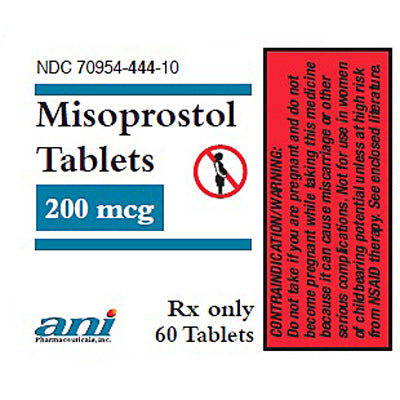
Misoprostol Tablets 200 mcg 60 Tablets (Rx)
Original price $ 169.95Current price $ 125.00🔒 Medical License Required


Misoprostol (Cytotec): Uses, Dosage, Side Effects
Misoprostol is a synthetic prostaglandin E₁ analog. It inhibits gastric acid secretion and enhances mucus/bicarbonate secretion, thus protecting the stomach lining. It is FDA-approved only for preventing or treating NSAID-induced gastric ulcers in high‐risk patients. For this indication it is given orally at 200 µg four times daily (800 µg/day) with meals to reduce GI upset. Misoprostol also has strong uterotonic effects (causing uterine contractions and cervical ripening). These properties are used off-label in obstetrics/gynecology: to ripen the cervix, induce labor, and manage postpartum hemorrhage. It is also used in combination with mifepristone for medical abortion.
Uses (Indications)
- Gastric ulcer prevention: FDA-approved for preventing or treating NSAID-induced gastric ulcers in high-risk patients.
- Labor induction / cervical ripening: Off-label use to induce labor or soften the cervix (e.g. 2nd/3rd trimester ripening).
- Postpartum hemorrhage (PPH): Used (often when oxytocin is unavailable) to contract the uterus and stop bleeding after childbirth.
- Medical abortion: Used inside/outside the uterus to terminate early pregnancy. Misoprostol with mifepristone (RU-486) is FDA-approved for abortion up to 10 weeks. The two drugs act synergistically (mifepristone blocks progesterone; misoprostol induces contractions). If mifepristone is unavailable, misoprostol alone is an accepted alternative.
- Miscarriage management: Used off-label to manage missed or incomplete abortion (often following the same regimens as for abortion)
Dosage and Administration
Misoprostol comes as 200 µg oral tablets (brand Cytotec) and can be given via multiple routes. Routes and doses vary by indication:
- NSAID ulcer prophylaxis: 200 µg orally four times daily (total 800 µg/day), taken with meals (often at bedtime) to minimize gastrointestinal upset.
- Medication abortion (≤70 days gestation): One regimen is a single oral dose of 200 mg mifepristone, followed 24–48 hours later by 800 µg misoprostol. Misoprostol is usually given as four 200 µg tablets placed either buccally (in the cheek pouch) or vaginally. In the buccal method, tablets remain in the cheek for ~30 minutes before swallowing.
- Misoprostol-only abortion (off-label): If not using mifepristone, a common regimen is 800 µg misoprostol every 3 hours (up to 3 doses). Possible routes are vaginal, buccal, or sublingual (some guidelines prefer sublingual for rapid absorption). Treatment is most effective early in gestation.
- Postpartum hemorrhage: 600–1000 µg once (e.g. 3–5 tablets) by mouth, sublingually, or rectally, to contract the uterus and stop bleeding. (WHO also recommends 600 µg sublingually as PPH prophylaxis for all deliveries.)
- Labor induction: Regimens vary by locale, but often small doses (e.g. 25–50 µg vaginally, repeated every 4–6 hours) are used to titrate uterine activity. (Not FDA-approved; combined with fetal monitoring.)
Routes of administration include oral, buccal, sublingual, vaginal or rectal placement of tablets. For example, for medication abortion the “buccal” route is common: four misoprostol tablets (800 µg) are placed in the cheek pouches for 30 minutes before swallowing. For gastric ulcer use it is taken by mouth with food. Care should be taken to avoid improper or excessive dosing: at least 90 minutes is generally allowed between large doses (e.g. if multiple misoprostol-only doses are given).
Side Effects
Adverse effects are dose-dependent. The most common side effects are gastrointestinal and constitutional: diarrhea, abdominal pain/cramps, nausea, vomiting, flatulence, indigestion, headache, shivering and fever. Misoprostol’s GI side effects correlate with plasma levels. Fever and chills frequently occur at higher doses (such as repeated-dose regimens or postpartum use) due to prostaglandins acting on the hypothalamus. Uterine cramps and vaginal bleeding are expected when used for abortion, miscarriage or labor; however, excessive bleeding (hemorrhage) must be monitored for. Overt uterine rupture is rare (mostly a concern if used >8 weeks gestation or in a woman with prior uterine surgery).
Less common but serious effects include hypotension or tachycardia (from vasodilation) and, in obstetric use, potential fetal distress if used for induction without monitoring. Allergic reactions (rash, urticaria) are rare. Misoprostol is contraindicated for ulcer prevention in pregnancy because it will induce abortion or cause fetal harm. In fact, a negative pregnancy test is advised before prescribing it for ulcer prophylaxis. Overall, gastrointestinal upset (diarrhea, pain) and uterine cramping are the most common side effects; severe reactions are uncommon with appropriate dosing.
Misoprostol vs Mifepristone
Misoprostol and mifepristone act differently. Mifepristone is an antiprogestin: it blocks progesterone receptors, causing the endometrium to break down and the cervix to soften. Misoprostol is a prostaglandin analog: it causes uterine contractions and cervical dilation. For medical abortion, the combined regimen (mifepristone then misoprostol) has the highest efficacy. Current guidelines recommend 200 mg mifepristone followed 1–2 days later by 800 µg misoprostol (buccally). This two-step regimen achieves >95% success up to 10 weeks’ gestation.
When mifepristone is not used, a misoprostol‐only regimen can be given (typically 800 µg repeatedly every 3–4 hours for up to 2–3 doses). Misoprostol alone is about 80–90% effective; it often requires multiple doses and has a longer bleeding process. It is still recommended (e.g. by WHO/FIGO) when mifepristone is unavailable. In summary, mifepristone is given first as an oral pill, then misoprostol is administered (usually buccally or vaginally). Both drugs can cause heavy uterine bleeding and cramping, but mifepristone tends to prod more bleeding initially, whereas misoprostol’s effect is to expel the pregnancy tissue. Because mifepristone is regulated differently (in some places it is under REMS or prescription-only), misoprostol-only regimens are sometimes used as an alternative.