
Filters
Availability
Price
$
-
$
$0
$2875
Vendor
Collection
Tags
- antifungal cream (2)
- athlete's foot (2)
- doctor-only (11)
- Fungal Infections (4)
- Fungal Infections Treatment (3)
- Generic Mycostatin (2)
- Nystatin (9)
- Nystatin Cream (2)
- Nystatin Units (2)
- ringworm (2)
- Treat Athlete's foot (2)
- treat fungal infections (5)
- Yeast infections (2)
- Antifungal Cream (1)
- Antifungal Medication (2)
- Corticosteroid (2)
- Corticosteroid Medication (1)
- Corticosteroid Skin Treatment (2)
- Nystatin Ointment (1)
- Topical Corticosteroid (2)
- Topical Corticosteroids (1)
- Fungal Infection Medicine (1)
- Intestinal Candidiasis (1)
- Nystatin Liquid (3)
- Nystatin Oral Suspension (3)
- Pharmaceutical Associates (1)
- Nystatin and Triamcinolone Acetonide (2)
- Triamcinolone Acetonide 0.1 (2)
- Triamcinolone Acetonide Ointment (2)
- Nystatin Cream 100000 Units (1)
- Candida yeast (1)
- nystatin 5000 mg (1)
- Nystatin Capsules (1)
- Nystatin Tablets (1)
- Oral Antifungal (1)
- Treat Yest Infections (1)
- vaginal yeast infections (1)
- Antifungal Powder (1)
- athlete’s foot treatment (1)
- cutaneous candidiasis cure (1)
- Diaper Rash (1)
- Fungal Skin Infections (1)
- Jock itch (1)
- Jock Itch Treatment (1)
- Nystatin Powder (1)
- nystatin powder 100000 units (1)
- Nystop (1)
- Nystop powder (1)
- pediatric antifungal (1)
- ringworm cure (1)
- skin yeast infection (1)
- Treat skin infections (1)
- Antifungal API (1)
- Compounding (1)
- Medisca (1)
- Pharmacy Compounding (1)
- Antifungal Liquid (1)
- Leading Pharma (1)
- Nystatin Oral Suspension Liquid 100000 Units (1)
- Oral Antifungal Medication (1)
- Oral Thrush (1)
- Oral Yeast Infection (1)
- Oropharyngeal Candidiasis (1)
Nystatin Creams, Ointments & Oral Suspension
Nystatin is an antifungal medication used to treat infections caused by yeasts, especially Candida species (the fungus responsible for conditions like thrush and many skin yeast infections). It belongs to a class of antifungals called polyene antibiotics, and it works by binding to a component of fungal cell membranes (ergosterol) and creating holes, which causes the fungal cells to leak and die. Nystatin is a very versatile “targeted” antifungal in that it’s highly effective against Candida, but it’s not absorbed well into the bloodstream. This means it’s mainly used as a local treatment – applied directly where the infection is – rather than taken systemically. Because of this, nystatin comes in formulations like creams, ointments, and oral suspensions to best reach the site of infection:
Nystatin:
- Type of Drug: Antifungal (polyene antibiotic).
- Scope: Effective mainly against Candida (yeast) infections.
-
Forms and Uses:
- Cream/Ointment: Apply to skin yeast infections (such as diaper rash, under-breast rash, groin yeast infections, fungal diaper dermatitis). Use multiple times a day as directed, continue for full course.
- Oral Suspension: Swish-and-swallow liquid for oral thrush (candidiasis of the mouth/throat). Used usually 4 times daily, ensures direct contact with fungus. Appropriate for infants, children, and adults with thrush. Not absorbed, so it treats the local infection in the mouth/gut only.
- Not Used For: Nystatin is not the right treatment for other kinds of fungal infections like athlete’s foot, ringworm, or nail fungus, which are usually caused by dermatophyte fungi – those require different antifungals (like clotrimazole, terbinafine, etc.). It’s specifically targeting Candida yeast. Also, nystatin is never given as a pill or injection to treat internal infections; it’s not absorbed and it can be toxic if given intravenously, so it’s purely a localized therapy. For serious systemic Candida infections, doctors use other antifungals (like fluconazole or amphotericin B), not nystatin.
- How Well It Works: When used correctly, nystatin is very effective at clearing up yeast infections on the skin or in the mouth. It has been a staple in antifungal therapy for decades and remains widely prescribed because of its efficacy and safety.
- Side Effects: As discussed, minimal. Topical use might cause a little skin irritation in some; oral use might cause mild gastrointestinal upset or a transient rash in rare cases. Overall, it’s considered very safe, even for infants and during pregnancy, because the body doesn’t significantly absorb it.
- Availability: Nystatin is available by prescription. In some countries, certain topical forms might be obtainable over-the-counter, but generally you get it via a doctor’s prescription (especially the oral suspension). Brand names include Mycostatin®, Nilstat®, Nystan® (in the UK), and generic “nystatin” is very common. Some combo creams (like the ones with corticosteroid or antibiotic) have their own brand names (e.g., Mycolog II is nystatin + triamcinolone in the US).
- Patient Tips: If using the oral suspension, remember to avoid eating or drinking immediately after, so the medicine isn’t washed away too quickly – give it at least 5-10 minutes of contact if possible. If using the cream/ointment for something like athlete’s foot (in case a provider recommended it for an intertrigo with yeast or so), keep the area clean and dry, and use breathable fabrics. In the case of diaper rash, change diapers frequently and consider letting the baby have some diaper-free time to air out, in addition to the nystatin application.
Nystatin is a targeted antifungal remedy for yeast infections:
- Creams and Ointments treat Candida on the skin – they are applied to get rid of rashes caused by yeast, like those in warm, damp areas of the body.
- Oral Suspension treats yeast in the mouth and throat – you swish it to coat all the surfaces and swallow it to ensure the throat is treated too.
It’s a localized therapy – super effective in the GI tract or on the skin, but not useful for deep systemic infections. Its safety and efficiency make it a go-to solution for thrush and cutaneous candidiasis, helping to clear those infections up with minimal fuss and minimal risk.
-
 Sale
from $ 19.95
Sale
from $ 19.95Nystatin Cream 100,000 Units USP (Rx)
Padagis US12 reviewsNystatin Cream 100,000 Units is a highly effective antifungal treatment designed to alleviate and manage fungal skin infections. This topical medic...
View full details🔒 Medical License Required -
 Sale 20%
Original price $ 22.95Current price $ 18.30
Sale 20%
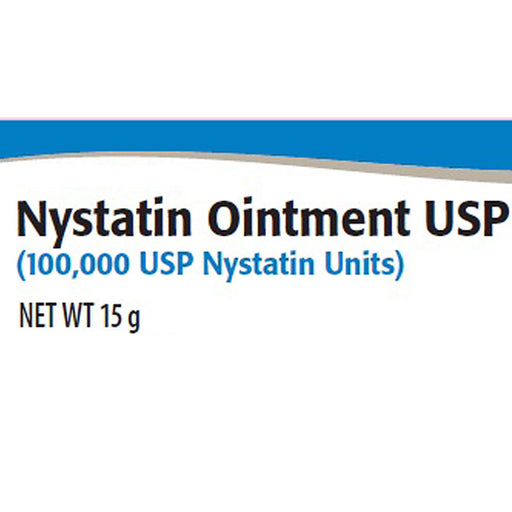
Original price $ 22.95Current price $ 18.30Nystatin Antifungal Ointment 100,000 USP (Rx)
Perrigo4 reviewsNystatin Antifungal Ointment is a topical cream or ointment used to treat fungal infections of the skin. Nystatin is a polyene antifungal agent tha...
View full details🔒 Medical License Required -
 Sale 36%
Original price $ 39.95Current price $ 25.50
Sale 36%
Original price $ 39.95Current price $ 25.50Nystatin Oral Suspension Liquid SS 100,000 Unit Per mL w/Dropper 60 mL Cherry/Peppermint Flavor (Rx)
Pharmaceutical Associates, IncNo reviewsNystatin Oral Suspension Liquid SS 100,000 Units per mL is a powerful medication that is primarily used for the treatment of fungal infections in t...
View full details🔒 Medical License Required -
 Sale
$ 32.90
Sale
$ 32.90Nystatin and Triamcinolone Acetonide Ointment 0.1% 15 gram Tube (Rx)
Alembic PharmaceuticalsNo reviewsNystatin and triamcinolone acetonide ointment, USP for dermatologic use contain the antifungal agent nystatin and the synthetic corticosteroid tria...
View full details🔒 Medical License Required -
 Sale 30%
Original price $ 49.95Current price $ 35.00
Sale 30%
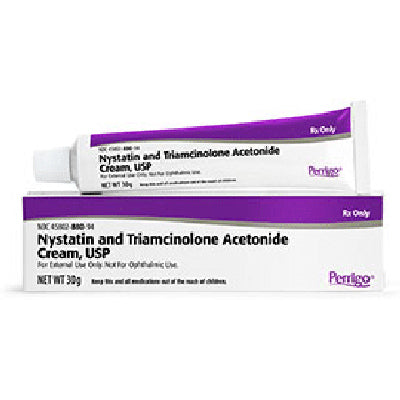
Original price $ 49.95Current price $ 35.00Nystatin and Triamcinolone Acetonide Cream 0.1% 15 gram Tube (Rx)
Padagis USNo reviewsNystatin and Triamcinolone Acetonide Cream 0.1% is a powerful combination medication often prescribed for the treatment of various skin conditions....
View full details🔒 Medical License Required -
 Sale 20%
Original price $ 235.00Current price $ 189.00
Sale 20%
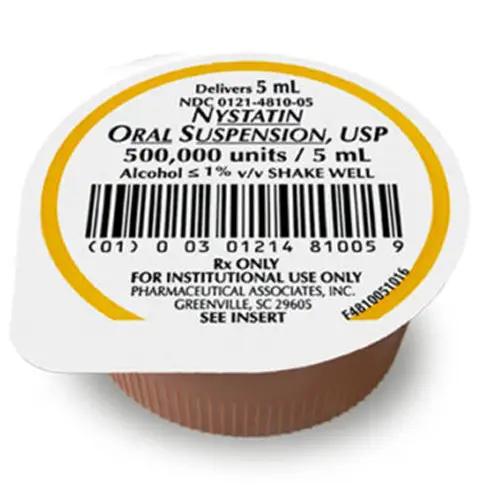
Original price $ 235.00Current price $ 189.00Nystatin Oral Suspension Cups 500000 Units 5 mL x 50 Count (Rx)
Pharmaceutical Associates, IncNo reviewsNystatin Oral Suspension Cups 500000 Units 5 mL are a highly effective medication used to treat fungal infections in the mouth and throat. Nystatin...
View full details🔒 Medical License Required -
 Sale 31%
Original price $ 22.95Current price $ 15.95
Sale 31%
Original price $ 22.95Current price $ 15.95Nystatin Cream 100,000 Units by Torrent Pharmaceuticals, 30 grams (Rx)
Torrent Pharmaceuticals1 reviewNystatin Cream 100,000 Units by Torrent Pharmaceuticals is a powerful antifungal medication used to treat a range of fungal infections of the skin,...
View full details🔒 Medical License Required -
 Sale 29%
Original price $ 76.95Current price $ 55.00
Sale 29%
Original price $ 76.95Current price $ 55.00Nystatin Tablets 500000 Units by Avet Pharma 100 Count (Rx)
Avet PharmaceuticalsNo reviewsNystatin tablets are a powerful antifungal medication that is primarily used to treat various types of infections caused by Candida yeast. Avet Pha...
View full details🔒 Medical License Required -
 Sale 50%
Original price $ 37.95Current price $ 19.00
Sale 50%
Original price $ 37.95Current price $ 19.00Nystop Nystatin Topical Powder 100,000 Units Antifungal Relief 30 grams by Padagis (Rx)
Padagis US3 reviews#1 Antifungal Powder for Skin | Jock Itch, Athlete’s Foot, Diaper Rash & Candidiasis Nystop Nystatin Topical Powder by Padagis US delivers powe...
View full details🔒 Medical License Required -
 Sale
from $ 105.00
Sale
from $ 105.00Nystatin USP For Compounding (API) **Refrigerated**
Mountainside MedicalNo reviewsNystatin USP for Compounding (API) is an antifungal active pharmaceutical ingredient used in the preparation of custom medications to treat fungal ...
View full details🔒 Medical License Required -
 Sale 35%
Original price $ 45.95Current price $ 29.95
Sale 35%
Original price $ 45.95Current price $ 29.95Nystatin Oral Suspension Liquid 100,000 Units Per mL by Leading Pharma 60 mL (RX)
Leading Pharma LLCNo reviewsNystatin Oral Suspension is an antifungal medication designed to treat yeast infections in the mouth—commonly known as oral thrush (or oropharyngea...
View full details🔒 Medical License Required


People Also Searched For
Nystatin Creams, Ointments & Oral Suspension to doctor-only
Nystatin Creams, Ointments & Oral Suspension to treat fungal infections
Antifungal Medications
Yeast Infection Treatments, Creams & Medicines
Antifungal Cream OTC & Prescription
Prescription Drugs and Medications
Athlete's Foot Treatments
Intertrigo Treatments
Padagis US
Ringworm Treatments & Medicines
Nystatin is an antifungal medication used to treat infections caused by yeasts, especially Candida species (the fungus responsible for conditions like thrush and many skin yeast infections). It belongs to a class of antifungals called polyene antibiotics, and it works by binding to a component of fungal cell membranes (ergosterol) and creating holes, which causes the fungal cells to leak and die. Nystatin is a very versatile “targeted” antifungal in that it’s highly effective against Candida, but it’s not absorbed well into the bloodstream. This means it’s mainly used as a local treatment – applied directly where the infection is – rather than taken systemically. Because of this, nystatin comes in formulations like creams, ointments, and oral suspensions to best reach the site of infection:
Nystatin:
- Type of Drug: Antifungal (polyene antibiotic).
- Scope: Effective mainly against Candida (yeast) infections.
-
Forms and Uses:
- Cream/Ointment: Apply to skin yeast infections (such as diaper rash, under-breast rash, groin yeast infections, fungal diaper dermatitis). Use multiple times a day as directed, continue for full course.
- Oral Suspension: Swish-and-swallow liquid for oral thrush (candidiasis of the mouth/throat). Used usually 4 times daily, ensures direct contact with fungus. Appropriate for infants, children, and adults with thrush. Not absorbed, so it treats the local infection in the mouth/gut only.
- Not Used For: Nystatin is not the right treatment for other kinds of fungal infections like athlete’s foot, ringworm, or nail fungus, which are usually caused by dermatophyte fungi – those require different antifungals (like clotrimazole, terbinafine, etc.). It’s specifically targeting Candida yeast. Also, nystatin is never given as a pill or injection to treat internal infections; it’s not absorbed and it can be toxic if given intravenously, so it’s purely a localized therapy. For serious systemic Candida infections, doctors use other antifungals (like fluconazole or amphotericin B), not nystatin.
- How Well It Works: When used correctly, nystatin is very effective at clearing up yeast infections on the skin or in the mouth. It has been a staple in antifungal therapy for decades and remains widely prescribed because of its efficacy and safety.
- Side Effects: As discussed, minimal. Topical use might cause a little skin irritation in some; oral use might cause mild gastrointestinal upset or a transient rash in rare cases. Overall, it’s considered very safe, even for infants and during pregnancy, because the body doesn’t significantly absorb it.
- Availability: Nystatin is available by prescription. In some countries, certain topical forms might be obtainable over-the-counter, but generally you get it via a doctor’s prescription (especially the oral suspension). Brand names include Mycostatin®, Nilstat®, Nystan® (in the UK), and generic “nystatin” is very common. Some combo creams (like the ones with corticosteroid or antibiotic) have their own brand names (e.g., Mycolog II is nystatin + triamcinolone in the US).
- Patient Tips: If using the oral suspension, remember to avoid eating or drinking immediately after, so the medicine isn’t washed away too quickly – give it at least 5-10 minutes of contact if possible. If using the cream/ointment for something like athlete’s foot (in case a provider recommended it for an intertrigo with yeast or so), keep the area clean and dry, and use breathable fabrics. In the case of diaper rash, change diapers frequently and consider letting the baby have some diaper-free time to air out, in addition to the nystatin application.
Nystatin is a targeted antifungal remedy for yeast infections:
- Creams and Ointments treat Candida on the skin – they are applied to get rid of rashes caused by yeast, like those in warm, damp areas of the body.
- Oral Suspension treats yeast in the mouth and throat – you swish it to coat all the surfaces and swallow it to ensure the throat is treated too.
It’s a localized therapy – super effective in the GI tract or on the skin, but not useful for deep systemic infections. Its safety and efficiency make it a go-to solution for thrush and cutaneous candidiasis, helping to clear those infections up with minimal fuss and minimal risk.
Nystatin Cream and Ointment
Nystatin Oral Suspension
Nystatin Cream and Ointment (Topical Use)
Nystatin creams and ointments are used to treat fungal infections on the skin or on mucous membranes (like the lips or around the mouth). These are topical forms of nystatin; you apply them to the affected area, and they work on the surface to eliminate yeast.
-
What They Treat: The cream or ointment is typically prescribed for cutaneous or mucocutaneous candidiasis – which basically means Candida (yeast) infections of the skin and superficial tissues. Examples include yeast rashes in skin folds (under the breasts, in the groin, under the belly), diaper rash caused by Candida (those angry red rashes in babies can often be yeast-related), and angular cheilitis (cracks at the corners of the mouth, sometimes associated with Candida). Nystatin cream/ointment can also be applied around the anus for Candida diaper rash or in the genital area for yeast infections of the skin. In some cases, nystatin ointment may be used for vaginal yeast infections, although in many countries nystatin also comes in vaginal tablet form for that purpose; azole antifungals (like clotrimazole) are more commonly used vaginally nowadays.
-
How to Use: You usually apply nystatin cream or ointment directly to the affected area 2 to 4 times a day, or as directed by a physician. The area should be clean and dry before application. A thin layer of the cream/ointment is gently massaged into the skin, covering not only the visible rash but also a bit of the surrounding area to get any microscopic satellite yeast. It’s important to continue using it for the full course prescribed, even if the rash looks better in a couple of days. For example, a typical duration might be 1-2 weeks, or at least a couple of days after the skin looks healed to ensure the yeast is fully eradicated. If you stop too soon, the infection can come back. Nystatin cream/ointment is for external use only – it’s not meant to be ingested, applied in the eyes, or used internally (it should not be used inside the vagina unless specifically the product is labeled for intravaginal use, nor should it be used for systemic infections).
-
Cream vs. Ointment: Both contain the same active ingredient, nystatin, and both will treat the yeast infection. The difference lies in their base: Nystatin cream is water-miscible, lighter, and tends to vanish into the skin after rubbing in. Nystatin ointment is greasier (petroleum-based) and stays on the surface longer. In practice, creams are often preferred for moist, weepy rashes or areas where you don’t want too much grease (they absorb more readily), whereas ointments can be good for dry, cracked areas or for use in diaper areas because they also serve as a barrier to moisture. Ointments might stick around longer on the skin, which can be an advantage in places like the diaper region where frequent wetness could wash a cream off. Your doctor or pharmacist may recommend one over the other based on the location of your infection, but both deliver nystatin to the fungus effectively.
-
Effectiveness and Expectations: Nystatin is fungistatic and fungicidal (meaning it can stop growth and also kill fungi) against Candida. You should see improvement in symptoms – such as less redness, itching, and irritation – typically within a few days of consistent use. If used for diaper rash, you might see the red patches diminish and baby’s discomfort ease up in 2-3 days. However, if a week goes by with no improvement, or if the infection appears to worsen, notify your healthcare provider; it’s possible the diagnosis might need re-evaluation or a different treatment (sometimes what looks like yeast could be another problem, or there could be bacterial co-infection requiring additional medication).
-
Safety: One of the great things about nystatin is that it’s very safe when used topically. Because almost none of it gets absorbed through the skin into the bloodstream, it doesn’t cause systemic side effects. The most you might experience is some local skin irritation or sensitivity – if the area becomes very red, itchy, or swollen after applying, you could be allergic to a component of the cream/ointment (this is uncommon). In such cases, discontinue use and consult your doctor for an alternative. Otherwise, nystatin doesn’t typically sting on application and can even be used on infants (for diaper rash or thrush-related rashes) with a doctor’s guidance. It’s also often safe to use in combination with other medications. In fact, nystatin is sometimes combined with other agents in creams/ointments – for instance, there are prescription products where nystatin is mixed with a mild steroid and/or antibacterial (brand names include Nystaform®, Trimovate®, Timodine® in some countries). These combo creams are used when there’s a mixed infection or inflammation – the nystatin handles the yeast, the steroid reduces inflammation, and an antiseptic or antibiotic component can cover bacteria. Your doctor will prescribe these combo creams if appropriate; otherwise plain nystatin works well for straightforward yeast infections.
Nystatin Oral Suspension (Liquid)
Nystatin oral suspension is essentially a liquid form of nystatin that you swish around in your mouth (and usually swallow) to treat or prevent fungal infections of the mouth and throat. The most common use is for oral thrush, which is a Candida infection in the mouth. Oral thrush causes those telltale white patches on the tongue, inner cheeks, gums, or throat, and can make the mouth sore or cause a cottony feeling. Nystatin suspension is a go-to treatment for this condition.
-
What It Treats: The suspension is indicated for candidiasis in the oral cavity – in other words, yeast infections of the mouth and throat. This could be in infants, who often get thrush; in adults using steroid inhalers (which can sometimes allow yeast to overgrow in the mouth); in people on antibiotics or chemotherapy (which can disrupt normal flora and lead to thrush); or in those with weakened immune systems. Sometimes, doctors also advise using nystatin suspension to prevent thrush – for example, a patient undergoing cancer chemotherapy or an organ transplant might take a dose of nystatin daily as a prophylaxis to stop Candida from overgrowing in the mouth. Additionally, when thrush is present, patients often swallow the suspension (rather than spitting it out) so that it can also treat any Candida in the throat or upper gastrointestinal tract. It’s not absorbed into the body, but as it goes down, it can coat the esophagus, which is useful if there’s concern about esophageal candidiasis (a deeper yeast infection that can happen in immunocompromised individuals).
-
How to Use: Nystatin suspension usually comes with a dropper or measuring device. The typical instruction is to use about 4 mL (which is 1 teaspoon, though dosing can vary) four times a day. You should swish it around in your mouth thoroughly, for as long as you comfortably can (usually several seconds to half a minute), to make sure it contacts all the affected areas – under the tongue, cheeks, gums, etc. Then you usually swallow it. If it’s an infant or someone who can’t “swish and swallow,” you use the dropper to paint the medicine around the mouth, ensuring it touches the lesions (for a baby, you may apply it to the tongue and inner cheeks on each side). Avoid feeding the baby immediately after, to let the medicine linger on the spots. Nystatin suspension has a sweet, syrupy base (often contains sugar and flavoring like cherry or mint) to make it palatable, which most people, including babies, tolerate well. Just like with the cream, continue using it for the full course prescribed. For oral thrush, that’s often 7-14 days. A common pitfall is stopping as soon as the white patches go away – but stopping early can allow a relapse. Doctors often recommend using it for at least 2 days after the symptoms have cleared. If you wear dentures and have thrush, you might be instructed to soak your dentures in nystatin solution or treat the denture surface too, to avoid recontamination.
-
Effectiveness: Nystatin is highly effective for oral thrush. Many patients notice improvement in 2 or 3 days – the pain or soreness lessens and the white patches begin to diminish. By the end of a 1- to 2-week course, the infection is usually cleared. If thrush does not improve at all after a few days of proper use, or if it worsens, you should let your healthcare provider know. Occasionally, certain strains of Candida might be less susceptible, or there could be another issue (like a different condition masquerading as thrush). There are alternative treatments (like fluconazole pills or clotrimazole troches) if needed, but nystatin is often tried first because it is very safe and stays local.
-
Safety: Nystatin oral suspension’s big advantage is that it is virtually not absorbed from the gastrointestinal tract. That means when you swish and swallow, it stays in the mouth and then travels through the gut doing its job, but it doesn’t enter the bloodstream in any meaningful amount. So, systemic side effects are exceedingly rare. You’re not going to get the drug affecting other parts of your body – its action is localized to the mucous membranes it touches. The most a person might experience is maybe a bit of stomach upset, especially if taking large volumes (since the suspension can be sweet and a bit thick). Infants generally handle it fine; some babies may get a bit gassy or have looser stools, but it’s usually not significant. Allergic reactions to nystatin are extremely uncommon, as it’s been used for many decades safely. However, since the suspension often contains sugar, one consideration: in older children or adults who use it long-term, it could potentially contribute to tooth decay (similar to any sweet liquid) – good oral hygiene is still important. For babies, it’s usually fine given the short course, but wiping the gums after doses can be done if advised. If a patient has diabetes, the sugar content in each dose is small, but it’s something a physician might mention if extremely tight glucose control is an issue.
-
Who Can Use It: Nystatin suspension can be used by all ages – from infants (even newborns) to the elderly. Pregnant or breastfeeding women can use it for thrush as well (it’s not absorbed, so it doesn’t pose a systemic risk to the baby). It’s one of the go-to treatments for infant thrush because of its safety profile. It’s also used in nursing mothers sometimes: for example, if a breastfeeding infant has thrush, the mother’s nipples might be a reservoir for Candida – doctors might recommend the mother apply a nystatin cream to the nipples (and then wipe/rinse before the next feed) so that both baby and mother are treated and they don’t pass the infection back and forth.
Nystatin Cream and Ointment
Nystatin Cream and Ointment (Topical Use)
Nystatin creams and ointments are used to treat fungal infections on the skin or on mucous membranes (like the lips or around the mouth). These are topical forms of nystatin; you apply them to the affected area, and they work on the surface to eliminate yeast.
-
What They Treat: The cream or ointment is typically prescribed for cutaneous or mucocutaneous candidiasis – which basically means Candida (yeast) infections of the skin and superficial tissues. Examples include yeast rashes in skin folds (under the breasts, in the groin, under the belly), diaper rash caused by Candida (those angry red rashes in babies can often be yeast-related), and angular cheilitis (cracks at the corners of the mouth, sometimes associated with Candida). Nystatin cream/ointment can also be applied around the anus for Candida diaper rash or in the genital area for yeast infections of the skin. In some cases, nystatin ointment may be used for vaginal yeast infections, although in many countries nystatin also comes in vaginal tablet form for that purpose; azole antifungals (like clotrimazole) are more commonly used vaginally nowadays.
-
How to Use: You usually apply nystatin cream or ointment directly to the affected area 2 to 4 times a day, or as directed by a physician. The area should be clean and dry before application. A thin layer of the cream/ointment is gently massaged into the skin, covering not only the visible rash but also a bit of the surrounding area to get any microscopic satellite yeast. It’s important to continue using it for the full course prescribed, even if the rash looks better in a couple of days. For example, a typical duration might be 1-2 weeks, or at least a couple of days after the skin looks healed to ensure the yeast is fully eradicated. If you stop too soon, the infection can come back. Nystatin cream/ointment is for external use only – it’s not meant to be ingested, applied in the eyes, or used internally (it should not be used inside the vagina unless specifically the product is labeled for intravaginal use, nor should it be used for systemic infections).
-
Cream vs. Ointment: Both contain the same active ingredient, nystatin, and both will treat the yeast infection. The difference lies in their base: Nystatin cream is water-miscible, lighter, and tends to vanish into the skin after rubbing in. Nystatin ointment is greasier (petroleum-based) and stays on the surface longer. In practice, creams are often preferred for moist, weepy rashes or areas where you don’t want too much grease (they absorb more readily), whereas ointments can be good for dry, cracked areas or for use in diaper areas because they also serve as a barrier to moisture. Ointments might stick around longer on the skin, which can be an advantage in places like the diaper region where frequent wetness could wash a cream off. Your doctor or pharmacist may recommend one over the other based on the location of your infection, but both deliver nystatin to the fungus effectively.
-
Effectiveness and Expectations: Nystatin is fungistatic and fungicidal (meaning it can stop growth and also kill fungi) against Candida. You should see improvement in symptoms – such as less redness, itching, and irritation – typically within a few days of consistent use. If used for diaper rash, you might see the red patches diminish and baby’s discomfort ease up in 2-3 days. However, if a week goes by with no improvement, or if the infection appears to worsen, notify your healthcare provider; it’s possible the diagnosis might need re-evaluation or a different treatment (sometimes what looks like yeast could be another problem, or there could be bacterial co-infection requiring additional medication).
-
Safety: One of the great things about nystatin is that it’s very safe when used topically. Because almost none of it gets absorbed through the skin into the bloodstream, it doesn’t cause systemic side effects. The most you might experience is some local skin irritation or sensitivity – if the area becomes very red, itchy, or swollen after applying, you could be allergic to a component of the cream/ointment (this is uncommon). In such cases, discontinue use and consult your doctor for an alternative. Otherwise, nystatin doesn’t typically sting on application and can even be used on infants (for diaper rash or thrush-related rashes) with a doctor’s guidance. It’s also often safe to use in combination with other medications. In fact, nystatin is sometimes combined with other agents in creams/ointments – for instance, there are prescription products where nystatin is mixed with a mild steroid and/or antibacterial (brand names include Nystaform®, Trimovate®, Timodine® in some countries). These combo creams are used when there’s a mixed infection or inflammation – the nystatin handles the yeast, the steroid reduces inflammation, and an antiseptic or antibiotic component can cover bacteria. Your doctor will prescribe these combo creams if appropriate; otherwise plain nystatin works well for straightforward yeast infections.
Nystatin Oral Suspension
Nystatin Oral Suspension (Liquid)
Nystatin oral suspension is essentially a liquid form of nystatin that you swish around in your mouth (and usually swallow) to treat or prevent fungal infections of the mouth and throat. The most common use is for oral thrush, which is a Candida infection in the mouth. Oral thrush causes those telltale white patches on the tongue, inner cheeks, gums, or throat, and can make the mouth sore or cause a cottony feeling. Nystatin suspension is a go-to treatment for this condition.
-
What It Treats: The suspension is indicated for candidiasis in the oral cavity – in other words, yeast infections of the mouth and throat. This could be in infants, who often get thrush; in adults using steroid inhalers (which can sometimes allow yeast to overgrow in the mouth); in people on antibiotics or chemotherapy (which can disrupt normal flora and lead to thrush); or in those with weakened immune systems. Sometimes, doctors also advise using nystatin suspension to prevent thrush – for example, a patient undergoing cancer chemotherapy or an organ transplant might take a dose of nystatin daily as a prophylaxis to stop Candida from overgrowing in the mouth. Additionally, when thrush is present, patients often swallow the suspension (rather than spitting it out) so that it can also treat any Candida in the throat or upper gastrointestinal tract. It’s not absorbed into the body, but as it goes down, it can coat the esophagus, which is useful if there’s concern about esophageal candidiasis (a deeper yeast infection that can happen in immunocompromised individuals).
-
How to Use: Nystatin suspension usually comes with a dropper or measuring device. The typical instruction is to use about 4 mL (which is 1 teaspoon, though dosing can vary) four times a day. You should swish it around in your mouth thoroughly, for as long as you comfortably can (usually several seconds to half a minute), to make sure it contacts all the affected areas – under the tongue, cheeks, gums, etc. Then you usually swallow it. If it’s an infant or someone who can’t “swish and swallow,” you use the dropper to paint the medicine around the mouth, ensuring it touches the lesions (for a baby, you may apply it to the tongue and inner cheeks on each side). Avoid feeding the baby immediately after, to let the medicine linger on the spots. Nystatin suspension has a sweet, syrupy base (often contains sugar and flavoring like cherry or mint) to make it palatable, which most people, including babies, tolerate well. Just like with the cream, continue using it for the full course prescribed. For oral thrush, that’s often 7-14 days. A common pitfall is stopping as soon as the white patches go away – but stopping early can allow a relapse. Doctors often recommend using it for at least 2 days after the symptoms have cleared. If you wear dentures and have thrush, you might be instructed to soak your dentures in nystatin solution or treat the denture surface too, to avoid recontamination.
-
Effectiveness: Nystatin is highly effective for oral thrush. Many patients notice improvement in 2 or 3 days – the pain or soreness lessens and the white patches begin to diminish. By the end of a 1- to 2-week course, the infection is usually cleared. If thrush does not improve at all after a few days of proper use, or if it worsens, you should let your healthcare provider know. Occasionally, certain strains of Candida might be less susceptible, or there could be another issue (like a different condition masquerading as thrush). There are alternative treatments (like fluconazole pills or clotrimazole troches) if needed, but nystatin is often tried first because it is very safe and stays local.
-
Safety: Nystatin oral suspension’s big advantage is that it is virtually not absorbed from the gastrointestinal tract. That means when you swish and swallow, it stays in the mouth and then travels through the gut doing its job, but it doesn’t enter the bloodstream in any meaningful amount. So, systemic side effects are exceedingly rare. You’re not going to get the drug affecting other parts of your body – its action is localized to the mucous membranes it touches. The most a person might experience is maybe a bit of stomach upset, especially if taking large volumes (since the suspension can be sweet and a bit thick). Infants generally handle it fine; some babies may get a bit gassy or have looser stools, but it’s usually not significant. Allergic reactions to nystatin are extremely uncommon, as it’s been used for many decades safely. However, since the suspension often contains sugar, one consideration: in older children or adults who use it long-term, it could potentially contribute to tooth decay (similar to any sweet liquid) – good oral hygiene is still important. For babies, it’s usually fine given the short course, but wiping the gums after doses can be done if advised. If a patient has diabetes, the sugar content in each dose is small, but it’s something a physician might mention if extremely tight glucose control is an issue.
-
Who Can Use It: Nystatin suspension can be used by all ages – from infants (even newborns) to the elderly. Pregnant or breastfeeding women can use it for thrush as well (it’s not absorbed, so it doesn’t pose a systemic risk to the baby). It’s one of the go-to treatments for infant thrush because of its safety profile. It’s also used in nursing mothers sometimes: for example, if a breastfeeding infant has thrush, the mother’s nipples might be a reservoir for Candida – doctors might recommend the mother apply a nystatin cream to the nipples (and then wipe/rinse before the next feed) so that both baby and mother are treated and they don’t pass the infection back and forth.