
Filters
Availability
Price
$
-
$
$0
$760
Vendor
Collection
Tags
- Buy Tubersol (1)
- doctor-only (5)
- Mantoux (4)
- Mantoux Test (1)
- PPD (4)
- Purified Protein Derivative (4)
- TB (4)
- Tuberculin (4)
- Tuberculin Purified Protein Derivative (1)
- Tuberculin Skin Test (1)
- Tuberculin Skin Test Near Me (1)
- Tubersol in Bulk (1)
- Tubersol Locally (1)
- Tubersol Near Me (1)
- Tubersol Tuberculin Purified Protein (1)
- Aplisol (2)
- Aplisol Test (1)
- Immune Response (1)
- Mycobacterium (1)
- ou-exclude (2)
- Screening (1)
- Skin test (2)
- aplisol skin test (1)
- Aplisol Tuberculin (1)
- Aplisol Tuberculin PPD (1)
- infection detection (1)
- Mantoux test (1)
- occupational health (1)
- Par Sterile Products (1)
- ppd skin test (1)
- ppd test (1)
- public health (1)
- TB screening (1)
- tb skin test (1)
- TB Test (2)
- TB test vial (1)
- TB testing (1)
- tuberculin skin test (1)
- Tuberculin Test (1)
- tuberculosis (1)
- tuberculosis diagnosis (1)
- tuberculosis test (1)
- Mycobacterium tuberculosis (1)
- Test for TB (1)
- Antituberculosis Agent (1)
- strep (1)
- Strep Injection (1)
- Streptomycin (1)
- test for strep (1)
- Treat Tuberculosis (1)
- Tuberculosis Treatment Medication (1)
- Whooping Cough (1)
Tubersol Skin Tests
TB Skin Tests (Mantoux Test)
A tuberculin skin test (TST) – often called the Mantoux test – is used to detect Mycobacterium tuberculosis infection (latent or active) by intradermal injection of tuberculin PPD. In North America, the standard dose is 0.1 mL containing 5 tuberculin units (TU) of PPD. The PPD solution (Aplisol® or Tubersol®) is injected into the inner forearm with a 27-gauge needle; a small, pale wheal (6–10 mm) should form if done correctly. A properly done test causes no systemic drug effect – it simply establishes whether the person’s immune system recognises TB antigens.
-
Administration (Mantoux Method): The patient’s forearm skin is cleaned, and 0.1 mL (5 TU) of PPD is injected intradermally on the volar forearm. The needle bevel is up, and the injection is just under the skin; a visible wheal should appear. If the skin test solution is incorrectly given (wrong volume or too deep), the test is invalid and should be repeated at a new site at least 2″ away. After injection, the patient leaves and returns 48–72 hours later for reading.
-
Reading the Test: A trained health professional measures the diameter of induration (firm swelling) at the site – NOT the redness – in millimetres. (If no induration is palpable, record 0 mm.) The reading must be at 48–72 hours; if the patient does not return within 72 hours, the test should be redone (there is no harm in repeating a skin test). Delay beyond 72 hours invalidates the result, as dermal reactions wane.
-
Interpreting Results: Interpretation depends on the size of induration and the individual’s risk factors. Current CDC cutoffs are: ≥5 mm is positive in high-risk persons (e.g. HIV infection, close contact of infectious TB, organ transplant recipients, other severely immunocompromised); ≥10 mm is positive in moderate-risk groups (recent immigrants from high-TB areas, injection drug users, residents/workers of high-risk congregate settings like prisons or shelters, certain medical conditions, children <5 years, etc.); ≥15 mm is positive in persons with no known risk factors. Reactivity between these thresholds is considered negative for the corresponding risk group. For example, an induration of 8 mm would be negative for a low-risk adult but positive for someone on immunosuppressive therapy (since it exceeds 5 mm).
-
False Positives/Negatives: A TB skin test can yield false results. False positives may occur in persons who received the BCG vaccine or who have nontuberculous mycobacteria – there is no way to distinguish these from true TB infection by PPD alone. Therefore, CDC advises that BCG-vaccinated individuals with positive TST still be evaluated as if they had not been vaccinated. Periodic skin testing can also “boost” old BCG-induced reactivity, leading to persistent positives. By contrast, false negatives can occur in very recent TB infection (it takes 2–8 weeks post-exposure for conversion) or in immunosuppressed states (e.g. AIDS, certain cancers, steroid use). Young infants (<6 months) may also react poorly. Thus, a negative test does not completely rule out infection in high-risk cases; if suspicion is high (e.g. symptomatic patient), further evaluation (e.g. chest X-ray, sputum tests) is done regardless of TST result.
-
Two-Step Testing: In some settings (e.g. baseline screening of healthcare workers), a two-step approach is used to avoid misinterpreting a “boosted” response as a new conversion. If the first TST is negative, a second test is given 1–3 weeks later. If the second test is positive, this likely reflects a boosted reaction due to remote infection or BCG, and it is counted as a baseline positive (not a new infection). However, if both are negative, the person is considered TB-free (for now). One-step testing is usually done otherwise.
-
Who Should Be Tested: TB skin testing is indicated for people at increased risk of TB infection or disease (household contacts of TB cases, immigrants, healthcare workers, homeless, prisoners, etc.). It is even recommended for all people with HIV infection due to the high risk. By contrast, testing is not needed for people with a documented positive TB test or history of TB disease, since almost all previously infected persons stay TST-positive indefinitely. The only contraindication is a prior severe reaction to PPD (e.g. blistering or necrosis at the site); otherwise, anyone (infant, pregnant woman, person with HIV) can safely receive a TST. (Pregnancy is not a contraindication.)
-
Procedure and Handling: The Mantoux TST requires careful technique: use a new sterile syringe/needle for each test, inject intradermally with the bevel up, and confirm a wheal forms. PPD solutions must be refrigerated (2–8 °C) and not frozen. (Refer to product info for specifics.) Reading should be done by a trained provider with a ruler perpendicular to the arm’s long axis.
-
Advantages/Disadvantages: The TST’s advantages are that it is simple, low-cost, and well-studied. However, it has drawbacks: it requires two patient visits (administration and reading), skilled administration and interpretation, and a strict cold-chain for reagents. It can cause booster phenomena on repeated testing and is subject to false positives (BCG, nontuberculous mycobacteria) or false negatives in immunocompromise. Rarely, strong local reactions (pain, swelling, ulceration) or systemic allergic reactions (rash, anaphylaxis) can occur. Epinephrine should be immediately available in the unlikely event of anaphylaxis.
-
Alternatives: CDC currently recommends newer TB blood tests (IGRAs) as the preferred method in many cases. IGRAs (e.g. QuantiFERON, T-Spot) require one visit and are not affected by BCG vaccination. However, TST remains acceptable when blood tests aren’t available or feasible, or for children under 5 (where IGRAs are less reliable).
Key Points: The Mantoux TST uses a standardised PPD intradermal injection (0.1 mL = 5 TU). The site is read 48–72 hours later by measuring induration. The cutoff for a “positive” test varies (≥5, ≥10, or ≥15 mm) depending on the person’s TB risk. Anyone with a concerning reaction (high induration) requires further TB evaluation (chest X-ray, health assessment). BCG vaccination or non-TB mycobacteria exposure do not exclude a positive result – interpret all results by risk categories. If a person has documented TB infection or a previous positive test, repeating a skin test adds no value. For baseline two-step (e.g. health workers), use a second test after 1–3 weeks if the first is negative. Always follow up any positive TST with a medical evaluation for latent or active TB.
Disclaimer: This information is for educational purposes only. For personal medical advice (e.g. reading your own test, treatment of TB infection), consult a qualified healthcare provider.
-
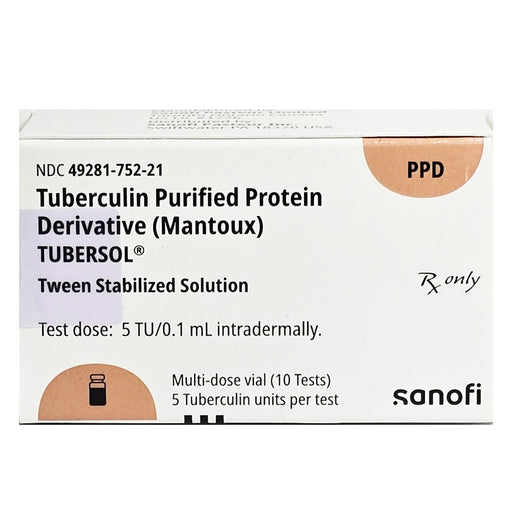 Sale 23%
Original price $ 325.00Current price $ 249.00
Sale 23%
Original price $ 325.00Current price $ 249.00Tubersol Tuberculin Purified Protein Derivative 1 mL (10 Tests) (Rx) *Refrigerated *
4 reviewsTubersol Tuberculin Purified Protein Derivative Tubersol by Sanofi is the gold standard for accurate, reliable, and safe screening of latent and ac...
View full details🔒 Medical License Required -
 Sale 18%
Original price $ 279.00Current price $ 229.00
Sale 18%
Original price $ 279.00Current price $ 229.00Aplisol Tuberculin Purified Protein Derivative Skin Test Diluted 1 mL (10 Tests) (Rx) * Refrigerated Item *
5 reviewsPar Sterile Products Aplisol Tuberculin Purified Protein Derivative, specifically Diluted 1 mL (10 Tests), is used to perform the Mantoux tuberculi...
View full details🔒 Medical License Required -
 Sale 33%
Original price $ 895.95Current price $ 599.00
Sale 33%
Original price $ 895.95Current price $ 599.00Aplisol Tuberculin TB Test PPD Purified Protein Derivative Mantoux Skin Test 5 TU /0.1 mL 5 mL (50 Tests) (Rx) Refrigerated
1 reviewAplisol Tuberculin TB Skin Test (Mantoux Test) Aplisol is a sterile intradermal diagnostic antigen used to detect Mycobacterium tuberculosis infec...
View full details🔒 Medical License Required -
 Sale 25%
Original price $ 850.95Current price $ 639.00
Sale 25%
Original price $ 850.95Current price $ 639.00Tubersol Tuberculin Purified Protein Derivative (Mantoux) 5 mL (50 Tests) *Refrigerated
1 reviewTubersol Tuberculin Purified Protein Derivative (Mantoux) 5 mL (50 Tests) by Sanofi – The Gold Standard for TB Diagnosis Item Requires Refrigeratio...
View full details🔒 Medical License Required -
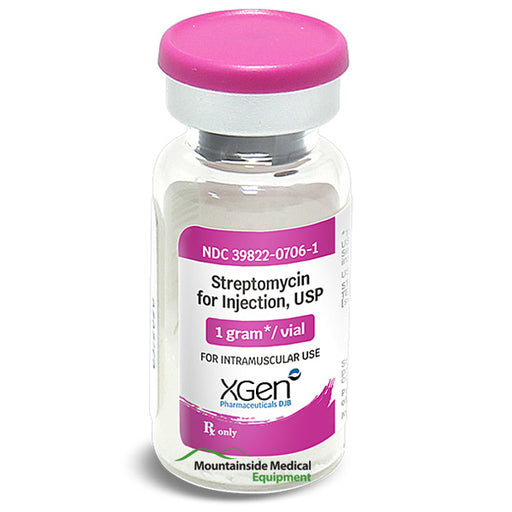 Sale 34%
Original price $ 1,159.95Current price $ 760.00
Sale 34%
Original price $ 1,159.95Current price $ 760.00Streptomycin Sulfate Antibiotic Medication in Powder Vial 1 mL x 10/Box (RX)
No reviewsStreptomycin sulfate injection is an antibiotic medication used to treat infections caused by bacteria, such as tuberculosis and certain types of p...
View full details🔒 Medical License Required


TB Skin Tests (Mantoux Test)
A tuberculin skin test (TST) – often called the Mantoux test – is used to detect Mycobacterium tuberculosis infection (latent or active) by intradermal injection of tuberculin PPD. In North America, the standard dose is 0.1 mL containing 5 tuberculin units (TU) of PPD. The PPD solution (Aplisol® or Tubersol®) is injected into the inner forearm with a 27-gauge needle; a small, pale wheal (6–10 mm) should form if done correctly. A properly done test causes no systemic drug effect – it simply establishes whether the person’s immune system recognises TB antigens.
-
Administration (Mantoux Method): The patient’s forearm skin is cleaned, and 0.1 mL (5 TU) of PPD is injected intradermally on the volar forearm. The needle bevel is up, and the injection is just under the skin; a visible wheal should appear. If the skin test solution is incorrectly given (wrong volume or too deep), the test is invalid and should be repeated at a new site at least 2″ away. After injection, the patient leaves and returns 48–72 hours later for reading.
-
Reading the Test: A trained health professional measures the diameter of induration (firm swelling) at the site – NOT the redness – in millimetres. (If no induration is palpable, record 0 mm.) The reading must be at 48–72 hours; if the patient does not return within 72 hours, the test should be redone (there is no harm in repeating a skin test). Delay beyond 72 hours invalidates the result, as dermal reactions wane.
-
Interpreting Results: Interpretation depends on the size of induration and the individual’s risk factors. Current CDC cutoffs are: ≥5 mm is positive in high-risk persons (e.g. HIV infection, close contact of infectious TB, organ transplant recipients, other severely immunocompromised); ≥10 mm is positive in moderate-risk groups (recent immigrants from high-TB areas, injection drug users, residents/workers of high-risk congregate settings like prisons or shelters, certain medical conditions, children <5 years, etc.); ≥15 mm is positive in persons with no known risk factors. Reactivity between these thresholds is considered negative for the corresponding risk group. For example, an induration of 8 mm would be negative for a low-risk adult but positive for someone on immunosuppressive therapy (since it exceeds 5 mm).
-
False Positives/Negatives: A TB skin test can yield false results. False positives may occur in persons who received the BCG vaccine or who have nontuberculous mycobacteria – there is no way to distinguish these from true TB infection by PPD alone. Therefore, CDC advises that BCG-vaccinated individuals with positive TST still be evaluated as if they had not been vaccinated. Periodic skin testing can also “boost” old BCG-induced reactivity, leading to persistent positives. By contrast, false negatives can occur in very recent TB infection (it takes 2–8 weeks post-exposure for conversion) or in immunosuppressed states (e.g. AIDS, certain cancers, steroid use). Young infants (<6 months) may also react poorly. Thus, a negative test does not completely rule out infection in high-risk cases; if suspicion is high (e.g. symptomatic patient), further evaluation (e.g. chest X-ray, sputum tests) is done regardless of TST result.
-
Two-Step Testing: In some settings (e.g. baseline screening of healthcare workers), a two-step approach is used to avoid misinterpreting a “boosted” response as a new conversion. If the first TST is negative, a second test is given 1–3 weeks later. If the second test is positive, this likely reflects a boosted reaction due to remote infection or BCG, and it is counted as a baseline positive (not a new infection). However, if both are negative, the person is considered TB-free (for now). One-step testing is usually done otherwise.
-
Who Should Be Tested: TB skin testing is indicated for people at increased risk of TB infection or disease (household contacts of TB cases, immigrants, healthcare workers, homeless, prisoners, etc.). It is even recommended for all people with HIV infection due to the high risk. By contrast, testing is not needed for people with a documented positive TB test or history of TB disease, since almost all previously infected persons stay TST-positive indefinitely. The only contraindication is a prior severe reaction to PPD (e.g. blistering or necrosis at the site); otherwise, anyone (infant, pregnant woman, person with HIV) can safely receive a TST. (Pregnancy is not a contraindication.)
-
Procedure and Handling: The Mantoux TST requires careful technique: use a new sterile syringe/needle for each test, inject intradermally with the bevel up, and confirm a wheal forms. PPD solutions must be refrigerated (2–8 °C) and not frozen. (Refer to product info for specifics.) Reading should be done by a trained provider with a ruler perpendicular to the arm’s long axis.
-
Advantages/Disadvantages: The TST’s advantages are that it is simple, low-cost, and well-studied. However, it has drawbacks: it requires two patient visits (administration and reading), skilled administration and interpretation, and a strict cold-chain for reagents. It can cause booster phenomena on repeated testing and is subject to false positives (BCG, nontuberculous mycobacteria) or false negatives in immunocompromise. Rarely, strong local reactions (pain, swelling, ulceration) or systemic allergic reactions (rash, anaphylaxis) can occur. Epinephrine should be immediately available in the unlikely event of anaphylaxis.
-
Alternatives: CDC currently recommends newer TB blood tests (IGRAs) as the preferred method in many cases. IGRAs (e.g. QuantiFERON, T-Spot) require one visit and are not affected by BCG vaccination. However, TST remains acceptable when blood tests aren’t available or feasible, or for children under 5 (where IGRAs are less reliable).
Key Points: The Mantoux TST uses a standardised PPD intradermal injection (0.1 mL = 5 TU). The site is read 48–72 hours later by measuring induration. The cutoff for a “positive” test varies (≥5, ≥10, or ≥15 mm) depending on the person’s TB risk. Anyone with a concerning reaction (high induration) requires further TB evaluation (chest X-ray, health assessment). BCG vaccination or non-TB mycobacteria exposure do not exclude a positive result – interpret all results by risk categories. If a person has documented TB infection or a previous positive test, repeating a skin test adds no value. For baseline two-step (e.g. health workers), use a second test after 1–3 weeks if the first is negative. Always follow up any positive TST with a medical evaluation for latent or active TB.
Disclaimer: This information is for educational purposes only. For personal medical advice (e.g. reading your own test, treatment of TB infection), consult a qualified healthcare provider.
Collection Overview
Product Categories
Comparison Chart
Use Cases & Applications
Selection Guide
Ordering & Bulk Options
Disclaimer
FAQ
- Collection scope: Tubersol PPD tuberculin skin test solutions and related TB screening supplies, available for wholesale purchase by licensed healthcare providers in the United States.
- Primary screening application: Products in this collection are intended to support the Mantoux tuberculin skin test (TST) protocol for tuberculosis infection screening, as administered by qualified clinical personnel.
- Regulatory context: Tuberculin PPD solutions used in the Mantoux test are FDA-regulated biological products. Purchasers should verify current FDA product status and review prescribing information before clinical use.
- Wholesale availability: All products are offered at wholesale pricing with volume-based ordering options. New customers receive 5% off their first purchase. Free US shipping on orders over $100.
- Intended buyers: This collection is available to hospitals, clinics, occupational health programmes, EMS and emergency response units, public health departments, and other licensed institutional purchasers.
- Licensing requirement: Purchase of tuberculin PPD products requires appropriate medical licensing. Mountainside Medical Equipment supplies to qualified healthcare professionals only.
- Procurement support: For bulk orders, lot number documentation, or institutional account enquiries, contact sales at +1 (888) 687-4334 or sales@mountainside-medical.com.
- Tubersol PPD Tuberculin Solution (5 TU/0.1 mL): The standard-dose tuberculin solution used in the Mantoux skin test protocol. Administered as a 0.1 mL intradermal injection into the volar surface of the forearm.
- Multi-dose vials: Tubersol tuberculin solution is available in multi-dose vial formats to support high-volume TB screening programmes in institutional or occupational health settings.
- Single-dose formats: Where available, single-dose presentation options support settings requiring individual patient documentation or reduced cross-contamination risk protocols.
- Related TB screening supplies: Intradermal syringes and needles suitable for PPD administration may be available within associated collections. Contact sales to confirm current inventory.
- Lot-documented stock: Products are supplied with lot numbers and expiry documentation to support institutional compliance, recall tracking, and medical records requirements.
This product is intended for use by qualified healthcare professionals or under the guidance of a licensed medical provider. It is not a substitute for professional medical advice, diagnosis, or treatment.
| Feature | Tubersol (PPD Skin Test) | Aplisol (PPD Skin Test) | QuantiFERON-TB Gold (IGRA Blood Test) |
|---|---|---|---|
| Test type | Tuberculin skin test (TST) — intradermal injection | Tuberculin skin test (TST) — intradermal injection | Interferon-gamma release assay (IGRA) — blood draw |
| Active component | Purified Protein Derivative (PPD) tuberculin, 5 TU per 0.1 mL | Purified Protein Derivative (PPD) tuberculin, 5 TU per 0.1 mL | Mycobacterium tuberculosis antigens (ESAT-6, CFP-10, TB7.7) |
| Standard dose | 0.1 mL intradermal | 0.1 mL intradermal | Venous blood draw (laboratory processed) |
| Result reading | 48–72 hours post-injection; induration measured in mm | 48–72 hours post-injection; induration measured in mm | Laboratory result: no patient return visit required |
| BCG vaccination impact | May produce false positive results in BCG-vaccinated individuals | May produce false positive results in BCG-vaccinated individuals | Not affected by prior BCG vaccination |
| Manufacturer | Sanofi Pasteur (Not specified in the provided data for current stock) | Par Pharmaceutical | QIAGEN |
| Wholesale availability (Mountainside Medical) | ✔ Available — contact sales for current stock and lot info | Not specified in the provided data | Not specified in the provided data |
This product is intended for use by qualified healthcare professionals or under the guidance of a licensed medical provider. It is not a substitute for professional medical advice, diagnosis, or treatment.
- Healthcare worker screening: Hospitals, clinics, and long-term care facilities routinely screen new employees and annual re-screeners for TB infection using the Mantoux tuberculin skin test as part of occupational health compliance programmes.
- Pre-employment and school entry screening: Many state and institutional policies require TB skin test documentation before employment in healthcare settings or enrolment in clinical education programmes.
- Public health surveillance: Public health departments and community health programmes use tuberculin skin testing in TB contact investigation, outbreak response, and population-level screening activities.
- Corrections and congregate settings: TB skin testing is commonly conducted in correctional facilities, shelters, and other congregate environments where TB transmission risk is elevated, in line with CDC recommendations for high-risk settings.
- Immigration medical examinations: Tuberculin skin testing may form part of required medical evaluations for certain immigration and refugee health screening processes, as directed by relevant federal health authority guidelines.
- Occupational health programmes: EMS, fire departments, and law enforcement agencies conducting annual health screenings for personnel exposed to patient populations may incorporate TB skin testing into their occupational health protocols.
This product is intended for use by qualified healthcare professionals or under the guidance of a licensed medical provider. It is not a substitute for professional medical advice, diagnosis, or treatment.
- Confirm licensing requirements first: Tuberculin PPD products are available to licensed healthcare providers only. Ensure your facility holds the appropriate medical purchasing credentials before placing an order.
- Assess volume needs: For high-throughput occupational health or institutional screening programmes, multi-dose vial formats typically offer better cost efficiency. Contact Mountainside Medical sales to discuss volume pricing and current lot availability.
- Review lot number documentation needs: If your facility requires lot number tracking for patient records, recall compliance, or accreditation purposes, request lot-documented stock when placing your order. Lot number for TB test documentation is available — enquire at time of purchase.
- Consider patient population characteristics: For patients with a history of BCG vaccination or known immunocompromising conditions, consult current CDC TB testing guidelines to determine whether a tuberculin skin test or an IGRA blood test is the more appropriate diagnostic approach before selecting a product.
- Verify storage and handling compatibility: Tubersol tuberculin solution requires refrigerated storage (2°C–8°C / 36°F–46°F) and must be protected from light and freezing. Confirm your facility's cold chain capacity before ordering large volumes.
- Match product format to clinical workflow: Single-dose presentations may be preferable in settings with lower testing volumes or where individual patient documentation is a priority; multi-dose vials suit high-volume, dedicated TB screening clinics.
- Wholesale pricing: All Tubersol skin test products in this collection are priced at wholesale rates. Volume-based pricing tiers are available for institutional and bulk purchasers — contact the Mountainside Medical sales team to discuss your facility's requirements.
- First-order discount: New customers receive 5% off their first purchase across all product categories, including TB skin test supplies.
- Free US shipping threshold: Orders totalling $100 or more qualify for free shipping within the United States.
- Licensing verification: A valid medical licence or equivalent credential is required to purchase tuberculin PPD products. Mountainside Medical supplies to qualified healthcare professionals and licensed institutional buyers only.
- Bulk and institutional orders: For large-volume procurement, standing orders, or institutional account setup, contact the sales team directly at +1 (888) 687-4334 or sales@mountainside-medical.com.
- Lot number documentation: Lot number for TB skin test and PPD lot documentation is available on request. Specify your documentation requirements at the time of ordering to ensure appropriate records are provided.
- Order support: To check or supply order PPD status, track an existing order, or confirm current product availability and lead times, contact the Mountainside Medical customer support team via phone or email.
This product is intended for use by qualified healthcare professionals or under the guidance of a licensed medical provider. It is not a substitute for professional medical advice, diagnosis, or treatment.
Products listed in this collection are available to licensed healthcare professionals and qualified institutional purchasers only. Purchase of tuberculin PPD products may require a valid medical licence or equivalent professional credential. It is the responsibility of the purchasing facility to verify that all products are appropriate for their intended clinical use, to review current prescribing information and FDA labelling before use, and to comply with all applicable federal, state, and institutional regulations governing the procurement, storage, administration, and disposal of tuberculin skin test products.
Mountainside Medical Equipment is a wholesale medical supplies and pharmaceutical distributor. Product descriptions on this page are provided for informational and procurement support purposes only. They do not constitute medical advice and should not be used as a basis for clinical decision-making independent of qualified professional judgement and current clinical guidelines.
All regulatory and clinical claims made on this page are based on publicly available FDA prescribing information and CDC guidance documents. Regulatory status, lot availability, and product specifications are subject to change. Consult current FDA labelling and CDC TB testing guidelines for the most up-to-date clinical information. Specific FDA clearance or approval numbers for products in this collection are not specified in the provided data — purchasers should verify current regulatory status directly with the manufacturer or via the FDA product database.
Manufacturer information: Product manufacturer details for current stock are not fully specified in the provided data. Contact Mountainside Medical sales for manufacturer and lot documentation on specific product units.
-
What is a Tubersol skin test?
Tubersol is a tuberculin purified protein derivative (PPD) solution used in the Mantoux tuberculin skin test (TST) — the standard intradermal skin test for detecting tuberculosis (TB) infection. A licensed healthcare professional administers a 0.1 mL intradermal injection of the solution into the forearm. The test result is read 48 to 72 hours later by measuring the diameter of any induration (raised firm area) at the injection site. Tubersol is not a vaccine and does not prevent TB — its sole purpose is diagnostic screening.
-
What is another name for the PPD test?
The PPD test is known by several names in clinical and procurement settings. Common alternatives include the tuberculin skin test (TST), the Mantoux test, the Mantoux PPD skin test, the TB skin test, the IDR test (intradermal reaction test), and informally as a 'TB test.' The term 'PPD vaccine' is a common lay misconception — PPD is not a vaccine and provides no immunity against tuberculosis. All of these terms refer to the same diagnostic procedure.
-
How many mL are used for a TB skin test?
The standard dose for the Mantoux tuberculin skin test is 0.1 mL of tuberculin PPD solution, equivalent to 5 tuberculin units (TU). This volume is administered as a single intradermal injection into the volar (inner) surface of the forearm using a short-bevel needle. The CDC and standard TB testing protocols consistently specify 0.1 mL as the correct dose. Administering more or less than this volume may affect result interpretation accuracy.
-
What does a negative TB skin test look like?
A normal negative TB skin test shows no induration (no firm raised area) or an induration of less than 5 mm at the injection site when measured 48 to 72 hours after administration. Minor redness or a small flat area of skin reaction without firmness does not constitute a positive result. The critical measurement is induration (raised, firm tissue) — not redness or bruising. A healthcare professional should always perform and interpret the result reading; self-interpretation is not recommended.
-
How does a positive TB test look?
A positive TB skin test is characterised by a raised, firm area of induration (not simply redness) at the injection site, measured in millimetres at 48 to 72 hours. According to CDC guidelines, what constitutes a positive result varies by patient risk category: 5 mm or greater is positive in immunocompromised individuals or recent TB contacts; 10 mm or greater is positive in persons from high-prevalence countries or healthcare workers; 15 mm or greater is considered positive in individuals with no known TB risk factors. A positive result indicates TB infection exposure — it does not diagnose active TB disease, which requires further clinical evaluation.
-
Can a TB skin test cause an allergic reaction?
Severe allergic reactions to the tuberculin skin test are uncommon but possible. An allergic reaction to TB skin test administration may present as local hypersensitivity (beyond normal induration), vesiculation, necrosis, or, in rare cases, systemic reactions including anaphylaxis. Headache after TB skin test administration and mild systemic symptoms have been reported but are not common. Healthcare providers administering the test should be prepared to manage hypersensitivity reactions and should review contraindications — including prior severe reaction to tuberculin — before administering the test. Consult current prescribing information for full contraindication guidance.
-
What causes a false positive TB skin test?
A false positive TB skin test result can occur for several reasons. The most common cause in the United States is prior BCG (Bacille Calmette-Guérin) vaccination, which can trigger a cross-reactive immune response to tuberculin PPD. Infection with non-tuberculous mycobacteria (NTM) can also produce a positive TST without true TB infection. Technical factors — such as incorrect injection depth, incorrect dose volume, or improper result reading technique — may also contribute to inaccurate readings. When BCG vaccination history is a concern, interferon-gamma release assay (IGRA) blood tests are not affected by prior BCG vaccination and may be a more appropriate diagnostic choice.
-
Is the TB skin test the same as the Tdap vaccine?
No. The TB skin test and the Tdap vaccine are entirely different products with different purposes. The Tdap vaccine protects against tetanus, diphtheria, and pertussis (whooping cough) and is administered as an intramuscular or subcutaneous injection. The TB skin test uses tuberculin PPD solution administered intradermally to screen for prior exposure to Mycobacterium tuberculosis. The two share no components, indications, or clinical functions.
-
Is QuantiFERON the same as PPD?
No. QuantiFERON-TB Gold is an interferon-gamma release assay (IGRA) — a blood test that detects TB infection by measuring the immune system's response to specific TB antigens in a laboratory sample. The PPD skin test is an intradermal injection-based diagnostic that measures delayed-type hypersensitivity via a skin reaction. Both tests detect TB infection, not active TB disease, but they use different methods, require different clinical workflows, and have different advantages depending on patient population. Unlike the PPD skin test, QuantiFERON is not affected by prior BCG vaccination.
-
How do I find the lot number for my TB skin test products?
Lot number for TB test documentation is typically printed on the product vial label and the outer packaging. For Tubersol and other PPD tuberculin products, the lot number should be recorded in the patient's medical record at the time of test administration as part of standard clinical documentation practice. If you are placing a bulk institutional order and require specific lot number documentation for compliance or recall-tracking purposes, contact the Mountainside Medical sales team at the time of ordering to request this information.
-
What is the difference between Tubersol and Aplisol?
Tubersol and Aplisol are both tuberculin purified protein derivative (PPD) solutions used in the Mantoux skin test protocol. Both are administered as a 0.1 mL intradermal injection and use the same 5 TU per 0.1 mL standard dose. The key differences are manufacturer (Tubersol: Sanofi Pasteur; Aplisol: Par Pharmaceutical), formulation excipients, and packaging. The diagnostic method and result interpretation criteria are the same for both products. Healthcare facilities should consult their institutional formulary and the respective prescribing information when choosing between the two.
-
Is an at-home TB test kit available?
At-home TB test kits for self-administration of the tuberculin skin test are not available and are not appropriate for use outside a clinical setting. The Mantoux tuberculin skin test requires a trained healthcare professional to administer the intradermal injection correctly and to read and interpret the result 48 to 72 hours later. Incorrect administration depth, technique, or result interpretation can produce inaccurate outcomes with significant clinical consequences. Individuals who require TB testing should contact a licensed healthcare provider, occupational health clinic, or public health department.
-
Who can purchase Tubersol skin test products from Mountainside Medical?
Tubersol skin test products are available for purchase by licensed healthcare professionals and qualified institutional buyers, including hospitals, clinics, EMS teams, occupational health programmes, public health departments, dental and veterinary practices, and other authorised medical facilities. A valid medical licence or equivalent professional credential is required. For bulk institutional procurement, volume pricing enquiries, or to set up an account, contact the Mountainside Medical sales team at +1 (888) 687-4334 or sales@mountainside-medical.com.
Collection Overview
- Collection scope: Tubersol PPD tuberculin skin test solutions and related TB screening supplies, available for wholesale purchase by licensed healthcare providers in the United States.
- Primary screening application: Products in this collection are intended to support the Mantoux tuberculin skin test (TST) protocol for tuberculosis infection screening, as administered by qualified clinical personnel.
- Regulatory context: Tuberculin PPD solutions used in the Mantoux test are FDA-regulated biological products. Purchasers should verify current FDA product status and review prescribing information before clinical use.
- Wholesale availability: All products are offered at wholesale pricing with volume-based ordering options. New customers receive 5% off their first purchase. Free US shipping on orders over $100.
- Intended buyers: This collection is available to hospitals, clinics, occupational health programmes, EMS and emergency response units, public health departments, and other licensed institutional purchasers.
- Licensing requirement: Purchase of tuberculin PPD products requires appropriate medical licensing. Mountainside Medical Equipment supplies to qualified healthcare professionals only.
- Procurement support: For bulk orders, lot number documentation, or institutional account enquiries, contact sales at +1 (888) 687-4334 or sales@mountainside-medical.com.
Product Categories
- Tubersol PPD Tuberculin Solution (5 TU/0.1 mL): The standard-dose tuberculin solution used in the Mantoux skin test protocol. Administered as a 0.1 mL intradermal injection into the volar surface of the forearm.
- Multi-dose vials: Tubersol tuberculin solution is available in multi-dose vial formats to support high-volume TB screening programmes in institutional or occupational health settings.
- Single-dose formats: Where available, single-dose presentation options support settings requiring individual patient documentation or reduced cross-contamination risk protocols.
- Related TB screening supplies: Intradermal syringes and needles suitable for PPD administration may be available within associated collections. Contact sales to confirm current inventory.
- Lot-documented stock: Products are supplied with lot numbers and expiry documentation to support institutional compliance, recall tracking, and medical records requirements.
This product is intended for use by qualified healthcare professionals or under the guidance of a licensed medical provider. It is not a substitute for professional medical advice, diagnosis, or treatment.
Comparison Chart
| Feature | Tubersol (PPD Skin Test) | Aplisol (PPD Skin Test) | QuantiFERON-TB Gold (IGRA Blood Test) |
|---|---|---|---|
| Test type | Tuberculin skin test (TST) — intradermal injection | Tuberculin skin test (TST) — intradermal injection | Interferon-gamma release assay (IGRA) — blood draw |
| Active component | Purified Protein Derivative (PPD) tuberculin, 5 TU per 0.1 mL | Purified Protein Derivative (PPD) tuberculin, 5 TU per 0.1 mL | Mycobacterium tuberculosis antigens (ESAT-6, CFP-10, TB7.7) |
| Standard dose | 0.1 mL intradermal | 0.1 mL intradermal | Venous blood draw (laboratory processed) |
| Result reading | 48–72 hours post-injection; induration measured in mm | 48–72 hours post-injection; induration measured in mm | Laboratory result: no patient return visit required |
| BCG vaccination impact | May produce false positive results in BCG-vaccinated individuals | May produce false positive results in BCG-vaccinated individuals | Not affected by prior BCG vaccination |
| Manufacturer | Sanofi Pasteur (Not specified in the provided data for current stock) | Par Pharmaceutical | QIAGEN |
| Wholesale availability (Mountainside Medical) | ✔ Available — contact sales for current stock and lot info | Not specified in the provided data | Not specified in the provided data |
This product is intended for use by qualified healthcare professionals or under the guidance of a licensed medical provider. It is not a substitute for professional medical advice, diagnosis, or treatment.
Use Cases & Applications
- Healthcare worker screening: Hospitals, clinics, and long-term care facilities routinely screen new employees and annual re-screeners for TB infection using the Mantoux tuberculin skin test as part of occupational health compliance programmes.
- Pre-employment and school entry screening: Many state and institutional policies require TB skin test documentation before employment in healthcare settings or enrolment in clinical education programmes.
- Public health surveillance: Public health departments and community health programmes use tuberculin skin testing in TB contact investigation, outbreak response, and population-level screening activities.
- Corrections and congregate settings: TB skin testing is commonly conducted in correctional facilities, shelters, and other congregate environments where TB transmission risk is elevated, in line with CDC recommendations for high-risk settings.
- Immigration medical examinations: Tuberculin skin testing may form part of required medical evaluations for certain immigration and refugee health screening processes, as directed by relevant federal health authority guidelines.
- Occupational health programmes: EMS, fire departments, and law enforcement agencies conducting annual health screenings for personnel exposed to patient populations may incorporate TB skin testing into their occupational health protocols.
This product is intended for use by qualified healthcare professionals or under the guidance of a licensed medical provider. It is not a substitute for professional medical advice, diagnosis, or treatment.
Selection Guide
- Confirm licensing requirements first: Tuberculin PPD products are available to licensed healthcare providers only. Ensure your facility holds the appropriate medical purchasing credentials before placing an order.
- Assess volume needs: For high-throughput occupational health or institutional screening programmes, multi-dose vial formats typically offer better cost efficiency. Contact Mountainside Medical sales to discuss volume pricing and current lot availability.
- Review lot number documentation needs: If your facility requires lot number tracking for patient records, recall compliance, or accreditation purposes, request lot-documented stock when placing your order. Lot number for TB test documentation is available — enquire at time of purchase.
- Consider patient population characteristics: For patients with a history of BCG vaccination or known immunocompromising conditions, consult current CDC TB testing guidelines to determine whether a tuberculin skin test or an IGRA blood test is the more appropriate diagnostic approach before selecting a product.
- Verify storage and handling compatibility: Tubersol tuberculin solution requires refrigerated storage (2°C–8°C / 36°F–46°F) and must be protected from light and freezing. Confirm your facility's cold chain capacity before ordering large volumes.
- Match product format to clinical workflow: Single-dose presentations may be preferable in settings with lower testing volumes or where individual patient documentation is a priority; multi-dose vials suit high-volume, dedicated TB screening clinics.
Ordering & Bulk Options
- Wholesale pricing: All Tubersol skin test products in this collection are priced at wholesale rates. Volume-based pricing tiers are available for institutional and bulk purchasers — contact the Mountainside Medical sales team to discuss your facility's requirements.
- First-order discount: New customers receive 5% off their first purchase across all product categories, including TB skin test supplies.
- Free US shipping threshold: Orders totalling $100 or more qualify for free shipping within the United States.
- Licensing verification: A valid medical licence or equivalent credential is required to purchase tuberculin PPD products. Mountainside Medical supplies to qualified healthcare professionals and licensed institutional buyers only.
- Bulk and institutional orders: For large-volume procurement, standing orders, or institutional account setup, contact the sales team directly at +1 (888) 687-4334 or sales@mountainside-medical.com.
- Lot number documentation: Lot number for TB skin test and PPD lot documentation is available on request. Specify your documentation requirements at the time of ordering to ensure appropriate records are provided.
- Order support: To check or supply order PPD status, track an existing order, or confirm current product availability and lead times, contact the Mountainside Medical customer support team via phone or email.
Disclaimer
This product is intended for use by qualified healthcare professionals or under the guidance of a licensed medical provider. It is not a substitute for professional medical advice, diagnosis, or treatment.
Products listed in this collection are available to licensed healthcare professionals and qualified institutional purchasers only. Purchase of tuberculin PPD products may require a valid medical licence or equivalent professional credential. It is the responsibility of the purchasing facility to verify that all products are appropriate for their intended clinical use, to review current prescribing information and FDA labelling before use, and to comply with all applicable federal, state, and institutional regulations governing the procurement, storage, administration, and disposal of tuberculin skin test products.
Mountainside Medical Equipment is a wholesale medical supplies and pharmaceutical distributor. Product descriptions on this page are provided for informational and procurement support purposes only. They do not constitute medical advice and should not be used as a basis for clinical decision-making independent of qualified professional judgement and current clinical guidelines.
All regulatory and clinical claims made on this page are based on publicly available FDA prescribing information and CDC guidance documents. Regulatory status, lot availability, and product specifications are subject to change. Consult current FDA labelling and CDC TB testing guidelines for the most up-to-date clinical information. Specific FDA clearance or approval numbers for products in this collection are not specified in the provided data — purchasers should verify current regulatory status directly with the manufacturer or via the FDA product database.
Manufacturer information: Product manufacturer details for current stock are not fully specified in the provided data. Contact Mountainside Medical sales for manufacturer and lot documentation on specific product units.
FAQ
-
What is a Tubersol skin test?
Tubersol is a tuberculin purified protein derivative (PPD) solution used in the Mantoux tuberculin skin test (TST) — the standard intradermal skin test for detecting tuberculosis (TB) infection. A licensed healthcare professional administers a 0.1 mL intradermal injection of the solution into the forearm. The test result is read 48 to 72 hours later by measuring the diameter of any induration (raised firm area) at the injection site. Tubersol is not a vaccine and does not prevent TB — its sole purpose is diagnostic screening.
-
What is another name for the PPD test?
The PPD test is known by several names in clinical and procurement settings. Common alternatives include the tuberculin skin test (TST), the Mantoux test, the Mantoux PPD skin test, the TB skin test, the IDR test (intradermal reaction test), and informally as a 'TB test.' The term 'PPD vaccine' is a common lay misconception — PPD is not a vaccine and provides no immunity against tuberculosis. All of these terms refer to the same diagnostic procedure.
-
How many mL are used for a TB skin test?
The standard dose for the Mantoux tuberculin skin test is 0.1 mL of tuberculin PPD solution, equivalent to 5 tuberculin units (TU). This volume is administered as a single intradermal injection into the volar (inner) surface of the forearm using a short-bevel needle. The CDC and standard TB testing protocols consistently specify 0.1 mL as the correct dose. Administering more or less than this volume may affect result interpretation accuracy.
-
What does a negative TB skin test look like?
A normal negative TB skin test shows no induration (no firm raised area) or an induration of less than 5 mm at the injection site when measured 48 to 72 hours after administration. Minor redness or a small flat area of skin reaction without firmness does not constitute a positive result. The critical measurement is induration (raised, firm tissue) — not redness or bruising. A healthcare professional should always perform and interpret the result reading; self-interpretation is not recommended.
-
How does a positive TB test look?
A positive TB skin test is characterised by a raised, firm area of induration (not simply redness) at the injection site, measured in millimetres at 48 to 72 hours. According to CDC guidelines, what constitutes a positive result varies by patient risk category: 5 mm or greater is positive in immunocompromised individuals or recent TB contacts; 10 mm or greater is positive in persons from high-prevalence countries or healthcare workers; 15 mm or greater is considered positive in individuals with no known TB risk factors. A positive result indicates TB infection exposure — it does not diagnose active TB disease, which requires further clinical evaluation.
-
Can a TB skin test cause an allergic reaction?
Severe allergic reactions to the tuberculin skin test are uncommon but possible. An allergic reaction to TB skin test administration may present as local hypersensitivity (beyond normal induration), vesiculation, necrosis, or, in rare cases, systemic reactions including anaphylaxis. Headache after TB skin test administration and mild systemic symptoms have been reported but are not common. Healthcare providers administering the test should be prepared to manage hypersensitivity reactions and should review contraindications — including prior severe reaction to tuberculin — before administering the test. Consult current prescribing information for full contraindication guidance.
-
What causes a false positive TB skin test?
A false positive TB skin test result can occur for several reasons. The most common cause in the United States is prior BCG (Bacille Calmette-Guérin) vaccination, which can trigger a cross-reactive immune response to tuberculin PPD. Infection with non-tuberculous mycobacteria (NTM) can also produce a positive TST without true TB infection. Technical factors — such as incorrect injection depth, incorrect dose volume, or improper result reading technique — may also contribute to inaccurate readings. When BCG vaccination history is a concern, interferon-gamma release assay (IGRA) blood tests are not affected by prior BCG vaccination and may be a more appropriate diagnostic choice.
-
Is the TB skin test the same as the Tdap vaccine?
No. The TB skin test and the Tdap vaccine are entirely different products with different purposes. The Tdap vaccine protects against tetanus, diphtheria, and pertussis (whooping cough) and is administered as an intramuscular or subcutaneous injection. The TB skin test uses tuberculin PPD solution administered intradermally to screen for prior exposure to Mycobacterium tuberculosis. The two share no components, indications, or clinical functions.
-
Is QuantiFERON the same as PPD?
No. QuantiFERON-TB Gold is an interferon-gamma release assay (IGRA) — a blood test that detects TB infection by measuring the immune system's response to specific TB antigens in a laboratory sample. The PPD skin test is an intradermal injection-based diagnostic that measures delayed-type hypersensitivity via a skin reaction. Both tests detect TB infection, not active TB disease, but they use different methods, require different clinical workflows, and have different advantages depending on patient population. Unlike the PPD skin test, QuantiFERON is not affected by prior BCG vaccination.
-
How do I find the lot number for my TB skin test products?
Lot number for TB test documentation is typically printed on the product vial label and the outer packaging. For Tubersol and other PPD tuberculin products, the lot number should be recorded in the patient's medical record at the time of test administration as part of standard clinical documentation practice. If you are placing a bulk institutional order and require specific lot number documentation for compliance or recall-tracking purposes, contact the Mountainside Medical sales team at the time of ordering to request this information.
-
What is the difference between Tubersol and Aplisol?
Tubersol and Aplisol are both tuberculin purified protein derivative (PPD) solutions used in the Mantoux skin test protocol. Both are administered as a 0.1 mL intradermal injection and use the same 5 TU per 0.1 mL standard dose. The key differences are manufacturer (Tubersol: Sanofi Pasteur; Aplisol: Par Pharmaceutical), formulation excipients, and packaging. The diagnostic method and result interpretation criteria are the same for both products. Healthcare facilities should consult their institutional formulary and the respective prescribing information when choosing between the two.
-
Is an at-home TB test kit available?
At-home TB test kits for self-administration of the tuberculin skin test are not available and are not appropriate for use outside a clinical setting. The Mantoux tuberculin skin test requires a trained healthcare professional to administer the intradermal injection correctly and to read and interpret the result 48 to 72 hours later. Incorrect administration depth, technique, or result interpretation can produce inaccurate outcomes with significant clinical consequences. Individuals who require TB testing should contact a licensed healthcare provider, occupational health clinic, or public health department.
-
Who can purchase Tubersol skin test products from Mountainside Medical?
Tubersol skin test products are available for purchase by licensed healthcare professionals and qualified institutional buyers, including hospitals, clinics, EMS teams, occupational health programmes, public health departments, dental and veterinary practices, and other authorised medical facilities. A valid medical licence or equivalent professional credential is required. For bulk institutional procurement, volume pricing enquiries, or to set up an account, contact the Mountainside Medical sales team at +1 (888) 687-4334 or sales@mountainside-medical.com.