Skip to content

Added to your cart:

Cart subtotal

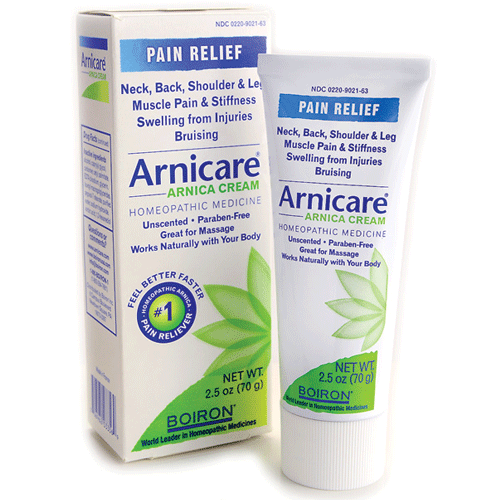
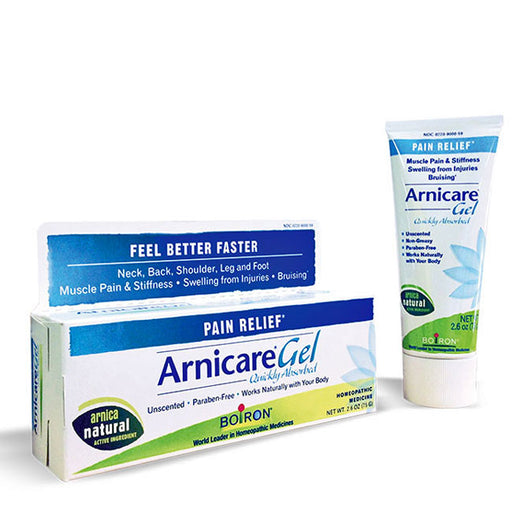
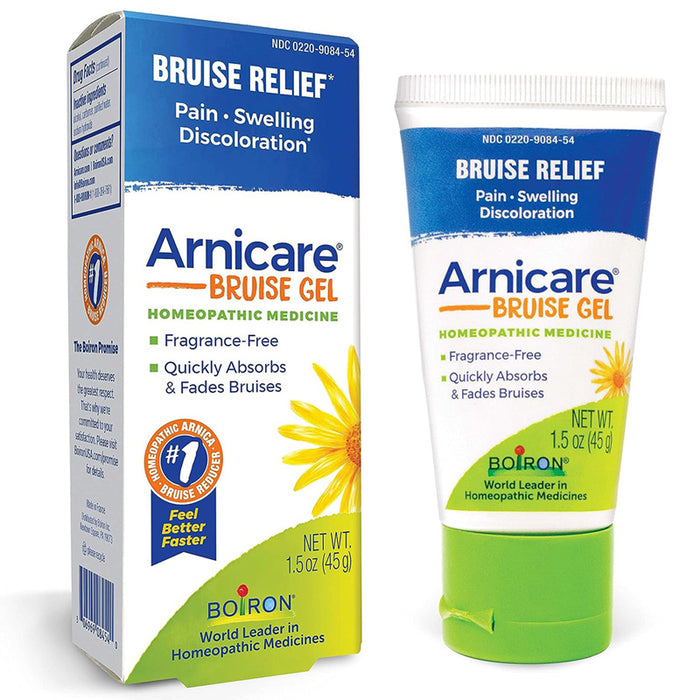
Arnicare Arnica Bruise Gel for Pain, Bruising & Swelling Relief 1.5 oz

SKU 00220-9084-54
Sale 36%
Original price $ 14.95
Current price $ 9.55
In stock
Fast Delivery
Fast Delivery
24/7 Support
24/7 Support
Easy Returns
Easy Returns
Hospital Grade
Hospital Grade
Free Shipping on orders above $100
Returns 30-day return / replacement
Payment Secure transaction
Packaging Ships in product packaging
Service-Disabled Veteran-Owned Small Business
Located in Adirondack Mountains in NY
Family Owned Business 2002
Sale 36%
Original price $ 14.95
Current price $ 9.55
Free Shipping on orders above $100
Returns 30-day return / replacement
Payment Secure transaction
Packaging Ships in product packaging
Arnicare Arnica Bruise Gel for Pain, Bruising & Swelling Relief 1.5 oz
$ 14.95 $ 9.55
Description

Arnicare Arnica Bruise Gel

Arnicare Arnica Bruise Gel (by Boiron USA) is an over-the-counter homeopathic topical gel formulated for minor bruises. It is promoted as a non‐greasy, fragrance‐free gel that “helps diminish discoloration while reducing pain and swelling” from bruises. The product is designed for adults and children aged 1 year and older. According to the label, Arnicare Gel is made from Arnica montana (mountain arnica) in a homeopathic dilution, and it is absorbed quickly into the skin. Boiron’s materials describe the gel’s feel as “cooling and refreshing on contact” and note that it works best when applied soon after a minor injury.

Composition

Active ingredient: Arnica montana 1X HPUS (homeopathic dilution), 7%. The “HPUS” designation means this formulation is listed in the Homeopathic Pharmacopoeia of the U.S.. A 1X dilution in homeopathy means a 1:10 reduction of the herbal extract; in practice, the gel contains about 7% of this 1X arnica tincture by weight. Inactive ingredients in the gel include alcohol, carbomer, and purified water. Boiron’s description emphasizes that the gel is free of fragrances, parabens, and dyes.

Indications and Labeled Claims

The manufacturer presents Arnicare Gel as a treatment for bruise-related symptoms. On the label and website, Boiron states that the gel “relieves pain, swelling, and discoloration from bruises” and is intended to reduce tenderness and unsightly bruising. It’s intended for external use only on minor bruises (closed skin), and is not indicated for internal or serious injuries. Suggested directions are to “apply a thin layer of Arnicare Bruise to the affected area and massage gently as soon as possible after a minor bruise. Repeat 3 times a day or as needed”. Users are cautioned not to cover the area with tight bandages or use heat (heating pads) after applying, and to keep the gel away from the eyes and mucous membranes.

How It’s Supposed to Work (Homeopathic Basis)

Arnicare Gel’s active component is Arnica montana, an herb in the Asteraceae (daisy) family. Traditional herbalists assert that arnica contains anti-inflammatory substances (e.g. flavonoids, sesquiterpene lactones like helenalin) that might help reduce swelling and bruising. However, in homeopathy the actual concentration of arnica is extremely low. (A 1X dilution means one part arnica extract in ten parts solution, and then only 7% of the gel is that dilution.) In practice, most of the botanical material is highly diluted or effectively absent. Because of this, no clear biochemical mechanism has been proven for such a preparation. Boiron explicitly notes that Arnicare’s bruise-relief claims are “based on traditional homeopathic practice, not accepted medical evidence,” and that the product has not been evaluated by the FDA. In short, while manufacturer literature calls Arnicare “scientifically formulated with Arnica,” users should understand it is a homeopathic remedy whose effects are not established by conventional clinical trials.

Evidence of Effectiveness

Scientific studies of topical arnica for bruises and swelling have yielded mixed results. A 2014 systematic review of all controlled trials of topical Arnica montana (11 trials, including both healthy volunteers and patients) found that many studies were small or of poor quality, and overall “even the better studies showed at most a modest effect”. The reviewers concluded, “The efficacy of Arnica in doses of 10% and below is not supported by the available evidence. More research is needed to determine if higher doses would be effective and remain safe”. (Arnicare Gel’s concentration is 7%, below this 10% threshold.)

In isolated experiments some higher-strength arnica preparations have shown benefits. For example, one randomized controlled trial induced standardized bruises with a laser and then applied various topical creams. The study found that 20% arnica ointment produced significantly faster improvement of bruising than plain petrolatum (placebo). However, the same trial found that pure vaseline or a 1% vitamin-K cream performed similarly to the 20% arnica, and 20% arnica was not superior to all other comparators. Importantly, that trial used a 20% arnica concentration (much higher than Arnicare’s 7%) and applied it under occlusion, so its findings don’t necessarily generalize to Arnicare Gel.

In summary, the clinical data on arnica gels are limited and inconclusive. Some physicians note that any observed reduction in bruise size or pain from arnica is generally small and inconsistent. A modern overview (Healthline, 2022) states that current research “suggests that arnica can help reduce bruising” but emphasizes that more high-quality trials are needed. Major medical groups (e.g. the American Academy of Ophthalmology) expressly do not endorse arnica for post-surgical bruising, citing lack of proven benefit. Given the lack of definitive proof, Arnicare’s bruise-relief claims should be viewed skeptically. As Boiron’s labeling warns, these claims reflect homeopathic tradition, not established pharmacology.

Safety and Side Effects

When used topically as directed, Arnica formulations are generally well tolerated, but some local skin reactions can occur. The most commonly reported side effects are mild irritation – itching, rash, redness or dry skin at the application site. These symptoms may indicate sensitivity or allergic contact dermatitis. In rare cases, serious allergic reactions (hives, swelling) to Arnica can occur, especially in individuals with known allergies to related plants (e.g. ragweed, daisies, marigolds). Persons with known plant allergies should test the gel on a small area first or avoid it altogether.

Crucially, Arnicare Bruise Gel is for external use only. Arnica is a plant that contains toxic constituents, and the FDA warns that undiluted arnica is poisonous if swallowed. (In fact, one report describes vomiting and even temporary vision loss after ingesting a homeopathic arnica preparation.) Boiron’s packaging explicitly states: “if swallowed, get medical help or contact a Poison Control Center right away”. Users must not ingest the gel or apply it near the mouth, eye area, or other mucous membranes. Similarly, do not apply Arnicare Gel to broken skin, open wounds, or mucosal surfaces. Pure arnica can cause chemical burns or irritation on injured skin, and the product label advises against use on cuts or scrapes. After applying the gel, avoid immediately covering the area tightly or using heating pads, per label instructions.

Additional safety notes:

  • Duration of use: Stop using and consult a doctor if symptoms (pain, swelling, discoloration) persist beyond 3 days or worsen. Seeking medical evaluation is important to rule out serious injury.
  • Age: The gel is labeled safe for children 1 year and older, but not for infants under 1. Special caution is prudent with pediatric use.
  • Medical conditions/medications: Because Arnicare is topical, systemic drug interactions are unlikely. However, oral arnica can affect blood clotting; one source cautions patients on anticoagulants (like warfarin) about any arnica use. This is mainly relevant if other arnica products are ingested; topical Arnicare should have minimal systemic absorption, but patients on blood thinners should still be cautious about bruising in general. Always inform your doctor of all medications and supplements you use before starting new remedies.
  • Pregnancy and breastfeeding: There are no controlled data on arnica use during pregnancy or lactation. As a precaution, most experts advise against internal arnica use while pregnant or nursing. Topical use in small amounts is less clearly contraindicated, but it’s best to consult a healthcare provider if pregnant or breastfeeding.

Regulatory and Clinical Considerations

Boiron’s Arnicare is sold in the United States as a homeopathic medicine. The FDA does not review or approve homeopathic remedies for safety or effectiveness. In fact, the FDA explicitly notes that “no agency has evaluated or approved any homeopathic remedy,” including arnica, for any medical condition. Product labeling is thus allowed to use traditional claims, but must include disclaimers like Boiron’s footnote: “Claims based on traditional homeopathic practice, not accepted medical evidence. Not FDA evaluated.”. Consumers should interpret Arnicare’s marketing as presenting anecdotal or historical uses rather than proven drug action.

Despite the homeopathic status, Arnicare Gel is often sold in pharmacies and qualifies for HSA/FSA accounts. Because it contains only dilute arnica, it is generally safe when used as directed, and adverse events are uncommon. Still, the overall health information to consider is: Arnicare Arnica Bruise Gel is a low-concentration arnica gel intended for minor bruise care, with modest claims that lack strong scientific proof. It may provide subjective relief for some users (possibly due to placebo effect or mild cooling sensation). At worst it does no harm beyond potential skin irritation. Users should apply it carefully to intact skin, observe recommended usage guidelines, and stop if irritation occurs or if the bruise does not improve within a few days. For serious injuries or persistent symptoms, medical advice is recommended.

Description

Arnicare Arnica Bruise Gel

Arnicare Arnica Bruise Gel (by Boiron USA) is an over-the-counter homeopathic topical gel formulated for minor bruises. It is promoted as a non‐greasy, fragrance‐free gel that “helps diminish discoloration while reducing pain and swelling” from bruises. The product is designed for adults and children aged 1 year and older. According to the label, Arnicare Gel is made from Arnica montana (mountain arnica) in a homeopathic dilution, and it is absorbed quickly into the skin. Boiron’s materials describe the gel’s feel as “cooling and refreshing on contact” and note that it works best when applied soon after a minor injury.

Composition

Active ingredient: Arnica montana 1X HPUS (homeopathic dilution), 7%. The “HPUS” designation means this formulation is listed in the Homeopathic Pharmacopoeia of the U.S.. A 1X dilution in homeopathy means a 1:10 reduction of the herbal extract; in practice, the gel contains about 7% of this 1X arnica tincture by weight. Inactive ingredients in the gel include alcohol, carbomer, and purified water. Boiron’s description emphasizes that the gel is free of fragrances, parabens, and dyes.

Indications and Labeled Claims

The manufacturer presents Arnicare Gel as a treatment for bruise-related symptoms. On the label and website, Boiron states that the gel “relieves pain, swelling, and discoloration from bruises” and is intended to reduce tenderness and unsightly bruising. It’s intended for external use only on minor bruises (closed skin), and is not indicated for internal or serious injuries. Suggested directions are to “apply a thin layer of Arnicare Bruise to the affected area and massage gently as soon as possible after a minor bruise. Repeat 3 times a day or as needed”. Users are cautioned not to cover the area with tight bandages or use heat (heating pads) after applying, and to keep the gel away from the eyes and mucous membranes.

How It’s Supposed to Work (Homeopathic Basis)

Arnicare Gel’s active component is Arnica montana, an herb in the Asteraceae (daisy) family. Traditional herbalists assert that arnica contains anti-inflammatory substances (e.g. flavonoids, sesquiterpene lactones like helenalin) that might help reduce swelling and bruising. However, in homeopathy the actual concentration of arnica is extremely low. (A 1X dilution means one part arnica extract in ten parts solution, and then only 7% of the gel is that dilution.) In practice, most of the botanical material is highly diluted or effectively absent. Because of this, no clear biochemical mechanism has been proven for such a preparation. Boiron explicitly notes that Arnicare’s bruise-relief claims are “based on traditional homeopathic practice, not accepted medical evidence,” and that the product has not been evaluated by the FDA. In short, while manufacturer literature calls Arnicare “scientifically formulated with Arnica,” users should understand it is a homeopathic remedy whose effects are not established by conventional clinical trials.

Evidence of Effectiveness

Scientific studies of topical arnica for bruises and swelling have yielded mixed results. A 2014 systematic review of all controlled trials of topical Arnica montana (11 trials, including both healthy volunteers and patients) found that many studies were small or of poor quality, and overall “even the better studies showed at most a modest effect”. The reviewers concluded, “The efficacy of Arnica in doses of 10% and below is not supported by the available evidence. More research is needed to determine if higher doses would be effective and remain safe”. (Arnicare Gel’s concentration is 7%, below this 10% threshold.)

In isolated experiments some higher-strength arnica preparations have shown benefits. For example, one randomized controlled trial induced standardized bruises with a laser and then applied various topical creams. The study found that 20% arnica ointment produced significantly faster improvement of bruising than plain petrolatum (placebo). However, the same trial found that pure vaseline or a 1% vitamin-K cream performed similarly to the 20% arnica, and 20% arnica was not superior to all other comparators. Importantly, that trial used a 20% arnica concentration (much higher than Arnicare’s 7%) and applied it under occlusion, so its findings don’t necessarily generalize to Arnicare Gel.

In summary, the clinical data on arnica gels are limited and inconclusive. Some physicians note that any observed reduction in bruise size or pain from arnica is generally small and inconsistent. A modern overview (Healthline, 2022) states that current research “suggests that arnica can help reduce bruising” but emphasizes that more high-quality trials are needed. Major medical groups (e.g. the American Academy of Ophthalmology) expressly do not endorse arnica for post-surgical bruising, citing lack of proven benefit. Given the lack of definitive proof, Arnicare’s bruise-relief claims should be viewed skeptically. As Boiron’s labeling warns, these claims reflect homeopathic tradition, not established pharmacology.

Safety and Side Effects

When used topically as directed, Arnica formulations are generally well tolerated, but some local skin reactions can occur. The most commonly reported side effects are mild irritation – itching, rash, redness or dry skin at the application site. These symptoms may indicate sensitivity or allergic contact dermatitis. In rare cases, serious allergic reactions (hives, swelling) to Arnica can occur, especially in individuals with known allergies to related plants (e.g. ragweed, daisies, marigolds). Persons with known plant allergies should test the gel on a small area first or avoid it altogether.

Crucially, Arnicare Bruise Gel is for external use only. Arnica is a plant that contains toxic constituents, and the FDA warns that undiluted arnica is poisonous if swallowed. (In fact, one report describes vomiting and even temporary vision loss after ingesting a homeopathic arnica preparation.) Boiron’s packaging explicitly states: “if swallowed, get medical help or contact a Poison Control Center right away”. Users must not ingest the gel or apply it near the mouth, eye area, or other mucous membranes. Similarly, do not apply Arnicare Gel to broken skin, open wounds, or mucosal surfaces. Pure arnica can cause chemical burns or irritation on injured skin, and the product label advises against use on cuts or scrapes. After applying the gel, avoid immediately covering the area tightly or using heating pads, per label instructions.

Additional safety notes:

  • Duration of use: Stop using and consult a doctor if symptoms (pain, swelling, discoloration) persist beyond 3 days or worsen. Seeking medical evaluation is important to rule out serious injury.
  • Age: The gel is labeled safe for children 1 year and older, but not for infants under 1. Special caution is prudent with pediatric use.
  • Medical conditions/medications: Because Arnicare is topical, systemic drug interactions are unlikely. However, oral arnica can affect blood clotting; one source cautions patients on anticoagulants (like warfarin) about any arnica use. This is mainly relevant if other arnica products are ingested; topical Arnicare should have minimal systemic absorption, but patients on blood thinners should still be cautious about bruising in general. Always inform your doctor of all medications and supplements you use before starting new remedies.
  • Pregnancy and breastfeeding: There are no controlled data on arnica use during pregnancy or lactation. As a precaution, most experts advise against internal arnica use while pregnant or nursing. Topical use in small amounts is less clearly contraindicated, but it’s best to consult a healthcare provider if pregnant or breastfeeding.

Regulatory and Clinical Considerations

Boiron’s Arnicare is sold in the United States as a homeopathic medicine. The FDA does not review or approve homeopathic remedies for safety or effectiveness. In fact, the FDA explicitly notes that “no agency has evaluated or approved any homeopathic remedy,” including arnica, for any medical condition. Product labeling is thus allowed to use traditional claims, but must include disclaimers like Boiron’s footnote: “Claims based on traditional homeopathic practice, not accepted medical evidence. Not FDA evaluated.”. Consumers should interpret Arnicare’s marketing as presenting anecdotal or historical uses rather than proven drug action.

Despite the homeopathic status, Arnicare Gel is often sold in pharmacies and qualifies for HSA/FSA accounts. Because it contains only dilute arnica, it is generally safe when used as directed, and adverse events are uncommon. Still, the overall health information to consider is: Arnicare Arnica Bruise Gel is a low-concentration arnica gel intended for minor bruise care, with modest claims that lack strong scientific proof. It may provide subjective relief for some users (possibly due to placebo effect or mild cooling sensation). At worst it does no harm beyond potential skin irritation. Users should apply it carefully to intact skin, observe recommended usage guidelines, and stop if irritation occurs or if the bruise does not improve within a few days. For serious injuries or persistent symptoms, medical advice is recommended.
Get Notified When Back in Stock