Chlorhexidine API
This product is a USP-grade 20% (w/v) aqueous solution of chlorhexidine gluconate, used as an active pharmaceutical ingredient (API) for compounding antiseptics and disinfectants. In other words, it is a bulk, preservative-free liquid containing about 20 g of chlorhexidine gluconate per 100 mL (equivalent to roughly 4% chlorhexidine base). The United States Pharmacopeia defines this solution as containing “not less than 19.0% and not more than 21.0% (w/v)” of chlorhexidine gluconate. Chlorhexidine gluconate is the digluconate salt of chlorhexidine, a bisbiguanide antimicrobial; this salt form makes the compound highly water-soluble. (The free base of chlorhexidine is virtually insoluble in water, whereas the gluconate salt dissolves readily.
Chlorhexidine Gluconate Solution 20%, USP For Compounding is a concentrated solution containing 20% of the active ingredient chlorhexidine gluconate. It is manufactured for use in pharmaceutical compounding and is used as an antiseptic and disinfectant. Chlorhexidine gluconate is a widely used germicidal agent with strong antimicrobial properties, making it effective against a variety of bacteria, fungi, and viruses. It is commonly used in medical and dental settings, as well as for skin and wound care. This solution is typically diluted and compounded with other ingredients to create various products, such as mouthwashes, disinfectants, and antiseptic solutions.
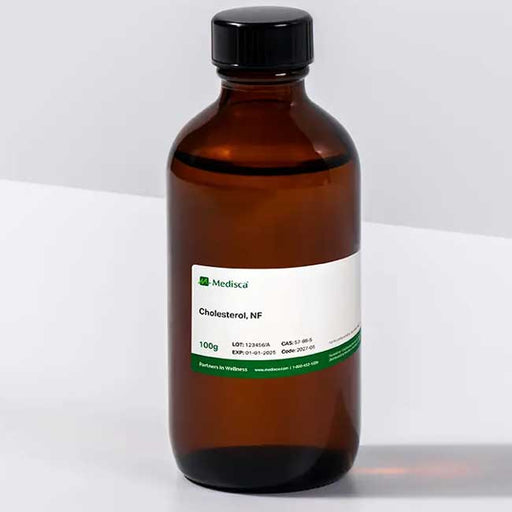
The solution itself is a clear, pale-yellow (almost colorless) liquid with very little odor. It is not hygroscopic and is usually packaged in tightly sealed bottles (often amber to avoid light exposure) since it is light-sensitive. It must be stored at controlled room temperature (about 15–25 °C) and kept sealed to prevent evaporation or contamination.
Antimicrobial Action
Chlorhexidine is a cationic bisbiguanide antiseptic. In aqueous solution, the chlorhexidine molecules are fully protonated (doubly positive charged at physiological pH). These positively-charged molecules bind strongly to negatively-charged surfaces of microbial cells (cell walls and membranes) and disrupt their integrity. The result is leakage of cell contents and rapid killing of the organism. It has a broad spectrum of activity – effective against both Gram-positive and Gram-negative bacteria – and also exhibits activity against many enveloped viruses, fungi, and yeasts. (It is not sporicidal, however, so resistant spores are not reliably destroyed.) Because chlorhexidine binds to skin and mucosa, it has a persistent antimicrobial effect (“substantivity”) after application.
Uses and Applications
This 20% solution is a concentrate meant for dilution into final products; it is not used directly on patients at full strength. Typical end-use concentrations are much lower. For example:
-
Oral care: Diluted to ~0.12–0.2% for use as a prescription mouthwash (to reduce dental plaque and gingivitis). Chlorhexidine gluconate is the active ingredient in many medicated rinses. For instance, one supplier notes it is a “powerful antiseptic… commonly used for disinfecting oral tissues”.
-
Surgical/skin antisepsis: Diluted to 2–4% (often with 70% isopropyl or ethyl alcohol) for surgical scrubs, hand scrubs or surgical field preparation. The classic example is Hibiclens® (4% chlorhexidine gluconate scrub) used to clean skin before surgery. (It is also used on catheter or injection sites as a skin disinfectant.).
-
Wound care: Diluted to ~0.05–0.2% as an antimicrobial irrigant or soak for wounds, cuts, or insect bites.
-
Neonatal cord care: A 7.1% chlorhexidine solution/gel (prepared from the 20% stock) is recommended by WHO and UNICEF as an essential medicine for newborn umbilical cord antisepsis in high-infection settings. (Indeed, chlorhexidine topical solution is on the WHO Essential Medicines List — e.g. “Topical Solution 5% (digluconate) for dilution”.)
In practice, compounding pharmacies or manufacturers will mix this 20% feed solution with water or alcohol and other excipients to make ready-to-use products. Full-strength 20% should never be applied to tissues or wounds – it is far too concentrated and can cause severe irritation. Manufacturer instructions expressly warn: “NOT to be administered full strength. See mixing guide” .
Safety and Handling
Chlorhexidine gluconate solution should be treated as a potentially hazardous chemical in the lab (even though it is an antiseptic). Key safety points:
-
Protect eyes and skin: The concentrate is a strong irritant to the eyes and can cause serious eye damage if splashed (GHS hazard H318). Standard safety datasheets (SDS) for chlorhexidine 20% recommend immediate and prolonged flushing of eyes or skin if contact occurs. Always wear gloves and eye protection when handling.
-
Ingestion/Inhalation: This solution is intended for topical use only. If accidentally swallowed, it can cause gastrointestinal irritation; do not induce vomiting and seek medical advice. Aerosol generation should be avoided (wear mask or use in well-ventilated area) but inhalation is not a major route.
-
Non-flammable: It is not combustible or flammable, so it poses no fire hazard.
-
Environmental hazard: Chlorhexidine is highly toxic to aquatic life (GHS category H410). The SDS warns “avoid release to the environment”. Do not pour large quantities down drains or into waterways. Contain and dispose of any spills properly (e.g. absorb and incinerate small spills).
-
Chemical incompatibilities: It should not be mixed with strong oxidizers or anionic compounds. For example, mixing chlorhexidine with bleach (sodium hypochlorite) inactivates both and produces a toxic precipitate (p-chloroaniline). Similarly, it will precipitate if mixed with anionic soaps or detergents. Always add to water and mix well when diluting.
Storage and Stability
Pack and store this solution in securely sealed containers (plastic or glass) away from light. It is light-sensitive, so use amber bottles or store in a dark cabinet. Keep the container upright to avoid leaks. The USP-grade solution is generally stable for long periods (~1–2 years) under proper conditions (sealed at 15–25 °C). It is not hygroscopic, so it will not absorb moisture from air.
Regulatory/Quality Notes
-
USP monograph: Being labeled “USP” means it meets the United States Pharmacopeia monograph for Chlorhexidine Gluconate Solution, 20%, which specifies identity, content, pH, sterility (if required), and other quality attributes. This ensures pharmaceutical-grade purity (no undeclared additives or preservatives).
-
Professional use only: This is an API, not a finished consumer product. It should only be used by healthcare professionals or in pharmaceutical compounding. Over-the-counter “chlorhexidine” products (like mouthwashes or antiseptic soaps) exist at much lower concentrations; those are not the same as this 20% stock.
-
Legend status: In many jurisdictions, chlorhexidine solutions above a certain concentration are prescription-only or regulated as hospital supplies. Always follow applicable laws and guidelines when procuring or using this material.
Summary: USP Chlorhexidine Gluconate 20% solution is a concentrated, pharmacopeial disinfectant raw material. It is used (after dilution) as a broad-spectrum topical antiseptic in healthcare and dental settings. Handle it with care (eye protection, gloves) and always dilute before use. Its potent antimicrobial and residual action make it valuable in infection control, but its high concentration also demands careful handling and proper dilution to safe working concentrations.
SDS Sheets for Chlorhexidine Gluconate Solution 20%
Allergen BSE GMO Declaration
 Skip to content