IV Catheter Needles
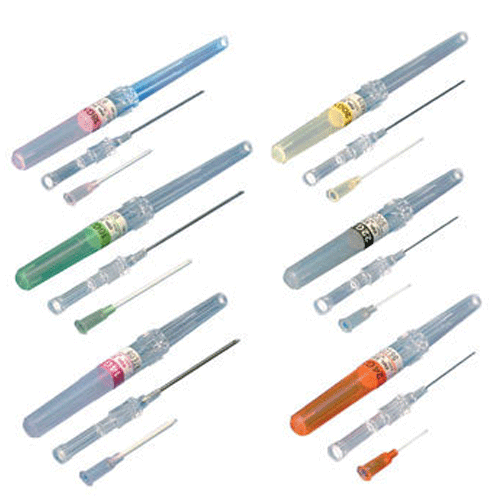
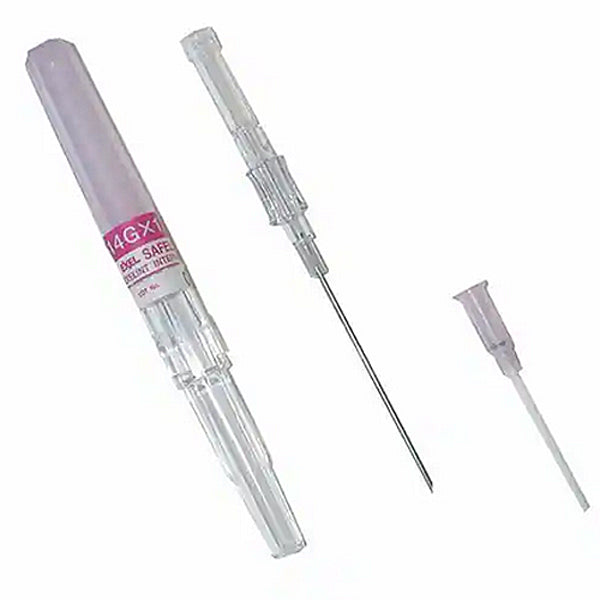
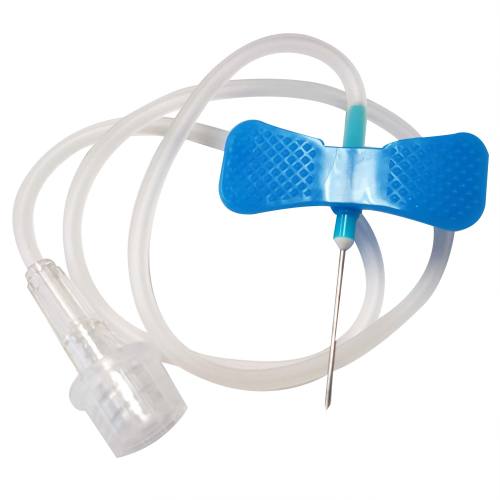
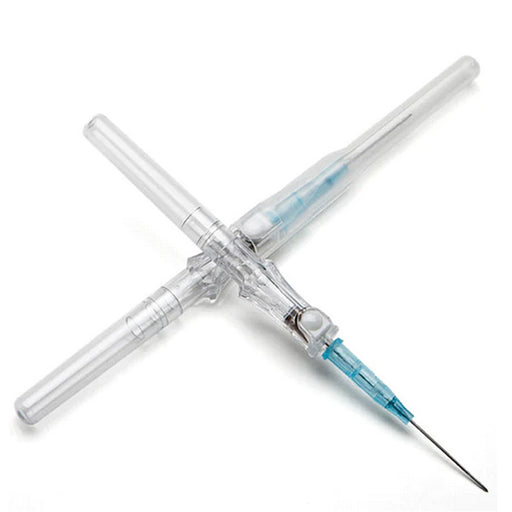
Peripheral IV catheters (a.k.a. angiocaths or cannulas) are sterile needle/catheter assemblies used to infuse fluids or medications into veins. The device consists of a hollow steel needle inside a soft plastic catheter. During insertion a blood flashback is seen in the needle’s chamber; then the needle is withdrawn, leaving only the flexible catheter in the vein. All devices include a beveled needle and flashback chamber to confirm venipuncture, plus a Luer-lock hub for tubing. Catheters may be “shielded” (sheathed after use) or “winged” (butterfly needles with plastic wings and attached tubing) for secure handling. Modern IV catheters often have safety features (needle‐sheathing mechanisms) to prevent needlestick injury.
Uses
-
Infusion of fluids (hydration, electrolytes)
-
Delivery of medications (antibiotics, pain meds, chemotherapy, etc.)
- Blood transfusions
- Drawing blood samples
- Emergency access for rapid medication/fluid delivery
IV catheter needles are used to insert an IV catheter, or a small, flexible tube, into a vein to allow for the administration of fluids, medications, or blood products directly into the bloodstream. IV catheter needles can be used for a variety of purposes, such as administering antibiotics, nutrients, or chemotherapy drugs, or for drawing blood samples for laboratory testing. The IV catheter needle allows for quick and efficient access to the veins without the need for repeated needle sticks, and is often used in hospital, clinic, and home healthcare settings.
Sizes
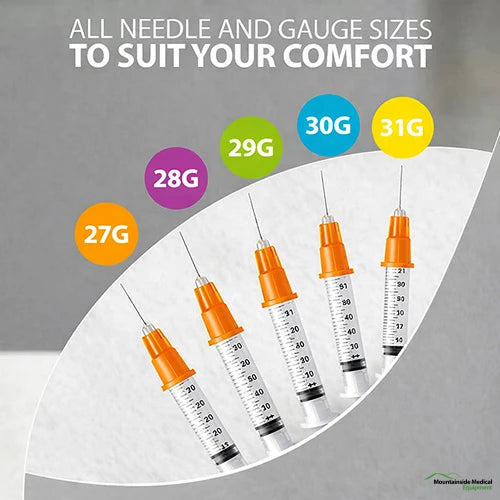
- Available in various sizes (gauges), usually color-coded (e.g., 14G, 16G, 18G, 20G, 22G, 24G).
-
Lower gauge = larger bore (e.g., 14G is larger than 22G)
How IV Catheter Sizes Are Measured
-
Gauge (G): The size is measured in gauge numbers; a lower gauge number means a larger diameter (e.g., 14G is larger than 22G).
- Catheters are often color-coded for fast identification.
Factors in Choosing the Correct IV Catheter Size
1. Purpose of IV Therapy
-
Rapid fluid or blood administration: Larger gauge (14G, 16G, 18G)
-
Routine medications and fluids: Medium gauge (20G, 22G)
-
Slow infusions, pediatric/elderly, small veins: Smaller gauge (22G, 24G)
2. Patient Factors
-
Adults: Generally tolerate larger gauges; vein size and fragility must be considered.
-
Children/Infants/Elderly: Smaller veins require smaller gauges (22G–24G).
-
Vein condition: Fragile or sclerosed veins may only accept smaller catheters.
3. Type of Fluids/Medications
-
Viscous fluids (e.g., blood products, contrast agents): Prefer larger gauge (18G or 16G).
-
Irritating or hyperosmolar solutions: Larger veins and higher gauge to minimize vein irritation.
-
Medications needing slower delivery: Smaller gauge often sufficient.
4. Duration of IV Therapy
- Short-term, emergency, or large-volume infusions = larger catheters.
- Long-term, routine access = smaller, less traumatic catheters.
General Guidelines/Tips
-
Always use the smallest gauge that safely and effectively delivers therapy needed—reduces risk of vein irritation and injury.
-
Consider patient’s veins—palpate and visualize veins before choosing size.
- If multiple IVs are needed for major trauma or surgery, use large-bore catheters in multiple sites.
- For routine care on stable patients, a 20G or 22G is often preferred.
- Pediatric or elderly patients almost always require smaller gauges (22G or 24G).
Features:
- Color-coded cap for easy size identification
- One action opening and no rolling
- Translucent hub and flashback chamber
- Connects easily to syringe
- Prevents catheter tip kink
- Sharp introducer needle
- Syringe compatible
- Eliminates blood leakage
- Radio-opaque
- Sterile
- Non-pyogenic
- Latex free
- 50 per box
IV Catheter Needles are a dynamic and efficient means of supplying medications to a patient. These needles can easily be connected to a syringe by removing the filter cap, and offer a variety of other features to help make your patient’s treatment easier. Plus, they are offered in a variety of sizes for convenience.
| IV CATHETERS |
| # |
Size |
Gauge |
Outside Diameter (m/m) |
Outside Diameter (m/m) |
Hub Color |
| 26726 |
14 x 1 1/4" |
14G |
1.65 ± 0.1 |
78 ± 0.5 |
Purple |
| 26729 |
14 x 2" |
14G |
1.65 ± 0.1 |
78 ± 0.5 |
Purple |
| 26730 |
16 x 1 1/4" |
16G |
1.24 ± 0.1 |
77 ± 0.5 |
Light Green |
| 26731 |
16 x 2" |
16G |
1.24 ± 0.1 |
77 ± 0.5 |
Light Green |
| 26735 |
18 1 1/4" |
18G |
0.89 ± 0.1 |
58 ± 0.5 |
Pink |
| 26736 |
18 1 1/2" |
18G |
0.89 ± 0.1 |
64 ± 0.5 |
Pink |
| 26738 |
18 x 2" |
18G |
0.89 ± 0.1 |
76 ± 0.5 |
Pink |
| 26741 |
20 x 1" |
20G |
0.71 ± 0.1 |
50 ± 0.5 |
Yellow |
| 26742 |
20 x 1 1/4" |
20G |
0.71 ± 0.1 |
57 ± 0.5 |
Yellow |
| 26743 |
20 x 2" |
20G |
0.71 ± 0.1 |
57 ± 0.5 |
Yellow |
| 26746 |
22 x 1" |
22G |
0.51 ± 0.1 |
50 ± 0.5 |
Black |
| 26751 |
24 x 3/4" |
24G |
0.41 ± 0.1 |
50 ± 0.5 |
Red |
IV catheter needles are essential medical tools that allow healthcare professionals to gain secure access to a patient’s vein. The device begins as a needle inside a plastic catheter; the needle is removed after insertion, leaving only the flexible catheter inside the vein for the delivery or withdrawal of fluids and medications.
 Skip to content