Skip to content
New users? Get 5% off on your first purchase.
Free US shipping over $100
New users? Get 5% off on your first purchase.
Free US shipping over $100

Added to your cart:

Cart subtotal

Filters

Price
$
-
$
$0 $86
Volume
Collection

IV Flush Syringes

IV Flush Syringes

Best-Selling, Nurse-Trusted IV Flush Syringes for Safe, Sterile Catheter Maintenance & Infection-Free IV Care

IV flush syringes are industry-standard, FDA-approved, prefilled or sterile empty devices for safe, efficient flushing and maintenance of IV saline locks, central lines, ports, and catheters in hospitals, clinics, ERs, long-term care, and at-home infusion therapy. Designed to prevent clotting, occlusion, medication residue, and infection, these single-use, latex-free syringes ensure effective IV therapy, medication delivery, and fluid management in adults, pediatrics, and neonates.

Purpose

  • Catheter Patency & Clot Prevention: Keeps IV lines open, preventing blockages and ensuring accurate medication/fluid administration.
  • Reduce Risk of Infection: Single-use, sterile syringes minimize the chance of contamination or hospital-acquired bloodstream infection.
  • Enhance Workflow & Compliance: Prefilled syringes streamline nursing workflow, eliminate compounding errors, and support effortless, barcoded bedside scanning for medication safety.

Uses

  • Flushing Peripheral IV Catheters: Saline flush before/after IV medications.
  • Central Line & PICC Line Maintenance: Standard of care for port patency, infection prevention, and medication delivery.
  • Heparin Flushes: For certain central lines requiring anticoagulant maintenance (as ordered).
  • Arterial Line & Hemodialysis Catheter Flushing
  • Blood Draw & Specimen Collection Preparation: Ensures clear lines before/after samples.
  • Hospital, Clinic, EMS, Home Infusion Protocols

Types & Popular Brands

Types:

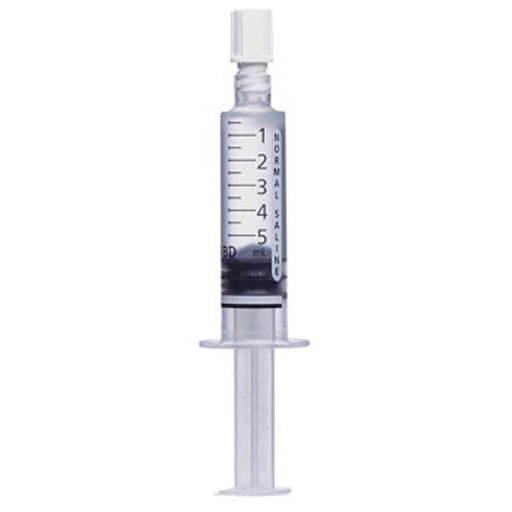
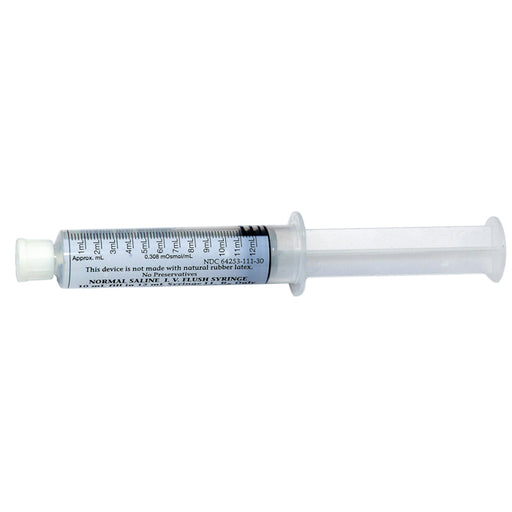
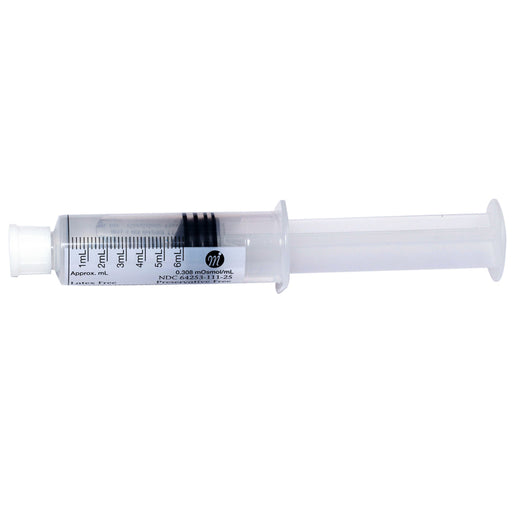
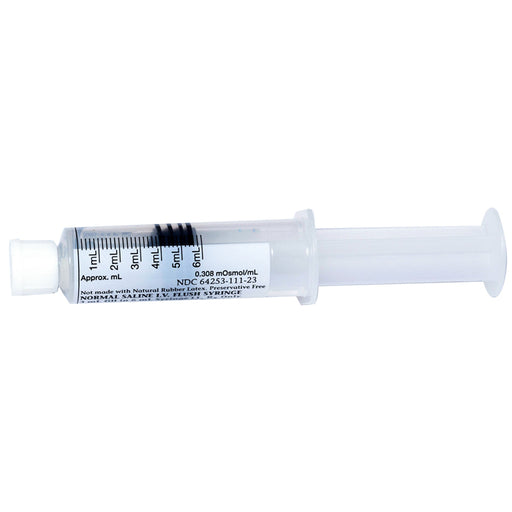
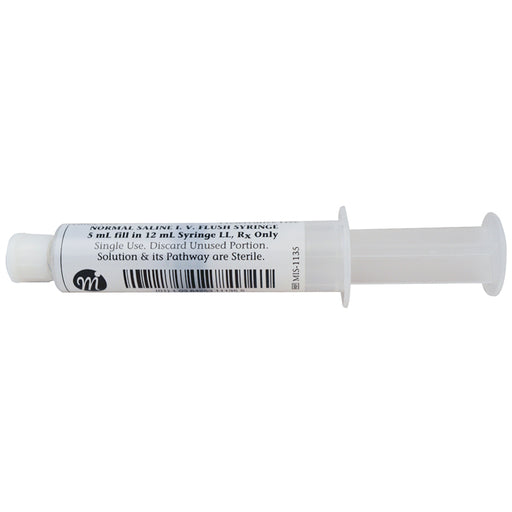
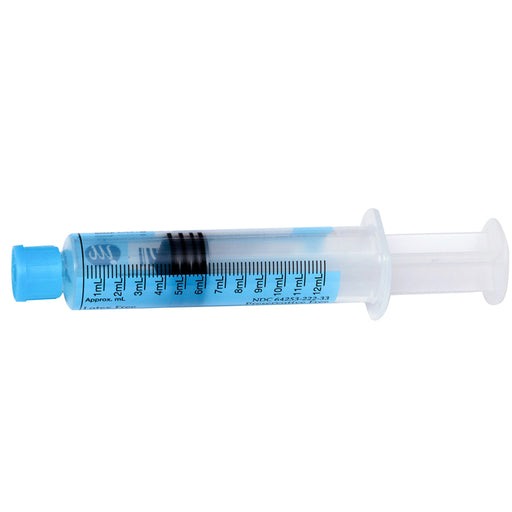
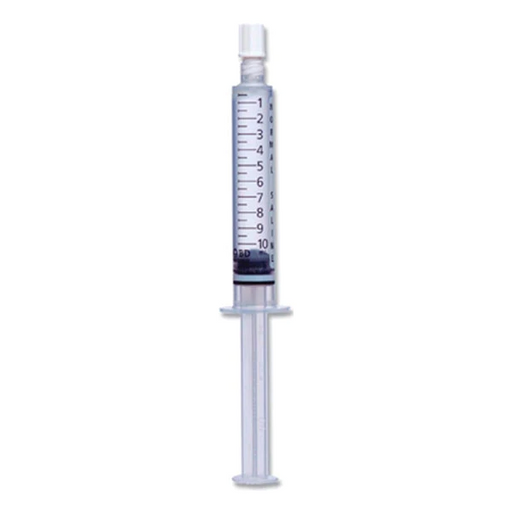
  • Prefilled Saline Flush Syringes: Ready-to-use, sterile, 0.9% sodium chloride solution (most common for routine IV catheter flushing).
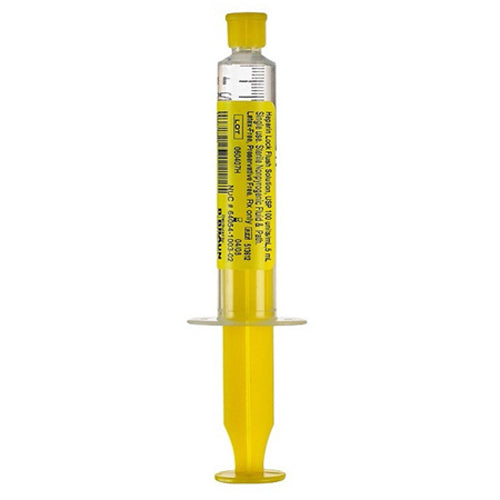
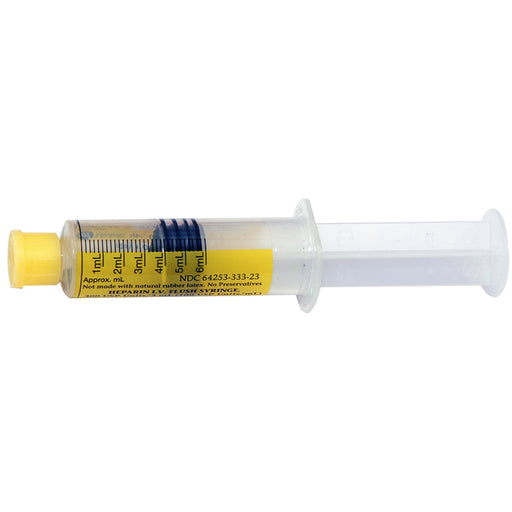
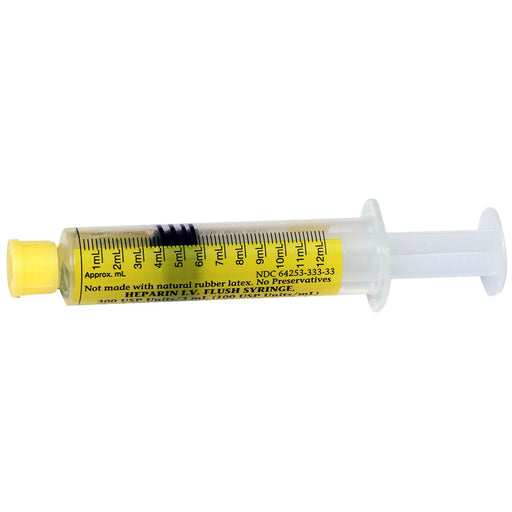
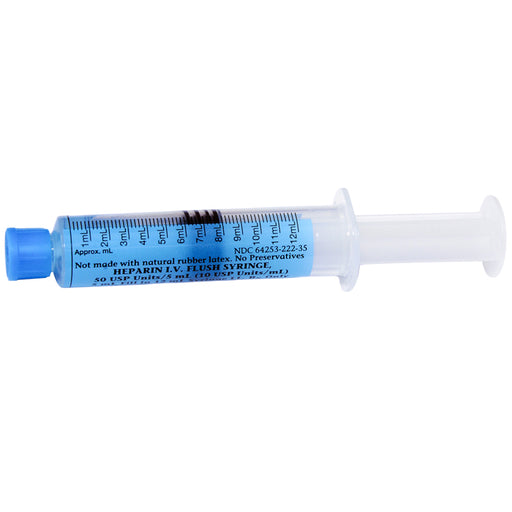
  • Prefilled Heparin Flush Syringes: Available in 10 units/mL, 100 units/mL for anticoagulation of central lines/ports (Rx only; per hospital protocol).
  • Empty Sterile Flush Syringes: For custom solution prep, non-prefilled use.
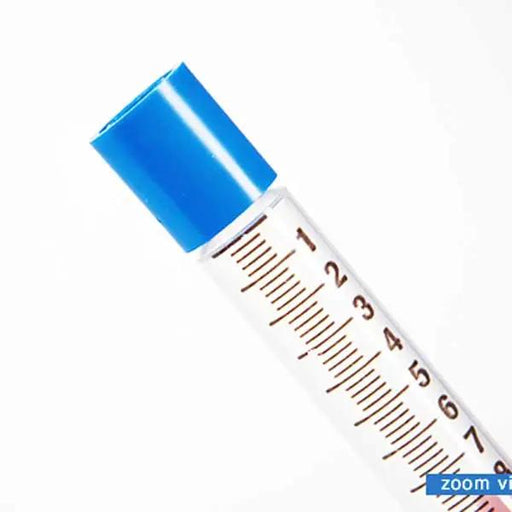
  • Graduated Barrels: Precise volume irrigations for neonate, pediatric, and adult dosing.
  • Safety-Engineered Syringes: Luer lock, slip tip, or needleless systems for OSHA/CDC compliance and sharps safety.

Popular Brands:

  • BD™ (Becton Dickinson, BD PosiFlush™)
  • Monoject™ (Cardinal Health)
  • Medline™
  • EXEL®
  • Nipro®
  • Covidien™ (Kendall)
  • McKesson™
  • Smiths Medical
  • Sol-Millennium™
  • Hospira (IV products)
  • ICU Medical
  • Pharmacy generics, large hospital pack/bulk brands

Strengths

  • Saline Prefilled Syringes: 1 mL, 3 mL, 5 mL, 10 mL, 20 mL, and 30 mL (10 mL most common hospital standard)
    • 0.9% Sodium Chloride USP (9 mg/ml)
  • Heparin Prefilled Syringes: 10, 100, 500, 1000 units/mL (concentration per protocol)
  • Empty Sterile Syringes: Graduations for custom flush or irrigation
  • Barrel Size, Tip Type: Luer lock, slip tip, needleless access for universal compatibility
  • Pack Sizes: Single-use and hospital bulk options (box of 30, 100, 400+)

Precautions

  • Single Use Only: Strictly dispose after each use; never re-use flush syringes—prevents line infections and cross-contamination.
  • Do Not Use for Medication: Dedicated for flushing lines; avoid medication mixing unless explicitly labeled/compounded for that purpose.
  • No Air Bubbles: Ensure no bubbles before flushing to prevent air embolism.
  • Aseptic Technique: Use sterile, proper technique; don gloves; clean port/cap 15–30 seconds with alcohol or chlorhexidine before accessing.
  • AVOID Pre-mixing With Meds: Use freshly opened, medication-free flush only to clear lines.
  • Monitor Electrolytes: Frequent large-volume saline/heparin use may affect sodium or coagulation status—follow hospital/practice protocol.
  • Heparin Cautions: Only use if ordered for central/port lines; contraindicated in heparin-induced thrombocytopenia or bleeding disorders.
  • Proper Disposal: Always use a sharps container to discard used syringes safely.
  • Check Expiry/Integrity: Inspect for sterility, leaks, or particles—do not use if expired or compromised.
  • Pediatric/Neonatal Dosing: Use only age- and size-appropriate volumes and strengths.

Trust FDA-approved IV Flush Syringes for safe, reliable catheter flushing and IV maintenance—used by hospitals, clinics, pharmacies, EMS, and home health professionals worldwide. Shop BD™, Monoject™, Medline™, Nipro™, McKesson™, and leading brands for prefilled saline, heparin, and empty flush syringes for every application. Order online for rapid delivery, infection prevention, and uncompromising patient safety in every care setting!

IV Flush Syringes

Best-Selling, Nurse-Trusted IV Flush Syringes for Safe, Sterile Catheter Maintenance & Infection-Free IV Care

IV flush syringes are industry-standard, FDA-approved, prefilled or sterile empty devices for safe, efficient flushing and maintenance of IV saline locks, central lines, ports, and catheters in hospitals, clinics, ERs, long-term care, and at-home infusion therapy. Designed to prevent clotting, occlusion, medication residue, and infection, these single-use, latex-free syringes ensure effective IV therapy, medication delivery, and fluid management in adults, pediatrics, and neonates.

Purpose

  • Catheter Patency & Clot Prevention: Keeps IV lines open, preventing blockages and ensuring accurate medication/fluid administration.
  • Reduce Risk of Infection: Single-use, sterile syringes minimize the chance of contamination or hospital-acquired bloodstream infection.
  • Enhance Workflow & Compliance: Prefilled syringes streamline nursing workflow, eliminate compounding errors, and support effortless, barcoded bedside scanning for medication safety.

Uses

  • Flushing Peripheral IV Catheters: Saline flush before/after IV medications.
  • Central Line & PICC Line Maintenance: Standard of care for port patency, infection prevention, and medication delivery.
  • Heparin Flushes: For certain central lines requiring anticoagulant maintenance (as ordered).
  • Arterial Line & Hemodialysis Catheter Flushing
  • Blood Draw & Specimen Collection Preparation: Ensures clear lines before/after samples.
  • Hospital, Clinic, EMS, Home Infusion Protocols

Types & Popular Brands

Types:

  • Prefilled Saline Flush Syringes: Ready-to-use, sterile, 0.9% sodium chloride solution (most common for routine IV catheter flushing).
  • Prefilled Heparin Flush Syringes: Available in 10 units/mL, 100 units/mL for anticoagulation of central lines/ports (Rx only; per hospital protocol).
  • Empty Sterile Flush Syringes: For custom solution prep, non-prefilled use.
  • Graduated Barrels: Precise volume irrigations for neonate, pediatric, and adult dosing.
  • Safety-Engineered Syringes: Luer lock, slip tip, or needleless systems for OSHA/CDC compliance and sharps safety.

Popular Brands:

  • BD™ (Becton Dickinson, BD PosiFlush™)
  • Monoject™ (Cardinal Health)
  • Medline™
  • EXEL®
  • Nipro®
  • Covidien™ (Kendall)
  • McKesson™
  • Smiths Medical
  • Sol-Millennium™
  • Hospira (IV products)
  • ICU Medical
  • Pharmacy generics, large hospital pack/bulk brands

Strengths

  • Saline Prefilled Syringes: 1 mL, 3 mL, 5 mL, 10 mL, 20 mL, and 30 mL (10 mL most common hospital standard)
    • 0.9% Sodium Chloride USP (9 mg/ml)
  • Heparin Prefilled Syringes: 10, 100, 500, 1000 units/mL (concentration per protocol)
  • Empty Sterile Syringes: Graduations for custom flush or irrigation
  • Barrel Size, Tip Type: Luer lock, slip tip, needleless access for universal compatibility
  • Pack Sizes: Single-use and hospital bulk options (box of 30, 100, 400+)

Precautions

  • Single Use Only: Strictly dispose after each use; never re-use flush syringes—prevents line infections and cross-contamination.
  • Do Not Use for Medication: Dedicated for flushing lines; avoid medication mixing unless explicitly labeled/compounded for that purpose.
  • No Air Bubbles: Ensure no bubbles before flushing to prevent air embolism.
  • Aseptic Technique: Use sterile, proper technique; don gloves; clean port/cap 15–30 seconds with alcohol or chlorhexidine before accessing.
  • AVOID Pre-mixing With Meds: Use freshly opened, medication-free flush only to clear lines.
  • Monitor Electrolytes: Frequent large-volume saline/heparin use may affect sodium or coagulation status—follow hospital/practice protocol.
  • Heparin Cautions: Only use if ordered for central/port lines; contraindicated in heparin-induced thrombocytopenia or bleeding disorders.
  • Proper Disposal: Always use a sharps container to discard used syringes safely.
  • Check Expiry/Integrity: Inspect for sterility, leaks, or particles—do not use if expired or compromised.
  • Pediatric/Neonatal Dosing: Use only age- and size-appropriate volumes and strengths.

Trust FDA-approved IV Flush Syringes for safe, reliable catheter flushing and IV maintenance—used by hospitals, clinics, pharmacies, EMS, and home health professionals worldwide. Shop BD™, Monoject™, Medline™, Nipro™, McKesson™, and leading brands for prefilled saline, heparin, and empty flush syringes for every application. Order online for rapid delivery, infection prevention, and uncompromising patient safety in every care setting!

FAQs About IV Flush Syringes

  • What is an IV Flush Syringe Used For?

    An IV flush syringe is used to clear and maintain IV catheters, flush out medication residue, ensure IV patency, and reduce the risk of infection or clot formation during and after infusions. Most commonly, they are filled with 0.9% normal saline solution and designed for use with IV lines, PICC lines, and central venous catheters.

  • What Size Syringe to Flush IV? What is the Minimum Size Syringe to Flush an IV?

    10 mL syringes are recommended as the standard and minimum size to flush most peripheral and central IV catheters, including PICC lines. The larger barrel ensures lower pressure, reducing the risk of catheter damage or rupture.

  • Which Syringe is Used for Flushing?

    Pre-filled 10 mL sterile saline flush syringes are standard in most hospitals and clinics. Some protocols use 3 mL or 5 mL for small IVs or pediatric use, but 10 mL is safest and best practice.

  • What is a Normal Saline Flush 0.9 Injection Syringe?

    A normal saline flush syringe is a sterile, prefilled syringe containing 0.9% sodium chloride solution (normal saline) used to flush IV lines, keep them open, and prevent occlusion or infection.

  • Why is Heparin No Longer Used to Flush IV Locks?

    Due to concerns about heparin-induced side effects, allergies, and the effectiveness of saline flushes alone, most institutions use saline-only flushes. Heparin flushes are now reserved for specific indications (e.g., certain central lines or long-term ports).

  • How to Properly Flush an IV?

    Clean the IV port with an alcohol swab for 15-30 seconds. Attach the saline flush syringe to the port. Gently inject 2-5 mL saline (depending on protocol and catheter type) using a push-pause (pulse) technique. Observe for resistance, swelling, or burning. Remove the syringe and ensure the IV site stays clean and intact.

  • What is a PosiFlush Syringe Used For?

    BD PosiFlush™ syringes are prefilled, sterile saline syringes with a unique design to minimize contamination and medication errors. They’re used for safe and convenient IV or PICC line flushing.

  • How Many mL for Saline Flush?

    2–5 mL for peripheral IVs; 5–10 mL for central lines and PICC lines. Always refer to your facility’s protocol.

  • Why Does My IV Burn When I Flush?

    Burning may indicate: Vein irritation or infiltration Phlebitis or infection Flushing too rapidly Notify your nurse or provider immediately if burning occurs.

  • How Fast Do You Flush an IV?

    Flush slowly using the push-pause method (pulse flush): Peripheral IV: over 5–10 seconds for 3–5 mL Central/PICC: over 10–30 seconds for 10 mL

  • Is Heparin Flush the Same as Saline Flush?

    No. Heparin flush contains a low dose of heparin (anticoagulant), while saline flush is just 0.9% sodium chloride. Saline flushes are now the standard in most settings.

  • What are the Risks of a Saline Flush?

    Rarely: Infection if not performed with strict sterile technique, air embolism, vein irritation, infiltration if the IV isn’t in the vein. Proper use and technique make saline flushes extremely safe.

  • What is an IV Flush Made Of?

    0.9% sodium chloride (normal saline) in a prefilled, sterile syringe.

  • How to Use a Normal Saline Flush?

    Wipe the IV port, attach syringe, flush with push-pause method, then discard the used syringe in a sharps container.

  • Do You Always Get Blood Return When Flushing an IV?

    Not always. Lack of blood return can happen with small-gauge catheters or PICC lines, but IV patency can still be confirmed by easy saline flush.

  • How Much to Flush a PICC Line With?

    5–10 mL of 0.9% saline per flush is standard for PICC and central lines.

  • Why Is It Important to Flush an IV?

    Prevents clot formation, blockage, and infection Ensures the line is patent and ready for medication or fluid administration

  • How Long Are Saline Flushes Good For?

    Prefilled saline flush syringes are sterile and single-use only. Check expiration date and do not use if past date or compromised.

  • Can You Run Normal Saline With Heparin?

    Yes, but rarely needed. Most protocols use saline only except for special patients/central lines.

  • Are Normal Saline Flushes Sterile?

    Yes, all prefilled saline flush syringes are sterile and single-use to prevent infection.

  • What is the IV Flush Strategy?

    Flush before and after medications, after blood draws, and every 8–12 hours (per facility policy) to keep lines patent.

  • What to Do if IV Won’t Flush?

    Stop immediately, assess for blockage or infiltration, and try troubleshooting steps (reposition, flush again). If resistance persists, start a new IV.

  • How to Administer PosiFlush?

    PosiFlush works like any prefilled flush: attach, flush with push-pause, detach, and dispose.

  • What Happens if You Flush an IV Too Fast?

    Fast flushing can cause discomfort, vein irritation, or even damage to the IV catheter—always flush slowly and gently.

  • Why Choose Our IV Flush Syringes?

    Sterile, medical-grade prefilled 10 mL (and other sizes) syringes 0.9% sodium chloride or heparin-free, in convenient packaging Latex-free, DEHP-free, and compatible with all IV lines and ports Trusted by hospitals, clinics, and home infusion care teams worldwide Cost-effective, easy-to-use, and time-saving for caregivers and clinicians

Collection Overview
Product Categories
Comparison Chart
Use Cases & Applications
Selection Guide
Ordering & Bulk Options
Disclaimer
FAQ
  • Scope: Single-use, sterile IV flush syringes for vascular access maintenance — available in prefilled saline, prefilled heparin, and empty sterile configurations across 1 mL to 30 mL volumes.
  • Primary Use: Flushing and locking peripheral IV catheters, central lines, PICC lines, implanted ports, and saline locks in accordance with INS and CDC vascular access standards.
  • Key Categories: Prefilled saline flush syringes (0.9% NaCl USP), prefilled heparin flush syringes (Rx-only), and empty sterile graduated flush syringes for custom preparation.
  • Intended Buyers: Licensed healthcare professionals, including hospitals, clinics, EMS teams, long-term care facilities, home infusion providers, and institutional procurement departments.
  • Brands Available: BD PosiFlush™, Monoject™ (Cardinal Health), Medline™, Nipro™, McKesson™, ICU Medical, Smiths Medical, Sol-Millennium™, and pharmacy-grade bulk options.
  • Compliance: Products in this collection are single-use only, latex-free (as specified per product), and intended for use by qualified healthcare professionals following institutional protocol. Heparin flush syringes require a valid medical license to purchase products from this collection.
  • Prefilled Saline Flush Syringes: Ready-to-use sterile syringes filled with 0.9% Sodium Chloride USP — the standard catheter flush solution for peripheral IVs, saline locks, and most central lines. Available in 1 mL, 3 mL, 5 mL, 10 mL, 20 mL, and 30 mL; 10 mL is the established hospital standard.
  • Prefilled Heparin Flush Syringes (Rx-Only): Sterile syringes prefilled with heparin sodium solution at 10 units/mL or 100 units/mL — used for anticoagulant locking of specific central venous catheters and implanted ports per physician order and institutional protocol. Requires a valid medical license to purchase.
  • Empty Sterile Flush Syringes: Graduated, sterile barrel syringes for facilities that prepare custom flush or irrigation solutions. Available in standard Luer lock and slip tip configurations.
  • Safety-Engineered Flush Syringes: Needleless access and safety-tip designs for OSHA and CDC sharps safety compliance — suitable for facilities operating under needlestick prevention programs.
  • Catheter Flush Kits: Pre-packaged catheter flush kits combining flush syringe, alcohol prep, and access components for streamlined bedside or field use by EMS and home infusion professionals.
  • Bulk Hospital Packs: Box quantities of 30, 100, and 400+ units for high-volume institutional procurement — available across saline and heparin prefilled product lines.
Feature Prefilled Saline Flush Prefilled Heparin Flush Empty Sterile Syringe
Solution 0.9% Sodium Chloride USP Heparin sodium 10 or 100 units/mL None — user-prepared
Primary Use Peripheral IV, saline lock, central line flushing Central line & port anticoagulant locking (per order) Custom flush or irrigation solution preparation
Common Volumes 1 mL, 3 mL, 5 mL, 10 mL, 20 mL, 30 mL 1 mL, 3 mL, 5 mL, 10 mL 3 mL, 5 mL, 10 mL, 20 mL, 30 mL
Rx Required No Yes — medical license required No
Workflow Benefit Ready-to-use; supports barcode scanning & bedside safety Eliminates compounding; reduces concentration errors Flexible for facilities with in-house compounding programs

All products are single-use only. Always follow your institutional vascular access protocol when selecting flush type, volume, and concentration. Heparin flush syringes are contraindicated in patients with heparin-induced thrombocytopenia (HIT) or active bleeding disorders.

This product is intended for use by qualified healthcare professionals or under the guidance of a licensed medical provider. It is not a substitute for professional medical advice, diagnosis, or treatment.

  • Peripheral IV Catheter Flushing: Saline flush before and after IV medication administration to confirm patency, clear residual drug, and prevent incompatibility reactions — standard practice per INS guidelines.
  • Central Line & PICC Line Maintenance: Regular flushing with the appropriately sized IV flush syringe (minimum 10 mL barrel recommended) to maintain patency, prevent CLABSI, and support long-term vascular access integrity.
  • Implanted Port & Saline Lock Maintenance: Heparin lock flush solution or saline flush (per protocol) used to lock ports between access events, preventing clot formation in low-flow devices.
  • EMS & Emergency Responder IV Access: Pre-packaged catheter flush kits and individual saline flush syringes for field IV establishment, medication delivery, and line patency maintenance during transport.
  • Home Infusion & Long-Term Care: Prefilled saline flush syringes support safe, accurate flushing by home health nurses and visiting nurses managing peripherally inserted central catheters (PICCs) and midlines outside the acute care setting.
  • Foley Catheter Irrigation: Catheter irrigation syringes specifically labelled for urinary catheter irrigation — used in post-surgical and long-term care settings to maintain urinary catheter patency. Note: IV flush syringes are not interchangeable with dedicated catheter irrigation devices.
  • Blood Draw Preparation: Flushing IV lines before and after specimen collection to ensure sample integrity and prevent contamination with residual IV fluids or medications.
  • Peripheral IV Catheter or Saline Lock: Select a prefilled saline flush syringe (0.9% NaCl USP) in 3 mL, 5 mL, or 10 mL. Saline-only flushing is the current evidence-based standard for peripheral lines — heparin is not required.
  • Central Venous Catheter or PICC Line: Use a 10 mL prefilled saline flush syringe for routine maintenance. A 10 mL barrel generates lower intraluminal pressure, reducing rupture risk in high-resistance lines. Confirm your institutional protocol before using heparin locking solutions.
  • Implanted Port (Rx Required): Heparin flush syringes at the concentration specified by your facility's pharmacist or physician order are standard for port locking between accesses. A valid medical license is required to purchase heparin flush products from Mountainside Medical.
  • Neonatal or Pediatric Patient: Select age-appropriate and size-appropriate volumes only. Use 1 mL or 3 mL prefilled saline flush syringes for neonatal and pediatric lines. Always follow your facility's weight-based flushing protocol.
  • High-Volume Facility or Institutional Procurement: Choose bulk hospital pack options (box of 100 or 400+) for cost-effective restocking. Contact sales@mountainside-medical.com to discuss volume pricing and wholesale account setup.
  • Brand Preference or Formulary Matching: BD PosiFlush™ is specified on many US hospital formularies for its barcoded labelling and consistent fill accuracy. Monoject™, Medline™, and Nipro™ offer equivalent sterility and USP-grade solution quality at competitive wholesale pricing.
  • Free US Shipping: All orders over $100 qualify for free shipping across the continental United States. Mountainside Medical ships to hospitals, clinics, EMS agencies, long-term care facilities, home infusion providers, and licensed institutional buyers nationwide.
  • Wholesale & Bulk Pricing: Volume pricing is available for high-quantity orders. To discuss bulk pricing tiers, GPO alignment, or institutional account setup, contact the Mountainside Medical sales team directly at sales@mountainside-medical.com or call +1 (888) 687-4334.
  • Licensing Requirements: Heparin flush syringes (Rx-only) and select injectable products in this collection require verification of a valid medical license before purchase. New account holders purchasing restricted products will be guided through the license verification process during onboarding.
  • First-Order Discount: New customers receive 5% off their first purchase. Applicable to all products, including bulk flush syringe orders.
  • Pack Size Options: Individual units, boxes of 30, boxes of 100, and hospital bulk packs of 400+ are available depending on product and brand. Pack size availability is displayed at the individual product level.
  • Account & Reorder Support: Established wholesale accounts can reorder through their account portal or by contacting the sales team. For urgent restocking needs, call +1 (888) 687-4334 for expedited assistance.

The IV flush syringes and related products listed in this collection are intended for use exclusively by licensed healthcare professionals or under the direct supervision of a qualified medical provider. These products are not intended for consumer or general public use.

Heparin flush syringes are prescription (Rx-only) pharmaceutical products. Purchase requires verification of a valid medical license. Heparin flush solutions are contraindicated in patients with heparin-induced thrombocytopenia (HIT), hypersensitivity to heparin, or active bleeding disorders. Always follow current institutional vascular access protocols and physician orders when selecting flush type, concentration, and volume.

All flush syringes in this collection are single-use only. Reuse of any flush syringe is strictly contraindicated and constitutes a serious infection control and patient safety violation. Always dispose of used syringes in an approved sharps container in accordance with OSHA 29 CFR 1910.1030 and applicable local regulations.

Clinical claims on this page reference published guidelines from the Infusion Nurses Society (INS), Centres for Disease Control and Prevention (CDC), and Agency for Healthcare Research and Quality (AHRQ). All content has been prepared for informational purposes only and does not constitute medical advice. Healthcare professionals should always apply clinical judgment and adhere to their facility's policies and procedures.

Mountainside Medical Equipment is a wholesale medical supply distributor. Product information is provided to support licensed procurement decisions. For clinical guidance, consult a licensed pharmacist, physician, or infusion therapy specialist.

For questions about licensing requirements, product specifications, or wholesale account setup, contact: sales@mountainside-medical.com | +1 (888) 687-4334.

  • What are saline flush syringes used for?

    Saline flush syringes — prefilled with 0.9% Sodium Chloride USP — are used to maintain catheter patency, clear medication residue from IV lines, confirm vascular access before and after drug administration, and prepare lines for blood draw or specimen collection. They are the standard iv flush solution for peripheral IV catheters, saline locks, and most central lines, as established by INS Infusion Therapy Standards of Practice.

  • What is the standard size for an IV flush syringe in hospital use?

    The 10 mL syringe is the established hospital standard for both peripheral and central line flushing. A 10 mL barrel generates lower intraluminal pressure than smaller syringes, which reduces the risk of catheter rupture — particularly relevant when flushing central venous catheters and PICCs. The question of central venous catheter flush syringe size should always be confirmed against the catheter manufacturer's instructions for use and your facility's vascular access protocol.

  • What is the difference between a saline flush and a heparin lock flush?

    A saline flush uses 0.9% Sodium Chloride USP and is appropriate for peripheral IV catheters and most central lines. A heparin lock flush solution uses heparin sodium (typically 10 or 100 units/mL) as an anticoagulant locking agent, indicated for specific central venous catheters and implanted ports where ordered by protocol. Current evidence, including a Cochrane Review, does not support routine heparin flushing for peripheral IV catheters — saline-only protocols are now the evidence-based standard in most acute care facilities. Heparin flush syringes are Rx-only and contraindicated in patients with HIT or bleeding disorders.

  • Can you flush an IV line with sterile water instead of saline?

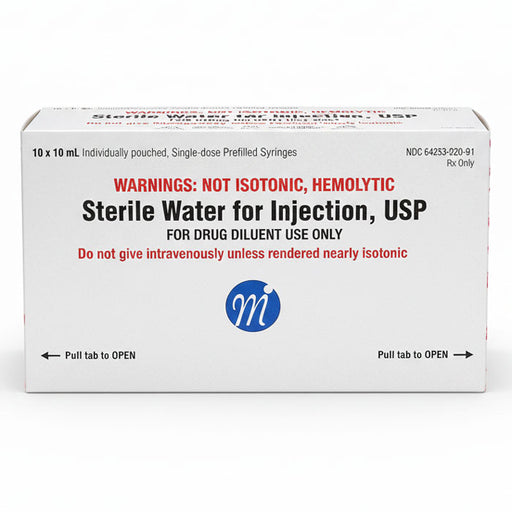
    No. Sterile water is hypotonic and can cause red blood cell lysis (haemolysis) if introduced directly into the bloodstream. Flushing an IV line with sterile water is contraindicated and not an acceptable substitute for 0.9% sodium chloride saline flush. Only use sterile saline (0.9% NaCl USP) or a flush solution specified by the prescribing physician and institutional protocol.

  • What are the main complications associated with IV flush syringes?

    Key iv flush syringe complications include: air embolism (from an unprimed syringe with air bubbles present), catheter rupture (from excessive pressure via a small-barrel syringe on central lines), CLABSI from non-sterile access technique, medication incompatibility from inadequate line clearing, and catheter occlusion from insufficient flush volume. Using a correctly sized, fully primed, sterile single-use syringe with proper aseptic technique is the primary prevention strategy for all of these complications.

  • How do I flush a catheter with a syringe correctly?

    When considering how to flush a catheter with a syringe, the INS recommends the following core steps: (1) Perform hand hygiene. (2) Scrub the needleless connector or access port with 70% isopropyl alcohol or chlorhexidine-alcohol for 15–30 seconds and allow to air dry. (3) Attach a new, sterile flush syringe — verify no air bubbles are present. (4) Aspirate for blood return to confirm vascular placement (per protocol). (5) Flush with slow, steady pressure using a push-pause technique. (6) Maintain positive pressure while disconnecting to prevent blood reflux into the catheter lumen. (7) Dispose of the used syringe immediately in an approved sharps container. Never reuse a flush syringe.

  • Do I need a medical license to buy IV flush syringes from Mountainside Medical?

    Prefilled saline flush syringes do not require a medical license for purchase. However, heparin flush syringes are prescription (Rx-only) pharmaceutical products and require verification of a valid medical license prior to purchase. To establish a wholesale account or confirm licensing requirements for specific products, contact the Mountainside Medical sales team at sales@mountainside-medical.com or call +1 (888) 687-4334.

  • What brands of IV flush syringes does Mountainside Medical carry?

    Mountainside Medical carries IV flush syringes from leading manufacturers including BD PosiFlush™ (Becton Dickinson), Monoject™ (Cardinal Health), Medline™, Nipro™, McKesson™, ICU Medical, Smiths Medical, Sol-Millennium™, and Covidien™ (Kendall). BD PosiFlush™ is among the most widely specified brands on US hospital formularies due to its barcoded labelling and consistent fill volume. All brands available in this collection supply sterile, USP-grade solutions in standard clinical volumes.

  • What pack sizes are available for bulk ordering of flush syringes?

    Flush syringes are available in individual units and hospital bulk configurations including boxes of 30, 100, and 400+ units depending on the product and brand selected. Pack size availability is displayed at the individual product level. For high-volume institutional orders or GPO-aligned procurement, contact sales@mountainside-medical.com to discuss volume pricing and wholesale account terms. Free US shipping applies to all orders over $100.

  • Are the flush syringes in this collection single-use only?

    Yes. All flush syringes in this collection are strictly single-use only. Reusing any flush syringe — including prefilled saline or heparin flush syringes — is a serious infection control violation that creates risk of catheter-related bloodstream infection and cross-contamination. Used syringes must be discarded immediately after use in an approved sharps container in compliance with OSHA 29 CFR 1910.1030 and applicable local regulations.

IV Flush Syringes – Sterile, Pre-Filled Saline & Heparin Syringes for Safe, Effective IV Line Maintenance

Shop Hospital-Grade IV Flush Syringes: 0.9% Normal Saline & Heparin-Free Options for Reliable Catheter Patency, Infection Control & Hassle-Free Infusion Care.

Buy IV Flush Syringes Online – Safe, Easy, and Reliable IV Catheter Care

Choose the leading prefilled saline flush syringes for consistent IV performance and superior patient safety—trusted by top hospitals and infusion clinics nationwide.

Get Notified When Back in Stock