
Filters
- Aesthetic Supplies MedSpa Supplies & Cosmetic Surgery Supplies (11)
- Botox Syringes (1)
- buy insulin syringes (1)
- Easy Touch (1)
- Easy Touch Syringes (1)
- Insulin (14)
- insulin needle (2)
- insulin syringe sizes (1)
- Insulin Syringes Near Me (1)
- Semaglutide Syringes (1)
- U-100 Insulin Syringes (25)
- 31 gauge insulin needles (1)
- Aesthetic Needles (1)
- Aesthetic Syringes (1)
- BD Insulin Syringes (10)
- best insulin syringes (4)
- Fine Needles (2)
- Fine Syringe (1)
- Fine Tip (1)
- Fine Tip Syringes (1)
- insulin syringes for diabetes (1)
- Micro Needles (1)
- Ultra Fine Needles (1)
- ultra-fine insulin syringes (1)
- 30 Gauge (5)
- 430506 (1)
- 430508 (1)
- Cheap Syringes (2)
- Diabetes (7)
- Diabetes Care (4)
- Diabetes Management (3)
- Diabetes Supplies (7)
- Diabetes Syringes (5)
- Disposable Syringes (3)
- EasyTouch (2)
- EasyTouch Syringes (1)
- Retractable Syringes (1)
- safety insulin syringes (1)
- Type 2 diabetes (1)
- 1 cc Syringes (2)
- 29 gauge (7)
- 29 Gauge x ½" (1)
- 511110 (1)
- 8881511110 (1)
- Covidien (1)
- Monoject (1)
- Pet Insulin Syringes (3)
- Veterinary Insulin Syringe (3)
- 5/16 (2)
- Comfort (2)
- Short Needle Syringe (3)
- Sure Comfort (8)
- 31 Gauge (7)
- BD Ultra-Fine (2)
- Diabetes Supply (1)
- Insulin Injections (1)
- Small needle (1)
- Sterile Syringes (1)
- Ultrafine Syringes (1)
- 1 ml (1)
- 1 ml Syringe (1)
- 324906 (1)
- BD Needles (1)
- bd syringes (5)
- BD Veo (1)
- Embecta (6)
- Ultra Fine Insulin Syringes (1)
- 1 mL insulin syringe (2)
- 31g insulin needles (1)
- 328418 insulin syringe (1)
- 8mm insulin syringes (1)
- diabetes syringes (1)
- diabetic injection (1)
- ltra-fine insulin injection (1)
- safe insulin shot (1)
- U-100 insulin syringe (1)
- 329424 (1)
- Micro Fine (1)
- Microfine Syringes (1)
- Ultra fine (1)
- 3/10 mL insulin syringe (1)
- 31 gauge syringes (1)
- 324910 (1)
- Blood Sugar Management (1)
- diabetic syringes (2)
- Embecta syringes (1)
- hort needle insulin syringes (1)
- hypoallergenic needle (1)
- Insulin Syringes 31 gauge (1)
- monoject (2)
- NovoFine (1)
- painless insulin syringe (1)
- safe insulin injection (1)
- True Comfort (1)
- ultra-fine needle (2)
- 30 gauge insulin syringe (1)
- 328411 (1)
- blood sugar management (2)
- Embecta insulin syringes (1)
- home diabetes care (1)
- PRP Injections (1)
- safe insulin delivery (1)
- sterile syringe (1)
- Untra Fine Needle (1)
- 29-gauge needle (1)
- Insulin therapy (1)
- Subcutaneous injections (1)
- 30 gauge Syringes (1)
- Ultra Fine Syringes (2)
- 1 cc Insulin Syringe (1)
- 31 Gauge Insulin Syringe (1)
- 31 Gauge x 5/16 (1)
- 5/16 Inch Insulin Needles (1)
- Diabetes Insipidus (1)
- Diabetes Insulin Injection (1)
- Painless Insulin Injection (1)
- Safe Insulin Delivery (1)
- Short Needle Insulin Syringe (1)
- Syringe for Diabetes (1)
- 31 Gauge x 1/2 (1)
- 324911 (1)
- Diabetic (1)
- diabetic supplies (2)
- Diabetic Syringes (1)
- Peptide Injections (1)
- SureComfort (2)
- U-100 Syringes (1)
- Diabetes Needles (1)
- Magellan (1)
- 28 Gauge (1)
- Blood Glucose Levels (1)
- Regular Needle (1)
- Ulticare (1)
- Ulticare Insulin Syringes (1)
- doctor-only (1)
- 31 gauge x 5/8" (1)
- 56151-1732-01 (1)
- disposable insulin syringes (1)
- glucose control tools (1)
- Insulin syringes 31 gauge (2)
- 0.5 mL insulin syringe (1)
- disposable syringes (1)
- short needle (1)
- short needle insulin syringe (1)
- single-use insulin injection (1)
- sterile diabetic syringes (1)
- subcutaneous insulin syringes (1)
- Retractable Needle (1)
- Stainless Steel Needle (1)
- VanishPoint (1)
- Peptide Syringes (1)
- Safety Needles (1)
Insulin Syringes
Insulin Syringes
Insulin syringes are specialized medical syringes used by people with diabetes to self-administer insulin injections. They are calibrated in insulin units rather than standard volume units (e.g. milliliters) because insulin dosage is measured in biological “units.” In standard U-100 insulin preparations, 1 mL = 100 units of insulin. This means a 1 mL syringe holds 100 units of U-100 insulin, a 0.5 mL syringe holds 50 units, and a 0.3 mL syringe holds 30 units. (Some medications use U-40 or higher concentrations, but U-100 is now the norm in most countries.) Insulin syringes are designed for subcutaneous (under the skin) injections and have several key features suited to this purpose:
- Fine, short needles: Insulin syringes use very thin needles (often 28–31 gauge) that are just a few millimeters long. This minimizes pain when injecting under the skin.
- Unit markings: The syringe barrel is printed in insulin “units” rather than milliliters, so users can dial up the correct dose directly. For U-100 insulin, each “unit” marking corresponds to 0.01 mL.
- Low dead space: Many insulin syringes have a low dead-space design, which means very little insulin remains wasted in the tip after injection. This ensures accurate dosing and efficiency.
- Single-use, disposable: Because sterility is critical, insulin syringes are intended for one-time use. Reusing or sharing syringes increases infection risk and is strongly discouraged.
Each insulin syringe is typically sold with a protective cap and sometimes an attached needle or with a separate needle that can be attached. Patients are usually instructed to attach a new sterile needle for each injection. After use, the needle should be capped and placed in a sharps container (see “Safety and Disposal” below).
Common Sizes and Calibrations
Insulin syringes come in several small-volume sizes to match typical insulin doses, each labeled in units of insulin. The most common insulin syringe sizes (U-100) are:
- 1.0 mL (100 units): Holds a maximum of 100 units. Graduations are usually in 10-unit increments, with each small line often representing 2 units.
- 0.5 mL (50 units): Holds up to 50 units. Markings are typically 5–10 unit increments; many syringes have 1-unit tick marks for precision.
- 0.3 mL (30 units): Holds up to 30 units, often used when doses are generally 30 units or less. These usually have markings every 5 units and finer lines for each 1 unit.
Some manufacturers also make half-unit syringes (0.3 mL with 0.5-unit markings) intended for very small doses (common in young children or very insulin-sensitive persons). When choosing a syringe, it’s important to match the syringe size to the insulin concentration (e.g. using U-100 syringes for U-100 insulin) and to pick a syringe that gives good resolution (smaller syringes allow smaller dose increments).
Using Insulin Syringes
Proper injection technique is essential for safe and effective insulin therapy. Each step should follow a healthcare provider’s instructions, but general principles include:
- Preparation: Wash hands thoroughly. Inspect and gently agitate the insulin vial (if it’s a suspension) to mix the medicine. Draw air into the syringe equal to the dose, inject the air into the vial, then draw up the correct insulin dose into the syringe.
- Choose and prepare an injection site: Common injection sites are the abdomen (avoiding a 2-inch area around the navel), the front of the thighs, the upper buttocks, and the back or side of the upper arms. Rotate injection sites systematically (e.g. rotating quadrants or days) to avoid repeatedly injecting the exact same spot. This rotation helps prevent lipohypertrophy (fat tissue buildup) which can occur if one site is used too often. Some guidelines recommend cleaning the skin with an alcohol swab before injection, especially if the area is dirty or if recommended by local practice.
- Injection: Pinch a fold of skin if needed (often needed only if the needle is longer or if the patient is very thin). Insert the needle at a 90° angle to the skin for most modern short needles (some older sources recommend 45° if a long needle is used). Inject the insulin by pushing the plunger slowly and steadily. It is generally not necessary to aspirate (pull back on the plunger) during subcutaneous insulin injections, as blood vessels are unlikely to be punctured; this is a change from older practices.
- Post-injection: After injecting the insulin, holding the plunger down for a few seconds (typically ~5–10 seconds) before withdrawing the needle can help ensure the full dose is delivered and minimize leaking from the injection site. Then withdraw the needle in the same direction it went in. Gently press the site with gauze (do not rub or massage the site, as that can alter insulin absorption). Finally, safely recap or cover the needle for disposal.
Note: Always follow the specific advice of a healthcare professional or certified diabetes educator for injection technique. Proper technique (site rotation, needle angle, etc.) is crucial for insulin to work predictably. For example, one review notes that correct injection technique and site care are required to ensure insulin’s effectiveness.
Precautions and Safety
- Sterility and Single Use: Each insulin syringe and needle should be used only once. Even though some people may be tempted to reuse needles for cost reasons, reusing syringes carries infection risks. Studies have shown that bacteria from the skin can enter the syringe and then the bloodstream upon reuse. Modern syringes are designed to be cheap and disposable specifically to reduce infection risk. Never share insulin needles or syringes with another person.
- Site Inspection: Avoid injecting into areas with skin problems (scars, infected or inflamed areas, or areas that are bruised). Check each chosen site; if there is swelling or lumps (lipohypertrophy), skip that spot and find a new area. Repeated injections into a lump can reduce insulin absorption.
- Avoiding Air Bubbles: Any air bubble in the syringe will have negligible effect on an insulin dose (because insulin is a suspension), but aim to remove large bubbles when drawing insulin.
- Accidental Overdose: Be especially careful not to confuse syringes (using a U-100 syringe with U-500 insulin, for example, can cause a 5-fold dosing error!). Always double-check labels. Use only the concentration your provider prescribed.
- Sharps Disposal: Immediately after use, place the used needle and syringe in a puncture-resistant sharps container. Do not throw used syringes in the regular trash or recycling. Many communities have specific disposal programs (community sharps bins, pharmacy drop-off, mail-back programs, etc.). Proper sharps disposal protects others from accidental needle sticks. (Health authorities generally advise disposing of used needles in an approved sharps container or according to local regulations. See, for example, CDC or local guidelines on household medical waste.)
Comparison to Insulin Pens and Pumps
Insulin syringes are one of several ways to inject insulin (alongside insulin pens and insulin pumps). Compared to pens, syringes require the user to draw up insulin from a vial but have the advantage of fine dose control and no dependence on mechanical dose clicking. Some patients prefer syringes for very small or precise dosing (especially using half-unit syringes). Pens have built-in dosing dials and disposable pen needles (usually similar short gauges, 4–8 mm length). Pumps are computerized infusion devices that deliver rapid or long-acting insulin through a catheter, but those are beyond the scope of syringe discussion. (In any case, all subcutaneous injection methods rely on similar site-rotation and hygiene principles.)
Key Takeaways
- Insulin syringes are unit-calibrated for insulin (mostly U-100), with fine short needles and minimal dead space.
- They come in small volumes (0.3, 0.5, 1.0 mL) marked 30, 50, or 100 insulin units; very small-dosage versions have half-unit marks.
- Use a syringe that matches your insulin concentration (don’t mix U-100 insulin and a U-40 syringe, for example).
- Follow recommended injection steps: clean hands, draw the correct dose, choose and rotate a suitable site, insert the needle subcutaneously (usually at 90°), inject insulin, then hold and withdraw needle.
- Always use a new sterile syringe and needle for each injection. Do not reuse or share syringes, as this can introduce infection.
- Dispose used syringes in a proper sharps container to prevent injury and contamination.
Disclaimer: This information is provided for general knowledge and does not replace personalized instruction by a healthcare provider. Always follow the guidance of medical professionals or certified diabetes educators for your specific insulin regimen and injection technique.
-
 Sale
$ 17.50
Sale
$ 17.50Insulin Syringes with Needle U-100, All Size Insulin Needles, Easy Touch 100/Box
47 reviewsEasyTouch Insulin Syringes EasyTouch U-100 Syringes are disposable, single-use insulin syringes designed specifically for standard U-100 insulin (1...
View full details -
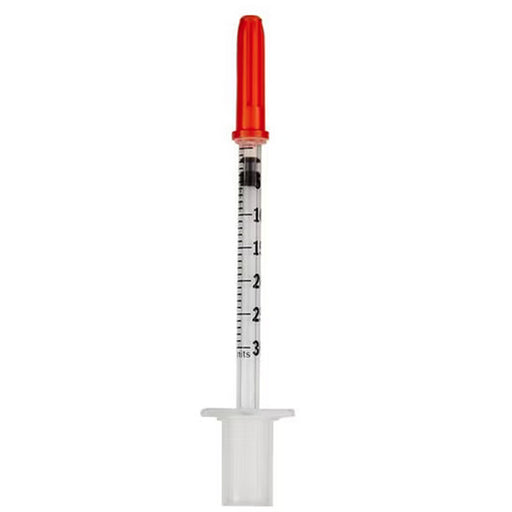 Sale 14%
Original price $ 99.95Current price $ 85.90
Sale 14%
Original price $ 99.95Current price $ 85.90Ultra-Fine Insulin Syringes 0.3 mL with 8 mm x 31 gauge Insulin Needle 100/box -BD 328438
2 reviewsPremium Diabetes Supply for Safe, Accurate Insulin Injection – Trusted, Comfortable, and Painless Delivery Ultra-Fine Insulin Syringes 0.3mL with N...
View full details -
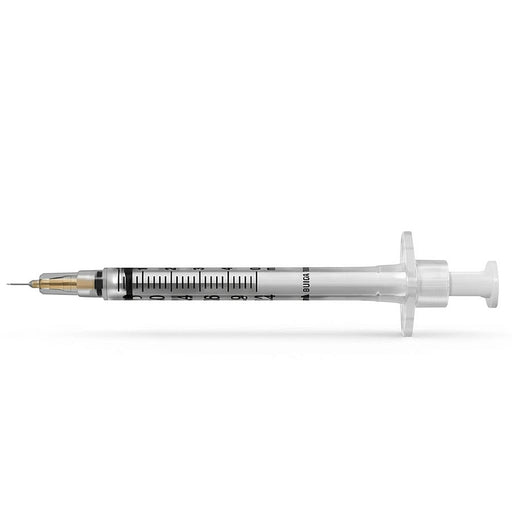 Sale 31%
Original price $ 79.95Current price $ 55.00
Sale 31%
Original price $ 79.95Current price $ 55.00EasyTouch Retractable Insulin Syringes 30 Gauge, Safety 0.5ml and 1 ml, 100/Box
No reviewsEasyTouch Retractable Insulin Syringes are a special type of insulin syringe (for diabetic use) made by EasyTouch (MHC Medical) that include a buil...
View full details -
 Sale 15%
Original price $ 46.95Current price $ 39.90
Sale 15%
Original price $ 46.95Current price $ 39.9029 Gauge x ½" Monoject 1 mL Insulin Syringes, Safety 1 cc, Permanent Needle, 100/box
No reviewsMonoject 8881511110 1mL Insulin Syringes, 1cc, 29 gauge x ½" Needle are a sterile. safety syringes used to deliver diabetic insulin from a vial in...
View full details -
 Sale 34%
Original price $ 38.95Current price $ 25.90
Sale 34%
Original price $ 38.95Current price $ 25.90Insulin Syringes 30 g x 5/16" 0.5 mL, Sterile by Sure Comfort 100/Box
2 reviewsAllison Medical 22-6005 Sure Comfort Insulin Syringes are medical devices used for injecting insulin into the body for diabetes management. These s...
View full details -
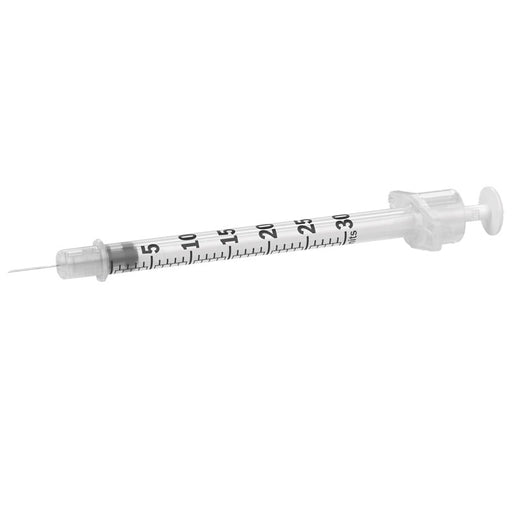 Sale 28%
Original price $ 89.95Current price $ 65.00
Sale 28%
Original price $ 89.95Current price $ 65.00Luer Lock Syringes 3 mL without Needle 5/16 inch, 0.3 mL Ultra-Fine, 100/box
No reviewsLuer Lock Syringes 3 mL without Needle Embecta Medical’s Insulin Syringe 31 Gauge 5/16 inch, 0.3 mL Ultra-Fine offers safe, precise, and pain-minim...
View full details -
 Sale 21%
Original price $ 32.95Current price $ 25.90
Sale 21%
Original price $ 32.95Current price $ 25.90Insulin Syringes 30g x 5/16", 1 mL Sterile by Sure Comfort 100/Box
No reviewsAllison Medical 22-6010 Sure Comfort Insulin Syringes 30g x 5/16" 1 mL are a type of syringe specifically designed for use with insulin injections....
View full details -
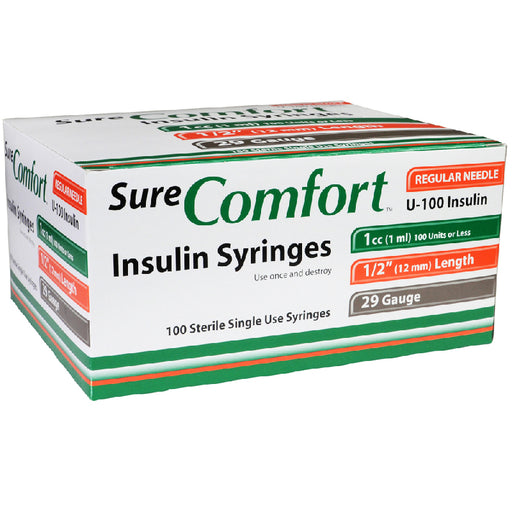 Sale 14%
Original price $ 29.95Current price $ 25.90
Sale 14%
Original price $ 29.95Current price $ 25.90Sure Comfort Insulin Syringes 29 gauge x 1/2" 1 mL (100/Count)
No reviewsAllison Medical 22-9010 Sure Comfort Insulin Syringes 29 gauge x 1/2" 1 mL. Allison Medical 22-9010 Sure Comfort Insulin Syringes are syringes used...
View full details -
 Sale 23%
Original price $ 64.00Current price $ 49.25
Sale 23%
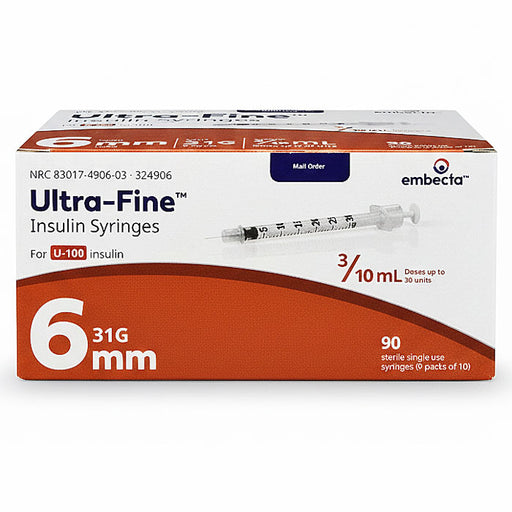
Original price $ 64.00Current price $ 49.25BD Insulin Syringes 31 gauge x 3/10 mL Ultra-Fine Needle 6mm, Sterile 90/box
1 reviewThe Ultimate in Comfort, Precision, and Safety for Diabetes Management Achieve accurate, comfortable, and safe insulin injections with the BD Insul...
View full details -
 Sale 24%
Original price $ 105.00Current price $ 79.95
Sale 24%
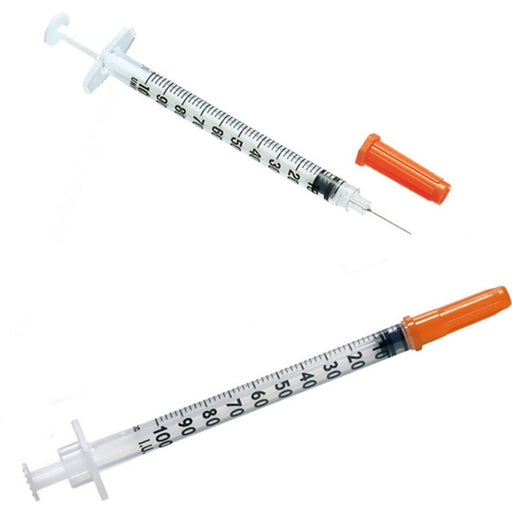
Original price $ 105.00Current price $ 79.95Insulin Syringes 31 g x 8 mm, 1 mL with Ultra-Fine Needle 100/box Embecta 328418
1 reviewBest for Comfortable and Accurate Insulin Injections Insulin Syringes 31g x 8mm, 1 mL Ultra-Fine Needle (SKU: 328418) are the #1 choice for diabeti...
View full details -
 Sale 34%
Original price $ 67.95Current price $ 45.00
Sale 34%
Original price $ 67.95Current price $ 45.00Insulin Syringes 28 Gauge x 1/2 inch, 1 mL Micro-Fine Needle U-100 Embecta 329424 Sterile 100/Box
2 reviewsMicrofine U-100 Insulin Syringes 1 mL, 28 Gauge x 1/2 inch have extremely fine, 28-gauge needles that are just 1/2 inch long. This makes them perfe...
View full details -
 Sale 19%
Original price $ 89.95Current price $ 72.95
Sale 19%
Original price $ 89.95Current price $ 72.95Insulin Syringes 31 gauge x 3/10 mL with Ultra-Fine Needle 6mm x 31 G by Embecta 100/box
No reviews#1 Doctor-Recommended Insulin Syringes for Safe, Comfortable, and Accurate Insulin Injections Looking for the best insulin syringes for diabetes ma...
View full details -
 Sale 24%
Original price $ 105.00Current price $ 79.95
Sale 24%
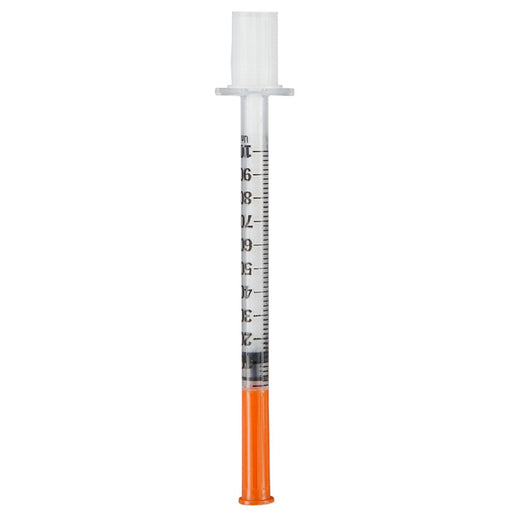
Original price $ 105.00Current price $ 79.9530 gauge x 1/2" Insulin Syringes 1 mL with Ultra-Fine Needle 1 mL, 100 Count
No reviewsThe Preferred Choice for Safe & Comfortable Insulin Injections Take your diabetes care to the next level with Embecta’s 30 Gauge x 1/2" Insulin...
View full details -
 Sale 35%
Original price $ 36.95Current price $ 23.90
Sale 35%
Original price $ 36.95Current price $ 23.90Insulin Syringes 29 gauge x 1/2" 0.5 mL Sure Comfort (100/Count)
1 reviewSure Comfort Insulin Syringes 29 gauge x 1/2" 0.5 mL are designed for the precise and comfortable administration of insulin to individuals with dia...
View full details -
 Sale 25%
Original price $ 99.95Current price $ 75.00
Sale 25%
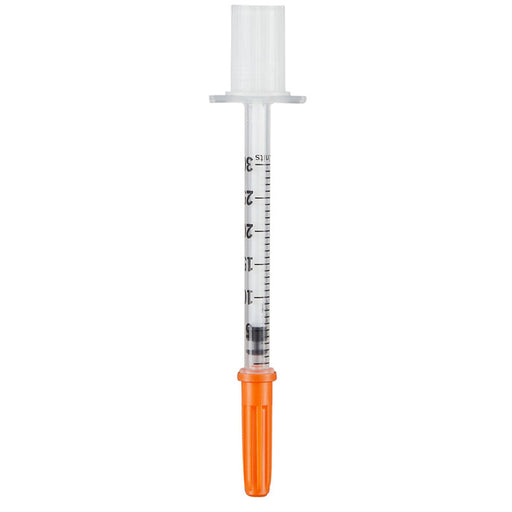
Original price $ 99.95Current price $ 75.00BD 30 gauge x 1/2" Insulin Syringes 0.3 mL with Ultra-Fine Needle, Non-Safety 100/box
No reviewsBD 328431 Insulin Syringes are designed for injecting insulin into the subcutaneous tissue just under the skin. They are used by people with diabet...
View full details -
 Sale 29%
Original price $ 24.95Current price $ 17.59
Sale 29%
Original price $ 24.95Current price $ 17.59Insulin Syringes 31 Gauge x 5/16", 1 cc Individually Wrapped, 100/box
No reviewsTake control of diabetes care with Insulin Syringes 31 Gauge x 5/16", 1 cc (100/box, Individually Wrapped) – the trusted choice for comfortable, ac...
View full details -
 Sale 19%
Original price $ 31.95Current price $ 25.90
Sale 19%
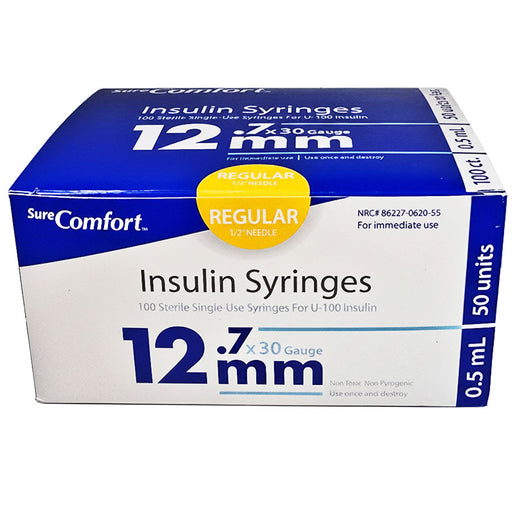
Original price $ 31.95Current price $ 25.90Insulin Syringes 30 g x 1/2", 0.3 mL, Sterile by Sure Comfort 100/Box
No reviews#1 Best Seller for Comfort, Accuracy, and Safety Control your diabetes with confidence! The Sure Comfort Insulin Syringes 30 gauge x 1/2 inch, 0.3 ...
View full details -
 Sale 21%
Original price $ 99.95Current price $ 78.90
Sale 21%
Original price $ 99.95Current price $ 78.90BD Insulin Syringes 31 Gauge x 1/2" with Ultra-Fine Needle 6mm Sterile (10-Packs) 100/box
No reviewsOptimize your insulin administration with BD Veo Insulin Syringes by Embecta. Featuring a 0.5 mL capacity and an Ultra-Fine 6mm x 31G needle, these...
View full details -
 Sale 25%
Original price $ 99.95Current price $ 75.00
Sale 25%
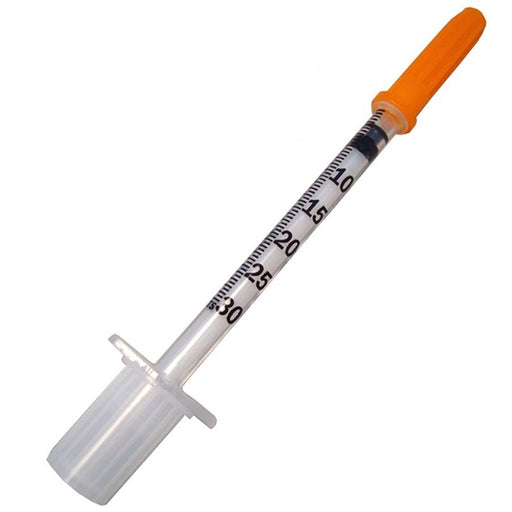
Original price $ 99.95Current price $ 75.00BD 328466 Insulin Syringes 0.5 mL with Ultra-Fine Needle 12.7mm x 30 Gauge, 100/box
No reviewsSimplify your diabetes management with BD 328466 Insulin Syringes. Expertly crafted by BD, each 0.5 mL syringe features an Ultra-Fine 12.7mm x 30G ...
View full details -
 Sale 48%
Original price $ 45.80Current price $ 23.90
Sale 48%
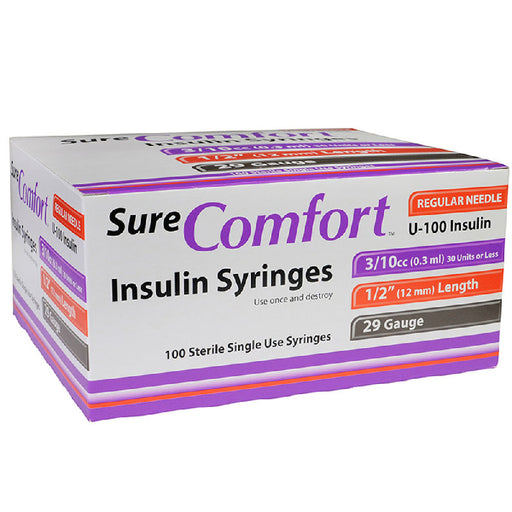
Original price $ 45.80Current price $ 23.90Insulin Syringes 29 gauge x 1/2" 0.3 mL Sure Comfort (100/Count)
No reviewsSureComfort Insulin Syringes (29G × 1/2″ (12.7 mm), 0.3 mL, U-100) Product Overview: These are sterile, single-use insulin syringes (SureComfort by...
View full details -
 Sale 43%
Original price $ 38.95Current price $ 22.15
Sale 43%
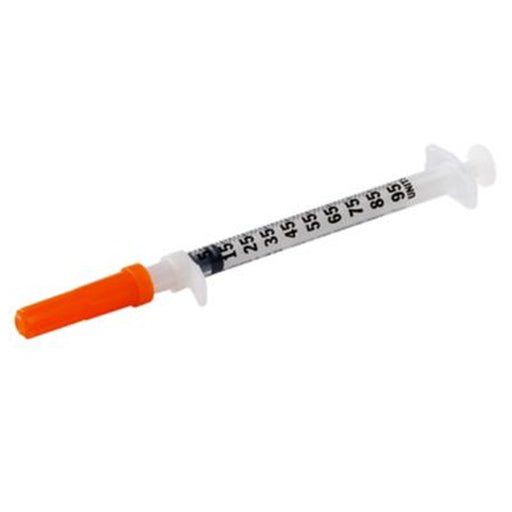
Original price $ 38.95Current price $ 22.15Monoject Insulin Safety Syringes with 29 Gauge x 1/2" Permanent Needle, 50 Per Box
No reviewsMonoject Magellan Insulin Safety Syringes with 29 Gauge x 1/2" Permanent Needle, 50 Per Box. Monoject™ Magellan™ Insulin Safety Syringes are integr...
View full details -
 Sale 23%
Original price $ 38.95Current price $ 29.95
Sale 23%
Original price $ 38.95Current price $ 29.95Insulin Syringes 28 gauge x 1/2"(12.7 mm) 0.5 mL Regular Needle by Ulticare 100/Box
No reviewsUlticare Insulin Syringes 28 gauge x 1/2" (12.7 mm) 0.5 mL Regular Needle are designed for the precise administration of insulin in individuals wit...
View full details -
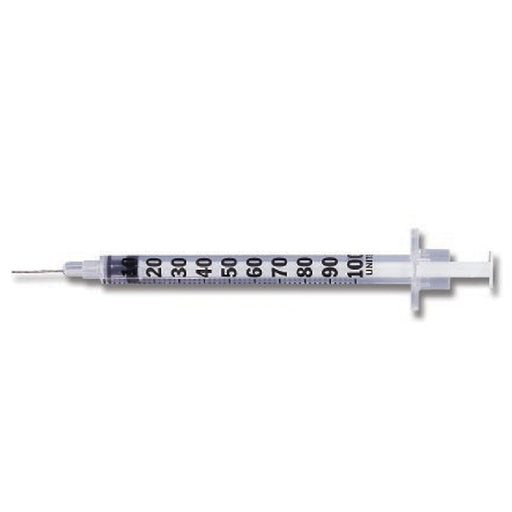 Sale 24%
Original price $ 59.95Current price $ 45.75
Sale 24%
Original price $ 59.95Current price $ 45.75BD Microfine Insulin Syringe 27 Gauge x 5/8 Inch, 1 mL, 100/Box
No reviewsBD 329412 Microfine Insulin Syringe 27 Gauge x 5/8 Inch is a highly effective and widely used tool in the world of diabetes management. This top of...
View full details🔒 Medical License Required -
 Sale 24%
Original price $ 19.95Current price $ 15.25
Sale 24%
Original price $ 19.95Current price $ 15.25Insulin Syringes 31 gauge x 5/8", 0.5 mL by Leader 100/Box
No reviewsFast, Safe & Accurate Insulin Injection Leader Insulin Syringes 31 gauge x 5/8", 0.5 mL provide precise and comfortable insulin delivery for di...
View full details -
 Sale 24%
Original price $ 33.95Current price $ 25.90
Sale 24%
Original price $ 33.95Current price $ 25.90Insulin Syringes 31 gauge x 5/16", 0.3 mL by SureComfort 100/Box
No reviewsGet Painless, Accurate Insulin Injections – Trusted by Diabetes Care Experts Take control of your diabetes management with SureComfort Insulin Syri...
View full details -
 Sale 25%
Original price $ 145.95Current price $ 109.00
Sale 25%
Original price $ 145.95Current price $ 109.00VanishPoint 29 gauge x 5/16 inch Retractable Insulin Syringe with Needle 1 mL, Regular Wall, 100/Box
No reviewsVanishPoint Safety Syringe is a type of syringe that is designed with a retractable needle. This feature allows the needle to retract into the syri...
View full details -
 Sale 39%
Original price $ 44.00Current price $ 27.00
Sale 39%
Original price $ 44.00Current price $ 27.00Insulin Syringes 31 gauge x 5/16" Needle (8mm) 100 Unit Markings (100/Box)
No reviewsSureComfort Insulin Syringe (31G × 5/16″ (8 mm) The SureComfort (Allison Medical) 31-gauge × 5/16″ (8 mm) insulin syringe is a single-use, U-100 in...
View full details


People Also Searched For
Insulin Syringes
Insulin syringes are specialized medical syringes used by people with diabetes to self-administer insulin injections. They are calibrated in insulin units rather than standard volume units (e.g. milliliters) because insulin dosage is measured in biological “units.” In standard U-100 insulin preparations, 1 mL = 100 units of insulin. This means a 1 mL syringe holds 100 units of U-100 insulin, a 0.5 mL syringe holds 50 units, and a 0.3 mL syringe holds 30 units. (Some medications use U-40 or higher concentrations, but U-100 is now the norm in most countries.) Insulin syringes are designed for subcutaneous (under the skin) injections and have several key features suited to this purpose:
- Fine, short needles: Insulin syringes use very thin needles (often 28–31 gauge) that are just a few millimeters long. This minimizes pain when injecting under the skin.
- Unit markings: The syringe barrel is printed in insulin “units” rather than milliliters, so users can dial up the correct dose directly. For U-100 insulin, each “unit” marking corresponds to 0.01 mL.
- Low dead space: Many insulin syringes have a low dead-space design, which means very little insulin remains wasted in the tip after injection. This ensures accurate dosing and efficiency.
- Single-use, disposable: Because sterility is critical, insulin syringes are intended for one-time use. Reusing or sharing syringes increases infection risk and is strongly discouraged.
Each insulin syringe is typically sold with a protective cap and sometimes an attached needle or with a separate needle that can be attached. Patients are usually instructed to attach a new sterile needle for each injection. After use, the needle should be capped and placed in a sharps container (see “Safety and Disposal” below).
Common Sizes and Calibrations
Insulin syringes come in several small-volume sizes to match typical insulin doses, each labeled in units of insulin. The most common insulin syringe sizes (U-100) are:
- 1.0 mL (100 units): Holds a maximum of 100 units. Graduations are usually in 10-unit increments, with each small line often representing 2 units.
- 0.5 mL (50 units): Holds up to 50 units. Markings are typically 5–10 unit increments; many syringes have 1-unit tick marks for precision.
- 0.3 mL (30 units): Holds up to 30 units, often used when doses are generally 30 units or less. These usually have markings every 5 units and finer lines for each 1 unit.
Some manufacturers also make half-unit syringes (0.3 mL with 0.5-unit markings) intended for very small doses (common in young children or very insulin-sensitive persons). When choosing a syringe, it’s important to match the syringe size to the insulin concentration (e.g. using U-100 syringes for U-100 insulin) and to pick a syringe that gives good resolution (smaller syringes allow smaller dose increments).
Using Insulin Syringes
Proper injection technique is essential for safe and effective insulin therapy. Each step should follow a healthcare provider’s instructions, but general principles include:
- Preparation: Wash hands thoroughly. Inspect and gently agitate the insulin vial (if it’s a suspension) to mix the medicine. Draw air into the syringe equal to the dose, inject the air into the vial, then draw up the correct insulin dose into the syringe.
- Choose and prepare an injection site: Common injection sites are the abdomen (avoiding a 2-inch area around the navel), the front of the thighs, the upper buttocks, and the back or side of the upper arms. Rotate injection sites systematically (e.g. rotating quadrants or days) to avoid repeatedly injecting the exact same spot. This rotation helps prevent lipohypertrophy (fat tissue buildup) which can occur if one site is used too often. Some guidelines recommend cleaning the skin with an alcohol swab before injection, especially if the area is dirty or if recommended by local practice.
- Injection: Pinch a fold of skin if needed (often needed only if the needle is longer or if the patient is very thin). Insert the needle at a 90° angle to the skin for most modern short needles (some older sources recommend 45° if a long needle is used). Inject the insulin by pushing the plunger slowly and steadily. It is generally not necessary to aspirate (pull back on the plunger) during subcutaneous insulin injections, as blood vessels are unlikely to be punctured; this is a change from older practices.
- Post-injection: After injecting the insulin, holding the plunger down for a few seconds (typically ~5–10 seconds) before withdrawing the needle can help ensure the full dose is delivered and minimize leaking from the injection site. Then withdraw the needle in the same direction it went in. Gently press the site with gauze (do not rub or massage the site, as that can alter insulin absorption). Finally, safely recap or cover the needle for disposal.
Note: Always follow the specific advice of a healthcare professional or certified diabetes educator for injection technique. Proper technique (site rotation, needle angle, etc.) is crucial for insulin to work predictably. For example, one review notes that correct injection technique and site care are required to ensure insulin’s effectiveness.
Precautions and Safety
- Sterility and Single Use: Each insulin syringe and needle should be used only once. Even though some people may be tempted to reuse needles for cost reasons, reusing syringes carries infection risks. Studies have shown that bacteria from the skin can enter the syringe and then the bloodstream upon reuse. Modern syringes are designed to be cheap and disposable specifically to reduce infection risk. Never share insulin needles or syringes with another person.
- Site Inspection: Avoid injecting into areas with skin problems (scars, infected or inflamed areas, or areas that are bruised). Check each chosen site; if there is swelling or lumps (lipohypertrophy), skip that spot and find a new area. Repeated injections into a lump can reduce insulin absorption.
- Avoiding Air Bubbles: Any air bubble in the syringe will have negligible effect on an insulin dose (because insulin is a suspension), but aim to remove large bubbles when drawing insulin.
- Accidental Overdose: Be especially careful not to confuse syringes (using a U-100 syringe with U-500 insulin, for example, can cause a 5-fold dosing error!). Always double-check labels. Use only the concentration your provider prescribed.
- Sharps Disposal: Immediately after use, place the used needle and syringe in a puncture-resistant sharps container. Do not throw used syringes in the regular trash or recycling. Many communities have specific disposal programs (community sharps bins, pharmacy drop-off, mail-back programs, etc.). Proper sharps disposal protects others from accidental needle sticks. (Health authorities generally advise disposing of used needles in an approved sharps container or according to local regulations. See, for example, CDC or local guidelines on household medical waste.)
Comparison to Insulin Pens and Pumps
Insulin syringes are one of several ways to inject insulin (alongside insulin pens and insulin pumps). Compared to pens, syringes require the user to draw up insulin from a vial but have the advantage of fine dose control and no dependence on mechanical dose clicking. Some patients prefer syringes for very small or precise dosing (especially using half-unit syringes). Pens have built-in dosing dials and disposable pen needles (usually similar short gauges, 4–8 mm length). Pumps are computerized infusion devices that deliver rapid or long-acting insulin through a catheter, but those are beyond the scope of syringe discussion. (In any case, all subcutaneous injection methods rely on similar site-rotation and hygiene principles.)
Key Takeaways
- Insulin syringes are unit-calibrated for insulin (mostly U-100), with fine short needles and minimal dead space.
- They come in small volumes (0.3, 0.5, 1.0 mL) marked 30, 50, or 100 insulin units; very small-dosage versions have half-unit marks.
- Use a syringe that matches your insulin concentration (don’t mix U-100 insulin and a U-40 syringe, for example).
- Follow recommended injection steps: clean hands, draw the correct dose, choose and rotate a suitable site, insert the needle subcutaneously (usually at 90°), inject insulin, then hold and withdraw needle.
- Always use a new sterile syringe and needle for each injection. Do not reuse or share syringes, as this can introduce infection.
- Dispose used syringes in a proper sharps container to prevent injury and contamination.
Disclaimer: This information is provided for general knowledge and does not replace personalized instruction by a healthcare provider. Always follow the guidance of medical professionals or certified diabetes educators for your specific insulin regimen and injection technique.
Directions on How to Use Insulin Syringes
Insulin injections are given subcutaneously (into the fat under the skin). Common injection sites include the abdomen, thighs, upper arms or buttocks. (Patients learn to “pinch” the skin and insert the needle straight in, usually at a 90° angle.) Rotating sites is important – for example, switching between different areas of the abdomen – to avoid tissue changes. (Guidelines note that patients should “rotate injection sites… to prevent tissue damage”. Typical technique steps (not detailed here) include cleaning the site, drawing in air equal to the dose, injecting it into the insulin vial, drawing up the insulin dose, removing air bubbles, then injecting the insulin under the skin. Each injection delivers the exact insulin dose measured in units.
Types of Insulin Syringes
1. By Barrel Size (Capacity)
a. 0.3 mL Syringes (30 units)
- Best for: Adults or children who need small doses (<30 units) of insulin.
- Advantages: Smaller, easier to use for precise measurements.
b. 0.5 mL Syringes (50 units)
- Best for: People who inject 30 to 50 units of insulin at a time.
- Advantages: More precise than 1 mL for mid-range doses.
c. 1.0 mL Syringes (100 units)
- Best for: Those who require larger doses (50 to 100 units) per injection.
- Advantages: Suitable for mixing two types of insulin.
2. By Needle Gauge (Thickness)
a. 28 Gauge Syringes
- Thicker needle; may suit people with thicker skin or those needing stability.
b. 29–31 Gauge Syringes
- Most common: Thin needles (higher number = thinner needle), less pain and tissue trauma.
c. 32 Gauge and Above
- Ultra-fine needles; ideal for people sensitive to injections or for pediatric patients.
3. By Needle Length
- Short Needles (4mm, 5mm, 6mm, 8mm): Reduce risk of injecting into muscle; good for children or lean adults.
- Standard Needles (12.7mm): Common in traditional syringes; may suit larger adults.
- Choose length based on body type and doctor’s advice.
4. By Insulin Concentration Compatibility
- U-100 Insulin Syringes: For standard U-100 insulin (100 units/mL) – MOST COMMON in the USA.
- U-40 Insulin Syringes: For U-40 insulin (40 units/mL), often used for veterinary purposes or in some countries.
5. By Safety Features
a. Standard (Non-Safety) Syringes
- Traditional design; no needle safety mechanism.
b. Safety Syringes (Retractable or Shielded Needles)
- Retractable Needle: Automatically retracts into barrel to prevent accidental needlestick injury (like EasyTouch Retractable).
- Needle Shield/Cover: Pops over the needle after use for safety.
6. Other Types
- Lo-Dose Syringes: For low-dose, high-precision injections.
- Dual-Syringes: Designed for mixing two insulin types.
Choosing the Right Insulin Syringe
- Match the syringe barrel size to your usual insulin dose.
- Select needle gauge/length for comfort and effectiveness.
- Make sure to use the correct syringe for your insulin concentration (U-100 or U-40).
- Consider safety syringes if needlestick injury is a concern.
- Consult your healthcare provider for personalized recommendations.
Uses & Indications
Insulin syringes are used any time a patient must inject insulin. This includes all people with Type 1 diabetes and many with Type 2 diabetes or gestational diabetes who require insulin to control blood sugar. As official guidelines state: All adults with type 1 diabetes need to use insulin… Insulin cannot be taken as a tablet and has to be injected. Thus, these syringes are the primary tool for any condition requiring insulin therapy. They may be used in hospitals (e.g. to manage inpatient blood sugar) or at home (daily insulin injections). Note that only insulin should be drawn with an insulin syringe – other medications have different concentrations and cannot be used with these calibrated markings.
Precautions
Key safety points include proper needle disposal and site care. Patients are advised to place used syringes in a dedicated sharps container and to never reuse or share syringes across different people. (Some patients reuse one syringe for their own injections, up to about 6–8 times if the needle remains sharp, but not more.) Always discard a dull or bent needle. Standard injection hygiene (cleaning skin with alcohol swab) prevents infection. Because insulin injections affect blood sugar, patients monitor glucose levels; hypoglycemia can occur if too much insulin is given. (These medical considerations are managed by the patient’s doctors or diabetes educator.)
Insulin Syringe vs. Insulin Pen: Key Differences, Pros & Cons
Managing diabetes often involves insulin injections, and two of the most widely used delivery methods are the insulin syringe and the insulin pen. Each method has unique features, benefits, and potential drawbacks. Understanding the distinctions will help you choose the best option for your needs or patient care.
1. What is an Insulin Syringe?
An insulin syringe is a traditional device comprising a barrel, plunger, and a detachable (or fixed) fine needle. Insulin is drawn from a vial and then injected subcutaneously. Insulin syringes are available in various sizes (0.3ml, 0.5ml, 1.0ml), needle gauges (28-31G), and needle lengths to suit different dosing needs.
2. What is an Insulin Pen?
An insulin pen is a modern insulin delivery device resembling a pen. It contains a pre-filled or refillable insulin cartridge and uses a replaceable, ultra-fine needle. Insulin pens can be disposable (single-use) or reusable, offering dial-a-dose accuracy and convenience.
Advantages of Insulin Syringes
- Compatible with all types of insulin including mixed types.
- Multiple syringe sizes and needle lengths for customized dosing.
- Cost-effective, especially for uninsured patients and those using large quantities.
- Useful for mixing insulin, which pens generally cannot do.
Best for: Patients comfortable with traditional injection techniques, those who mix insulin types, and situations where cost is a concern.
Advantages of Insulin Pens
- Easier to use, especially for those with visual or dexterity impairments.
- More precise dosing with digital or mechanical dial.
- Less painful due to finer, higher-quality needles.
- More convenient and portable—great for travel or on-the-go use.
- Discreet and less intimidating for new insulin users.
- Memory functions and dose tracking in smart pens.
Best for: Children, elderly, visually impaired, and anyone who values convenience, discretion, and accuracy.
Disadvantages & Limitations
- Insulin Syringes: Require more steps, potential for dose mistakes, not as portable, and higher risk of needle-stick injury.
- Insulin Pens: Higher upfront cost, not compatible with all insulin types or brands, cannot typically mix insulins, some pens require a learning curve.
Which Should You Choose?
- Consider insulin type, lifestyle, dexterity, insurance coverage, and personal preference.
- Talk to your healthcare provider to determine the most effective, safe, and affordable option for your unique diabetes management needs.
Directions on How to Use Insulin Syringes
Insulin injections are given subcutaneously (into the fat under the skin). Common injection sites include the abdomen, thighs, upper arms or buttocks. (Patients learn to “pinch” the skin and insert the needle straight in, usually at a 90° angle.) Rotating sites is important – for example, switching between different areas of the abdomen – to avoid tissue changes. (Guidelines note that patients should “rotate injection sites… to prevent tissue damage”. Typical technique steps (not detailed here) include cleaning the site, drawing in air equal to the dose, injecting it into the insulin vial, drawing up the insulin dose, removing air bubbles, then injecting the insulin under the skin. Each injection delivers the exact insulin dose measured in units.
Types of Insulin Syringes
1. By Barrel Size (Capacity)
a. 0.3 mL Syringes (30 units)
- Best for: Adults or children who need small doses (<30 units) of insulin.
- Advantages: Smaller, easier to use for precise measurements.
b. 0.5 mL Syringes (50 units)
- Best for: People who inject 30 to 50 units of insulin at a time.
- Advantages: More precise than 1 mL for mid-range doses.
c. 1.0 mL Syringes (100 units)
- Best for: Those who require larger doses (50 to 100 units) per injection.
- Advantages: Suitable for mixing two types of insulin.
2. By Needle Gauge (Thickness)
a. 28 Gauge Syringes
- Thicker needle; may suit people with thicker skin or those needing stability.
b. 29–31 Gauge Syringes
- Most common: Thin needles (higher number = thinner needle), less pain and tissue trauma.
c. 32 Gauge and Above
- Ultra-fine needles; ideal for people sensitive to injections or for pediatric patients.
3. By Needle Length
- Short Needles (4mm, 5mm, 6mm, 8mm): Reduce risk of injecting into muscle; good for children or lean adults.
- Standard Needles (12.7mm): Common in traditional syringes; may suit larger adults.
- Choose length based on body type and doctor’s advice.
4. By Insulin Concentration Compatibility
- U-100 Insulin Syringes: For standard U-100 insulin (100 units/mL) – MOST COMMON in the USA.
- U-40 Insulin Syringes: For U-40 insulin (40 units/mL), often used for veterinary purposes or in some countries.
5. By Safety Features
a. Standard (Non-Safety) Syringes
- Traditional design; no needle safety mechanism.
b. Safety Syringes (Retractable or Shielded Needles)
- Retractable Needle: Automatically retracts into barrel to prevent accidental needlestick injury (like EasyTouch Retractable).
- Needle Shield/Cover: Pops over the needle after use for safety.
6. Other Types
- Lo-Dose Syringes: For low-dose, high-precision injections.
- Dual-Syringes: Designed for mixing two insulin types.
Choosing the Right Insulin Syringe
- Match the syringe barrel size to your usual insulin dose.
- Select needle gauge/length for comfort and effectiveness.
- Make sure to use the correct syringe for your insulin concentration (U-100 or U-40).
- Consider safety syringes if needlestick injury is a concern.
- Consult your healthcare provider for personalized recommendations.
Uses & Indications
Insulin syringes are used any time a patient must inject insulin. This includes all people with Type 1 diabetes and many with Type 2 diabetes or gestational diabetes who require insulin to control blood sugar. As official guidelines state: All adults with type 1 diabetes need to use insulin… Insulin cannot be taken as a tablet and has to be injected. Thus, these syringes are the primary tool for any condition requiring insulin therapy. They may be used in hospitals (e.g. to manage inpatient blood sugar) or at home (daily insulin injections). Note that only insulin should be drawn with an insulin syringe – other medications have different concentrations and cannot be used with these calibrated markings.
Precautions
Key safety points include proper needle disposal and site care. Patients are advised to place used syringes in a dedicated sharps container and to never reuse or share syringes across different people. (Some patients reuse one syringe for their own injections, up to about 6–8 times if the needle remains sharp, but not more.) Always discard a dull or bent needle. Standard injection hygiene (cleaning skin with alcohol swab) prevents infection. Because insulin injections affect blood sugar, patients monitor glucose levels; hypoglycemia can occur if too much insulin is given. (These medical considerations are managed by the patient’s doctors or diabetes educator.)
Insulin Syringe vs. Insulin Pen: Key Differences, Pros & Cons
Managing diabetes often involves insulin injections, and two of the most widely used delivery methods are the insulin syringe and the insulin pen. Each method has unique features, benefits, and potential drawbacks. Understanding the distinctions will help you choose the best option for your needs or patient care.
1. What is an Insulin Syringe?
An insulin syringe is a traditional device comprising a barrel, plunger, and a detachable (or fixed) fine needle. Insulin is drawn from a vial and then injected subcutaneously. Insulin syringes are available in various sizes (0.3ml, 0.5ml, 1.0ml), needle gauges (28-31G), and needle lengths to suit different dosing needs.
2. What is an Insulin Pen?
An insulin pen is a modern insulin delivery device resembling a pen. It contains a pre-filled or refillable insulin cartridge and uses a replaceable, ultra-fine needle. Insulin pens can be disposable (single-use) or reusable, offering dial-a-dose accuracy and convenience.
Advantages of Insulin Syringes
- Compatible with all types of insulin including mixed types.
- Multiple syringe sizes and needle lengths for customized dosing.
- Cost-effective, especially for uninsured patients and those using large quantities.
- Useful for mixing insulin, which pens generally cannot do.
Best for: Patients comfortable with traditional injection techniques, those who mix insulin types, and situations where cost is a concern.
Advantages of Insulin Pens
- Easier to use, especially for those with visual or dexterity impairments.
- More precise dosing with digital or mechanical dial.
- Less painful due to finer, higher-quality needles.
- More convenient and portable—great for travel or on-the-go use.
- Discreet and less intimidating for new insulin users.
- Memory functions and dose tracking in smart pens.
Best for: Children, elderly, visually impaired, and anyone who values convenience, discretion, and accuracy.
Disadvantages & Limitations
- Insulin Syringes: Require more steps, potential for dose mistakes, not as portable, and higher risk of needle-stick injury.
- Insulin Pens: Higher upfront cost, not compatible with all insulin types or brands, cannot typically mix insulins, some pens require a learning curve.
Which Should You Choose?
- Consider insulin type, lifestyle, dexterity, insurance coverage, and personal preference.
- Talk to your healthcare provider to determine the most effective, safe, and affordable option for your unique diabetes management needs.