
Filters
- blood administration (1)
- Cannula Needles (3)
- Catheter Needles (2)
- drawing blood (1)
- Infusion needles (1)
- intravenous (1)
- intravenous catheters (1)
- IV cannulas (1)
- Iv Catheter (28)
- IV Catheter Cannula Needles (1)
- IV Catheter Sizes (1)
- IV medications (1)
- IV Needle (11)
- IV Therapy (2)
- Safelet (1)
- vein (1)
- 22 g (1)
- 22 Gauge (5)
- Aesthetic Supplies MedSpa Supplies & Cosmetic Surgery Supplies (3)
- Blood Control Catheter (3)
- Insyte Autoguard (4)
- IV Catheter Needle (26)
- Radiopaque (1)
- Vialon Biomaterial (3)
- BD Insyte Autoguard (1)
- bd catheter (1)
- bd insyte (1)
- bd insyte autoguard (1)
- BD Insyte IV catheter (1)
- bd iv catheter (2)
- BD Needles (3)
- bd shielded iv catheter (1)
- doctor-only (22)
- Intravenous catheter (3)
- iv cannula (2)
- 22 Gauge x 1 inch (1)
- Autoguard IV Catheter (1)
- IV needles (1)
- PROTECTIV (1)
- Safety IV Needles (1)
- Safety Needles (1)
- 383511 (1)
- 383532 (1)
- 383536 (1)
- 383539 (1)
- bd iv cannula (1)
- bd medical (1)
- BD Nexiva (1)
- Closed IV Catheter (2)
- Closed IV Catheter Needle (1)
- White Single Port (1)
- Retracting Safety Needle (3)
- ProtectIV (1)
- ProtectIV IV Catheter (1)
- ProtectIV Peripheral Safety IV Catheter with Straight Hub (1)
- 22g (2)
- 22g IV Catheter (1)
- Introcan (4)
- Introcan IV (1)
- Introcan Safety (4)
- safety IV catheter 22g (1)
- sterile IV catheter (1)
- Winged Hub (5)
- 24 gauge (2)
- 4252500-02 (1)
- Bloodborne pathogen protection (1)
- Bloodstream infection risk reduction (1)
- Hospital medical supplies (1)
- Infection prevention in hospitals (1)
- Intravenous access (1)
- IV cannula safety (1)
- Needle stick injury prevention (1)
- Safe injection technique (1)
- Sterile vascular access device (1)
- Color Coded (1)
- IV access (1)
- Medical procedures (1)
- Pen Needles (1)
- Start IV (1)
- Administering Medications (1)
- Autoguard technology (1)
- Blood control (1)
- Intravenous Catheter (1)
- iv fluid (1)
- Peripheral IV (1)
- Protectiv (1)
- 24 Gauge 3/4 Inch (1)
- 24g needle (1)
- IV 24g (1)
- 20 Gauge (2)
- 22 g x 1 inch (1)
- 22 gauge catheter (1)
- blood draw needle (1)
- Intravenous infusion (1)
- IV infusion needle (1)
- radiopaque IV catheter (1)
- Retractable Needle (1)
- sterile catheter (1)
- Line Securement (1)
- Line Tape (1)
- Secure Tape (1)
- 18 Gauge (1)
- Delivering medications (1)
- Prevent R (2)
- Straight Hub Needles (1)
- 16 Gauge (1)
- 20 Gauge 1 Inch (1)
- BD Cathena (1)
- BD Vialon (1)
- Sliding Safety Needle (1)
IV Catheters & Peripheral IV Catheters
IV Catheter Needles
Peripheral IV catheters (a.k.a. angiocaths or cannulas) are sterile needle/catheter assemblies used to infuse fluids or medications into veins. The device consists of a hollow steel needle inside a soft plastic catheter. During insertion a blood flashback is seen in the needle’s chamber; then the needle is withdrawn, leaving only the flexible catheter in the vein. All devices include a beveled needle and flashback chamber to confirm venipuncture, plus a Luer-lock hub for tubing. Catheters may be “shielded” (sheathed after use) or “winged” (butterfly needles with plastic wings and attached tubing) for secure handling. Modern IV catheters often have safety features (needle‐sheathing mechanisms) to prevent needlestick injury.
Uses of IV Catheters include:
- Fluid and Medication Infusion: They allow safe delivery of intravenous fluids (like saline or glucose), medications (antibiotics, pain relievers, chemotherapy, etc.), blood products, or nutrients directly into the circulatory system.
- Blood Sampling or Transfusion: IV catheters can be used to draw blood for testing without repeated needle pokes, or to infuse donated blood or plasma.
- Emergency and ICU Use: In emergencies, IV catheters enable rapid infusion of life-saving fluids or drugs (e.g., during shock or major surgery). Central IV catheters (longer lines placed in large chest or neck veins) are used for intensive care or long-term intravenous therapy.
- Sites of Insertion: Most IV catheters are placed in peripheral veins of the arm, hand, or leg. For long-term needs, special catheters (like PICC lines or central venous catheters) may be threaded into larger veins in the chest or neck.
- Professional Insertion: IV catheter placement must be done using sterile technique by trained medical staff. A small needle inside the catheter helps insert it into the vein; after placement, the needle is removed, and only the soft plastic catheter remains in the vein. The catheter is then secured to the skin and connected to IV tubing and a fluid source (like an IV bag) for the prescribed infusion.
In summary, an IV catheter is the essential tubing that provides a direct, reliable pathway into a vein. It is the first component of any IV infusion setup, allowing ongoing delivery of fluids or drugs into the bloodstream under medical supervision.
Types of IV Catheters and Devices
- Standard peripheral IV (angiocatheter): The most common. A short (typically 1–1¼ inch) steel needle mounted inside a pliable plastic cannula. After puncturing a vein at ~10–30° (bevel up), the cannula is threaded off the needle, which is then removed. The remaining catheter has a Luer-lock fitting and is secured with a transparent dressing. Variations include plain straight catheters or ones with stabilizing wings or attached extension tubing.
- Winged (“butterfly”) needles: These have 1–1.5 inch needles with flexible plastic wings and short tubing. They are colored by gauge and used for short-term infusions or blood draws. They are not usually left in place long-term (often replaced by a standard catheter if extended IV access is needed).
- Safety IV catheters: Many catheters now have built-in needle‐retraction or locking features. After threading the catheter, the needle is automatically shielded or retracted to reduce accidental sticks. Regardless, all used needles must go into a sharps container.
Gauges, Sizes and Color-Coding
IV catheter sizes are given in gauge (G) – a smaller gauge number means a larger bore. Common peripheral gauges include 14G (very large), 16G, 18G, 20G, 22G, 24G, and 26G (very small). Typical adult therapy uses 18–20G, whereas large-bore (14–16G) catheters are reserved for massive transfusions or high-flow fluids. Tiny 22–24G catheters go into smaller veins (elderly or pediatric patients). Each gauge has a standard hub color for quick ID: for example, green hubs are 18G, pink are 20G, blue are 22G, yellow 24G, purple 26G (and orange 14G, gray 16G). This helps staff verify correct size at a glance. (Again, lower gauge = larger needle and higher flow.)
Common Gauge Examples:
- 14G (orange hub): Very large bore, used for trauma/blood.
- 16G (gray): Large trauma/OR lines.
- 18G (green): High-flow fluids, blood products.
- 20G (pink): Routine adult IV fluids/meds.
- 22G (blue): Small adult or child IV, or elderly frail veins.
- 24G (yellow): Pediatric or very small, fragile veins.
- 26G (purple): Rarely used for IV (more for injections)
Popular Brands and Types
Leading Brands:
- BD (Becton Dickinson) Insyte™ Autoguard™
- AngioDynamics Deltaven®
- Smiths Medical Jelco® IV Catheters
- B. Braun Introcan Safety®
- Terumo SurFlash™
- Vygon
- Medline Venflon™
- Cardinal Health SecureStick™
Sizes (Gauge/Length Options)
-
Gauge Colours (international standard for fast identification):
- 14G (orange): Large bore, trauma/resuscitation (1.5–2 inches)
- 16G (grey): Major surgery/rapid volume (1–2 inches)
- 18G (green): Blood transfusion, fluids, surgery (1–1.25 inches)
- 20G (pink): Medications, routine fluids (1–1.25 inches)
- 22G (blue): Elderly, children, routine meds (0.75–1 inch)
- 24G (yellow): Neonate/pediatric, sensitive veins (0.75 inch)
- Lengths usually range from 0.75 to 2 inches, depending on vein depth and application.
Insertion Technique (Step-by-Step)
Preparation: Perform hand hygiene and don clean gloves. Confirm the provider’s order and patient ID; review any allergies (e.g. to dressings or antiseptics). Assemble equipment: the IV catheter of appropriate gauge, a tourniquet, alcohol/chlorhexidine swabs, gauze/tape or transparent dressing, and a syringe of saline for flush. Prime (flush) the extension tubing or IV lock connector if in kit.
-
Select a Vein: Apply a tourniquet ~4–6 inches above the intended site (arm or hand). Ask the patient to make a fist. Palpate firmly to “roll out” a straight, well-filled vein (e.g. on the forearm or hand). If needed, lower the arm or apply warm compress to distend veins. The MSD Manual advises: “Apply a tourniquet… have the patient make a fist, and palpate… large-diameter vein that is nonmobile and has good turgor”. Release the fist and tourniquet while preparing to insert.
-
Clean the Site: Wipe the insertion site with 70% alcohol or chlorhexidine (avoid touching it again). Let the antiseptic fully dry. This reduces infection risk.
-
Needle Insertion: Remove the cap from the catheter’s needle. With your non-dominant hand, anchor the vein by stretching the skin taut just distal to the insertion point. Hold the catheter bevel-up between thumb and fingers. Pierce the skin at a shallow 10–30° angle aiming along the vein. Advance until you see blood in the needle’s flashback chamber. This confirms entry into the vein lumen.
-
Advance the Catheter: Once flashback is seen, lower the needle angle nearly parallel to the skin and advance a few millimeters. Then, shove the plastic catheter (not the needle) forward into the vein until its hub rests against the skin. Hold the catheter hub and withdraw the needle completely. (Some techniques push catheter then peel back needle.) Immediately release the tourniquet and apply gentle pressure just above the site (to prevent blood from squirting).
-
Secure and Flush: Quickly attach the extension tubing or saline lock, tape it in place, and aspirate gently for blood return. Flush with about 2–5 mL normal saline to check patency (no resistance, no swelling). The catheter should flush easily and blood (if withdrawn) should flow freely. Apply a sterile transparent dressing (e.g. Tegaderm) over the site, securing the hub and any extension tubing to avoid kinking. Tag the dressing with date/time and catheter size if required.
-
Operator Tips: Use a steady, one-handed technique: once the vein is cannulated, advance the catheter smoothly without significant torque. Never reuse a needle or reinsert it into the catheter. If the flashback fails, withdraw entirely and try a new site/needle (multiple attempts should be minimal). After placement, label the IV dressing per facility policy. Finally, dispose of the used needle immediately into a sharps container.
Safety and Monitoring: Always use aseptic technique. Monitor the site for infiltration (swelling/bleeding), phlebitis (redness, pain), or occlusion. If any complication arises, consult a practitioner before further infusion. According to guidelines, peripheral catheters are usually replaced every 72–96 hours or per protocol to lower infection risk
Precautions
- Strict Aseptic Technique: Required for insertion/removal to prevent bloodstream infection and phlebitis.
- Monitor IV Site: Inspect regularly for redness, swelling, pain, infiltration, or infection—stop use if issues arise.
- Secure Properly: Use approved dressings/tapes/securement devices to prevent dislodgement or kinking.
- Single Use Only: All IV catheter needles are single-use for infection prevention—never reuse or share between patients.
- Needlestick Safety: Use safety-engineered devices to minimise healthcare worker exposure; never recap.
- Correct Sizing: Select the smallest gauge needed for therapy to minimise patient discomfort and vein trauma.
- Remove Promptly: Discontinue as soon as no longer medically necessary to prevent catheter-related complications.
Depend on FDA-approved IV Catheter Needles for safe, accurate, and comfortable venous access—trusted by hospitals, infusion clinics, ERs, and home care teams. Choose top brands like BD, Jelco, Braun, Vygon, and more in a full range of gauge sizes for every patient and every therapy. Shop the best IV catheters online for critical care, emergency medicine, pediatric infusion, and daily hospital supply!
-
 Sale
$ 75.00
Sale
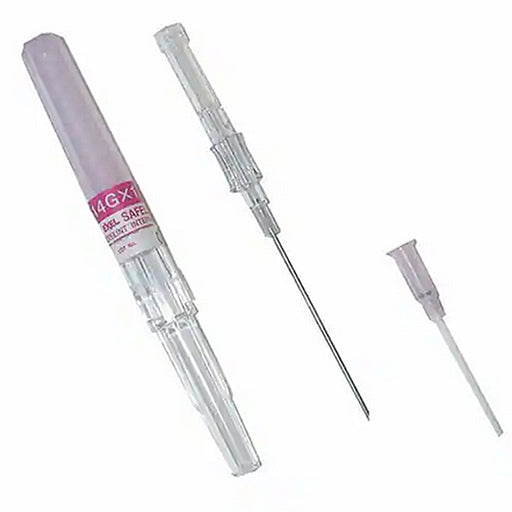
$ 75.00IV Catheter Needles by Exel, 50 Per Box
14 reviewsIV Catheter Needles Peripheral IV catheters (a.k.a. angiocaths or cannulas) are sterile needle/catheter assemblies used to infuse fluids or medicat...
View full details -
 Sale 34%
Original price $ 5.95Current price $ 3.95
Sale 34%
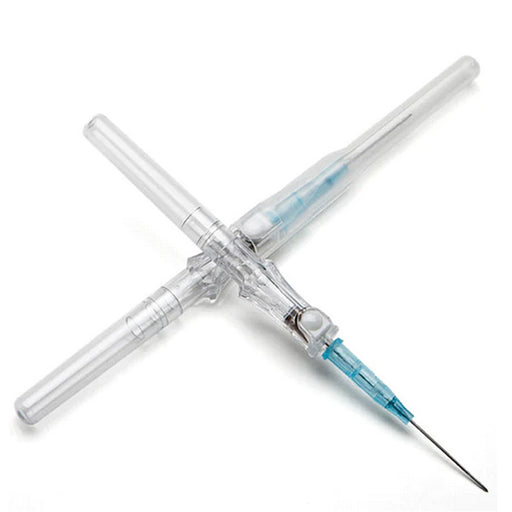
Original price $ 5.95Current price $ 3.95BD 22 Gauge x 1 inch Insyte IV Catheter Needle with Blood Control Blue (Each)
4 reviewsA BD 22 Gauge x 1 inch Insyte IV Catheter Needle is a medical device used for starting intravenous (IV) lines—meaning it is used to access a vein s...
View full details -
 Sale 33%
Original price $ 5.95Current price $ 3.98
Sale 33%
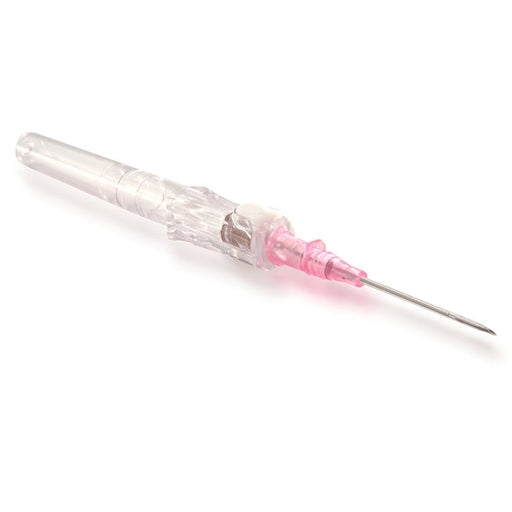
Original price $ 5.95Current price $ 3.98BD 20g x 1 inch Insyte IV Catheter Needle with Shielded Pink (Each)
5 reviewsThe Insyte IV Catheter is a top choice among healthcare professionals for its safety, reliability, and ease of insertion, making it essential for b...
View full details -
 Sale
$ 4.15
Sale
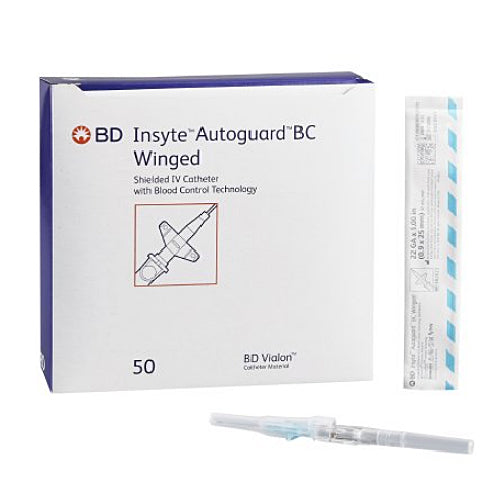
$ 4.15BD Insyte Autoguard IV Catheter BC Shielded with Button Retracting Safety Needle
3 reviewsBD Insyte Autoguard™ BC Shielded IV Catheter The BD Insyte Autoguard™ BC is a shielded safety peripheral IV catheter with built-in “Blood Control” ...
View full details🔒 Medical License Required -
 Sale 35%
Original price $ 5.95Current price $ 3.85
Sale 35%
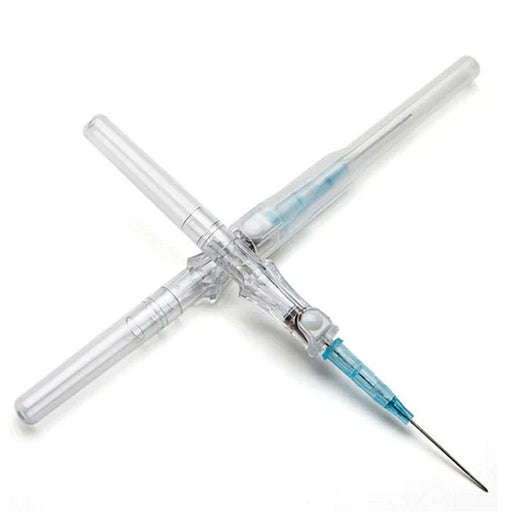
Original price $ 5.95Current price $ 3.85Insyte IV Catheter Needle, 22ga x 1 inch, Straight Hub, Retracting Needle (Each)
1 reviewBD 381423 Insyte Autoguard Blood Control Catheter Shielded 22 Gauge 1" are designed to provide security and safety to patients. They work by protec...
View full details -
 Sale 28%
Original price $ 5.95Current price $ 4.30
Sale 28%
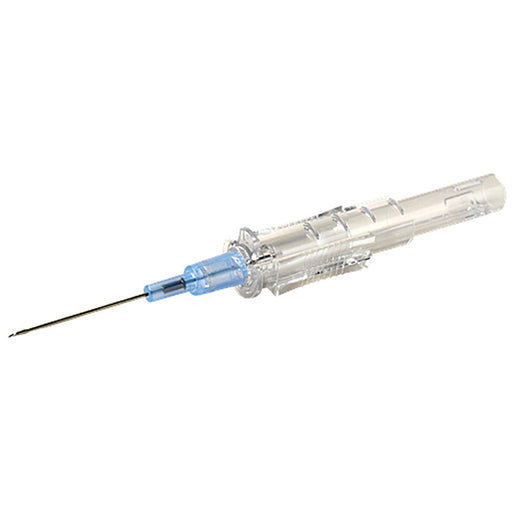
Original price $ 5.95Current price $ 4.30IV Catheter Needles PROTECTIV Plus Retracting Safety
3 reviewsThe Smiths Medical PROTECTIV Plus Safety IV Catheter Needles utilize a two-step safety mechanism that effectively guards healthcare workers against...
View full details🔒 Medical License Required -
 Sale
$ 8.95
Sale
$ 8.95BD Nexiva Closed IV Catheter System with Sliding Safety Shield
1 reviewBD Nexiva Closed IV Catheter System The BD Nexiva is a closed intravenous (IV) catheter system – essentially an all-in-one peripheral IV catheter (...
View full details🔒 Medical License Required -
 Sale 38%
Original price $ 5.99Current price $ 3.70
Sale 38%
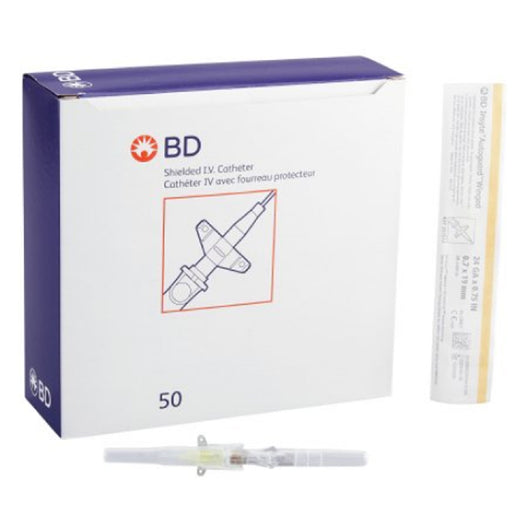
Original price $ 5.99Current price $ 3.70BD Insyte Autoguard Peripheral IV Catheter with Button Retracting Safety Needle
1 reviewThe Insyte Autoguard Peripheral IV Catheter with Button Retracting Safety Needle is a revolutionary medical device that has been specifically desig...
View full details -
 Sale 38%
Original price $ 5.95Current price $ 3.70
Sale 38%
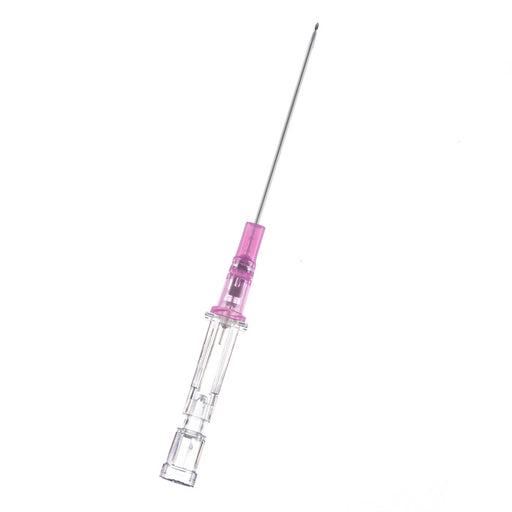
Original price $ 5.95Current price $ 3.70IV Catheter Needle Introcan Safety 20 g x 1 Inch Straight - B Braun
No reviewsB Braun IV Catheter Needle Introcan Safety 20 g x 1 Inch is an advanced medical device designed to ensure safe and efficient therapy delivery throu...
View full details🔒 Medical License Required -
 Sale 46%
Original price $ 5.99Current price $ 3.25
Sale 46%
Original price $ 5.99Current price $ 3.25ProtectIV Peripheral Safety IV Catheter with Straight Hub
No reviewsProtectIV Safety IV Catheter The ProtectIV (by ICU Medical) is a peripheral IV catheter with a built-in safety needle shield. It is a straight-hub ...
View full details🔒 Medical License Required -
 Sale
$ 165.00
Sale
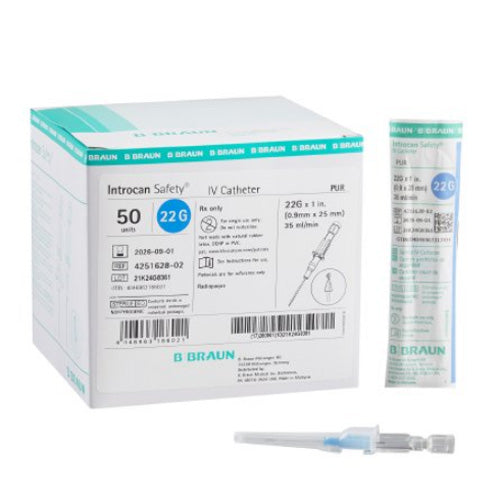
$ 165.00Introcan Safety IV Catheter Needles 22 gauge x 1 inch, Sterile 50/Box by B Braun
No reviewsBest IV Catheter for Hospitals, Clinics & EMS Elevate vascular access safety and patient comfort with the #1 clinician-trusted Introcan Safety ...
View full details🔒 Medical License Required -
 Sale
$ 172.00
Sale
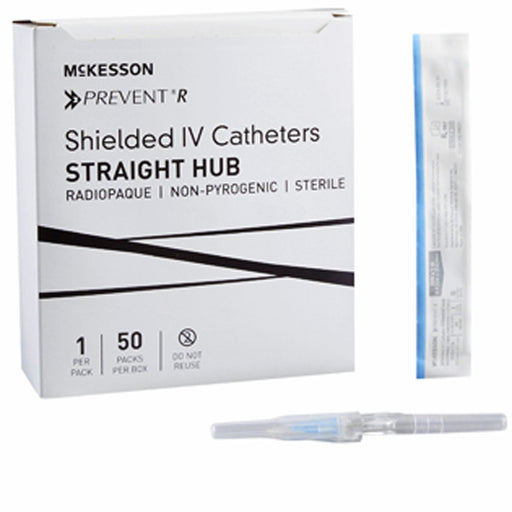
$ 172.00IV Catheters 22 gauge x 1" Prevent R Shielded with Button Retracting Safety Needle, 50/Box
1 reviewPrevent Shielded IV Catheter Needles with Button Retracting Safety Needle 22 gauge x 1" are uniquely designed needles that are designed to reduce t...
View full details🔒 Medical License Required -
 Sale 34%
Original price $ 5.95Current price $ 3.95
Sale 34%
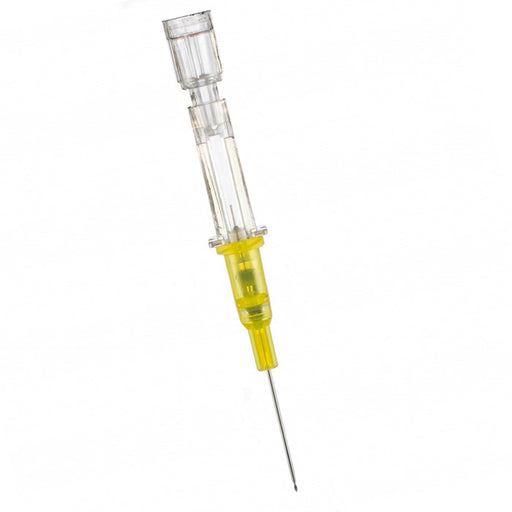
Original price $ 5.95Current price $ 3.95IV Catheter Needle 24 g x 0.75 Inch Introcan Safety Straight by B Braun
No reviewsThe Gold Standard for Patient Safety, Reliable Vascular Access, and Infection Prevention The IV Catheter Needle Introcan Safety 24g x 0.75 Inch Str...
View full details🔒 Medical License Required -
 Sale 40%
Original price $ 5.95Current price $ 3.59
Sale 40%
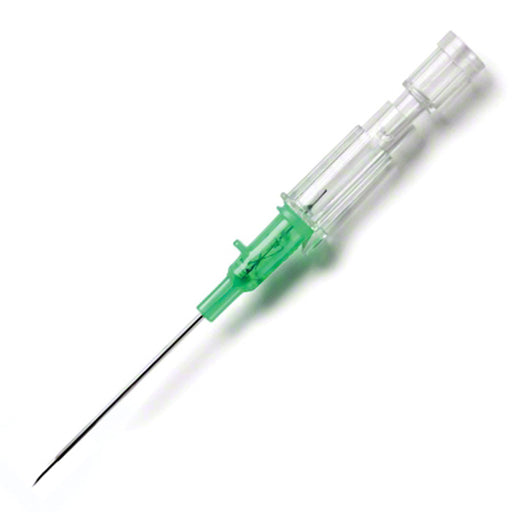
Original price $ 5.95Current price $ 3.59IV Catheter 18g x 1.25" Needle B Braun Introcan (Color Coded Green)
No reviewsThe B. Braun Introcan Safety® IV Catheter, 18G x 1.25" is engineered for secure, efficient, and safe vascular access in clinical, emergency, and ho...
View full details🔒 Medical License Required -
 Sale 51%
Original price $ 3.95Current price $ 1.95
Sale 51%
Original price $ 3.95Current price $ 1.95IV Catheter 22g x 1" Needle Size (Color Coded Blue) by Terumo EACH
No reviewsThe Terumo Surflo IV Catheter Needle, 22 Gauge x 1 inch, is an expertly designed medical device crafted for reliable and efficient venous access. W...
View full details🔒 Medical License Required -
 Sale
$ 4.10
Sale
$ 4.10Peripheral IV Catheter 24 Gauge 3/4" BD Insyte Autoguard BC with Blood Control Push Button Safety
1 reviewThe Peripheral IV Catheter Insyte Autoguard BC 24 Gauge 3/4 Inch is a type of intravenous catheter used for accessing a patient's venous system. It...
View full details🔒 Medical License Required -
 Sale
$ 2.95
Sale
$ 2.95Protectiv Plus-W IV Catheter, Winged Hub, Radiopaque
No reviewsProtectIV® Plus-Winged Safety IV Catheter (Radiopaque, Polyurethane) Catheter types: ProtectIV Plus-W (“winged” version) peripheral IV cannulas wit...
View full details🔒 Medical License Required -
 Sale 17%
Original price $ 199.95Current price $ 165.00
Sale 17%
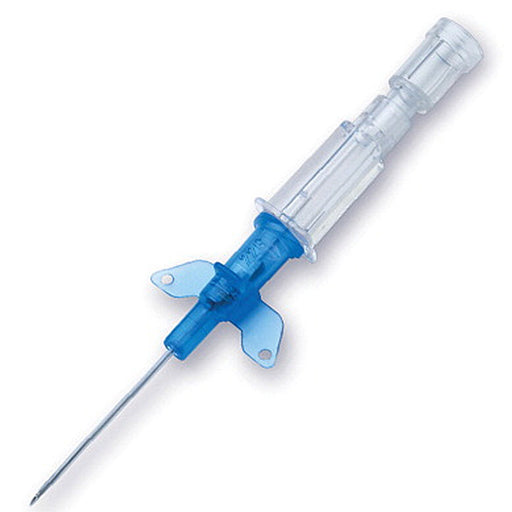
Original price $ 199.95Current price $ 165.00Introcan Safety Peripheral IV Catheter 22 Gauge 1 Inch Sliding Safety Needle, Winged Hub 50/Box
No reviewsThe B Braun Introcan Safety Peripheral IV Catheter is a type of medical device used to access a patient's veins for intravenous (IV) therapy. It is...
View full details🔒 Medical License Required -
 Sale 28%
Original price $ 5.25Current price $ 3.79
Sale 28%
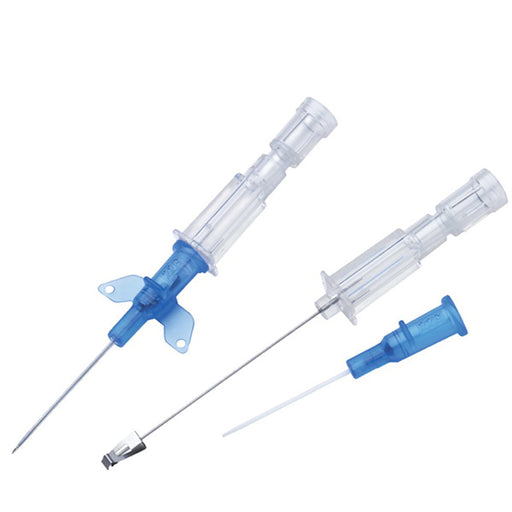
Original price $ 5.25Current price $ 3.79IV Catheter 24g x 0.75" B Braun Introcan with Winged Hub & Sliding Safety Needle
No reviewsThe B Braun IV Catheter Needle Introcan 24 Gauge x 0.75 Inch Sliding Safety Needle with Winged Hub by B Braun is a medical device used for administ...
View full details🔒 Medical License Required -
 Sale 17%
Original price $ 199.95Current price $ 165.00
Sale 17%
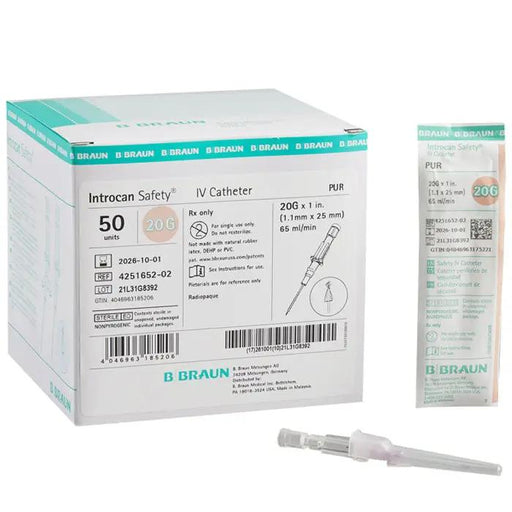
Original price $ 199.95Current price $ 165.00Introcan Safety Peripheral IV Catheter 20 Gauge 1 Inch Sliding Safety Needle, Straught Hub 50/Box
1 reviewThe B Braun Introcan Safety Peripheral IV Catheter is a medical device that is used to access the veins of a patient for the purpose of delivery me...
View full details🔒 Medical License Required -
 Sale 26%
Original price $ 229.95Current price $ 170.00
Sale 26%
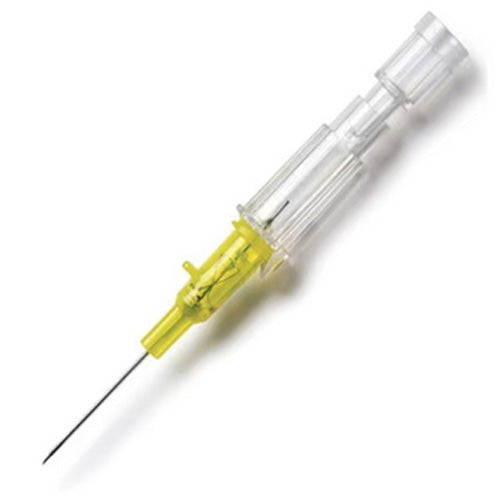
Original price $ 229.95Current price $ 170.00IV Catheter 24 gauge x 3/4" B Braun Introcan Safety IV Catheter Needle, Sterile 50/Box
No reviewsThe B Braun Introcan Safety IV Catheter Needle 24 gauge x 3/4" is a medical device used to access a patient's vein for the administration of fluids...
View full details🔒 Medical License Required -
 Sale 13%
Original price $ 6.89Current price $ 5.99
Sale 13%
Original price $ 6.89Current price $ 5.99IV Catheter Needle 22 gauge x 1 inch PROTECTIV Plus, Safety Retracting Needle, Radiopaque, Sterile
No reviewsElevate your patient care and ensure clinical safety with the PROTECTIV Plus IV Catheter Needle 22 Gauge x 1 inch—an advanced, safety-engineered me...
View full details -
 Sale 20%
Original price $ 4.99Current price $ 3.97
Sale 20%
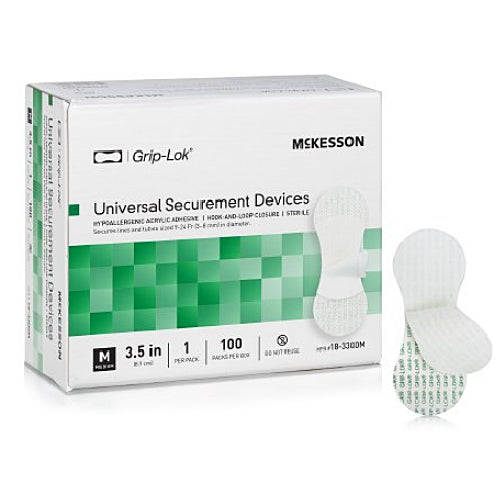
Original price $ 4.99Current price $ 3.97Grip-Lok Universal Securement Device for Catheter Lines, IV Tubing (1 EACH)
No reviewsGrip-Lok Universal Securement Device for Catheter Lines and IV Tubing is a revolutionary product designed to securely hold medical devices in place...
View full details -
 Sale 15%
Original price $ 199.95Current price $ 169.95
Sale 15%
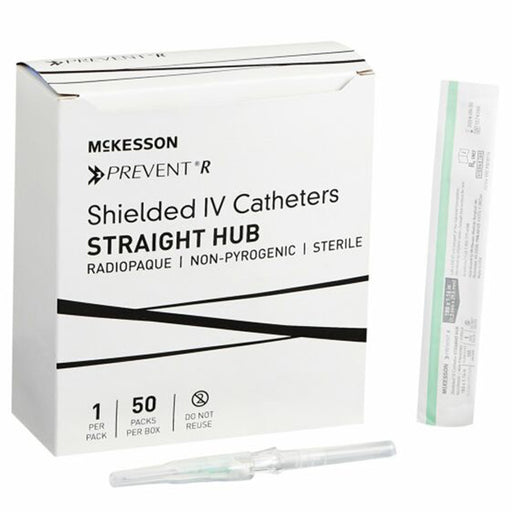
Original price $ 199.95Current price $ 169.95IV Catheter 18 Gauge x 1.16" Prevent R Peripheral with Button Retracting Safety Needles 50/Box
1 reviewPrevent R Peripheral IV Catheter 18 Gauge 1.16 Inch with Button Retracting Safety Needles is a medical device used to access a patient's veins for ...
View full details🔒 Medical License Required -
 Sale
$ 159.00
Sale
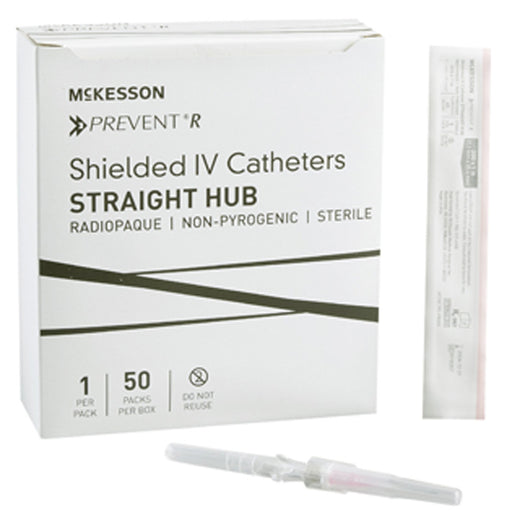
$ 159.00IV Catheters -Prevent R Shielded IV Catheter Needles with Button Retracting Safety Needle 20 gauge x 1", 50/Box
No reviewsMcKesson Prevent Shielded IV Catheter Needles with Button Retracting Safety Needle 20 gauge x 1" are uniquely designed needles that are designed to...
View full details🔒 Medical License Required -
 Sale 21%
Original price $ 239.95Current price $ 189.95
Sale 21%
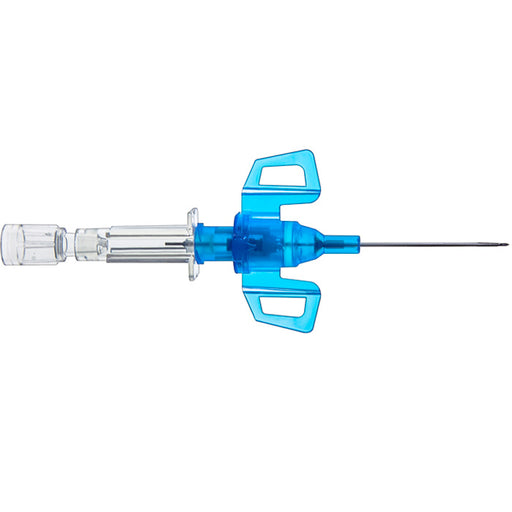
Original price $ 239.95Current price $ 189.95Introcan Safety 3 Closed IV Catheter 22 Gauge x 1 inch, PUR, Winged Hub 50/Box
No reviewsB Braun Introcan Safety 3 Closed IV Catheter 22 Gauge x 1 inch, PUR, Winged, 50/Box is a medical device used for venipuncture, which is the process...
View full details🔒 Medical License Required -
 Sale
$ 165.00
Sale
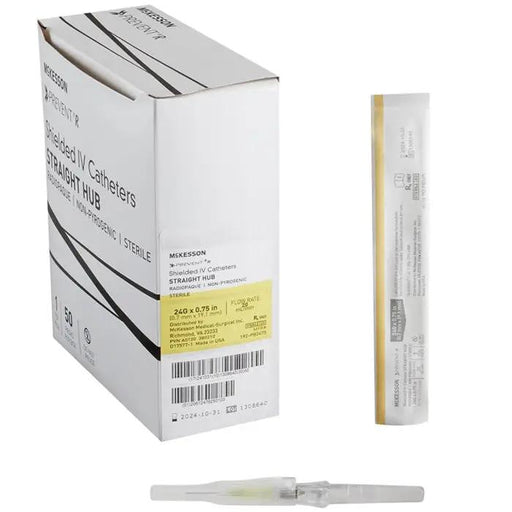
$ 165.00Peripheral IV Catheter 24 Gauge x 3/4" Prevent with Button Retracting Safety Needle 50/Box
No reviewsMcKesson 192-PB2475 Prevent Peripheral IV Catheter is a medical device used for intravenous therapy. It consists of a 24 gauge peripheral catheter ...
View full details🔒 Medical License Required -
 Sale 23%
Original price $ 259.95Current price $ 199.00
Sale 23%
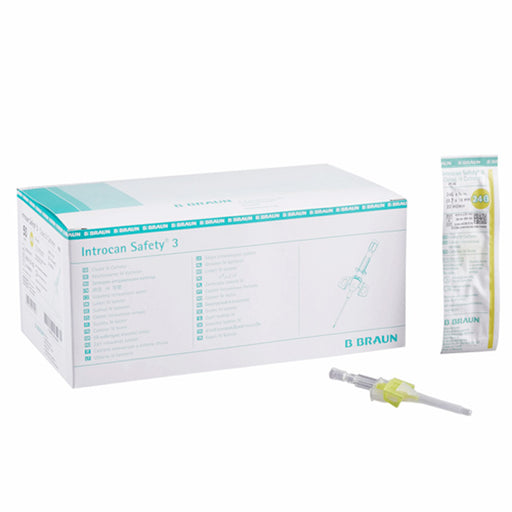
Original price $ 259.95Current price $ 199.00IV Catheter 24 Gauge x 0.75" with Safety Needle, Introcan Safety 3 Closed 50/Box
No reviewsB Braun Introcan Safety® 3 Closed IV Catheter 24 Gauge x 0.75 inch is a type of intravenous (IV) catheter that is used for administering fluids, me...
View full details🔒 Medical License Required -
 Sale 14%
Original price $ 450.00Current price $ 389.00
Sale 14%
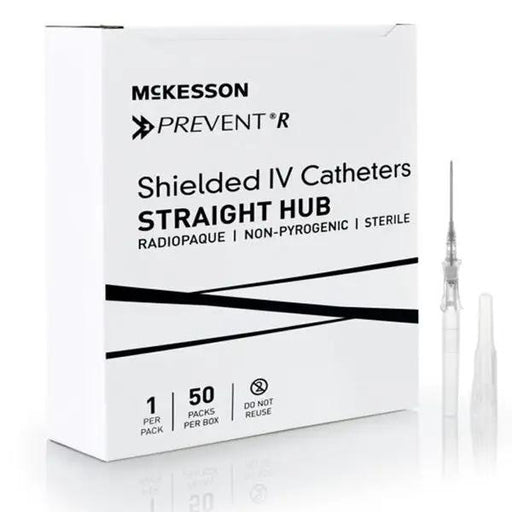
Original price $ 450.00Current price $ 389.00IV Catheter 16 Gauge x 1.16" Prevent R Peripheral with Button Retracting Safety Needle 50/Box
No reviewsPrevent R Peripheral IV Catheter is a medical device used for intravenous therapy to access and administer fluids, medications, and blood products....
View full details🔒 Medical License Required -
 Sale 16%
Original price $ 285.00Current price $ 239.00
Sale 16%
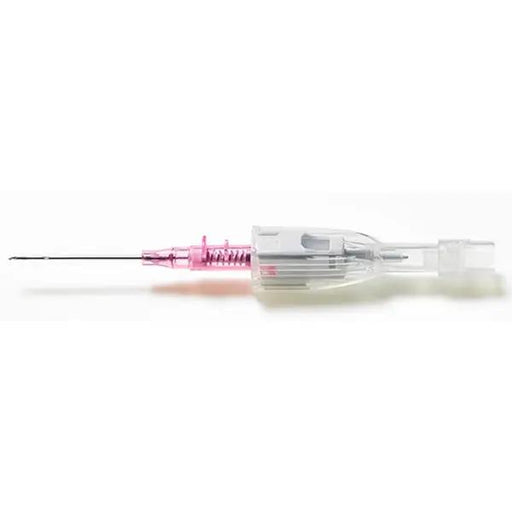
Original price $ 285.00Current price $ 239.00BD 20g x 1 inch Cathene Safety IV Catheter 50 box
No reviewsBD 386862 Cathena Safety IV Catheter is a medical device used for intravenous (IV) infusion or therapy. It is designed with BD Multiguard Technolog...
View full details


People Also Searched For
IV Catheter Needles
Peripheral IV catheters (a.k.a. angiocaths or cannulas) are sterile needle/catheter assemblies used to infuse fluids or medications into veins. The device consists of a hollow steel needle inside a soft plastic catheter. During insertion a blood flashback is seen in the needle’s chamber; then the needle is withdrawn, leaving only the flexible catheter in the vein. All devices include a beveled needle and flashback chamber to confirm venipuncture, plus a Luer-lock hub for tubing. Catheters may be “shielded” (sheathed after use) or “winged” (butterfly needles with plastic wings and attached tubing) for secure handling. Modern IV catheters often have safety features (needle‐sheathing mechanisms) to prevent needlestick injury.
Uses of IV Catheters include:
- Fluid and Medication Infusion: They allow safe delivery of intravenous fluids (like saline or glucose), medications (antibiotics, pain relievers, chemotherapy, etc.), blood products, or nutrients directly into the circulatory system.
- Blood Sampling or Transfusion: IV catheters can be used to draw blood for testing without repeated needle pokes, or to infuse donated blood or plasma.
- Emergency and ICU Use: In emergencies, IV catheters enable rapid infusion of life-saving fluids or drugs (e.g., during shock or major surgery). Central IV catheters (longer lines placed in large chest or neck veins) are used for intensive care or long-term intravenous therapy.
- Sites of Insertion: Most IV catheters are placed in peripheral veins of the arm, hand, or leg. For long-term needs, special catheters (like PICC lines or central venous catheters) may be threaded into larger veins in the chest or neck.
- Professional Insertion: IV catheter placement must be done using sterile technique by trained medical staff. A small needle inside the catheter helps insert it into the vein; after placement, the needle is removed, and only the soft plastic catheter remains in the vein. The catheter is then secured to the skin and connected to IV tubing and a fluid source (like an IV bag) for the prescribed infusion.
In summary, an IV catheter is the essential tubing that provides a direct, reliable pathway into a vein. It is the first component of any IV infusion setup, allowing ongoing delivery of fluids or drugs into the bloodstream under medical supervision.
Types of IV Catheters and Devices
- Standard peripheral IV (angiocatheter): The most common. A short (typically 1–1¼ inch) steel needle mounted inside a pliable plastic cannula. After puncturing a vein at ~10–30° (bevel up), the cannula is threaded off the needle, which is then removed. The remaining catheter has a Luer-lock fitting and is secured with a transparent dressing. Variations include plain straight catheters or ones with stabilizing wings or attached extension tubing.
- Winged (“butterfly”) needles: These have 1–1.5 inch needles with flexible plastic wings and short tubing. They are colored by gauge and used for short-term infusions or blood draws. They are not usually left in place long-term (often replaced by a standard catheter if extended IV access is needed).
- Safety IV catheters: Many catheters now have built-in needle‐retraction or locking features. After threading the catheter, the needle is automatically shielded or retracted to reduce accidental sticks. Regardless, all used needles must go into a sharps container.
Gauges, Sizes and Color-Coding
IV catheter sizes are given in gauge (G) – a smaller gauge number means a larger bore. Common peripheral gauges include 14G (very large), 16G, 18G, 20G, 22G, 24G, and 26G (very small). Typical adult therapy uses 18–20G, whereas large-bore (14–16G) catheters are reserved for massive transfusions or high-flow fluids. Tiny 22–24G catheters go into smaller veins (elderly or pediatric patients). Each gauge has a standard hub color for quick ID: for example, green hubs are 18G, pink are 20G, blue are 22G, yellow 24G, purple 26G (and orange 14G, gray 16G). This helps staff verify correct size at a glance. (Again, lower gauge = larger needle and higher flow.)
Common Gauge Examples:
- 14G (orange hub): Very large bore, used for trauma/blood.
- 16G (gray): Large trauma/OR lines.
- 18G (green): High-flow fluids, blood products.
- 20G (pink): Routine adult IV fluids/meds.
- 22G (blue): Small adult or child IV, or elderly frail veins.
- 24G (yellow): Pediatric or very small, fragile veins.
- 26G (purple): Rarely used for IV (more for injections)
Popular Brands and Types
Leading Brands:
- BD (Becton Dickinson) Insyte™ Autoguard™
- AngioDynamics Deltaven®
- Smiths Medical Jelco® IV Catheters
- B. Braun Introcan Safety®
- Terumo SurFlash™
- Vygon
- Medline Venflon™
- Cardinal Health SecureStick™
Sizes (Gauge/Length Options)
-
Gauge Colours (international standard for fast identification):
- 14G (orange): Large bore, trauma/resuscitation (1.5–2 inches)
- 16G (grey): Major surgery/rapid volume (1–2 inches)
- 18G (green): Blood transfusion, fluids, surgery (1–1.25 inches)
- 20G (pink): Medications, routine fluids (1–1.25 inches)
- 22G (blue): Elderly, children, routine meds (0.75–1 inch)
- 24G (yellow): Neonate/pediatric, sensitive veins (0.75 inch)
- Lengths usually range from 0.75 to 2 inches, depending on vein depth and application.
Insertion Technique (Step-by-Step)
Preparation: Perform hand hygiene and don clean gloves. Confirm the provider’s order and patient ID; review any allergies (e.g. to dressings or antiseptics). Assemble equipment: the IV catheter of appropriate gauge, a tourniquet, alcohol/chlorhexidine swabs, gauze/tape or transparent dressing, and a syringe of saline for flush. Prime (flush) the extension tubing or IV lock connector if in kit.
-
Select a Vein: Apply a tourniquet ~4–6 inches above the intended site (arm or hand). Ask the patient to make a fist. Palpate firmly to “roll out” a straight, well-filled vein (e.g. on the forearm or hand). If needed, lower the arm or apply warm compress to distend veins. The MSD Manual advises: “Apply a tourniquet… have the patient make a fist, and palpate… large-diameter vein that is nonmobile and has good turgor”. Release the fist and tourniquet while preparing to insert.
-
Clean the Site: Wipe the insertion site with 70% alcohol or chlorhexidine (avoid touching it again). Let the antiseptic fully dry. This reduces infection risk.
-
Needle Insertion: Remove the cap from the catheter’s needle. With your non-dominant hand, anchor the vein by stretching the skin taut just distal to the insertion point. Hold the catheter bevel-up between thumb and fingers. Pierce the skin at a shallow 10–30° angle aiming along the vein. Advance until you see blood in the needle’s flashback chamber. This confirms entry into the vein lumen.
-
Advance the Catheter: Once flashback is seen, lower the needle angle nearly parallel to the skin and advance a few millimeters. Then, shove the plastic catheter (not the needle) forward into the vein until its hub rests against the skin. Hold the catheter hub and withdraw the needle completely. (Some techniques push catheter then peel back needle.) Immediately release the tourniquet and apply gentle pressure just above the site (to prevent blood from squirting).
-
Secure and Flush: Quickly attach the extension tubing or saline lock, tape it in place, and aspirate gently for blood return. Flush with about 2–5 mL normal saline to check patency (no resistance, no swelling). The catheter should flush easily and blood (if withdrawn) should flow freely. Apply a sterile transparent dressing (e.g. Tegaderm) over the site, securing the hub and any extension tubing to avoid kinking. Tag the dressing with date/time and catheter size if required.
-
Operator Tips: Use a steady, one-handed technique: once the vein is cannulated, advance the catheter smoothly without significant torque. Never reuse a needle or reinsert it into the catheter. If the flashback fails, withdraw entirely and try a new site/needle (multiple attempts should be minimal). After placement, label the IV dressing per facility policy. Finally, dispose of the used needle immediately into a sharps container.
Safety and Monitoring: Always use aseptic technique. Monitor the site for infiltration (swelling/bleeding), phlebitis (redness, pain), or occlusion. If any complication arises, consult a practitioner before further infusion. According to guidelines, peripheral catheters are usually replaced every 72–96 hours or per protocol to lower infection risk
Precautions
- Strict Aseptic Technique: Required for insertion/removal to prevent bloodstream infection and phlebitis.
- Monitor IV Site: Inspect regularly for redness, swelling, pain, infiltration, or infection—stop use if issues arise.
- Secure Properly: Use approved dressings/tapes/securement devices to prevent dislodgement or kinking.
- Single Use Only: All IV catheter needles are single-use for infection prevention—never reuse or share between patients.
- Needlestick Safety: Use safety-engineered devices to minimise healthcare worker exposure; never recap.
- Correct Sizing: Select the smallest gauge needed for therapy to minimise patient discomfort and vein trauma.
- Remove Promptly: Discontinue as soon as no longer medically necessary to prevent catheter-related complications.
Depend on FDA-approved IV Catheter Needles for safe, accurate, and comfortable venous access—trusted by hospitals, infusion clinics, ERs, and home care teams. Choose top brands like BD, Jelco, Braun, Vygon, and more in a full range of gauge sizes for every patient and every therapy. Shop the best IV catheters online for critical care, emergency medicine, pediatric infusion, and daily hospital supply!
- This collection covers peripheral IV catheter needles and cannula catheter needles for intravenous fluid and medication delivery in professional clinical settings.
- Products are available in gauge sizes 14G through 24G, including 18-gauge IV catheter, 20-gauge IV catheter, 22-gauge IV needle, and 24-gauge needle configurations.
- All IV catheter needles are single-use, sterile medical devices intended for use by licensed healthcare professionals only.
- Wholesale pricing is available to qualifying clinics, hospitals, EMS agencies, medspas, dental practices, and institutional buyers across the United States.
- Free shipping applies to orders over $100; new account holders receive 5% off their first purchase.
- Products require valid healthcare professional or institutional credentials for purchase — contact sales@mountainside-medical.com or +1 (888) 687-4334 for licence verification queries.
- Standard Peripheral IV Catheters: Over-the-needle designs for routine IV access — the most widely used catheter needle type in hospital and clinic settings. Includes 18g IV needle, 20 gauge IV, and 22 gauge IV needle options.
- Safety IV Catheter Needles: Feature passive or active needlestick shielding mechanisms designed to support compliance with OSHA 29 CFR 1910.1030 bloodborne pathogen standards. Includes the BD Insyte Autoguard Shielded IV Catheter.
- Flexible IV Needle / Winged (Butterfly) Catheters: Designed for a flexible needle for IV insertion in fragile, small, or difficult-to-access veins — suitable for paediatric, geriatric, and oncology patient populations.
- Large-Bore IV Catheter Needles: 14-gauge IV catheter and 16-gauge IV catheter options for trauma, rapid fluid resuscitation, and major surgical procedures requiring high flow rates.
- Paediatric & Neonatal IV Catheters: 22-gauge needle IV and 24-gauge needle configurations designed for small vein access in neonatal, paediatric, and sensitive patient populations.
- Brand-Specific Lines: BD IV catheter, Braun IV catheter (B. Braun Introcan Safety®), Smiths Medical Jelco®, and Vygon Venflon™ peripheral catheter ranges stocked for formulary-aligned procurement.
| Catheter Type | Key Feature | Primary Setting | Gauge Range Available | Needlestick Safety |
|---|---|---|---|---|
| Standard Peripheral IV Catheter | Over-the-needle design; cost-effective for high-volume use | Hospital ward, clinic, infusion centre | 14G – 24G | Standard (manual precautions required) |
| Safety IV Catheter Needle (e.g. BD Insyte Autoguard) | Passive or active shielding mechanism on needle withdrawal | High-risk needlestick environments; OSHA-compliant facilities | 18G – 24G (varies by brand) | Engineered needlestick protection |
| Flexible IV Needle / Winged Catheter | Flexible wings for single-handed insertion; reduced vein trauma | Paediatric, geriatric, oncology, and home health | 20G – 24G | Standard (varies by model) |
| Large-Bore IV Catheter (14G / 16G) | Maximum flow rate for rapid volume infusion | Emergency department, trauma, major surgery, ICU | 14G, 16G | Standard or safety models available |
- Blood Transfusion: The 18-gauge IV catheter is the minimum gauge recommended for red blood cell transfusion to maintain adequate flow rates, per AABB Technical Manual guidance.
- Routine Medication & Fluid Delivery: The 20-gauge IV catheter is the most commonly placed peripheral line for standard IV fluid infusion and routine medication administration in adult inpatient settings.
- Paediatric & Neonatal IV Access: The 22-gauge needle IV and 24-gauge needle are designed for small vein catheterisation in paediatric and neonatal patients, where minimising vein trauma is clinically essential.
- Emergency & Trauma Resuscitation: The 14-gauge IV catheter and 16-gauge IV catheter support rapid volume replacement and emergency drug administration in trauma, surgical, and ICU environments.
- Medspa & Aesthetic IV Infusion: Peripheral IV catheter needles in 20G and 22G are used by aesthetic and wellness professionals for IV vitamin infusion therapies administered under licensed medical supervision.
- EMS & Pre-Hospital Care: Safety IV catheter needles and standard peripheral catheters support pre-hospital venous access for fluid and drug delivery in ambulance and first-responder settings.
This product is intended for use by qualified healthcare professionals or under the guidance of a licensed medical provider. It is not a substitute for professional medical advice, diagnosis, or treatment.
- Match gauge to therapy flow requirement: Use the 14-gauge IV catheter or 16-gauge IV catheter for rapid volume infusion; select the 18-gauge IV needle or 20-gauge IV catheter for standard adult infusion and blood products; choose the 22-gauge needle IV or 24-gauge needle for paediatric, neonatal, or fragile vein access.
- Select catheter type by care setting: Safety IV catheter needles are recommended for settings with high needlestick exposure risk. Flexible IV needle or winged designs are preferred for difficult peripheral vein access or single-handed insertion scenarios.
- Use gauge colour coding to reduce preparation error: The 20 gauge IV colour is pink; the blue IV size is 22G; 18G is green. International colour coding is consistent across BD, B. Braun, and Jelco product lines to support rapid bedside identification.
- Choose brand by formulary alignment: If your facility standardises on a specific brand of IV catheter, select from the BD IV catheter, Braun IV catheter, or Jelco ranges stocked in this collection. Contact our sales team to confirm current SKU availability for specific models.
- Confirm licensing requirements before ordering: Products in this collection are intended for licensed healthcare professionals. Ensure your account reflects a valid medical or institutional licence to avoid order fulfilment delays.
- For bulk or high-volume procurement: Contact Mountainside Medical directly at sales@mountainside-medical.com or +1 (888) 687-4334 to discuss volume pricing and availability for standing orders.
- Free US shipping on all orders over $100 — Mountainside Medical ships nationwide to qualifying healthcare facilities, clinics, EMS agencies, and institutional buyers.
- New account holders receive 5% off their first purchase — applicable to all IV catheter needles and peripheral IV catheter orders.
- Wholesale and bulk pricing is available for high-volume orders. Contact the sales team at sales@mountainside-medical.com or call +1 (888) 687-4334 to discuss volume pricing tiers for standing or recurring orders.
- Licensing requirements: A valid medical, nursing, or institutional licence may be required to complete the purchase of certain IV catheter products. Mountainside Medical verifies credentials in accordance with applicable federal and state regulations.
- Order support: For product availability, order status, or procurement assistance, contact the Mountainside Medical team directly — Monday through Friday during standard business hours.
- Returns and quality issues: Contact sales@mountainside-medical.com with your order number and product details. Mountainside Medical is committed to supplying products that meet the expectations of licensed clinical buyers.
All IV catheter needles and peripheral IV catheters listed in this collection are Class II medical devices regulated under FDA 21 CFR Part 880 and are intended exclusively for purchase and use by licensed healthcare professionals or qualified institutional buyers operating under applicable federal and state regulations.
These products are single-use only. Reuse between patients or across clinical procedures is contraindicated and constitutes a violation of CDC Guidelines for the Prevention of Intravascular Catheter-Related Infections (CDC, 2011, updated 2017). Never recap, reuse, or share IV catheter needles between patients.
IV catheter insertion and removal must be performed using strict aseptic technique by trained clinical personnel. Mountainside Medical Equipment does not provide clinical training, insertion guidance, or patient care advice. Nothing on this page constitutes medical advice, a clinical recommendation, or a substitute for professional medical judgment.
Product specifications, availability, and regulatory status are subject to change. Mountainside Medical makes no warranty — express or implied — regarding the suitability of any product for a specific clinical application. Buyers are responsible for confirming product suitability within their clinical protocols before use.
Regulatory certification details beyond those confirmed in product-level documentation are not specified in provided data. Do not infer regulatory clearance status from brand name or product category alone.
For clinical or regulatory queries, consult the product insert, the relevant manufacturer, or contact Mountainside Medical at sales@mountainside-medical.com.
-
What is the difference between an IV catheter needle and a standard needle?
A standard needle is a solid or hollow metal shaft used for a single injection or blood draw and is removed immediately after use. An IV catheter needle — also called a cannula catheter needle — consists of a soft, flexible plastic cannula loaded over a sharp introducer needle. Once the vein is accessed, the introducer needle is withdrawn and the flexible cannula remains in the vein, providing ongoing access for fluid or medication delivery without repeated needle insertions. The catheter is secured in place and connected to IV tubing for continuous infusion.
-
What gauge IV catheter is used for blood transfusions?
The American Association of Blood Banks (AABB) recommends a minimum of an 18 gauge IV catheter for red blood cell transfusions to maintain adequate flow rates and reduce the risk of haemolysis during infusion. A 20 gauge IV catheter may be used when an 18G line cannot be placed, though flow rate will be reduced. Gauges smaller than 20G are generally not recommended for blood transfusion in adult patients.
-
What does the colour of an IV catheter indicate?
IV catheter needle colour coding follows the international gauge identification standard used across all major brands — BD, B. Braun, Jelco, and Vygon included. The 20 gauge IV color is pink; the blue IV size is 22G; 18G catheters are green; 16G is grey; 14G is orange; and 24G is yellow. This colour system allows clinical teams to identify the correct gauge at a glance during preparation, reducing selection errors at the bedside.
-
Can I buy IV catheter needles without a prescription or medical licence?
IV catheter needles are Class II medical devices regulated under FDA 21 CFR Part 880 and are intended for purchase by licensed healthcare professionals and qualified institutional buyers. Some products in this collection may require verification of a valid medical, nursing, or institutional licence prior to order fulfilment. Mountainside Medical complies with applicable federal and state regulations governing the sale of medical devices. Contact sales@mountainside-medical.com or +1 (888) 687-4334 for credential verification queries.
-
What is the most commonly used peripheral IV catheter gauge in adults?
The 20 gauge IV catheter is the most commonly placed peripheral IV line in adult inpatient settings. It provides a balance between adequate flow rate for routine medication and fluid delivery and minimised patient discomfort during insertion. The 18g IV needle is used when higher flow rates are required — for example, during blood transfusion, surgical fluid replacement, or delivery of viscous medications.
-
Which IV catheter brands does Mountainside Medical stock?
Mountainside Medical stocks IV catheter needles from the leading brands of IV catheters used in US healthcare institutions, including BD (BD IV catheter and BD Insyte Autoguard Shielded IV Catheter), B. Braun (Braun IV catheter — Introcan Safety® line), Smiths Medical Jelco®, and Vygon (Venflon™). Brand availability by gauge size and catheter type is confirmed at the product level within this collection. Contact our sales team for formulary-specific procurement support.
-
Are IV catheter needles single-use only?
Yes. All IV catheter needles in this collection are single-use medical devices. Reuse between patients or across procedures is clinically contraindicated and violates CDC Guidelines for the Prevention of Intravascular Catheter-Related Infections. Single-use policy applies regardless of visual appearance or perceived sterility of the device after initial use. Used IV catheter needles must be disposed of in accordance with applicable medical sharps disposal regulations.
-
What is the difference between a flexible IV needle and a standard peripheral catheter?
A flexible IV needle — sometimes called a flexible needle for IV or winged catheter — incorporates a winged grip and a more pliable cannula design intended to facilitate insertion in small, fragile, or difficult-to-access peripheral veins. Standard over-the-needle peripheral catheters are designed for routine venous access in patients with accessible peripheral veins. Flexible and winged designs are particularly suited to paediatric, geriatric, oncology, and home health patients where vein integrity or patient cooperation may complicate standard insertion technique.
- This collection covers peripheral IV catheter needles and cannula catheter needles for intravenous fluid and medication delivery in professional clinical settings.
- Products are available in gauge sizes 14G through 24G, including 18-gauge IV catheter, 20-gauge IV catheter, 22-gauge IV needle, and 24-gauge needle configurations.
- All IV catheter needles are single-use, sterile medical devices intended for use by licensed healthcare professionals only.
- Wholesale pricing is available to qualifying clinics, hospitals, EMS agencies, medspas, dental practices, and institutional buyers across the United States.
- Free shipping applies to orders over $100; new account holders receive 5% off their first purchase.
- Products require valid healthcare professional or institutional credentials for purchase — contact sales@mountainside-medical.com or +1 (888) 687-4334 for licence verification queries.
- Standard Peripheral IV Catheters: Over-the-needle designs for routine IV access — the most widely used catheter needle type in hospital and clinic settings. Includes 18g IV needle, 20 gauge IV, and 22 gauge IV needle options.
- Safety IV Catheter Needles: Feature passive or active needlestick shielding mechanisms designed to support compliance with OSHA 29 CFR 1910.1030 bloodborne pathogen standards. Includes the BD Insyte Autoguard Shielded IV Catheter.
- Flexible IV Needle / Winged (Butterfly) Catheters: Designed for a flexible needle for IV insertion in fragile, small, or difficult-to-access veins — suitable for paediatric, geriatric, and oncology patient populations.
- Large-Bore IV Catheter Needles: 14-gauge IV catheter and 16-gauge IV catheter options for trauma, rapid fluid resuscitation, and major surgical procedures requiring high flow rates.
- Paediatric & Neonatal IV Catheters: 22-gauge needle IV and 24-gauge needle configurations designed for small vein access in neonatal, paediatric, and sensitive patient populations.
- Brand-Specific Lines: BD IV catheter, Braun IV catheter (B. Braun Introcan Safety®), Smiths Medical Jelco®, and Vygon Venflon™ peripheral catheter ranges stocked for formulary-aligned procurement.
| Catheter Type | Key Feature | Primary Setting | Gauge Range Available | Needlestick Safety |
|---|---|---|---|---|
| Standard Peripheral IV Catheter | Over-the-needle design; cost-effective for high-volume use | Hospital ward, clinic, infusion centre | 14G – 24G | Standard (manual precautions required) |
| Safety IV Catheter Needle (e.g. BD Insyte Autoguard) | Passive or active shielding mechanism on needle withdrawal | High-risk needlestick environments; OSHA-compliant facilities | 18G – 24G (varies by brand) | Engineered needlestick protection |
| Flexible IV Needle / Winged Catheter | Flexible wings for single-handed insertion; reduced vein trauma | Paediatric, geriatric, oncology, and home health | 20G – 24G | Standard (varies by model) |
| Large-Bore IV Catheter (14G / 16G) | Maximum flow rate for rapid volume infusion | Emergency department, trauma, major surgery, ICU | 14G, 16G | Standard or safety models available |
- Blood Transfusion: The 18-gauge IV catheter is the minimum gauge recommended for red blood cell transfusion to maintain adequate flow rates, per AABB Technical Manual guidance.
- Routine Medication & Fluid Delivery: The 20-gauge IV catheter is the most commonly placed peripheral line for standard IV fluid infusion and routine medication administration in adult inpatient settings.
- Paediatric & Neonatal IV Access: The 22-gauge needle IV and 24-gauge needle are designed for small vein catheterisation in paediatric and neonatal patients, where minimising vein trauma is clinically essential.
- Emergency & Trauma Resuscitation: The 14-gauge IV catheter and 16-gauge IV catheter support rapid volume replacement and emergency drug administration in trauma, surgical, and ICU environments.
- Medspa & Aesthetic IV Infusion: Peripheral IV catheter needles in 20G and 22G are used by aesthetic and wellness professionals for IV vitamin infusion therapies administered under licensed medical supervision.
- EMS & Pre-Hospital Care: Safety IV catheter needles and standard peripheral catheters support pre-hospital venous access for fluid and drug delivery in ambulance and first-responder settings.
This product is intended for use by qualified healthcare professionals or under the guidance of a licensed medical provider. It is not a substitute for professional medical advice, diagnosis, or treatment.
- Match gauge to therapy flow requirement: Use the 14-gauge IV catheter or 16-gauge IV catheter for rapid volume infusion; select the 18-gauge IV needle or 20-gauge IV catheter for standard adult infusion and blood products; choose the 22-gauge needle IV or 24-gauge needle for paediatric, neonatal, or fragile vein access.
- Select catheter type by care setting: Safety IV catheter needles are recommended for settings with high needlestick exposure risk. Flexible IV needle or winged designs are preferred for difficult peripheral vein access or single-handed insertion scenarios.
- Use gauge colour coding to reduce preparation error: The 20 gauge IV colour is pink; the blue IV size is 22G; 18G is green. International colour coding is consistent across BD, B. Braun, and Jelco product lines to support rapid bedside identification.
- Choose brand by formulary alignment: If your facility standardises on a specific brand of IV catheter, select from the BD IV catheter, Braun IV catheter, or Jelco ranges stocked in this collection. Contact our sales team to confirm current SKU availability for specific models.
- Confirm licensing requirements before ordering: Products in this collection are intended for licensed healthcare professionals. Ensure your account reflects a valid medical or institutional licence to avoid order fulfilment delays.
- For bulk or high-volume procurement: Contact Mountainside Medical directly at sales@mountainside-medical.com or +1 (888) 687-4334 to discuss volume pricing and availability for standing orders.
- Free US shipping on all orders over $100 — Mountainside Medical ships nationwide to qualifying healthcare facilities, clinics, EMS agencies, and institutional buyers.
- New account holders receive 5% off their first purchase — applicable to all IV catheter needles and peripheral IV catheter orders.
- Wholesale and bulk pricing is available for high-volume orders. Contact the sales team at sales@mountainside-medical.com or call +1 (888) 687-4334 to discuss volume pricing tiers for standing or recurring orders.
- Licensing requirements: A valid medical, nursing, or institutional licence may be required to complete the purchase of certain IV catheter products. Mountainside Medical verifies credentials in accordance with applicable federal and state regulations.
- Order support: For product availability, order status, or procurement assistance, contact the Mountainside Medical team directly — Monday through Friday during standard business hours.
- Returns and quality issues: Contact sales@mountainside-medical.com with your order number and product details. Mountainside Medical is committed to supplying products that meet the expectations of licensed clinical buyers.
All IV catheter needles and peripheral IV catheters listed in this collection are Class II medical devices regulated under FDA 21 CFR Part 880 and are intended exclusively for purchase and use by licensed healthcare professionals or qualified institutional buyers operating under applicable federal and state regulations.
These products are single-use only. Reuse between patients or across clinical procedures is contraindicated and constitutes a violation of CDC Guidelines for the Prevention of Intravascular Catheter-Related Infections (CDC, 2011, updated 2017). Never recap, reuse, or share IV catheter needles between patients.
IV catheter insertion and removal must be performed using strict aseptic technique by trained clinical personnel. Mountainside Medical Equipment does not provide clinical training, insertion guidance, or patient care advice. Nothing on this page constitutes medical advice, a clinical recommendation, or a substitute for professional medical judgment.
Product specifications, availability, and regulatory status are subject to change. Mountainside Medical makes no warranty — express or implied — regarding the suitability of any product for a specific clinical application. Buyers are responsible for confirming product suitability within their clinical protocols before use.
Regulatory certification details beyond those confirmed in product-level documentation are not specified in provided data. Do not infer regulatory clearance status from brand name or product category alone.
For clinical or regulatory queries, consult the product insert, the relevant manufacturer, or contact Mountainside Medical at sales@mountainside-medical.com.
-
What is the difference between an IV catheter needle and a standard needle?
A standard needle is a solid or hollow metal shaft used for a single injection or blood draw and is removed immediately after use. An IV catheter needle — also called a cannula catheter needle — consists of a soft, flexible plastic cannula loaded over a sharp introducer needle. Once the vein is accessed, the introducer needle is withdrawn and the flexible cannula remains in the vein, providing ongoing access for fluid or medication delivery without repeated needle insertions. The catheter is secured in place and connected to IV tubing for continuous infusion.
-
What gauge IV catheter is used for blood transfusions?
The American Association of Blood Banks (AABB) recommends a minimum of an 18 gauge IV catheter for red blood cell transfusions to maintain adequate flow rates and reduce the risk of haemolysis during infusion. A 20 gauge IV catheter may be used when an 18G line cannot be placed, though flow rate will be reduced. Gauges smaller than 20G are generally not recommended for blood transfusion in adult patients.
-
What does the colour of an IV catheter indicate?
IV catheter needle colour coding follows the international gauge identification standard used across all major brands — BD, B. Braun, Jelco, and Vygon included. The 20 gauge IV color is pink; the blue IV size is 22G; 18G catheters are green; 16G is grey; 14G is orange; and 24G is yellow. This colour system allows clinical teams to identify the correct gauge at a glance during preparation, reducing selection errors at the bedside.
-
Can I buy IV catheter needles without a prescription or medical licence?
IV catheter needles are Class II medical devices regulated under FDA 21 CFR Part 880 and are intended for purchase by licensed healthcare professionals and qualified institutional buyers. Some products in this collection may require verification of a valid medical, nursing, or institutional licence prior to order fulfilment. Mountainside Medical complies with applicable federal and state regulations governing the sale of medical devices. Contact sales@mountainside-medical.com or +1 (888) 687-4334 for credential verification queries.
-
What is the most commonly used peripheral IV catheter gauge in adults?
The 20 gauge IV catheter is the most commonly placed peripheral IV line in adult inpatient settings. It provides a balance between adequate flow rate for routine medication and fluid delivery and minimised patient discomfort during insertion. The 18g IV needle is used when higher flow rates are required — for example, during blood transfusion, surgical fluid replacement, or delivery of viscous medications.
-
Which IV catheter brands does Mountainside Medical stock?
Mountainside Medical stocks IV catheter needles from the leading brands of IV catheters used in US healthcare institutions, including BD (BD IV catheter and BD Insyte Autoguard Shielded IV Catheter), B. Braun (Braun IV catheter — Introcan Safety® line), Smiths Medical Jelco®, and Vygon (Venflon™). Brand availability by gauge size and catheter type is confirmed at the product level within this collection. Contact our sales team for formulary-specific procurement support.
-
Are IV catheter needles single-use only?
Yes. All IV catheter needles in this collection are single-use medical devices. Reuse between patients or across procedures is clinically contraindicated and violates CDC Guidelines for the Prevention of Intravascular Catheter-Related Infections. Single-use policy applies regardless of visual appearance or perceived sterility of the device after initial use. Used IV catheter needles must be disposed of in accordance with applicable medical sharps disposal regulations.
-
What is the difference between a flexible IV needle and a standard peripheral catheter?
A flexible IV needle — sometimes called a flexible needle for IV or winged catheter — incorporates a winged grip and a more pliable cannula design intended to facilitate insertion in small, fragile, or difficult-to-access peripheral veins. Standard over-the-needle peripheral catheters are designed for routine venous access in patients with accessible peripheral veins. Flexible and winged designs are particularly suited to paediatric, geriatric, oncology, and home health patients where vein integrity or patient cooperation may complicate standard insertion technique.