 Skip to content












Filters
- Adrenalin (1)
- adrenaline hospital (1)
- adrenaline shot for allergic reaction (1)
- Allergic (2)
- Allergic Reaction (2)
- Allergic Reaction Treatment (1)
- Allergic Reaction Treatments (1)
- allergic reactions (3)
- Allergy (1)
- Allergy Antihistamine (1)
- allergy medicine (1)
- Alpha Beta-Adrenergic Agonist (8)
- Anaphylaxis (2)
- anaphylaxis emergency medication (1)
- Buy Epinephrine (3)
- doctor-only (8)
- EMS allergy rescue kit (1)
- Epinephrine Injection (3)
- epinephrine injection 1:1000 (1)
- Epinephrine Vials (2)
- EpiPen (1)
- Par Sterile Products (1)
- severe allergy (1)
- Treat Allergic Reactions (2)
- Treat Allergic Skin Reactions (1)
- ampule (1)
- Ampules (1)
- BPI (1)
- Epinephrine for Injection (1)
- Epinephrine HCI (1)
- Treatment of Allergic Reactions (1)
- Alpha and Beta Adrenergic Agonist (1)
- JHP Pharmaceuticals (1)
- Asthma Medication (1)
- Asthma Treatment (1)
- chronic bronchitis (4)
- COPD (1)
- emphysema (4)
- Inhalation Solution (4)
- Levalbuterol (4)
- Levlbutrl (4)
- Treat Asthma (1)
- Treat COPD (1)
- Anesthesiologist Supplies (1)
- ou-exclude (1)
- Phenylephrine for Injection (1)
- Treatment Of Hypotension (1)
- Vazculep (1)
Filters
- Adrenalin (1)
- adrenaline hospital (1)
- adrenaline shot for allergic reaction (1)
- Allergic (2)
- Allergic Reaction (2)
- Allergic Reaction Treatment (1)
- Allergic Reaction Treatments (1)
- allergic reactions (3)
- Allergy (1)
- Allergy Antihistamine (1)
- allergy medicine (1)
- Alpha Beta-Adrenergic Agonist (8)
- Anaphylaxis (2)
- anaphylaxis emergency medication (1)
- Buy Epinephrine (3)
- doctor-only (8)
- EMS allergy rescue kit (1)
- Epinephrine Injection (3)
- epinephrine injection 1:1000 (1)
- Epinephrine Vials (2)
- EpiPen (1)
- Par Sterile Products (1)
- severe allergy (1)
- Treat Allergic Reactions (2)
- Treat Allergic Skin Reactions (1)
- ampule (1)
- Ampules (1)
- BPI (1)
- Epinephrine for Injection (1)
- Epinephrine HCI (1)
- Treatment of Allergic Reactions (1)
- Alpha and Beta Adrenergic Agonist (1)
- JHP Pharmaceuticals (1)
- Asthma Medication (1)
- Asthma Treatment (1)
- chronic bronchitis (4)
- COPD (1)
- emphysema (4)
- Inhalation Solution (4)
- Levalbuterol (4)
- Levlbutrl (4)
- Treat Asthma (1)
- Treat COPD (1)
- Anesthesiologist Supplies (1)
- ou-exclude (1)
- Phenylephrine for Injection (1)
- Treatment Of Hypotension (1)
- Vazculep (1)
Prescription Medications & Prescription Drugs for Alpha Beta-Adrenergic Agonist
-

 This item is sold out
🔒 Medical License Required
This item is sold out
🔒 Medical License Required
Adrenalin Injection Epinephrine 1:1000, 1 mg Vial, 25/pack(Rx)
5.0 (7) 5.0 out of 5 stars, 7 reviews18% OFFOriginal price $ 428.00Current price $ 349.00 -

 Sale 19%
🔒 Medical License Required
Sale 19%
🔒 Medical License Required
Epinephrine for Injection 1 mL Ampules (1:1000), 10/Box (Rx)
3.0 (2) 3.0 out of 5 stars, 2 reviews19% OFFOriginal price $ 215.95Current price $ 175.00 -
 Sale 33%
🔒 Medical License Required
Sale 33%
🔒 Medical License Required
Adrenalin Epinephrine Injection Multiple-Dose Vial 30 mL (Rx)
33% OFFOriginal price $ 238.00Current price $ 160.00 -
 Sale 26%
🔒 Medical License Required
Sale 26%
🔒 Medical License Required
Levalbuterol Inhalation Solution 1.25mg Nebulizer Vial 3 mL x 30/Box - Teva (Rx)
26% OFFOriginal price $ 94.95Current price $ 69.95 -
 Sale 24%
🔒 Medical License Required
Sale 24%
🔒 Medical License Required
-
 Sale 29%
🔒 Medical License Required
Sale 29%
🔒 Medical License Required
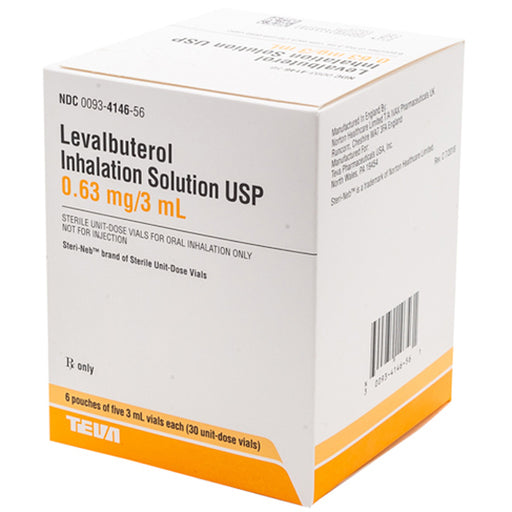
Levalbuterol Inhalation Solution 0.63mg Nebulizer Vial 3 mL x 30/Box - Teva (Rx)
29% OFFOriginal price $ 59.95Current price $ 42.80 -
 Sale 13%
🔒 Medical License Required
Sale 13%
🔒 Medical License Required
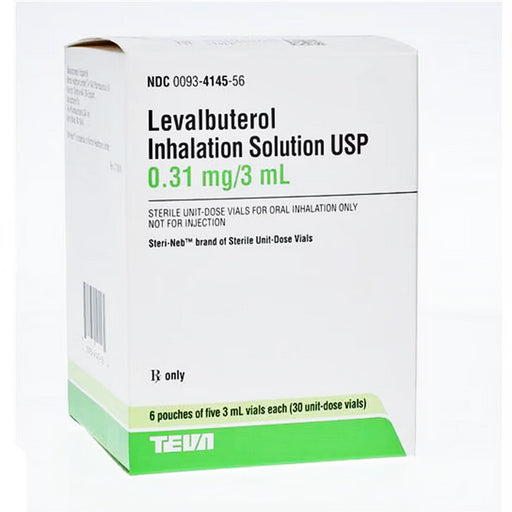
Levalbuterol Inhalation Solution 0.31 mg Nebulizer Vial 3 mL x 30/Box, Teva (Rx)
13% OFFOriginal price $ 79.00Current price $ 69.00 -
 Sale 21%
🔒 Medical License Required
Sale 21%
🔒 Medical License Required
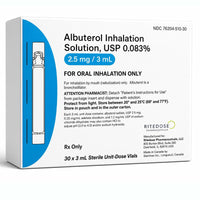
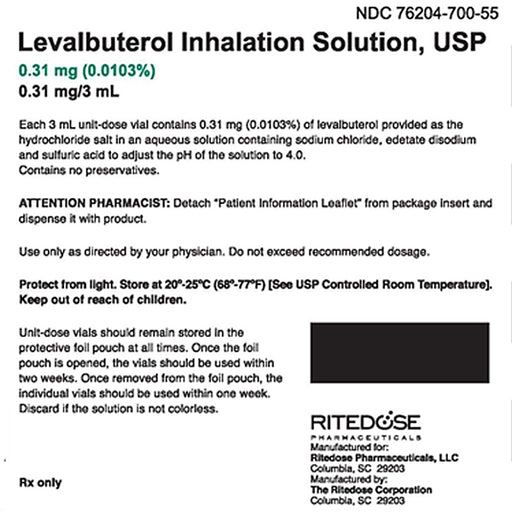
Levalbuterol Inhalation Solution 0.31 mg Nebulizer Vial 3 mL x 30/Box - Ritedose
21% OFFOriginal price $ 37.95Current price $ 29.95


People Also Searched For
Understanding Prescription Drugs
Prescription drugs are medications that require authorization from a licensed healthcare provider (such as a doctor, nurse practitioner, or physician assistant) to be dispensed by a pharmacist. In contrast to over-the-counter (OTC) drugs, which can be bought without a prescription, these medications are regulated such that you can only obtain them with a valid prescription. They are often potent or complex drugs intended to treat specific medical conditions and must be used under professional supervision to ensure safety and effectiveness.
Why Some Drugs Require a Prescription
The main reason certain medications are classified as prescription-only is because of their potential risks and the need for medical oversight. These drugs might:
- Have stronger effects or side effects: Many prescription drugs can cause serious side effects if not used correctly. A healthcare provider needs to determine the appropriate type and dose for each individual, monitor for adverse reactions, and adjust treatment as needed.
- Require diagnosis and monitoring: Some conditions (like high blood pressure, diabetes, or bacterial infections) need a professional diagnosis and ongoing monitoring. The medications for these conditions (e.g., blood pressure pills, insulin, antibiotics) are prescription-only to ensure the patient is properly evaluated and followed up by a provider.
- Pose a risk of misuse or dependency: Certain medications have a high potential for abuse or addiction – examples include opioid painkillers, sedatives (like benzodiazepines), and stimulant medications for ADHD. These are prescription drugs so that their use can be closely controlled and monitored by a healthcare professional. Without this control, there’s a risk of harm ranging from drug abuse to practicing medicine without a license (people taking powerful drugs without knowing how to use them safely). In fact, taking a prescription medication in a way other than intended (for instance, someone using another person’s medication, or taking a higher dose than prescribed) can lead to serious health effects, including overdose, dependency, or other harmful reactions.
Because of these factors, laws worldwide define which drugs are “prescription only.” For example, in the United States the Food and Drug Administration (FDA) designates drugs as “Rx only” (meaning prescription required) if they are not safe for self-medication. In the United Kingdom, such medications are labeled “POM” (Prescription Only Medicines), versus pharmacy-dispensed medicines (P) or general sale list (GSL) medicines which anyone can buy. While the specific lists of drugs differ by country, the concept is the same: prescription drugs should be used under medical guidance to protect patient health.
How Prescription Drugs are Obtained and Used
To get a prescription drug, a patient typically sees a healthcare provider, who evaluates their condition. If medication is needed, the provider will issue a prescription – this can be a paper script or an electronic order – specifying the drug name, dose, instructions for use (for example, “take one tablet twice daily with food”), and the number of doses or duration of therapy. The patient then takes this prescription to a pharmacy, where a licensed pharmacist will verify it and dispense the medication. The pharmacist may also provide counseling on how to take the medication properly, discuss possible side effects, and answer questions.
Prescription drugs are intended to be used exactly as directed. It’s important for patients to follow the dosage and schedule provided, and not to stop a medication early or take more than recommended without consulting the prescriber. Using them as prescribed maximizes their benefits in treating the condition while minimizing risks. The medication usually comes with a detailed label or a patient information leaflet explaining its use, dosage, and warnings. Patients are encouraged to read this information and keep it for reference.
Refills and duration: Some prescriptions can be refilled multiple times (if the provider indicates refills on the prescription), especially for chronic conditions like hypertension or asthma. Other prescriptions might be for a one-time treatment (e.g., a one-week course of antibiotics). Certain controlled substances (like strong pain medications) may have stricter rules – for instance, no refills allowed, requiring a new prescription each time, due to their abuse potential.
Examples of prescription drugs: This category includes a vast range of medications, such as:
- Antibiotics (e.g., amoxicillin) – for bacterial infections.
- Antidepressants and anti-anxiety medications (e.g., sertraline, alprazolam) – for mental health conditions.
- Blood pressure and heart medications (e.g., lisinopril, metoprolol) – for cardiovascular conditions.
- Diabetes medications (e.g., insulin, metformin) – to control blood sugar.
- Pain relievers stronger than OTC options (e.g., oxycodone, morphine) – for severe pain, and these are tightly regulated.
- Hormonal medications (e.g., birth control pills, thyroid hormone) – for contraception or hormone replacement, etc.
- Specialized drugs for conditions like cancer, autoimmune diseases, etc., which often require careful dosing and monitoring.
Each of these drugs is powerful in its own way and necessitates a healthcare provider’s involvement to use safely and effectively.
Prescription drugs are those medicines you can only obtain with a healthcare provider’s prescribing order. They are designated as such to protect patients – ensuring that powerful or complex drugs are used correctly and safely under professional supervision. When used as intended, prescription medications can effectively treat illnesses, manage chronic conditions, and improve quality of life. But because of their potency and potential risks, they are controlled by laws: you must have a consultation and a prescription to get them, and they should be used by the intended patient according to the instructions. Always ask your doctor or pharmacist if you have any questions about a prescription drug, and keep open communication about how the medication is working for you or if you experience any side effects. Responsible use of prescription drugs is key to reaping their benefits while minimizing any dangers.