
Filters
Availability
Price
$
-
$
$0
$4799
Vendor
Collection
Tags
- Infectious Disease Immunoassay (1)
- Saliva Test (1)
- strep (3)
- strep a (11)
- Strep A Dipstick Test (7)
- Strep A Test (11)
- strep test (6)
- Strep Throat (7)
- test for strep (9)
- Test for Strep A (1)
- Throat Test (1)
- best strep test (1)
- qualitative detection of Strep A antigen (1)
- rapid (1)
- rapid test (2)
- streptococcal infection (1)
- throat swab (1)
- OSOM (2)
- Rapid Test Kit (3)
- Group A Streptococcal (2)
- QuickVue (2)
- Quidel (3)
- Strep Test (2)
- Cassette Format (1)
- Cassettes (2)
- doctor-only (5)
- FIA (1)
- Fluorescence Immunoassay (1)
- Sofia (1)
- test cassette (2)
- ID NOW (1)
- Strep A 2 (1)
- BD 256040 (1)
- Group A Streptococcus (2)
- Testing Kit (1)
- Cepheid Xpert Xpress (1)
- CLIA waived strep test (4)
- GeneXpert (1)
- GeneXpert Xpress system (1)
- Group A Streptococcus detection (2)
- molecular strep A test (1)
- point of care testing (1)
- rapid strep test (4)
- Strep A Tests (1)
- Strep Throat Detection (2)
- Antibiotic (1)
- Antibiotic Medication (1)
- Antibiotic Treatment (1)
- Antibiotics (1)
- Bacterial Infections (2)
- Oral Solution (1)
- Pen VK (1)
- Penicillin (3)
- Potassium (1)
- Treat bacterial infections (2)
- Bacterial Infection Medicine (1)
- Bacterial Infection Treatment (1)
- Benzylpenicillin (1)
- Bicillin C-R (1)
- Immediate-release (1)
- Intramuscular Injection (2)
- kill bacteria (2)
- Peanut Butter Shot (1)
- Penicillin G (2)
- Penicillin G Benzathine (1)
- Penicillin G Procaine (1)
- prefilled syringes (2)
- Prevent Rheumatic Fever (2)
- Prolonged-release (1)
- Respiratory tract (1)
- Sexually transmitted infections (1)
- Soft tissue (1)
- Strep Infections (1)
- Syphilis (1)
- Treat Syphilis Infection (1)
- Bicillin L-A Antibiotic (1)
- Antituberculosis Agent (1)
- Strep Injection (1)
- Streptomycin (1)
- Treat Tuberculosis (1)
- Tuberculosis Treatment Medication (1)
- Whooping Cough (1)
- Abbott Rapid Dx (1)
- Acceava (1)
- Best strep test (1)
- Diagnostic accuracy (1)
- Fast strep throat test (1)
- Pharmacy test kit (1)
- Point of care test (POCT) (1)
- Rapid Strep A Test Kit (1)
- Rapid strep test (1)
- Sore throat diagnosis (1)
- Streptococcal pharyngitis test (1)
- Streptococcus pyogenes (1)
- Throat infection test (1)
- accurate strep throat diagnosis (1)
- best rapid strep test kit (1)
- Clearview (1)
- easy strep throat testing (1)
- fast strep test results (1)
- pediatric strep test (1)
- point of care strep test (1)
- strep throat test kit (1)
- antibiotics for strep throat (1)
- Bacterial Pharyngitis Test (1)
- CLIA-Waived Strep Test (1)
- Fast Strep Throat Test (1)
- Point of Care Strep Test (1)
- Rapid Streptococcus A Test (1)
- Strep A Antigen Test (1)
- clinical microbiology supplies (1)
- Culture Plate (1)
- Group A strep test (1)
- Lab (1)
- Lab Supplies (1)
- selective strep agar (1)
- Strep Agar (1)
- Strep agar plate (1)
- strep throat culture plate (1)
- streptococcus culture media (1)
- Clia Waived (1)
- Group A streptococcus (1)
- Osom 147 (1)
- Point-of-care (1)
- School Clinic (1)
- Sekisui (1)
- Urgent Care (1)
Rapid Strep Test Kits
Rapid Strep Test Kits are diagnostic tools used to detect the presence of Group A Streptococcus bacteria, the primary cause of strep throat. Rapid Strep Test Kits provide rapid results, enabling timely diagnosis and treatment. By identifying strep throat early, healthcare providers can prescribe the appropriate antibiotics to prevent complications and reduce transmission. Typically, a throat swab is used to collect a sample, which is then analyzed within minutes. Early detection improves patient outcomes and minimizes the spread of infection.
Strep A Test
A Strep A test is a diagnostic test to detect Group A Streptococcus bacteria (the species Streptococcus pyogenes) in the throat . These bacteria are the usual cause of “strep throat” and related infections. The test is often called a strep throat test, rapid strep test, or GAS (Group A Streptococcus) test. Clinicians use it to determine whether a sore throat is caused by these bacteria (which require antibiotics) or by a virus (which usually does not).
Doctors will perform a Strep A test if a patient has symptoms suggestive of strep throat. Typical signs include a sudden, severe sore throat (often with pain on swallowing), fever (about 101°F/38°C or higher), red and swollen tonsils (often with white patches of pus), and tender, swollen lymph nodes in the neck. The test helps confirm a strep infection so that appropriate treatment can be given. Because most sore throats are viral and viral sore throats resolve on their own. The Strep A test prevents unnecessary antibiotic use. Treating confirmed strep throat promptly with antibiotics also prevents rare but serious complications (such as rheumatic fever or kidney problems)
Key symptoms that often prompt testing include:
- Sudden onset of a very sore throat, often with difficulty swallowing.
- Fever (around 38°C/101°F or higher) and chills.
- Red, swollen tonsils, especially with white patches or streaks of pus.
- Tender, enlarged lymph nodes in the neck.
Because symptoms can overlap with viral infections, the Strep A test confirms whether Streptococcus pyogenes is present. A positive test indicates strep throat (antibiotics needed); a negative result usually means a viral infection (no antibiotic needed).
Types of Strep A Tests
There are two main ways to test for Group A strep:
- Rapid antigen test: This in-office test looks for antigens (molecular markers) from Group A strep on a throat swab. The provider swabs the back of the throat/tonsils and applies the sample to a test strip. If strep antigens are present, the strip shows a visible result in about 10–20 minutes.
- Throat culture: This laboratory test grows any bacteria from the throat swab. The swab is streaked onto a growth medium and incubated. If Group A strep bacteria grow, the lab confirms Streptococcus pyogenes over 24–48 hours. Cultures are more sensitive (accurate) than the rapid test. In practice, if a rapid test is negative but strep throat is still strongly suspected, a throat culture is often performed to be sure.
A Strep A test is a throat-swab test used to diagnose strep throat. It is also known as a “strep throat test,” “GAS test,” or “group A strep screen”. Healthcare providers use it to ensure the right treatment: antibiotics when needed (strep positive) and avoiding antibiotics when it’s a virus. If you suspect you or your child has strep throat (especially with the symptoms listed above), a medical professional can administer this test. Always follow up with a healthcare provider for testing and treatment recommendations if strep throat is suspected
-
 Sale 25%
Original price $ 59.95Current price $ 44.85
Sale 25%
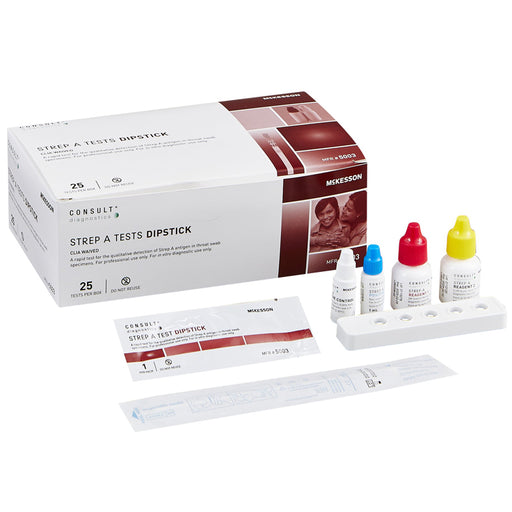
Original price $ 59.95Current price $ 44.85Rapid Strep A Test Kit Throat Swab Specimen Dipsticks, 25 Test Per Box
McKesson7 reviewsThe Rapid Strep A Testing Kit Throat Swab Specimen Dipsticks are utilized for the quick diagnosis of strep throat, caused by the Streptococcus pyog...
View full details -
 Sale 25%
Original price $ 64.95Current price $ 49.00
Sale 25%
Original price $ 64.95Current price $ 49.00Rapid Strep A Test Throat Swab Testing Kit, 25/Box
Pro Advantage4 reviewsThe Rapid Strep A Test Throat Swab Testing Kit is used to quickly diagnose Streptococcus pyogenes, the bacteria causing strep throat. This point-of...
View full details -
 Sale 9%
Original price $ 89.95Current price $ 82.20
Sale 9%
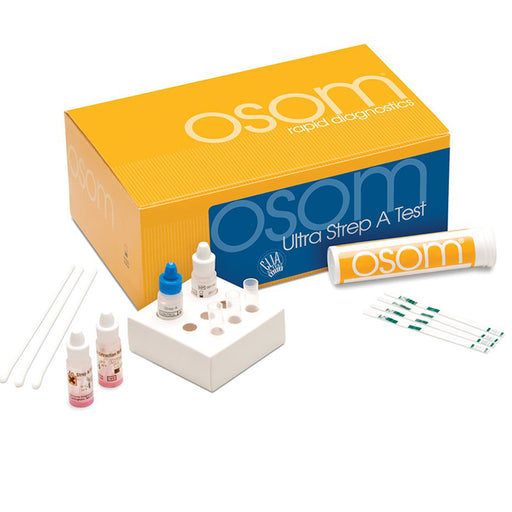
Original price $ 89.95Current price $ 82.20OSOM Strep A Test Rapid Test Kit with Throat Swab Sample, 25 Tests Per box
Sekisui DiagnosticsNo reviewsOSOM Strep A Test Rapid Test Kit with Throat Swab Sample, 25 Tests Per box. The OSOM ® Ultra Strep A Test is a color immunochromatographic assay in...
View full details -
 Sale 17%
Original price $ 149.95Current price $ 123.95
Sale 17%
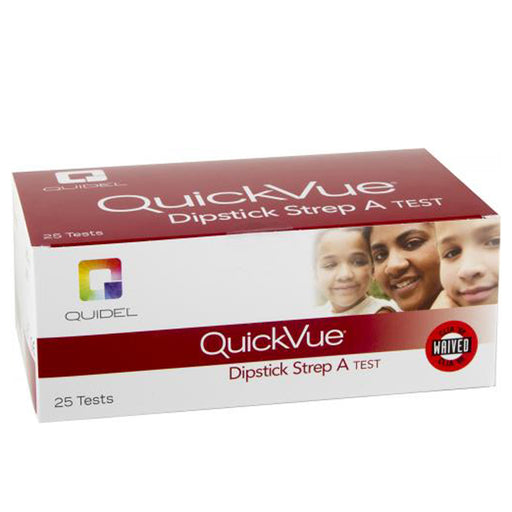
Original price $ 149.95Current price $ 123.95QuickVue Strep A Rapid Test Kit Throat Saliva Sample Dipsticks, 50 Test Per Box
Quidel CorporationNo reviewsThe QuickVue Dipstick Strep A test allows for the rapid qualitative detection of Group A Streptococcal antigen directly from patient throat swab sp...
View full details -
 Sale 33%
Original price $ 205.95Current price $ 139.00
Sale 33%
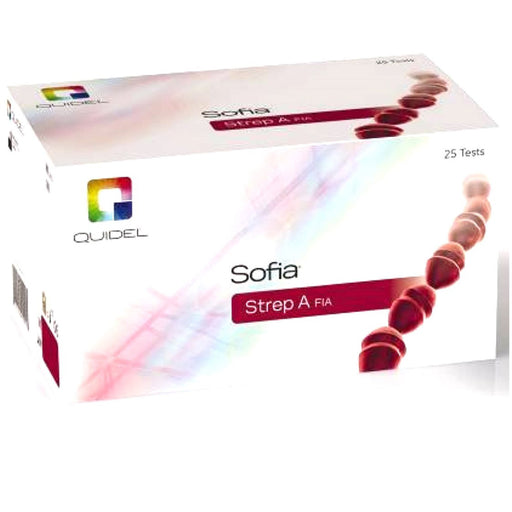
Original price $ 205.95Current price $ 139.00Sofia Strep A+ FIA Rapid Test Kit Strep A Test Throat Swab Sample Cassettes, 25 Tests Per Box
QuidelNo reviewsSofia Strep A+ FIA Rapid Test Kit Strep A Test Throat Swab Sample Cassettes,, 25 Tests Per Box. The Sofia Strep A+ Fluorescent Immunoassay (FIA) us...
View full details🔒 Medical License Required -
 Sale 13%
Original price $ 155.00Current price $ 134.95
Sale 13%
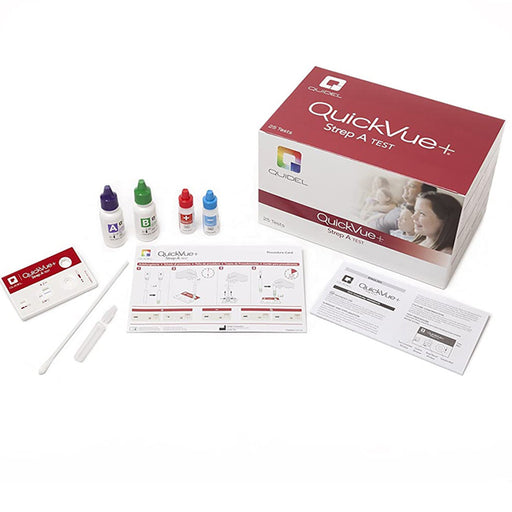
Original price $ 155.00Current price $ 134.95QuickVue Strep A Rapid Test Kit Throat Saliva Sample test Cassettes, 25 Test Per Box
Quidel CorporationNo reviewsThe QuickVue Dipstick Strep A test allows for the rapid qualitative detection of Group A Streptococcal antigen directly from patient Rapidly detect...
View full details -
 Sale 11%
Original price $ 1,295.95Current price $ 1,150.00
Sale 11%
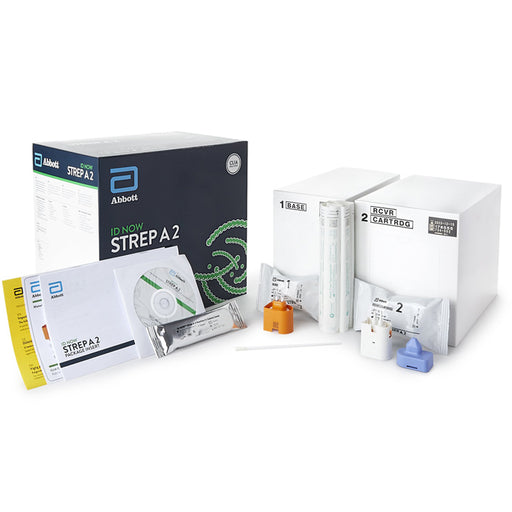
Original price $ 1,295.95Current price $ 1,150.00ID NOW Strep A 2.0 Rapid Test Kit Molecular Diagnostic Strep A Test Throat Swab Sample, 24 Tests Per Box
Abbott Rapid Dx North AmericaNo reviewsID NOW Strep A 2.0 Rapid Test Kit Molecular Diagnostic Strep A Test Throat Swab Sample, 24 Tests Per Box. The CLIA waived ID NOW™ Strep A 2 test pr...
View full details -
 Sale 44%
Original price $ 229.95Current price $ 129.00
Sale 44%
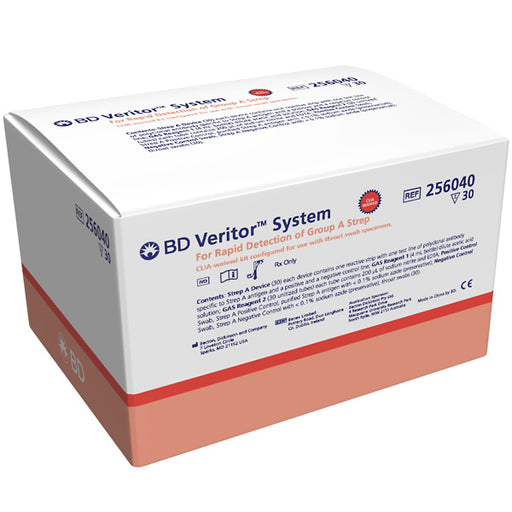
Original price $ 229.95Current price $ 129.00BD Veritor System for Rapid Strep A Testing Kit, 30 Test Box
BDNo reviewsThe BD 256040 Veritor System for Rapid Strep A Testing Kit is used for the rapid and accurate detection of Group A Streptococcus (strep A) antigens...
View full details -
 Sale 22%
Original price $ 529.95Current price $ 415.00
Sale 22%
Original price $ 529.95Current price $ 415.00Xpert Xpress Strep A Tests CLIA Waived on GeneXpert® Xpress System 10 Tests
CepheidNo reviewsFast, Accurate, and Reliable Strep Throat Testing - The Gold Standard for Healthcare Facilities The Cepheid Xpert Xpress Strep A Test is designed f...
View full details -
 Sale 28%
Original price $ 21.95Current price $ 15.75
Sale 28%
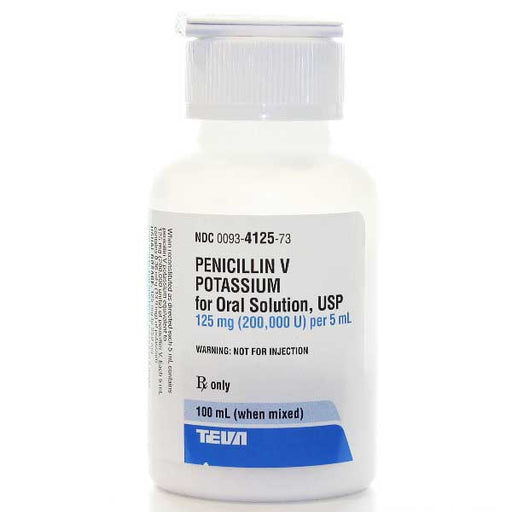
Original price $ 21.95Current price $ 15.75Penicillin V Potassium Oral Solution Liquid 125mg/5 mL (2000,000 Units) Cherry Flavored 100 mL Bottle
Teva PharmaceuticalsNo reviewsPenicillin V Potassium Oral Solution Liquid, also known as Pen VK, is a prescription medication often used to treat bacterial infections. It contai...
View full details🔒 Medical License Required -
 Sale 7%
Original price $ 2,695.95Current price $ 2,495.00
Sale 7%
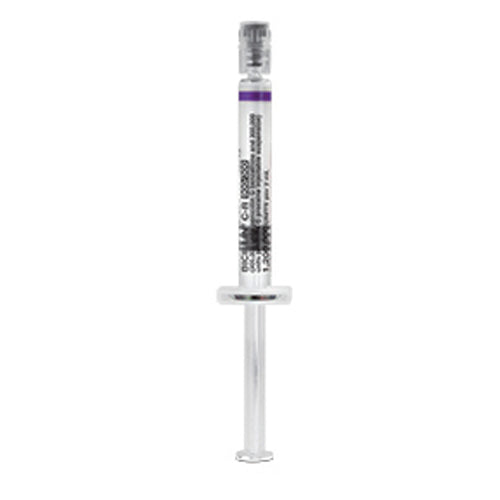
Original price $ 2,695.95Current price $ 2,495.00Bicillin C-R 900/300 Penicillin G Bezathine & Penicillin G Procaine For Injection Prefilled Syringes 2 mL x 10, Adult (Rx) **Refrigerated**
Pfizer USPGNo reviewsBicillin C-R 900/300, a combination of Penicillin G Benzathine and Penicillin G Procaine, is used to treat moderate to severe infections caused by ...
View full details🔒 Medical License Required -
 Sale 4%
Original price $ 4,999.00Current price $ 4,799.00
Sale 4%
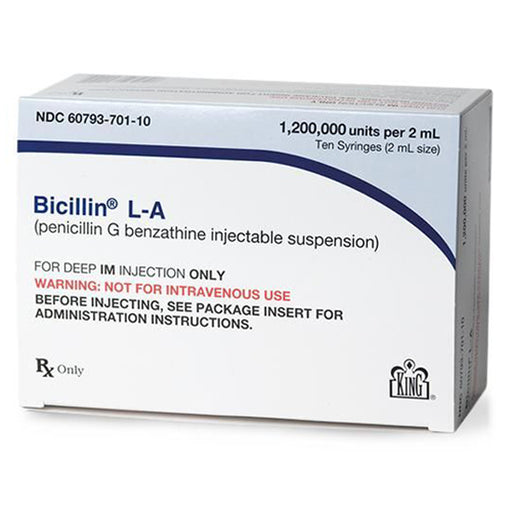
Original price $ 4,999.00Current price $ 4,799.00Bicillin L-A Antibiotic Penicillin G Benzathine 1200 MU/mL Intramuscular Injection (Rx) Prefilled Syringe 2 mL x 10 Count **Refrigerated**
Pfizer USPGNo reviewsBicillin L-A (Penicillin G Benzathine) 1200 MU/mL Intramuscular Injection is an antibiotic used to treat specific bacterial infections. It is effec...
View full details🔒 Medical License Required -
 Sale 34%
Original price $ 1,159.95Current price $ 760.00
Sale 34%
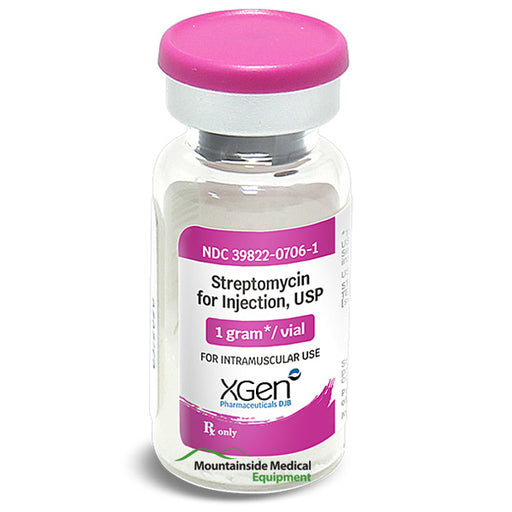
Original price $ 1,159.95Current price $ 760.00Streptomycin Sulfate Antibiotic Medication in Powder Vial 1 mL x 10/Box (RX)
Xgen PharmaNo reviewsStreptomycin sulfate injection is an antibiotic medication used to treat infections caused by bacteria, such as tuberculosis and certain types of p...
View full details🔒 Medical License Required -
 Sale 26%
Original price $ 199.95Current price $ 147.00
Sale 26%
Original price $ 199.95Current price $ 147.00Acceava Rapid Strep A Test Kit CLIA Waived, 50 Test Per Box by Abbott Rapid Dx North America
Abbott Rapid Dx North AmericaNo reviewsAn Acceava Rapid Strep A Test Kit is a medical diagnostic tool used by healthcare professionals to quickly detect the presence of group A Streptoco...
View full details -
 Sale 32%
Original price $ 109.95Current price $ 75.00
Sale 32%
Original price $ 109.95Current price $ 75.00Clearview Strep A Exact II Dipstick Test Kit, Throat Swabs Sample, CLIA Waived by Abbott Rapid Dx North America 30 Tests
Abbott Rapid Dx North AmericaNo reviews#1 Fast, Accurate Strep Throat Test For Reliable Point-Of-Care Results Take control of your patients' health with the Clearview Strep A Exact II Di...
View full details -
 Sale 17%
Original price $ 199.95Current price $ 165.00
Sale 17%
Original price $ 199.95Current price $ 165.00Rapid Strep A Test Dipsticks, CLIA-waived, 5 Minute Results by Cardinal Health 50 Tests
Cardinal HealthNo reviewsLeading Point-of-Care Strep Throat Test for Fast, Accurate Diagnosis Get rapid, reliable, and lab-accurate strep throat results in just 5 minutes w...
View full details -
 Sale 26%
Original price $ 26.95Current price $ 19.95
Sale 26%
Original price $ 26.95Current price $ 19.95Selective Strep Agar Culture Plate 15 x 100mm 10/Pack - A70 Hardy Diagnostics * Refrigerated, Signature Required *
Hardy DiagnosticsNo reviewsGold Standard Strep Detection for Clinical Labs & Hospitals Upgrade your laboratory’s diagnostic precision with the Selective Strep Agar Cultur...
View full details -
 Sale 22%
Original price $ 105.00Current price $ 82.20
Sale 22%
Original price $ 105.00Current price $ 82.20Osom 147 Ultra Strep A Test Kit, Dipstick-Style Test CLIA Waived 25/Box
Sekisui DiagnosticsNo reviewsRapid Strep Throat Detection – Reliable, Accurate, and Easy to Use Osom 147 Ultra Strep A Test Kit by Sekisui Diagnostics delivers fast, easy, and ...
View full details


People Also Searched For
Rapid Strep Test Kits to strep a
Rapid Strep Test Kits to Strep A Test
Rapid Strep Test Kits to test for strep
Rapid Strep Test Kits to strep test
Rapid Strep Test Kits to Strep A Dipstick Test
Rapid Strep Test Kits to Strep Throat
Rapid Strep Test Kits to Strep A Testing Kit
Rapid Strep Test Kits to doctor-only
Rapid Strep Test Kits to CLIA waived strep test
Rapid Strep Test Kits to rapid strep test
Rapid Strep Test Kits are diagnostic tools used to detect the presence of Group A Streptococcus bacteria, the primary cause of strep throat. Rapid Strep Test Kits provide rapid results, enabling timely diagnosis and treatment. By identifying strep throat early, healthcare providers can prescribe the appropriate antibiotics to prevent complications and reduce transmission. Typically, a throat swab is used to collect a sample, which is then analyzed within minutes. Early detection improves patient outcomes and minimizes the spread of infection.
Strep A Test
A Strep A test is a diagnostic test to detect Group A Streptococcus bacteria (the species Streptococcus pyogenes) in the throat . These bacteria are the usual cause of “strep throat” and related infections. The test is often called a strep throat test, rapid strep test, or GAS (Group A Streptococcus) test. Clinicians use it to determine whether a sore throat is caused by these bacteria (which require antibiotics) or by a virus (which usually does not).
Doctors will perform a Strep A test if a patient has symptoms suggestive of strep throat. Typical signs include a sudden, severe sore throat (often with pain on swallowing), fever (about 101°F/38°C or higher), red and swollen tonsils (often with white patches of pus), and tender, swollen lymph nodes in the neck. The test helps confirm a strep infection so that appropriate treatment can be given. Because most sore throats are viral and viral sore throats resolve on their own. The Strep A test prevents unnecessary antibiotic use. Treating confirmed strep throat promptly with antibiotics also prevents rare but serious complications (such as rheumatic fever or kidney problems)
Key symptoms that often prompt testing include:
- Sudden onset of a very sore throat, often with difficulty swallowing.
- Fever (around 38°C/101°F or higher) and chills.
- Red, swollen tonsils, especially with white patches or streaks of pus.
- Tender, enlarged lymph nodes in the neck.
Because symptoms can overlap with viral infections, the Strep A test confirms whether Streptococcus pyogenes is present. A positive test indicates strep throat (antibiotics needed); a negative result usually means a viral infection (no antibiotic needed).
Types of Strep A Tests
There are two main ways to test for Group A strep:
- Rapid antigen test: This in-office test looks for antigens (molecular markers) from Group A strep on a throat swab. The provider swabs the back of the throat/tonsils and applies the sample to a test strip. If strep antigens are present, the strip shows a visible result in about 10–20 minutes.
- Throat culture: This laboratory test grows any bacteria from the throat swab. The swab is streaked onto a growth medium and incubated. If Group A strep bacteria grow, the lab confirms Streptococcus pyogenes over 24–48 hours. Cultures are more sensitive (accurate) than the rapid test. In practice, if a rapid test is negative but strep throat is still strongly suspected, a throat culture is often performed to be sure.
A Strep A test is a throat-swab test used to diagnose strep throat. It is also known as a “strep throat test,” “GAS test,” or “group A strep screen”. Healthcare providers use it to ensure the right treatment: antibiotics when needed (strep positive) and avoiding antibiotics when it’s a virus. If you suspect you or your child has strep throat (especially with the symptoms listed above), a medical professional can administer this test. Always follow up with a healthcare provider for testing and treatment recommendations if strep throat is suspected
What is Strep
What is a Strep Test Kit
Strep A Symptoms
Strep (Streptococcus) Infection
“Strep” refers to infections caused by Streptococcus bacteria. Streptococcus is a genus of Gram-positive coccal bacteria (spherical cells often in chains) that can live harmlessly on mucus membranes or cause disease. Many human infections – from mild throat and skin infections to pneumonia and meningitis – are due to various Streptococcus species.. For example, Streptococcus pyogenes (Group A Strep) causes classic “strep throat,” skin infections (impetigo, cellulitis) and scarlet fever; S. pneumoniae (pneumococcus) causes pneumonia, ear/sinus infections and meningitis; and S. agalactiae (Group B Strep) causes newborn sepsis and meningitis. In short, a “streptococcal infection” is any disease caused by Streptococcus bacteria.
Group A Strep (“Strep Throat”)
“Strep throat” (streptococcal pharyngitis) is the most familiar streptococcal infection. It is caused by Group A S. pyogenes, which infects the throat and tonsils. CDC emphasizes that strep throat is a bacterial infection of the throat and tonsils – and in fact viruses cause most sore throats. (Only about 10% of adult sore throats and 30% of childhood sore throats are due to S. pyogenes. Strep throat typically spreads easily in classrooms and homes via respiratory droplets.
Symptoms: Strep throat usually comes on suddenly and more severely than a cold. Common symptoms include high fever, headache, and a very sore throat with pain on swallowing. The throat and tonsils often appear bright red and swollen, sometimes with white patches or streaks of pus (a “white exudate”) Tiny red spots (petechiae) may appear on the roof of the mouth. The front neck lymph nodes are usually tender and swollen. Importantly, strep throat typically lacks a cough, runny nose or hoarseness; the presence of cough/runny nose usually indicates a viral infection, not strep. A child with strep may also have stomach pain or rash.
Diagnosis: Because viral and bacterial sore throats cannot be reliably distinguished by symptoms alone, a throat swab is needed. Health providers often perform a rapid antigen test or throat culture. A rapid strep test can detect Group A strep bacteria within minutes, or a throat culture can be done for confirmation
Treatment: Strep throat is treated with antibiotics. Penicillin or amoxicillin is typically prescribed because S. pyogenes remains very sensitive to penicillin. CDC notes that antibiotics help people with strep throat feel better faster and reduce spread. Starting antibiotics within a day or two of symptoms usually shortens illness by ~1–2 days and prevents complications. Patients are generally not contagious 12–24 hours after beginning antibiotics (so children should stay home from school until then). Treatment is important to prevent complications, so the full course of antibiotics should be finished even if symptoms improve.
Complications: If untreated, strep throat can rarely lead to more serious problems. CDC lists possible sequelae such as a peritonsillar abscess (a pus pocket around the tonsils), ear or sinus infections, and immune-driven diseases. Two of the classic post-strep complications are rheumatic fever (an inflammatory condition affecting heart valves, joints, brain or skin) and post-streptococcal glomerulonephritis (a type of kidney inflammation), (Rheumatic fever is very rare in countries where strep throat is treated with antibiotics.)
Other Streptococcal Infections
Beyond strep throat, different Streptococcus species cause various diseases:
- Group A skin infections: S. pyogenes can also infect the skin. It commonly causes impetigo (a contagious rash, often around the nose/mouth) and cellulitis (skin and soft tissue infection). Scarlet fever (a widespread red rash with fever) is just strep throat plus a toxin from S. pyogenes.
- Group B Strep (GBS): Streptococcus agalactiae does not cause throat infections. Instead it colonizes the vagina/rectum of many women and can be passed to a newborn during delivery. GBS can cause serious newborn infections (sepsis and meningitis) in the first week of life. Because of this, CDC recommends that all pregnant women are screened for GBS in late pregnancy and given antibiotics in labor if positive.
- Pneumococcus: Streptococcus pneumoniae (“pneumococcus”) is another major pathogen. It causes pneumonia, meningitis, otitis media (middle ear infections) and sinusitis. Vaccines are available against many strains of S. pneumoniae (not used for strep throat, but for pneumonia/meningitis prevention).
- Viridans streptococci and others: Some streptococci normally live in the mouth and gut (viridans group) and can occasionally cause tooth decay or infect heart valves (endocarditis) if they enter the bloodstream. Enterococcus (formerly Group D Strep) causes urinary tract or wound infections. These are beyond common “strep” infections but are related bacteria.
Transmission and Prevention
How strep spreads: Group A strep bacteria spread easily from person to person via respiratory droplets or by sharing food/utensils. Close contact in schools, daycares and households increases risk. An infected person can be contagious for 1–3 weeks if untreated. Once on antibiotics, contagiousness usually drops dramatically after about 24 hours.
Prevention tips: Good hygiene helps prevent strep. Wash hands frequently with soap and water, especially after coughing or before eating. Teach children to cover their mouths when coughing or sneezing. Do not share drinks, forks or toothbrushes. Clean commonly touched surfaces (doorknobs, toys) if someone in the household is sick. Finally, anyone with strep throat should stay home from school or work until they have taken antibiotics for ≥24 hours and symptoms (fever) have improved, to avoid infecting others.
Key points: Strep infections are caused by Streptococcus bacteria – Group A strep causes strep throat and certain skin infections, while other groups cause pneumonia, neonatal infections, etc. Strep throat presents with high fever and sudden sore throat, often with white patches on tonsils, and is diagnosed by a rapid test or throat culture. It is treated with antibiotics (usually penicillin/amoxicillin). Prompt diagnosis and treatment not only relieve symptoms but also prevent rare complications like rheumatic feve. Covering coughs, handwashing, and staying home when sick are effective measures to stop its spread.
Strep Test Kits
A Strep test kit is the packaged set of supplies used to perform a Group A streptococcus (GAS) throat test (a “strep throat” test). In other words, it contains everything needed to take a throat swab and test it for Streptococcus pyogenes (Group A strep) antigens. MedlinePlus describes the Strep A test (rapid antigen test) for detecting group A strep bacteria in a throat sample. The kit typically includes sterile throat swabs, chemical reagents, sample tubes, and a test device (cassette or strip) that gives a visible result. These tests are often labeled “strep throat test,” “strep A swab test,” “rapid strep test,” or “GAS test”.
Test Types and Components
Most modern strep kits use a lateral-flow (immunoassay) format. In a rapid strep kit, the collected throat sample is mixed with buffer reagents and then applied to a test cassette or strip. The strip contains antibodies that bind GAS antigen: if strep antigen is present, a colored line appears in the test zone. (A second “control” line always appears to show the test ran correctly. For example, one commercial kit describes itself as a “rapid lateral flow immunoassay” for Group A strep. Older kits (now mostly replaced) used latex agglutination: antigen mixed with antibody-coated latex beads that visibly clump if strep is present, but today nearly all point-of-care kits are strip-based.
A typical rapid-strep kit contains multiple test cassettes and the required reagents. For instance, a 20-test kit might include 20 foil-wrapped test cassettes (with desiccant), 20 sterile throat swabs, bottles of buffer reagents (e.g. sodium nitrite and citric acid), sample tubes with caps, and even positive/negative control solutions. It also includes instructions (and often a small stand or “workstation” for the cassettes). In use, you would swab the back of the throat/tonsils, place the swab in the provided tube with reagents (mixing it to release any bacteria), then transfer a few drops of that solution onto the cassette’s sample well. After about 5–10 minutes, the cassette is read: a visible colored line indicates strep A antigen was detected (If the line does not appear, the test is negative.)
Usage and Availability
Strep test kits are widely used by healthcare providers and are increasingly available for home or telehealth use. Many brand-name rapid strep kits are CLIA-waived for point-of-care use. In recent years, over-the-counter (OTC) strep A test kits have become available at pharmacies (often labeled “Strep A throat test” or similar). These home kits come with full instructions. Research shows that non-medical persons (like parents) can correctly perform the test: for example, one study found that parents could successfully swab their child’s throat, mix the swab in the kit’s reagent, and then dip a test strip to get a result in about 10 minutes.
Using the kit properly yields a rapid answer. A positive rapid test means Group A strep is present, confirming strep throat (and the patient should receive antibiotics). A negative rapid test (especially in adults or after follow-up culture in children) usually indicates a viral sore throat, so antibiotics are not needed. In practice, strep test kits help ensure appropriate treatment: only confirmed strep cases get antibiotics, while viral infections (negative tests) are managed without them.
Group A Streptococcus (“Strep A”) Symptoms
Group A Streptococcus (Strep A, S. pyogenes) causes several infections. The most common is strep throat, whose symptoms often include:
- Severe sore throat and tonsil inflammation: Sudden-onset throat pain with a very red, swollen throat and tonsils, often bearing white patches or streaks of pus.
- Painful swallowing: Swallowing becomes difficult and painful (odynophagia).
- Fever: Typically high (often >100.4°F or 38°C).
- Swollen neck glands: Tender, enlarged lymph nodes in the front of the neck (cervical lymphadenopathy).
- Red spots on the palate: Tiny red pinhead spots (petechiae) on the roof of the mouth may appear.
- Other symptoms (especially in children): Headache, body aches, nausea or vomiting, and stomach (abdominal) pain can occur.
- Scarlet fever rash: In some infections (especially in children), a fine red “sandpaper-like” rash develops, often starting on the chest and trunk, along with a “strawberry tongue” (bright red, bumpy tongue).
In contrast to viral sore throats, strep throat usually does not cause a cough, runny nose, hoarseness or conjunctivitis – the presence of those symptoms suggests a viral infection instead.
Other Strep A infections: Strep A also causes skin infections with different symptoms:
- Impetigo (skin sores): Red, itchy blisters or sores (often around the nose and mouth) that break open, ooze fluid or pus, and then form a characteristic honey-colored crust.
- Cellulitis/Erysipelas: Deeper skin infection causes a painful, red, swollen area that feels warm to the touch. The skin may look pitted or shiny; some people get blisters. Fever and chills often accompany cellulitis.
(In rare cases, invasive Group A Strep can cause life-threatening conditions like necrotizing fasciitis or toxic shock syndrome, which involve severe systemic symptoms – but these are uncommon.)
What is Strep
Strep (Streptococcus) Infection
“Strep” refers to infections caused by Streptococcus bacteria. Streptococcus is a genus of Gram-positive coccal bacteria (spherical cells often in chains) that can live harmlessly on mucus membranes or cause disease. Many human infections – from mild throat and skin infections to pneumonia and meningitis – are due to various Streptococcus species.. For example, Streptococcus pyogenes (Group A Strep) causes classic “strep throat,” skin infections (impetigo, cellulitis) and scarlet fever; S. pneumoniae (pneumococcus) causes pneumonia, ear/sinus infections and meningitis; and S. agalactiae (Group B Strep) causes newborn sepsis and meningitis. In short, a “streptococcal infection” is any disease caused by Streptococcus bacteria.
Group A Strep (“Strep Throat”)
“Strep throat” (streptococcal pharyngitis) is the most familiar streptococcal infection. It is caused by Group A S. pyogenes, which infects the throat and tonsils. CDC emphasizes that strep throat is a bacterial infection of the throat and tonsils – and in fact viruses cause most sore throats. (Only about 10% of adult sore throats and 30% of childhood sore throats are due to S. pyogenes. Strep throat typically spreads easily in classrooms and homes via respiratory droplets.
Symptoms: Strep throat usually comes on suddenly and more severely than a cold. Common symptoms include high fever, headache, and a very sore throat with pain on swallowing. The throat and tonsils often appear bright red and swollen, sometimes with white patches or streaks of pus (a “white exudate”) Tiny red spots (petechiae) may appear on the roof of the mouth. The front neck lymph nodes are usually tender and swollen. Importantly, strep throat typically lacks a cough, runny nose or hoarseness; the presence of cough/runny nose usually indicates a viral infection, not strep. A child with strep may also have stomach pain or rash.
Diagnosis: Because viral and bacterial sore throats cannot be reliably distinguished by symptoms alone, a throat swab is needed. Health providers often perform a rapid antigen test or throat culture. A rapid strep test can detect Group A strep bacteria within minutes, or a throat culture can be done for confirmation
Treatment: Strep throat is treated with antibiotics. Penicillin or amoxicillin is typically prescribed because S. pyogenes remains very sensitive to penicillin. CDC notes that antibiotics help people with strep throat feel better faster and reduce spread. Starting antibiotics within a day or two of symptoms usually shortens illness by ~1–2 days and prevents complications. Patients are generally not contagious 12–24 hours after beginning antibiotics (so children should stay home from school until then). Treatment is important to prevent complications, so the full course of antibiotics should be finished even if symptoms improve.
Complications: If untreated, strep throat can rarely lead to more serious problems. CDC lists possible sequelae such as a peritonsillar abscess (a pus pocket around the tonsils), ear or sinus infections, and immune-driven diseases. Two of the classic post-strep complications are rheumatic fever (an inflammatory condition affecting heart valves, joints, brain or skin) and post-streptococcal glomerulonephritis (a type of kidney inflammation), (Rheumatic fever is very rare in countries where strep throat is treated with antibiotics.)
Other Streptococcal Infections
Beyond strep throat, different Streptococcus species cause various diseases:
- Group A skin infections: S. pyogenes can also infect the skin. It commonly causes impetigo (a contagious rash, often around the nose/mouth) and cellulitis (skin and soft tissue infection). Scarlet fever (a widespread red rash with fever) is just strep throat plus a toxin from S. pyogenes.
- Group B Strep (GBS): Streptococcus agalactiae does not cause throat infections. Instead it colonizes the vagina/rectum of many women and can be passed to a newborn during delivery. GBS can cause serious newborn infections (sepsis and meningitis) in the first week of life. Because of this, CDC recommends that all pregnant women are screened for GBS in late pregnancy and given antibiotics in labor if positive.
- Pneumococcus: Streptococcus pneumoniae (“pneumococcus”) is another major pathogen. It causes pneumonia, meningitis, otitis media (middle ear infections) and sinusitis. Vaccines are available against many strains of S. pneumoniae (not used for strep throat, but for pneumonia/meningitis prevention).
- Viridans streptococci and others: Some streptococci normally live in the mouth and gut (viridans group) and can occasionally cause tooth decay or infect heart valves (endocarditis) if they enter the bloodstream. Enterococcus (formerly Group D Strep) causes urinary tract or wound infections. These are beyond common “strep” infections but are related bacteria.
Transmission and Prevention
How strep spreads: Group A strep bacteria spread easily from person to person via respiratory droplets or by sharing food/utensils. Close contact in schools, daycares and households increases risk. An infected person can be contagious for 1–3 weeks if untreated. Once on antibiotics, contagiousness usually drops dramatically after about 24 hours.
Prevention tips: Good hygiene helps prevent strep. Wash hands frequently with soap and water, especially after coughing or before eating. Teach children to cover their mouths when coughing or sneezing. Do not share drinks, forks or toothbrushes. Clean commonly touched surfaces (doorknobs, toys) if someone in the household is sick. Finally, anyone with strep throat should stay home from school or work until they have taken antibiotics for ≥24 hours and symptoms (fever) have improved, to avoid infecting others.
Key points: Strep infections are caused by Streptococcus bacteria – Group A strep causes strep throat and certain skin infections, while other groups cause pneumonia, neonatal infections, etc. Strep throat presents with high fever and sudden sore throat, often with white patches on tonsils, and is diagnosed by a rapid test or throat culture. It is treated with antibiotics (usually penicillin/amoxicillin). Prompt diagnosis and treatment not only relieve symptoms but also prevent rare complications like rheumatic feve. Covering coughs, handwashing, and staying home when sick are effective measures to stop its spread.
What is a Strep Test Kit
Strep Test Kits
A Strep test kit is the packaged set of supplies used to perform a Group A streptococcus (GAS) throat test (a “strep throat” test). In other words, it contains everything needed to take a throat swab and test it for Streptococcus pyogenes (Group A strep) antigens. MedlinePlus describes the Strep A test (rapid antigen test) for detecting group A strep bacteria in a throat sample. The kit typically includes sterile throat swabs, chemical reagents, sample tubes, and a test device (cassette or strip) that gives a visible result. These tests are often labeled “strep throat test,” “strep A swab test,” “rapid strep test,” or “GAS test”.
Test Types and Components
Most modern strep kits use a lateral-flow (immunoassay) format. In a rapid strep kit, the collected throat sample is mixed with buffer reagents and then applied to a test cassette or strip. The strip contains antibodies that bind GAS antigen: if strep antigen is present, a colored line appears in the test zone. (A second “control” line always appears to show the test ran correctly. For example, one commercial kit describes itself as a “rapid lateral flow immunoassay” for Group A strep. Older kits (now mostly replaced) used latex agglutination: antigen mixed with antibody-coated latex beads that visibly clump if strep is present, but today nearly all point-of-care kits are strip-based.
A typical rapid-strep kit contains multiple test cassettes and the required reagents. For instance, a 20-test kit might include 20 foil-wrapped test cassettes (with desiccant), 20 sterile throat swabs, bottles of buffer reagents (e.g. sodium nitrite and citric acid), sample tubes with caps, and even positive/negative control solutions. It also includes instructions (and often a small stand or “workstation” for the cassettes). In use, you would swab the back of the throat/tonsils, place the swab in the provided tube with reagents (mixing it to release any bacteria), then transfer a few drops of that solution onto the cassette’s sample well. After about 5–10 minutes, the cassette is read: a visible colored line indicates strep A antigen was detected (If the line does not appear, the test is negative.)
Usage and Availability
Strep test kits are widely used by healthcare providers and are increasingly available for home or telehealth use. Many brand-name rapid strep kits are CLIA-waived for point-of-care use. In recent years, over-the-counter (OTC) strep A test kits have become available at pharmacies (often labeled “Strep A throat test” or similar). These home kits come with full instructions. Research shows that non-medical persons (like parents) can correctly perform the test: for example, one study found that parents could successfully swab their child’s throat, mix the swab in the kit’s reagent, and then dip a test strip to get a result in about 10 minutes.
Using the kit properly yields a rapid answer. A positive rapid test means Group A strep is present, confirming strep throat (and the patient should receive antibiotics). A negative rapid test (especially in adults or after follow-up culture in children) usually indicates a viral sore throat, so antibiotics are not needed. In practice, strep test kits help ensure appropriate treatment: only confirmed strep cases get antibiotics, while viral infections (negative tests) are managed without them.
Strep A Symptoms
Group A Streptococcus (“Strep A”) Symptoms
Group A Streptococcus (Strep A, S. pyogenes) causes several infections. The most common is strep throat, whose symptoms often include:
- Severe sore throat and tonsil inflammation: Sudden-onset throat pain with a very red, swollen throat and tonsils, often bearing white patches or streaks of pus.
- Painful swallowing: Swallowing becomes difficult and painful (odynophagia).
- Fever: Typically high (often >100.4°F or 38°C).
- Swollen neck glands: Tender, enlarged lymph nodes in the front of the neck (cervical lymphadenopathy).
- Red spots on the palate: Tiny red pinhead spots (petechiae) on the roof of the mouth may appear.
- Other symptoms (especially in children): Headache, body aches, nausea or vomiting, and stomach (abdominal) pain can occur.
- Scarlet fever rash: In some infections (especially in children), a fine red “sandpaper-like” rash develops, often starting on the chest and trunk, along with a “strawberry tongue” (bright red, bumpy tongue).
In contrast to viral sore throats, strep throat usually does not cause a cough, runny nose, hoarseness or conjunctivitis – the presence of those symptoms suggests a viral infection instead.
Other Strep A infections: Strep A also causes skin infections with different symptoms:
- Impetigo (skin sores): Red, itchy blisters or sores (often around the nose and mouth) that break open, ooze fluid or pus, and then form a characteristic honey-colored crust.
- Cellulitis/Erysipelas: Deeper skin infection causes a painful, red, swollen area that feels warm to the touch. The skin may look pitted or shiny; some people get blisters. Fever and chills often accompany cellulitis.
(In rare cases, invasive Group A Strep can cause life-threatening conditions like necrotizing fasciitis or toxic shock syndrome, which involve severe systemic symptoms – but these are uncommon.)