
Sterile Water for Injection for water for injection by Hospira
-
 Sale 1%
Low Stock
Sale 1%
Low Stock
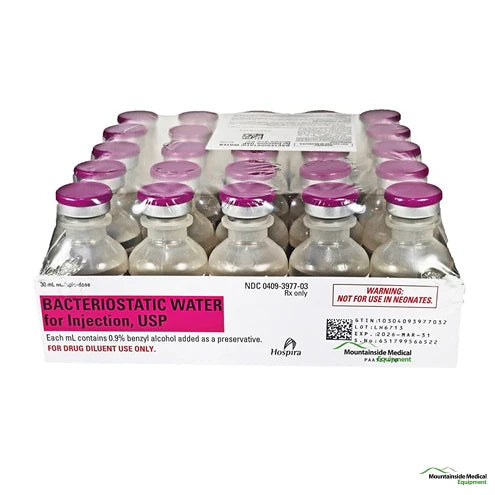
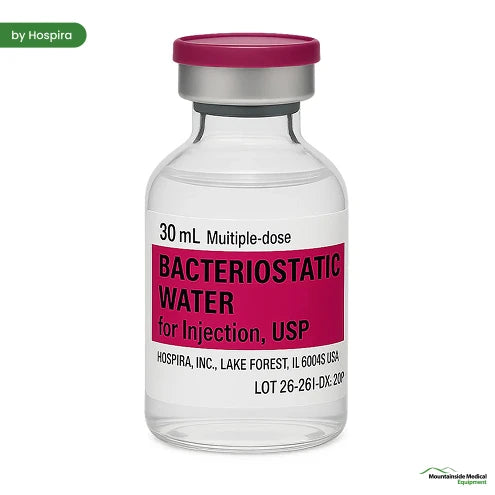
Bacteriostatic Water Injection by Hospira, Multiple Dose Vials 30 mL 25/Pack (Rx)
 Original price $ 550.00Current price $ 545.00
 -
 Sale 20%
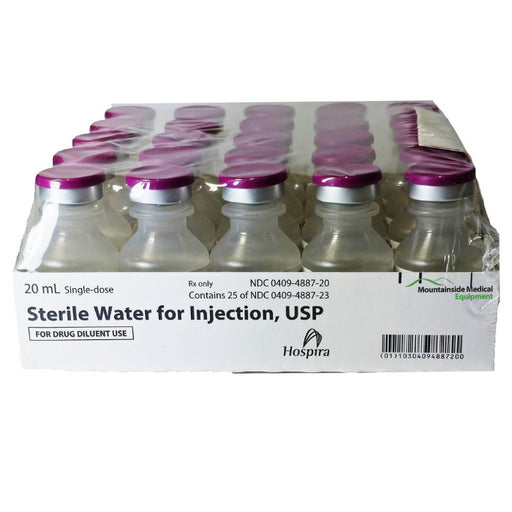
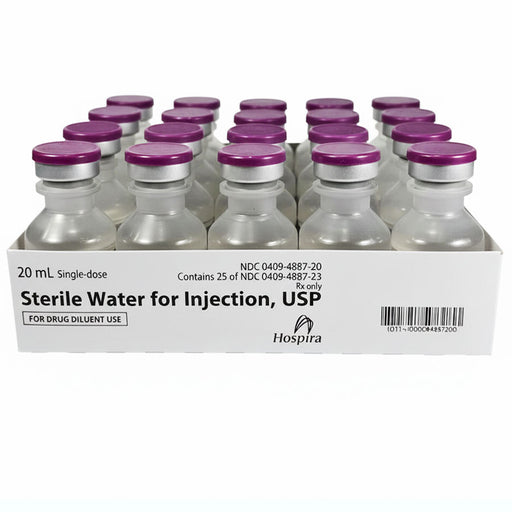
Sterile Water Injection 20 mL Single-Dose Vials by Hospira 25/Tray (Rx)
 Original price $ 275.00Current price $ 219.00
Sterile Water for Injection
Sterile Water for Injection (USP) is a sterile, nonpyrogenic preparation of water that contains no added substances (no antimicrobial agents, buffers, or other solutes). It is supplied in single-use containers intended only as a diluent or solvent to dissolve or dilute drugs for parenteral administration. By itself, it has no therapeutic effect and is not to be injected directly without first mixing with the appropriate medication or solute.
Sterile Water for Injection (SWFI) is a specially prepared water that has been purified and sterilized to make it safe for use in preparing injections. It contains no dissolved substances (such as salts, antimicrobial agents, or preservatives) and is intended to be used as a solvent or diluent for medications that will be given by injection
Sterile Water for Injection USP is a single-use, purified, apyrogenic solution trusted by hospitals, pharmacies, clinics, compounding facilities, and healthcare professionals worldwide. This essential pharmaceutical-grade diluent is used for medication reconstitution, intravenous and intramuscular injection preparation, admixture, and a wide range of clinical and compounding applications. Sterile Water for Injection is the gold standard for ensuring safety, purity, and precision in injectable and IV medication delivery.
Sterile Water Injection Purpose
- Diluent for Injectable Medications: Safely dissolves or reconstitutes powders and lyophilized drug products before parenteral administration.
- IV Medication Preparation: Used to create precisely concentrated solutions for intravenous infusions, compatible with a range of drugs.
- Compounding and Admixture: Required in pharmacy cleanrooms and compounding labs for the safe mixing, dilution, and preparation of customized medications.
- Clinical and Diagnostic Procedures: For irrigation, flushing lines, or as a carrier in diagnostic and nuclear medicine.
Sterile Water Injection Uses
- Antibiotic & Antiviral Reconstitution (e.g. ceftriaxone, vancomycin, penicillin, acyclovir, vaccines)
- Hormone and Biologic Preparation (insulin, peptides, growth hormone, cosyntropin)
- IV Chemotherapy and Injectable Oncology Drugs
- Pain Management Compounds and Regional Anesthesia
- IV/IM/SC Medication Delivery for patient-specific dosing in hospitals and clinics
- Medical Device Irrigation and Flushing
- Hospital, Clinic, and Home Infusion Protocols
Diluent for Injection: The sole indication for Sterile Water for Injection is as a vehicle to dissolve or dilute other drugs for injection (intravenous, intramuscular, or subcutaneous), in accordance with the instructions for those drugs. For example, certain medications are supplied as dry powders or concentrated solutions that must be combined with a specific volume of sterile water to prepare an injectable solution of the proper concentration.No Pharmacological Action: SWFI itself does not exert any pharmacological effect other than providing water volume. When used in typical small volumes to reconstitute medications, it has minimal impact on the body's fluid or electrolyte balance (except potentially in very sensitive patients like neonates; see Precautions). It simply serves as a sterile, safe medium for delivering the active drug into the body.
- Diluting or Dissolving Medications: Its primary purpose is to dissolve or dilute drugs that will be administered by injection. Many medications (for example, certain antibiotics or vaccines supplied as dry powder) need to be mixed with a specified amount of sterile water to create an injectable solution.
- Routes of Administration: After a drug is reconstituted with sterile water, the resulting solution can be given by intravenous (IV) injection into a vein, intramuscular (IM) injection into a muscle, or subcutaneous (SC) injection under the skin – according to the medication’s requirements. The sterile water itself is just the vehicle to get the drug into a usable liquid form for these routes.
Important: Sterile Water for Injection must be made approximately isotonic (having a similar concentration of solutes as blood) by mixing it with a solute before intravenous administration. Injecting plain sterile water directly into the bloodstream (without adding solutes) can cause hemolysis, meaning it can make red blood cells burst due to osmotic imbalance. For this reason, one should never inject sterile water intravenously unless it has been properly diluted with an appropriate substance (e.g. mixing it with a medication or dissolving electrolyte powders in it as directed).
Precautions
- Not for Direct IV Injection Alone: Must always be used as a diluent for drugs or electrolytes; direct injection may cause serious adverse events (hemolysis, electrolyte disturbance).
- Single-Use Only: Discard unused portion. Do not use for multiple patients or keep open vials.
- Check for Clarity and Seal: Do not use if solution is cloudy, discolored, or shows signs of tampering/leakage.
- Aseptic Technique Required: Prevent contamination through sterile handling and preparation procedures.
- Prescription-Only Product: Use only under professional supervision and as per medical/pharmacy protocols.
- Appropriate Dosing: Always follow recommended preparation and administration guidelines for each medication.
Sterile Water for Injection is an essential pharmaceutical diluent used in clinical practice to prepare injectable medications. It must be used according to guidelines — adding it to a powder or concentrate as directed, never injecting it by itself, and maintaining strict sterile technique. When used properly, it allows medications to be delivered safely to patients; but if used improperly (for example, if accidentally infused alone), it can cause serious complications like hemolysis. Always adhere to the “for dilution only” purpose of this product and follow all precautions to ensure patient safety
Sterile Water vs. Bacteriostatic Water for Injection: Key Differences
| Feature | Sterile Water for Injection (SWFI) | Bacteriostatic Water for Injection | Normal Saline (0.9% NaCl) |
|---|---|---|---|
| Preservative | None | 0.9% Benzyl Alcohol | None |
| Tonicity | Hypotonic (pure) | Hypotonic (pure) | Isotonic |
| Use type | Single-use only | Multi-dose (up to 28 days after opening) | Single-use or multi-dose, depending on presentation |
| Safe for neonates | Yes | No benzyl alcohol contraindicated | Yes (saline-based formulations) |
| Direct IV infusion | Not permitted alone must contain a solute | Not permitted alone must contain a solute | Yes, isotonic; suitable for IV fluid therapy |
| Primary application | Single-dose reconstitution of injectables | Multi-dose reconstitution (e.g., peptides, hormones) | IV fluid therapy, drug dilution, flush |
| Compounding use | Yes, required in many USP <797> sterile preparations | Yes, where preservatives are acceptable | Yes, common admixture base |
This product is intended for use by qualified healthcare professionals or under the guidance of a licensed medical provider. It is not a substitute for professional medical advice, diagnosis, or treatment.
Sterile Water for Injection (SWFI) and Bacteriostatic Water for Injection (BWFI) are both specially prepared, sterile water solutions used to dilute or dissolve medications for injectable use. The primary difference between them is the presence of a preservative in bacteriostatic water:
-
Sterile Water for Injection (SWFI): This is pure sterile water with no added antimicrobial preservatives or other substances. It is typically supplied in single-use vials or ampules, and any unused portion must be discarded after opening. Sterile water is used when a medication needs to be reconstituted or diluted with preservative-free water (for example, certain medications specify using only sterile water as the diluent). Because it contains no bacteriostat to inhibit microbial growth, it cannot be stored for reuse once opened – it’s meant to be used promptly and one-time only under strict aseptic conditions. Also, sterile water for injection on its own is not isotonic, so it is never injected directly by itself in large quantities; it must first be mixed with a medicine or solute. (Injecting plain water in large volume would cause cells to swell and rupture due to osmotic imbalance, so sterile water is only given after adding an appropriate amount of solute to make it nearly isotonic.
-
Bacteriostatic Water for Injection (BWFI): This is sterile water that **contains a preservative agent (most commonly 0.9% benzyl alcohol). The added preservative inhibits the growth of bacteria that might be introduced when the vial is first punctured. Bacteriostatic water usually comes in multiple-dose vials (e.g., 30 mL vials), allowing for repeated withdrawals of water for mixing over time. Because of the preservative, any unused portion can be stored and used for a longer period (commonly up to 28 days after opening, if properly stored) for additional doses or dilutions. This makes it convenient when one needs to mix a multi-dose medication (for example, reconstituting a vial of medication that will be used for several injections over a course of days). It’s important to note that the presence of benzyl alcohol (or other preservative) means bacteriostatic water should not be used in certain situations – notably not in newborn infants (neonates) because benzyl alcohol can be toxic to babies (“gasping syndrome”), and generally avoided for epidural or intrathecal (spinal) injections where preservatives are not allowed. Bacteriostatic water is intended for dilution purposes only and, like sterile water, it should never be injected intravenously without first mixing with a suitable solute, since it’s just water with preservative and not an isotonic solution on its own.
Side-by-Side Comparison
-
Composition: Sterile water is just water that’s been sterilized (no other ingredients). Bacteriostatic water is sterilized water plus a small amount of preservative (e.g., benzyl alcohol ~0.9% or 9 mg/mL). This difference in composition is the core distinction: preservative-free vs. preservative-containing.
-
Usage & Packaging: Sterile water is supplied in single-dose containers because it has no preservative. Once you open a vial or ampule of sterile water, you use what you need to mix a medication and then discard any leftover; you shouldn’t save it for later use. In contrast, bacteriostatic water is supplied in multi-dose vials which you can reuse multiple times (with proper aseptic technique) since the preservative keeps it bacteriostatic (inhibiting bacterial growth) after opening. For example, if you have a 30 mL vial of bacteriostatic water, you can puncture the rubber stopper to withdraw some water, and then later puncture it again for another dose, and so on, typically for up to 28 days after the first use (or per the manufacturer’s guidelines). This makes bacteriostatic water more suitable when a medication requires periodic reconstitution or dilution over time (such as mixing doses of HCG, peptides, or antibiotics that will be used over days). If you tried that with plain sterile water, the risk of contamination and bacterial growth in the vial after the first use would be high, since there’s nothing to prevent bacteria from growing once it’s opened. In short: sterile = one-time use; bacteriostatic = multi-use (thanks to the preservative).
-
Labeling and Instructions: Medication instructions will usually specify which type of diluent to use. If the instructions say “dilute with Sterile Water for Injection”, you should use the preservative-free sterile water. If it allows or suggests “bacteriostatic water” (or doesn’t forbid it), and especially if multiple-dose usage is needed, then bacteriostatic can be used. Always follow the medication’s label or your pharmacist’s guidance on which diluent is appropriate. One key rule in healthcare preparation is to not substitute one for the other unless it’s explicitly safe to do so. In many cases they might function the same way in dissolving a drug, but the choice matters for patient safety and medication stability. For example, certain drugs intended for intrathecal (spinal) injection or neonatal use mandate preservative-free sterile water, because introducing benzyl alcohol or other preservatives in those contexts can be harmful. Conversely, if you are preparing a multi-dose medication that will be used over a week, using bacteriostatic water can be crucial to keep the solution stable and safe from bacterial contamination over that period.
-
Safety Considerations: Both sterile water and bacteriostatic water are nonpyrogenic (meaning they are sterile and formulated not to cause fevers or reactions on their own). The main safety consideration is about the preservative in bacteriostatic water:
- Benzyl Alcohol Toxicity: Bacteriostatic water typically uses benzyl alcohol as the preservative. Benzyl alcohol is harmless to most adults in the tiny amounts used for injections; however, in newborns/infants it can accumulate and cause a dangerous syndrome (gasping respiration, metabolic acidosis – often called “gasping syndrome”). Therefore, bacteriostatic water must not be used for mixing medications that will be given to neonates. In those cases, sterile water (preservative-free) must be used, and if multiple doses are needed, other strategies (like preparing fresh solutions more frequently) are employed rather than relying on bacteriostatic water. Many bacteriostatic water vials even carry a warning: “Not for use in neonates.”
- Route of Injection: If a medication is going to be injected into the spinal canal or the brain (intrathecal/intraventricular routes), or in the eye (intraocular), or sometimes for epidural injections, the use of preservative-free diluents is required. Preservatives like benzyl alcohol can irritate these sensitive tissues. Thus, sterile water for injection (or saline without preservative, depending on instructions) would be used for dissolving drugs given by these routes. Bacteriostatic water is generally restricted to intramuscular, subcutaneous, or intravenous routes where small amounts of benzyl alcohol are well-tolerated in adults.
- Expiration and Storage: Unopened, both sterile water and bacteriostatic water have long shelf lives until their expiration date. Once opened, a sterile water single-use vial should be used immediately and then thrown away – any leftover is not saved. A bacteriostatic water multi-use vial can be recapped and stored (usually at room temperature) for later use, but healthcare facilities typically mark the vial with the date it was opened and ensure it’s discarded after 28 days (or sooner if the manufacturer specifies) to minimize infection risk. Even though the preservative inhibits bacterial growth, it doesn’t guarantee sterility if grossly contaminated, so proper handling is essential (wiping the rubber stopper with alcohol each time, using new sterile needles, etc.).
Use Cases:
- Sterile Water: Used for one-time reconstitution of medications like certain antibiotics for injection, lyophilized (powder) drugs, or vaccines, when you’re going to administer the dose immediately. Also used when preparing injections for pediatric or neonatal patients (where no preservative is allowed). Essentially anytime the instructions call for “sterile water” specifically.
- Bacteriostatic Water: Commonly used for multi-dose medications or for medications that will be used over an extended period. For example, hormone injections (like HCG or some fertility treatments) or peptide injections that a patient might self-administer daily – these often are supplied as dry powder that needs mixing. Using bacteriostatic water to mix them allows the mixed solution to remain usable for days or weeks because the preservative prevents bacterial growth. In a hospital or clinic, if a medication order allows it, a pharmacist might choose bacteriostatic water to reconstitute a multi-dose vial of a drug so that it can be used for multiple patients/doses (as long as it’s safe for that drug and patient population). It’s all about balancing sterility and practicality.
In essence, sterile water for injection is pure water with no preservative, meant for immediate, single-use dilution of medications, whereas bacteriostatic water for injection is sterile water with a preservative (like benzyl alcohol) that allows for multiple uses from the same container by suppressing bacterial growth. The choice between them boils down to what the medication’s guidelines require and patient safety considerations: Use sterile (preservative-free) water when indicated for sensitive situations (newborns, intrathecal use, single-dose needs), and use bacteriostatic water when a multi-dose solution is needed and it’s safe to do so. They are not interchangeable unless specified – always double-check the medication label or protocol to ensure you’re using the correct type of diluent. This difference, while seemingly small, is important to prevent contamination and ensure patient safety during injections.
Sterile Water Injection Contraindications and Warnings
Never Administer Plain Water Intravenously: Do not use sterile water for direct intravenous injection without first adding an appropriate solute. Infusing water alone (a hypotonic solution) into the bloodstream can cause hemolysis – destruction of red blood cells due to osmotic imbalance. Sterile Water for Injection must be made approximately isotonic prior to IV use by mixing with a sufficient amount of solute (such as dissolving a drug or adding saline). Using it undiluted intravenously is contraindicated for this reason.Single-Dose Only – No Preservatives: Sterile Water for Injection contains no preservatives, so each container is meant for a single use. Do not reuse an ampule or vial once it has been opened. Any unused portion should be discarded, because without preservatives there is a risk of bacterial contamination if it’s stored after opening. Inspect Before Use: Only use the product if the solution is clear, colorless, and the seal is intact. If the water appears cloudy, discolored, or if the container is damaged (leaking, cracked), it must be discarded to prevent patient harm. Likewise, always check the expiry date; do not use if expired.Follow Drug-Specific Instructions: When using SWFI to reconstitute or dilute a medication, always follow the medication manufacturer’s guidelines for the proper dilution instructions. This includes using the recommended volume of sterile water to achieve the correct drug concentration, and adhering to any directions on the route (IV, IM, SC) and rate of administration of the resulting solution. Adding too much or too little diluent can lead to dosing errors or drug instability.Special Populations – Use Caution in Infants: Pay attention when administering solutions reconstituted with sterile water to neonates or very small infants. Even modest volumes of free water could potentially affect their fluid and electrolyte balance. While the amount of water used to reconstitute a drug is usually small, infants have low reserves and hyponatremia (low sodium) or other imbalances could occur if large relative volumes of hypotonic fluid are introduced. Thus, in pediatric settings the volume of diluent is kept as low as safely possible and the infant is monitored accordingly.
Adverse Reactions
Sterile Water for Injection itself is inert, but improper use or contamination can lead to adverse effects. According to the manufacturer, potential reactions (usually related to the technique of administration or contamination of the solution) include:
- Febrile response: The patient develops fever/chills, which could indicate pyrogens (fever-causing substances) or contamination in the fluid.
- Injection site reactions: Pain, local tenderness, or swelling at the site of injection. In severe cases, if contamination occurred, an abscess (pocket of infection) or tissue necrosis could develop at the injection site.
- Venous irritation: When given intravenously (after proper dilution with solute), there is a risk of phlebitis or thrombosis (vein inflammation or clot at the injection site), especially if the osmolarity of the admixture is not close to physiologic.
- Extravasation: Leakage of the fluid out of the vein into surrounding tissue can occur if the IV injection is not properly placed in the vein. This can cause local tissue damage, though with just sterile water the damage is primarily due to the hypo-osmolar effect (cells swelling with water).
If an adverse reaction is observed during administration, the infusion should be stopped immediately, the patient evaluated and treated as needed, and the remaining solution saved for analysis if contamination is suspected (
Sterile Water Injection Dosage and Administration
Using Sterile Water for Reconstitution: The volume of sterile water needed to dilute a medication depends on the specific drug’s requirements – typically outlined in the drug’s package insert. For instance, a medication might instruct: “Add 5 mL of Sterile Water for Injection to the vial to obtain a solution containing 100 mg/mL.” Always use the exact volume directed to achieve the intended concentration.Technique: Use aseptic (sterile) technique when mixing sterile water with any drug. Clean the vial tops with alcohol, use sterile syringes/needles, and avoid touching the syringe tip or vial opening. Inject the water slowly into the drug vial to prevent foaming or aerosolization of drug powder. Gently swirl or roll the vial to help the drug dissolve – do not violently shake unless instructed, as some drugs can be denatured by shaking.Administration: After reconstitution, the drug solution should be administered according to its guidelines (e.g. IV push, IV infusion over a set time, IM injection into a muscle, etc.). Do not give the sterile water by itself – it must be part of a prepared solution. If the reconstituted solution will not be used immediately, check whether the drug’s instructions allow storage; many reconstituted medications have limited stability and may need refrigeration or must be used within a short period to ensure potency and sterility.Compatibility: Generally, only mix sterile water with the medication it’s intended for, and do not mix with other solutions unless directed. For IV admixtures, sometimes medications reconstituted with sterile water are further diluted into larger IV bags of saline or glucose solution for infusion – follow pharmacy or manufacturer instructions for any further dilution steps.
Storage and Handling
-
Packaging: Sterile Water for Injection is available in a range of single-dose sizes (commonly 5 mL, 10 mL, 20 mL, 50 mL, 100 mL vials, as well as larger bottles up to 1,000 mL for pharmacy use). The containers may be glass vials, plastic vials, or polyampules. Each is labeled “Single Dose” or “Single Use” and is meant to be used one time for one patient only. There is also a form packaged in prefilled syringes for convenience in some settings (e.g. sterile water syringe for flushing or dilutions).
-
Storage Conditions: Store at room temperature (generally 20° to 25°C / 68° to 77°F). Do not freeze the vials or expose them to excessive heat. Freezing could potentially crack glass vials or destabilize the sterility of plastic containers. Always keep the vials in their outer packaging until use to protect from light if instructed (though water itself is not light-sensitive, the packaging integrity is important).
-
Handling Precautions: Before use, inspect the vial to ensure the solution is clear and free from particles. Flip off the cap (if a vial) or snap open the neck (if an ampule) right before use; once opened, maintain sterility of the opening. Use a new sterile needle and syringe to withdraw the needed amount. After drawing up the sterile water and performing the reconstitution, promptly discard the empty vial or ampule and any remaining water. Partially used vials must not be stored for later – any leftover water should be thrown away, as it will not remain sterile.
-
Label Warnings: The vial or ampule labels typically have a cautionary note such as: “Not for direct infusion; for dilution of compatible drugs. Hypotonic – may cause hemolysis if administered intravenously without adequate solute.” This reiterates that the product is only for diluting drugs, and reminds healthcare providers to ensure the final mixture is safe for infusion.
- Product type: Sterile Water for Injection USP, a pharmaceutical-grade, nonpyrogenic, preservative-free aqueous diluent supplied in single-use vials.
- Primary function: Reconstitution and dilution of powdered or concentrated drug products before parenteral (IV, IM, or SC) administration, not for direct IV infusion alone.
- Regulatory standard: Meets USP monograph specifications for Sterile Water for Injection; intended for use in accordance with FDA-regulated pharmaceutical preparation protocols.
- Vial sizes available: 2ml, 5ml, 10ml, 20ml, 30ml, 50ml, and 100ml, covering single-dose and higher-volume reconstitution requirements across clinical settings.
- Buyer profile: Licensed healthcare professionals, hospital pharmacies, compounding facilities, infusion centres, EMS teams, medspas and aesthetic practices, dental and veterinary practices, and institutional procurement teams.
- Purchasing requirement: Valid medical or pharmacy license required for purchase in compliance with applicable federal and state regulations.
- Wholesale pricing: Competitive per-unit pricing with volume savings; free US shipping on orders over $100; 5% off for new customers.
- Small-volume SWFI vials (2ml–10ml): Designed for precise reconstitution of single-dose injectable medications, including antibiotics, vaccines, and hormonal preparations where low-volume diluent is specified.
- Mid-volume SWFI vials (20ml–30ml): Used in standard clinical reconstitution workflows commonly required for ceftriaxone, vancomycin, and similar antimicrobial preparations per prescribing information.
- Large-volume SWFI vials (50ml–100ml): Suited for IV admixture preparation, compounding cleanroom workflows, and higher-volume dilution requirements in oncology or infusion settings.
- Single-use sterile water vials: All presentations in this collection are single-use only; no bacteriostatic agent is included; vials must be discarded after opening, regardless of remaining volume.
- Pharmaceutical-grade diluent: All products in this collection are medical-grade sterile water intended exclusively for licensed professional use in medication preparation, not for consumer or non-clinical applications.
- Antibiotic reconstitution: SWFI is the specified diluent for numerous injectable antibiotics, including ceftriaxone, vancomycin, penicillin, and acyclovir, where the prescribing information requires a preservative-free aqueous vehicle for single-dose preparation.
- Hormone and biologic preparation: Used to reconstitute lyophilized hormone and biologic products, including insulin, cosyntropin, growth hormone, and peptide compounds, where a preservative-free sterile water for reconstitution is required to maintain molecular integrity.
- Compounding and admixture: An essential component in USP <797>-compliant sterile compounding workflows, used as the diluent sterile water for injection in cleanroom preparation of patient-specific parenteral formulations.
- IV and infusion preparation: Supports preparation of intravenous medication admixtures in hospital, outpatient infusion centre, and home infusion settings, always combined with appropriate solutes to achieve isotonicity before IV administration.
- Emergency and EMS drug preparation: Field-use reconstitution of injectable emergency medications where a single-use, preservative-free SWFI solution is required for rapid, safe drug preparation.
- Aesthetic and medspa reconstitution: Used by licensed aesthetic professionals to reconstitute injectable compounds, particularly peptides and biologics, where bacteriostatic agents would interfere with the formulation.
- Dental and veterinary injectable preparation: Serves as the diluent for injectable local anaesthetics and parenteral medications in dental and veterinary clinical settings requiring medical water for injection.
This product is intended for use by qualified healthcare professionals or under the guidance of a licensed medical provider. It is not a substitute for professional medical advice, diagnosis, or treatment.
- Choose SWFI when: The drug prescribing information specifies a preservative-free diluent, the preparation is for a single-dose administration, or the patient population includes neonates where bacteriostatic water is contraindicated due to benzyl alcohol content.
- Choose vial size by reconstitution volume: Match the SWFI vial fill volume to the exact diluent volume specified in the drug's prescribing information. 2ml–10ml vials for low-volume single-dose reconstitution; 20ml–30ml for standard antibiotic or vaccine preparation; 50ml–100ml for IV admixture or compounding applications.
- Choose bacteriostatic water instead when: The formulation will be accessed multiple times from the same vial (multi-dose protocols), the drug is stable with benzyl alcohol, and the patient is not a neonate. See the Comparison Chart tab for a full side-by-side breakdown.
- Bulk volume selection: Institutional and high-volume buyers should match vial count per order to anticipated weekly reconstitution volume to minimise per-unit cost while avoiding overstocking of single-use products with defined shelf lives.
- Confirm licensing requirements before ordering: Purchase of sterile water for injection requires a valid medical or pharmacy license. Buyers should confirm applicable state-level regulations for their practice type before placing an order.
- Wholesale and bulk pricing: Mountainside Medical offers competitive per-unit wholesale pricing on sterile water for injection, with volume savings available for institutional, clinic, and high-volume buyers. Contact the sales team for a bulk pricing quote.
- First-order discount: New customers receive 5% off their first purchase across all eligible products, including SWFI vials.
- Free US shipping threshold: Orders over $100 qualify for free shipping within the continental United States. Fast delivery to clinics, hospitals, pharmacies, and compounding facilities nationwide.
- Licensing requirement: Purchase of prescription-classified pharmaceutical products, including sterile water for injection, requires a valid medical or pharmacy license. Buyers should have credentials available at the time of account setup or checkout.
- Contact for bulk orders: Reach the Mountainside Medical sales team by phone at +1 (888) 687-4334 or by email at sales@mountainside-medical.com for volume pricing, formulary sourcing, and institutional account setup.
- Product availability: Stock levels and vial size availability are subject to change based on manufacturer supply. Contact the sales team directly if a specific vial size or quantity is required urgently.
For Professional Use Only. Sterile Water for Injection USP is a prescription pharmaceutical product intended exclusively for use by or under the supervision of a licensed healthcare professional, pharmacist, or authorised medical provider. It is not intended for consumer use or self-administration.
Not for Direct Intravenous Injection. Sterile Water for Injection must not be administered alone by direct intravenous infusion. It must be combined with an appropriate drug or solute to produce an approximately isotonic solution before IV administration. Direct IV injection of plain sterile water can cause hemolysis and serious adverse events.
Single-Use Product. All vials in this collection are designated for single-use only. Discard any unused portion immediately after use. Do not reuse or reassign open vials between patients or procedures.
No Medical Advice. Product descriptions, use case information, and clinical content provided on this page are for informational purposes to assist licensed healthcare professionals in product selection. This content does not constitute medical advice, clinical guidance, or a substitute for professional clinical judgement, institutional protocol, or drug prescribing information.
Regulatory Compliance. Buyers are responsible for ensuring that procurement, storage, handling, and use of this product comply with all applicable federal and state regulations, including those governing the purchase and use of prescription pharmaceutical products.
Content Review. Clinical and pharmacological information on this page is provided for professional reference. Mountainside Medical recommends that all clinical use decisions be made in accordance with the relevant drug prescribing information, institutional protocols, and applicable USP standards.
-
What is sterile water for injection used for?
Sterile Water for Injection (SWFI) is used exclusively as a diluent or solvent to dissolve or dilute drug products before parenteral administration. It has no therapeutic effect of its own. Common applications include reconstituting injectable antibiotics (such as ceftriaxone and vancomycin), preparing hormonal and biologic formulations, supporting sterile compounding workflows, and diluting medications for IV, IM, or SC delivery. It is not intended for direct infusion without first combining with an appropriate drug or solute.
-
Where can I buy sterile water for injection?
Licensed healthcare professionals, pharmacies, compounding facilities, and institutional buyers can purchase sterile water for injection directly from Mountainside Medical at wholesale pricing. Orders over $100 qualify for free US shipping. New customers receive 5% off their first purchase. A valid medical or pharmacy license is required. Contact the sales team at sales@mountainside-medical.com or +1 (888) 687-4334 for bulk orders and institutional pricing.
-
What is the difference between sterile water for injection and bacteriostatic water?
Sterile Water for Injection contains no preservatives and is strictly single-use the vial must be discarded after a single access. Bacteriostatic Water for Injection contains 0.9% benzyl alcohol as a preservative, which inhibits microbial growth and permits multi-dose use for up to 28 days after first access. The most critical clinical distinction is that bacteriostatic water is contraindicated in neonates due to benzyl alcohol toxicity, while SWFI is safe for this population. For single-dose, preservative-sensitive, or neonatal preparations, SWFI is the correct choice. For adult multi-dose reconstitution protocols, bacteriostatic water is generally appropriate.
-
Can you inject sterile water directly into a vein?
No. Sterile Water for Injection must never be administered alone by direct intravenous infusion. In its pure form, SWFI is hypotonic, it has a much lower solute concentration than blood. Injecting it directly into a vein causes osmotic pressure to draw fluid into red blood cells, causing them to rupture (hemolysis). This is a serious, potentially fatal adverse event. SWFI must always be combined with a drug or appropriate solute to achieve a solution that is approximately isotonic before any IV administration.
-
What vial sizes are available for sterile water for injection?
This collection includes sterile water for injection vials in 2ml, 5ml, 10ml, 20ml, 30ml, 50ml, and 100ml fill volumes. Vial size selection should be guided by the specific reconstitution volume stated in the drug product's prescribing information. Smaller vials (2ml–10ml) are suited for single-dose antibiotic, vaccine, or hormonal reconstitution; mid-range vials (20ml–30ml) cover standard clinical reconstitution requirements; and larger vials (50ml–100ml) are appropriate for IV admixture and compounding applications.
-
Is sterile water for reconstitution the same as sterile water for injection?
These terms refer to the same product class. 'Sterile water for reconstitution' is a functional descripto, it describes the application of the product (reconstituting drug powders). 'Sterile Water for Injection USP' is the official pharmaceutical designation. Both terms describe a purified, nonpyrogenic, preservative-free aqueous preparation used to dissolve or dilute injectable medications. When purchasing, confirm the product meets USP monograph standards for Sterile Water for Injection regardless of the descriptive label used.
-
Do I need a medical license to buy sterile water for injection?
Yes. Sterile Water for Injection is a prescription pharmaceutical product. Purchase requires a valid medical or pharmacy license in accordance with applicable federal and state regulations. Mountainside Medical serves licensed healthcare professionals, clinics, hospitals, compounding pharmacies, EMS teams, and institutional buyers. Contact the sales team at +1 (888) 687-4334 or sales@mountainside-medical.com to discuss account setup and licensing requirements.
-
Is sterile water for injection safe for use with antibiotics?
Yes, when used as directed. Sterile Water for Injection is the specified diluent for many injectable antibiotics including ceftriaxone, vancomycin, penicillin, and acyclovir. The reconstituted solution must be prepared according to the antibiotic's prescribing information, which specifies the exact volume of SWFI required and the appropriate route of administration. The resulting reconstituted solution is then safe for IV, IM, or SC administration as directed it is the plain SWFI before drug addition that must never be administered alone intravenously.
Sterile Water vs. Bacteriostatic Water for Injection: Key Differences
| Feature | Sterile Water for Injection (SWFI) | Bacteriostatic Water for Injection | Normal Saline (0.9% NaCl) |
|---|---|---|---|
| Preservative | None | 0.9% Benzyl Alcohol | None |
| Tonicity | Hypotonic (pure) | Hypotonic (pure) | Isotonic |
| Use type | Single-use only | Multi-dose (up to 28 days after opening) | Single-use or multi-dose, depending on presentation |
| Safe for neonates | Yes | No benzyl alcohol contraindicated | Yes (saline-based formulations) |
| Direct IV infusion | Not permitted alone must contain a solute | Not permitted alone must contain a solute | Yes, isotonic; suitable for IV fluid therapy |
| Primary application | Single-dose reconstitution of injectables | Multi-dose reconstitution (e.g., peptides, hormones) | IV fluid therapy, drug dilution, flush |
| Compounding use | Yes, required in many USP <797> sterile preparations | Yes, where preservatives are acceptable | Yes, common admixture base |
This product is intended for use by qualified healthcare professionals or under the guidance of a licensed medical provider. It is not a substitute for professional medical advice, diagnosis, or treatment.
Sterile Water for Injection (SWFI) and Bacteriostatic Water for Injection (BWFI) are both specially prepared, sterile water solutions used to dilute or dissolve medications for injectable use. The primary difference between them is the presence of a preservative in bacteriostatic water:
-
Sterile Water for Injection (SWFI): This is pure sterile water with no added antimicrobial preservatives or other substances. It is typically supplied in single-use vials or ampules, and any unused portion must be discarded after opening. Sterile water is used when a medication needs to be reconstituted or diluted with preservative-free water (for example, certain medications specify using only sterile water as the diluent). Because it contains no bacteriostat to inhibit microbial growth, it cannot be stored for reuse once opened – it’s meant to be used promptly and one-time only under strict aseptic conditions. Also, sterile water for injection on its own is not isotonic, so it is never injected directly by itself in large quantities; it must first be mixed with a medicine or solute. (Injecting plain water in large volume would cause cells to swell and rupture due to osmotic imbalance, so sterile water is only given after adding an appropriate amount of solute to make it nearly isotonic.
-
Bacteriostatic Water for Injection (BWFI): This is sterile water that **contains a preservative agent (most commonly 0.9% benzyl alcohol). The added preservative inhibits the growth of bacteria that might be introduced when the vial is first punctured. Bacteriostatic water usually comes in multiple-dose vials (e.g., 30 mL vials), allowing for repeated withdrawals of water for mixing over time. Because of the preservative, any unused portion can be stored and used for a longer period (commonly up to 28 days after opening, if properly stored) for additional doses or dilutions. This makes it convenient when one needs to mix a multi-dose medication (for example, reconstituting a vial of medication that will be used for several injections over a course of days). It’s important to note that the presence of benzyl alcohol (or other preservative) means bacteriostatic water should not be used in certain situations – notably not in newborn infants (neonates) because benzyl alcohol can be toxic to babies (“gasping syndrome”), and generally avoided for epidural or intrathecal (spinal) injections where preservatives are not allowed. Bacteriostatic water is intended for dilution purposes only and, like sterile water, it should never be injected intravenously without first mixing with a suitable solute, since it’s just water with preservative and not an isotonic solution on its own.
Side-by-Side Comparison
-
Composition: Sterile water is just water that’s been sterilized (no other ingredients). Bacteriostatic water is sterilized water plus a small amount of preservative (e.g., benzyl alcohol ~0.9% or 9 mg/mL). This difference in composition is the core distinction: preservative-free vs. preservative-containing.
-
Usage & Packaging: Sterile water is supplied in single-dose containers because it has no preservative. Once you open a vial or ampule of sterile water, you use what you need to mix a medication and then discard any leftover; you shouldn’t save it for later use. In contrast, bacteriostatic water is supplied in multi-dose vials which you can reuse multiple times (with proper aseptic technique) since the preservative keeps it bacteriostatic (inhibiting bacterial growth) after opening. For example, if you have a 30 mL vial of bacteriostatic water, you can puncture the rubber stopper to withdraw some water, and then later puncture it again for another dose, and so on, typically for up to 28 days after the first use (or per the manufacturer’s guidelines). This makes bacteriostatic water more suitable when a medication requires periodic reconstitution or dilution over time (such as mixing doses of HCG, peptides, or antibiotics that will be used over days). If you tried that with plain sterile water, the risk of contamination and bacterial growth in the vial after the first use would be high, since there’s nothing to prevent bacteria from growing once it’s opened. In short: sterile = one-time use; bacteriostatic = multi-use (thanks to the preservative).
-
Labeling and Instructions: Medication instructions will usually specify which type of diluent to use. If the instructions say “dilute with Sterile Water for Injection”, you should use the preservative-free sterile water. If it allows or suggests “bacteriostatic water” (or doesn’t forbid it), and especially if multiple-dose usage is needed, then bacteriostatic can be used. Always follow the medication’s label or your pharmacist’s guidance on which diluent is appropriate. One key rule in healthcare preparation is to not substitute one for the other unless it’s explicitly safe to do so. In many cases they might function the same way in dissolving a drug, but the choice matters for patient safety and medication stability. For example, certain drugs intended for intrathecal (spinal) injection or neonatal use mandate preservative-free sterile water, because introducing benzyl alcohol or other preservatives in those contexts can be harmful. Conversely, if you are preparing a multi-dose medication that will be used over a week, using bacteriostatic water can be crucial to keep the solution stable and safe from bacterial contamination over that period.
-
Safety Considerations: Both sterile water and bacteriostatic water are nonpyrogenic (meaning they are sterile and formulated not to cause fevers or reactions on their own). The main safety consideration is about the preservative in bacteriostatic water:
- Benzyl Alcohol Toxicity: Bacteriostatic water typically uses benzyl alcohol as the preservative. Benzyl alcohol is harmless to most adults in the tiny amounts used for injections; however, in newborns/infants it can accumulate and cause a dangerous syndrome (gasping respiration, metabolic acidosis – often called “gasping syndrome”). Therefore, bacteriostatic water must not be used for mixing medications that will be given to neonates. In those cases, sterile water (preservative-free) must be used, and if multiple doses are needed, other strategies (like preparing fresh solutions more frequently) are employed rather than relying on bacteriostatic water. Many bacteriostatic water vials even carry a warning: “Not for use in neonates.”
- Route of Injection: If a medication is going to be injected into the spinal canal or the brain (intrathecal/intraventricular routes), or in the eye (intraocular), or sometimes for epidural injections, the use of preservative-free diluents is required. Preservatives like benzyl alcohol can irritate these sensitive tissues. Thus, sterile water for injection (or saline without preservative, depending on instructions) would be used for dissolving drugs given by these routes. Bacteriostatic water is generally restricted to intramuscular, subcutaneous, or intravenous routes where small amounts of benzyl alcohol are well-tolerated in adults.
- Expiration and Storage: Unopened, both sterile water and bacteriostatic water have long shelf lives until their expiration date. Once opened, a sterile water single-use vial should be used immediately and then thrown away – any leftover is not saved. A bacteriostatic water multi-use vial can be recapped and stored (usually at room temperature) for later use, but healthcare facilities typically mark the vial with the date it was opened and ensure it’s discarded after 28 days (or sooner if the manufacturer specifies) to minimize infection risk. Even though the preservative inhibits bacterial growth, it doesn’t guarantee sterility if grossly contaminated, so proper handling is essential (wiping the rubber stopper with alcohol each time, using new sterile needles, etc.).
Use Cases:
- Sterile Water: Used for one-time reconstitution of medications like certain antibiotics for injection, lyophilized (powder) drugs, or vaccines, when you’re going to administer the dose immediately. Also used when preparing injections for pediatric or neonatal patients (where no preservative is allowed). Essentially anytime the instructions call for “sterile water” specifically.
- Bacteriostatic Water: Commonly used for multi-dose medications or for medications that will be used over an extended period. For example, hormone injections (like HCG or some fertility treatments) or peptide injections that a patient might self-administer daily – these often are supplied as dry powder that needs mixing. Using bacteriostatic water to mix them allows the mixed solution to remain usable for days or weeks because the preservative prevents bacterial growth. In a hospital or clinic, if a medication order allows it, a pharmacist might choose bacteriostatic water to reconstitute a multi-dose vial of a drug so that it can be used for multiple patients/doses (as long as it’s safe for that drug and patient population). It’s all about balancing sterility and practicality.
In essence, sterile water for injection is pure water with no preservative, meant for immediate, single-use dilution of medications, whereas bacteriostatic water for injection is sterile water with a preservative (like benzyl alcohol) that allows for multiple uses from the same container by suppressing bacterial growth. The choice between them boils down to what the medication’s guidelines require and patient safety considerations: Use sterile (preservative-free) water when indicated for sensitive situations (newborns, intrathecal use, single-dose needs), and use bacteriostatic water when a multi-dose solution is needed and it’s safe to do so. They are not interchangeable unless specified – always double-check the medication label or protocol to ensure you’re using the correct type of diluent. This difference, while seemingly small, is important to prevent contamination and ensure patient safety during injections.
Sterile Water Injection Contraindications and Warnings
Never Administer Plain Water Intravenously: Do not use sterile water for direct intravenous injection without first adding an appropriate solute. Infusing water alone (a hypotonic solution) into the bloodstream can cause hemolysis – destruction of red blood cells due to osmotic imbalance. Sterile Water for Injection must be made approximately isotonic prior to IV use by mixing with a sufficient amount of solute (such as dissolving a drug or adding saline). Using it undiluted intravenously is contraindicated for this reason.Single-Dose Only – No Preservatives: Sterile Water for Injection contains no preservatives, so each container is meant for a single use. Do not reuse an ampule or vial once it has been opened. Any unused portion should be discarded, because without preservatives there is a risk of bacterial contamination if it’s stored after opening. Inspect Before Use: Only use the product if the solution is clear, colorless, and the seal is intact. If the water appears cloudy, discolored, or if the container is damaged (leaking, cracked), it must be discarded to prevent patient harm. Likewise, always check the expiry date; do not use if expired.Follow Drug-Specific Instructions: When using SWFI to reconstitute or dilute a medication, always follow the medication manufacturer’s guidelines for the proper dilution instructions. This includes using the recommended volume of sterile water to achieve the correct drug concentration, and adhering to any directions on the route (IV, IM, SC) and rate of administration of the resulting solution. Adding too much or too little diluent can lead to dosing errors or drug instability.Special Populations – Use Caution in Infants: Pay attention when administering solutions reconstituted with sterile water to neonates or very small infants. Even modest volumes of free water could potentially affect their fluid and electrolyte balance. While the amount of water used to reconstitute a drug is usually small, infants have low reserves and hyponatremia (low sodium) or other imbalances could occur if large relative volumes of hypotonic fluid are introduced. Thus, in pediatric settings the volume of diluent is kept as low as safely possible and the infant is monitored accordingly.
Adverse Reactions
Sterile Water for Injection itself is inert, but improper use or contamination can lead to adverse effects. According to the manufacturer, potential reactions (usually related to the technique of administration or contamination of the solution) include:
- Febrile response: The patient develops fever/chills, which could indicate pyrogens (fever-causing substances) or contamination in the fluid.
- Injection site reactions: Pain, local tenderness, or swelling at the site of injection. In severe cases, if contamination occurred, an abscess (pocket of infection) or tissue necrosis could develop at the injection site.
- Venous irritation: When given intravenously (after proper dilution with solute), there is a risk of phlebitis or thrombosis (vein inflammation or clot at the injection site), especially if the osmolarity of the admixture is not close to physiologic.
- Extravasation: Leakage of the fluid out of the vein into surrounding tissue can occur if the IV injection is not properly placed in the vein. This can cause local tissue damage, though with just sterile water the damage is primarily due to the hypo-osmolar effect (cells swelling with water).
If an adverse reaction is observed during administration, the infusion should be stopped immediately, the patient evaluated and treated as needed, and the remaining solution saved for analysis if contamination is suspected (
Sterile Water Injection Dosage and Administration
Using Sterile Water for Reconstitution: The volume of sterile water needed to dilute a medication depends on the specific drug’s requirements – typically outlined in the drug’s package insert. For instance, a medication might instruct: “Add 5 mL of Sterile Water for Injection to the vial to obtain a solution containing 100 mg/mL.” Always use the exact volume directed to achieve the intended concentration.Technique: Use aseptic (sterile) technique when mixing sterile water with any drug. Clean the vial tops with alcohol, use sterile syringes/needles, and avoid touching the syringe tip or vial opening. Inject the water slowly into the drug vial to prevent foaming or aerosolization of drug powder. Gently swirl or roll the vial to help the drug dissolve – do not violently shake unless instructed, as some drugs can be denatured by shaking.Administration: After reconstitution, the drug solution should be administered according to its guidelines (e.g. IV push, IV infusion over a set time, IM injection into a muscle, etc.). Do not give the sterile water by itself – it must be part of a prepared solution. If the reconstituted solution will not be used immediately, check whether the drug’s instructions allow storage; many reconstituted medications have limited stability and may need refrigeration or must be used within a short period to ensure potency and sterility.Compatibility: Generally, only mix sterile water with the medication it’s intended for, and do not mix with other solutions unless directed. For IV admixtures, sometimes medications reconstituted with sterile water are further diluted into larger IV bags of saline or glucose solution for infusion – follow pharmacy or manufacturer instructions for any further dilution steps.
Storage and Handling
-
Packaging: Sterile Water for Injection is available in a range of single-dose sizes (commonly 5 mL, 10 mL, 20 mL, 50 mL, 100 mL vials, as well as larger bottles up to 1,000 mL for pharmacy use). The containers may be glass vials, plastic vials, or polyampules. Each is labeled “Single Dose” or “Single Use” and is meant to be used one time for one patient only. There is also a form packaged in prefilled syringes for convenience in some settings (e.g. sterile water syringe for flushing or dilutions).
-
Storage Conditions: Store at room temperature (generally 20° to 25°C / 68° to 77°F). Do not freeze the vials or expose them to excessive heat. Freezing could potentially crack glass vials or destabilize the sterility of plastic containers. Always keep the vials in their outer packaging until use to protect from light if instructed (though water itself is not light-sensitive, the packaging integrity is important).
-
Handling Precautions: Before use, inspect the vial to ensure the solution is clear and free from particles. Flip off the cap (if a vial) or snap open the neck (if an ampule) right before use; once opened, maintain sterility of the opening. Use a new sterile needle and syringe to withdraw the needed amount. After drawing up the sterile water and performing the reconstitution, promptly discard the empty vial or ampule and any remaining water. Partially used vials must not be stored for later – any leftover water should be thrown away, as it will not remain sterile.
-
Label Warnings: The vial or ampule labels typically have a cautionary note such as: “Not for direct infusion; for dilution of compatible drugs. Hypotonic – may cause hemolysis if administered intravenously without adequate solute.” This reiterates that the product is only for diluting drugs, and reminds healthcare providers to ensure the final mixture is safe for infusion.
- Product type: Sterile Water for Injection USP, a pharmaceutical-grade, nonpyrogenic, preservative-free aqueous diluent supplied in single-use vials.
- Primary function: Reconstitution and dilution of powdered or concentrated drug products before parenteral (IV, IM, or SC) administration, not for direct IV infusion alone.
- Regulatory standard: Meets USP monograph specifications for Sterile Water for Injection; intended for use in accordance with FDA-regulated pharmaceutical preparation protocols.
- Vial sizes available: 2ml, 5ml, 10ml, 20ml, 30ml, 50ml, and 100ml, covering single-dose and higher-volume reconstitution requirements across clinical settings.
- Buyer profile: Licensed healthcare professionals, hospital pharmacies, compounding facilities, infusion centres, EMS teams, medspas and aesthetic practices, dental and veterinary practices, and institutional procurement teams.
- Purchasing requirement: Valid medical or pharmacy license required for purchase in compliance with applicable federal and state regulations.
- Wholesale pricing: Competitive per-unit pricing with volume savings; free US shipping on orders over $100; 5% off for new customers.
- Small-volume SWFI vials (2ml–10ml): Designed for precise reconstitution of single-dose injectable medications, including antibiotics, vaccines, and hormonal preparations where low-volume diluent is specified.
- Mid-volume SWFI vials (20ml–30ml): Used in standard clinical reconstitution workflows commonly required for ceftriaxone, vancomycin, and similar antimicrobial preparations per prescribing information.
- Large-volume SWFI vials (50ml–100ml): Suited for IV admixture preparation, compounding cleanroom workflows, and higher-volume dilution requirements in oncology or infusion settings.
- Single-use sterile water vials: All presentations in this collection are single-use only; no bacteriostatic agent is included; vials must be discarded after opening, regardless of remaining volume.
- Pharmaceutical-grade diluent: All products in this collection are medical-grade sterile water intended exclusively for licensed professional use in medication preparation, not for consumer or non-clinical applications.
- Antibiotic reconstitution: SWFI is the specified diluent for numerous injectable antibiotics, including ceftriaxone, vancomycin, penicillin, and acyclovir, where the prescribing information requires a preservative-free aqueous vehicle for single-dose preparation.
- Hormone and biologic preparation: Used to reconstitute lyophilized hormone and biologic products, including insulin, cosyntropin, growth hormone, and peptide compounds, where a preservative-free sterile water for reconstitution is required to maintain molecular integrity.
- Compounding and admixture: An essential component in USP <797>-compliant sterile compounding workflows, used as the diluent sterile water for injection in cleanroom preparation of patient-specific parenteral formulations.
- IV and infusion preparation: Supports preparation of intravenous medication admixtures in hospital, outpatient infusion centre, and home infusion settings, always combined with appropriate solutes to achieve isotonicity before IV administration.
- Emergency and EMS drug preparation: Field-use reconstitution of injectable emergency medications where a single-use, preservative-free SWFI solution is required for rapid, safe drug preparation.
- Aesthetic and medspa reconstitution: Used by licensed aesthetic professionals to reconstitute injectable compounds, particularly peptides and biologics, where bacteriostatic agents would interfere with the formulation.
- Dental and veterinary injectable preparation: Serves as the diluent for injectable local anaesthetics and parenteral medications in dental and veterinary clinical settings requiring medical water for injection.
This product is intended for use by qualified healthcare professionals or under the guidance of a licensed medical provider. It is not a substitute for professional medical advice, diagnosis, or treatment.
- Choose SWFI when: The drug prescribing information specifies a preservative-free diluent, the preparation is for a single-dose administration, or the patient population includes neonates where bacteriostatic water is contraindicated due to benzyl alcohol content.
- Choose vial size by reconstitution volume: Match the SWFI vial fill volume to the exact diluent volume specified in the drug's prescribing information. 2ml–10ml vials for low-volume single-dose reconstitution; 20ml–30ml for standard antibiotic or vaccine preparation; 50ml–100ml for IV admixture or compounding applications.
- Choose bacteriostatic water instead when: The formulation will be accessed multiple times from the same vial (multi-dose protocols), the drug is stable with benzyl alcohol, and the patient is not a neonate. See the Comparison Chart tab for a full side-by-side breakdown.
- Bulk volume selection: Institutional and high-volume buyers should match vial count per order to anticipated weekly reconstitution volume to minimise per-unit cost while avoiding overstocking of single-use products with defined shelf lives.
- Confirm licensing requirements before ordering: Purchase of sterile water for injection requires a valid medical or pharmacy license. Buyers should confirm applicable state-level regulations for their practice type before placing an order.
- Wholesale and bulk pricing: Mountainside Medical offers competitive per-unit wholesale pricing on sterile water for injection, with volume savings available for institutional, clinic, and high-volume buyers. Contact the sales team for a bulk pricing quote.
- First-order discount: New customers receive 5% off their first purchase across all eligible products, including SWFI vials.
- Free US shipping threshold: Orders over $100 qualify for free shipping within the continental United States. Fast delivery to clinics, hospitals, pharmacies, and compounding facilities nationwide.
- Licensing requirement: Purchase of prescription-classified pharmaceutical products, including sterile water for injection, requires a valid medical or pharmacy license. Buyers should have credentials available at the time of account setup or checkout.
- Contact for bulk orders: Reach the Mountainside Medical sales team by phone at +1 (888) 687-4334 or by email at sales@mountainside-medical.com for volume pricing, formulary sourcing, and institutional account setup.
- Product availability: Stock levels and vial size availability are subject to change based on manufacturer supply. Contact the sales team directly if a specific vial size or quantity is required urgently.
For Professional Use Only. Sterile Water for Injection USP is a prescription pharmaceutical product intended exclusively for use by or under the supervision of a licensed healthcare professional, pharmacist, or authorised medical provider. It is not intended for consumer use or self-administration.
Not for Direct Intravenous Injection. Sterile Water for Injection must not be administered alone by direct intravenous infusion. It must be combined with an appropriate drug or solute to produce an approximately isotonic solution before IV administration. Direct IV injection of plain sterile water can cause hemolysis and serious adverse events.
Single-Use Product. All vials in this collection are designated for single-use only. Discard any unused portion immediately after use. Do not reuse or reassign open vials between patients or procedures.
No Medical Advice. Product descriptions, use case information, and clinical content provided on this page are for informational purposes to assist licensed healthcare professionals in product selection. This content does not constitute medical advice, clinical guidance, or a substitute for professional clinical judgement, institutional protocol, or drug prescribing information.
Regulatory Compliance. Buyers are responsible for ensuring that procurement, storage, handling, and use of this product comply with all applicable federal and state regulations, including those governing the purchase and use of prescription pharmaceutical products.
Content Review. Clinical and pharmacological information on this page is provided for professional reference. Mountainside Medical recommends that all clinical use decisions be made in accordance with the relevant drug prescribing information, institutional protocols, and applicable USP standards.
-
What is sterile water for injection used for?
Sterile Water for Injection (SWFI) is used exclusively as a diluent or solvent to dissolve or dilute drug products before parenteral administration. It has no therapeutic effect of its own. Common applications include reconstituting injectable antibiotics (such as ceftriaxone and vancomycin), preparing hormonal and biologic formulations, supporting sterile compounding workflows, and diluting medications for IV, IM, or SC delivery. It is not intended for direct infusion without first combining with an appropriate drug or solute.
-
Where can I buy sterile water for injection?
Licensed healthcare professionals, pharmacies, compounding facilities, and institutional buyers can purchase sterile water for injection directly from Mountainside Medical at wholesale pricing. Orders over $100 qualify for free US shipping. New customers receive 5% off their first purchase. A valid medical or pharmacy license is required. Contact the sales team at sales@mountainside-medical.com or +1 (888) 687-4334 for bulk orders and institutional pricing.
-
What is the difference between sterile water for injection and bacteriostatic water?
Sterile Water for Injection contains no preservatives and is strictly single-use the vial must be discarded after a single access. Bacteriostatic Water for Injection contains 0.9% benzyl alcohol as a preservative, which inhibits microbial growth and permits multi-dose use for up to 28 days after first access. The most critical clinical distinction is that bacteriostatic water is contraindicated in neonates due to benzyl alcohol toxicity, while SWFI is safe for this population. For single-dose, preservative-sensitive, or neonatal preparations, SWFI is the correct choice. For adult multi-dose reconstitution protocols, bacteriostatic water is generally appropriate.
-
Can you inject sterile water directly into a vein?
No. Sterile Water for Injection must never be administered alone by direct intravenous infusion. In its pure form, SWFI is hypotonic, it has a much lower solute concentration than blood. Injecting it directly into a vein causes osmotic pressure to draw fluid into red blood cells, causing them to rupture (hemolysis). This is a serious, potentially fatal adverse event. SWFI must always be combined with a drug or appropriate solute to achieve a solution that is approximately isotonic before any IV administration.
-
What vial sizes are available for sterile water for injection?
This collection includes sterile water for injection vials in 2ml, 5ml, 10ml, 20ml, 30ml, 50ml, and 100ml fill volumes. Vial size selection should be guided by the specific reconstitution volume stated in the drug product's prescribing information. Smaller vials (2ml–10ml) are suited for single-dose antibiotic, vaccine, or hormonal reconstitution; mid-range vials (20ml–30ml) cover standard clinical reconstitution requirements; and larger vials (50ml–100ml) are appropriate for IV admixture and compounding applications.
-
Is sterile water for reconstitution the same as sterile water for injection?
These terms refer to the same product class. 'Sterile water for reconstitution' is a functional descripto, it describes the application of the product (reconstituting drug powders). 'Sterile Water for Injection USP' is the official pharmaceutical designation. Both terms describe a purified, nonpyrogenic, preservative-free aqueous preparation used to dissolve or dilute injectable medications. When purchasing, confirm the product meets USP monograph standards for Sterile Water for Injection regardless of the descriptive label used.
-
Do I need a medical license to buy sterile water for injection?
Yes. Sterile Water for Injection is a prescription pharmaceutical product. Purchase requires a valid medical or pharmacy license in accordance with applicable federal and state regulations. Mountainside Medical serves licensed healthcare professionals, clinics, hospitals, compounding pharmacies, EMS teams, and institutional buyers. Contact the sales team at +1 (888) 687-4334 or sales@mountainside-medical.com to discuss account setup and licensing requirements.
-
Is sterile water for injection safe for use with antibiotics?
Yes, when used as directed. Sterile Water for Injection is the specified diluent for many injectable antibiotics including ceftriaxone, vancomycin, penicillin, and acyclovir. The reconstituted solution must be prepared according to the antibiotic's prescribing information, which specifies the exact volume of SWFI required and the appropriate route of administration. The resulting reconstituted solution is then safe for IV, IM, or SC administration as directed it is the plain SWFI before drug addition that must never be administered alone intravenously.