
Transparent Film Dresssings - Opsite, Tegaderm to Transparent Film
Transparent film dressings are thin, flexible, see-through coverings used to protect wounds and IV sites. They’re made of a clear polyurethane film coated with a special breathable adhesive that sticks to intact skin but not to the moist wound surface. In simple terms, think of a transparent film dressing as a transparent “second skin” bandage that you can place over a wound. Because they’re see-through, you can visually monitor the wound without removing the dressing, and because they’re thin and flexible, they conform to body contours and move with you.
These dressings are typically waterproof and act as a barrier to bacteria and dirt, yet they also allow the skin to breathe. They are semi-permeable: meaning air (oxygen) and water vapor can pass through, but liquids and microbes cannot. This unique property helps maintain a moist healing environment under the dressing, which is known to promote faster wound healing, all while keeping the outside contaminants away from the wound.
Transparent film dressings are a key tool in modern wound care for covering wounds that are relatively superficial and dry (or as secondary covers for other dressings/devices), offering the benefits of visibility, protection, and moisture retention which contribute to better healing and easier wound management. They keep the environment just moist enough to aid healing, while keeping external nasties out. They’ve essentially redefined how we manage things like IV sites and small wounds, moving away from bulky gauze and tape to a sleek, clear coverage. When used appropriately – on the right wounds – they can dramatically reduce infection rates and patient discomfort, and they align well with the concept of “hands-off” wound care (monitor more, disturb less).
-
 Sale
from $ 2.50
Sale
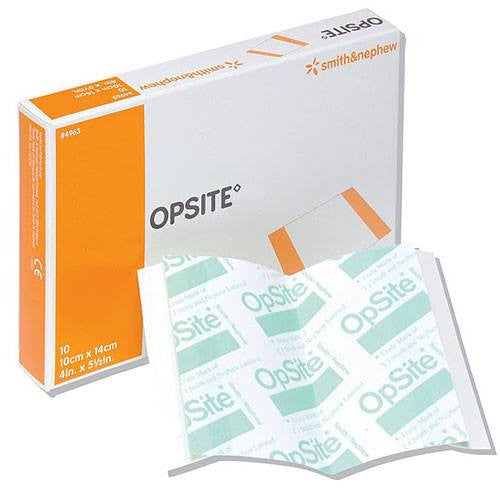
from $ 2.50Opsite Transparent Film Dressings
Smith & NephewOpsite Transparent Film Dressings by Smith & Nephew are high-quality, sterile wound dressings designed to provide a waterproof and bacteria-res...
View full details -
 Sale 19%
Original price $ 2.89Current price $ 2.35
Sale 19%
Original price $ 2.89Current price $ 2.35Opsite IV3000 IV Site Cover Dressing, 4 inch x 5.5 inch, Waterproof EACH
Smith & NephewOpsite IV3000 IV Cover dressing is a sterile, waterproof injection site dressing secures and allows for flexibility. Repels moisture, and helps kee...
View full details

Transparent film dressings are thin, flexible, see-through coverings used to protect wounds and IV sites. They’re made of a clear polyurethane film coated with a special breathable adhesive that sticks to intact skin but not to the moist wound surface. In simple terms, think of a transparent film dressing as a transparent “second skin” bandage that you can place over a wound. Because they’re see-through, you can visually monitor the wound without removing the dressing, and because they’re thin and flexible, they conform to body contours and move with you.
These dressings are typically waterproof and act as a barrier to bacteria and dirt, yet they also allow the skin to breathe. They are semi-permeable: meaning air (oxygen) and water vapor can pass through, but liquids and microbes cannot. This unique property helps maintain a moist healing environment under the dressing, which is known to promote faster wound healing, all while keeping the outside contaminants away from the wound.
Transparent film dressings are a key tool in modern wound care for covering wounds that are relatively superficial and dry (or as secondary covers for other dressings/devices), offering the benefits of visibility, protection, and moisture retention which contribute to better healing and easier wound management. They keep the environment just moist enough to aid healing, while keeping external nasties out. They’ve essentially redefined how we manage things like IV sites and small wounds, moving away from bulky gauze and tape to a sleek, clear coverage. When used appropriately – on the right wounds – they can dramatically reduce infection rates and patient discomfort, and they align well with the concept of “hands-off” wound care (monitor more, disturb less).
How Transparent Film Dresssings Are Used
Transparent film dressings are extremely versatile in healthcare. Some common uses include:
- Covering IV Sites and Central Lines: One of the classic uses is to secure and protect intravenous catheter sites. For example, when you have an IV in your arm, a transparent film (like Tegaderm or Opsite) is placed over the IV insertion site and part of the catheter. This keeps the area sterile and dry, but since the dressing is clear, doctors and nurses can easily inspect the site for any signs of infection (redness, swelling) or check if the IV is still in place properly, without removing the dressing. These are also used over central line dressings (like PICC lines or subclavian lines) and are typically changed every 5-7 days or sooner if needed.
- Protecting Shallow Wounds, Cuts, and Abrasions: For minor wounds with no or very light drainage, a transparent film can serve as a primary dressing. For instance, a small skin tear or a scraped knee can be covered with a film to keep it clean and moist. The film will adhere around the wound, sealing it off from water and germs. Since it’s not absorbent, it’s best if the wound isn’t oozing much. The moist environment under the film can help with epithelial cell migration (skin cells moving in to close the wound) and autolytic debridement (your body’s enzymes softening any dried tissue).
- Securing Dressings or Devices: Transparent films are sometimes used as an “over-dressing.” For example, if you have a gauze pad on a wound and you want to keep it dry in the shower, you might place a transparent film over the gauze as a waterproof cover. They’re also used to secure things like catheters, chest tubes, or other medical devices to the skin, while allowing observation of the insertion site.
- Covering Skin Grafts or Donor Sites: After a skin graft or when skin has been harvested from a donor site (like the thigh), clinicians often use transparent films to dress the area. It protects the raw area while keeping it moist, and the see-through nature lets them spot any issues like fluid buildup or infection at a glance.
- Preventing Blisters or Friction Injuries: Athletes or hikers sometimes use transparent films (or thin versions often marketed as blister patches) on areas prone to blistering (heels, toes, etc.). The film reduces friction and acts as a protective layer. Because it’s flexible and adheres smoothly, it stays put in areas of movement better than many traditional bandages.
Application of a transparent film dressing is straightforward but requires a bit of care: you clean the wound, pat the skin dry around it, then peel off the backing and apply the film over the wound—taking care to smooth it out so there are no wrinkles. Many have a two-step application process with a frame or tabs to help lay it down flat. Once on, the dressing can stay for several days as long as it remains intact and there’s no excessive fluid buildup under it.
Benefits of Transparent Film Dressings
Transparent film dressings are popular in wound care for several reasons:
-
Visualization: As the name implies, the transparency offers a huge advantage. Caregivers can inspect the wound or insertion site without removing the dressing. This can mean fewer dressing changes and therefore less disturbance to the wound (every time you change a dressing, you expose the wound to the environment and risk cooling it down or introducing germs). For patients, it also means less frequent painful removal of dressings.
-
Moist Wound Healing: Transparent films are occlusive enough to hold in moisture. They create a moist environment under the dressing by trapping the natural wound fluids (but not allowing them to leak out). This moisture helps with autolytic debridement, where the body’s own enzymes break down dead tissue, aiding in cleaning the wound. A moist environment is also known to speed up the healing process and reduce scarring for many types of wounds. Patients often report that wounds under a film dressing are less painful than when left open to air or under dry gauze, likely because nerve endings are kept moist and not drying out.
-
Barrier to Contaminants: The film is waterproof and impermeable to bacteria and other contaminants. Once it’s properly sealed around a wound, no external liquids, urine, stool, or germs can get in. This is incredibly valuable for infection prevention. For example, a patient can shower with a transparent film over their surgical incision – water just rolls off the film, and the incision stays dry and protected. In a hospital setting, this barrier function is crucial since it protects against hospital-acquired infections entering through the wound. Some studies have noted that infection rates in IV sites are lower when transparent films are used (in combination with proper site cleaning) because the dressing doesn’t need frequent changes and stays sealed.
-
Self-Adhesive & Non-Stick: These dressings adhere well to intact skin around a wound but do not stick to the wound bed itself. The adhesive is usually an acrylic that is coated in such a way that moisture under the dressing prevents it from sticking to the open wound surface. So when you remove the film, it typically lifts off the wound without tearing up new tissue (assuming the wound is producing a bit of moisture). They are also designed to be removed with minimal pain – you can stretch some films and they release, or peel them back low and slow. Additionally, they don’t leave a lot of adhesive residue.
-
Flexible and Comfortable: Transparent films are very thin and flexible, so they are comfortable to wear even over joints or moving parts of the body. They conform like a second skin. Patients often forget they’re wearing them. They also typically have rounded corners or shapes that minimize edge roll-up, helping them stay on longer. Because they’re breathable, skin under them generally stays healthy (unless there’s too much fluid, which we’ll touch on shortly). They also come in a variety of sizes and shapes – some are specially shaped for certain body parts (like a doughnut shape for an IV site or a butterfly shape for a knuckle), adding to comfort and securement.
-
Long Wear Time: If a wound isn’t too wet, a transparent film dressing can often stay in place for 3 to 7 days. Long wear time means fewer changes, which is cost-effective and less labor-intensive in healthcare settings. It also means the wound is undisturbed, which can facilitate better healing.
-
Cost-Effective: Transparent films tend to be relatively inexpensive compared to some advanced wound dressings. Given their benefits of reducing infection and needing fewer changes, they’re considered cost-effective in many scenarios. They also come in various forms including large rolls that can be cut to size for custom applications, which can reduce waste.
Some popular brands of transparent film dressings include:
- 3M Tegaderm®,
- Smith & Nephew Opsite®,
- Johnson & Johnson Bioclusive®,
- Medline Suresite®,
- Hartmann Cutifilm®, and various generic versions. Often healthcare providers will refer to them by brand (e.g., “place a Tegaderm on that IV”) because of how common they are.
Transparent Film Limitations and Considerations
While transparent film dressings are very useful, they are not suitable for every wound. There are some limitations to keep in mind:
-
No Absorptive Capacity: Transparent films are not absorbent. They can handle a small amount of fluid (it will just collect under the film), but if a wound is leaking moderate to large amounts of exudate, a film dressing will quickly get overwhelmed. The fluid will have nowhere to go and can start to leak out the edges or cause the adhesive to fail. More importantly, too much fluid trapped under a film can lead to skin maceration – the skin turns white, soggy, and fragile (like when you stay in water too long). Therefore, these dressings are generally recommended only for wounds with minimal drainage. If used on a slightly exudative wound, they should be monitored and changed promptly if fluid builds up (one sign is a bubble of fluid you can see under the dressing). For anything beyond mild exudate, a different dressing like a hydrocolloid, foam, or alginate that can absorb moisture is preferred. In some cases, practitioners might place a tiny piece of absorbent material under a film (like a small bit of gauze) if there’s just a bit of oozing, but usually, it’s best to switch dressing type.
-
Not for Infected or Deep Wounds: Because they are occlusive, film dressings should not be placed over clinically infected wounds. Trapping infection under a sealed environment can sometimes worsen it, and also, you’d likely have too much exudate and need frequent changes anyway. Infected wounds typically require frequent assessment and often need absorptive and antimicrobial dressings. For deep wounds (like Stage III/IV pressure ulcers or big cavity wounds), films alone are not indicated as they cannot fill dead space or absorb drainage. They might be used as a secondary dressing over a filler (like an alginate) in some cases, but as a primary cover over a deep hole – no, because they’d just bridge over it and fluid would pool.
-
Application on Fragile Skin: The adhesive on transparent films, while gentle compared to, say, regular tape, is still quite sticky. Care is needed when using them on very fragile or elderly skin. Improper removal can cause skin stripping (tearing off the top layer of skin). The general tip is to hold the skin and peel the dressing back on itself slowly, or stretch the dressing to break the adhesive bond (some films are designed to stretch-release). There are also “frame delivery” versions that help with precise placement. But if a patient’s skin is extremely delicate, even a film dressing might cause a skin tear on removal. In such cases, sometimes a thin hydrocolloid edge or skin sealant (barrier film wipe) is used under the adhesive edges to protect the skin.
-
Requires Dry Surrounding Skin: When applying a film, the skin around the wound must be dry (and ideally free of lotions or oils) to get a good seal. If the patient is diaphoretic (sweaty) or the area is moist, the dressing won’t stick well. In areas with a lot of flexion or moisture (like near the groin or under a breast), films might have trouble staying on if moisture builds up around the edges. Also, if there’s a lot of tension or pulling on the area (like over a joint that flexes deeply), the dressing can crinkle or peel. Proper placement (sometimes with the joint in a certain position) and using the right size (with enough border adhering to intact skin, usually at least a 1-inch border) help mitigate this.
-
Removal of Excess Exudate: As the guidance suggests, if fluid does accumulate under a film dressing, it may need to be changed “in a timely manner”. One has to be vigilant in case of more drainage than expected. Because it’s visible, you’ll see a bubble or fluid pocket. At that point, protocol would be to change the dressing, clean the wound, and possibly choose a more absorbent product if it repeatedly accumulates fluid quickly.