
Filters
- Cyanocobalamin (11)
- doctor-only (13)
- Low Red Blood Cell Count (1)
- Meitheal (1)
- Meitheal Pharmaceutical (1)
- Multiple dose Vials (1)
- Vitamin B12 (1)
- Vitamin B12 Complex (2)
- Vitamin B12 Deficiency (2)
- Vitamin B12 for Injection (7)
- Cyanocobalamin for Injection (7)
- Multiple Dose Vial (6)
- Vitamin B12 Deficency (7)
- Vitamin Injection (1)
- Vitamin Supplement (1)
- Vitamins (1)
- Absorption issues (1)
- B12 Injection (2)
- DNA synthesis (1)
- Gastrointestinal disorders (1)
- Neurological disorders (1)
- Neurological function (1)
- Pernicious anemia (1)
- Red blood cell formation (1)
- Treat Fish Tapeworm (1)
- Treat Folic acid deficiency (1)
- Treat Gastrointestinal pathology (1)
- Vitamin B-12 (1)
- Boost Energy (2)
- Boost Energy Levels (1)
- Boosting energy levels (2)
- Energy booster (2)
- Energy Production (1)
- energy supplement (2)
- Gastrointestinal Disorders (1)
- Mental Clarity (1)
- Pernicious Anemia (2)
- Red Blood Cell Production (1)
- vitamin B12 (5)
- Vitamin B12 Injection (1)
- Anemia treatment (3)
- Energy levels (2)
- Nerve health (1)
- Neurological issues (1)
- Red blood cell production (1)
- Treat anemia (3)
- cell reproduction (1)
- Vitamin for Injection (1)
- Vitruvias (1)
- Cyanocobalamin 1000 mcg (2)
- Multiple Dose Vials (1)
- B12 Shot (1)
- More Energy (1)
- ou-exclude (1)
- Weight Loss (1)
- B Injection (1)
- B12 benefits for energy (1)
- B12 deficiency treatment (1)
- B12 for nerve health (1)
- B12 injection for anemia (1)
- B12 shot (1)
- B12 supplement for vegans (1)
- Best injectable B12 (1)
- Boost metabolism with B12 (1)
- Injectable vitamin B12 (1)
- vitamin B12 for deficiency (1)
- Vitamin B12 multi-dose vial (1)
- Buy Cyanocobalamin (1)
- Buy Vitamin B12 (1)
- Compounding (1)
- Custom medications (1)
- Cyanocobalamin for Mixing (1)
- Cyanocobalamin Liquid (1)
- Cyanocobalamin Locally (1)
- Cyanocobalamin Near Me (1)
- Cyanocobalamin USP (1)
- Medisca (1)
- Pharmacy Compounding (1)
- Vitamin B 12 (1)
- Vitamin B12 API (1)
- Nasal Spray (1)
- Nascobal (1)
- Vitamin B12 Nasal Spray (1)
- B Shots (1)
- B-12 Injection (1)
- Gastrointestinal Conditions (1)
- Hydroxocobalamin (1)
- HYDROXY (1)
- Neurological Function (1)
- Neurological Symptoms (1)
- Red Blood Cells (1)
- Vitamin B-12 Shot (1)
- Vitamin B12 deficiency (1)
- Vitamin Shot (1)
Vitamin B12 Injections
Vitamin B12 injections are a parenteral form of cobalamin (usually cyanocobalamin or hydroxocobalamin) given by intramuscular (IM) or subcutaneous (SC) injection. They rapidly raise blood B12 levels by bypassing the gut. Vitamin B₁₂ is essential for red blood cell formation, nerve function, and DNA synthesis. In a healthy diet, B12 comes from animal products; without it, the body exhausts its stores over time. Injections are prescribed when dietary intake is inadequate or absorption is impaired. Because IM injections send B12 directly into muscle, the vitamin peaks in blood within about an hour, ensuring tissues get what they need.
Parenteral B12 use: Deficiency of B12 causes megaloblastic anemia and neurological symptoms (fatigue, tingling, memory problems). When deficiency is diagnosed, lifelong B₁₂ replacement is often required (especially in pernicious anemia). Intramuscular B₁₂ is the standard treatment. It prevents progression of anemia and nerve damage by supplying B₁₂ directly, even when intrinsic factor (the gastric protein needed for oral B12 absorption) is lacking.
Clinical Uses
Vitamin B12 injections are used to treat or prevent B12 deficiency in various situations:
- Pernicious anemia: An autoimmune condition where gastric intrinsic factor is missing. Patients cannot absorb B12 orally, so IM injections are required indefinitely.
- Gastrointestinal malabsorption: Patients with Crohn’s disease, celiac disease, gastric bypass or intestinal surgery often can’t absorb B12 properly. Injections bypass the gut and correct deficiency.
- Drug-induced malabsorption: Long-term medications like metformin or proton-pump inhibitors can reduce B12 absorption. In such cases, injections ensure adequate levels.
- Dietary deficiency: Strict vegans or very poor diets may lack animal-source B12.. If supplements or fortified foods aren’t used, injections can restore levels.
- Neuropathy or neurological disease: Although evidence is mixed, injections are often given when deficiency is linked to nerve pain or cognitive symptoms. The goal is to prevent irreversible nerve damage.
In all these cases, the goal is to correct deficiency and prevent complications. UK guidance notes that B₁₂ shots improve energy and prevent nerve damage in deficient patients. By contrast, giving B₁₂ to people with normal levels does not boost energy or metabolism beyond normal.
Role in the Body & “Energy” Production
Vitamin B₁₂ plays several vital roles that underlie its effect on energy and vitality:
-
Red blood cell (RBC) production: B12 is needed for DNA synthesis in bone marrow. Without it, RBC precursors grow abnormally large (megaloblasts) and fail to mature. In anemia, tissues receive less oxygen, causing fatigue and weakness. Restoring B12 allows RBCs to form properly, oxygen delivery improves, and energy levels rise.(The NHS notes B₁₂ “is needed for making healthy red blood cells” and helps “reduce tiredness and fatigue”.)
-
Nerve & myelin synthesis: B12 is also essential for maintaining the myelin sheath around nerves. Deficiency causes nerve dysfunction (numbness, balance issues) and can lead to irreversible damage. Injections protect nerve health.
-
Metabolic pathways: B12 is a cofactor in two critical reactions:
- Methylmalonyl-CoA mutase: Converts methylmalonyl CoA (from odd-chain fatty acids and some amino acids) into succinyl-CoA, which enters the Krebs (TCA) cycle to make ATP (cellular energy). Without B₁₂, methylmalonic acid accumulates and energy production is less efficient.
- Methionine synthase: Converts homocysteine to methionine (with folate). Methionine is needed for DNA synthesis and methylation reactions. Impairment can affect energy metabolism and nerve function.
In short, B12 injections restore these pathways so the body can generate energy from fats and proteins effectively. Clinically, this means that correcting a deficiency often relieves unexplained fatigue and “brain fog.” (NHS sources report that deficiency leads to “extreme tiredness” and low energy.)
-
Energy misconception: It’s important to stress that B₁₂ injections are not a stimulant. They do not give “instant energy” like caffeine. Only patients with true B₁₂ deficiency will experience improved energy. In healthy people with normal B₁₂ levels, additional B₁₂ has no effect on energy metabolism.
Administration and Dosage
Vitamin B₁₂ injections must be administered by a trained health professional (nurse, doctor) or by a patient who has been taught proper technique. Key points:
-
Formulation: Most commonly, cyanocobalamin or hydroxocobalamin in aqueous solution is used. These come in 1000 µg/mL vials (1 mg per mL). Hydroxocobalamin has a longer half-life and is often used in Europe (e.g. UK).
-
Route: Injections are given intramuscularly (IM), though subcutaneous (SC) is also possible in some cases. IM is traditional for rapid absorption. The typical IM sites are the deltoid muscle (upper arm) or the gluteal muscle (buttock). Use aseptic technique, rotate sites to prevent soreness, and use an appropriate needle (e.g. 22–25 gauge, 1–1.5 inch for adult muscle).
-
Frequency (Loading and Maintenance): Regimens vary by country and condition, but representative examples include:
- Pernicious anemia or severe deficiency: Start with an “intensive” phase: e.g. 1000 µg IM daily or every other day for 1–2 weeks, then 1000 µg once weekly for 4–8 weeks. After that, patients usually continue lifelong maintenance 1000 µg once monthly. StatPearls (US source) states, “Patients generally receive lifelong intramuscular (IM) injections of vitamin B12 (typically 1000 µg per month). Initially, injections are given daily or every other day for a week, then weekly for 1–2 months, followed by monthly maintenance”.
- Hydroxocobalamin regimen (UK example): 1 mg (1000 µg) IM three times a week for 2 weeks (loading), then 1 mg every 3 months thereafter. This schedule aligns with British practice, reflecting the longer duration of action of hydroxocobalamin.
- Milder or dietary deficiency: Sometimes a less intensive approach (e.g. weekly injections for a month, then monthly) is used if there are no neurological symptoms.
-
Monitoring: After starting injections, B12 blood levels and hematologic response are monitored. Nurses should follow orders for how often to draw labs. If anemia and symptoms are severe, early labs (e.g. after 1 month) can ensure a response.
-
Oral alternative: High-dose oral B12 (e.g. 1000–2000 µg daily) can correct deficiency in some cases (even without intrinsic factor, because a small fraction can be absorbed passively). StatPearls notes that high-dose oral B₁₂ has been shown effective for maintenance, but “recommendations are to always use the parenteral route in severe neurological manifestations”. In practice, injections are used when rapid correction or assured absorption is needed.
Nursing & Patient Tips and Precautions
Vaccinating B₁₂ by injection is generally safe, but nurses and patients should note:
-
Injection technique: Use standard IM technique. Clean the skin, use the correct needle length, insert at 90°, and do not inject into subcutaneous fat by mistake. Some practitioners use the “Z-track” method (pulling tissue aside before injection) to prevent leakage. Do not vigorously aspirate in immunization-style injections, but ensure not in a blood vessel (striking a vein is unlikely in recommended sites). Always rotate sites to avoid local irritation. Dispose needles in sharps container immediately.
-
Observe after injection: Have the patient sit (not stand) during and for a few minutes after injection. Some may feel lightheaded or dizzy briefly. Rarely, an allergic reaction (rash, throat tightness) can occur. Keep emergency equipment (e.g. epinephrine) nearby if there is any history of allergies.
-
Side effects: Most patients have no significant side effects. Injection site pain, redness or swelling may occur (local inflammation). Headache or nausea is uncommon. Discuss these potential mild effects so patients know they are normal. Severe side effects are rare but include anaphylaxis (especially in those allergic to cobalt or B₁₂).
- Cautions: Do not give B12 injections to someone with a known hypersensitivity to cyanocobalamin, hydroxocobalamin, or cobalt.
- Potassium levels: In severe anemia, rapid red cell production can lower potassium. If the patient is known to have low potassium or heart rhythm issues, monitor electrolytes.
-
Patient education: Explain that B12 shots usually relieve symptoms gradually – it may take weeks to feel better. Advise patients to keep all follow-up appointments for injections and labs. Encourage them to eat B12-rich foods (meat, fish, dairy, eggs) when possible. If vegan, discuss fortified foods or supplements to prevent recurrence. Emphasize that injections are prescribed because of a medical need (deficiency); these are not immunity or vitamin boosters for healthy people.
-
Pregnancy and breastfeeding: B₁₂ is safe and important during pregnancy; deficiency can cause harm to fetus (neurodevelopment issues). If the patient is pregnant or breastfeeding, inform the prescriber – usually, injections continue as needed, and B₁₂ even passes into breast milk (beneficial). A patient info leaflet advises women to tell clinicians if pregnant, but also notes supplementing prevents deficiency risks.
-
Compliance: Some patients may require lifelong injections (e.g. pernicious anemia. Nurses should check that patients understand the chronic nature of treatment. For motivated patients, some services allow “patient-specific direction” so they can self-administer B₁₂ at home (after training).
-
Record-keeping: Document each injection (site, lot number, dose, date). Use separate syringes for each IM injection. If a multi-dose vial is opened, discard per protocol to avoid contamination.
-
Interactions: Inform patients that certain drugs (antibiotics, methotrexate) can affect B12 testing, but generally B12 injections have no major drug interactions. Alcoholism impairs B12 status, so counsel on alcohol use.
-
Symptom monitoring: Fatigue, numbness or cognitive problems should improve with treatment. If symptoms worsen or new ones appear, re-evaluate (e.g., neurological exam, additional testing).
Summary of Key Points
- What: B₁₂ injections are vitamin B12 delivered IM/SC (usually 1000 µg/mL). They replace deficient B12 when absorption or intake is inadequate.
- Uses: Treat B12 deficiency (pernicious anemia, malabsorption, certain diets/drugs). Indicated especially when neurological signs or severe anemia are present.
- Mechanism: B12 is a cofactor for blood cell production and energy-yielding metabolism. Adequate B12 allows normals RBC formation (preventing anemia-related fatigue) and keeps nerves myelinated.
- Regimen: Initial “loading” injections (e.g. daily or weekly) to correct deficiency, followed by maintenance (commonly 1 mg IM monthly or as prescribed).
- Nursing care: Use proper IM technique, rotate sites, educate patient on side effects and schedule. Observe for rare allergic reactions and ensure follow-up labs.
- Patient advice: Emphasize that injections restore normal body function (energy and nerve health) if they were deficient; they are not a general stimulant. Encourage diet sources of B₁₂ where possible, and adherence to the injection schedule.
-
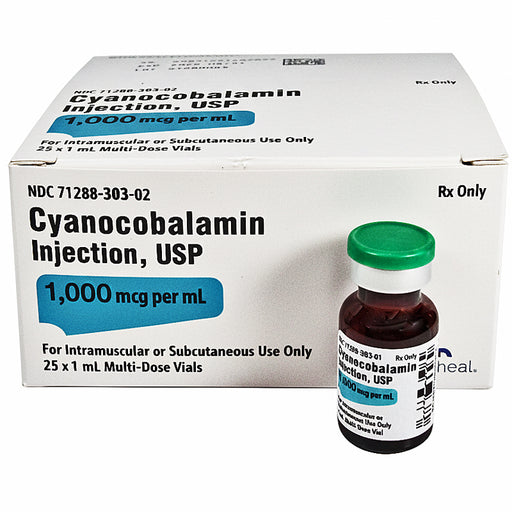 Sale 24%
Original price $ 65.95Current price $ 49.89
Sale 24%
Original price $ 65.95Current price $ 49.89Vitamin B12 Injection Cyanocobalamin Shot 1000 mcg Multiple Dose 1 mL Vials x 25/Tray (Rx)
2 reviewsCyanocobalamin Injection (Vitamin B12 Injection) 1000 mcg/mL is primarily used to treat and prevent vitamin B12 deficiency, which can lead to condi...
View full details🔒 Medical License Required -
 Sale 30%
Original price $ 99.95Current price $ 69.95
Sale 30%
Original price $ 99.95Current price $ 69.95Cyanocobalamin Injection 1000 mcg Multiple-Dose Vials 1 mL x 25/Tray (Rx)
1 reviewSola Pharmaceuticals Cyanocobalamin for injection 1000 mcg Multiple-Dose Vials 1mL. Cyanocobalamin is a form of vitamin B12. It is used to treat or...
View full details🔒 Medical License Required -
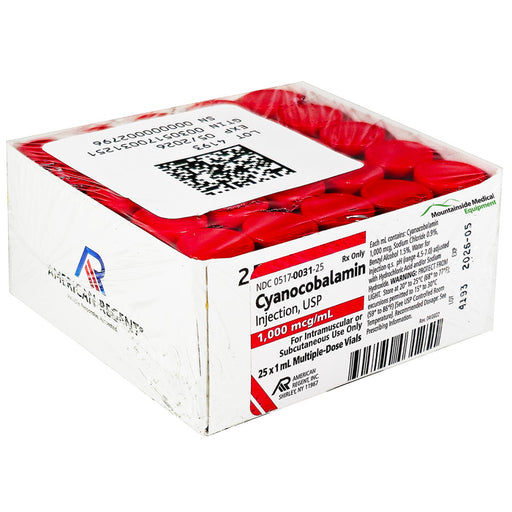 Sale 24%
Original price $ 169.95Current price $ 129.00
Sale 24%
Original price $ 169.95Current price $ 129.00Vitamin B12 Injection Cyanocobalamin 1000 mcg/mL 25/Pack (Rx)
3 reviewsVitamin B12 Cyanocobalamin Injection 1,000 mcg/mL is used to treat and prevent Vitamin B12 deficiency, which can lead to serious conditions such as...
View full details🔒 Medical License Required -
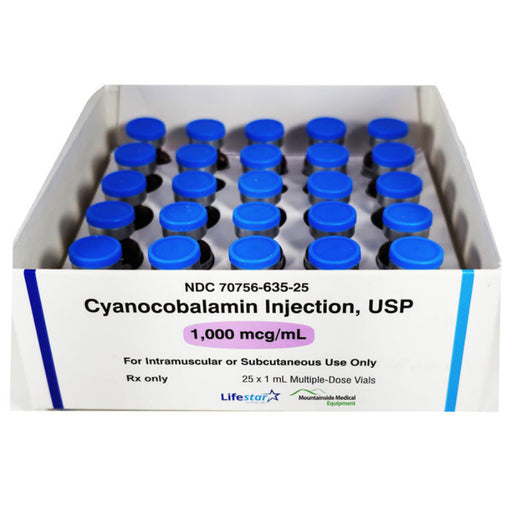 Sale 17%
Original price $ 59.95Current price $ 49.89
Sale 17%
Original price $ 59.95Current price $ 49.89Cyanocobalamin Injection Vitamin B12 Deficiency Relief 1000 mcg/mL Multiple-Use Vials 1 mL x 25/Tray (RX)
2 reviewsCyanocobalamin Injection is used to treat and prevent vitamin B12 deficiency, which is essential for maintaining healthy nerve cells and red blood ...
View full details🔒 Medical License Required -
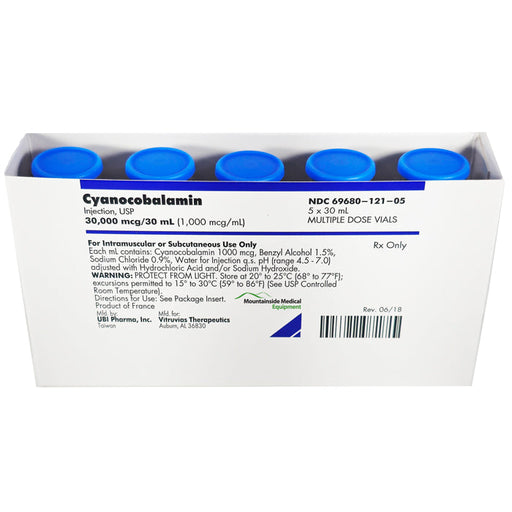 Sale 15%
Original price $ 199.95Current price $ 169.00
Sale 15%
Original price $ 199.95Current price $ 169.00Cyanocobalamin B12 injection 1000 mcg Multiple-Dose Vials 30 mL x 5/Box (Rx)
No reviewsCyanocobalamin B12 Injection is a widely recognized and effective solution for individuals suffering from vitamin B12 deficiency, often recommended...
View full details🔒 Medical License Required -
 Sale 16%
Original price $ 345.00Current price $ 289.00
Sale 16%
Original price $ 345.00Current price $ 289.00Cyanocobalamin Injection 30,000 mcg Multiple-Dose Vials 30 mL x 10/Box (Rx)
1 reviewCyanocobalamin injection is a form of Vitamin B12 used to treat deficiencies. It works by replacing Vitamin B12 in the body and helps with abnormal...
View full details🔒 Medical License Required -
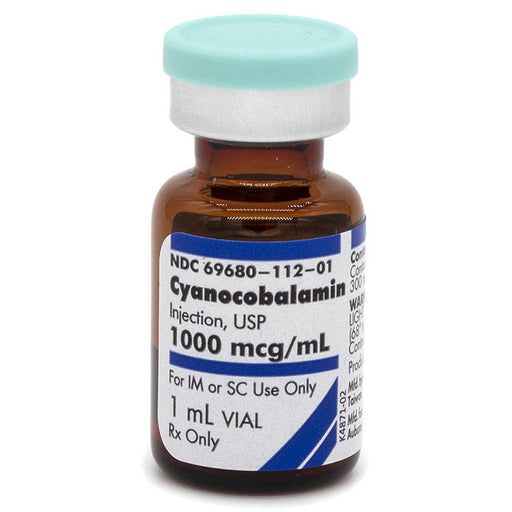 Sale 22%
Original price $ 139.95Current price $ 108.90
Sale 22%
Original price $ 139.95Current price $ 108.90Vitamin B12 Complex Cyanocobalamin Injection 1 mL x 10/Box (Rx)
No reviewsCyanocobalamin, also known as vitamin B12, is used to treat and prevent vitamin B12 deficiency. Cyanocobalamin can also be prescribed to treat pern...
View full details🔒 Medical License Required -
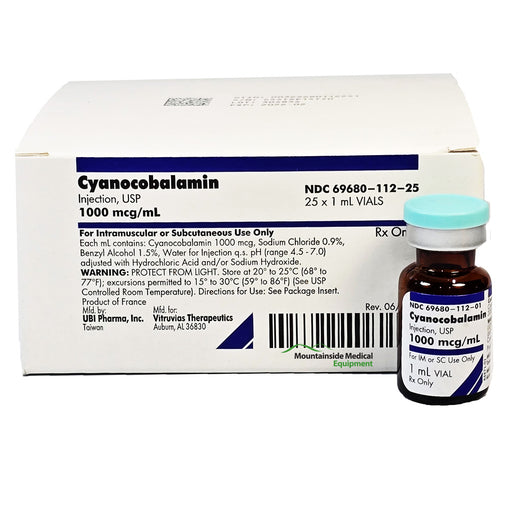 Sale 30%
Original price $ 89.00Current price $ 61.95
Sale 30%
Original price $ 89.00Current price $ 61.95Cyanocobalamin Injection 1000 mcg Multiple-Dose Vials 1 mL x 25/Tray (Rx)
No reviewsVitruvias Therapeutics Cyanocobalamin for injection 1000 mcg Multiple-Dose Vials 1mL. Cyanocobalamin is a form of vitamin B12. It is used to treat ...
View full details🔒 Medical License Required -
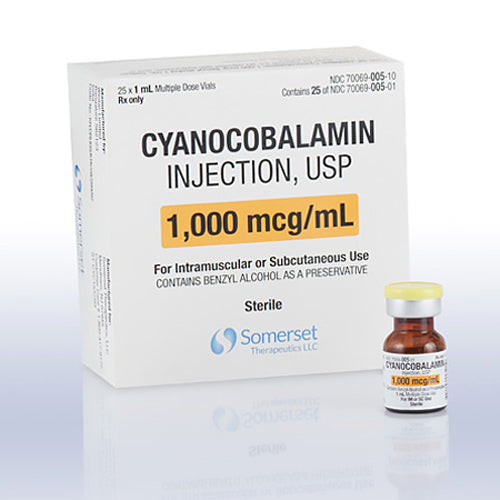 Sale 57%
Original price $ 169.00Current price $ 72.00
Sale 57%
Original price $ 169.00Current price $ 72.00Vitamin B12 for Injection Cyanocobalamin 1,000 mcg, 25/Box (Rx)
No reviewsVitamin B12 for Injection (Shot) Cyanocobalamin 1,000mcg by Somerset Therapeutics used to treat low levels (deficiency) of this vitamin. Vitamin B1...
View full details🔒 Medical License Required -
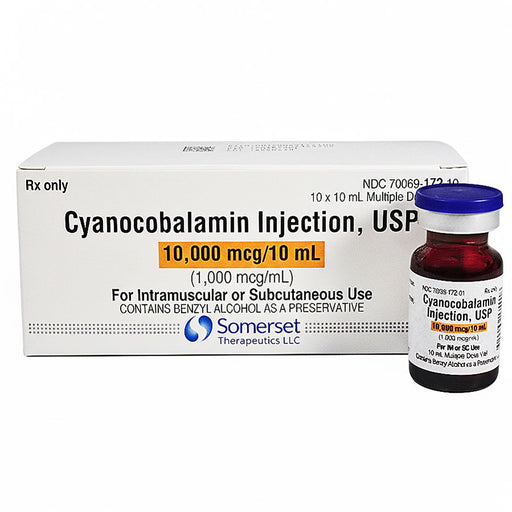 Sale 25%
Original price $ 169.95Current price $ 127.00
Sale 25%
Original price $ 169.95Current price $ 127.00Vitamin B12 Cyanocobalamin injection 1000 mcg Multiple-Dose Vials 10 mL x 10/Box by Somerset (Rx)
No reviewsVitamin B12 Injectable Solution for B12 Deficiency, Energy, Anemia, and Nerve Health Boost your vitamin B12 levels instantly with hospital-grade Cy...
View full details🔒 Medical License Required -
 Sale
$ 49.95
Sale
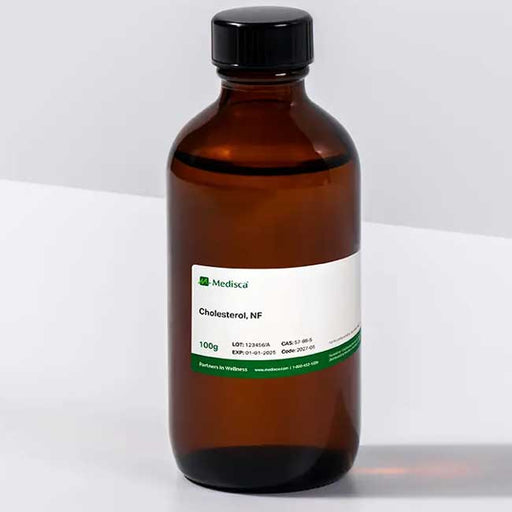
$ 49.95Cyanocobalamin Liquid API (Vitamin B 12) USP For Custom Compounding (API)
1 reviewCyanocobalamin Liquid API (Vitamin B12) USP is the pharmaceutical-grade, liquid form of cyanocobalamin, which is a synthetic, stable form of vitami...
View full details🔒 Medical License Required -
 Sale 34%
Original price $ 1,450.00Current price $ 950.00
Sale 34%
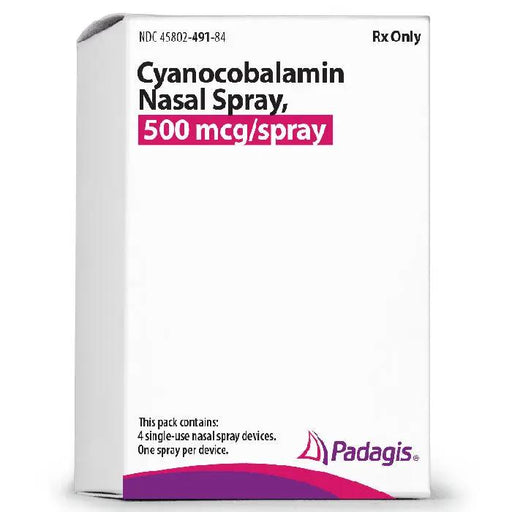
Original price $ 1,450.00Current price $ 950.00Cyanocobalamin Vitamin B12 Nasal Spray 500 mcg (4-Pack) (RX)
No reviewsCyanocobalamin Nasal Spray is used to treat vitamin B12 deficiency, which is essential for nerve health, red blood cell production, and DNA synthes...
View full details🔒 Medical License Required -
 Sold out
Original price $ 75.95Current price $ 49.00
Sold out
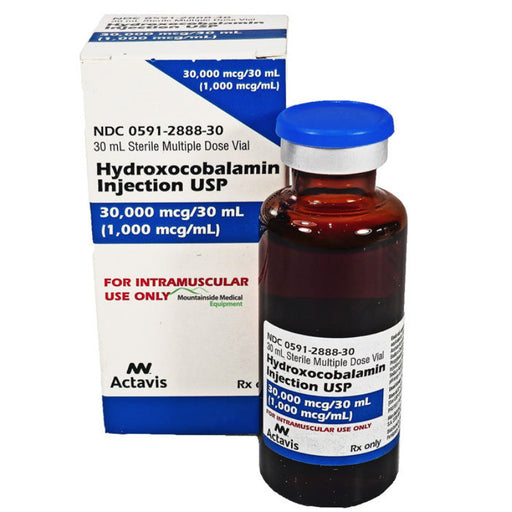
Original price $ 75.95Current price $ 49.00B 12 Hydroxocobalamin Injection For Vitamin B12 Deficiency & Energy 30,000 mcg Multiple Dose Vial 30 mL (Rx)
7 reviewsPremium Injectable Solution for Rapid Vitamin B12 Replenishment & Energy Boost. Hydroxocobalamin Injection by Actavis provides a potent, pharma...
View full details


People Also Searched For
Vitamin B12 injections are a parenteral form of cobalamin (usually cyanocobalamin or hydroxocobalamin) given by intramuscular (IM) or subcutaneous (SC) injection. They rapidly raise blood B12 levels by bypassing the gut. Vitamin B₁₂ is essential for red blood cell formation, nerve function, and DNA synthesis. In a healthy diet, B12 comes from animal products; without it, the body exhausts its stores over time. Injections are prescribed when dietary intake is inadequate or absorption is impaired. Because IM injections send B12 directly into muscle, the vitamin peaks in blood within about an hour, ensuring tissues get what they need.
Parenteral B12 use: Deficiency of B12 causes megaloblastic anemia and neurological symptoms (fatigue, tingling, memory problems). When deficiency is diagnosed, lifelong B₁₂ replacement is often required (especially in pernicious anemia). Intramuscular B₁₂ is the standard treatment. It prevents progression of anemia and nerve damage by supplying B₁₂ directly, even when intrinsic factor (the gastric protein needed for oral B12 absorption) is lacking.
Clinical Uses
Vitamin B12 injections are used to treat or prevent B12 deficiency in various situations:
- Pernicious anemia: An autoimmune condition where gastric intrinsic factor is missing. Patients cannot absorb B12 orally, so IM injections are required indefinitely.
- Gastrointestinal malabsorption: Patients with Crohn’s disease, celiac disease, gastric bypass or intestinal surgery often can’t absorb B12 properly. Injections bypass the gut and correct deficiency.
- Drug-induced malabsorption: Long-term medications like metformin or proton-pump inhibitors can reduce B12 absorption. In such cases, injections ensure adequate levels.
- Dietary deficiency: Strict vegans or very poor diets may lack animal-source B12.. If supplements or fortified foods aren’t used, injections can restore levels.
- Neuropathy or neurological disease: Although evidence is mixed, injections are often given when deficiency is linked to nerve pain or cognitive symptoms. The goal is to prevent irreversible nerve damage.
In all these cases, the goal is to correct deficiency and prevent complications. UK guidance notes that B₁₂ shots improve energy and prevent nerve damage in deficient patients. By contrast, giving B₁₂ to people with normal levels does not boost energy or metabolism beyond normal.
Role in the Body & “Energy” Production
Vitamin B₁₂ plays several vital roles that underlie its effect on energy and vitality:
-
Red blood cell (RBC) production: B12 is needed for DNA synthesis in bone marrow. Without it, RBC precursors grow abnormally large (megaloblasts) and fail to mature. In anemia, tissues receive less oxygen, causing fatigue and weakness. Restoring B12 allows RBCs to form properly, oxygen delivery improves, and energy levels rise.(The NHS notes B₁₂ “is needed for making healthy red blood cells” and helps “reduce tiredness and fatigue”.)
-
Nerve & myelin synthesis: B12 is also essential for maintaining the myelin sheath around nerves. Deficiency causes nerve dysfunction (numbness, balance issues) and can lead to irreversible damage. Injections protect nerve health.
-
Metabolic pathways: B12 is a cofactor in two critical reactions:
- Methylmalonyl-CoA mutase: Converts methylmalonyl CoA (from odd-chain fatty acids and some amino acids) into succinyl-CoA, which enters the Krebs (TCA) cycle to make ATP (cellular energy). Without B₁₂, methylmalonic acid accumulates and energy production is less efficient.
- Methionine synthase: Converts homocysteine to methionine (with folate). Methionine is needed for DNA synthesis and methylation reactions. Impairment can affect energy metabolism and nerve function.
In short, B12 injections restore these pathways so the body can generate energy from fats and proteins effectively. Clinically, this means that correcting a deficiency often relieves unexplained fatigue and “brain fog.” (NHS sources report that deficiency leads to “extreme tiredness” and low energy.)
-
Energy misconception: It’s important to stress that B₁₂ injections are not a stimulant. They do not give “instant energy” like caffeine. Only patients with true B₁₂ deficiency will experience improved energy. In healthy people with normal B₁₂ levels, additional B₁₂ has no effect on energy metabolism.
Administration and Dosage
Vitamin B₁₂ injections must be administered by a trained health professional (nurse, doctor) or by a patient who has been taught proper technique. Key points:
-
Formulation: Most commonly, cyanocobalamin or hydroxocobalamin in aqueous solution is used. These come in 1000 µg/mL vials (1 mg per mL). Hydroxocobalamin has a longer half-life and is often used in Europe (e.g. UK).
-
Route: Injections are given intramuscularly (IM), though subcutaneous (SC) is also possible in some cases. IM is traditional for rapid absorption. The typical IM sites are the deltoid muscle (upper arm) or the gluteal muscle (buttock). Use aseptic technique, rotate sites to prevent soreness, and use an appropriate needle (e.g. 22–25 gauge, 1–1.5 inch for adult muscle).
-
Frequency (Loading and Maintenance): Regimens vary by country and condition, but representative examples include:
- Pernicious anemia or severe deficiency: Start with an “intensive” phase: e.g. 1000 µg IM daily or every other day for 1–2 weeks, then 1000 µg once weekly for 4–8 weeks. After that, patients usually continue lifelong maintenance 1000 µg once monthly. StatPearls (US source) states, “Patients generally receive lifelong intramuscular (IM) injections of vitamin B12 (typically 1000 µg per month). Initially, injections are given daily or every other day for a week, then weekly for 1–2 months, followed by monthly maintenance”.
- Hydroxocobalamin regimen (UK example): 1 mg (1000 µg) IM three times a week for 2 weeks (loading), then 1 mg every 3 months thereafter. This schedule aligns with British practice, reflecting the longer duration of action of hydroxocobalamin.
- Milder or dietary deficiency: Sometimes a less intensive approach (e.g. weekly injections for a month, then monthly) is used if there are no neurological symptoms.
-
Monitoring: After starting injections, B12 blood levels and hematologic response are monitored. Nurses should follow orders for how often to draw labs. If anemia and symptoms are severe, early labs (e.g. after 1 month) can ensure a response.
-
Oral alternative: High-dose oral B12 (e.g. 1000–2000 µg daily) can correct deficiency in some cases (even without intrinsic factor, because a small fraction can be absorbed passively). StatPearls notes that high-dose oral B₁₂ has been shown effective for maintenance, but “recommendations are to always use the parenteral route in severe neurological manifestations”. In practice, injections are used when rapid correction or assured absorption is needed.
Nursing & Patient Tips and Precautions
Vaccinating B₁₂ by injection is generally safe, but nurses and patients should note:
-
Injection technique: Use standard IM technique. Clean the skin, use the correct needle length, insert at 90°, and do not inject into subcutaneous fat by mistake. Some practitioners use the “Z-track” method (pulling tissue aside before injection) to prevent leakage. Do not vigorously aspirate in immunization-style injections, but ensure not in a blood vessel (striking a vein is unlikely in recommended sites). Always rotate sites to avoid local irritation. Dispose needles in sharps container immediately.
-
Observe after injection: Have the patient sit (not stand) during and for a few minutes after injection. Some may feel lightheaded or dizzy briefly. Rarely, an allergic reaction (rash, throat tightness) can occur. Keep emergency equipment (e.g. epinephrine) nearby if there is any history of allergies.
-
Side effects: Most patients have no significant side effects. Injection site pain, redness or swelling may occur (local inflammation). Headache or nausea is uncommon. Discuss these potential mild effects so patients know they are normal. Severe side effects are rare but include anaphylaxis (especially in those allergic to cobalt or B₁₂).
- Cautions: Do not give B12 injections to someone with a known hypersensitivity to cyanocobalamin, hydroxocobalamin, or cobalt.
- Potassium levels: In severe anemia, rapid red cell production can lower potassium. If the patient is known to have low potassium or heart rhythm issues, monitor electrolytes.
-
Patient education: Explain that B12 shots usually relieve symptoms gradually – it may take weeks to feel better. Advise patients to keep all follow-up appointments for injections and labs. Encourage them to eat B12-rich foods (meat, fish, dairy, eggs) when possible. If vegan, discuss fortified foods or supplements to prevent recurrence. Emphasize that injections are prescribed because of a medical need (deficiency); these are not immunity or vitamin boosters for healthy people.
-
Pregnancy and breastfeeding: B₁₂ is safe and important during pregnancy; deficiency can cause harm to fetus (neurodevelopment issues). If the patient is pregnant or breastfeeding, inform the prescriber – usually, injections continue as needed, and B₁₂ even passes into breast milk (beneficial). A patient info leaflet advises women to tell clinicians if pregnant, but also notes supplementing prevents deficiency risks.
-
Compliance: Some patients may require lifelong injections (e.g. pernicious anemia. Nurses should check that patients understand the chronic nature of treatment. For motivated patients, some services allow “patient-specific direction” so they can self-administer B₁₂ at home (after training).
-
Record-keeping: Document each injection (site, lot number, dose, date). Use separate syringes for each IM injection. If a multi-dose vial is opened, discard per protocol to avoid contamination.
-
Interactions: Inform patients that certain drugs (antibiotics, methotrexate) can affect B12 testing, but generally B12 injections have no major drug interactions. Alcoholism impairs B12 status, so counsel on alcohol use.
-
Symptom monitoring: Fatigue, numbness or cognitive problems should improve with treatment. If symptoms worsen or new ones appear, re-evaluate (e.g., neurological exam, additional testing).
Summary of Key Points
- What: B₁₂ injections are vitamin B12 delivered IM/SC (usually 1000 µg/mL). They replace deficient B12 when absorption or intake is inadequate.
- Uses: Treat B12 deficiency (pernicious anemia, malabsorption, certain diets/drugs). Indicated especially when neurological signs or severe anemia are present.
- Mechanism: B12 is a cofactor for blood cell production and energy-yielding metabolism. Adequate B12 allows normals RBC formation (preventing anemia-related fatigue) and keeps nerves myelinated.
- Regimen: Initial “loading” injections (e.g. daily or weekly) to correct deficiency, followed by maintenance (commonly 1 mg IM monthly or as prescribed).
- Nursing care: Use proper IM technique, rotate sites, educate patient on side effects and schedule. Observe for rare allergic reactions and ensure follow-up labs.
- Patient advice: Emphasize that injections restore normal body function (energy and nerve health) if they were deficient; they are not a general stimulant. Encourage diet sources of B₁₂ where possible, and adherence to the injection schedule.