Ciprofloxacin Eye Drops
Ciprofloxacin eye drops (0.3% ophthalmic solution; brand name Ciloxan) are a broad-spectrum fluoroquinolone antibiotic used topically in the eye. It is indicated for bacterial ocular infections such as bacterial conjunctivitis (pink eye) and corneal ulcers/keratitis caused by susceptible bacteria. Ciprofloxacin works by killing bacteria (it inhibits bacterial DNA gyrase, blocking DNA replication). It is not effective against viral or fungal eye infections; it targets many Gram-negative and Gram-positive pathogens (e.g. Pseudomonas, Haemophilus, Staphylococcus, Streptococcus). Treatment should only be started if a bacterial infection is suspected or confirmed.
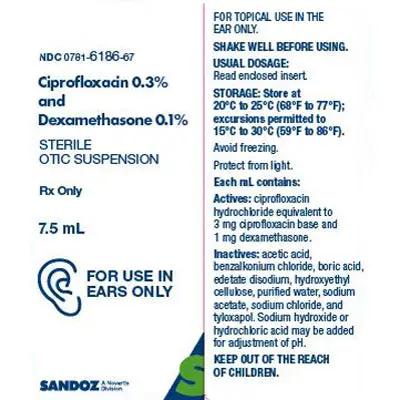
Contraindications: Prior hypersensitivity to ciprofloxacin or any quinolone (“-floxacin”) antibiotic, or to any component of the drops, is an absolute contraindication. (Cross-reaction with other quinolones is possible.) The drops are for ophthalmic use only – never inject in the eye or use in the ear/nose, and do not use in viral eye diseases (e.g. herpes keratitis), as it will not help those.
How It Works
Ciprofloxacin is bactericidal: it rapidly kills susceptible bacteria by interfering with DNA replication. Specifically, it inhibits DNA gyrase and topoisomerase IV enzymes that bacteria need to replicate their DNA. By blocking these enzymes, ciprofloxacin stops bacterial growth and clears the infection. Because systemic absorption from eye drops is minimal, it acts locally with very little effect on the rest of the body.
Dosage and Administration
-
General instillation: Shake the bottle well. Wash hands before use. Tilt head back and pull down the lower eyelid. Place 1–2 drops of solution into the affected eye(s). Release the eyelid and lightly press on the inner corner of the eye for about 1 minute to help absorption and reduce systemic drainage. Blurry vision or a bitter taste in the mouth may occur briefly after dosing. If both eyes are infected, repeat in the other eye using the same procedure. A light blink will spread the medication.
-
Conjunctivitis (Pink Eye): The usual regimen is 1–2 drops every 2 hours while awake for the first 2 days, then 1–2 drops every 4 hours while awake for the next 5 days. This 7-day course is typically sufficient for common acute bacterial conjunctivitis. (Some practitioners may start every 1–2 hours and then taper.) Complete the full course even if symptoms improve early.
-
Corneal Ulcers/Keratitis: For serious corneal infections, a very intensive regimen is used (as per FDA labeling): Initial: 2 drops every 15 minutes for 1 hour, then 2 drops every 30 minutes for the rest of day 1. Day 2: 2 drops hourly. Days 3–14: 2 drops every 4 hours. Treatment may continue beyond 14 days until the ulcer is healed. (Such dosing is under ophthalmologist supervision.)
-
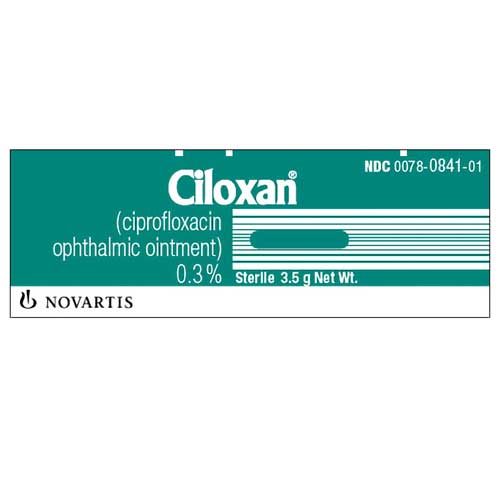
Eye ointment: A preservative-free ciprofloxacin 0.3% ointment (Ciloxan ointment) is also available. For the ointment, apply a small strip (about ½-inch) into the lower conjunctival sac of the affected eye, usually twice daily. (Example: one applicator tip per dose.) Ointment often causes more temporary blurring.
-
Contact lenses: Remove soft contact lenses before using ciprofloxacin drops. Because the drops contain a preservative (benzalkonium chloride), contacts must be removed and can be reinserted 15 minutes after dosing. Patients with active infection should not wear contact lenses until fully healed.
-
Storage: Store at room temperature. Keep the bottle closed with cap on. Discard any unused portion beyond the expiration date or 30 days after opening (typical instruction).
Side Effects
Ciprofloxacin eye drops are generally well tolerated. Common local side effects include transient burning, stinging or discomfort in the eye immediately after instillation. Patients may also notice crusting or a filamenty discharge, and white crystalline precipitates may form on the cornea (observed in ~17% of patients under intensive dosing). These usually resolve upon stopping or as treatment continues. Some patients experience blurred vision or a bitter taste, but these effects are mild and brief.
Less common effects (usually mild) include eye itchiness, redness of the conjunctiva or eyelids, and a sensation of something in the eye. The ointment form often causes temporary blurry vision and a feeling of fullness in the eye. If side effects are severe or persistent (e.g. intense pain, marked redness, swelling, or vision changes), the medication should be stopped and a doctor consulted.
Serious reactions are rare. Watch for signs of an allergic reaction: severe eye irritation, swelling, hives or rash around the eyes. If rash or signs of hypersensitivity occur, discontinue and seek medical help immediately. Because systemic absorption is negligible, systemic side effects (dizziness, GI upset) are very uncommon with the eye drops. However, patients with a history of quinolone allergy (even systemic) should use caution. Use during pregnancy or breastfeeding should be discussed with a doctor (no controlled studies; generally use only if clearly needed).
Summary
Ciprofloxacin 0.3% ophthalmic solution is a prescription fluoroquinolone antibiotic drop used to treat bacterial eye infections (especially conjunctivitis and corneal ulcers). It is applied topically, typically as 1–2 drops multiple times per day for up to 7–14 days depending on infection severity. Common side effects are mild eye irritation or burning. It should not be used in cases of viral pinkeye (like from herpes) or in patients allergic to ciprofloxacin or related quinolones. As with any antibiotic drop, the full prescribed course should be completed, and contact lens wear avoided during treatment.