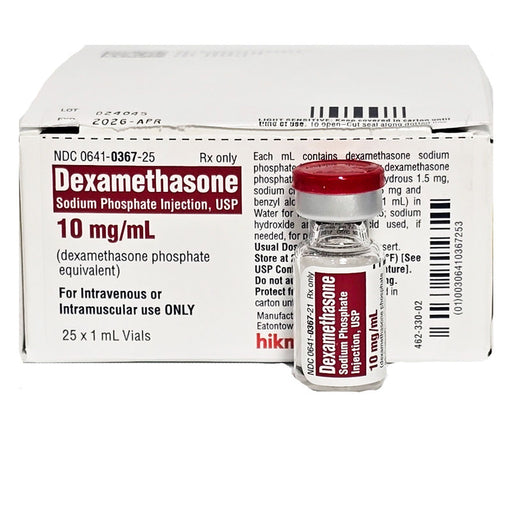
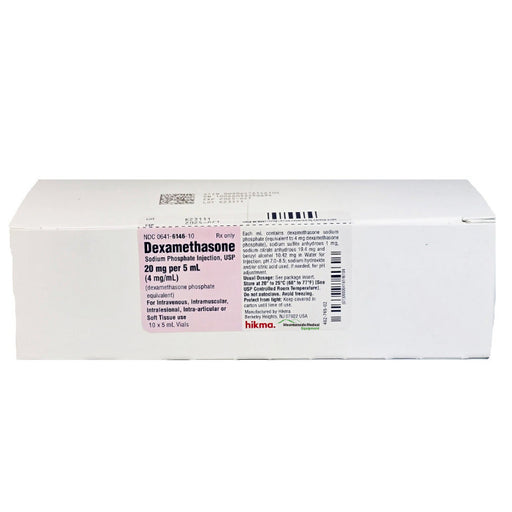
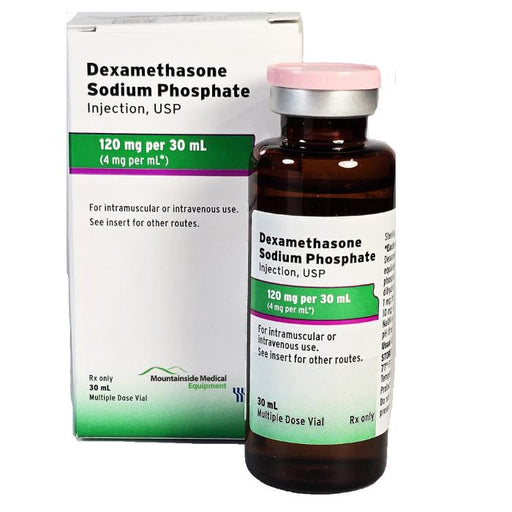
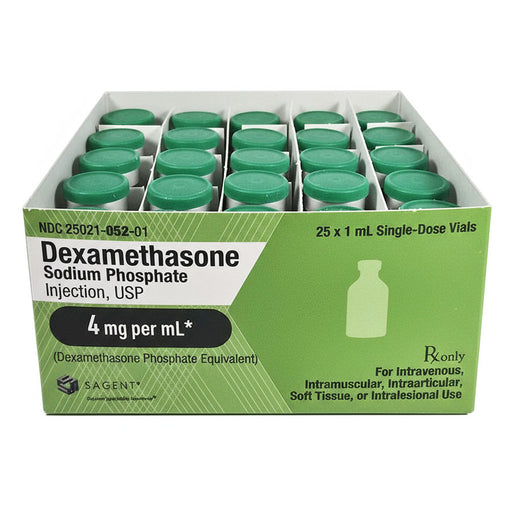
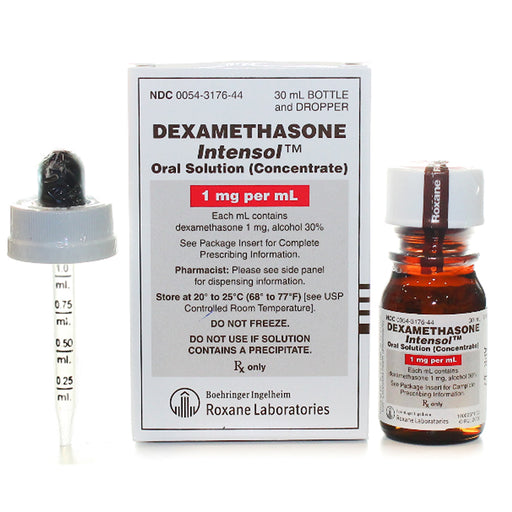
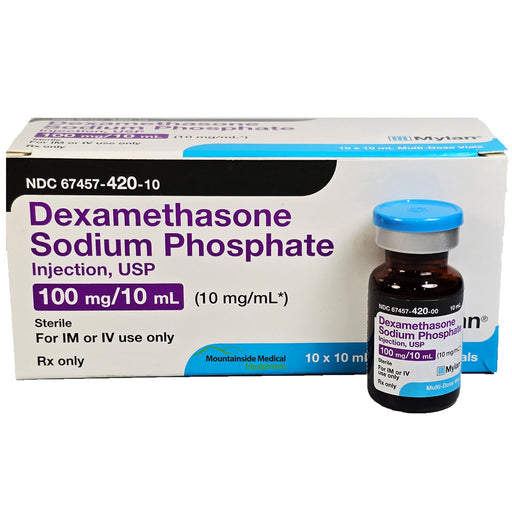
Dexamethasone Sodium Phosphate 10 mg/mL Injection
Dexamethasone sodium phosphate is a synthetic corticosteroid (glucocorticoid) given by injection (IM or IV). In this form it is a water-soluble ester of dexamethasone, provided as a sterile solution (10 mg dexamethasone equivalent per 1 mL) for acute treatment of inflammatory or adrenal insufficiency conditions. Because it’s water-soluble, dexamethasone sodium phosphate acts rapidly (fast onset) but has a relatively short duration of action, making it well suited for severe or acute disorders that need prompt steroid therapy.
Mechanism of action: Like other glucocorticoids, dexamethasone binds the glucocorticoid receptor to profoundly reduce inflammation and immune activity. It is a very potent anti-inflammatory steroid (much more potent than cortisol) and—as noted in its label—“at equipotent anti-inflammatory doses, dexamethasone almost completely lacks salt-retaining properties”. In practice it largely exerts glucocorticoid effects (reducing swelling, inflammation, capillary permeability, etc.) and minimal mineralocorticoid (salt-retention) effects. As a potent steroid, it also suppresses many aspects of immune response (cytokine production, leukocyte movement). In short, dexamethasone sodium phosphate “is used to treat…endocrine, rheumatic, collagen, dermatologic, allergic, ophthalmic, gastrointestinal, respiratory, hematologic, neoplastic, edematous, and other conditions,” reflecting its broad anti-inflammatory/immunosuppressant role.
Uses:
This injection is indicated for a wide variety of acute or severe conditions when systemic glucocorticoid is needed and oral steroids are not feasible. Typical uses include severe allergic reactions (e.g. asthma or anaphylaxis), adrenal insufficiency (shock or crisis treatment), inflammatory or autoimmune disorders (such as rheumatoid arthritis flare, lupus flare, collagen diseases), dermatologic or ophthalmic inflammation, certain cancers (for symptom palliation or to reduce edema), cerebral edema (brain swelling), and other acute inflammatory states. Clinical guidelines and prescribing information list dozens of “by IV/IM injection” indications – for example, acute asthma, severe dermatitis, colitis, graft-versus-host disease, and many others. Dexamethasone sodium phosphate may also be used diagnostically (e.g. high-dose dexamethasone suppression test) or for certain infectious-inflammatory conditions (e.g. tubercular meningitis, to reduce intracranial pressure). In practice it’s often reserved for acute, severe cases or when rapid effect is needed and when the patient cannot take an equivalent oral dose. (Notably, systemic dexamethasone gained prominence in 2020 for reducing mortality in severe COVID-19 requiring ventilation or oxygen.)
-
Typical acute uses: Severe asthma exacerbations, anaphylactic reactions, shock, acute exacerbations of autoimmune diseases (e.g. lupus nephritis, vasculitis), brain tumors or edema, certain transplant or chemotherapy regimens to reduce nausea or prevent graft rejection.
-
Replacement therapy: In adrenal crisis or severe adrenal insufficiency, dexamethasone can substitute for cortisol (though it has no mineralocorticoid effect) together with mineralocorticoid if needed.
-
Diagnostic: High-dose dexamethasone is used in endocrine testing (e.g. suppression tests for Cushing’s).
Dosage and administration:
The product is supplied as 10 mg/mL sterile solution in 1 mL vials. Each mL contains dexamethasone sodium phosphate equivalent to 10 mg dexamethasone. It may be given intravenously (IV) or intramuscularly (IM). Injection into joints or other tissues (intra-articular, intralesional) is also possible for local control, though the 10 mg/mL form is typically for systemic use. Before use, internal guidelines emphasize titrating dose to severity and response. The official monograph notes that “dosage requirements are variable and must be individualized” for each condition. As a general range, initial doses often start from 1–9 mg/day in adults (titrated by disease). In life-threatening cases (e.g. severe shock or cerebral edema), much higher doses (e.g. 10 mg IV, repeat q4–6h) have been used. For milder conditions, as little as 0.5–4 mg/day may suffice. (Note: the dosing range depends on indication; see reference, and always follow a doctor’s orders.) If given by IV infusion, it is often added to saline or dextrose solution. Because dexamethasone suppresses hypothalamic-pituitary-adrenal (HPA) axis, regimens longer than a few days generally require tapering down rather than abrupt stop.
-
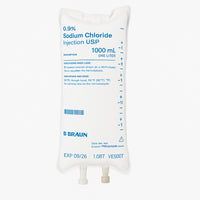
Preparation: This product is ready-to-use as provided (sterile solution). If diluted, use compatible IV fluids (usually D5W or normal saline) under aseptic technique.
-
Route: Administration should be confirmed as IV or deep IM injection (not intra-arterial). Dosing frequency depends on situation: it may be once daily or divided doses.
-
Monitoring: Watch blood glucose, blood pressure, and signs of infection during therapy. Glucose should be monitored in diabetics, since dexamethasone causes hyperglycemia.
Side effects and precautions:
As a corticosteroid, dexamethasone can cause a wide range of side effects, especially at higher doses or long durations. Common reactions (especially when used chronically) include fluid retention, hypertension, high blood sugar (steroid-induced diabetes), weight gain, redistribution of fat (Cushingoid appearance), muscle weakness, mood changes (euphoria, depression, insomnia), increased appetite, and skin thinning/fragility. Injection-site reactions (pain, redness) can occur. Because it suppresses immune function, even short courses raise infection risk – patients need monitoring for fever, chills or other infection signs. Notable serious effects include:
-
Infections: Corticosteroids can mask infection symptoms and worsen latent infections. Patients should avoid exposure to chickenpox or measles. If infection occurs (e.g. sore throat, fever, cough) stop and seek care.
-
Metabolic: Can cause glucose intolerance or full diabetes; monitor glucose in at-risk patients. It can also lead to sodium retention and potassium loss.
-
Gastrointestinal: Risk of peptic ulcer or GI bleeding, especially if used with NSAIDs. Chronic use can cause gastritis.
-
Endocrine: Long-term therapy causes adrenal suppression; abrupt withdrawal can precipitate adrenal insufficiency, so taper gradually if >5–7 days of therapy. It may also disrupt menstrual cycles or growth in children (growth retardation) with prolonged use.
-
Neuropsychiatric: Insomnia, mood swings, euphoria or depression, and even psychosis can occur at high doses.
-
Musculoskeletal: Osteoporosis with long-term use; muscle wasting; aseptic necrosis of femoral head (rare with long courses).
-
Ophthalmic: Raised intraocular pressure, glaucoma, cataracts (especially with chronic use).
-
Allergic: Although rare, hypersensitivity to dexamethasone or preservatives (methylparaben) can occur; do not use if known allergy to this steroid or any injection components.
-
Other: Children may have growth suppression if used chronically. Always weigh risks vs. benefits in each patient.
 Skip to content