Skip to content

Added to your cart:

Cart subtotal

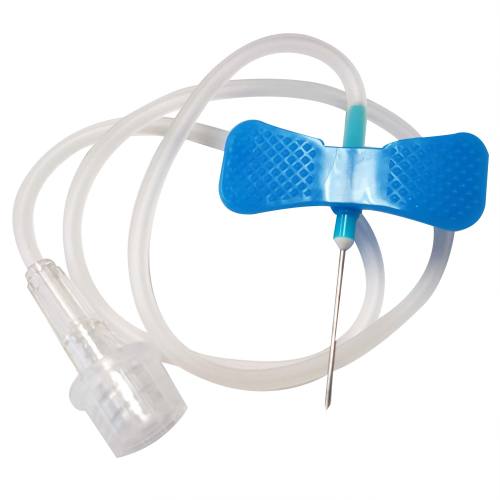
Protectiv Plus-W IV Catheter, Winged Hub, Radiopaque

SKU 308500
Sale 43%
Original price $ 5.99
Current price $ 3.39
In stock
Non-Returnable
*Mountainside Medical does not fill personal prescriptions Medical Professional License Required to Unlock Account

How to Order:

Send an email request to: sales@mountainside-medical.com

You will receive instructions on how to create an account along with Rx Ordering Details.

(Note: Acceptable licenses must have Prescriptive Authority in the license issuing state.)
Fast Delivery
Fast Delivery
24/7 Support
24/7 Support
No Returns
No Returns
Hospital Grade
Hospital Grade
Free Shipping on orders above $100
Payment Secure transaction
Packaging Ships in product packaging
Service-Disabled Veteran-Owned Small Business
Located in Adirondack Mountains in NY
Family Owned Business 2002
Sale 43%
Original price $ 5.99
Current price $ 3.39
Free Shipping on orders above $100
Payment Secure transaction
Packaging Ships in product packaging
Protectiv Plus-W IV Catheter, Winged Hub, Radiopaque
$ 5.99 $ 3.39
🔒 Medical License Required
Description

ProtectIV® Plus-Winged Safety IV Catheter (Radiopaque, Polyurethane)

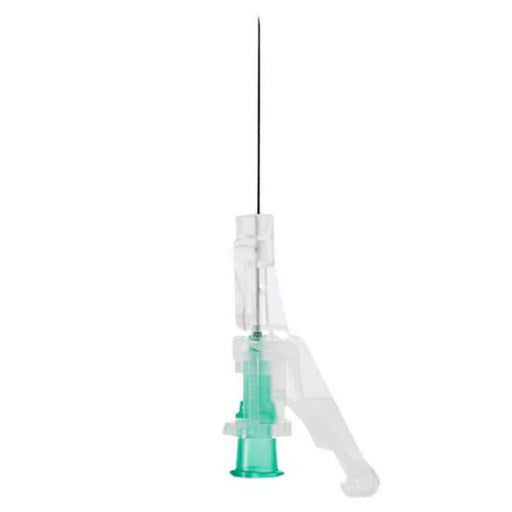
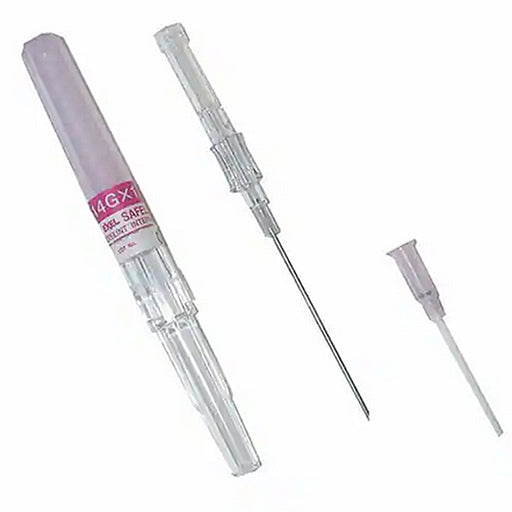
Catheter types: ProtectIV Plus-W (“winged” version) peripheral IV cannulas with a molded wing for easy handling and stabilization. They house a stainless-steel needle and flexible polyurethane catheter. The polyurethane body is radiopaque (visible on X-ray) and kink-resistant. The catheter is single-use, sterile, for short-term peripheral IV access (infusions, blood draws, etc.).

Gauges & color codes: Available in standard sizes. The catheter gauges and their ISO color codes are: 14G (Orange), 16G (Gray), 18G (Green), 20G (Pink), 22G (Blue), and 24G (Yellow). (Two lengths exist for 20G and 18G in this line.) Devices are radiopaque—a stripe in the catheter wall makes them visible under fluoroscopy or X-ray.

Safety features: These safety catheters have an integrated needle-shield mechanism. As you advance the catheter over the needle into the vein, the sharp needle is automatically encased (locked out of the way) to prevent accidental sticks. A built-in “gasket” minimizes blood spray when removing the needle. Studies show such safety designs significantly reduce needlestick injuries. (Always activate/engage the safety after insertion as per manufacturer instructions.)

Preparation: Use full aseptic technique. Gather IV start kit (catheter, tourniquet, antiseptic, flush syringe, tape/dressings). Apply a tourniquet and select a suitable vein. Cleanse the skin site with chlorhexidine or alcohol swabs and let dry. Loosen tourniquet or ask patient to make a fist to dilate veins if needed.

Insertion steps:

  • Hold the catheter by its wings. Bevel-point up. Re-apply tourniquet. Using gentle traction on the skin (with non-dominant hand), insert the needle–catheter assembly bevel-up at a shallow angle (10–30°) into the skin, slightly distal to the chosen vein entry point 
  • Flashback: Advance slowly until you see dark red blood appear in the flashback chamber (“flash”). This indicates the needle tip is in the vein. You may feel a slight “pop” as the lumen is entered.
  • Advance catheter: Lower the angle, then stabilize the needle and advance the catheter fully into the vein. Slide the entire length of the polyurethane catheter off the needle (it should glide smoothly). Hold the needle hub steady during this step.
  • Withdraw needle: Once the catheter is fully inserted, withdraw the needle straight out. The safety shield should automatically cover/retract the needle tip. Do not reinsert the needle back into the catheter (risk of shearing the tip).
  • Confirm placement: Attach IV tubing or a syringe to the catheter hub. Release the tourniquet. Aspirate gently for blood flash, then flush with ~5 mL normal saline to ensure patency. Fluid should flow easily without swelling. If there is resistance or swelling, remove the catheter and try a new site.
  • Secure & dress: Tape the wings/hub flat against the skin and apply a transparent dressing. Loop any IV tubing to strain relief. Label the site with date/time. Ongoing infusion or a heparin/saline lock can now be used.
  • Key points: The winged design aids positioning and fixation, especially on hand/arm veins. Follow the standard “slide catheter, then cover needle” technique. Always use light tourniquet pressure (venous tourniquet), and if no blood flash appears after 1–2 cm, withdraw slightly and re-advance or reposition. Avoid reinsertion of the needle into the catheter once removed. Regularly observe the site (stop infusion if infiltration or resistance occurs).
Description

ProtectIV® Plus-Winged Safety IV Catheter (Radiopaque, Polyurethane)

Catheter types: ProtectIV Plus-W (“winged” version) peripheral IV cannulas with a molded wing for easy handling and stabilization. They house a stainless-steel needle and flexible polyurethane catheter. The polyurethane body is radiopaque (visible on X-ray) and kink-resistant. The catheter is single-use, sterile, for short-term peripheral IV access (infusions, blood draws, etc.).

Gauges & color codes: Available in standard sizes. The catheter gauges and their ISO color codes are: 14G (Orange), 16G (Gray), 18G (Green), 20G (Pink), 22G (Blue), and 24G (Yellow). (Two lengths exist for 20G and 18G in this line.) Devices are radiopaque—a stripe in the catheter wall makes them visible under fluoroscopy or X-ray.

Safety features: These safety catheters have an integrated needle-shield mechanism. As you advance the catheter over the needle into the vein, the sharp needle is automatically encased (locked out of the way) to prevent accidental sticks. A built-in “gasket” minimizes blood spray when removing the needle. Studies show such safety designs significantly reduce needlestick injuries. (Always activate/engage the safety after insertion as per manufacturer instructions.)

Preparation: Use full aseptic technique. Gather IV start kit (catheter, tourniquet, antiseptic, flush syringe, tape/dressings). Apply a tourniquet and select a suitable vein. Cleanse the skin site with chlorhexidine or alcohol swabs and let dry. Loosen tourniquet or ask patient to make a fist to dilate veins if needed.

Insertion steps:

  • Hold the catheter by its wings. Bevel-point up. Re-apply tourniquet. Using gentle traction on the skin (with non-dominant hand), insert the needle–catheter assembly bevel-up at a shallow angle (10–30°) into the skin, slightly distal to the chosen vein entry point 
  • Flashback: Advance slowly until you see dark red blood appear in the flashback chamber (“flash”). This indicates the needle tip is in the vein. You may feel a slight “pop” as the lumen is entered.
  • Advance catheter: Lower the angle, then stabilize the needle and advance the catheter fully into the vein. Slide the entire length of the polyurethane catheter off the needle (it should glide smoothly). Hold the needle hub steady during this step.
  • Withdraw needle: Once the catheter is fully inserted, withdraw the needle straight out. The safety shield should automatically cover/retract the needle tip. Do not reinsert the needle back into the catheter (risk of shearing the tip).
  • Confirm placement: Attach IV tubing or a syringe to the catheter hub. Release the tourniquet. Aspirate gently for blood flash, then flush with ~5 mL normal saline to ensure patency. Fluid should flow easily without swelling. If there is resistance or swelling, remove the catheter and try a new site.
  • Secure & dress: Tape the wings/hub flat against the skin and apply a transparent dressing. Loop any IV tubing to strain relief. Label the site with date/time. Ongoing infusion or a heparin/saline lock can now be used.
  • Key points: The winged design aids positioning and fixation, especially on hand/arm veins. Follow the standard “slide catheter, then cover needle” technique. Always use light tourniquet pressure (venous tourniquet), and if no blood flash appears after 1–2 cm, withdraw slightly and re-advance or reposition. Avoid reinsertion of the needle into the catheter once removed. Regularly observe the site (stop infusion if infiltration or resistance occurs).

Get Notified When Back in Stock