
Filters
- Allergic (3)
- allergic reactions (8)
- Allergic response (1)
- Allergy (2)
- Anaphylaxis (7)
- Auto (4)
- Auto-Injector (4)
- Autoinjector (6)
- Bee Sting (2)
- Buy Epipen Jr (1)
- children (1)
- daycares (1)
- Difficulty breathing (1)
- doctor-only (15)
- Emergency treatment (1)
- Epi Jr (1)
- Epinephrine (14)
- Epinephrine Injection (14)
- epipen for kids (1)
- Epipen Jr Local (1)
- Epipen Jr Near Me (1)
- exclude-black-friday (2)
- food allergy in children (1)
- Kids (1)
- peanut allergy in children (1)
- Pen (4)
- Reaction (1)
- schools (1)
- Treat Allergic Reactions (11)
- Auto-Injectior (1)
- Buy Epinephrine (3)
- Epinephrine Adult (1)
- Epinephrine Auto-Injectior (1)
- Epinephrine for Injection (3)
- Epipen Cost (1)
- Epipen Local (1)
- Epipen Near Me (1)
- Epi-pen (1)
- Epinephrine Autoinjector (1)
- Epinephrine Autoinjector 0.3 mg (1)
- EpiPen (7)
- EpiPen Jr (2)
- Kids Epipen (2)
- Mylan (2)
- Pens (2)
- Epinephrine 0.15 mg (1)
- Epinephrine Auto Injector Jr (1)
- Epinephrine Pediatric 0.15 mg (1)
- Allergic Reaction Treatments (1)
- AUVI-Q (2)
- Treat Allergic Skin Reactions (1)
- Epi Syringe (1)
- Epinephrine Prefilled Syringes (1)
- Epinephrine Syringe (1)
- Epinephrine Syringes (1)
- Luer Lock (1)
- Luer-Jet (1)
- prefilled syringes (3)
- Adrenaclick (1)
- Generic Epipen (1)
- Symjepi (1)
- Pen Injector (2)
- EpiPen Adult (1)
- Adrenalin (1)
- Adrenalin Epinephrine Injection (1)
- Alpha Beta-Adrenergic Agonist (1)
- ampule (1)
- Ampules (1)
- BPI (1)
- Epinephrine HCI (1)
- Treatment of Allergic Reactions (1)
- Emergency Medical Supplies (1)
- EpiPens (1)
- Fanny Pack (1)
- Field Trip (1)
- Hypodermic Needle (1)
- Hypodermic Needles (1)
- VanishPoint (1)
- API (1)
- Epinephrine Bitartrate (1)
- Epinephrine for Compounding (1)
- Epinephrine Powder (1)
Epinephrine Prefilled Syringes & Epi Pens
Epinephrine Prefilled Syringes are single-use syringes pre-loaded with a dose of epinephrine (adrenaline), ready for immediate injection in emergency situations. Epinephrine is a life-saving medication used to treat conditions like anaphylaxis (a severe allergic reaction) and cardiac arrest. Prefilled syringes are prepared by the manufacturer with the correct dose and sterile solution, so the user doesn’t need to draw up medication from a vial – this saves valuable time and reduces dosing errors during emergencies.
Key Points about Epinephrine Prefilled Syringes:
-
Immediate Use in Emergencies: They are designed so that with a quick twist or cap removal, they’re ready to inject. This makes them ideal for emergencies like anaphylaxis, where giving epinephrine quickly (usually into a muscle, like the thigh) can be lifesaving. For example, if someone has a severe allergic reaction to peanuts or bee stings causing throat swelling and low blood pressure, an epinephrine prefilled syringe can be quickly administered to reverse those symptoms.
-
Set Dosages: Epinephrine prefilled syringes come in standardized doses. For allergic reactions (anaphylaxis), common prefilled doses are 0.3 mg for adults and 0.15 mg for children. These are typically given as intramuscular injections. In hospital settings, prefilled syringes containing 1 mg of epinephrine (in 10 mL) are used for intravenous (IV) push during advanced cardiac life support (for example, during a cardiac arrest/code blue situation). The prefilled syringe format ensures the dose is accurate – the healthcare provider can grab the syringe and inject without needing to measure anything.
-
Manual Injection vs. Auto-Injector: It’s important to note that a “prefilled syringe” is slightly different from an “auto-injector.” An auto-injector (like an EpiPen) is a special device that automatically inserts the needle and delivers the medication when you push it against the thigh. A prefilled syringe, on the other hand, requires the user to inject it manually (you push the needle into the thigh or other injection site and press the plunger). Both contain epinephrine in a ready-to-use form; the difference is in the delivery method. Prefilled syringes (for example, the brand Symjepi is a prefilled epinephrine syringe) tend to be smaller and often less expensive than auto-injectors, but the user needs to be comfortable giving an injection.
-
Advantages of Prefilled Syringes:
- Speed and Convenience: No need to fumble with drawing up medication. In a crisis, you simply remove safety caps and inject.
- Accuracy: The dose is pre-measured, reducing risk of error. This is critical with epinephrine, since too high or too low a dose could be dangerous or less effective.
- Stability: These syringes are filled and sealed under sterile conditions. They often contain a small amount of preservative or are in a form that keeps the epinephrine stable (epinephrine can be sensitive to light and air). They usually have a shelf life (check the expiration date regularly, as out-of-date epinephrine may be less effective or not work).
Anaphylaxis (Severe Allergic Reaction): A person (or caregiver) injects epinephrine into the outer thigh muscle at the first sign of a severe allergic reaction. This rapidly helps open up airways, raise blood pressure, and reduce swelling. People with known severe allergies often carry an epinephrine auto-injector or prefilled syringe for immediate self-use.Hospital Emergency Codes (Cardiac Arrest): Prefilled syringes (usually larger volume, for IV use) are kept on crash carts. In a code situation, a nurse or doctor can grab a 1 mg epinephrine syringe, quickly push the dose into an IV line to help stimulate the heart during CPR. The prefilled format saves critical seconds and ensures the correct concentration (1:10,000 for IV) is given.Severe Asthma or Croup (Rare cases): On occasion, epinephrine might be drawn up for severe asthma attacks or pediatric croup (usually given via nebulizer or injection in an ER). Prefilled syringes could be used here as well for quick administration (though more commonly vials are used in these settings).Safety and Training: Using a prefilled syringe correctly still requires a little training:You must know how to remove the safety caps (they usually have a cap on the needle and sometimes on the plunger).Needle Handling: Be cautious – once uncapped, there’s an exposed needle. Inject firmly into the intended muscle (for IM use) and avoid your fingers.After injection, follow guidelines on needle disposal (in a sharps container if available). Many manufacturers include clear instructions with diagrams in the package. Some even have trainers or demo devices so patients can practice (without a needle or drug) to feel comfortable with the process.
Epinephrine prefilled syringes are about delivering epinephrine quickly and accurately when it’s needed most. Whether it’s a patient injecting themselves during a life-threatening allergic reaction, or a paramedic administering a dose in an ambulance, the prefilled syringe format makes the process faster and more reliable than drawing medication from a vial. They are an important tool in emergency medicine, ensuring epinephrine — a drug that can literally be the difference between life and death in certain scenarios — is available for injection at a moment’s notice.
-
 Sale 37%
Original price $ 475.00Current price $ 299.95
Sale 37%
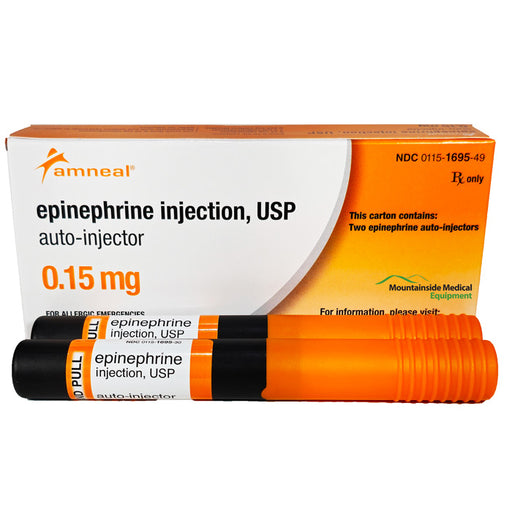
Original price $ 475.00Current price $ 299.95Epinephrine Auto-Injector 0.15 mg Injection Syringe, 2-Pack (Rx)
No reviewsEpinephrine Auto-Injector Jr, 0.15 mg Epinephrine (also called adrenaline) is the first-line treatment for life-threatening allergic reactions (ana...
View full details🔒 Medical License Required -
 Sale 37%
Original price $ 475.00Current price $ 299.95
Sale 37%
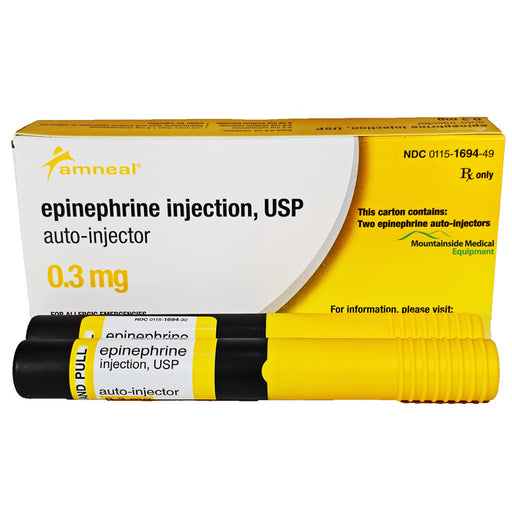
Original price $ 475.00Current price $ 299.95Epinephrine Auto-Injector 0.3 mg Adult Epinephrine Pen (2-Pack) (Rx)
No reviewsEpinephrine Auto-Injector 0.3 mg An Epinephrine Auto-Injector 0.3 mg (commonly known by brand names like EpiPen®, Auvi-Q®, or Adrenaclick®) is a pr...
View full details🔒 Medical License Required -
 Sale 33%
Original price $ 599.95Current price $ 399.95
Sale 33%
Original price $ 599.95Current price $ 399.95Epinephrine Auto-injector (Generic Epipen) For Adults, Anaphylaxis Emergency Pen 0.3 mg (2 Injectors +1 Trainer) (Rx)
No reviewsEmergency Anaphylaxis Allergy Treatment | Fast-Acting Life-Saving Epinephrine Injection Be prepared for life’s unexpected allergic emergencies with...
View full details🔒 Medical License Required -
 Sale 21%
Original price $ 499.95Current price $ 395.00
Sale 21%
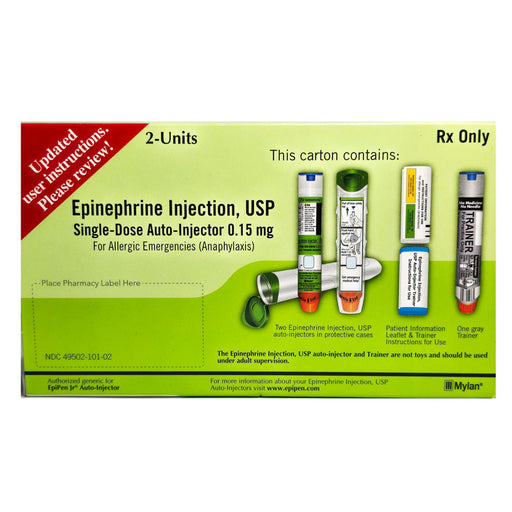
Original price $ 499.95Current price $ 395.00Epinephrine Auto Injector Jr Pediatric Pen 0.15 mg (2 Pack) For Weight 33 lbs to 66 lbs (Rx)
No reviewsDiscover life-saving Epinephrine Auto Injector Jr 0.15 mg for pediatric use at Mountainside Medical. Perfect for emergency allergy reactions, it de...
View full details🔒 Medical License Required -
 Sale 8%
Original price $ 639.95Current price $ 589.00
Sale 8%
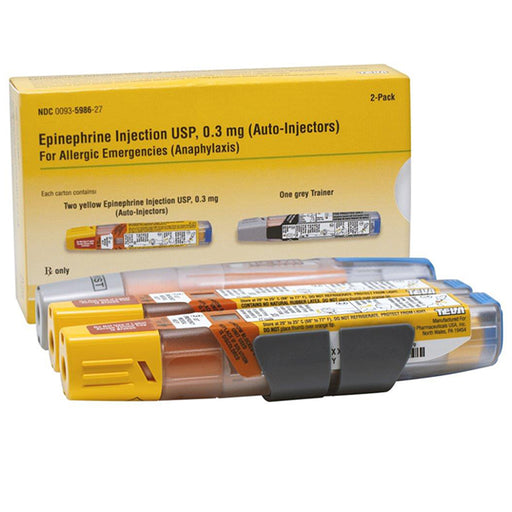
Original price $ 639.95Current price $ 589.00Teva Epinephrine Auto-Injector Pen (Epipen Generic) 0.3 mg (2-Pack + 1 Trainer)
No reviewsThe Teva Epinephrine Auto-Injector Pen 0.3 mg is a FDA-approved, easy-to-use emergency treatment for severe allergic reactions (anaphylaxis) in adu...
View full details🔒 Medical License Required -
 Sale 31%
Original price $ 39.95Current price $ 27.50
Sale 31%
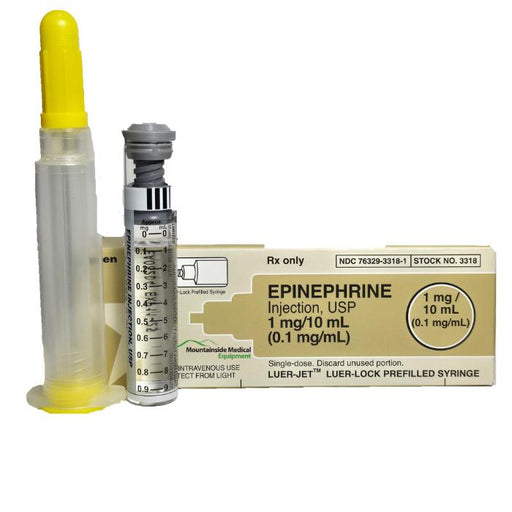
Original price $ 39.95Current price $ 27.50Epinephrine Prefilled Syringe 0.1 mg/mL (1 mg per 10 mL) Each (Rx)
3 reviewsAn Epinephrine Prefilled Syringe is a medical device containing a specific dose of epinephrine (also known as adrenaline), already loaded into a sy...
View full details🔒 Medical License Required -
 Sale 6%
Original price $ 599.95Current price $ 565.95
Sale 6%
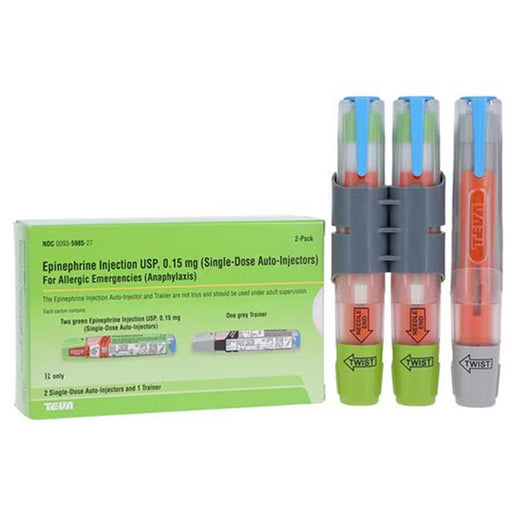
Original price $ 599.95Current price $ 565.95Epinephrine (Generic Epipen) Auto-Injector Pens 0.15 mg (2 Auto-Injectors + 1 Trainer)
No reviewsTeva Pharmaceuticals Epinephrine Auto-Injector Pen for Injection 0.15 mg (2 Epinephrine Auto-Injectors + 1 Trainer) NDC: 00093-5985-27 Injection: ...
View full details🔒 Medical License Required -
 Sold out
Original price $ 995.00Current price $ 739.00
Sold out
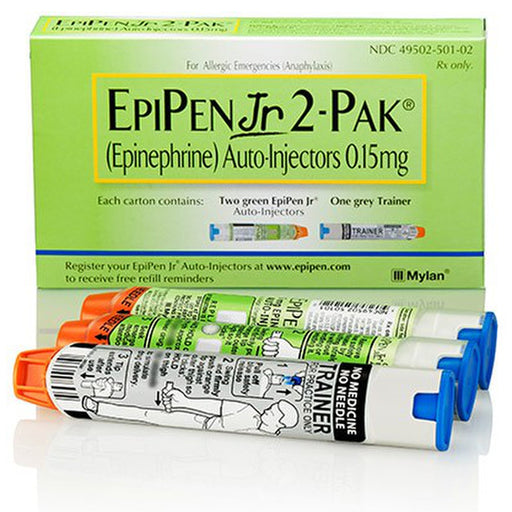
Original price $ 995.00Current price $ 739.00EpiPen Jr Auto-Injector 2 Pak Pediatric Epinephrine Injection 0.15 mg for Children (2 Pack)
No reviewsEpiPen Jr Auto-Injector is a disposable, pre-filled auto-injectors used to treat life-threatening, allergic emergencies including anaphylaxis in pe...
View full details -
 Sale
$ 739.00
Sale
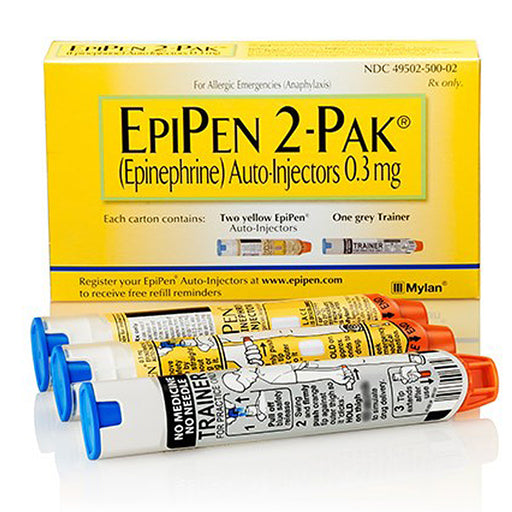
$ 739.00EpiPen 2 Pak Epinephrine Injection 0.3 mg Auto-Injector for Adults (2 Pack)
1 reviewThe EpiPen 2-Pak with Epinephrine Injection 0.3 mg is used to treat severe allergic reactions, known as anaphylaxis. It is an emergency treatment d...
View full details🔒 Medical License Required -
 Sale 23%
Original price $ 38.95Current price $ 29.95
Sale 23%
Original price $ 38.95Current price $ 29.95Epinephrine Convenience Kit with Syringe, Prep Pads (Rx)
No reviewsExperience reliable protection with the Adrenalin Epinephrine Convenience Kit by Mountainside Medical, designed to prepare and respond to emergency...
View full details🔒 Medical License Required -
 Sale 19%
Original price $ 215.95Current price $ 175.00
Sale 19%
Original price $ 215.95Current price $ 175.00Epinephrine for Injection 1 mL Ampules (1:1000), 10/Box (Rx)
2 reviewsEpinephrine Ampules are used to treat anaphylaxis, a severe allergic reaction. The medication works by narrowing the blood vessels and increasing h...
View full details🔒 Medical License Required -
 Sale 19%
Original price $ 659.95Current price $ 535.00
Sale 19%
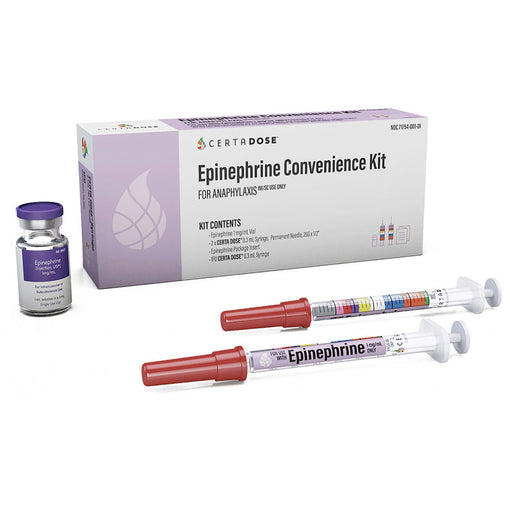
Original price $ 659.95Current price $ 535.00Certa Dose Epinephrine Convenience Kit, 1mL Vial, 2 Syringes
No reviewsPrecise epinephrine dosing for anaphylaxis from neonate to 0.3 mg. Prehospital epinephrine administration error rates can exceed 60%; studies ...
View full details🔒 Medical License Required -
 Sale 13%
Original price $ 599.95Current price $ 519.00
Sale 13%
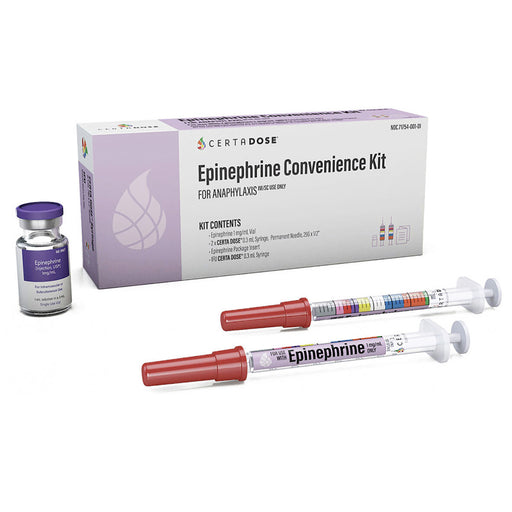
Original price $ 599.95Current price $ 519.00Certa Dose Epinephrine for Injection Convenience Kit, 1mL Vial with 2 Syringes, 5 Pack (Rx)
No reviewsCerta Dose Epinephrine for Injection Convenience Kit is a pre-filled syringe designed to provide a single dose of epinephrine for the emergency tre...
View full details🔒 Medical License Required -
 Sale
$ 29.99
Sale
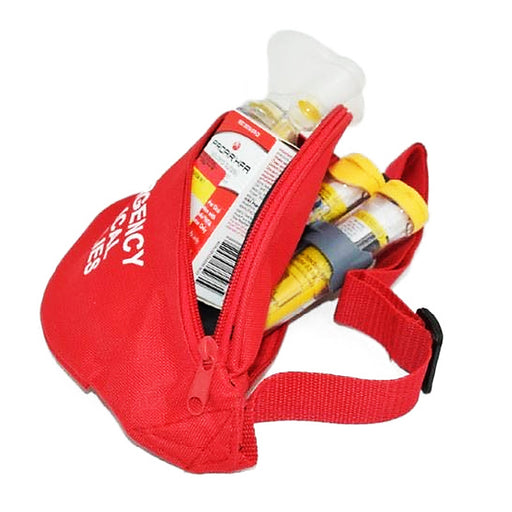
$ 29.99Emergency Medical Supplies Large Field Trip Fanny Pack for Allergic Reaction EpiPens, Inhalers
No reviewsEmergency Medical Supplies Large Field Trip Fanny Pack for Allergic Reaction EpiPens and Rescue Inhalers is a larger fanny pack for teachers, c...
View full details -
 Sale 26%
Original price $ 139.95Current price $ 103.85
Sale 26%
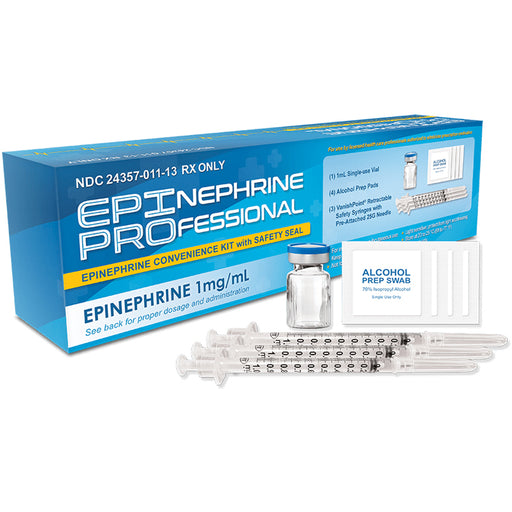
Original price $ 139.95Current price $ 103.85Epinephrine for Injection 1 mg/mL (1:1000) Professional Convenience Kit (Rx)
2 reviewsEpinephrine Professional Convenience Kit is a life-saving device that administers epinephrine to people who are experiencing anaphylactic shock. Th...
View full details🔒 Medical License Required -
 Sale
$ 175.00
Sale
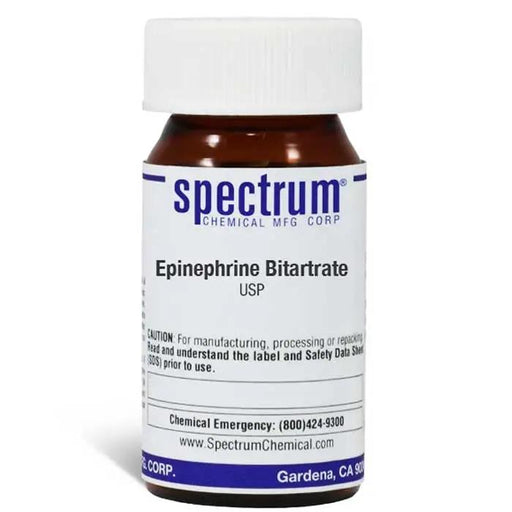
$ 175.00Epinephrine Bitartrate USP Powder for Compounding Medications (API)
No reviewsEpinephrine Bitartrate USP Powder for Compounding Medications is an active pharmaceutical ingredient (API) used in the preparation of customized me...
View full details🔒 Medical License Required


People Also Searched For
Epinephrine Prefilled Syringes are single-use syringes pre-loaded with a dose of epinephrine (adrenaline), ready for immediate injection in emergency situations. Epinephrine is a life-saving medication used to treat conditions like anaphylaxis (a severe allergic reaction) and cardiac arrest. Prefilled syringes are prepared by the manufacturer with the correct dose and sterile solution, so the user doesn’t need to draw up medication from a vial – this saves valuable time and reduces dosing errors during emergencies.
Key Points about Epinephrine Prefilled Syringes:
-
Immediate Use in Emergencies: They are designed so that with a quick twist or cap removal, they’re ready to inject. This makes them ideal for emergencies like anaphylaxis, where giving epinephrine quickly (usually into a muscle, like the thigh) can be lifesaving. For example, if someone has a severe allergic reaction to peanuts or bee stings causing throat swelling and low blood pressure, an epinephrine prefilled syringe can be quickly administered to reverse those symptoms.
-
Set Dosages: Epinephrine prefilled syringes come in standardized doses. For allergic reactions (anaphylaxis), common prefilled doses are 0.3 mg for adults and 0.15 mg for children. These are typically given as intramuscular injections. In hospital settings, prefilled syringes containing 1 mg of epinephrine (in 10 mL) are used for intravenous (IV) push during advanced cardiac life support (for example, during a cardiac arrest/code blue situation). The prefilled syringe format ensures the dose is accurate – the healthcare provider can grab the syringe and inject without needing to measure anything.
-
Manual Injection vs. Auto-Injector: It’s important to note that a “prefilled syringe” is slightly different from an “auto-injector.” An auto-injector (like an EpiPen) is a special device that automatically inserts the needle and delivers the medication when you push it against the thigh. A prefilled syringe, on the other hand, requires the user to inject it manually (you push the needle into the thigh or other injection site and press the plunger). Both contain epinephrine in a ready-to-use form; the difference is in the delivery method. Prefilled syringes (for example, the brand Symjepi is a prefilled epinephrine syringe) tend to be smaller and often less expensive than auto-injectors, but the user needs to be comfortable giving an injection.
-
Advantages of Prefilled Syringes:
- Speed and Convenience: No need to fumble with drawing up medication. In a crisis, you simply remove safety caps and inject.
- Accuracy: The dose is pre-measured, reducing risk of error. This is critical with epinephrine, since too high or too low a dose could be dangerous or less effective.
- Stability: These syringes are filled and sealed under sterile conditions. They often contain a small amount of preservative or are in a form that keeps the epinephrine stable (epinephrine can be sensitive to light and air). They usually have a shelf life (check the expiration date regularly, as out-of-date epinephrine may be less effective or not work).
Anaphylaxis (Severe Allergic Reaction): A person (or caregiver) injects epinephrine into the outer thigh muscle at the first sign of a severe allergic reaction. This rapidly helps open up airways, raise blood pressure, and reduce swelling. People with known severe allergies often carry an epinephrine auto-injector or prefilled syringe for immediate self-use.Hospital Emergency Codes (Cardiac Arrest): Prefilled syringes (usually larger volume, for IV use) are kept on crash carts. In a code situation, a nurse or doctor can grab a 1 mg epinephrine syringe, quickly push the dose into an IV line to help stimulate the heart during CPR. The prefilled format saves critical seconds and ensures the correct concentration (1:10,000 for IV) is given.Severe Asthma or Croup (Rare cases): On occasion, epinephrine might be drawn up for severe asthma attacks or pediatric croup (usually given via nebulizer or injection in an ER). Prefilled syringes could be used here as well for quick administration (though more commonly vials are used in these settings).Safety and Training: Using a prefilled syringe correctly still requires a little training:You must know how to remove the safety caps (they usually have a cap on the needle and sometimes on the plunger).Needle Handling: Be cautious – once uncapped, there’s an exposed needle. Inject firmly into the intended muscle (for IM use) and avoid your fingers.After injection, follow guidelines on needle disposal (in a sharps container if available). Many manufacturers include clear instructions with diagrams in the package. Some even have trainers or demo devices so patients can practice (without a needle or drug) to feel comfortable with the process.
Epinephrine prefilled syringes are about delivering epinephrine quickly and accurately when it’s needed most. Whether it’s a patient injecting themselves during a life-threatening allergic reaction, or a paramedic administering a dose in an ambulance, the prefilled syringe format makes the process faster and more reliable than drawing medication from a vial. They are an important tool in emergency medicine, ensuring epinephrine — a drug that can literally be the difference between life and death in certain scenarios — is available for injection at a moment’s notice.
EpiPen Uses
An EpiPen is an emergency adrenaline (epinephrine) auto-injector carried by people at risk of life-threatening allergic reactions. It delivers a dose of epinephrine into the thigh muscle to rapidly reverse anaphylaxis – a severe allergic shock. In anaphylaxis (triggered by foods, insect stings, drugs, latex, etc.), epinephrine constricts blood vessels (raising blood pressure) and relaxes airway muscles (bronchodilation). This counteracts the sudden drop in blood pressure and swelling of the airways. In fact, cancer experts and allergy guidelines emphasize that epinephrine is the first-line, lifesaving treatment for anaphylaxis. The Cleveland Clinic notes that an epinephrine auto-injector “treats severe allergic reactions (anaphylaxis)” and even acute asthma attacks.
Indications (When to Use EpiPen)
- Anaphylaxis from allergies: Use EpiPen immediately for severe allergy attacks. Common triggers include foods (peanuts, tree nuts, shellfish, etc.), insect stings (bees, wasps), or medications/latex that cause a full-body allergic reaction. For example, if someone with a known peanut allergy suddenly develops difficulty breathing, throat tightness, dizziness or widespread hives, an EpiPen should be injected right away.
- Severe asthma attacks: In rare, life-threatening asthma exacerbations – especially if allergy-related – epinephrine can relieve bronchospasm and improve breathing. (EpiPens are not for routine asthma control, only for emergency use.)
- Other anaphylactic scenarios: Any condition leading to anaphylaxis warrants epinephrine. This includes unusual cases like exercise-induced anaphylaxis or idiopathic (unknown cause) anaphylaxis. In all these situations, epinephrine is essentially the only effective immediate treatment.
For each of these uses, the EpiPen injection works by quickly narrowing peripheral blood vessels and reducing airway swelling. This raises falling blood pressure and opens up breathing passages. As a result, symptoms such as wheezing, throat swelling, faintness or shock are rapidly relieved. (Note: Antihistamines or steroids are not substitutes in this acute setting, as they act too slowly and do not reverse airway swelling.
Usage Guidelines and Precautions
EpiPens are only for emergency use – they are not meant for mild allergies or everyday asthma. The device is given intramuscularly in the thigh at the earliest sign of severe reaction (e.g. sudden difficulty breathing, throat closure, collapse). After use, emergency medical help must be sought immediately. (As the Cleveland Clinic advises: call 911 right away after injecting epinephrine, since further doses or advanced care may be needed. Allergy specialists recommend that at-risk patients always carry an auto-injector. In fact, guidelines say all patients with a history of anaphylaxis or with significant food/venom allergies should keep their EpiPen on hand. They should also have two doses available, because severe reactions can recur and a second injection may be required.
In summary, EpiPen’s use is strictly for acute anaphylactic emergencies. It is prescribed for people with known life-threatening allergies (foods, stings, drugs, etc.). By injecting epinephrine, it immediately combats the dangerous symptoms of anaphylaxis (raising blood pressure, relieving airway constriction). After injection, professional medical care is still essential. This approach — immediate epinephrine for anaphylaxis — is supported by expert and medical guidelines as the standard of care
Epi Pen Types
Epinephrine “pen” devices (auto-injectors) come in several brands and formats. The original EpiPen is just one brand name; there are others available that serve the same life-saving purpose. Here are the main types of epinephrine auto-injectors and similar devices:
-
EpiPen® (and EpiPen Jr®):
- What it is: The most well-known epinephrine auto-injector, resembling a thick pen.
- Dosages: Adult dose (0.3 mg) and a pediatric dose called EpiPen Jr (0.15 mg) for children (~33-66 lbs).
- Features: Brightly colored (yellow for adult, green for junior) with clear instructions printed on it. To use, you remove the safety cap and press the orange tip against the outer thigh – it automatically injects epinephrine.
- Notes: Made by Mylan (now Viatris). Typically comes in a two-pack. It’s been on the market for decades and set the standard for emergency allergy treatment.
-
Authorized Generic EpiPen (by Teva or Mylan):
- What it is: Identical in design and function to the brand-name EpiPen, but sold under a generic label (often just called “Epipen Auto-Injector” on the box).
- Dosages: Same as EpiPen – 0.3 mg and 0.15 mg versions.
- Features: Works and looks almost the same as the EpiPen (the generic by Teva has a slightly different color scheme on the label but uses the same mechanism).
- Notes: Typically lower cost than the branded EpiPen. Pharmacies may substitute this if you ask for an EpiPen and your insurance prefers the generic.
-
Adrenaclick® (and its Generics):
- What it is: An alternative epinephrine auto-injector device, originally branded as Adrenaclick (by Amedra/Impax). Now more commonly encountered as a lower-cost generic “epinephrine auto-injector” (often the one available through certain pharmacies or programs).
- Dosages: Also available in 0.3 mg and 0.15 mg.
- Features: Different operation than EpiPen: it has two caps (one on each end) that you remove before injection. You then press against the thigh to inject. The needle retracts after use.
- Notes: In 2017, CVS pharmacies began selling an authorized generic of Adrenaclick at a much lower price than EpiPen, making this option more accessible for many patients. If you’re prescribed an “epinephrine auto-injector” without specifying brand, you might receive this generic device. It’s important to get training on its use, since the two-cap system is a bit different from EpiPen’s one-cap design.
-
Auvi-Q®:
- What it is: A compact, rectangular epinephrine auto-injector with voice instructions. Developed by kaléo (originally came out via Sanofi in 2012).
- Dosages: Comes in 0.3 mg (for adults and kids over 66 lbs), 0.15 mg (for children ~33-66 lbs), and even a 0.1 mg version designed for small infants (16.5 to 33 lbs) – the 0.1 mg Auvi-Q is the first auto-injector made for infants.
- Features: Audio guided – when you pull it from its case, it literally talks you through the injection process (“Place black end against thigh, press firmly and hold for 5 seconds…”). The design is very small – about the size of a deck of cards, which can fit in a pocket easily. The needle automatically retracts so you don’t see it and reduces injury risk. It also comes with a practice trainer device so you can rehearse using it without any needle or drug.
- Notes: Auvi-Q was briefly recalled in 2015 for a dosing issue, but was re-released after fixes. It’s unique for its portability and voice guidance – great for folks who might panic or for children/parents who appreciate audible instructions. Often delivered via a mail-order program; many patients with commercial insurance can get it for free through the manufacturer’s program.
-
Symjepi®:
- What it is: A pre-filled epinephrine syringe (0.3 mg or 0.15 mg), introduced as a simpler, more affordable alternative to auto-injectors. Instead of an auto spring mechanism, you inject this manually like a traditional syringe.
- Dosages: 0.3 mg (adult) and 0.15 mg (child) versions.
- Features: It’s a small, ready-to-use syringe with epinephrine solution. Remove the cap, inject into thigh, and push the plunger. The device is slimmer than an EpiPen, roughly the size of a small marker.
- Notes: Because it’s not spring-loaded, some people find it intimidating (you see the needle). However, it’s generally lower cost. It can be a good option for those comfortable with injections or as a backup in emergency kits. Symjepi comes in a two-pack as well.
-
Nasal Spray (New Alternative – Not a “Pen”):
- What it is: This isn’t an injection at all, but worth noting: In 2023, the FDA approved Neffy®, the first epinephrine nasal spray for allergic reactions.
- Dosages: Meant to deliver a comparable adult dose of epinephrine via a spray up the nose. (Pediatric approval is being sought as well.)
- Features: No needle — you spray it in the nostril, which is great for anyone who absolutely cannot use a needle. It’s easy to carry like a small nasal spray bottle.
- Notes: As of mid-2025, Neffy is just launching and not yet widely available in pharmacies. It’s an exciting development for needle-phobic patients, but always discuss with your doctor if it’s right for you (for certain very severe reactions, injections might still be preferred due to absorption speed).
-
International Brands (if outside the U.S.):
- In Canada, the Allerject® is essentially the same device as Auvi-Q (just a different name).
- In Europe, you might encounter brands like Jext® or Emerade® which are also epinephrine auto-injectors with similar dosages (though Emerade was recalled in 2023 for device malfunctions). The mechanism of these is similar (remove cap, jab into thigh).
- Regardless of brand name, they all serve the same function: delivering epinephrine quickly during anaphylaxis.
Important Considerations for All Types: All epinephrine pens contain the same medication (epinephrine) and work in generally the same way – by intramuscular injection, usually into the thigh. The main differences are in design, ease-of-use, size, and price. Whichever type you have, you should familiarize yourself with it. Practice with a trainer if available, note the expiration date (epinephrine pens typically expire about 1 to 1.5 years from purchase), and always carry it if you have serious allergies.
How to Use an EpiPen (Epinephrine Auto-Injector): Using an EpiPen correctly can save a life during a severe allergic reaction (anaphylaxis). Here are the step-by-step directions:
-
Recognize the Emergency: If someone is showing signs of a severe allergic reaction – such as difficulty breathing, swelling of the throat/face, hives, or severe dizziness – prepare to use the EpiPen. Act quickly, as anaphylaxis can worsen fast. Always call emergency services (911) or have someone call for you, even if you use an EpiPen, because further medical care is needed.
-
Get the EpiPen Ready: Retrieve the EpiPen from its carrying tube. Hold the EpiPen in your dominant hand like a fist, with the orange tip (needle end) pointing downward. Important: Keep your fingers and thumb away from both ends of the auto-injector to avoid an accidental injection into your hand. (Remember the phrase: “Blue to the sky, Orange to the thigh.” The blue cap points upward, orange tip toward the thigh.)
-
Remove the Safety Cap (Blue End): With your other hand, pull straight up on the blue safety cap (do not bend or twist it, just pull firmly). Once the safety cap is off, the EpiPen is “armed” and ready to use. Do not touch the orange tip – that’s where the needle will come out.
-
Position on the Outer Thigh: Place the orange tip about 90° (right angle) against the middle of the outer thigh. You can give the injection through clothing if needed (for example, through jeans or pants), but avoid seams or thick pockets. The outer thigh is the recommended injection site because it has a large muscle that absorbs the medication quickly.
-
Administer the Injection: Push the EpiPen firmly into the thigh until it “clicks.” That click sound means the needle has deployed into the muscle. Press and hold it in place against the thigh for about 3 seconds (current guidance). This allows the full dose of epinephrine to be delivered. Older instructions mentioned holding for 10 seconds, but newer EpiPens only require ~3 seconds – follow the instructions of your specific device if it differs.
-
Remove and Secure: After holding for 3 seconds, pull the EpiPen straight out of the thigh. The orange end of the EpiPen will automatically extend to cover the needle (so you shouldn’t see an exposed needle). Be careful not to touch the needle if it didn’t fully cover – in most cases, the design will shield it. If some liquid remains in the injector, don’t worry – the dose is already given (the EpiPen is designed to leave a bit behind).
-
Optional – Massage (Clarification): In the past, people were taught to massage the injection site for 10 seconds. This is no longer necessary according to updated instructions – the medication will absorb on its own. A brief rub of the site won’t hurt, but the priority is getting emergency help, not massaging the leg.
-
Call 911 and Monitor (if not already done): If you haven’t called for an ambulance yet, do so immediately after using the EpiPen. Epinephrine works fast (symptoms often improve within minutes), but its effects can wear off in 10-20 minutes. The person needs medical follow-up, as a second wave of the reaction (biphasic reaction) can occur, or further treatment may be required. While waiting:
- Keep the person lying down with legs elevated (if they feel faint) or sitting up if breathing is difficult.
- Stay with them and keep them calm.
- If they stop breathing or lose consciousness, begin CPR and use an AED if available, as instructed by emergency dispatchers.
-
Second Dose (if needed): Most anaphylaxis emergency plans recommend having two doses available. If symptoms persist or return before emergency help arrives (for instance, no improvement in 5-10 minutes, or symptoms come back), you may use a second EpiPen (inject into the other thigh or same thigh a few inches away from the first spot). Only do this if necessary and the ambulance is not there yet, or under instruction from medical personnel.
-
Aftercare: Give the used EpiPen to emergency responders or dispose of it in a sharps container if you’re able (the needle could still pose a risk if not properly covered). At the hospital, doctors will likely continue treatment (maybe with additional medications like antihistamines, steroids or breathing treatments) and keep the person for observation, since anaphylactic reactions can sometimes recur. Also:
- Replace the used EpiPen as soon as possible with a new one from a pharmacy so you’re prepared for next time.
- If this was the person’s first severe reaction, they should see an allergist for testing and to get a prescription for EpiPens going forward.
Quick Recap (for memory): “Blue to the sky, Orange to the thigh.” – Remove blue safety cap, jab orange tip into thigh, hold for 3 seconds, then call 911. An EpiPen is easy to use, but try to practice with a trainer device if you can, and always carry it if you have serious allergies. It can truly be a lifesaver. Stay calm, act quickly, and follow the steps above in order.
EpiPen Uses
An EpiPen is an emergency adrenaline (epinephrine) auto-injector carried by people at risk of life-threatening allergic reactions. It delivers a dose of epinephrine into the thigh muscle to rapidly reverse anaphylaxis – a severe allergic shock. In anaphylaxis (triggered by foods, insect stings, drugs, latex, etc.), epinephrine constricts blood vessels (raising blood pressure) and relaxes airway muscles (bronchodilation). This counteracts the sudden drop in blood pressure and swelling of the airways. In fact, cancer experts and allergy guidelines emphasize that epinephrine is the first-line, lifesaving treatment for anaphylaxis. The Cleveland Clinic notes that an epinephrine auto-injector “treats severe allergic reactions (anaphylaxis)” and even acute asthma attacks.
Indications (When to Use EpiPen)
- Anaphylaxis from allergies: Use EpiPen immediately for severe allergy attacks. Common triggers include foods (peanuts, tree nuts, shellfish, etc.), insect stings (bees, wasps), or medications/latex that cause a full-body allergic reaction. For example, if someone with a known peanut allergy suddenly develops difficulty breathing, throat tightness, dizziness or widespread hives, an EpiPen should be injected right away.
- Severe asthma attacks: In rare, life-threatening asthma exacerbations – especially if allergy-related – epinephrine can relieve bronchospasm and improve breathing. (EpiPens are not for routine asthma control, only for emergency use.)
- Other anaphylactic scenarios: Any condition leading to anaphylaxis warrants epinephrine. This includes unusual cases like exercise-induced anaphylaxis or idiopathic (unknown cause) anaphylaxis. In all these situations, epinephrine is essentially the only effective immediate treatment.
For each of these uses, the EpiPen injection works by quickly narrowing peripheral blood vessels and reducing airway swelling. This raises falling blood pressure and opens up breathing passages. As a result, symptoms such as wheezing, throat swelling, faintness or shock are rapidly relieved. (Note: Antihistamines or steroids are not substitutes in this acute setting, as they act too slowly and do not reverse airway swelling.
Usage Guidelines and Precautions
EpiPens are only for emergency use – they are not meant for mild allergies or everyday asthma. The device is given intramuscularly in the thigh at the earliest sign of severe reaction (e.g. sudden difficulty breathing, throat closure, collapse). After use, emergency medical help must be sought immediately. (As the Cleveland Clinic advises: call 911 right away after injecting epinephrine, since further doses or advanced care may be needed. Allergy specialists recommend that at-risk patients always carry an auto-injector. In fact, guidelines say all patients with a history of anaphylaxis or with significant food/venom allergies should keep their EpiPen on hand. They should also have two doses available, because severe reactions can recur and a second injection may be required.
In summary, EpiPen’s use is strictly for acute anaphylactic emergencies. It is prescribed for people with known life-threatening allergies (foods, stings, drugs, etc.). By injecting epinephrine, it immediately combats the dangerous symptoms of anaphylaxis (raising blood pressure, relieving airway constriction). After injection, professional medical care is still essential. This approach — immediate epinephrine for anaphylaxis — is supported by expert and medical guidelines as the standard of care
Epi Pen Types
Epinephrine “pen” devices (auto-injectors) come in several brands and formats. The original EpiPen is just one brand name; there are others available that serve the same life-saving purpose. Here are the main types of epinephrine auto-injectors and similar devices:
-
EpiPen® (and EpiPen Jr®):
- What it is: The most well-known epinephrine auto-injector, resembling a thick pen.
- Dosages: Adult dose (0.3 mg) and a pediatric dose called EpiPen Jr (0.15 mg) for children (~33-66 lbs).
- Features: Brightly colored (yellow for adult, green for junior) with clear instructions printed on it. To use, you remove the safety cap and press the orange tip against the outer thigh – it automatically injects epinephrine.
- Notes: Made by Mylan (now Viatris). Typically comes in a two-pack. It’s been on the market for decades and set the standard for emergency allergy treatment.
-
Authorized Generic EpiPen (by Teva or Mylan):
- What it is: Identical in design and function to the brand-name EpiPen, but sold under a generic label (often just called “Epipen Auto-Injector” on the box).
- Dosages: Same as EpiPen – 0.3 mg and 0.15 mg versions.
- Features: Works and looks almost the same as the EpiPen (the generic by Teva has a slightly different color scheme on the label but uses the same mechanism).
- Notes: Typically lower cost than the branded EpiPen. Pharmacies may substitute this if you ask for an EpiPen and your insurance prefers the generic.
-
Adrenaclick® (and its Generics):
- What it is: An alternative epinephrine auto-injector device, originally branded as Adrenaclick (by Amedra/Impax). Now more commonly encountered as a lower-cost generic “epinephrine auto-injector” (often the one available through certain pharmacies or programs).
- Dosages: Also available in 0.3 mg and 0.15 mg.
- Features: Different operation than EpiPen: it has two caps (one on each end) that you remove before injection. You then press against the thigh to inject. The needle retracts after use.
- Notes: In 2017, CVS pharmacies began selling an authorized generic of Adrenaclick at a much lower price than EpiPen, making this option more accessible for many patients. If you’re prescribed an “epinephrine auto-injector” without specifying brand, you might receive this generic device. It’s important to get training on its use, since the two-cap system is a bit different from EpiPen’s one-cap design.
-
Auvi-Q®:
- What it is: A compact, rectangular epinephrine auto-injector with voice instructions. Developed by kaléo (originally came out via Sanofi in 2012).
- Dosages: Comes in 0.3 mg (for adults and kids over 66 lbs), 0.15 mg (for children ~33-66 lbs), and even a 0.1 mg version designed for small infants (16.5 to 33 lbs) – the 0.1 mg Auvi-Q is the first auto-injector made for infants.
- Features: Audio guided – when you pull it from its case, it literally talks you through the injection process (“Place black end against thigh, press firmly and hold for 5 seconds…”). The design is very small – about the size of a deck of cards, which can fit in a pocket easily. The needle automatically retracts so you don’t see it and reduces injury risk. It also comes with a practice trainer device so you can rehearse using it without any needle or drug.
- Notes: Auvi-Q was briefly recalled in 2015 for a dosing issue, but was re-released after fixes. It’s unique for its portability and voice guidance – great for folks who might panic or for children/parents who appreciate audible instructions. Often delivered via a mail-order program; many patients with commercial insurance can get it for free through the manufacturer’s program.
-
Symjepi®:
- What it is: A pre-filled epinephrine syringe (0.3 mg or 0.15 mg), introduced as a simpler, more affordable alternative to auto-injectors. Instead of an auto spring mechanism, you inject this manually like a traditional syringe.
- Dosages: 0.3 mg (adult) and 0.15 mg (child) versions.
- Features: It’s a small, ready-to-use syringe with epinephrine solution. Remove the cap, inject into thigh, and push the plunger. The device is slimmer than an EpiPen, roughly the size of a small marker.
- Notes: Because it’s not spring-loaded, some people find it intimidating (you see the needle). However, it’s generally lower cost. It can be a good option for those comfortable with injections or as a backup in emergency kits. Symjepi comes in a two-pack as well.
-
Nasal Spray (New Alternative – Not a “Pen”):
- What it is: This isn’t an injection at all, but worth noting: In 2023, the FDA approved Neffy®, the first epinephrine nasal spray for allergic reactions.
- Dosages: Meant to deliver a comparable adult dose of epinephrine via a spray up the nose. (Pediatric approval is being sought as well.)
- Features: No needle — you spray it in the nostril, which is great for anyone who absolutely cannot use a needle. It’s easy to carry like a small nasal spray bottle.
- Notes: As of mid-2025, Neffy is just launching and not yet widely available in pharmacies. It’s an exciting development for needle-phobic patients, but always discuss with your doctor if it’s right for you (for certain very severe reactions, injections might still be preferred due to absorption speed).
-
International Brands (if outside the U.S.):
- In Canada, the Allerject® is essentially the same device as Auvi-Q (just a different name).
- In Europe, you might encounter brands like Jext® or Emerade® which are also epinephrine auto-injectors with similar dosages (though Emerade was recalled in 2023 for device malfunctions). The mechanism of these is similar (remove cap, jab into thigh).
- Regardless of brand name, they all serve the same function: delivering epinephrine quickly during anaphylaxis.
Important Considerations for All Types: All epinephrine pens contain the same medication (epinephrine) and work in generally the same way – by intramuscular injection, usually into the thigh. The main differences are in design, ease-of-use, size, and price. Whichever type you have, you should familiarize yourself with it. Practice with a trainer if available, note the expiration date (epinephrine pens typically expire about 1 to 1.5 years from purchase), and always carry it if you have serious allergies.
How to Use an EpiPen (Epinephrine Auto-Injector): Using an EpiPen correctly can save a life during a severe allergic reaction (anaphylaxis). Here are the step-by-step directions:
-
Recognize the Emergency: If someone is showing signs of a severe allergic reaction – such as difficulty breathing, swelling of the throat/face, hives, or severe dizziness – prepare to use the EpiPen. Act quickly, as anaphylaxis can worsen fast. Always call emergency services (911) or have someone call for you, even if you use an EpiPen, because further medical care is needed.
-
Get the EpiPen Ready: Retrieve the EpiPen from its carrying tube. Hold the EpiPen in your dominant hand like a fist, with the orange tip (needle end) pointing downward. Important: Keep your fingers and thumb away from both ends of the auto-injector to avoid an accidental injection into your hand. (Remember the phrase: “Blue to the sky, Orange to the thigh.” The blue cap points upward, orange tip toward the thigh.)
-
Remove the Safety Cap (Blue End): With your other hand, pull straight up on the blue safety cap (do not bend or twist it, just pull firmly). Once the safety cap is off, the EpiPen is “armed” and ready to use. Do not touch the orange tip – that’s where the needle will come out.
-
Position on the Outer Thigh: Place the orange tip about 90° (right angle) against the middle of the outer thigh. You can give the injection through clothing if needed (for example, through jeans or pants), but avoid seams or thick pockets. The outer thigh is the recommended injection site because it has a large muscle that absorbs the medication quickly.
-
Administer the Injection: Push the EpiPen firmly into the thigh until it “clicks.” That click sound means the needle has deployed into the muscle. Press and hold it in place against the thigh for about 3 seconds (current guidance). This allows the full dose of epinephrine to be delivered. Older instructions mentioned holding for 10 seconds, but newer EpiPens only require ~3 seconds – follow the instructions of your specific device if it differs.
-
Remove and Secure: After holding for 3 seconds, pull the EpiPen straight out of the thigh. The orange end of the EpiPen will automatically extend to cover the needle (so you shouldn’t see an exposed needle). Be careful not to touch the needle if it didn’t fully cover – in most cases, the design will shield it. If some liquid remains in the injector, don’t worry – the dose is already given (the EpiPen is designed to leave a bit behind).
-
Optional – Massage (Clarification): In the past, people were taught to massage the injection site for 10 seconds. This is no longer necessary according to updated instructions – the medication will absorb on its own. A brief rub of the site won’t hurt, but the priority is getting emergency help, not massaging the leg.
-
Call 911 and Monitor (if not already done): If you haven’t called for an ambulance yet, do so immediately after using the EpiPen. Epinephrine works fast (symptoms often improve within minutes), but its effects can wear off in 10-20 minutes. The person needs medical follow-up, as a second wave of the reaction (biphasic reaction) can occur, or further treatment may be required. While waiting:
- Keep the person lying down with legs elevated (if they feel faint) or sitting up if breathing is difficult.
- Stay with them and keep them calm.
- If they stop breathing or lose consciousness, begin CPR and use an AED if available, as instructed by emergency dispatchers.
-
Second Dose (if needed): Most anaphylaxis emergency plans recommend having two doses available. If symptoms persist or return before emergency help arrives (for instance, no improvement in 5-10 minutes, or symptoms come back), you may use a second EpiPen (inject into the other thigh or same thigh a few inches away from the first spot). Only do this if necessary and the ambulance is not there yet, or under instruction from medical personnel.
-
Aftercare: Give the used EpiPen to emergency responders or dispose of it in a sharps container if you’re able (the needle could still pose a risk if not properly covered). At the hospital, doctors will likely continue treatment (maybe with additional medications like antihistamines, steroids or breathing treatments) and keep the person for observation, since anaphylactic reactions can sometimes recur. Also:
- Replace the used EpiPen as soon as possible with a new one from a pharmacy so you’re prepared for next time.
- If this was the person’s first severe reaction, they should see an allergist for testing and to get a prescription for EpiPens going forward.
Quick Recap (for memory): “Blue to the sky, Orange to the thigh.” – Remove blue safety cap, jab orange tip into thigh, hold for 3 seconds, then call 911. An EpiPen is easy to use, but try to practice with a trainer device if you can, and always carry it if you have serious allergies. It can truly be a lifesaver. Stay calm, act quickly, and follow the steps above in order.