Skip to content

Added to your cart:

Cart subtotal

Arformoterol Tartrate Nebulizer Solution Inhalation 15 mcg/2 mL 30/Pack (RX) Refrigerated

SKU 50742-0395-30P
Sale 32%
Original price $ 139.95
Current price $ 95.00
In stock
Non-Returnable
*Mountainside Medical does not fill personal prescriptions Medical Professional License Required to Unlock Account

How to Order:

Send an email request to: sales@mountainside-medical.com

You will receive instructions on how to create an account along with Rx Ordering Details.

(Note: Acceptable licenses must have Prescriptive Authority in the license issuing state.)
Fast Delivery
Fast Delivery
24/7 Support
24/7 Support
No Returns
No Returns
Hospital Grade
Hospital Grade
Free Shipping on orders above $100
Payment Secure transaction
Packaging Ships in product packaging
Service-Disabled Veteran-Owned Small Business
Located in Adirondack Mountains in NY
Family Owned Business 2002
Sale 32%
Original price $ 139.95
Current price $ 95.00
Free Shipping on orders above $100
Payment Secure transaction
Packaging Ships in product packaging
Arformoterol Tartrate Nebulizer Solution Inhalation 15 mcg/2 mL 30/Pack (RX) Refrigerated
$ 139.95 $ 95.00
🔒 Medical License Required
Description

Arformoterol Tartrate

Arformoterol tartrate is a long-acting inhaled bronchodilator (a β₂-adrenergic agonist) used for maintenance treatment of chronic obstructive pulmonary disease (COPD). It is marketed under the brand name Brovana and is supplied as a sterile nebulizer solution. Arformoterol is the (R,R)-enantiomer of formoterol – essentially the active isomer of the racemic drug – and its tartrate salt form (arformoterol tartrate) is the United States Adopted Name (USAN) for (R,R)-formoterol L-tartrate. Each 2 mL vial contains 15 μg of arformoterol (equivalent to 22 μg as arformoterol tartrate) in isotonic saline.

Arformoterol is indicated only for long-term maintenance treatment of bronchoconstriction in COPD (chronic bronchitis and emphysema). It is not intended for relief of acute bronchospasm attacks, and it is not approved for treatment of asthma. Patients who develop sudden shortness of breath during therapy should use a fast-acting “rescue” bronchodilator (e.g. albuterol) and seek medical attention.

Mechanism of Action

Arformoterol selectively stimulates β₂-adrenergic receptors on bronchial smooth muscle. This activation increases intracellular cyclic AMP via adenylyl cyclase, causing prolonged relaxation of airway smooth muscle (bronchodilation). It also inhibits the release of inflammatory mediators (e.g. histamine, leukotrienes) from mast cells. Because arformoterol is the pure (R,R)-enantiomer, it has roughly twice the β₂-agonist potency of racemic formoterol. Its effects begin within ~15 minutes of inhalation and persist for at least 12 hours, which is why it is dosed twice daily.

Administration and Dosage

  • Formulation: Brovana® is supplied as 2 mL unit-dose vials of a clear, colorless aqueous solution (15 μg arformoterol per vial).
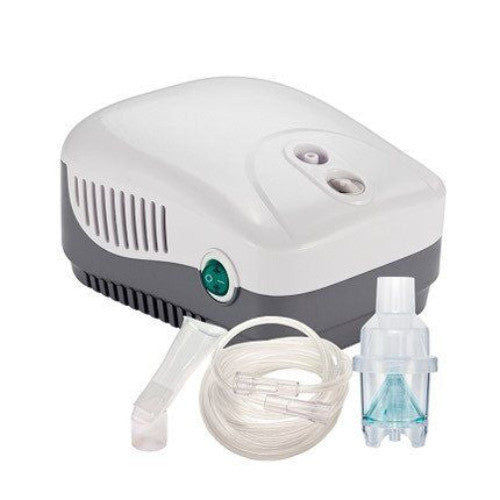
  • Route: Administer by nebulization (oral inhalation) using a standard jet nebulizer with compressor (mouthpiece or face mask). The solution requires no dilution.
  • Typical dose: One 15 μg/2 mL vial every 12 hours (twice daily). Do not exceed 30 μg per day (i.e. no more than two vials in 24 hours).
  • Usage: Start only in patients not in acute distress (stable COPD). Improvement in symptoms and lung function may be seen after a few days of continued use. This medication is for regular maintenance use, not as a “rescue” inhaler.

Clinical Use

In clinical trials and practice, arformoterol has been shown to improve pulmonary function and reduce COPD symptoms when used twice daily. Because every patient’s response can vary, lung function (FEV₁) and symptom control are typically monitored over time to assess benefit. Arformoterol can decrease the frequency of COPD exacerbations compared to placebo, though it does not replace anti-inflammatory therapies.

Contraindications and Precautions

  • Hypersensitivity: Contraindicated in patients with a known hypersensitivity to arformoterol, formoterol, or any component of the formulation.
  • Asthma: Black box warning: As with other long-acting β₂-agonists (LABAs), arformoterol must not be used as monotherapy for asthma; it is contraindicated in asthma unless the patient is also on an inhaled corticosteroid. LABA monotherapy in asthma is associated with increased risk of asthma-related death.
  • Acute COPD exacerbation: Not indicated for acute bronchospasm or sudden worsening of COPD. In an emergency, use a short-acting bronchodilator instead.
  • Cardiovascular disease: Use caution in patients with cardiac disorders (arrhythmias, ischemic heart disease, hypertension), seizures, or thyroid disease. β₂-agonists can increase heart rate and blood pressure. If chest pain or significant dyspnea occurs, discontinue use.
  • Drug interactions: Avoid other sympathomimetics or adrenergic drugs if possible, as concurrent use may potentiate cardiovascular effects. Beta-blockers (including eye drops) can diminish arformoterol’s effect and should be avoided if possible.

Side Effects

Common side effects stem from β₂-stimulation and include tremors or shakiness, headache, nervousness, insomnia, muscle cramps, nausea, vomiting, diarrhea, and dry mouth. Other reported effects (more frequent than placebo) include leg cramps, back pain, headache, chest pain, sinusitis, rash, and viral respiratory infections.. Because β₂-agonists can affect the heart, patients may also experience tachycardia or palpitations (fast/irregular heartbeat) and elevated blood pressure. Arformoterol can lower serum potassium and raise blood glucose, so these should be monitored in patients at risk. If symptoms worsen (paradoxical bronchospasm), or if severe cardiovascular symptoms occur, the drug should be stopped immediately and medical care sought.

Summary

Arformoterol tartrate (Brovana) is a prescription nebulized bronchodilator for COPD maintenance therapy. It is given as a 15 μg dose twice daily by nebulizer. As a long-acting β₂-agonist, it works by relaxing airway smooth muscle through β₂-receptor stimulation. It should be used regularly to improve airflow and symptoms in COPD, and is not effective for quick relief of acute bronchospasm. Common side effects are mild and related to sympathetic stimulation (tremor, tachycardia, headache, etc.). Close adherence to dosing instructions and monitoring by a healthcare provider are essential. This information is a general summary; clinicians should consult full prescribing information and tailor therapy to each patient’s needs.

Description

Arformoterol Tartrate

Arformoterol tartrate is a long-acting inhaled bronchodilator (a β₂-adrenergic agonist) used for maintenance treatment of chronic obstructive pulmonary disease (COPD). It is marketed under the brand name Brovana and is supplied as a sterile nebulizer solution. Arformoterol is the (R,R)-enantiomer of formoterol – essentially the active isomer of the racemic drug – and its tartrate salt form (arformoterol tartrate) is the United States Adopted Name (USAN) for (R,R)-formoterol L-tartrate. Each 2 mL vial contains 15 μg of arformoterol (equivalent to 22 μg as arformoterol tartrate) in isotonic saline.

Arformoterol is indicated only for long-term maintenance treatment of bronchoconstriction in COPD (chronic bronchitis and emphysema). It is not intended for relief of acute bronchospasm attacks, and it is not approved for treatment of asthma. Patients who develop sudden shortness of breath during therapy should use a fast-acting “rescue” bronchodilator (e.g. albuterol) and seek medical attention.

Mechanism of Action

Arformoterol selectively stimulates β₂-adrenergic receptors on bronchial smooth muscle. This activation increases intracellular cyclic AMP via adenylyl cyclase, causing prolonged relaxation of airway smooth muscle (bronchodilation). It also inhibits the release of inflammatory mediators (e.g. histamine, leukotrienes) from mast cells. Because arformoterol is the pure (R,R)-enantiomer, it has roughly twice the β₂-agonist potency of racemic formoterol. Its effects begin within ~15 minutes of inhalation and persist for at least 12 hours, which is why it is dosed twice daily.

Administration and Dosage

  • Formulation: Brovana® is supplied as 2 mL unit-dose vials of a clear, colorless aqueous solution (15 μg arformoterol per vial).
  • Route: Administer by nebulization (oral inhalation) using a standard jet nebulizer with compressor (mouthpiece or face mask). The solution requires no dilution.
  • Typical dose: One 15 μg/2 mL vial every 12 hours (twice daily). Do not exceed 30 μg per day (i.e. no more than two vials in 24 hours).
  • Usage: Start only in patients not in acute distress (stable COPD). Improvement in symptoms and lung function may be seen after a few days of continued use. This medication is for regular maintenance use, not as a “rescue” inhaler.

Clinical Use

In clinical trials and practice, arformoterol has been shown to improve pulmonary function and reduce COPD symptoms when used twice daily. Because every patient’s response can vary, lung function (FEV₁) and symptom control are typically monitored over time to assess benefit. Arformoterol can decrease the frequency of COPD exacerbations compared to placebo, though it does not replace anti-inflammatory therapies.

Contraindications and Precautions

  • Hypersensitivity: Contraindicated in patients with a known hypersensitivity to arformoterol, formoterol, or any component of the formulation.
  • Asthma: Black box warning: As with other long-acting β₂-agonists (LABAs), arformoterol must not be used as monotherapy for asthma; it is contraindicated in asthma unless the patient is also on an inhaled corticosteroid. LABA monotherapy in asthma is associated with increased risk of asthma-related death.
  • Acute COPD exacerbation: Not indicated for acute bronchospasm or sudden worsening of COPD. In an emergency, use a short-acting bronchodilator instead.
  • Cardiovascular disease: Use caution in patients with cardiac disorders (arrhythmias, ischemic heart disease, hypertension), seizures, or thyroid disease. β₂-agonists can increase heart rate and blood pressure. If chest pain or significant dyspnea occurs, discontinue use.
  • Drug interactions: Avoid other sympathomimetics or adrenergic drugs if possible, as concurrent use may potentiate cardiovascular effects. Beta-blockers (including eye drops) can diminish arformoterol’s effect and should be avoided if possible.

Side Effects

Common side effects stem from β₂-stimulation and include tremors or shakiness, headache, nervousness, insomnia, muscle cramps, nausea, vomiting, diarrhea, and dry mouth. Other reported effects (more frequent than placebo) include leg cramps, back pain, headache, chest pain, sinusitis, rash, and viral respiratory infections.. Because β₂-agonists can affect the heart, patients may also experience tachycardia or palpitations (fast/irregular heartbeat) and elevated blood pressure. Arformoterol can lower serum potassium and raise blood glucose, so these should be monitored in patients at risk. If symptoms worsen (paradoxical bronchospasm), or if severe cardiovascular symptoms occur, the drug should be stopped immediately and medical care sought.

Summary

Arformoterol tartrate (Brovana) is a prescription nebulized bronchodilator for COPD maintenance therapy. It is given as a 15 μg dose twice daily by nebulizer. As a long-acting β₂-agonist, it works by relaxing airway smooth muscle through β₂-receptor stimulation. It should be used regularly to improve airflow and symptoms in COPD, and is not effective for quick relief of acute bronchospasm. Common side effects are mild and related to sympathetic stimulation (tremor, tachycardia, headache, etc.). Close adherence to dosing instructions and monitoring by a healthcare provider are essential. This information is a general summary; clinicians should consult full prescribing information and tailor therapy to each patient’s needs.

Get Notified When Back in Stock