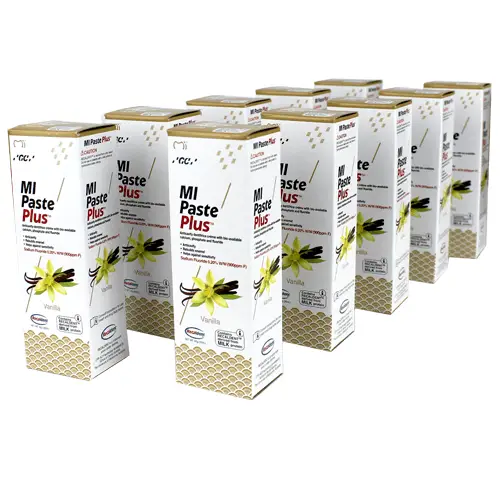
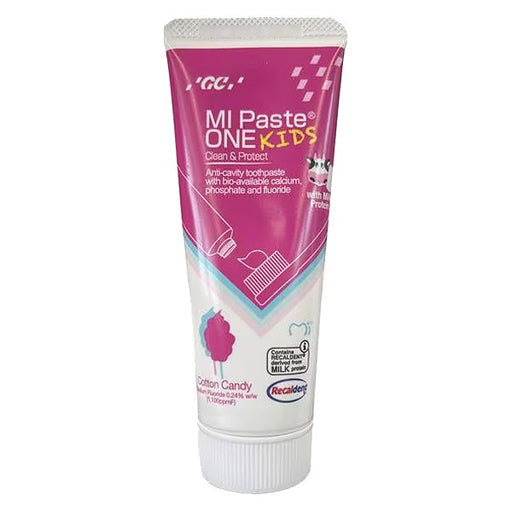
MI Paste and MI Paste Plus
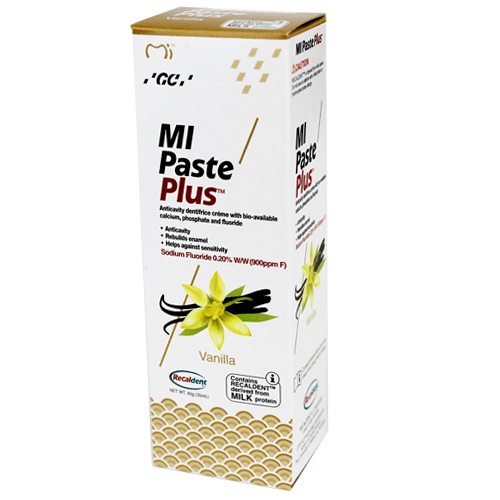
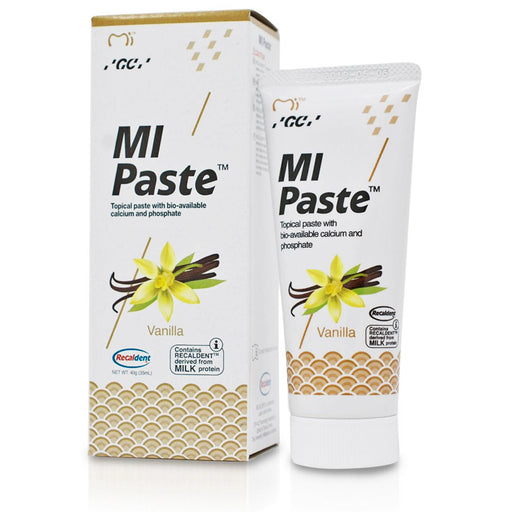
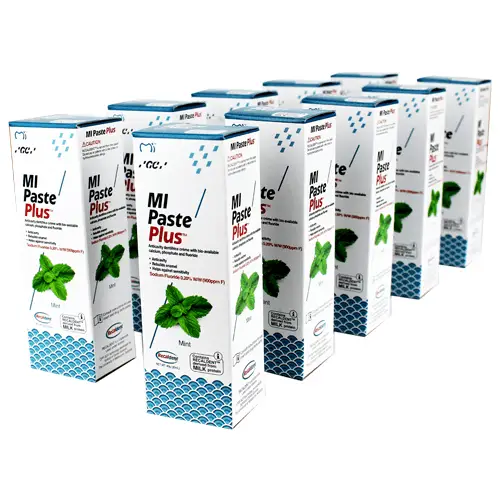
MI Paste and MI Paste Plus are specialty topical tooth “cremes” used to help remineralize and protect tooth enamel. Both products contain Recaldent® (CPP-ACP) – a milk-derived casein phosphopeptide–amorphous calcium phosphate complex – which delivers bio-available calcium and phosphate ions to the teeth. MI Paste Plus also contains fluoride (sodium fluoride, about 900 ppm) in addition to the CPP-ACP. In other words, MI Paste is essentially a concentrated calcium + phosphate paste, and MI Paste Plus is the same formula fortified with fluoride. These minerals work together to “supersaturate” the saliva and tooth surface with the building blocks of enamel, helping repair early decay and strengthen teeth.
MI Paste® is a topical dental cream (by GC America) formulated to strengthen tooth enamel. Mi paste contains a milk-derived protein complex called CPP-ACP (marketed as “Recaldent”) which slowly releases bioavailable calcium and phosphate onto tooth surfaces. In other words, MI Paste provides the same mineral building blocks (calcium, phosphate, and optionally fluoride in the “Plus” version) that healthy saliva supplies. By delivering these minerals directly, MI Paste helps rebuild (remineralize) early tooth decay (such as white spot lesions) and harden enamel. This remineralization effect can also make teeth less sensitive, since it helps “fill in” microscopic defects in the enamel. (The manufacturer advertises it as the first topical crème that releases Ca/P for treating non-cavitated demineralization.
MI Paste products “are the first of their kind – containing naturally derived milk protein and fluoride for safe and effective treatment of white spot lesions and non-cavitated tooth demineralization”. In practice, dentists use these pastes for preventive care: to treat early caries (“white spots”), reduce tooth sensitivity, and protect enamel. In fact, clinical research confirms that CPP-ACP (the active in MI Paste) significantly remineralizes early enamel lesions. One systematic review reported that CPP-ACP markedly improves white spot lesions, restoring enamel hardness and appearance more than no treatment. Put simply, MI Paste supplies extra calcium and phosphate (and fluoride in the Plus version) right where the teeth need it, helping “heal” weakened enamel and plug sensitivity pathways.
Composition & Mechanism
-
MI Paste® (original): Contains Recaldent (CPP-ACP) derived from milk. The CPP (casein phosphopeptides) molecules stabilize amorphous calcium phosphate (ACP) and adhere to tooth surfaces and plaque, delivering calcium and phosphate ions where saliva flow is low or teeth are demineralized. This remineralizes early “white-spot” lesions and can help soothe dentin hypersensitivity. Importantly, it does not contain fluoride, making it safe for young children (even under 6) and pregnant women when fluoride use may be a concern.
-
MI Paste Plus®: Everything in MI Paste plus 0.2% sodium fluoride (anti-cavity agent). The fluoride works with the delivered calcium and phosphate to form fluorapatite, which is more resistant to acid. Thus MI Paste Plus not only rebuilds enamel but also provides an anticavity (anticaries) effect. The inclusion of fluoride means it is recommended for patients at higher risk of cavities, but young children should use it only under supervision (to avoid swallowing excess fluoride).
GC America notes that MI Paste and MI Paste Plus are “the first of their kind” containing milk protein and (for Plus) fluoride. They supply minerals needed when saliva is insufficient, and MI Paste Plus supplies all three ions (calcium, phosphate, fluoride) whereas the original MI Paste supplies just calcium and phosphate. Both formulas are SLS‐free (gentle on soft tissues) and have low abrasiveness.
Uses (Indications)
Both products are used as preventive care aids in situations requiring enamel strengthening and sensitivity relief:
-
Demineralization and White spots: Ideal for early (non-cavitated) caries lesions. MI Paste products deliver minerals to “treat white spot lesions and non-cavitated tooth demineralization”. Dentists often recommend them after orthodontic treatment or heavy fluoride bleaching, when enamel needs rebuilding.
-
Sensitivity relief: By depositing calcium and phosphate, CPP-ACP can occlude exposed dentin tubules. Both MI Paste and MI Paste Plus have a desensitizing effect. GC explicitly recommends MI Paste for dentin hypersensitivity and for sensitivity after cleaning or whitening, and MI Paste Plus for patients who experience tooth sensitivity (before/after whitening or professional cleaning).
-
Cavity prevention: MI Paste Plus (with fluoride) can help prevent new cavities in at-risk patients, thanks to its fluoride content. The original MI Paste (no fluoride) is not a substitute for anticavity treatments, so it’s mainly used when fluoride use must be limited (e.g. very young children) or as an adjunct for remineralization.
-
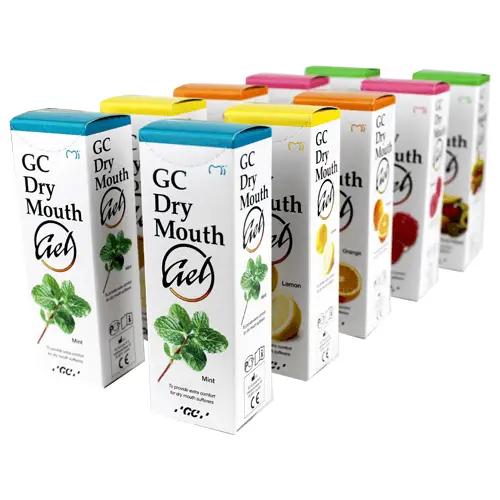
Dry mouth and erosion: Both products are useful when saliva is low (xerostomia) or diets are acidic. They help neutralize acid pH and supply lacking minerals, protecting against erosion and decay.
-
General oral maintenance: Many users with disc treatments or crowns use MI Paste to keep enamel strong. MI Paste Plus, being anticavity, is recommended as part of preventive regimens (e.g. “ongoing dental health program” for adults, seniors).
Note: MI Paste products do not treat active cavities that already require drilling and filling—they are preventive. They also have no effect on viruses or systemic conditions.
How to Use
MI Paste and MI Paste Plus are used like a toothpaste/crème, usually after regular brushing with a normal fluoride toothpaste (to maximize benefit).
-
Frequency: Apply twice daily (morning and night) or as instructed by your dentist.
-
Application: Squeeze a pea-sized amount onto a clean finger or onto a soft toothbrush. Spread or brush it onto all tooth surfaces. (Some people also use custom trays to hold it on teeth if recommended.)
-
Dwell time: Leave it on for about 3 minutes. Spit out the excess paste. Do not rinse with water immediately—the remaining minerals and fluoride should stay on the teeth to be absorbes. Avoid eating or drinking for at least 30 minutes after application.
-
Special cases: MI Paste (no fluoride) can be used even in very young children (ask your dentist), since any small swallowed amount is not dangerous. MI Paste Plus (with fluoride) should be used in children 6 years and older (or as advised) and in a pea-sized dose. Supervise children to ensure they spit out the paste.
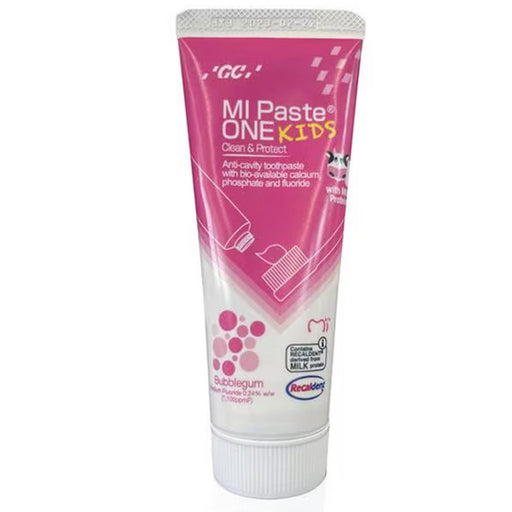
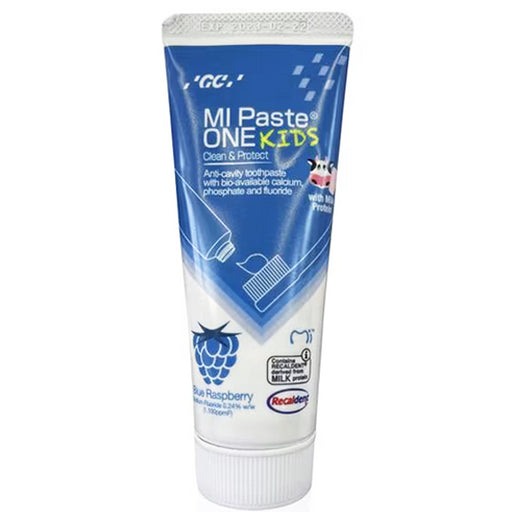
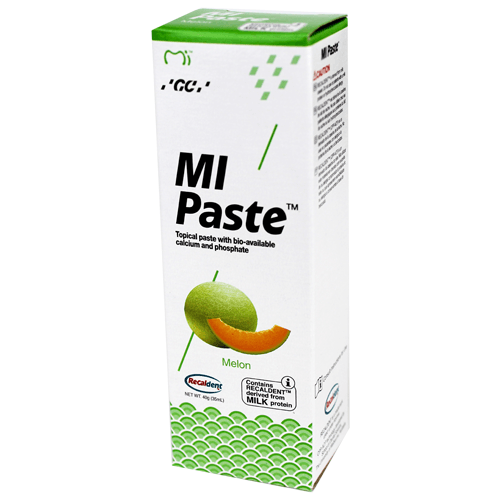
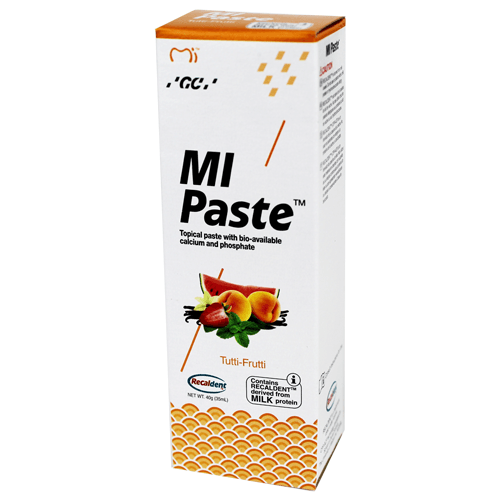
Both pastes come in flavors (mint, melon, berry, bubblegum, etc.) to make brushing pleasant. Store at room temperature with cap on.
Use MI Paste exactly as your dentist directs. It is typically applied after brushing and flossing, on clean dry teeth, so that the minerals contact the enamel directly. There are two common application methods:
-
Method 1 – Direct application: Dispense a small amount of paste (about pea-size) onto a clean fingertip (or cotton applicator). Gently apply and spread it over the teeth and gums, especially on areas of concern. You can use your tongue to move it around. Once in place, leave the paste on the teeth for at least 3–5 minutes. During this time, avoid eating, drinking or rinsing. After 3–5 minutes, spit out any excess saliva or paste. Do not rinse your mouth or eat for about 30 minutes afterwards; this allows the minerals to stay on the enamel and work effectively. Finally, wipe off or spit out the remaining paste. You may leave any thin residue on your teeth overnight (it won’t harm anything and can provide ongoing benefit while you sleep).
-
Method 2 – Custom tray: Your dentist may provide a soft plastic mouth tray (similar to a bleaching tray). Apply a thin layer of MI Paste into the tray and then seat it over your teeth as directed. Leave the tray in place for 3–5 minutes. Afterward, remove the tray and spit out excess; again, do not rinse or eat for 30 minutes. Be sure to rinse the tray thoroughly with water after each use. The prescription tray helps keep the paste in contact with teeth, and is often used for patients with many sensitive spots or white lesions.
In general, your dentist will tell you how often to use it. Common instructions are to apply MI Paste once or twice daily. Many patients use it at night before bed (after brushing) so it can sit on the teeth undisturbed. Always follow the specific schedule given by your dental professional. (Note: MI Paste and MI Paste Plus are dental devices available by prescription only in the U.S. – they should be used under dentist supervision.)
Quick usage tips:
- Always apply to clean teeth. Brush and floss first (with your regular toothpaste), spit out, then apply MI Paste. Do not mix the Paste with your regular toothpaste on the brush; it should be used on its own as a separate step.
- Use a pea-sized amount. More is not better – a little paste releases plenty of minerals.
- After the recommended time, spit out the paste. Do not swallow the paste or rinse immediately, since you want the minerals to stay on the enamel.
- If using a special tray, follow your dentist’s filling and removal instructions exactly. Clean the tray after each use.
Precautions and Important Information
MI Paste products are generally safe, but observe the following health precautions:
-
Milk protein allergy: The active ingredient CPP-ACP (Recaldent®) is derived from milk casein. Do not use MI Paste or MI Paste Plus if you have a known milk-protein (casein) allergy. Even though the lactose content is extremely low (<0.01%), anyone with a true milk allergy should avoid it. (On the other hand, MI Paste has been found safe for people with lactose intolerance because it contains almost no lactose.)
-
Preservative sensitivity: MI Paste contains small amounts of benzoate preservatives. If you are sensitive to benzoates or similar preservatives, do not use these products.
-
Fluoride caution (MI Paste Plus): MI Paste Plus contains fluoride (900 ppm). It is not recommended for children under 6 years old. For young children (6 and under), use the non-fluoride MI Paste version if glassified by your dentist. (This is simply to avoid excessive fluoride intake in very young kids.)
-
Do not mix with other products: Use MI Paste on its own. Do not mix it with your toothpaste when brushing. Also, avoid using MI Paste/Plus at the same time as other high-fluoride products (such as certain fluoride rinses) unless your dentist specifically advises it. For example, apply MI Paste after brushing and rinse, rather than adding it to your fluoride mouthwash.
-
Application warnings: After applying the paste, spit out any excess. Do not swallow MI Paste. Remember not to eat, drink, or rinse your mouth for about 30 minutes after application. This waiting period ensures the minerals stay on the teeth.
-
General use: MI Paste and MI Paste Plus are considered dental devices and in the U.S. they are supplied by or on the order of a dentist. Always follow your dentist’s directions on frequency and amount. Do not use the paste more often or in greater amounts than recommended.
-
Other considerations: Continue your normal oral hygiene routine. MI Paste is a supplement to brushing, not a replacement. (It does not contain cleaning abrasives or antimicrobial agents, so you still should brush and floss with your regular toothpaste.) If you wear orthodontic braces, MI Paste can be a helpful adjunct to protect the exposed enamel. It is available in mild flavors (e.g. melon, mint, etc.) for comfort, but avoid eating or drinking flavored products right after applying it, to give it time to work.
If you have any unusual symptoms (such as jaw soreness, rash, or digestive upset from swallowing large amounts accidentally), discontinue use and contact your dentist. In most patients, MI Paste causes no side effects; it is non-toxic and non-irritating when used properly. The biggest risk is just as noted above – an allergic reaction if you are sensitive to milk proteins or preservatives
Side Effects and Warnings
These topical pastes are very safe. Because they are not swallowed (in normal use), systemic effects are virtually none. Possible side effects include:
-
Allergic reaction: Milk protein allergy is the main concern. Both products contain casein (milk-derived) and paraben preservatives. GC’s label warns not to use MI Paste products on anyone “with a milk protein or hydroxybenzoates allergy”. Symptoms of allergy (rash, hives, itching, facial swelling, breathing difficulty) warrant immediate discontinuation and medical attention.
-
Oral irritation: In rare cases, mild gum or palate irritation can occur. Both products are SLS-free (less irritating), but if your child complains of burning or sores, stop use and see a dentist.
-
Fluoride ingestion: MI Paste Plus contains fluoride (0.2%). Swallowing very large amounts (far more than a pea-sized dose) could cause nausea or vomiting. Keep the tube out of reach of young children and supervise brushing. If a child accidentally swallows a large quantity of MI Paste Plus, call your local poison control center or seek medical help. (MI Paste original has no fluoride and thus no such risk.)
-
No improvement: If sensitivity or white spots do not improve after several weeks of regular use, consult a dentist. Persistent pain, new cavities, or advancing decay are not solved by toothpaste alone.
Besides milk allergies, there are no drug interactions (the product isn’t systemic). However, those with renal failure or other severe mineral-balance issues should mention any calcium/phosphate supplement to their doctor, although topical use is generally safe. As with all dental products, pregnant/nursing women should inform their dentist; MI Paste (with virtually no systemic fluoride) is usually considered safe, and MI Paste Plus delivers only minimal fluoride topically.
-
MI Paste® – Tooth crème with CPP-ACP (calcium & phosphate), no fluoride. Uses: enamel remineralization, sensitivity relief, white-spot management. Safe for young kids and expectant mothers.
-
MI Paste Plus® – Same CPP-ACP base plus 0.2% NaF. Uses: remineralization and cavity prevention. Recommended for older children/adults with sensitivity, after whitening, or high cavity risk. Use cautiously in young children (pea-sized dose, supervised) due to fluoride.
Both are not medicines or antibiotics—they are preventive dental aids. Use as directed by a dentist or the product instructions. Do not substitute these pastes for professional dental treatment when cavities are present.
In summary, MI Paste and MI Paste Plus are special dental creams that supply calcium, phosphate, and (in the Plus version) fluoride directly to your teeth. They are used under a dentist’s guidance to help remineralize enamel and reduce sensitivity. You apply a small amount after cleaning your teeth, leave it on for a few minutes, then spit out without rinsing. The treatments are usually done once or twice a day, often at bedtime, according to your dentist’s advice. They are safe and well-tolerated for most patients, but be sure to follow the precautions: avoid them if you have a milk allergy, use the correct version for your child’s age, and do not mix them into your regular toothpaste or with other fluoride treatments.
Used correctly, MI Paste and MI Paste Plus can strengthen your teeth from the inside out by restoring lost minerals. This can help stop early cavities, alleviate sensitivity, and make your enamel healthier overall. Always use it under dental supervision and maintain your normal brushing and flossing routine for the best results.