
Filters
Availability
Price
$
-
$
$0
$659
Vendor
Collection
Tags
- anesthetic spray (6)
- Ethyl Chloride (1)
- Ethyl Chloride Spray (2)
- Gebauer's Ethyl Chloride (1)
- Gebauer’s ethyl chloride (1)
- instant pain relief spray (1)
- IV start numbing spray (1)
- minor procedure anesthetic (1)
- Mist Spray (4)
- Numb Pain (1)
- pre-injection anesthetic (1)
- skin refrigerant spray (2)
- Sports Injury (1)
- Topical Anesthetic (10)
- Aesthetic Supplies MedSpa Supplies & Cosmetic Surgery Supplies (2)
- anesthesologist (1)
- Gebauer Pain Spray (1)
- Local Anesthetic (1)
- numb pain (1)
- Numb Skin (1)
- Pain ease Spray (1)
- Pain Relief (4)
- Aerosol (1)
- Aerosol Spray (1)
- cold spray (5)
- freeze (3)
- Freeze Spray (4)
- Medi First (1)
- Numbing (1)
- Numbing Spray (1)
- pain ease (1)
- pain numbing spray (1)
- Pain Relief Spray (1)
- pain spray (1)
- Refrigerant Spray (1)
- Severe Pain Relief (1)
- sprains (1)
- Swelling (1)
- Topical Pain Relief (1)
- Topical Skin Refrigerant (1)
- geb bottle (1)
- gebauer (1)
- Gebauer Ethyl Chloride (1)
- Gebauer Ethyl Chloride Instant Topical Anesthetic Spray (1)
- med mist (1)
- mist spray (1)
- Numbing the Skin (1)
- Medium Stream Spray (1)
- Pain Ease (1)
- PainEase (1)
- Topical antiseptic (1)
- topical spray (1)
- 20% Benzocaine (1)
- Americaine (1)
- Benzocaine 20 (2)
- Burns (1)
- Insect Bite Relief (1)
- Insect bites (1)
- minor burns (1)
- sunburns (1)
- Treat Burns (1)
- Anesthetic Solution (3)
- CryoDose (6)
- CryoDose Spray (3)
- CryoDose TA (1)
- dermatology (1)
- Laser Treatments (1)
- Surgical procedures (2)
- Dermatological Treatments (1)
- First aid antiseptic (1)
- Hurricaine (1)
- Lidocaine (1)
- Tubes (1)
- Cryosurgery (3)
- doctor-only (3)
- Verruca (2)
- Gebauer Spray (1)
- Muscle pain relief (1)
- Muscle Soreness (1)
- Myofascial Pain (1)
- Sports Injuries (1)
- Vapocoolant Spray (1)
- Cryotherapy Arrow Buds (1)
- Cryotherapy Tips (1)
- CryoSurgery Spray (1)
- Cryosurgical (2)
- CryoSurgical Spray (1)
- Cryosurgical Treatment Kit (1)
- Freeze tips (1)
- Butamben (1)
- Cetacaine (1)
- Cetacaine Topical Anesthetic Spray (1)
- Dental Anesthetic (1)
- Oral Health (1)
- Pain Management (1)
- Patient comfort (1)
- Skin Numbing (1)
- Tetracaine (1)
- Tetracaine Hydrochloride (1)
- CryoDose Tips (1)
- Round Tip Buds (1)
- actinic keratosis (1)
- Age spots treatment (1)
- clinic cryosurgery (1)
- Cryo kit (1)
- cryotherapy system (1)
- Gebauer cryo kit (1)
- lesion removal (1)
- non-invasive skin treatment (1)
- podiatry cryosurgery (1)
- professional cryotherapy (1)
- seborrheic keratosis (1)
- Skin lesion (1)
- skin lesion removal (1)
- skin tag removal (1)
- wart removal (1)
- Cryo Applicators (1)
- CryoBuds (1)
- CryoConcepts (1)
- Histofreezer (2)
- Remove warts (3)
- Wart Remover (1)
- Cryogen (1)
- Histofreezer Flex (1)
- Plantar Warts (1)
- Cold Therapy (2)
- Cryo Therapy (1)
- CryoTherapy Kit (1)
- CryoTherapy Treatment (1)
- DE Treatment Kit (1)
- Remove skin tags (1)
- Cold Therapy Pain Relief (1)
- Instant Ice (1)
- Skin Refrigerant Spray (1)
Skin Refrigerant Sprays
Skin refrigerant sprays – also known as cold sprays or vapocoolant sprays – are topical aerosol sprays that rapidly cool the surface of the skin. They typically contain a liquefied gas under pressure, which is released as a fine mist onto the skin. Upon contact, this liquid quickly evaporates, absorbing heat from the skin and dropping the skin’s temperature dramatically. These sprays are designed to be safe for direct use on intact skin and are commonly used for first aid, sports injuries, and minor medical procedures to provide quick pain relief through cooling.
How Does Skin Refrigerant Spray Work?
Skin refrigerant sprays work on the principle of evaporative cooling. When the liquefied gas in the spray comes out and hits the warmer skin, it rapidly turns from liquid to gas, a process that takes away heat from the skin (much like how alcohol feels cool as it evaporates off the skin). This fast drop in skin temperature (often down to about 10-15°C in the area applied) causes a few useful effects:
-
Local Anesthetic Effect (Pain Relief): The sudden cold numbs the superficial nerve endings. In extremely cold conditions, nerve fibers transmit pain signals more slowly or not at all. Thus, by “freezing” the skin surface for a short time, these sprays act as temporary topical anesthetics, making pain sensation less intense. People often feel immediate relief because the cold dulls the nerves that send pain signals to the brain.
-
Reduction of Swelling and Inflammation: Cold causes blood vessels in the skin (and just under it) to constrict (a process called vasoconstriction). By narrowing the blood vessels, the spray can help reduce blood flow to the area, which in turn minimizes bruising or swelling (edema) from an injury. That’s why cold therapy is generally recommended for acute injuries – these sprays just provide a very rapid, localized way to apply cold.
-
Fast and Short-Acting: One advantage of vapocoolant sprays is how quickly they act. They start cooling (and thus numbing) within seconds of application. The pain relief is almost immediate, which is why they’re popular right before a painful procedure (like a needle stick) or immediately after an injury. However, the effect is short-lived, typically lasting only a few minutes – often enough time to perform a quick procedure or initial first aid. For example, a sports cold spray might provide relief that lasts up to 10–15 minutes before the area returns to normal temperature.
It’s important to note that skin refrigerant sprays only affect the surface and near-surface of the skin. They do not cool deep tissues significantly, so their pain relief and anti-swelling effects are mostly superficial and temporary.
-
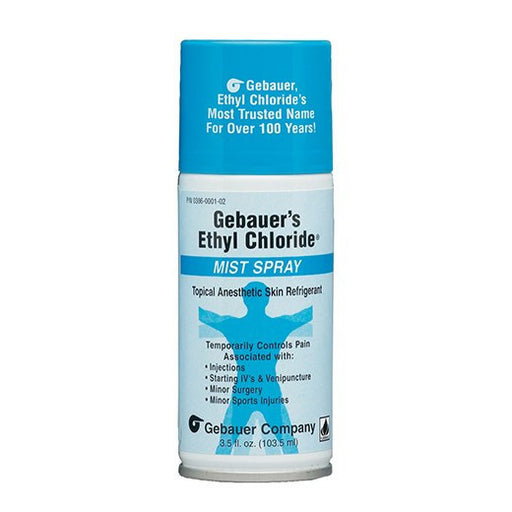 Sale 25%
Original price $ 78.95Current price $ 59.00
Sale 25%
Original price $ 78.95Current price $ 59.00Gebauer's Ethyl Chloride Skin Refrigerant Spray Mist Topical Anesthetic
Gebauer's29 reviewsTopical Anesthetic for Instant Pain Relief, Minor Procedures, and Sports Injuries Discover rapid pain relief and numbing power with the leading top...
View full details -
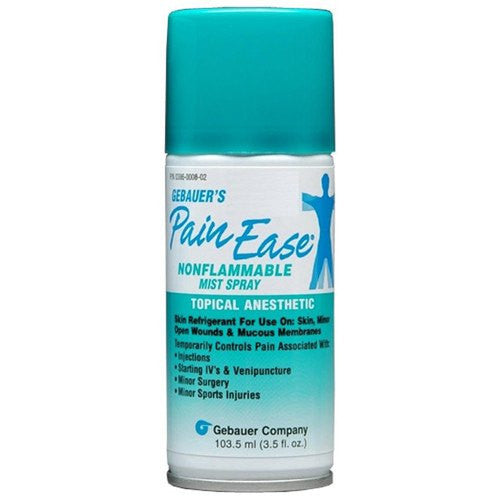 Sale 26%
Original price $ 64.95Current price $ 47.85
Sale 26%
Original price $ 64.95Current price $ 47.85Gebauer's Pain Ease Aerosol Mist Spray 118 mL
Gebauer's26 reviewsGebauer's Pain Ease® instant topical anesthetic skin refrigerant (vapocoolant) is FDA cleared to temporarily control the pain associated with needl...
View full details -
 Sale 32%
Original price $ 9.95Current price $ 6.75
Sale 32%
Original price $ 9.95Current price $ 6.75Pain Ease Cold Topical Skin Refrigerant Spray by Medi-First
Medique3 reviewsMedi-First Cold Spray is a topical skin refrigerant used to quell the minor swelling and pain associated with sprains, bruising and contusions. Med...
View full details -
 Sale 18%
Original price $ 67.95Current price $ 55.95
Sale 18%
Original price $ 67.95Current price $ 55.95Gebauer Ethyl Chloride Topical Anesthetic Spray, Jet-Stream Glass Bottle, 3.5 oz
Gebauer's8 reviewsGebauer Ethyl Chloride Topical Anesthetic Spray is used for providing temporary pain relief by numbing the skin's surface. Typically applied before...
View full details -
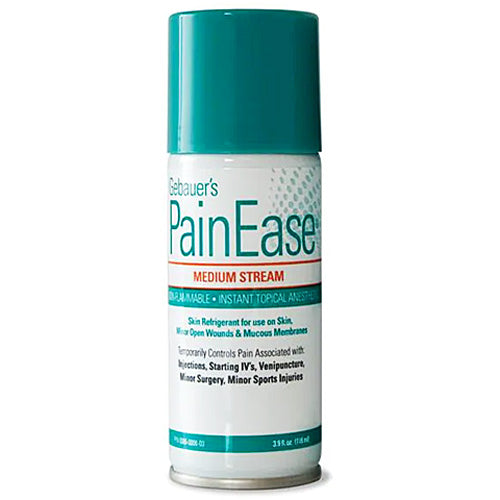 Sale 14%
Original price $ 24.95Current price $ 21.50
Sale 14%
Original price $ 24.95Current price $ 21.50Gebauer Pain Ease Topical Anesthetic Skin Refrigerant Spray Medium Stream 1 oz
Gebauer Company3 reviewsGebauer Pain Ease Topical Anesthetic Skin Refrigerant Medium Stream Spray is a topical spray that is designed to help provide temporary numbing and...
View full details -
 Sale 41%
Original price $ 11.85Current price $ 6.95
Sale 41%
Original price $ 11.85Current price $ 6.95Americaine Benzocaine Topical Anesthetic Spray 2 oz
MedTech1 reviewAmericaine Benzocaine Topical Anesthetic Spray is a local anesthetic that is sprayed on the skin. It works by blocking the nerve impulses that send...
View full details -
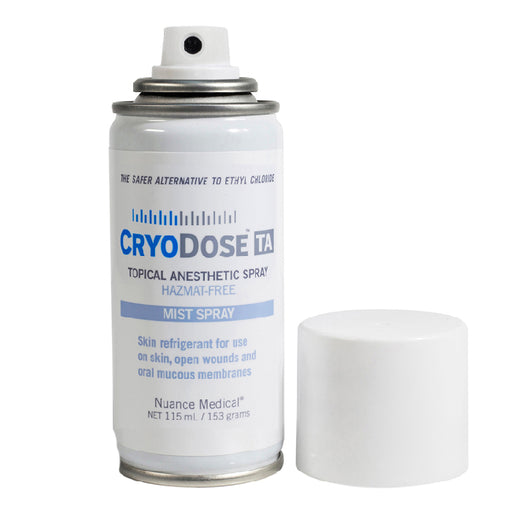 Sale 18%
Original price $ 54.95Current price $ 44.85
Sale 18%
Original price $ 54.95Current price $ 44.85CryoDose TA Anesthetic Mist Spray 115 mL Size
Nuance Medical5 reviewsCryoDose TA Topical Anesthetic Mist Spray is used to numb the skin and reduce pain sensation during minor surgical procedures, laser treatments, an...
View full details -
 Sale 34%
Original price $ 67.95Current price $ 44.85
Sale 34%
Original price $ 67.95Current price $ 44.85CryoDose TA Topical Anesthetic Medium Stream Spray 115 mL Size
Nuance Medical2 reviewsCryoDose TA Topical Anesthetic Medium Stream Spray is designed for rapid pain relief during minor surgical procedures, wound care, and dermatologic...
View full details -
 Sale 33%
Original price $ 78.95Current price $ 52.95
Sale 33%
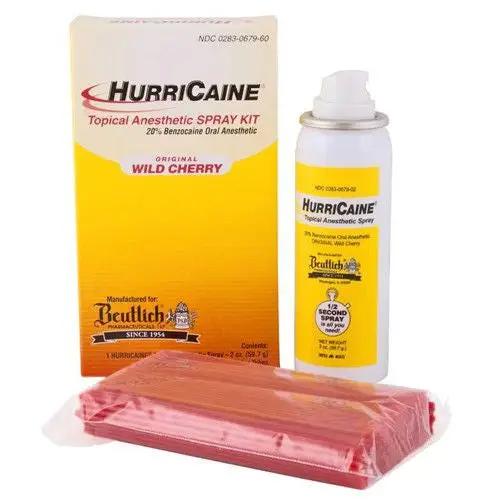
Original price $ 78.95Current price $ 52.95HurriCaine Topical Anesthetic Pain Spray Kit with 200 Extension tubes
Beutlich1 reviewBeutlich HurriCaine Topical Anesthetic Spray used to anesthetize mucosal tissue to elimate pain and discomfort. Can be used on multiple patients. W...
View full details -
 Sale 7%
Original price $ 429.95Current price $ 399.00
Sale 7%
Original price $ 429.95Current price $ 399.00Cryosurgery Kit - Verruca Freeze 50 Freeze Kit (VFK50)
Verruca FreezeNo reviewsThe Cryosurgery Verruca-Freeze Kit is a portable cryosurgical system designed to help your office treat a variety of lesions in-house without refer...
View full details🔒 Medical License Required -
 Sale 23%
Original price $ 64.95Current price $ 49.95
Sale 23%
Original price $ 64.95Current price $ 49.95Gebauer's Spray and Stretch Topical Anesthetic Vapocoolant Spray
Gebauer CompanyNo reviewsGebauer's Spray and Stretch® is a premier topical anesthetic designed to provide instant relief from myofascial pain and facilitate trigger point r...
View full details -
 Sale 23%
Original price $ 58.79Current price $ 45.00
Sale 23%
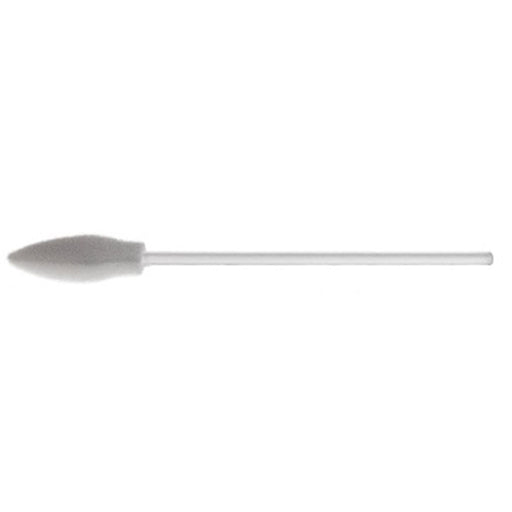
Original price $ 58.79Current price $ 45.00CryoDose Cryotherapy Arrow Buds 30/Pack
Nuance Medical1 reviewThe CryoDose Arrow Buds are a replacement accessory for using with the CryoDose Portable Cryosurgical System. Theses buds are arrow shaped and have...
View full details -
 Sale 12%
Original price $ 429.95Current price $ 379.00
Sale 12%
Original price $ 429.95Current price $ 379.00CryoDose Reusable Cryosurgical Treatment Kit with 162 mL Canister, 6 Cones, 20 Arrow Buds and 20 Round Buds
Nuance MedicalNo reviewsCryoDose Cryotherapy V is a reusable treatment kit that uses cryotherapy, or the use of extreme cold temperatures, to provide therapeutic benefit...
View full details -
 Sale 36%
Original price $ 139.95Current price $ 89.95
Sale 36%
Original price $ 139.95Current price $ 89.95Cetacaine Topical Anesthetic Spray Dental Anesthesia Oral Numbing Spray 5 gm Bottle (Rx)
Cethlite IndustriesNo reviewsCetacaine Dental Anesthetic – Fast-Acting Oral Numbing Spray Unlock the ultimate solution for fast-acting and effective topical pain management wit...
View full details🔒 Medical License Required -
 Sale 20%
Original price $ 39.95Current price $ 32.00
Sale 20%
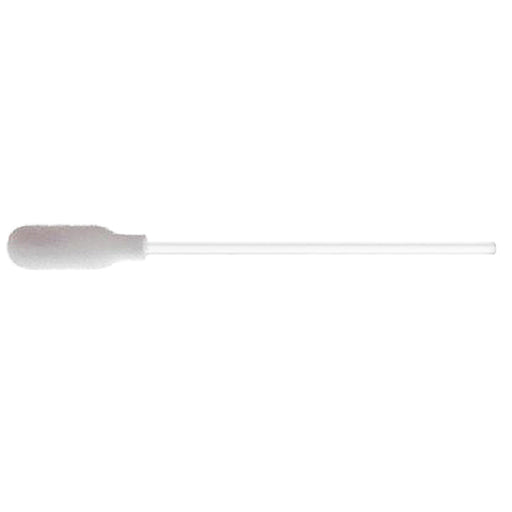
Original price $ 39.95Current price $ 32.00CryoDose Cryotherapy Round Tip Buds 30/Pack
NDCNo reviewsNuance CryoDose Cryotherapy Round Tip Buds are designed to freeze and kill cancer cells. The rounded tips are inserted into the tumor and the dispo...
View full details -
 Sale 36%
Original price $ 459.95Current price $ 295.00
Sale 36%
Original price $ 459.95Current price $ 295.00Cryosurgery Kit Cryo Professional System with (2) 80mL Cryogen Canisters, (50) 5mm Applicators, 6/Case
Gebauer CompanyNo reviewsFast-Acting Cryosurgical Solution for Dermatology, Skin Tag, Wart & Lesion Removal Gebauer Cryo Professional System is the #1 choice for dermat...
View full details -
 Sale
$ 179.00
Sale
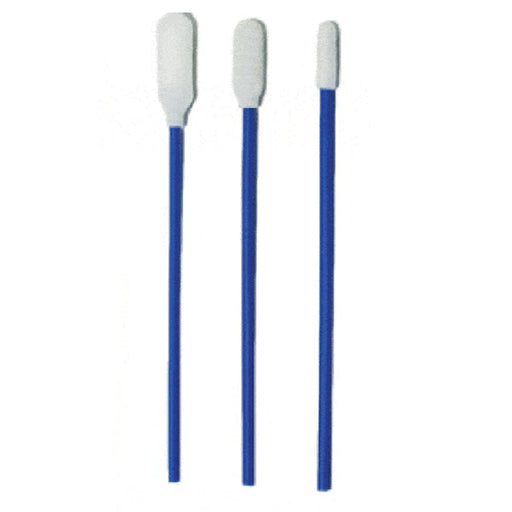
$ 179.00Cryosurgical Tip Set Verruca-Freeze® 3 / 5 / 9 mm Applicator Bud Tip
Verruca FreezeNo reviewsCryosurgery Verruca-Freeze CryoBuds are designed for the Verruca-Freeze cryosurgery system. These disposable applicators feature a foam tip and stu...
View full details -
 Sold out
Original price $ 29.95Current price $ 22.00
Sold out
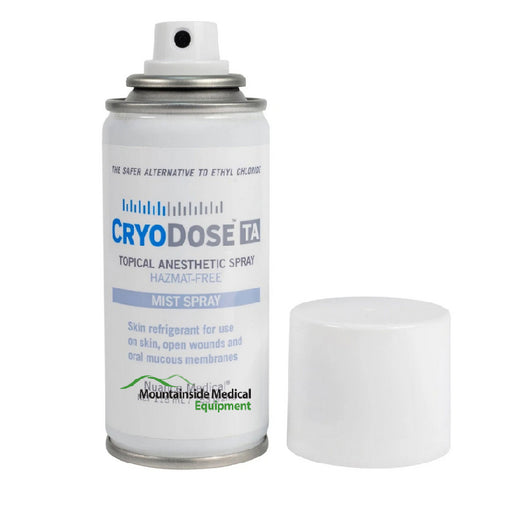
Original price $ 29.95Current price $ 22.00CryoDose TA Topical Anesthetic Mist Spray 35 mL Size
Nuance MedicalNo reviewsCryoDose TA Topical Anesthetic Mist Spray 35 mL is a revolutionary product that offers unparalleled relief for individuals who experience discomfor...
View full details -
 Sale 1%
Original price $ 129.95Current price $ 129.00
Sale 1%
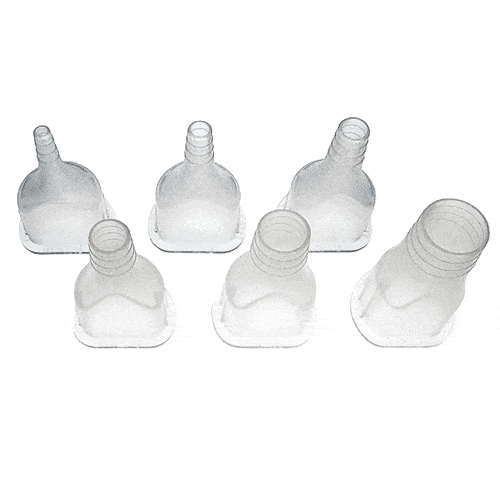
Original price $ 129.95Current price $ 129.00CryoDose Dosing Cones, 6/set *Non Stock Ships in 5-7 Days*
n/aNo reviewsThe CryoDose Dosing Cones are for using with the CryoDose Treatment Kit. Instead of having to buy a whole new kit, you can save money by getting th...
View full details -
 Sale 14%
Original price $ 399.95Current price $ 345.00
Sale 14%
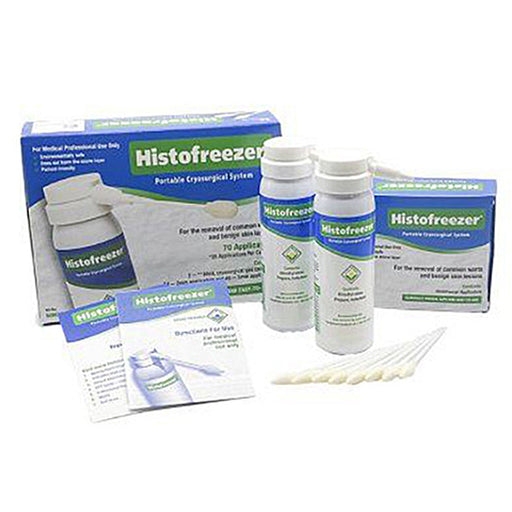
Original price $ 399.95Current price $ 345.00Histofreezer CryoConcepts H Kit Portable Cryosurgical System
CryoConcepts LPNo reviewsHistofreezer CryoConcepts Portable Cryosurgical System is a non-invasive option with quick treatment times, the CryoConcepts Histofreezer Portable ...
View full details -
 Sale 18%
Original price $ 799.95Current price $ 659.00
Sale 18%
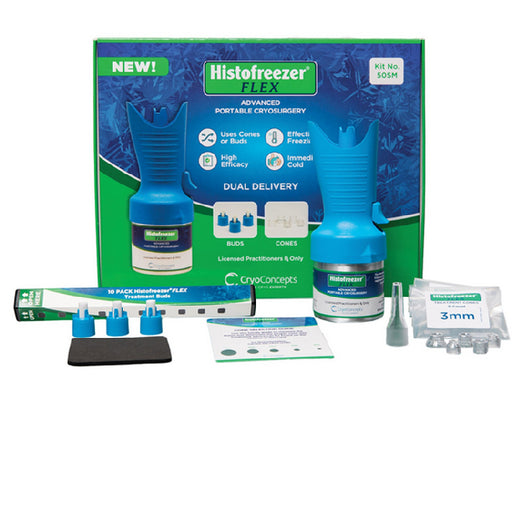
Original price $ 799.95Current price $ 659.00Histofreezer Flex Cryosurgery Kit with 30 Buds and 40 Cones
CryoConcepts LPNo reviewsThe Histofreezer Flex Cryosurgery Kit with 30 Buds and 40 Cones is a state-of-the-art cryosurgery treatment kit that is used to effectively remove ...
View full details -
 Sale 27%
Original price $ 549.95Current price $ 399.95
Sale 27%
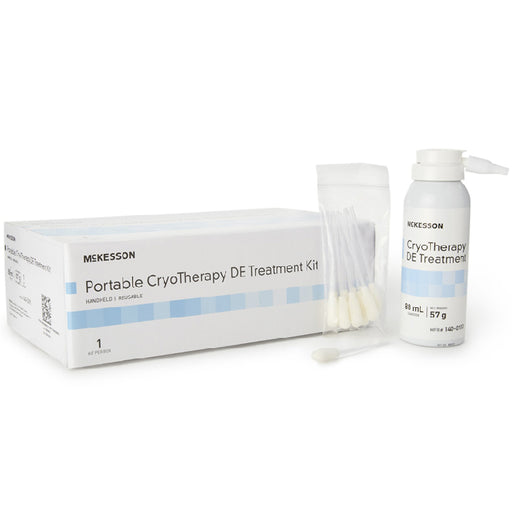
Original price $ 549.95Current price $ 399.95CryoTherapy DE Treatment Kit with 30 Round Tips, 20 Arrow Tips
McKessonNo reviewsCryoTherapy DE Treatment Kit with 30 Round Tips and 20 Arrow Tips is a comprehensive kit that is designed to provide targeted cryotherapy treatment...
View full details -
 Sold out
Original price $ 38.95Current price $ 24.95
Sold out
Original price $ 38.95Current price $ 24.95Instant Ice Topical Skin Refrigerant Spray by Gebauer 3.9 oz
Gebauer CompanyNo reviewsInstant Ice Topical Skin Refrigerant Spray by Gebauer is a topical skin refrigerant that is used for temporary relief of minor pain and swelling as...
View full details -
 Sale 14%
Original price $ 579.95Current price $ 499.95
Sale 14%
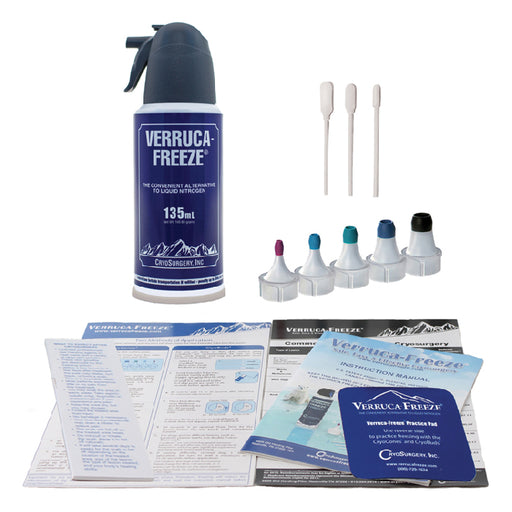
Original price $ 579.95Current price $ 499.95Cryosurgery Verruca Freeze Kit with 5 CryoCones (3, 5, 7, 9, 12 mm) 30 CryoBuds (10 Small, 10 Med, 10 Large)
Verruca FreezeNo reviewsThe Cryosurgery Verruca Freeze Kit with 5 CryoCones and 30 CryoBuds is a highly effective tool for treating stubborn warts and verrucas. This compr...
View full details🔒 Medical License Required


People Also Searched For
Skin Refrigerant Sprays to Topical Anesthetic
Skin Refrigerant Sprays to Topical Anesthetic Spray
Skin Refrigerant Sprays to Cryotherapy
Skin Refrigerant Sprays to anesthetic spray
Skin Refrigerant Sprays to CryoDose
Skin Refrigerant Sprays to Mist Spray
Skin Refrigerant Sprays to cold spray
Skin Refrigerant Sprays to Cryosurgery Kit
CryoSurgery and Cryotherapy Products
Topical Anesthetic Sprays
Skin refrigerant sprays – also known as cold sprays or vapocoolant sprays – are topical aerosol sprays that rapidly cool the surface of the skin. They typically contain a liquefied gas under pressure, which is released as a fine mist onto the skin. Upon contact, this liquid quickly evaporates, absorbing heat from the skin and dropping the skin’s temperature dramatically. These sprays are designed to be safe for direct use on intact skin and are commonly used for first aid, sports injuries, and minor medical procedures to provide quick pain relief through cooling.
How Does Skin Refrigerant Spray Work?
Skin refrigerant sprays work on the principle of evaporative cooling. When the liquefied gas in the spray comes out and hits the warmer skin, it rapidly turns from liquid to gas, a process that takes away heat from the skin (much like how alcohol feels cool as it evaporates off the skin). This fast drop in skin temperature (often down to about 10-15°C in the area applied) causes a few useful effects:
-
Local Anesthetic Effect (Pain Relief): The sudden cold numbs the superficial nerve endings. In extremely cold conditions, nerve fibers transmit pain signals more slowly or not at all. Thus, by “freezing” the skin surface for a short time, these sprays act as temporary topical anesthetics, making pain sensation less intense. People often feel immediate relief because the cold dulls the nerves that send pain signals to the brain.
-
Reduction of Swelling and Inflammation: Cold causes blood vessels in the skin (and just under it) to constrict (a process called vasoconstriction). By narrowing the blood vessels, the spray can help reduce blood flow to the area, which in turn minimizes bruising or swelling (edema) from an injury. That’s why cold therapy is generally recommended for acute injuries – these sprays just provide a very rapid, localized way to apply cold.
-
Fast and Short-Acting: One advantage of vapocoolant sprays is how quickly they act. They start cooling (and thus numbing) within seconds of application. The pain relief is almost immediate, which is why they’re popular right before a painful procedure (like a needle stick) or immediately after an injury. However, the effect is short-lived, typically lasting only a few minutes – often enough time to perform a quick procedure or initial first aid. For example, a sports cold spray might provide relief that lasts up to 10–15 minutes before the area returns to normal temperature.
It’s important to note that skin refrigerant sprays only affect the surface and near-surface of the skin. They do not cool deep tissues significantly, so their pain relief and anti-swelling effects are mostly superficial and temporary.
Types of Skin Refrigerant Sprays
Uses and Safety Considerations
Directions for Using a Skin Refrigerant Spray
Skin Refrigerant Spray Precautions & Warnings
Types of Skin Refrigerant Sprays
There are a few different types of skin refrigerant sprays, distinguished mainly by the cooling agent (chemical) they use and their typical applications:
-
Ethyl Chloride Sprays: Ethyl chloride is a volatile chemical that has been used for decades as an instant topical anesthetic spray. Ethyl chloride vapocoolant sprays are often used by doctors or nurses to numb the skin before injections, IV cannulation, or minor surgical procedures (like lancing a boil or stitching a small wound). It’s also been used for sports injuries and muscle pain. When sprayed on the skin, ethyl chloride evaporates extremely quickly, producing an immediate numbing, cooling effect at the site. These sprays are clear, fast-evaporating, and very effective at preventing the brief pain of needle sticks or minor injury pain. (Example: “Gebauer’s Ethyl Chloride” spray is a well-known medical vapocoolant in this category.)
-
Hydrocarbon Cold Sprays (Sports Cold Sprays): Many over-the-counter cold sprays contain mixtures of liquefied gases like isobutane, n-butane, and propane as the active cooling ingredients. These are commonly found in sports first aid kits and are used to treat acute sports injuries – such as sprains, strains, bruises, or contusions. When you spray it on, you feel a quick icy blast. The rapid cooling helps numb the pain and reduce swelling in the injured area, allowing athletes to get immediate relief on the field. These sprays are typically marketed as “instant cold spray” or “freeze spray” for muscle aches and injuries. (They often come in aerosol cans; for example, products labeled as “Sports Cold Spray” or “Instant Ice Spray” fall in this category.)
-
Other Refrigerant Sprays: In the past, certain chlorofluorocarbon (CFC) or hydrofluorocarbon (HFC) refrigerants (like dichlorodifluoromethane, known by the trade name “Fluori-Methane”) were used in vapocoolant sprays, especially in physical therapy for techniques like “spray and stretch” to treat muscle trigger points. Due to environmental regulations (CFCs affect the ozone layer), those have largely been phased out. Modern formulations have shifted to more environmentally friendly gases (like HFC-134a or others) or simply to the hydrocarbon blends mentioned above. Additionally, some newer coolant spray products may include additives like menthol or other cooling compounds to enhance the sensation of cold on the skin. Regardless of formula, all these sprays function similarly – by rapidly evaporating to draw heat away from the skin.
Uses and Safety Considerations
Common Uses: Skin refrigerant sprays have two main arenas of use – medical procedures and injury first aid:
-
In medical settings, they are often used as a quick numbing agent. For example, just before a nurse gives a shot or inserts an IV line, a quick spray of a vapocoolant can make the needle stick hurt less. It’s a handy alternative or addition to other pain-reducing methods because it acts within seconds and doesn’t involve injecting any medication (it’s a topical, non-systemic effect). They’re also used before minor dermatology procedures (like drawing blood, small biopsies, or suturing a cut). The instant anesthesia provided by ethyl chloride spray in these cases can significantly reduce a patient’s pain and anxiety.
-
In sports medicine and first aid, cold sprays are used immediately after an injury like an ankle sprain, a hard blow (contusion), or muscle strain. The spray can reduce pain and swelling on the spot which is why trainers run onto the field with a cold spray in soccer matches when a player is down. It’s a form of immediate care to cool the area, similar to applying an ice pack, but much faster and more convenient (no need for actual ice). The injured area might be numbed enough to allow the person to move or be transported with less discomfort. However, it’s worth noting that this relief is temporary – the spray is not actually healing the injury, just moderating the symptoms initially.
Safety and Precautions: While generally safe when used correctly, skin refrigerant sprays come with a few important cautions:
-
Do Not Spray on Broken Skin or Mucous Membranes: These sprays are for external use on intact skin only. You should not spray them on open wounds, cuts, or directly in the eyes/mouth/nose. The intense cold could further damage tissue or cause severe irritation on sensitive membranes.
-
Avoid Prolonged Spraying: You should only spray until the skin turns white or for a few seconds at a time. Over-spraying one area (spraying for too long or too close) can potentially cause frostbite or freeze the skin, because the temperature can drop below safe levels if overdone. The goal is a brief cooling – a little goes a long way. Always follow the product instructions on how long to spray. The liquefied gases in most formulations have boiling points above the freezing point of water (so they shouldn’t cause ice crystals on the skin if used properly), but misuse (such as very prolonged exposure or very short spraying distance) can still cause cold injury.
-
Flammability: Many vapocoolant sprays (especially those with butane/propane) are flammable because they use hydrocarbon gases. That means you must keep them away from open flames, sparks, or extreme heat. Do not use them near an ignition source (and don’t smoke while spraying). The canisters are pressurized, so they also shouldn’t be punctured or incinerated.
-
Use in Well-Ventilated Area: It’s best to use these sprays in an open or well-ventilated space. The vapors from the spray should not be inhaled deliberately. While brief normal use is generally fine, intentionally inhaling the fumes can be dangerous. (Ethyl chloride, for instance, is sometimes abused as an inhalant, which is very unsafe.)
-
Transient Effect – Don’t Over-rely for Serious Injuries: Remember that the pain relief is temporary. Especially in sports, it’s important that an athlete doesn’t spray an injury and then immediately return to play if the injury is serious – numbing the pain can mask a severe problem and potentially lead to worse damage if they continue activity too soon. Cold sprays do not treat the underlying injury, so proper medical evaluation and treatment (rest, ice, compression, etc., in the case of R.I.C.E. protocol) may still be needed after the initial relief wears off.
Skin refrigerant sprays are a quick and effective way to induce superficial cold therapy. By rapidly evaporating on the skin, they cool the area, numb pain, and reduce swelling for a short period. They come in various types, from ethyl chloride medical sprays to sports injury aerosols, but all operate on the same cooling principle. When used appropriately – spraying just enough to cool the skin – they are helpful for first aid and minor procedures. Always follow the instructions and precautions to use these sprays safely, and remember that while they can make things feel better temporarily, they’re usually one part of a larger treatment or first aid plan.
Directions for Using a Skin Refrigerant Spray
Skin refrigerant sprays (cold sprays or vapocoolant sprays) provide quick cooling and numbing of the skin. It’s important to use them correctly to get the benefit and avoid injury. Below are step-by-step directions for proper use, followed by precautions and warnings to keep in mind.
How to Use a Skin Refrigerant Spray (Directions)
-
Prepare the Spray Can: If directed by the product instructions, shake the can before use. Ensure the spray nozzle is securely attached and pointed away from your face (do not point it toward your eyes or mouth).
-
Check the Area to be Treated: Make sure the skin area is clean and dry, with no clothing covering it. Do not apply the spray on any broken skin, open wounds, or serious burns. If it’s your first time using the spray (or on sensitive skin), consider spraying a small test area first to ensure it doesn’t cause an unexpected skin reaction.
-
Position the Spray Can Properly: Hold the can about 4 to 6 inches (approximately 10–15 cm) away from the skin surface. Keep the can upright, or follow the specific instructions for the product (some medical ethyl chloride sprays can be used upside-down or at angles, per their design).
-
Spray in Short Bursts: Aim at the target area and spray using a sweeping motion rather than concentrating on one spot. It’s often recommended to use short bursts of spray (e.g., 2–3 quick sprays over the area) rather than a continuous long spray. Stop spraying as soon as the skin surface just begins to turn white (a frost-like appearance). Whitening of the skin indicates it’s been cooled to a very low temperature; spraying beyond this point does not increase effectiveness and could cause frostbite or skin damage.
-
Wait Briefly and Observe: The cooling/numbing effect happens almost immediately (within seconds). Allow a few seconds for the spray to evaporate and do its job. The skin will feel very cold and numb. Do not touch the area right away with bare hands, as it will be extremely cold (and your fingers could stick if there’s frost). If you needed the spray for a medical procedure (like an injection), go ahead with the procedure immediately after spraying, since the numbing effect only lasts about a minute or so.
-
After Use: As the effect wears off, the skin will return to normal temperature on its own. There’s usually no residue, but if any spray solution is visible on the skin, you can gently wipe it off. It’s a good idea to wash your hands after using the spray, especially if you got any on your fingers while handling the can. This prevents accidentally rubbing any of the cooling substance into your eyes or mouth. If needed, you can repeat the application later (allow the skin to return to normal temperature first). Follow product guidelines for frequency – many sprays suggest not using it more than 3 to 4 times per day on the same area.
Skin Refrigerant Spray Precautions & Warnings
-
For External Use Only: Skin refrigerant sprays are meant only for use on intact skin. Do not spray into eyes, mouth, nostrils, or on any mucous membranes. Also, never use it on deep wounds, puncture wounds, or serious burns – those injuries require proper medical care, not just cold therapy.
-
Flammable Contents: Many cold sprays contain flammable gases. Keep the spray away from open flames, heat sources, or sparks. Do not smoke while using it. The canister is pressurized; do not puncture or incinerate the can, and don’t store it in places above ~120° F (49° C) (for example, don’t leave it in a hot car or on a heater). High heat can cause the can to burst.
-
Avoid Prolonged or Excessive Spraying: Do not use for an extended period on one spot or spray over large areas of the body. Over-spraying can cause frostbite or cold burns to the skin. A quick spray until the skin is cool/white is sufficient – more is not better. If you need to cover a larger area, spray sections one at a time briefly, rather than continuously spraying a wide area.
-
Watch for Skin Reaction: It’s normal for the skin to appear pale or white and feel numb immediately after spraying. However, if you notice redness, persistent tingling, swelling, or irritation after the area rewarms, discontinue use. If the skin irritation is severe or the pain/symptoms of your injury get worse or don’t improve within 7 days, stop using the spray and consult a doctor. Some people could have a sensitivity to the cooling agent or an added ingredient (though serious allergic reactions are rare).
-
Avoid Inhaling the Spray: Use the product in a well-ventilated area and try not to breathe in the fumes during application. The gases used can be harmful if inhaled in large amounts. Never deliberately inhale vapocoolant sprays – this is extremely dangerous. If you accidentally get a strong whiff and feel lightheaded, move to fresh air.
-
Keep Out of Reach of Children: These sprays should be stored safely away from children. If a child (or anyone) accidentally sprays it in their face/eyes, or ingests the liquid, seek medical attention or call a poison control center immediately. Also, children should not use the spray without adult supervision, as misuse could cause injury.
Lastly, always read the specific instructions and warnings on the product label before use. Different brands might have slight differences in how to use them safely. When used properly, skin refrigerant sprays are a handy tool for quick pain relief and minor injury care – just make sure to follow the directions and respect the power of the “cold” to avoid any accidents. Stay safe and cool!
Types of Skin Refrigerant Sprays
Types of Skin Refrigerant Sprays
There are a few different types of skin refrigerant sprays, distinguished mainly by the cooling agent (chemical) they use and their typical applications:
-
Ethyl Chloride Sprays: Ethyl chloride is a volatile chemical that has been used for decades as an instant topical anesthetic spray. Ethyl chloride vapocoolant sprays are often used by doctors or nurses to numb the skin before injections, IV cannulation, or minor surgical procedures (like lancing a boil or stitching a small wound). It’s also been used for sports injuries and muscle pain. When sprayed on the skin, ethyl chloride evaporates extremely quickly, producing an immediate numbing, cooling effect at the site. These sprays are clear, fast-evaporating, and very effective at preventing the brief pain of needle sticks or minor injury pain. (Example: “Gebauer’s Ethyl Chloride” spray is a well-known medical vapocoolant in this category.)
-
Hydrocarbon Cold Sprays (Sports Cold Sprays): Many over-the-counter cold sprays contain mixtures of liquefied gases like isobutane, n-butane, and propane as the active cooling ingredients. These are commonly found in sports first aid kits and are used to treat acute sports injuries – such as sprains, strains, bruises, or contusions. When you spray it on, you feel a quick icy blast. The rapid cooling helps numb the pain and reduce swelling in the injured area, allowing athletes to get immediate relief on the field. These sprays are typically marketed as “instant cold spray” or “freeze spray” for muscle aches and injuries. (They often come in aerosol cans; for example, products labeled as “Sports Cold Spray” or “Instant Ice Spray” fall in this category.)
-
Other Refrigerant Sprays: In the past, certain chlorofluorocarbon (CFC) or hydrofluorocarbon (HFC) refrigerants (like dichlorodifluoromethane, known by the trade name “Fluori-Methane”) were used in vapocoolant sprays, especially in physical therapy for techniques like “spray and stretch” to treat muscle trigger points. Due to environmental regulations (CFCs affect the ozone layer), those have largely been phased out. Modern formulations have shifted to more environmentally friendly gases (like HFC-134a or others) or simply to the hydrocarbon blends mentioned above. Additionally, some newer coolant spray products may include additives like menthol or other cooling compounds to enhance the sensation of cold on the skin. Regardless of formula, all these sprays function similarly – by rapidly evaporating to draw heat away from the skin.
Uses and Safety Considerations
Uses and Safety Considerations
Common Uses: Skin refrigerant sprays have two main arenas of use – medical procedures and injury first aid:
-
In medical settings, they are often used as a quick numbing agent. For example, just before a nurse gives a shot or inserts an IV line, a quick spray of a vapocoolant can make the needle stick hurt less. It’s a handy alternative or addition to other pain-reducing methods because it acts within seconds and doesn’t involve injecting any medication (it’s a topical, non-systemic effect). They’re also used before minor dermatology procedures (like drawing blood, small biopsies, or suturing a cut). The instant anesthesia provided by ethyl chloride spray in these cases can significantly reduce a patient’s pain and anxiety.
-
In sports medicine and first aid, cold sprays are used immediately after an injury like an ankle sprain, a hard blow (contusion), or muscle strain. The spray can reduce pain and swelling on the spot which is why trainers run onto the field with a cold spray in soccer matches when a player is down. It’s a form of immediate care to cool the area, similar to applying an ice pack, but much faster and more convenient (no need for actual ice). The injured area might be numbed enough to allow the person to move or be transported with less discomfort. However, it’s worth noting that this relief is temporary – the spray is not actually healing the injury, just moderating the symptoms initially.
Safety and Precautions: While generally safe when used correctly, skin refrigerant sprays come with a few important cautions:
-
Do Not Spray on Broken Skin or Mucous Membranes: These sprays are for external use on intact skin only. You should not spray them on open wounds, cuts, or directly in the eyes/mouth/nose. The intense cold could further damage tissue or cause severe irritation on sensitive membranes.
-
Avoid Prolonged Spraying: You should only spray until the skin turns white or for a few seconds at a time. Over-spraying one area (spraying for too long or too close) can potentially cause frostbite or freeze the skin, because the temperature can drop below safe levels if overdone. The goal is a brief cooling – a little goes a long way. Always follow the product instructions on how long to spray. The liquefied gases in most formulations have boiling points above the freezing point of water (so they shouldn’t cause ice crystals on the skin if used properly), but misuse (such as very prolonged exposure or very short spraying distance) can still cause cold injury.
-
Flammability: Many vapocoolant sprays (especially those with butane/propane) are flammable because they use hydrocarbon gases. That means you must keep them away from open flames, sparks, or extreme heat. Do not use them near an ignition source (and don’t smoke while spraying). The canisters are pressurized, so they also shouldn’t be punctured or incinerated.
-
Use in Well-Ventilated Area: It’s best to use these sprays in an open or well-ventilated space. The vapors from the spray should not be inhaled deliberately. While brief normal use is generally fine, intentionally inhaling the fumes can be dangerous. (Ethyl chloride, for instance, is sometimes abused as an inhalant, which is very unsafe.)
-
Transient Effect – Don’t Over-rely for Serious Injuries: Remember that the pain relief is temporary. Especially in sports, it’s important that an athlete doesn’t spray an injury and then immediately return to play if the injury is serious – numbing the pain can mask a severe problem and potentially lead to worse damage if they continue activity too soon. Cold sprays do not treat the underlying injury, so proper medical evaluation and treatment (rest, ice, compression, etc., in the case of R.I.C.E. protocol) may still be needed after the initial relief wears off.
Skin refrigerant sprays are a quick and effective way to induce superficial cold therapy. By rapidly evaporating on the skin, they cool the area, numb pain, and reduce swelling for a short period. They come in various types, from ethyl chloride medical sprays to sports injury aerosols, but all operate on the same cooling principle. When used appropriately – spraying just enough to cool the skin – they are helpful for first aid and minor procedures. Always follow the instructions and precautions to use these sprays safely, and remember that while they can make things feel better temporarily, they’re usually one part of a larger treatment or first aid plan.
Directions for Using a Skin Refrigerant Spray
Directions for Using a Skin Refrigerant Spray
Skin refrigerant sprays (cold sprays or vapocoolant sprays) provide quick cooling and numbing of the skin. It’s important to use them correctly to get the benefit and avoid injury. Below are step-by-step directions for proper use, followed by precautions and warnings to keep in mind.
How to Use a Skin Refrigerant Spray (Directions)
-
Prepare the Spray Can: If directed by the product instructions, shake the can before use. Ensure the spray nozzle is securely attached and pointed away from your face (do not point it toward your eyes or mouth).
-
Check the Area to be Treated: Make sure the skin area is clean and dry, with no clothing covering it. Do not apply the spray on any broken skin, open wounds, or serious burns. If it’s your first time using the spray (or on sensitive skin), consider spraying a small test area first to ensure it doesn’t cause an unexpected skin reaction.
-
Position the Spray Can Properly: Hold the can about 4 to 6 inches (approximately 10–15 cm) away from the skin surface. Keep the can upright, or follow the specific instructions for the product (some medical ethyl chloride sprays can be used upside-down or at angles, per their design).
-
Spray in Short Bursts: Aim at the target area and spray using a sweeping motion rather than concentrating on one spot. It’s often recommended to use short bursts of spray (e.g., 2–3 quick sprays over the area) rather than a continuous long spray. Stop spraying as soon as the skin surface just begins to turn white (a frost-like appearance). Whitening of the skin indicates it’s been cooled to a very low temperature; spraying beyond this point does not increase effectiveness and could cause frostbite or skin damage.
-
Wait Briefly and Observe: The cooling/numbing effect happens almost immediately (within seconds). Allow a few seconds for the spray to evaporate and do its job. The skin will feel very cold and numb. Do not touch the area right away with bare hands, as it will be extremely cold (and your fingers could stick if there’s frost). If you needed the spray for a medical procedure (like an injection), go ahead with the procedure immediately after spraying, since the numbing effect only lasts about a minute or so.
-
After Use: As the effect wears off, the skin will return to normal temperature on its own. There’s usually no residue, but if any spray solution is visible on the skin, you can gently wipe it off. It’s a good idea to wash your hands after using the spray, especially if you got any on your fingers while handling the can. This prevents accidentally rubbing any of the cooling substance into your eyes or mouth. If needed, you can repeat the application later (allow the skin to return to normal temperature first). Follow product guidelines for frequency – many sprays suggest not using it more than 3 to 4 times per day on the same area.
Skin Refrigerant Spray Precautions & Warnings
Skin Refrigerant Spray Precautions & Warnings
-
For External Use Only: Skin refrigerant sprays are meant only for use on intact skin. Do not spray into eyes, mouth, nostrils, or on any mucous membranes. Also, never use it on deep wounds, puncture wounds, or serious burns – those injuries require proper medical care, not just cold therapy.
-
Flammable Contents: Many cold sprays contain flammable gases. Keep the spray away from open flames, heat sources, or sparks. Do not smoke while using it. The canister is pressurized; do not puncture or incinerate the can, and don’t store it in places above ~120° F (49° C) (for example, don’t leave it in a hot car or on a heater). High heat can cause the can to burst.
-
Avoid Prolonged or Excessive Spraying: Do not use for an extended period on one spot or spray over large areas of the body. Over-spraying can cause frostbite or cold burns to the skin. A quick spray until the skin is cool/white is sufficient – more is not better. If you need to cover a larger area, spray sections one at a time briefly, rather than continuously spraying a wide area.
-
Watch for Skin Reaction: It’s normal for the skin to appear pale or white and feel numb immediately after spraying. However, if you notice redness, persistent tingling, swelling, or irritation after the area rewarms, discontinue use. If the skin irritation is severe or the pain/symptoms of your injury get worse or don’t improve within 7 days, stop using the spray and consult a doctor. Some people could have a sensitivity to the cooling agent or an added ingredient (though serious allergic reactions are rare).
-
Avoid Inhaling the Spray: Use the product in a well-ventilated area and try not to breathe in the fumes during application. The gases used can be harmful if inhaled in large amounts. Never deliberately inhale vapocoolant sprays – this is extremely dangerous. If you accidentally get a strong whiff and feel lightheaded, move to fresh air.
-
Keep Out of Reach of Children: These sprays should be stored safely away from children. If a child (or anyone) accidentally sprays it in their face/eyes, or ingests the liquid, seek medical attention or call a poison control center immediately. Also, children should not use the spray without adult supervision, as misuse could cause injury.
Lastly, always read the specific instructions and warnings on the product label before use. Different brands might have slight differences in how to use them safely. When used properly, skin refrigerant sprays are a handy tool for quick pain relief and minor injury care – just make sure to follow the directions and respect the power of the “cold” to avoid any accidents. Stay safe and cool!