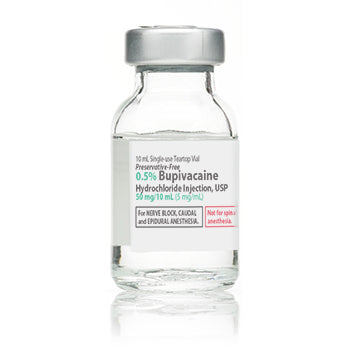
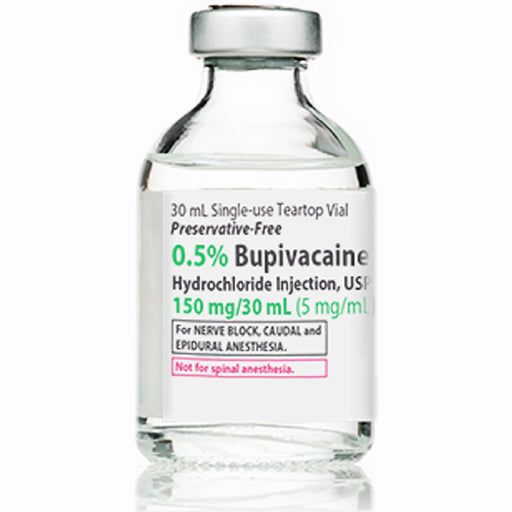
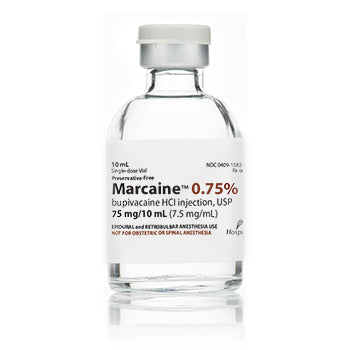
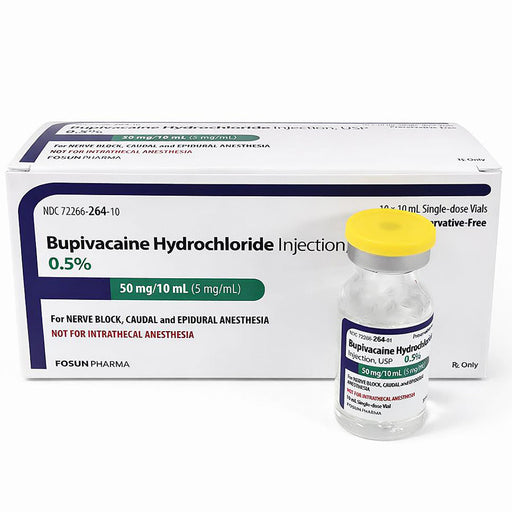
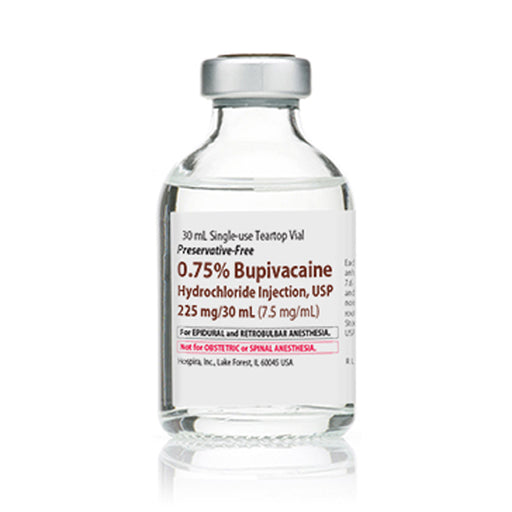
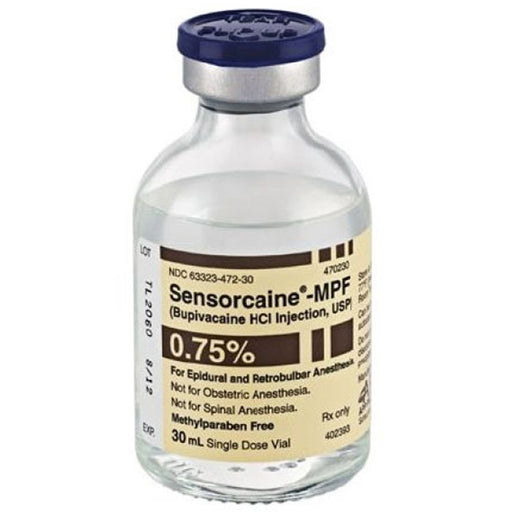
Bupivacaine 0.25% Injection (30 mL Single-Dose, Preservative-Free)
Bupivacaine injection is a local anesthetic (numbing medication) used to prevent or relieve pain during medical procedures. It belongs to the amide class of local anesthetics (chemically related to lidocaine and mepivacaine) and was first discovered in 1957. Bupivacaine works by blocking nerve signals in the area where it’s injected, so that pain impulses are not transmitted to the brain. Unlike general anesthesia, it causes loss of sensation in a targeted region without making the patient unconscious.
Bupivacaine Injection Uses
Bupivacaine is a long-acting local anesthetic used to produce numbness (anesthesia or analgesia) in a specific area of the body for various medical purposes. Doctors commonly use bupivacaine 0.25% in the following ways:
-
Infiltration anesthesia: Injecting the solution directly into tissues to numb a small area. For example, a surgeon might infiltrate bupivacaine around a wound or surgical incision site to provide pain relief during and after a procedure. Dental procedures or stitching of lacerations may use bupivacaine to keep the area painless for a prolonged period.
-
Peripheral nerve blocks: Injecting near a specific nerve or bundle of nerves to block sensation from a larger region (such as an entire arm, leg, or the nerves of the chest/abdomen). Bupivacaine’s long duration makes it ideal for nerve blocks in orthopedic surgery or for post-operative pain control; a single injection near the nerve can keep an area numb for several hours.
-
Epidural anesthesia/analgesia: Injecting into the epidural space (around the spinal cord in the lower back) to numb the lower half of the body, often used for childbirth (labor pain relief) or surgeries of the lower abdomen, pelvis, or legs. In obstetrics, dilute bupivacaine (for example 0.25% or even lower) is frequently used in epidurals to relieve pain while minimizing muscle blockade, allowing the mother to participate in delivery. Bupivacaine is also used in epidurals for major surgeries or post-surgical pain management, delivered either as single injections or continuous infusions via an epidural catheter.
-
Spinal anesthesia: In certain cases, a form of bupivacaine can be injected into the cerebrospinal fluid (a “spinal block”) for surgeries requiring a dense block of sensation (e.g., cesarean sections or lower limb surgeries). Typically a specialized preservative-free formulation (often hyperbaric bupivacaine with dextrose) is used for spinal anesthesia. (The 0.25% solution in 30 mL vials is more often used for epidural or nerve block techniques; many spinal anesthetics use 0.75% heavy bupivacaine in small ampules.)
In all these uses, bupivacaine causes a reversible loss of sensation. The drug’s effect generally begins within 5–15 minutes after injection (depending on the dose and proximity to the nerves) and can last much longer than shorter-acting agents – often providing numbness for 2 to 6 hours or more (with higher concentrations and certain block techniques, pain relief can extend up to 8-12 hours). This prolonged action is why bupivacaine is favored for procedures where extended pain control is desired. Sometimes epinephrine (adrenaline) is added (in separate formulations of bupivacaine) to constrict blood vessels and further prolong the anesthesia duration and reduce bleeding, but the preservative-free 0.25% vials usually do not contain epinephrine (they are plain bupivacaine solution).
Bupivacaine 0.25% injection (30 mL preservative-free single-dose vial) is a long-acting local anesthetic used by healthcare professionals to numb specific areas for surgery, childbirth, dental work, and other procedures. It blocks nerve conduction to prevent pain, with effects that can last for several hours. This formulation’s lack of preservatives makes it safe for sensitive uses like epidural anesthesia. While highly effective for pain control, it must be administered with caution – inadvertent injection into the bloodstream or use of excessive doses can lead to serious central nervous system and cardiovascular toxicity, so careful monitoring is required. When used properly, bupivacaine enables medical procedures to be performed pain-free and provides prolonged pain relief in the post-operative or labor setting, significantly improving patient comfort.
Bupivacaine Injection Administration
Bupivacaine 0.25% injection must be administered by a trained healthcare professional, such as an anesthesiologist, physician, or nurse anesthetist. The medication is given by injection using various techniques appropriate for the type of block:
- For local infiltration, a needle is used to infiltrate the area around a wound or surgical site with bupivacaine solution.
- For a peripheral nerve block, the clinician inserts a needle near the target nerve (often using ultrasound or nerve stimulator guidance) and injects the solution around that nerve to bathe it in anesthetic.
- For an epidural, a special needle (Tuohy needle) is used to access the epidural space in the spine, and bupivacaine can be injected through the needle or via a catheter left in place for continuous infusion. Because preservative-free solution is used, it’s safe for injection in this potential space near the spinal cord.
During administration, care is taken to avoid intravascular injection (injecting into a blood vessel). The provider will typically aspirate (pull back on the syringe) before injecting to ensure blood doesn’t enter the syringe, which helps confirm the needle isn’t in a vessel. This is critical because accidental injection of bupivacaine directly into the bloodstream can lead to rapid systemic toxicity. The dose of bupivacaine given depends on the type of block, the size of the patient, and the area to be numbed – there are established maximum dose guidelines to reduce the risk of overdose. For example, a typical upper limit might be around 2 mg per kg of body weight for a single injection (without epinephrine), though exact dosing is carefully calculated by the clinician based on context. The 30 mL vial provides a relatively large volume, which is useful for techniques like epidural anesthesia (where 10-20 mL might be needed per dose) or for numbing larger areas; however, often only a portion of the vial is used per patient, and the rest is discarded.
Bupivacaine Injection Side Effects & Precautions
When used correctly, bupivacaine provides targeted numbness and pain relief, but it must be used with caution because of potential serious side effects if it enters the circulation in significant amounts. Systemic toxicity from local anesthetics is a primary concern. Early signs of bupivacaine toxicity might include ringing in the ears (tinnitus), a metallic taste in the mouth, dizziness, or numbness around the mouth, followed by more severe symptoms like seizures (due to effects on the central nervous system). If high levels of bupivacaine reach the heart and circulation, it can cause dangerous heart rhythm disturbances, very low blood pressure, or cardiac arrest (heart stoppage). In fact, strong concentrations of bupivacaine (like 0.75%) were historically linked to cardiac arrest in obstetric epidural anesthesia, leading to the recommendation that 0.75% not be used for epidurals in labor. All practitioners administering bupivacaine are trained to recognize and manage these symptoms immediately. Treatment of severe local anesthetic toxicity may include stopping the injection, supporting breathing and circulation, and administering an intravenous lipid emulsion (“fat therapy”) which can bind the anesthetic – a specific rescue therapy for bupivacaine toxicity.
Because of these risks, bupivacaine injections are always done in settings with appropriate monitoring and resuscitation equipment on hand. The patient’s blood pressure, heart rate, breathing, and level of awareness are closely watched during and after the injection. If an epidural or major nerve block is in place (for example, during labor or post-surgery), medical staff will regularly check that the block is working properly and that there are no signs of adverse effects.
Aside from systemic toxicity, bupivacaine’s anesthetic action causes expected effects like numbness and muscle weakness in the affected area while the drug is working. For example, a person with a bupivacaine nerve block in the leg may be unable to move that leg until the anesthetic wears off. An epidural block can cause the lower body to feel heavy or unable to move temporarily, and it often leads to a drop in blood pressure (because it relaxes blood vessels; IV fluids or medications may be used to counter this). These effects are generally monitored and managed as needed. Once the anesthetic wears off, sensation and motor function return to normal.
Allergic reactions to amide local anesthetics like bupivacaine are extremely rare, but if a patient experiences symptoms such as hives, itching, swelling, or difficulty breathing after an injection, that could indicate an allergic reaction requiring immediate medical attention. The “preservative-free” formulation helps reduce the risk of allergic reactions or irritation that might be caused by additives like parabens in multi-dose vials. Patients with certain medical conditions (for example, heart rhythm disorders, liver disease, or neurological conditions) or those taking particular medications might need extra caution or dose adjustments when using bupivacaine.
There are a few specific contraindications to be aware of: Bupivacaine must not be used for intravenous (IV) regional anesthesia (also known as a Bier block, where a tourniquet is used on a limb and anesthetic is injected into a vein) because this technique has led to cardiac arrest and death in some cases.. It’s also contraindicated to inject bupivacaine into the cervix (paracervical block) during obstetrics, due to risk of fetal harm. And of course, anyone with a known hypersensitivity to bupivacaine or other amide anesthetics should not receive it (
 Skip to content