Ciclopirox Cream 0.77% – Topical Antifungal (Skin)
Ciclopirox is an antifungal medication often formulated as a cream (also as gel, lotion, shampoo, or nail lacquer) for skin infections. In cream form it is mainly used to treat superficial fungal infections of the skin. Typical uses include athlete’s foot (tinea pedis), jock itch (tinea cruris), and ringworm (tinea corporis) – all caused by dermatophyte fungi. It’s also used for skin yeast infections (cutaneous candidiasis) and for tinea versicolor (a yeast-related rash). In addition, ciclopirox cream (and related formulations) may be used for seborrheic dermatitis (dandruff-like rash on scalp or skin). (Severe nail fungus is treated with ciclopirox nail lacquer or solution, not the skin cream, but ciclopirox’s ability to penetrate nail is why it has a nail formulation
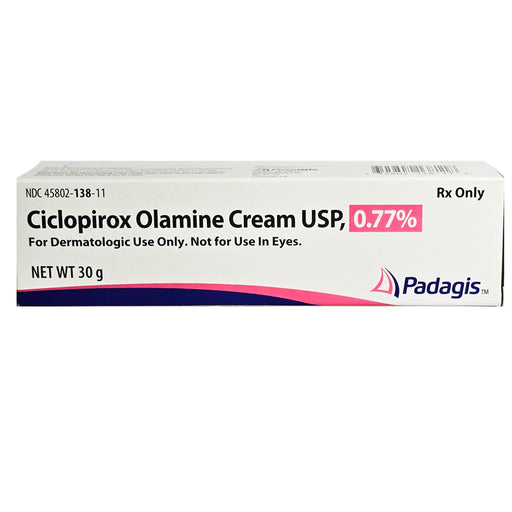
Ciclopirox 0.77% cream is a prescription antifungal for skin infections. It treats superficial fungal infections (such as athlete’s foot, jock itch, body ringworm, pityriasis (tinea) versicolor, and Candida skin infections) by stopping fungal growth. It comes as a cream to apply only on the skin (not eyes or mucous membranes).
Uses: Ciclopirox cream 0.77% is indicated for treating various fungal skin infections. Specifically, it is used topically for:
-
Tinea pedis (athlete’s foot) – fungal infection of the feet
-
Tinea cruris (jock itch) – fungal infection of the groin area
-
Tinea corporis (ringworm) – fungal infection of the body/skin
-
Candidiasis (moniliasis) of the skin – yeast (Candida) infection of skin folds
-
Tinea (pityriasis) versicolor – a yeast-associated rash on the trunk caused by Malassezia
These are exactly the dermal infections listed in its FDA-approved indications. Ciclopirox cream works by stopping fungal growth and is applied (usually twice daily) to the affected areas as directed by a healthcare provider
-
How to apply: Apply a thin film of the 0.77% cream to the affected area and a small margin of surrounding normal skin. Gently rub it in until absorbed.
-
Frequency: Use twice daily – once in the morning and once in the evening. (This applies to adults and children 10 years and older. For younger children, follow a doctor’s advice.)
-
Duration: Continue treatment daily for the full prescribed course. For example, pityriasis versicolor often clears in about 2 weeks of therapy. Most other skin fungal infections (athlete’s foot, jock itch, ringworm, candidiasis) typically require on the order of 2–4 weeks of treatment. Do not stop early even if symptoms improve; fungus can be slow to clear. (If there’s no noticeable improvement after ~4 weeks, re-evaluate the diagnosis with your doctor.
-
Special points: Keep the treated area clean and dry before application. Do not cover the area with bandages or airtight dressings unless your doctor says to do so (occlusive coverings can irritate the skin). Avoid contact of the cream with eyes or mouth.
Ciclopirox cream is prescribed for fungal skin conditions. It will not help bacterial or viral infections. When applied as directed, it stops the growth of the fungi causing these infections and helps clear the skin changes (redness, scaling, itching) typically associated with ringworm, athlete’s foot, jock itch.
Ciclopirox Cream Uses
Ciclopirox 0.77% cream is a prescription topical antifungal used to treat superficial fungal skin infections. It works by killing or inhibiting fungus growth. The cream is applied to affected skin areas (usually twice daily) as directed by a doctor. Ciclopirox cream’s main approved uses include:
- Dermatophyte (tinea) infections: Tinea corporis (ringworm of the body), tinea pedis (athlete’s foot), and tinea cruris (jock itch).
- Pityriasis (tinea) versicolor: a common “sun fungus” rash (Malassezia) that causes discolored patches on the trunk.
- Cutaneous candidiasis: certain yeast (Candida) skin infections, such as diaper rash or candida intertrigo.
(Note: Ciclopirox cream is not used for nail fungus or deep skin infections. Nail fungus requires a special ciclopirox nail lacquer, and invasive infections need oral therapy.).
Ciclopirox Side Effects
Side Effects: Ciclopirox 0.77% cream is generally well tolerated, but causes local skin reactions at the application site. The most common side effects are skin irritation where the drug is applied – people often report itching, burning or stinging sensations, mild pain and redness (erythema) of the skin. The treated skin may also become dry or flaky. If used on the scalp, users can experience dandruff-like flaking or oily scalp.. Some people get a light rash or eczema at the site. These effects are usually mild and go away when treatment is finished.
Others: Occasionally, uncommon side effects have been noted. For example, Mayo Clinic mentions that headache or oily skin might occur in some patients. Because ciclopirox is applied topically, systemic effects are rare.
Serious (rare): Although uncommon, ciclopirox can cause severe allergic skin reactions. Signs include intense rash, swelling, blistering or weeping of the skin at the application site. Patients should stop use and call a doctor if they develop hives, severe redness, swelling of the face or lips, or difficulty breathing. In summary, most side effects of ciclopirox cream are localized and mild (itching, burning, redness). If any severe irritation or allergy occurs, treatment should be discontinued and medical advice sought.
 Skip to content