Skip to content

Added to your cart:

Cart subtotal

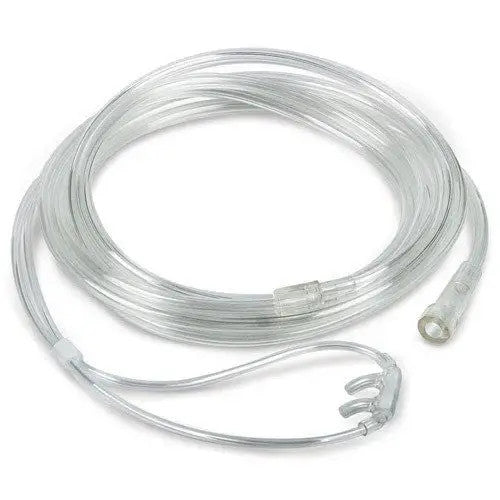
ETCO2 Nasal Cannula, ETCO2 Nasal Cannula Size with Curved Prongs & 7 Foot Tubing

SKU 16-0503
Sale 35%
Original price $ 5.95
Current price $ 3.85
In stock
Fast Delivery
Fast Delivery
24/7 Support
24/7 Support
Easy Returns
Easy Returns
Hospital Grade
Hospital Grade
Free Shipping on orders above $100
Returns 30-day return / replacement
Payment Secure transaction
Packaging Ships in product packaging
Service-Disabled Veteran-Owned Small Business
Located in Adirondack Mountains in NY
Family Owned Business 2002
Sale 35%
Original price $ 5.95
Current price $ 3.85
Free Shipping on orders above $100
Returns 30-day return / replacement
Payment Secure transaction
Packaging Ships in product packaging
ETCO2 Nasal Cannula, ETCO2 Nasal Cannula  Size with Curved Prongs & 7 Foot Tubing
ETCO2 Nasal Cannula, ETCO2 Nasal Cannula Size with Curved Prongs & 7 Foot Tubing
$ 5.95 $ 3.85
Description

ETCO2 Nasal Cannula (Curved Prongs, 7-Foot Tubing)

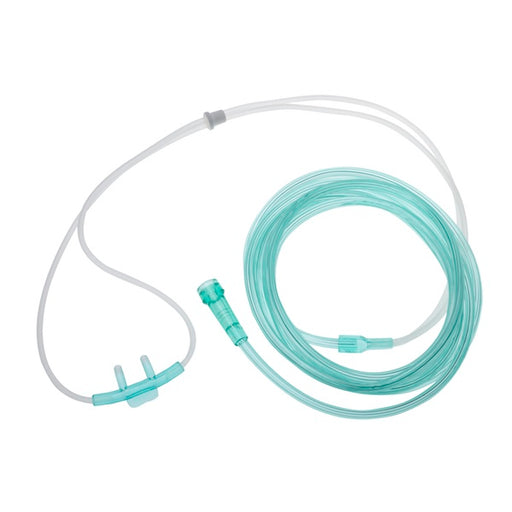
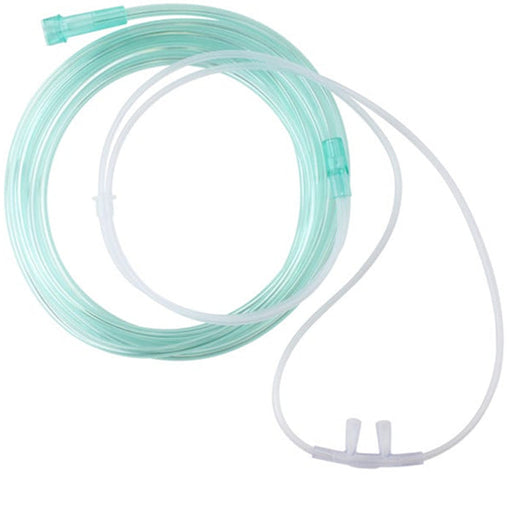
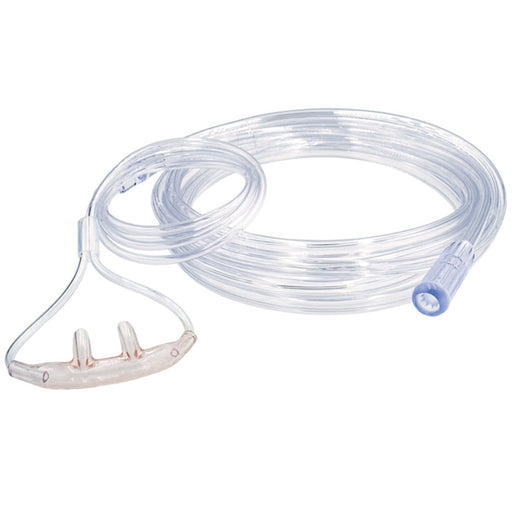
This disposable ETCO nasal cannula is engineered for continuous capnography monitoring in adults. It features soft curved nasal prongs that fit comfortably in the nostrils, plus dual 7-foot tubing channels – one delivers supplemental oxygen and the other samples exhaled breath. By splitting oxygen flow from the CO sampling flow, the cannula delivers oxygen to both nostrils while capturing an undiluted end-tidal CO sample. This design prevents fresh oxygen from diluting the CO reading, so the capnograph can accurately display the patient’s ETCO value and waveform in real time. The cannula’s 3-channel kink-resistant tubing further ensures free patient movement and stable gas sampling. A standard luer-lock connector (male/female adapter included) makes it easy to attach to most sidestream capnography monitors, and “Fits-All” oxygen connectors are available for flexibility. The entire assembly is 100% latex-free and single-patient use, meeting infection-control standards.

  • Simultaneous O2 Delivery & CO Sampling: The dual-lumen design provides oxygen to both nostrils while continuously sampling exhaled gas. This yields a clear capnogram (CO waveform) without dilution by the oxygen flow.
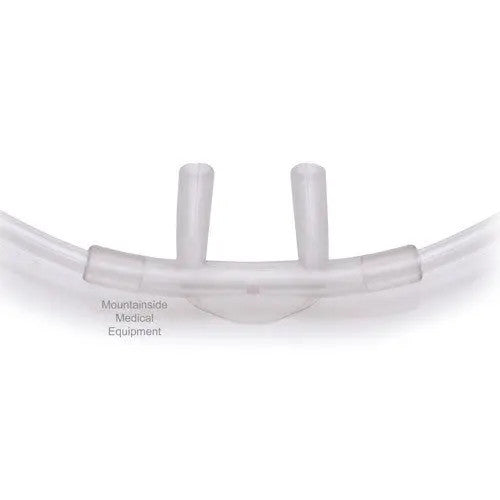
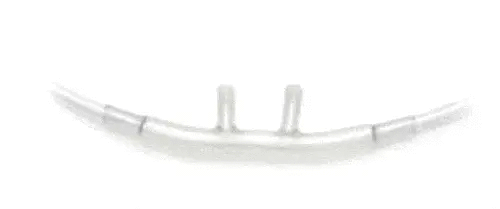
  • Curved Prong Fit (Adult Size): Ergonomic curved nasal prongs ensure a secure, comfortable fit in adult patients. The non-flared tips minimize nasal irritation and hold position even if the patient moves or speaks.
  • 7-Foot Kink-Resistant Tubing: Lengthy, 3-channel tubing supports patient mobility (ideal for ICU beds or transport stretchers) and resists occlusions. The special tubing design prevents kinking or accidental disconnection.
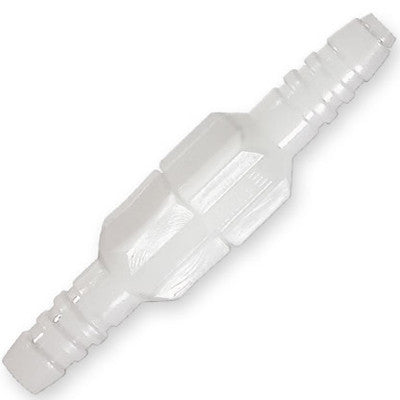
  • Standard Connectors: Includes a luer-lock adapter (male/female) for most CO modules. An optional “Fits-All” connector adapts to O wall outlets or flowmeters.
  • Latex-Free & Disposable: Made from soft medical-grade plastic (not natural rubber), this cannula is 100% latex-free. It’s labeled single-use to prevent cross-contamination and complies with patient safety regulations.

Clinical Applications & Health Benefits

This ETCO cannula serves as a non-invasive ventilation monitor that enhances patient safety across many healthcare settings. End-tidal CO monitoring provides vital information about a patient’s respiratory and circulatory status. NurseKey explains that measuring CO in exhaled breath “provides information about a patient’s pulmonary, cardiac, and metabolic status”, helping clinicians catch problems early. In practical terms, a continuous capnogram can reveal hypoventilation, apnea, or bronchospasm almost immediately. A rising ETCO can signal hypoventilation or impaired pulmonary gas exchange, while a sudden drop to zero indicates apnea or disconnection.

  • Enhanced Sedation Safety: Modern anesthesia and sedation protocols demand CO monitoring to guard against respiratory depression. For example, anesthesia guidelines require that any moderate or deep sedation be accompanied by continuous exhaled CO monitoring. In routine practice, websites like NurseKey note that ETCO monitoring “has become standard during anesthesia administration” and is used in moderate sedation or analgesia (e.g. epidurals, PCA pumps). The cannula’s real-time output “can alert the nurse to hypoventilation from oversedation”, often sooner than a drop in SpO would. This provides early warning of opioid-induced respiratory depression or sedation-related apnea, allowing prompt intervention before hypoxia develops.
  • Pulmonary & Critical Care: In intensive care units and emergency departments, ETCO monitoring is invaluable for ventilatory assessment. It complements pulse oximetry by directly reflecting ventilation quality. For example, in shock or cardiac arrest situations, capnography helps infer cardiac output and ventilation-perfusion status. International standards reinforce its importance: WHO guidelines list capnography as a mandatory monitoring parameter in anesthesia because it “is considered particularly important” for patient safety. This cannula enables compliance with these standards during any procedure or transport.
  • Versatile Use Cases: The cannula is widely used whenever spontaneous-breathing patients require respiratory monitoring. Applications include operating rooms (anesthesia and post-anesthesia care), procedural sedation (endoscopy, dental surgery, pain management), interventional radiology, ICU (weaning trials), and even monitored transport/ambulance scenarios. It can safely be used on adult patients (including the elderly) and larger pediatric patients, as already sized. Clinicians find it especially useful in conscious sedation – for example, in sedation dentistry or GI endoscopy – as it provides a continuous capnogram without hindering oxygen therapy.
  • Continuous Respiratory Tracking: By sending a steady stream of sampled gas to the CO<sub>2</sub> analyzer, the cannula helps measure respiratory rate and tidal ventilation. Capnography thus acts as a fifth vital sign. It ensures that each patient’s breathing is being tracked even when they cannot report symptoms. In essence, caregivers gain a “ventilation alarm” that can prevent clinical compromise.

In summary, this ETCO nasal cannula is a high-quality respiratory monitoring device that meets top safety and comfort standards. Featuring ergonomic curved prongs and long kink-resistant tubing, it integrates seamlessly with standard capnography systems to meet guideline-driven monitoring practices. The cannula’s ability to deliver oxygen and sample CO simultaneously enhances patient oxygenation while giving clinicians crucial real-time data on ventilation. By using this cannula in your practice, you ensure your patients receive state-of-the-art respiratory care – protecting their breathing, heart, and overall metabolic function with continuous CO monitoring.

Description

ETCO2 Nasal Cannula (Curved Prongs, 7-Foot Tubing)

This disposable ETCO nasal cannula is engineered for continuous capnography monitoring in adults. It features soft curved nasal prongs that fit comfortably in the nostrils, plus dual 7-foot tubing channels – one delivers supplemental oxygen and the other samples exhaled breath. By splitting oxygen flow from the CO sampling flow, the cannula delivers oxygen to both nostrils while capturing an undiluted end-tidal CO sample. This design prevents fresh oxygen from diluting the CO reading, so the capnograph can accurately display the patient’s ETCO value and waveform in real time. The cannula’s 3-channel kink-resistant tubing further ensures free patient movement and stable gas sampling. A standard luer-lock connector (male/female adapter included) makes it easy to attach to most sidestream capnography monitors, and “Fits-All” oxygen connectors are available for flexibility. The entire assembly is 100% latex-free and single-patient use, meeting infection-control standards.
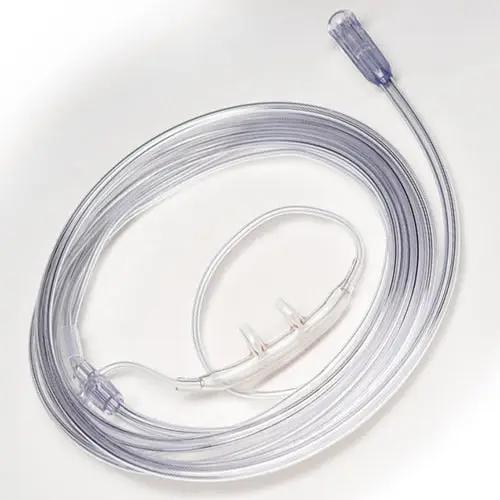
  • Simultaneous O2 Delivery & CO Sampling: The dual-lumen design provides oxygen to both nostrils while continuously sampling exhaled gas. This yields a clear capnogram (CO waveform) without dilution by the oxygen flow.
  • Curved Prong Fit (Adult Size): Ergonomic curved nasal prongs ensure a secure, comfortable fit in adult patients. The non-flared tips minimize nasal irritation and hold position even if the patient moves or speaks.
  • 7-Foot Kink-Resistant Tubing: Lengthy, 3-channel tubing supports patient mobility (ideal for ICU beds or transport stretchers) and resists occlusions. The special tubing design prevents kinking or accidental disconnection.
  • Standard Connectors: Includes a luer-lock adapter (male/female) for most CO modules. An optional “Fits-All” connector adapts to O wall outlets or flowmeters.
  • Latex-Free & Disposable: Made from soft medical-grade plastic (not natural rubber), this cannula is 100% latex-free. It’s labeled single-use to prevent cross-contamination and complies with patient safety regulations.

Clinical Applications & Health Benefits

This ETCO cannula serves as a non-invasive ventilation monitor that enhances patient safety across many healthcare settings. End-tidal CO monitoring provides vital information about a patient’s respiratory and circulatory status. NurseKey explains that measuring CO in exhaled breath “provides information about a patient’s pulmonary, cardiac, and metabolic status”, helping clinicians catch problems early. In practical terms, a continuous capnogram can reveal hypoventilation, apnea, or bronchospasm almost immediately. A rising ETCO can signal hypoventilation or impaired pulmonary gas exchange, while a sudden drop to zero indicates apnea or disconnection.

  • Enhanced Sedation Safety: Modern anesthesia and sedation protocols demand CO monitoring to guard against respiratory depression. For example, anesthesia guidelines require that any moderate or deep sedation be accompanied by continuous exhaled CO monitoring. In routine practice, websites like NurseKey note that ETCO monitoring “has become standard during anesthesia administration” and is used in moderate sedation or analgesia (e.g. epidurals, PCA pumps). The cannula’s real-time output “can alert the nurse to hypoventilation from oversedation”, often sooner than a drop in SpO would. This provides early warning of opioid-induced respiratory depression or sedation-related apnea, allowing prompt intervention before hypoxia develops.
  • Pulmonary & Critical Care: In intensive care units and emergency departments, ETCO monitoring is invaluable for ventilatory assessment. It complements pulse oximetry by directly reflecting ventilation quality. For example, in shock or cardiac arrest situations, capnography helps infer cardiac output and ventilation-perfusion status. International standards reinforce its importance: WHO guidelines list capnography as a mandatory monitoring parameter in anesthesia because it “is considered particularly important” for patient safety. This cannula enables compliance with these standards during any procedure or transport.
  • Versatile Use Cases: The cannula is widely used whenever spontaneous-breathing patients require respiratory monitoring. Applications include operating rooms (anesthesia and post-anesthesia care), procedural sedation (endoscopy, dental surgery, pain management), interventional radiology, ICU (weaning trials), and even monitored transport/ambulance scenarios. It can safely be used on adult patients (including the elderly) and larger pediatric patients, as already sized. Clinicians find it especially useful in conscious sedation – for example, in sedation dentistry or GI endoscopy – as it provides a continuous capnogram without hindering oxygen therapy.
  • Continuous Respiratory Tracking: By sending a steady stream of sampled gas to the CO<sub>2</sub> analyzer, the cannula helps measure respiratory rate and tidal ventilation. Capnography thus acts as a fifth vital sign. It ensures that each patient’s breathing is being tracked even when they cannot report symptoms. In essence, caregivers gain a “ventilation alarm” that can prevent clinical compromise.

In summary, this ETCO nasal cannula is a high-quality respiratory monitoring device that meets top safety and comfort standards. Featuring ergonomic curved prongs and long kink-resistant tubing, it integrates seamlessly with standard capnography systems to meet guideline-driven monitoring practices. The cannula’s ability to deliver oxygen and sample CO simultaneously enhances patient oxygenation while giving clinicians crucial real-time data on ventilation. By using this cannula in your practice, you ensure your patients receive state-of-the-art respiratory care – protecting their breathing, heart, and overall metabolic function with continuous CO monitoring.

Get Notified When Back in Stock