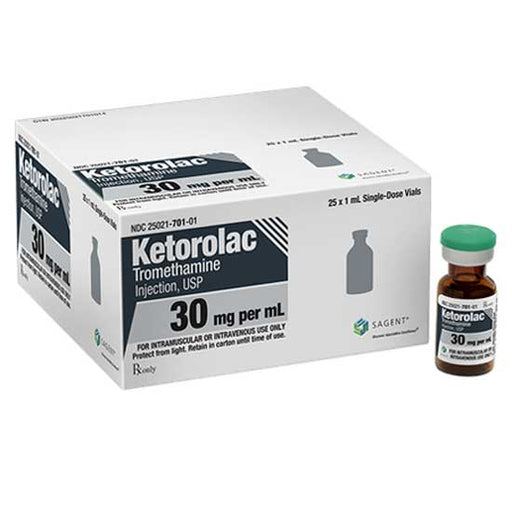
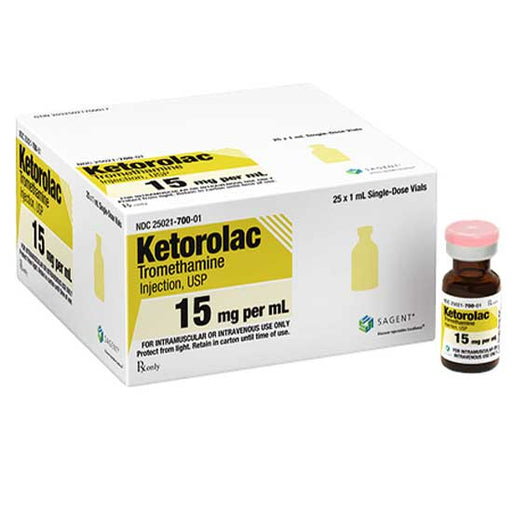
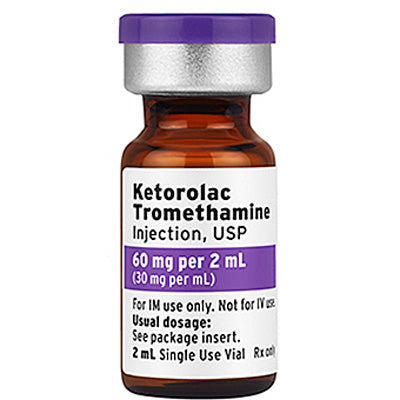
Ketorolac Tromethamine Injection (60 mg/2 mL vial)
Ketorolac injection (e.g. Toradol) is a potent NSAID (nonsteroidal anti-inflammatory drug) given by intravenous (IV) or intramuscular (IM) injection for short-term pain relief. It contains 30 mg ketorolac tromethamine in a 2 mL sterile solution (15 mg/mL). Ketorolac works by blocking prostaglandin synthesis, reducing inflammation and pain. The drug is indicated only for short-term (≤5 days) management of moderately severe acute pain that typically requires opioid-level analgesia. It is not intended for mild pain, chronic pain, or pediatric use. For example, MedlinePlus notes ketorolac injection is used in patients ≥17 years old for severe pain (often post-surgical) and should never be used longer than five days.
Uses (Indications)
Ketorolac injection is prescribed for acute pain relief in hospitalized or postoperative patients. Typical uses include postoperative pain after surgery, kidney stone pain, fractures, or other severe pain when short-term relief is needed. The FDA-approved labeling states it is indicated for “moderately severe acute pain that requires analgesia at the opioid level,” usually post-operatively. Importantly, ketorolac injection must be used at the lowest effective dose for the shortest duration. The total combined duration of IV/IM plus any follow-up oral ketorolac should not exceed 5 days due to increased risk of serious adverse events. It is explicitly contraindicated for pediatric patients and for minor or chronic pain conditions.
Dosage and Administration
Ketorolac injection is given under medical supervision. Adult dosing (under 65 years): The usual single dose is 30 mg IV (slow push) or 60 mg IM (deep into muscle). For ongoing pain, this may be repeated every 6 hours up to a maximum of 120 mg per 24 hours. For example:
-
Initial single-dose: 30 mg IV or 60 mg IM (for patients <65).
-
Repeat dosing: 30 mg IV/IM every 6 hours as needed (max 120 mg/day).
Elderly or high-risk patients: For patients aged ≥65, those weighing <50 kg, or with mild-to-moderate renal impairment, the dose is halved: 15 mg IV or 30 mg IM per dose. This can be repeated every 6 hours to a maximum of 60 mg per day. Never exceed these limits in high-risk patients.
Administration tips: IV boluses should be given slowly (over ≥15 seconds) to reduce side effects. IM injections are administered deep into a large muscle. Analgesia begins in about 30 minutes and peaks at 1–2 hours after dose; relief typically lasts 4–6 hours. If pain persists or breaks through dosing limits, patients should be switched to an alternative analgesic – do not increase ketorolac dose or duration.
Side Effects (Adverse Reactions)
Adverse effects of ketorolac are mostly related to its NSAID action. Common side effects (occurring in at least 1–10% of patients) include: gastrointestinal discomfort (such as abdominal pain, indigestion, heartburn, nausea) and elements of gastrointestinal bleeding or ulceration, as well as headache, dizziness, drowsiness, fluid retention (edema), hypertension, elevated liver enzymes, injection-site pain/swelling, rash or itching, and tinnitus (ringing in the ears).
Rare but serious reactions (0.1–1% or less): These may include life-threatening events such as gastrointestinal ulcers/bleeding, perforation, acute kidney injury (which can lead to renal failure) and/or liver failure. Ketorolac also impairs platelet aggregation (increasing bleeding time); severe bleeding (e.g. GI bleeding or hemorrhagic stroke) can occur, especially in patients on anticoagulants or with bleeding disorders. Allergic reactions (from hives and bronchospasm to anaphylaxis) have been reported in patients with NSAID sensitivity. If symptoms like chest pain, weakness on one side, black tarry stools, blood in urine/stool, difficulty breathing, or rash/hives occur, ketorolac should be stopped immediately and medical help sought.
In summary, side effects range from mild GI upset and headache to rare severe GI, renal, or cardiovascular events. The official label warns that serious GI bleeding and ulceration can be fatal and that higher doses/longer use increase risk. These dangers are why ketorolac is limited to very short courses and low doses.
Warnings and Precautions
Ketorolac injection carries several boxed warnings and contraindications due to its potent NSAID effects:
-
Gastrointestinal (GI): Contraindicated in active GI bleeding or ulcer disease, recent GI bleeding/perforation, or history of peptic ulcer/bleeding. Even without warning signs, ketorolac can cause fatal GI bleeding or perforation. Patients (especially elderly) must be monitored for abdominal pain or GI bleeding.
-
Cardiovascular (CV): NSAIDs increase risk of serious CV thrombotic events (heart attack, stroke), which may be fatal. This risk grows with duration of use. Ketorolac is contraindicated before or after coronary artery bypass graft (CABG) surgery and should be used with extreme caution in patients with CV disease.
-
Bleeding: Ketorolac inhibits platelet function. It is contraindicated in patients with bleeding diathesis, in those at high risk of bleeding, or undergoing surgery/delivery. Concomitant use with other NSAIDs or aspirin is contraindicated due to additive bleeding risk.
-
Renal: Ketorolac can cause acute kidney injury and renal failure, especially in dehydrated patients or those with pre-existing renal impairment. It is contraindicated in advanced renal disease. Do not administer if volume depleted – correct hydration first. Monitor renal function in all patients receiving ketorolac.
-
Hypersensitivity: Contraindicated in patients with known ketorolac allergy or with aspirin/NSAID-allergy (e.g., asthma, urticaria triggered by NSAIDs). Severe anaphylactic reactions have occurred. Have emergency equipment ready when giving the first dose.
-
Pregnancy/Labor: Ketorolac is contraindicated in labor and delivery because it can harm the fetus (via ductus arteriosus closure) and inhibit uterine contractions. Non-selective NSAIDs are also generally avoided in late pregnancy. Ketorolac is excreted in breast milk; nursing mothers should not breastfeed while using it.
-
Age: Not for children under 17. In elderly patients (≥65), use the lowest dose as they are more susceptible to GI and renal effects. Dosing reduction is specified above for elderly and low-weight patients.
-
Drug Interactions: Avoid ketorolac with other NSAIDs or anticoagulants (e.g. warfarin) to prevent excess bleeding. Caution if on ACE inhibitors, diuretics or have cardiovascular risk factors.
In summary, ketorolac injection is strictly for short-term acute pain under close supervision. It should never be used to relieve mild pain, chronic pain, or for longer than recommended. Proper patient selection and monitoring (for GI bleed, kidney function, blood pressure, etc.) are essential.
Summary
Ketorolac tromethamine injection (30 mg/2 mL) is a prescription NSAID analgesic for short-term use in severe acute pain. It provides strong pain relief similar to opioids, but with no opioid side effects. Standard dosing is 30 mg IV or 60 mg IM every 6 hours (lowered to 15 mg IV/30 mg IM in the elderly or renally impaired). Total use (injection and any follow-on oral ketorolac) must not exceed 5 days. Common side effects include gastrointestinal upset, headache, and local injection pain. The major concerns are serious GI bleeding/ulcer and impaired kidney function – these risks (also bleeding and cardiovascular events) limit its use and require monitoring. Ketorolac should be avoided in patients with active ulcers, bleeding disorders, severe renal impairment, or NSAID/aspirin allergy. In practice, ketorolac injection is given only by healthcare providers in hospital or clinic settings, following strict guidelines. Patients must be informed of the risks and instructed to report any signs of abdominal pain, unusual bleeding, or allergic reaction immediately.