Skip to content
New users? Get 5% off on your first purchase.
Free US shipping over $100
New users? Get 5% off on your first purchase.
Free US shipping over $100

Added to your cart:

Cart subtotal

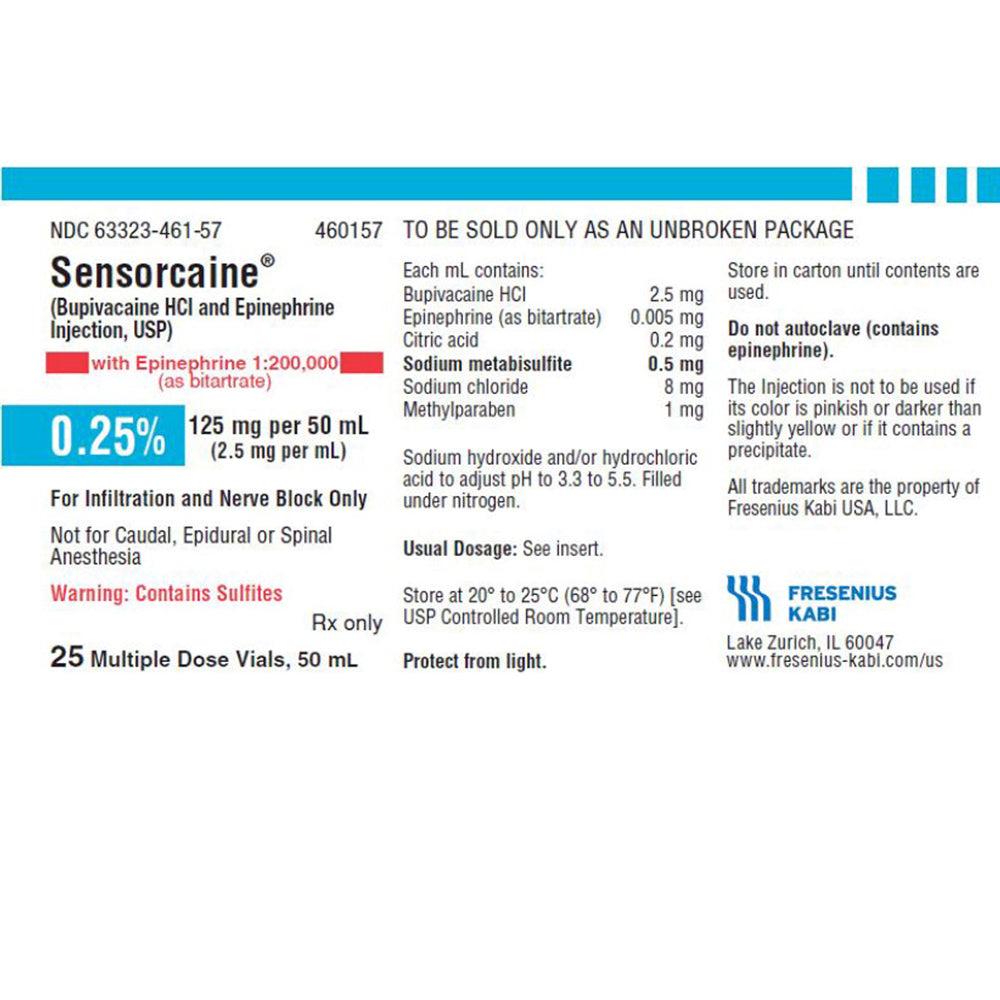
Sensorcaine (Bupivacaine HCL) 0.25% with Epinephrine 1:200,000 (as bitartrate) Multi-Dose 50 mL Vials x 25/Tray

SKU 63323-0461-57
Sale 16%
Original price $ 999.95
Current price $ 839.00
*Mountainside Medical does not fill personal prescriptions Medical Professional License Required to Unlock Account

How to Order:

Send an email request to: sales@mountainside-medical.com

You will receive instructions on how to create an account along with Rx Ordering Details.

(Note: Acceptable licenses must have Prescriptive Authority in the license issuing state.)
Fast Delivery
Fast Delivery
24/7 Support
24/7 Support
Easy Returns
Easy Returns
Hospital Grade
Hospital Grade
Save 16% ($ 160.95)
Free Shipping on orders $100
Returns 30-day return / replacement
Payment Secure transaction
Packaging Ships in product packaging

Service-Disabled Veteran-Owned Small Business
Located in Adirondack Mountains in NY
Family Owned Business 2002
Sale 16%
Original price $ 999.95
Current price $ 839.00
Free Shipping on orders $100
Returns 30-day return / replacement
Payment Secure transaction
Packaging Ships in product packaging
Sensorcaine (Bupivacaine HCL) 0.25% with Epinephrine 1:200,000 (as bitartrate) Multi-Dose 50 mL Vials x 25/Tray
$ 999.95 $ 839.00
🔒 Medical License Required
Description

Sensorcaine® (bupivacaine HCl) injections are sterile isotonic solutions that contain a local anesthetic agent with and without epinephrine (as bitartrate) 1:200,000 and are administered parenterally by injection.

Local anesthetics block the generation and the conduction of nerve impulses, presumably by increasing the threshold for electrical excitation in the nerve, by slowing the propagation of the nerve impulse, and by reducing the rate of rise of the action potential. In general, the progression of anesthesia is related to the diameter, myelination, and conduction velocity of affected nerve fibers. Clinically, the order of loss of nerve function is as follows: (1) pain, (2) temperature, (3) touch, (4) proprioception, and (5) skeletal muscle tone.

Systemic absorption of local anesthetics produces effects on the cardiovascular and central nervous systems (CNS). At blood concentrations achieved with normal therapeutic doses, changes in cardiac conduction, excitability, refractoriness, contractility, and peripheral vascular resistance are minimal. However, toxic blood concentrations depress cardiac conduction and excitability, which may lead to atrioventricular block, ventricular arrhythmias and cardiac arrest, sometimes resulting in fatalities. In addition, myocardial contractility is depressed and peripheral vasodilation occurs, leading to decreased cardiac output and arterial blood pressure. Recent clinical reports and animal research suggest that these cardiovascular changes are more likely to occur after unintended intravascular injection of bupivacaine. Therefore, incremental dosing is necessary.

Get Notified When Back in Stock