
Filters
Availability
Price
$
-
$
$0
$2595
Vendor
Collection
Tags
- Allergic (5)
- Allergy (4)
- Auto (4)
- Auto-Injectior (1)
- Auto-Injector (4)
- Autoinjector (6)
- Bee Sting (2)
- Buy Epinephrine (9)
- Buy Epipen (1)
- doctor-only (29)
- Epinephrine Adult (1)
- Epinephrine Auto-Injectior (1)
- Epinephrine for Injection (7)
- Epinephrine Injection (26)
- Epipen Cost (1)
- Epipen Local (1)
- Epipen Near Me (1)
- exclude-black-friday (2)
- Pen (4)
- allergic reactions (14)
- Allergic response (1)
- Anaphylaxis (12)
- Buy Epipen Jr (1)
- children (1)
- daycares (1)
- Difficulty breathing (1)
- Emergency treatment (1)
- Epi Jr (1)
- epipen for kids (1)
- Epipen Jr Local (1)
- Epipen Jr Near Me (1)
- food allergy in children (1)
- Kids (1)
- peanut allergy in children (1)
- Reaction (1)
- schools (1)
- Treat Allergic Reactions (16)
- Adrenalin (3)
- adrenaline hospital (1)
- adrenaline shot for allergic reaction (1)
- Allergic Reaction Treatments (3)
- Allergy Antihistamine (1)
- allergy medicine (1)
- Alpha Beta-Adrenergic Agonist (3)
- anaphylaxis emergency medication (2)
- EMS allergy rescue kit (1)
- epinephrine injection 1:1000 (1)
- Epinephrine Vials (7)
- EpiPen (8)
- Par Sterile Products (1)
- severe allergy (1)
- Treat Allergic Skin Reactions (3)
- Epi Syringe (1)
- Epinephrine Prefilled Syringes (1)
- Epinephrine Syringe (1)
- Epinephrine Syringes (1)
- Luer Lock (1)
- Luer-Jet (1)
- prefilled syringes (3)
- Hypodermic Needle (1)
- Hypodermic Needles (1)
- VanishPoint (1)
- ampule (1)
- Ampules (1)
- BPI (1)
- Epinephrine HCI (1)
- Epinephrine 0.15 mg (1)
- Epinephrine Auto Injector Jr (1)
- Epinephrine Pediatric 0.15 mg (1)
- EpiPen Jr (2)
- Kids Epipen (2)
- Mylan (2)
- Pens (2)
- AUVI-Q (2)
- Lidocaine (5)
- Lidocaine 1% (2)
- Lidocaine for Injection (2)
- Lidocaine Injection (3)
- Lidocaine with Epinephrine (7)
- 2% lidocaine (1)
- Lidocaine 2% with Epinephrine (1)
- lidocaine hydochloride (2)
- xylocaine (1)
- Xylocaine 2% (1)
- 1% lidocaine (2)
- Aesthetic Supplies MedSpa Supplies & Cosmetic Surgery Supplies (1)
- Lidocaine HCl (2)
- Epi-pen (1)
- Epinephrine Autoinjector (1)
- Epinephrine Autoinjector 0.3 mg (1)
- Buy Lidocaine with Epinephrine (1)
- Epinephrine Near Me (1)
- Lidocaine with Epinephrine Locally (1)
- Lidocaine with Epinephrine Near Me (1)
- Local anesthesi (1)
- Local Anesthetic (3)
- vasoconstriction (1)
- Dental Procedures (1)
- Minor Surgeries (1)
- Nerve (1)
- nerve block (3)
- Nerve blocker (3)
- Pain Relief (1)
- Surgical procedures (1)
- Treat Nerve Pain (1)
- 54288-0120-01 (1)
- ACLS epinephrine (1)
- adrenaline for resuscitation (1)
- adrenaline injection (1)
- advanced cardiac life support drugs (1)
- cardiac arrest drug (1)
- emergency injectable drugs (1)
- epinephrine 1 mg/mL (1)
- epinephrine for severe allergy (1)
- epinephrine IM vs IV dose (1)
- Epinephrine Injection 10 mg (1)
- epinephrine multi-dose vial (1)
- first responder emergency injection (1)
- hospital code cart drugs (1)
- Multiple-dose Vial 10 mL (1)
- bulk lidocaine (1)
- cosmetic anesthesia (1)
- dental anesthesia (1)
- dental injection (1)
- hospital anesthesia (1)
- injectable anesthesia (1)
- Lidocaine 2% with epinephrine (1)
- Lidocaine for injection (1)
- Lidocaine Hydrochloride (2)
- Pain Management (1)
- vasoconstrictor injection (1)
- Epinephrine Snap-V (1)
- Lido with Epi (1)
- Lidociane for injection (1)
- Multiple Dose Vial (2)
- Xylocaine 1% (1)
- Alpha and Beta Adrenergic Agonist (1)
- JHP Pharmaceuticals (1)
- Pen Injector (2)
- EpiPen Adult (1)
- Allergy Relief Medicine (1)
- Epinephrine Multiple Dose (1)
- IMS (1)
- Adrenaline (1)
- API (2)
- Epinephrine Bitartrate (2)
- Epinephrine for Compounding (2)
- Epinephrine Powder (2)
- Hormone Adrenaline (1)
- Adrenaclick (1)
- Generic Epipen (1)
- Symjepi (1)
- Emergency Medical Supplies (2)
- EpiPens (1)
- Fanny Pack (1)
- Field Trip (1)
- Adrenalin Epinephrine (1)
- blood pressure (1)
- Cardiac arrest (1)
- Critical care (1)
- Intravenous (1)
- Intravenous Solution (1)
- Iv Bags (1)
- Life-saving (1)
- Treat High Blood Pressure (1)
Epipen, Epinephrine Auto Injectors, Injection Pens
Epipen, Epinephrine Auto Injectors, Injection Pens
Epinephrine (adrenaline) is a powerful hormone and medication used in emergencies. It is a nonselective alpha and beta adrenergic agonist – meaning it stimulates all adrenergic receptors in the body. In practice, epinephrine relaxes bronchial muscles and tightens (constricts) blood vessels, rapidly reversing life-threatening allergic shock (anaphylaxis) and other forms of circulatory collapse. Epinephrine injections are prescribed for severe allergic reactions (to foods, insect stings, medications, etc.) and for acute low blood pressure/shock (for example, in septic shock). In essence, epinephrine injection is first-line therapy for anaphylaxis, the most dangerous form of allergic reaction. It is given under medical supervision in hospitals or by patients/caregivers using self-injector devices.
Fast-Acting, Life-Saving Epinephrine Injections and Auto-Injectors for Severe Allergic Reactions, Anaphylaxis & Emergency Rescue
Epinephrine injections and auto-injectors are the gold standard, FDA-approved, emergency treatment for anaphylaxis, severe allergic reactions, insect sting allergies, food allergies, drug allergies, asthma attacks, and cardiac emergencies. Trusted by physicians, allergists, emergency responders, schools, and families worldwide, these critical care products deliver rapid, reliable symptom reversal—saving lives when every second counts.
Why Choose Our Epinephrine Injections & Auto-Injectors?
- Immediate Action in Emergencies: Designed for instantly stopping anaphylaxis, including throat swelling, breathing difficulty, severe hives, and drop in blood pressure.
- Doctor-Recommended & FDA-Approved: All products meet strict standards for purity, potency, safety, and effectiveness.
- Simple, Ready-to-Use Auto-Injector Devices: User-friendly, portable, and safe for self-administration or use by caregivers, teachers, and bystanders.
- Reliable, Consistent Dosage: Precise, pre-measured epinephrine dose for children, teens, and adults—includes 0.3 mg (adult) and 0.15 mg (pediatric) strengths.
- Critical Rescue for Multiple Conditions: Essential for allergy rescue, asthma emergency, cardiac arrest support, and shock management.
- Hospitals & Community Distribution: Available for use in ER, EMS, primary care, schools, public venues, and at home.
When Are Epinephrine Injections & Auto-Injectors Used?
- Anaphylactic Shock: Life-threatening responses to peanuts, shellfish, latex, bee stings, medications, or unknown triggers.
- Allergy Emergencies: Quick relief of swelling, shortness of breath, throat tightness, and skin hives.
- Asthma Attacks: Emergency rescue for severe, sudden-onset asthma symptoms.
- Cardiac Arrest & Severe Shock: IV and IM epinephrine is used in hospital and EMS for ACLS, advanced resuscitation, and acute hypotension.
Trust Epinephrine Injections & Auto-Injectors for rapid, life-saving relief when every second counts. Equip yourself, your loved ones, or your facility with the #1 doctor-recommended emergency allergy rescue—because immediate action means saved lives. Order now for unmatched safety, reliability, and peace of mind!
-
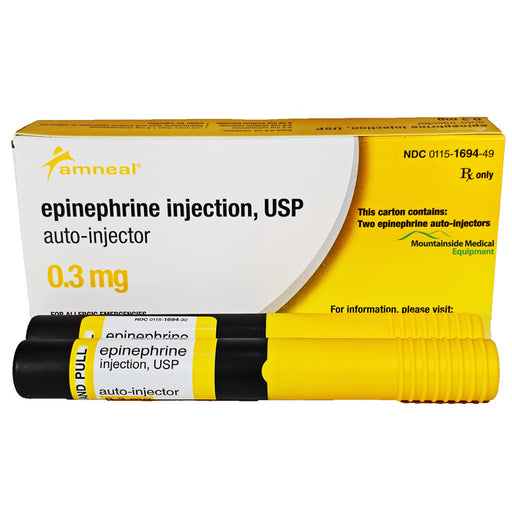 Sale 37%
Original price $ 475.00Current price $ 299.95
Sale 37%
Original price $ 475.00Current price $ 299.95Epinephrine Auto-Injector 0.3 mg Adult Epinephrine Pen (2-Pack) (Rx)
Amneal PharmaceuticalsNo reviewsEpinephrine Auto-Injector 0.3 mg An epinephrine auto-injector (0.3 mg) is a pre-filled, spring-loaded device (often called an “EpiPen”) containing ...
View full details🔒 Medical License Required -
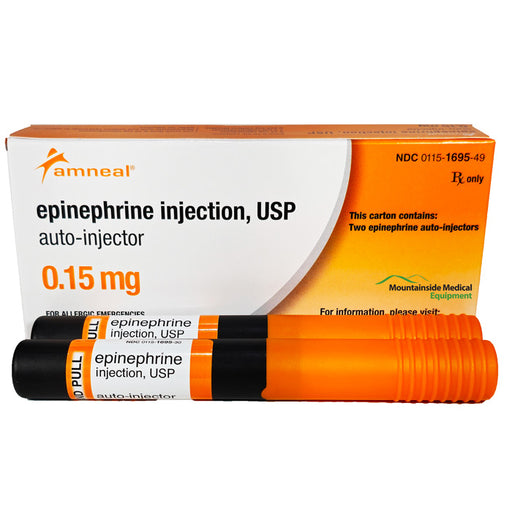 Sale 37%
Original price $ 475.00Current price $ 299.95
Sale 37%
Original price $ 475.00Current price $ 299.95Epinephrine Jr Auto-Injector 0.15 mg Injection Syringe For Kids in School & Daycare, 2-Pack (Rx)
Anneal PharmaceuticalsNo reviews#1 Pediatric Emergency Allergy & Anaphylaxis Treatment Protect your child from life-threatening allergic reactions with the Epinephrine Jr Auto...
View full details🔒 Medical License Required -
 Sale 29%
Original price $ 32.99Current price $ 23.50
Sale 29%
Original price $ 32.99Current price $ 23.50Adrenalin Epinephrine Injection 1:1000 For Anaphylaxis 1 mg Vial - Each (Rx)
Par Sterile Products LLC7 reviewsFast, Reliable Emergency Treatment for Anaphylactic Shock and Severe Allergic Reactions Reach for Adrenalin Epinephrine Injection 1:1000 (1 mg/mL) ...
View full details🔒 Medical License Required -
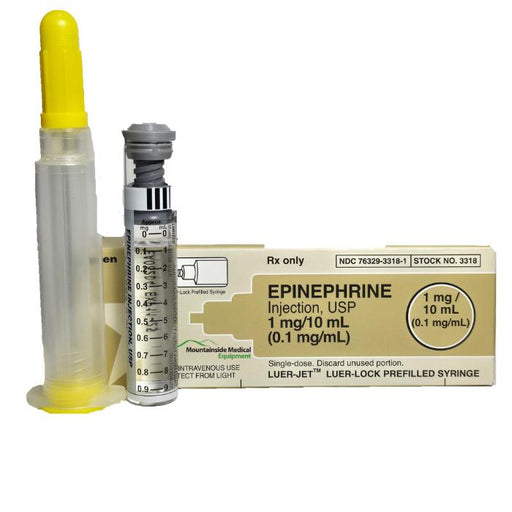 Sold out
Original price $ 34.95Current price $ 28.20
Sold out
Original price $ 34.95Current price $ 28.20Epinephrine Prefilled Syringe 0.1 mg/mL (1 mg per 10 mL) Each (Rx)
International Medication Systems3 reviewsAn Epinephrine Prefilled Syringe is a medical device containing a specific dose of epinephrine (also known as adrenaline), already loaded into a sy...
View full details -
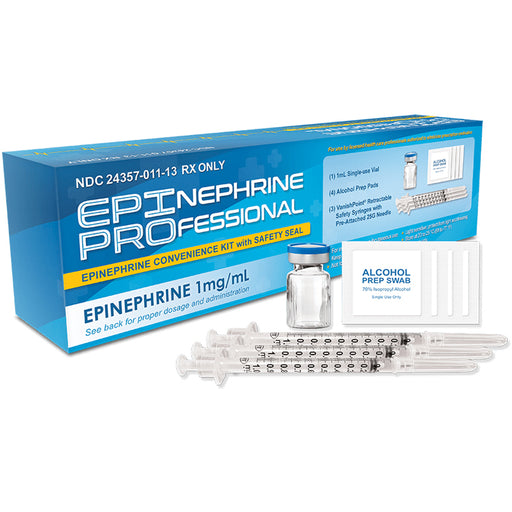 Sale 26%
Original price $ 139.95Current price $ 103.85
Sale 26%
Original price $ 139.95Current price $ 103.85Epinephrine for Injection 1 mg/mL (1:1000) Professional Convenience Kit (Rx)
Focus Health Group2 reviewsEpinephrine Professional Convenience Kit is a life-saving device that administers epinephrine to people who are experiencing anaphylactic shock. Th...
View full details🔒 Medical License Required -
 Sale 19%
Original price $ 215.95Current price $ 175.00
Sale 19%
Original price $ 215.95Current price $ 175.00Epinephrine for Injection 1 mL Ampules (1:1000), 10/Box (Rx)
BPI Labs2 reviewsEpinephrine Ampules are used to treat anaphylaxis, a severe allergic reaction. The medication works by narrowing the blood vessels and increasing h...
View full details🔒 Medical License Required -
 Sale 21%
Original price $ 499.95Current price $ 395.00
Sale 21%
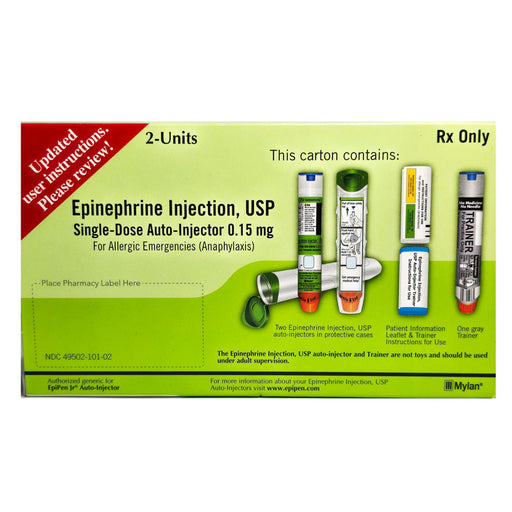
Original price $ 499.95Current price $ 395.00Epinephrine Auto Injector Jr Pediatric Pen 0.15 mg (2 Pack) For Weight 33 lbs to 66 lbs (Rx)
Mylan SpecialtyNo reviewsDiscover life-saving Epinephrine Auto Injector Jr 0.15 mg for pediatric use at Mountainside Medical. Perfect for emergency allergy reactions, it de...
View full details🔒 Medical License Required -
 Sale 8%
Original price $ 639.95Current price $ 589.00
Sale 8%
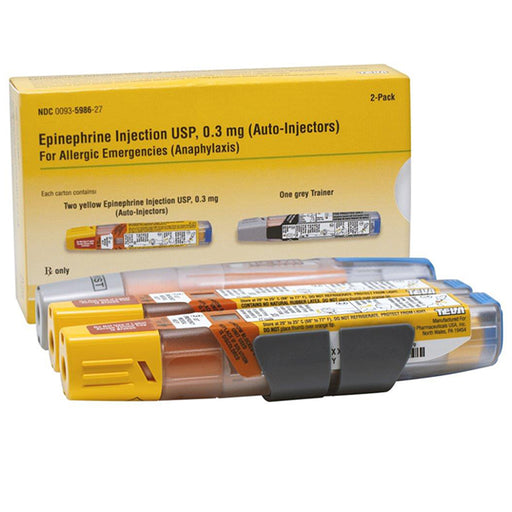
Original price $ 639.95Current price $ 589.00Teva Epinephrine Auto-Injector Pen (Epipen Generic) 0.3 mg (2-Pack + 1 Trainer)
Teva PharmaceuticalsNo reviewsThe Teva Epinephrine Auto-Injector Pen 0.3 mg is a FDA-approved, easy-to-use emergency treatment for severe allergic reactions (anaphylaxis) in adu...
View full details🔒 Medical License Required -
 Sale 8%
Original price $ 529.95Current price $ 486.00
Sale 8%
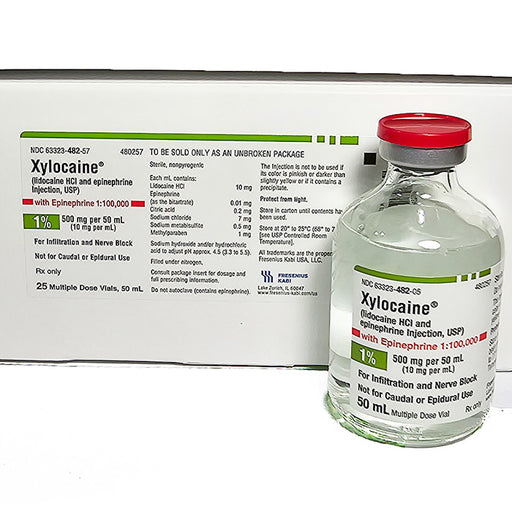
Original price $ 529.95Current price $ 486.00Xylocaine Lidocaine 1% With Epinephrine 1:100000 Injection Multiple Dose Vial 50 mL x 25/Tray (RX)
Fresenius Kabi3 reviewsXylocaine Lidocaine 1% with Epinephrine 1:100,000 Injection in a multiple-dose vial of 50 mL is a local anesthetic commonly used in medical and den...
View full details🔒 Medical License Required -
 Sale 16%
Original price $ 259.95Current price $ 219.00
Sale 16%
Original price $ 259.95Current price $ 219.00Xylocaine Lidocaine 2% with Epinephrine 1:100,000 Injection Multiple Dose Vial 20mL, 25/Pack (Rx)
Fresenius Kabi2 reviewsFresenius Kabi Lidocaine 2% with Epinephrine 1:100,000 is an anesthetic injection used to reduce local pain and discomfort. It is most commonly use...
View full details🔒 Medical License Required -
 Sale 17%
Original price $ 259.99Current price $ 215.00
Sale 17%
Original price $ 259.99Current price $ 215.00Xylocaine (lidocaine HCl) 1% and Epinephrine 1% Injection 1:00,000 Multiple-Dose Vial 20 mL x 25/Tray (RX)
Fresenius Kabi4 reviewsXylocaine 1% with Epinephrine Injection is used for local anesthesia and vasoconstriction during surgical and dental procedures. Xylocaine (Lidocai...
View full details🔒 Medical License Required -
 Sale 33%
Original price $ 599.95Current price $ 399.95
Sale 33%
Original price $ 599.95Current price $ 399.95Epinephrine Auto-injector (Generic Epipen) For Adults, Anaphylaxis Emergency Pen 0.3 mg (2 Injectors +1 Trainer) (Rx)
Mylan SpecialtyNo reviewsEmergency Anaphylaxis Allergy Treatment | Fast-Acting Life-Saving Epinephrine Injection Be prepared for life’s unexpected allergic emergencies with...
View full details🔒 Medical License Required -
 Sale 11%
Original price $ 549.00Current price $ 489.00
Sale 11%
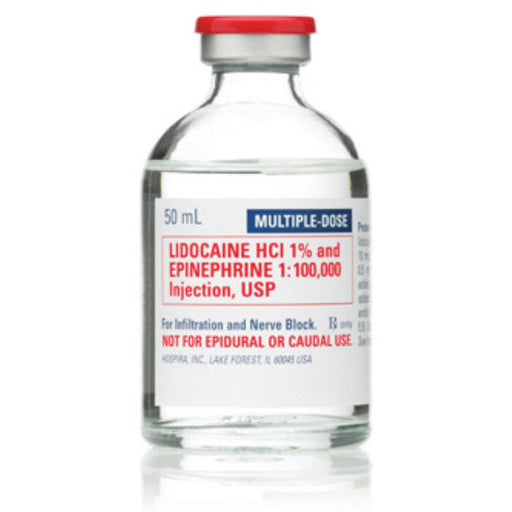
Original price $ 549.00Current price $ 489.00Lidocaine 1% with Epinephrine 1:100,000 Injection 500 mg/50ml, 50 mL Multiple Dose 25/tray (Rx) *** Expiration 5/31/26 ***
Pfizer InjectablesNo reviewsLidocaine 1% with Epinephrine 1:100,000 Injection is a local anesthetic solution used primarily in medical and dental procedures to numb a specific...
View full details🔒 Medical License Required -
 Sale 27%
Original price $ 475.00Current price $ 345.00
Sale 27%
Original price $ 475.00Current price $ 345.00Xylocaine 0.5% with Epinephrine 1:200,000 Injection 50 mL Vials 25/Tray (Rx)
Fresenius USA2 reviewsXylocaine 0.5% with Epinephrine 1:200,000 Injection is a local anesthetic used to provide pain relief and reduce bleeding during surgical, dental, ...
View full details🔒 Medical License Required -
 Sale 29%
Original price $ 129.95Current price $ 92.85
Sale 29%
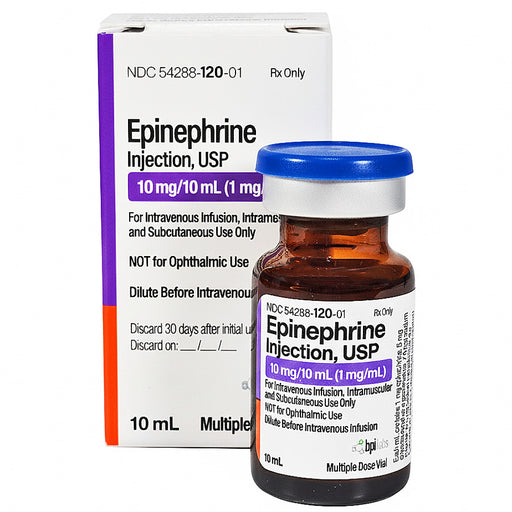
Original price $ 129.95Current price $ 92.85Epinephrine Injection 10 mg/10 mL Multiple-dose Vial 10 mL by BPI Labs (RX)
BPI LabsNo reviewsEmergency & Critical Care Solution | Fast-Acting Cardiac, Anaphylaxis, & Resuscitation Support Ensure clinical readiness for life-threateni...
View full details🔒 Medical License Required -
 Sale 16%
Original price $ 525.00Current price $ 439.00
Sale 16%
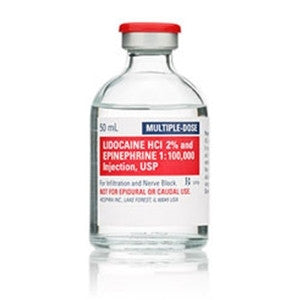
Original price $ 525.00Current price $ 439.00Lidocaine 2% with Epinephrine 2% 1:100,000 Injection 50 mL Multiple Dose, 25/Pack (Rx) Expiration 1/31/27
Pfizer InjectablesNo reviewsLidocaine 2% with Epinephrine 1:100,000 for Injection is a combination local anesthetic and vasoconstrictor solution commonly used in medical and d...
View full details🔒 Medical License Required -
 Sale 23%
Original price $ 259.95Current price $ 199.95
Sale 23%
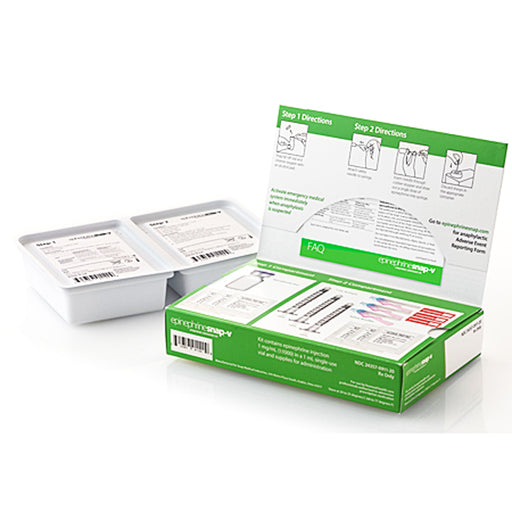
Original price $ 259.95Current price $ 199.95Epinephrine Snap-V Emergency Anaphylaxis Kit with Injection Vial (Rx)
Focus Health GroupNo reviewsEpinephrine Snap-V Emergency Anaphylaxis Kit with Injection Vial. Each Epinephrine Snap-V kit contains one 1 mL vial of epinephrine 1 mg/mL for inj...
View full details🔒 Medical License Required -
 Sale 32%
Original price $ 229.00Current price $ 155.00
Sale 32%
Original price $ 229.00Current price $ 155.00Xylocaine Lidocaine 1% with Epinephrine Injection 1% Multiple Dose Vial 10 mL x 25/Pack (Rx)
Fresenius Kabi1 reviewXylocaine Lidocaine HCl and with Epinephrine Injection 1% Multiple Dose Vial 10 mL is a medication used for its numbing and pain-relieving effects....
View full details🔒 Medical License Required -
 Sale 37%
Original price $ 625.95Current price $ 397.00
Sale 37%
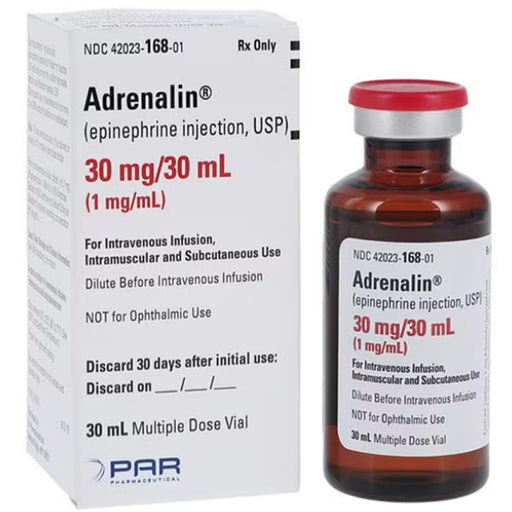
Original price $ 625.95Current price $ 397.00Adrenalin Epinephrine for Injection Multiple-Dose Vial 30mL (Rx)
Par Sterile Products LLCNo reviewsAdrenalin (epinephrine) for injection is a hormone that is produced by the adrenal gland. It is released into the blood when the body is stressed. ...
View full details🔒 Medical License Required -
 Sold out
Original price $ 995.00Current price $ 739.00
Sold out
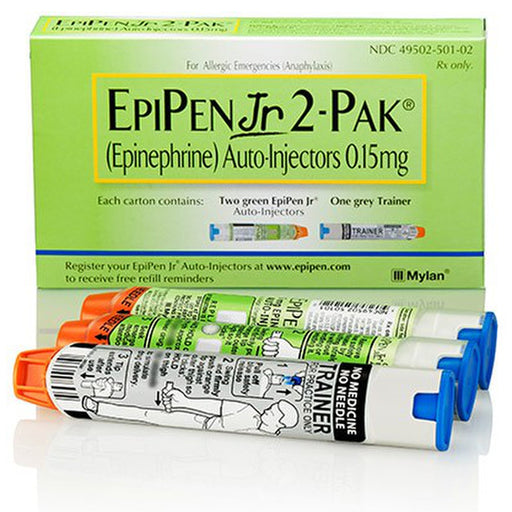
Original price $ 995.00Current price $ 739.00EpiPen Jr Auto-Injector 2 Pak Pediatric Epinephrine Injection 0.15 mg for Children (2 Pack)
Mylan SpecialtyNo reviewsEpiPen Jr Auto-Injector is a disposable, pre-filled auto-injectors used to treat life-threatening, allergic emergencies including anaphylaxis in pe...
View full details -
 Sale
$ 739.00
Sale
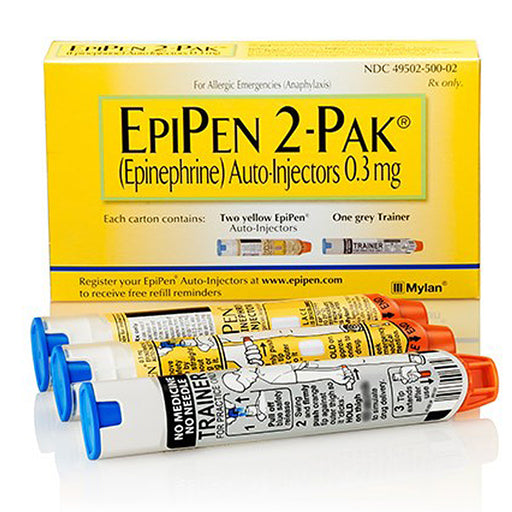
$ 739.00EpiPen 2 Pak Epinephrine Injection 0.3 mg Auto-Injector for Adults (2 Pack)
Mylan Specialty1 reviewThe EpiPen 2-Pak with Epinephrine Injection 0.3 mg is used to treat severe allergic reactions, known as anaphylaxis. It is an emergency treatment d...
View full details🔒 Medical License Required -
 Sale 13%
Original price $ 429.00Current price $ 375.00
Sale 13%
Original price $ 429.00Current price $ 375.00Epinephrine Injection 1 mg/mL Multiple-Dose Vial 30 mL (RX)
International Medication SystemsNo reviewsEpinephrine Injection 1 mg/mL Multiple-Dose Vial 30 mL is a medication manufactured by International Medication Systems. Epinephrine Injection is a...
View full details🔒 Medical License Required -
 Sale 30%
Original price $ 3,700.00Current price $ 2,595.00
Sale 30%
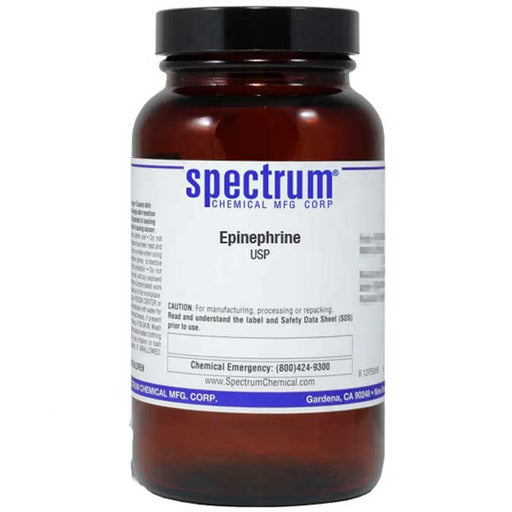
Original price $ 3,700.00Current price $ 2,595.00Epinephrine USP Powder for Compounding (API) 100 gram Jar
SpectrumNo reviewsEpinephrine USP Powder for Compounding Medications, also known as API (Active Pharmaceutical Ingredient), is a pure form of epinephrine used in the...
View full details🔒 Medical License Required -
 Sale
from $ 175.00
Sale
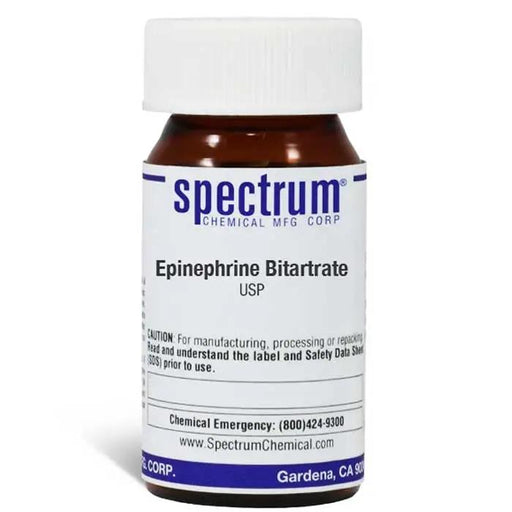
from $ 175.00Epinephrine Bitartrate USP Powder for Compounding Medications (API)
SpectrumNo reviewsEpinephrine Bitartrate USP Powder for Compounding Medications is an active pharmaceutical ingredient (API) used in the preparation of customized me...
View full details🔒 Medical License Required -
 Sale 6%
Original price $ 599.95Current price $ 565.95
Sale 6%
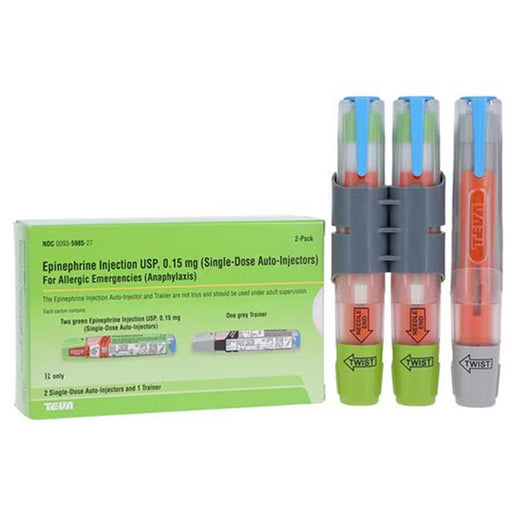
Original price $ 599.95Current price $ 565.95Epinephrine (Generic Epipen) Auto-Injector Pens 0.15 mg (2 Auto-Injectors + 1 Trainer)
Teva PharmaceuticalsNo reviewsTeva Pharmaceuticals Epinephrine Auto-Injector Pen for Injection 0.15 mg (2 Epinephrine Auto-Injectors + 1 Trainer) NDC: 00093-5985-27 Injection: ...
View full details🔒 Medical License Required -
 Sale 13%
Original price $ 599.95Current price $ 519.00
Sale 13%
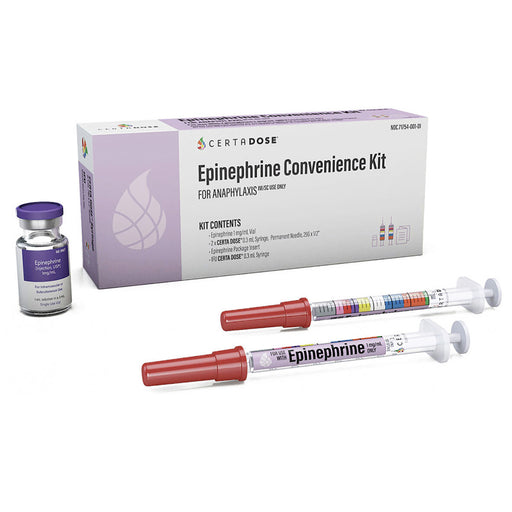
Original price $ 599.95Current price $ 519.00Certa Dose Epinephrine for Injection Convenience Kit, 1mL Vial with 2 Syringes, 5 Pack (Rx)
Certa DoseNo reviewsCerta Dose Epinephrine for Injection Convenience Kit is a pre-filled syringe designed to provide a single dose of epinephrine for the emergency tre...
View full details🔒 Medical License Required -
 Sale 19%
Original price $ 659.95Current price $ 535.00
Sale 19%
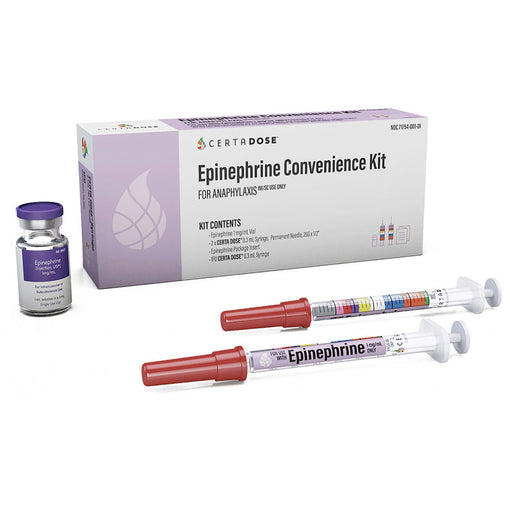
Original price $ 659.95Current price $ 535.00Certa Dose Epinephrine Convenience Kit, 1mL Vial, 2 Syringes
Certa DoseNo reviewsPrecise epinephrine dosing for anaphylaxis from neonate to 0.3 mg. Prehospital epinephrine administration error rates can exceed 60%; studies ...
View full details🔒 Medical License Required -
 Sale
$ 29.99
Sale
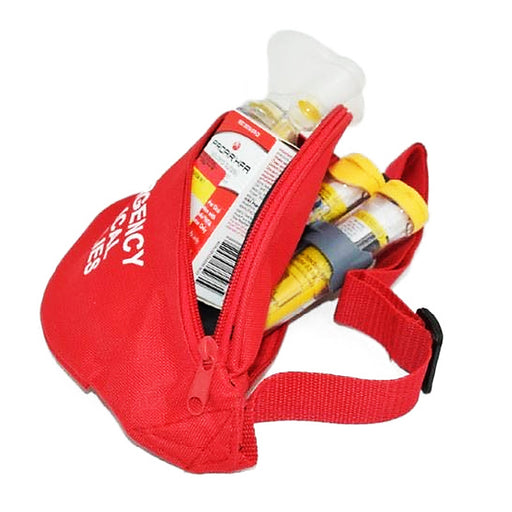
$ 29.99Emergency Medical Supplies Large Field Trip Fanny Pack for Allergic Reaction EpiPens, Inhalers
Illinois Supply CompanyNo reviewsEmergency Medical Supplies Large Field Trip Fanny Pack for Allergic Reaction EpiPens and Rescue Inhalers is a larger fanny pack for teachers, c...
View full details -
 Sale 20%
Original price $ 1,495.00Current price $ 1,199.00
Sale 20%
Original price $ 1,495.00Current price $ 1,199.00IV Bags, Adrenalin (Epinephrine in 0.9% Sodium Chloride Injection) IV Solution 4 mg Per 250 mL x 10/Case (RX)
Endo USANo reviewsThe Adrenalin IV Bag (Epinephrine in 0.9% Sodium Chloride Injection) presents a vital emergency treatment solution designed for swift action and pr...
View full details🔒 Medical License Required -
 Sale 23%
Original price $ 38.95Current price $ 29.95
Sale 23%
Original price $ 38.95Current price $ 29.95Epinephrine Convenience Kit with Syringe, Prep Pads (Rx)
Mountainside Medical Equipment (SDVOSB)No reviewsExperience reliable protection with the Adrenalin Epinephrine Convenience Kit by Mountainside Medical, designed to prepare and respond to emergency...
View full details🔒 Medical License Required


People Also Searched For
Epipen, Epinephrine Auto Injectors, Injection Pens to doctor-only
Epipen, Epinephrine Auto Injectors, Injection Pens to Epinephrine Injection
Epipen, Epinephrine Auto Injectors, Injection Pens to Treat Allergic Reactions
Epipen, Epinephrine Auto Injectors, Injection Pens to allergic reactions
Epipen, Epinephrine Auto Injectors, Injection Pens to Anaphylaxis
Epipen, Epinephrine Auto Injectors, Injection Pens to Buy Epinephrine
Epipen, Epinephrine Auto Injectors, Injection Pens to Epinephrine for Injection
Epipen, Epinephrine Auto Injectors, Injection Pens to Epinephrine Vials
Epipen, Epinephrine Auto Injectors, Injection Pens to Lidocaine with Epinephrine
Epipen, Epinephrine Auto Injectors, Injection Pens to Autoinjector
Epipen, Epinephrine Auto Injectors, Injection Pens
Epinephrine (adrenaline) is a powerful hormone and medication used in emergencies. It is a nonselective alpha and beta adrenergic agonist – meaning it stimulates all adrenergic receptors in the body. In practice, epinephrine relaxes bronchial muscles and tightens (constricts) blood vessels, rapidly reversing life-threatening allergic shock (anaphylaxis) and other forms of circulatory collapse. Epinephrine injections are prescribed for severe allergic reactions (to foods, insect stings, medications, etc.) and for acute low blood pressure/shock (for example, in septic shock). In essence, epinephrine injection is first-line therapy for anaphylaxis, the most dangerous form of allergic reaction. It is given under medical supervision in hospitals or by patients/caregivers using self-injector devices.
Fast-Acting, Life-Saving Epinephrine Injections and Auto-Injectors for Severe Allergic Reactions, Anaphylaxis & Emergency Rescue
Epinephrine injections and auto-injectors are the gold standard, FDA-approved, emergency treatment for anaphylaxis, severe allergic reactions, insect sting allergies, food allergies, drug allergies, asthma attacks, and cardiac emergencies. Trusted by physicians, allergists, emergency responders, schools, and families worldwide, these critical care products deliver rapid, reliable symptom reversal—saving lives when every second counts.
Why Choose Our Epinephrine Injections & Auto-Injectors?
- Immediate Action in Emergencies: Designed for instantly stopping anaphylaxis, including throat swelling, breathing difficulty, severe hives, and drop in blood pressure.
- Doctor-Recommended & FDA-Approved: All products meet strict standards for purity, potency, safety, and effectiveness.
- Simple, Ready-to-Use Auto-Injector Devices: User-friendly, portable, and safe for self-administration or use by caregivers, teachers, and bystanders.
- Reliable, Consistent Dosage: Precise, pre-measured epinephrine dose for children, teens, and adults—includes 0.3 mg (adult) and 0.15 mg (pediatric) strengths.
- Critical Rescue for Multiple Conditions: Essential for allergy rescue, asthma emergency, cardiac arrest support, and shock management.
- Hospitals & Community Distribution: Available for use in ER, EMS, primary care, schools, public venues, and at home.
When Are Epinephrine Injections & Auto-Injectors Used?
- Anaphylactic Shock: Life-threatening responses to peanuts, shellfish, latex, bee stings, medications, or unknown triggers.
- Allergy Emergencies: Quick relief of swelling, shortness of breath, throat tightness, and skin hives.
- Asthma Attacks: Emergency rescue for severe, sudden-onset asthma symptoms.
- Cardiac Arrest & Severe Shock: IV and IM epinephrine is used in hospital and EMS for ACLS, advanced resuscitation, and acute hypotension.
Trust Epinephrine Injections & Auto-Injectors for rapid, life-saving relief when every second counts. Equip yourself, your loved ones, or your facility with the #1 doctor-recommended emergency allergy rescue—because immediate action means saved lives. Order now for unmatched safety, reliability, and peace of mind!
How Epinephrine Works
Epinephrine Uses
Administration & Dosing
Epinephrine Side Effects
Key Points
How Epinephrine Works
Because epinephrine acts on both α and β receptors, it has multiple effects: α-receptor stimulation causes blood vessels to constrict, raising blood pressure and reducing swelling; β1-receptor activation increases heart rate and output; β2-receptor activation relaxes airway smooth muscle to improve breathing. Together, these effects counteract the life-threatening symptoms of anaphylaxis (such as airway constriction, hypotension, and shock). The drug also quickly reduces hives and angioedema (swelling) by decreasing fluid leakage from capillaries. In short, epinephrine buys time by stabilizing breathing and circulation until further medical care can be given
Uses and Indications
The primary indication for injectable epinephrine is anaphylaxis – a rapid-onset, severe allergic reaction that can cause shock, difficulty breathing, and loss of consciousness. Guidelines emphasize giving epinephrine immediately at the first sign of anaphylaxis. Allergic triggers include foods (peanuts, shellfish, etc.), insect stings, medications, latex, or idiopathic causes. Symptoms warranting epinephrine include sudden hives, throat swelling, wheezing, dizziness, vomiting, or loss of consciousness. If anaphylaxis is suspected, a dose of epinephrine should be given without delay, even before calling emergency services.
Other medical uses of injectable epinephrine include:
- Cardiac arrest (advanced life support): In hospitals, IV epinephrine is given during CPR to support the heart.
- Severe asthma exacerbations: IV or IM epinephrine may be used if life-threatening asthma does not respond to inhalers.
- Shock (non-allergic): In intensive care, epinephrine infusions raise blood pressure in septic or cardiogenic shock, though other vasopressors may be preferred.
However, outside the hospital the emergency use is almost exclusively for anaphylaxis. Auto-injectors are not indicated for routine use in heart conditions or ordinary asthma – their purpose is urgent allergy response.
Administration and Dosing
Injections (Medical Setting)
Epinephrine for injection comes in vials (typically 1 mg/mL, called “1:1000” solution) or as pre-filled syringes. In anaphylaxis, the recommended route is intramuscular (IM), usually injected into the anterolateral thigh (mid-outer thigh) for rapid absorption. (The medication can be given through clothing if needed.) In a hospital, epinephrine may also be given intravenously in controlled situations (e.g. during resuscitation or refractory shock). Healthcare providers carefully dose epinephrine by patient weight: typically 0.01 mg/kg IM per dose, up to ~0.5 mg in adults.
Common dosing regimens (auto-injectors) are: 0.3 mg intramuscularly for adults and children ≥30 kg, and 0.15 mg for smaller children (15–30 kg). These correspond to the two standard auto-injector strengths (0.3 mg and 0.15 mg). If symptoms persist, the IM dose may be repeated every 5–15 minutes, but often medical personnel will be administering treatment and transporting the patient by then. Protocols recommend having two doses available, since in ~10–20% of cases a second dose is needed before emergency care arrives.
Important administration notes: Epinephrine must be injected into muscle, not under the skin or in small digits. Per guidelines, inject only in the mid-outer thigh. (Do not inject into fingers, toes, hands or feet – this can cause severe local vasoconstriction.) Patients should be lying down with legs elevated after injection while awaiting EMS, to maintain blood flow to vital organs.
Auto-injectors (Self-Administration)
Auto-injectors are pen-like devices preloaded with a fixed dose of epinephrine (and a concealed needle). Common brands include EpiPen, Auvi-Q, Adrenaclick, and Symjepi. These are prescribed for individuals at risk of anaphylaxis so they can self-administer epinephrine immediately if needed. Unlike a vial and syringe, an auto-injector is designed for use by people without medical training. To use one, the patient presses the tip firmly against their outer thigh (through clothing if necessary); the automatic mechanism delivers the injection, usually in a few seconds.
Auto-injectors come in two doses: 0.3 mg (adult) and 0.15 mg (child) of epinephrine, both as a 1 mg/mL solution. Adults and older children should use the 0.3 mg device; smaller children use the 0.15 mg pediatric device. Patients are advised to carry two auto-injectors at all times, since a second dose may be needed if symptoms do not fully resolve or recur. It is crucial to check expiration dates regularly and keep the devices at room temperature (avoid extreme heat or cold). After use, the used device should be handed to EMS personnel (it contains a needle and some “leftover” fluid by design) and disposed of safely.
Epinephrine Side Effects and Precautions
Since epinephrine is a potent cardiovascular stimulant, side effects common to adrenergic stimulation are expected: anxiety, restlessness, tremor, headache, palpitations (rapid heartbeat), sweating, nausea and dizziness. These usually pass quickly as the drug wears off. Rare but serious effects include arrhythmias (irregular heartbeat), dangerously high blood pressure, and, in extreme cases, heart attack. However, the risk of these complications is far outweighed by the need to treat a life-threatening allergic reaction promptly.
Because epinephrine can stress the heart, anyone with known heart disease or high blood pressure should only receive epinephrine in a life-threatening situation, and preferably under medical supervision. Patients on certain medications (beta-blockers, MAO inhibitors, etc.) should inform caregivers, as these can alter epinephrine’s effects. Importantly, an allergy to epinephrine itself is virtually unheard of – almost all contraindications to use are relative. The only true contraindication is in local anesthesia formulations (e.g. dental lidocaine with epinephrine) for people with certain heart conditions, which is a different context.
In summary, when facing anaphylaxis, the rule is: give epinephrine first, worry about side effects later. Quick administration can save a life, and complications are rare in the short term. After injection, patients must always seek emergency care. Epinephrine treats the immediate crisis but does not replace hospital treatment: 911 should be called immediately after use
Key Points:
- What it is: Epinephrine (adrenaline) injection is a fast-acting emergency medication used to treat life-threatening allergic reactions (anaphylaxis) and shock. It is available as a vial for medical use and as a prefilled auto-injector for patient self-use.
- How it works: It is a nonselective alpha/beta-adrenergic agonist. In anaphylaxis it constricts blood vessels (raising blood pressure and reducing swelling) and relaxes airway muscles (opening breathing passages).
- Administration: In emergencies, epinephrine is injected IM (usually into the outer thigh). In hospitals it may be given IV for severe shock. Auto-injectors (such as EpiPen, Auvi-Q) deliver a fixed dose (0.3 mg adult; 0.15 mg child) under the skin and can be used by patients or bystanders.
- When to use: At the first sign of anaphylaxis – symptoms like hives, swelling, wheezing, or collapse – epinephrine should be given without delay. Patients at risk should carry two auto-injectors and be trained to use them. After injection, call 911 and lie with legs elevated while waiting for help.
- Side effects: Expect adrenaline-like effects (rapid heartbeat, tremors, headache, anxiety) immediately after the shot. These are usually transient. Serious complications (arrhythmias, heart issues) are very rare but possible. Epinephrine injection should always be followed by medical evaluation.
- Safety: Only use epinephrine injections for true emergencies. Follow the device instructions carefully (inject into thigh, not fingers or toes. Replace expired injectors and dispose of used ones properly.
How Epinephrine Works
How Epinephrine Works
Because epinephrine acts on both α and β receptors, it has multiple effects: α-receptor stimulation causes blood vessels to constrict, raising blood pressure and reducing swelling; β1-receptor activation increases heart rate and output; β2-receptor activation relaxes airway smooth muscle to improve breathing. Together, these effects counteract the life-threatening symptoms of anaphylaxis (such as airway constriction, hypotension, and shock). The drug also quickly reduces hives and angioedema (swelling) by decreasing fluid leakage from capillaries. In short, epinephrine buys time by stabilizing breathing and circulation until further medical care can be given
Epinephrine Uses
Uses and Indications
The primary indication for injectable epinephrine is anaphylaxis – a rapid-onset, severe allergic reaction that can cause shock, difficulty breathing, and loss of consciousness. Guidelines emphasize giving epinephrine immediately at the first sign of anaphylaxis. Allergic triggers include foods (peanuts, shellfish, etc.), insect stings, medications, latex, or idiopathic causes. Symptoms warranting epinephrine include sudden hives, throat swelling, wheezing, dizziness, vomiting, or loss of consciousness. If anaphylaxis is suspected, a dose of epinephrine should be given without delay, even before calling emergency services.
Other medical uses of injectable epinephrine include:
- Cardiac arrest (advanced life support): In hospitals, IV epinephrine is given during CPR to support the heart.
- Severe asthma exacerbations: IV or IM epinephrine may be used if life-threatening asthma does not respond to inhalers.
- Shock (non-allergic): In intensive care, epinephrine infusions raise blood pressure in septic or cardiogenic shock, though other vasopressors may be preferred.
However, outside the hospital the emergency use is almost exclusively for anaphylaxis. Auto-injectors are not indicated for routine use in heart conditions or ordinary asthma – their purpose is urgent allergy response.
Administration & Dosing
Administration and Dosing
Injections (Medical Setting)
Epinephrine for injection comes in vials (typically 1 mg/mL, called “1:1000” solution) or as pre-filled syringes. In anaphylaxis, the recommended route is intramuscular (IM), usually injected into the anterolateral thigh (mid-outer thigh) for rapid absorption. (The medication can be given through clothing if needed.) In a hospital, epinephrine may also be given intravenously in controlled situations (e.g. during resuscitation or refractory shock). Healthcare providers carefully dose epinephrine by patient weight: typically 0.01 mg/kg IM per dose, up to ~0.5 mg in adults.
Common dosing regimens (auto-injectors) are: 0.3 mg intramuscularly for adults and children ≥30 kg, and 0.15 mg for smaller children (15–30 kg). These correspond to the two standard auto-injector strengths (0.3 mg and 0.15 mg). If symptoms persist, the IM dose may be repeated every 5–15 minutes, but often medical personnel will be administering treatment and transporting the patient by then. Protocols recommend having two doses available, since in ~10–20% of cases a second dose is needed before emergency care arrives.
Important administration notes: Epinephrine must be injected into muscle, not under the skin or in small digits. Per guidelines, inject only in the mid-outer thigh. (Do not inject into fingers, toes, hands or feet – this can cause severe local vasoconstriction.) Patients should be lying down with legs elevated after injection while awaiting EMS, to maintain blood flow to vital organs.
Auto-injectors (Self-Administration)
Auto-injectors are pen-like devices preloaded with a fixed dose of epinephrine (and a concealed needle). Common brands include EpiPen, Auvi-Q, Adrenaclick, and Symjepi. These are prescribed for individuals at risk of anaphylaxis so they can self-administer epinephrine immediately if needed. Unlike a vial and syringe, an auto-injector is designed for use by people without medical training. To use one, the patient presses the tip firmly against their outer thigh (through clothing if necessary); the automatic mechanism delivers the injection, usually in a few seconds.
Auto-injectors come in two doses: 0.3 mg (adult) and 0.15 mg (child) of epinephrine, both as a 1 mg/mL solution. Adults and older children should use the 0.3 mg device; smaller children use the 0.15 mg pediatric device. Patients are advised to carry two auto-injectors at all times, since a second dose may be needed if symptoms do not fully resolve or recur. It is crucial to check expiration dates regularly and keep the devices at room temperature (avoid extreme heat or cold). After use, the used device should be handed to EMS personnel (it contains a needle and some “leftover” fluid by design) and disposed of safely.
Epinephrine Side Effects
Epinephrine Side Effects and Precautions
Since epinephrine is a potent cardiovascular stimulant, side effects common to adrenergic stimulation are expected: anxiety, restlessness, tremor, headache, palpitations (rapid heartbeat), sweating, nausea and dizziness. These usually pass quickly as the drug wears off. Rare but serious effects include arrhythmias (irregular heartbeat), dangerously high blood pressure, and, in extreme cases, heart attack. However, the risk of these complications is far outweighed by the need to treat a life-threatening allergic reaction promptly.
Because epinephrine can stress the heart, anyone with known heart disease or high blood pressure should only receive epinephrine in a life-threatening situation, and preferably under medical supervision. Patients on certain medications (beta-blockers, MAO inhibitors, etc.) should inform caregivers, as these can alter epinephrine’s effects. Importantly, an allergy to epinephrine itself is virtually unheard of – almost all contraindications to use are relative. The only true contraindication is in local anesthesia formulations (e.g. dental lidocaine with epinephrine) for people with certain heart conditions, which is a different context.
In summary, when facing anaphylaxis, the rule is: give epinephrine first, worry about side effects later. Quick administration can save a life, and complications are rare in the short term. After injection, patients must always seek emergency care. Epinephrine treats the immediate crisis but does not replace hospital treatment: 911 should be called immediately after use
Key Points
Key Points:
- What it is: Epinephrine (adrenaline) injection is a fast-acting emergency medication used to treat life-threatening allergic reactions (anaphylaxis) and shock. It is available as a vial for medical use and as a prefilled auto-injector for patient self-use.
- How it works: It is a nonselective alpha/beta-adrenergic agonist. In anaphylaxis it constricts blood vessels (raising blood pressure and reducing swelling) and relaxes airway muscles (opening breathing passages).
- Administration: In emergencies, epinephrine is injected IM (usually into the outer thigh). In hospitals it may be given IV for severe shock. Auto-injectors (such as EpiPen, Auvi-Q) deliver a fixed dose (0.3 mg adult; 0.15 mg child) under the skin and can be used by patients or bystanders.
- When to use: At the first sign of anaphylaxis – symptoms like hives, swelling, wheezing, or collapse – epinephrine should be given without delay. Patients at risk should carry two auto-injectors and be trained to use them. After injection, call 911 and lie with legs elevated while waiting for help.
- Side effects: Expect adrenaline-like effects (rapid heartbeat, tremors, headache, anxiety) immediately after the shot. These are usually transient. Serious complications (arrhythmias, heart issues) are very rare but possible. Epinephrine injection should always be followed by medical evaluation.
- Safety: Only use epinephrine injections for true emergencies. Follow the device instructions carefully (inject into thigh, not fingers or toes. Replace expired injectors and dispose of used ones properly.