
Filters
- Aerosol Inhaler (2)
- Albuterol (3)
- Albuterol inhalation (10)
- albuterol sulfate (12)
- Albuterol Sulfate Inhaler (4)
- Asthma Inhaler (6)
- Asthma Treatment (11)
- Bronchodilators (6)
- Childrens Nebulizer Machine (1)
- doctor-only (30)
- Emergency Medical Supplies (3)
- Inhalation (11)
- inhalation Solution (3)
- Nebulizer Machines (1)
- Nebulizers (3)
- pediatric nebulizer machine (1)
- Portable nebulizer machine (1)
- Proventil Nebules (2)
- AddiPak (1)
- Asthma Medication (9)
- Cystic Fibrosis (1)
- humidification (1)
- Inhalation Solution (15)
- isotonic saline (1)
- nacl (1)
- nebulizer treatments (1)
- Saline Inhalation (2)
- sinus irrigation (1)
- Sodium Chloride (5)
- Sodium Chloride Inhalation (1)
- Tracheostomy Care (1)
- Treat cystic fibrosis (1)
- Unit Dose (2)
- 15 ml Vials (1)
- Mylan (3)
- Respiratory Therapy (3)
- Sterile Saline Solution (1)
- Hypertonic Saline (1)
- Repiratory Care (1)
- Unit Doses (1)
- Obstructive Airway Disease (1)
- ou-exclude (1)
- Airway obstruction (1)
- Albuterol ipratropium (1)
- asthma attack (2)
- Asthma inhalation (1)
- Breathing treatment (1)
- Bronchitis (1)
- Bronchospasm (2)
- chronic bronchitis (5)
- Chronic obstructive pulmonary disease (COPD) (3)
- Clear airways (1)
- COPD nebulizer medication (1)
- Dual-action bronchodilator (1)
- Ipratropium albuterol ampules (1)
- Ipratropium bromide (5)
- Nebulizer medication (1)
- Nebulizer solution (1)
- Nebulizer solution for COPD (1)
- Open Airways (1)
- Rescue breathing treatment (1)
- Ritedose inhalation (1)
- shortness of breath (1)
- Treat COPD (6)
- wheezing (1)
- Asthma Symptoms (1)
- Atrovent (1)
- Ipratropium Bromide inhalation (1)
- Ipratropium Bromide Solution (1)
- Lung Function (1)
- Prevent Wheezing (1)
- Abronchodilator (1)
- Antimuscarinic (1)
- Antispasmodic (1)
- Oral Inhalation (1)
- Abuderol (4)
- Asthma Relief Medicine (4)
- Asthma treatments (6)
- budesonide (5)
- Budesonide Inhalation (5)
- Treat Asthma (5)
- Albuterol Vials (1)
- Ampules (3)
- Albuterol Sulfate Solution (1)
- allergic asthma (1)
- Anti-Inflammatory (1)
- asthma medicine (1)
- Asthma Nebulizer (2)
- Asthma treatment for children (1)
- Asthma Treatment Inhaler (1)
- asthma vials (1)
- Best nebulizer solution (1)
- Breathing treatment medication (1)
- Bronchial (1)
- Bronchial inflammation solution (1)
- Budesonide nebulizer solution (1)
- Budesonide Vials (1)
- Chronic asthma (1)
- chronic bronchial asthma (1)
- Inhaled corticosteroid (1)
- Inhaled corticosteroid for asthma (1)
- Nebulizer medicine (1)
- respiratory medication (1)
- Respiratory Relief (1)
- Teva budesonide inhalation (1)
- Unit-dose (1)
- 4733-50703 (1)
- 4733-50703-49 (1)
- Albutero Solution (1)
- Albuterol inhalation solution (1)
- Asthma treatment medication (1)
- breathlessness relief (1)
- Bronchodilator nebulizer solution (1)
- COPD Relief (2)
- COPD respiratory therapy (1)
- Nebulizer prescription medication (1)
- Nebulizer Solution (4)
- Nebulizer solution for asthma (1)
- Pediatric asthma relief (1)
- Pharmacy Compounding (1)
- Alpha Beta-Adrenergic Agonist (4)
- emphysema (4)
- Levalbuterol (4)
- Levlbutrl (4)
- Chronic Obstructive Pulmonary Disease (1)
- Respiratory Treatment (1)
- Severe Asthma (1)
- 00115-1689-74 (1)
- airway disease (1)
- airway inflammation (1)
- allergy management (1)
- Amneal (1)
- Amneal Budesonide (1)
- anti-inflammatory respiratory medication (1)
- asthma control (1)
- breathing relief (1)
- breathing support (1)
- Budesonide 0.5% (1)
- chronic asthma inhaler (1)
- COPD therapy (1)
- corticosteroid inhalation (1)
- inhaled corticosteroid (1)
- long-term asthma solution (1)
- lung inflammation (1)
- pediatric asthma (1)
- persistent asthma (1)
- prescription inhaler (1)
- Respiratory Health (1)
- Inhalation Powder (1)
- budesonide 0.5 mg (1)
- budesonide nebulizer (1)
- budesonide nebulizer dose (1)
- inhalation suspension (1)
- inhaled corticosteroids (1)
- Nebuliwe Medicine (1)
- Nebulizer Medication (2)
- Nebulizer Treatment (1)
- Nephron (1)
- prescription drugs (1)
- Ampule Vials (1)
- 6909-7013-53 (1)
- COPD treatment (2)
- inhalation therapy (1)
- Ipratropium Bromide and Albuterol (1)
- Arformoterol Tartrate (2)
- brovana (1)
- brovana inhalation solution (1)
- brovana nebulizer (1)
- copd inhaler (1)
- nebulizer medications (1)
- new treatments for copd (1)
- respiratory medications (1)
- African Sleeping Sickness (1)
- Aids Treatment (1)
- HIV (1)
- HIV treatment (1)
- Leishmaniasis (1)
- Lung Infection (1)
- Pentamidine (1)
- Pentamidine Isethionate (1)
- Pneumocystis Pneumonia (PCP) (1)
- Prophylactic Treatment (1)
- Protozoal Infection (1)
- Serious Infection (1)
- Serious Infection Treatments (1)
- Trypanosomiasis (1)
Nebulizer Solution
Nebulizer Solutions (Inhalation Therapy Liquids)
Nebulizer solutions are sterile liquid medications or diluents that are aerosolized into a fine mist by a nebulizer machine for inhalation into the lungs. They are used to treat various respiratory conditions because the aerosolized medication can travel deep into the airways and lungs. A nebulizer converts the solution into droplets small enough to be inhaled (usually via a mouthpiece or mask). This direct-delivery method is especially helpful for young children or anyone who cannot use a handheld inhaler effectively.
Mechanism: The nebulizer solution (often containing medication plus saline) is placed into the nebulizer cup. Compressed air or ultrasonic vibrations then generate a breathable mist. The patient inhales normally while the device is operating, allowing the drug to deposit throughout the bronchial tree. Because nebulization delivers medication directly to bronchial receptors, onset can be relatively rapid for bronchodilators, while anti-inflammatory drugs act over days to weeks of regular use.
Uses
Nebulized solutions are used in many airway diseases where inhaled therapy is indicated. Common uses include:
- Asthma: Both acute relief and long-term control. Nebulized bronchodilators (e.g. albuterol) are used for acute wheezing or exacerbations. Inhaled corticosteroids (e.g. budesonide suspension) are used daily to suppress chronic inflammation in persistent asthma (especially in young children who use a nebulizer).
- Chronic Obstructive Pulmonary Disease (COPD): Nebulized therapies help relieve bronchospasm and improve airway patency in COPD exacerbations, including inhaled anticholinergics or beta-agonists.
- Cystic Fibrosis & Bronchiectasis: Mucus-thinning and antibiotic solutions are commonly inhaled. For example, hypertonic saline (3–7%) nebulization helps hydrate and loosen thick mucus in cystic fibrosis and bronchiectasis, and inhaled antibiotics (tobramycin, colistin) target chronic lung infections in these diseases.
- Respiratory Infections: As adjunct treatment in diseases like pneumonia or bronchiolitis, nebulizer solutions (saline or medications like racemic epinephrine) can ease breathing. In children with viral croup, a single dose of nebulized epinephrine is sometimes used to reduce airway swelling.
- Exercise-Induced Symptoms: On a prescription basis, a bronchodilator solution before exercise can prevent asthma symptoms.
- Palliative/Wheezing Disorders: In nebulized therapy for conditions like bronchiolitis, severe cough with sputum, etc., nebulized saline or bronchodilators may provide symptomatic relief.
Overall, nebulizer treatment is indicated whenever direct lung delivery of medication is needed. It is NOT used as an emergency reliever for an ongoing asthma attack (nebulized bronchodilators can be used in acute attacks, but steroids in nebulizers are preventive).
Common Types of Nebulizer Solutions
Nebulizer solutions can be pure diluents (like sterile saline) or solutions containing an active medication. Key categories include:
- Saline Solutions (Isotonic or Hypertonic): Sterile 0.9% sodium chloride (normal saline) is used as a diluent or to humidify and thin airway secretions. Higher-strength saline (e.g. 3%, 7%) is used as a mucolytic, especially in cystic fibrosis, to help mobilize mucus. Nebulized saline itself can help patients cough up sputum and is often mixed with medications. It is also used to rinse or humidify the airways.
- Bronchodilators: Medications that relax airway smooth muscle. The classic example is albuterol (salbutamol) inhalation solution (typically 2.5 mg/3 mL), a short-acting β₂-agonist that “opens” bronchi in asthma or COPD exacerbations. Another is levalbuterol (the R-enantiomer of albuterol) available in nebulized form. These are used for rapid relief of bronchospasm. Adrenergic bronchodilators are often combined with anticholinergics (see below) in a single nebulization solution.
- Anticholinergics: Ipratropium bromide is a nebulized anticholinergic bronchodilator. It inhibits vagal impulses to the airway, causing bronchodilation. It is indicated for bronchospasm in chronic lung disease and is often given together with a beta-agonist. For example, in severe asthma/COPD attacks, ipratropium nebulizer (0.5 mg) is used alongside albuterol. (It has a slower onset than β-agonists and helps maintain opening of airways.)
- Inhaled Corticosteroids: Suspensions of corticosteroids (e.g. budesonide 0.25–1 mg/2 mL, or dexamethasone) can be nebulized for anti-inflammatory effect. These are mainly used for maintenance therapy in asthma or wheezing disorders, not for immediate relief. Budesonide Respules are a common example. They reduce airway inflammation over time, decreasing asthma symptoms and exacerbations. Nebulized steroids must be taken regularly (often twice daily) for best effect.
- Mucolytics and Mucokinetics: Beyond saline, other agents are used to thin mucus. For cystic fibrosis, dornase alfa (Pulmozyme) is a DNAse enzyme given by nebulization to break down thick DNA-containing sputum. N-acetylcysteine (NAC) is a mucolytic that can be nebulized to reduce mucus viscosity. (NAC also has antioxidant effects on airway lining fluid.) These improve clearance of pulmonary secretions.
- Inhaled Antibiotics: Certain pulmonary infections are treated by inhaled antibiotics. Examples include tobramycin or aztreonam lysinate nebulization for chronic Pseudomonas infection in cystic fibrosis. These solutions deliver high local drug concentrations to the lungs.
- Other Agents: Rarely, a physician may order other nebulized drugs: epinephrine for acute croup (as racemic epinephrine), furosemide nebulization (sometimes used off-label in refractory pulmonary edema), or inhaled heparin in specific settings. Nebulized anesthetics or inhaled antivirals are under research.
Each nebulizer solution comes either as a unit-dose vial (single-use) or a multi-dose vial with preservatives, but in clinical practice single-use doses are preferred to prevent contamination. Sterile water should never be used; only FDA-approved sterile solutions or medications are safe to nebulize.
Administration
A nebulizer treatment typically proceeds as follows:
- Preparation: Wash hands. Assemble the nebulizer (jet or mesh type) per instructions. Use a new sterile vial of solution (e.g. 3–5 mL) – common sizes are 2 mL, 3 mL, or 4 mL.
- Filling: Open the unit-dose vial and pour the entire contents into the nebulizer cup. Do not mix multiple drugs unless specifically prescribed to be combined. If a viscous medication (like dornase alfa) is prescribed, it is already premixed appropriately.
- Inhalation: Attach the mouthpiece or mask. Sit upright. Start the nebulizer device (air compressor or mesh vibration). Breathe normally through the mouthpiece/mask – inhaling deeply occasionally to ensure delivery to lower airways. Continue until the medication is gone (usually 5–15 minutes). One normally breathes steadily; pauses or coughing during treatment are common.
- Post-Treatment: After nebulizing a corticosteroid or antibiotic, rinse and spit the mouthwash (or gargle) every time to remove any residual medication and prevent oral irritation or infection. Clean the nebulizer parts according to the manufacturer’s instructions (rinse with sterile water and air-dry) to avoid contamination.
Tips: Use the nebulizer on a stable surface. Keep the head still and slightly tilted back to aid delivery. It may help to sit in front of a mirror or have someone observe the mist flow to know when it’s finished.
Side Effects and Adverse Reactions
Because nebulizer solutions act locally in the lungs and airways, most side effects are local or related to the specific drug:
- Bronchodilators (Albuterol, Ipratropium): Commonly cause tremors, nervousness, and tachycardia (especially albuterol) due to β2-agonist effects. Headache and throat irritation can occur. Ipratropium may cause dry mouth, blurred vision (if it contacts the eyes), or urinary retention (anticholinergic effects). Rarely, paradoxical bronchospasm (tightening of airways) can happen with any inhaled bronchodilator.
- Inhaled Corticosteroids: The most frequent issues are local: oral thrush (white patches in the mouth), hoarseness, sore throat, and cough. These occur because residual steroid on the oropharynx can promote yeast growth. Rinsing the mouth after use greatly reduces this risk. Systemic side effects (like adrenal suppression or growth retardation) are possible only with very high doses or prolonged therapy; they are rare with standard nebulized doses. At high chronic doses, signs of Cushing’s syndrome or decreased bone density could nevertheless emerge. Patients should be monitored on long-term therapy.
- Nebulized Saline: Generally well tolerated. Some patients cough or feel throat irritation as saline is inhaled. Hypertonic saline (3–7%) can sometimes provoke bronchospasm; clinicians often pre-medicate with a bronchodilator or start with a lower concentration in sensitive patients. Allergic reactions to saline are extremely rare (saline contains only salt).
- Mucolytics: Dornase alfa and NAC can cause hoarseness and throat irritation. Some patients feel a bitter taste from NAC. Iodine allergy is irrelevant for SF (sulfite preservatives might provoke asthma in susceptible patients).
- Inhaled Antibiotics: May cause cough, bronchospasm, or wheezing (slow the inhalation if this happens). Local irritation is common, but systemic toxicity is minimized by inhalation. Patients on nebulized aminoglycosides should still have periodic hearing and kidney checks, although blood levels are typically low.
- General: All nebulizer solutions must be used cautiously in patients with acute lung infections or tuberculosis, as steroids could worsen infections. Nebulization can sometimes spread contagious pathogens (source: infection control context), so machines should be cleaned and patients isolated as needed. Proper cleaning prevents bacterial contamination of the device.
If any severe reactions (difficulty breathing, rash, swelling) occur during a nebulizer treatment, stop the treatment and seek medical attention. Report any side effects to a doctor; in the U.S., serious reactions can be reported to FDA MedWatch.
Precautions and Contraindications
- Proper Equipment: Use only a nebulizer device that meets specifications (e.g. overlaps with oxygen tubing or compressor). A mouthpiece is preferred over a mask for older children/adults to reduce drug loss; infants may need a mask. Follow the manufacturer’s instructions for assembly. Only respirable solutions (sterile, preservative-free or specifically formulated for inhalation) should be nebulized – do not use tap water or non-sterile liquids. Always verify the solution is clear and at room/body temperature.
- Dosing and Mixing: Use the dose prescribed. Do not mix multiple vials or medications in the nebulizer cup unless guided by a physician. (Some powers combine albuterol+ipratropium or add saline to increase volume.) Follow the rule: “Unit-dose vials are for single use only.” Dispose of any unused solution after each treatment.
- Cleaning: Strictly clean and disinfect the nebulizer and accessories after each use to prevent contamination. Incorrect cleaning can lead to bacterial or fungal infections in the lungs. Replace tubing and masks periodically per guidelines.
- Monitoring: Patients (especially children) on daily nebulized steroids should have periodic pediatric check-ups to monitor growth and adrenal function. Anyone experiencing reduced efficacy (worsening asthma control) should be re-evaluated.
- Drug Interactions: Generally, systemic interactions are limited, but remember that nebulized steroids add systemically when combined with oral steroids or certain drugs. Medical providers will account for total steroid dose from all sources.
- Pregnancy/Breastfeeding: While inhaled drugs have less systemic exposure, many nebulizer medications cross the placenta or into breast milk. For example, albuterol and ipratropium are categories C/B respectively; budesonide is Category B. These are often still used in pregnancy if needed for asthma control (uncontrolled asthma risks are higher). Nonetheless, discuss all medications with a doctor if pregnant or nursing.
- Pediatrics: Nebulizer therapy is very common in pediatrics since young children can’t usually coordinate inhalers. Dosing is often weight-based for drugs like albuterol (e.g. 0.15 mg/kg). Equipment should have appropriately sized masks.
- Elderly: Older adults may have difficulty with the force required to breathe normally, so ensure they have appropriate assistance or a suitable device. Monitor for cardiac effects of bronchodilators, since tachycardia can stress the heart.
Summary
Nebulizer solutions are sterile medications or saline preparations designed for inhalation into the lungs via a nebulizer device. They are an effective way to deliver respiratory drugs—bronchodilators (albuterol, ipratropium), inhaled steroids (budesonide), mucolytics (saline, NAC, DNAse), antibiotics (tobramycin)—directly to the airways in conditions like asthma, COPD, cystic fibrosis and others. Proper administration requires correct nebulizer use and cleaning. Side effects are mostly local (thrush, cough, tachycardia) and depend on the medication nebulized. Overall, nebulized therapy allows medications to reach deep lung tissues, providing symptom relief while minimizing systemic exposure, especially useful in children and severe disease.
-
 Sale 38%
Original price $ 29.95Current price $ 18.50
Sale 38%
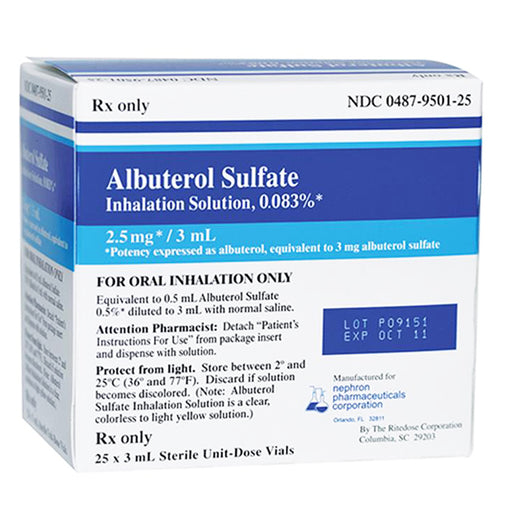
Original price $ 29.95Current price $ 18.50Albuterol Sulfate 0.083% Inhalation Nebulizer Solution 2.5 mg/3 ml by Ritedose 25/Box (Rx)
96 reviewsFast-Acting Relief for Asthma, COPD, and Bronchospasm – Professional-Grade Albuterol Nebulizer Solution Breathe easier and faster with Albuterol Su...
View full details🔒 Medical License Required -
 Sale 37%
Original price $ 45.00Current price $ 28.50
Sale 37%
Original price $ 45.00Current price $ 28.50Addipak Sodium Chloride Inhalation Solution 0.9% Saline 3 mL 100 Unit Dose Vials by Medine
30 reviewsSodium Chloride Inhalation Solution Experience the gold standard in respiratory care and airway hydration with Addipak Sodium Chloride Inhalation S...
View full details -
 Sale 25%
Original price $ 39.95Current price $ 29.95
Sale 25%
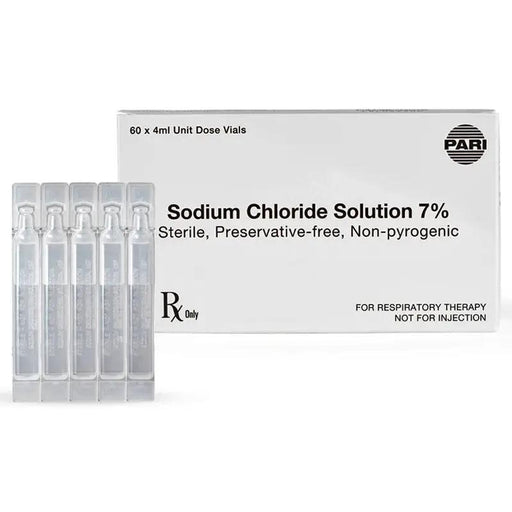
Original price $ 39.95Current price $ 29.95Sodium Chloride Inhalation Solution 7% Sterile 4 mL Vial, 60 Per Box (Rx)
5 reviewsSodium Chloride Inhalation Solution is used for inhalation therapy in patients with respiratory conditions such as cystic fibrosis, bronchiectasis,...
View full details🔒 Medical License Required -
 Sale 28%
Original price $ 99.95Current price $ 72.00
Sale 28%
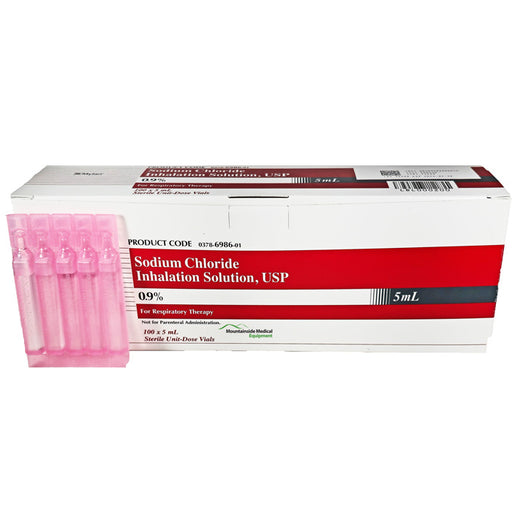
Original price $ 99.95Current price $ 72.00Sodium Chloride 0.9% Inhalation Solution 5 mL Plastic Vials 100/box by Mylan
No reviewsMylan Sodium Chloride 0.9% Inhalation Solution 5 mL is a sterile saline solution used primarily for respiratory therapy. It is administered via neb...
View full details🔒 Medical License Required -
 Sale 37%
Original price $ 19.95Current price $ 12.50
Sale 37%
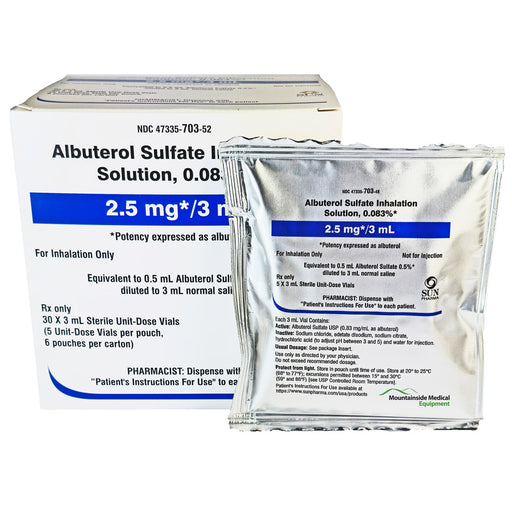
Original price $ 19.95Current price $ 12.50Albuterol Sulfate Inhalation Solution 0.083% USP 3 mL, 30 Count (Rx)
No reviewsAlbuterol Sulfate Inhalation Solution is used to treat and prevent bronchospasm in individuals with reversible obstructive airway disease, such as ...
View full details🔒 Medical License Required -
 Sale 30%
Original price $ 42.95Current price $ 29.95
Sale 30%
Original price $ 42.95Current price $ 29.95Ipratropium Bromide and Albuterol Sulfate 0.5 mg / 3 mg Per 3 mL Ampules for Inhalation (RX)
No reviews#1 Dual-Action Nebulizer Medication for Asthma, COPD & Acute Bronchospasm Relief Discover rapid, doctor-recommended respiratory relief with Ipr...
View full details🔒 Medical License Required -
 Sale 26%
Original price $ 39.99Current price $ 29.55
Sale 26%
Original price $ 39.99Current price $ 29.55Ipratropium Bromide 0.02% Inhalation Solution 2.5 mL by Ritedose 30/Box (Rx)
No reviewsIpratropium oral inhalation is used to prevent wheezing, shortness of breath, coughing, and chest tightness in people with chronic obstructive pulm...
View full details🔒 Medical License Required -
 Sale 22%
Original price $ 35.80Current price $ 27.95
Sale 22%
Original price $ 35.80Current price $ 27.95Ipratropium Bromide 0.02% Inhalation Solution 0.5 mg Per 2.5 mL Vials, 30 Count (Rx)
No reviewsIpratropium Bromide Inhalation Solution 0.02% is a bronchodilator used to treat respiratory conditions such as chronic obstructive pulmonary diseas...
View full details🔒 Medical License Required -
 Sale
$ 12.95
Sale
$ 12.95Albuterol inhalation Solution 0.083%, 3mL, 25/Box (Rx)
No reviewsAlbuterol inhalation Solution 0.083%, 3mL (also known as salbutamol) is used to treat wheezing and shortness of breath caused by breathing problems...
View full details🔒 Medical License Required -
 Sale 20%
Original price $ 489.00Current price $ 389.00
Sale 20%
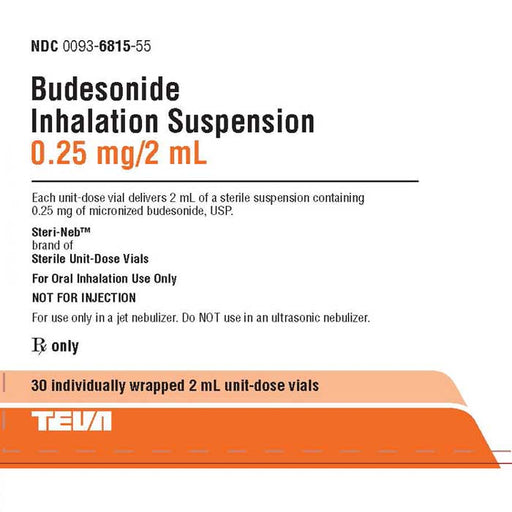
Original price $ 489.00Current price $ 389.00Budesonide Inhalation Suspension 0.25 mg / 2 mL Single Unit-Dose Vials (Rx) 30 Individually wrapped
No reviewsBudesonide Inhalation Suspension 0.25mg/2 mL Single Unit-Dose Vials are a medication used to treat asthma in both adults and children. This medicat...
View full details🔒 Medical License Required -
 Sale 37%
Original price $ 24.95Current price $ 15.75
Sale 37%
Original price $ 24.95Current price $ 15.75Albuterol Sulfate Inhalation Solution 0.083% (2.5 mg/ 3 mL) Unit-Dose Sterile Vials, 30 Count (Rx)
No reviewsFast, Reliable Relief for Asthma & COPD Albuterol Sulfate Inhalation Solution 0.083% (2.5 mg/3 mL) Unit-Dose Sterile Vials, 30 Count delivers p...
View full details🔒 Medical License Required -
 Sale
$ 59.99
Sale
$ 59.99Albuterol Sulfate for Inhalation 1.25 mg Ampules by Mylan 3 mL x 25/Box (Rx)
No reviewsAlbuterol sulfate for inhalation 1.25 mg is an inhalation agent used to treat bronchospasm in people with chronic obstructive pulmonary disease (CO...
View full details🔒 Medical License Required -
 Sale 21%
Original price $ 27.95Current price $ 22.00
Sale 21%
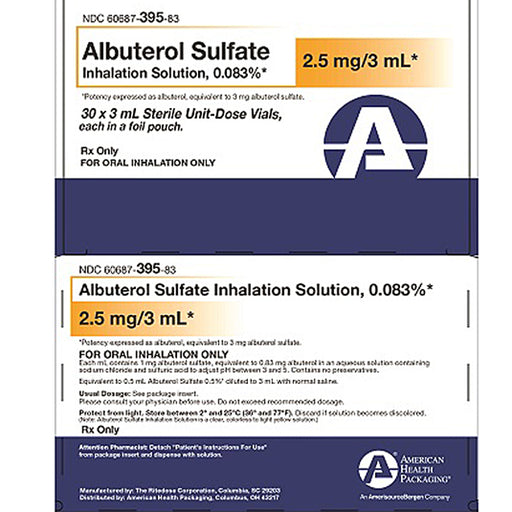
Original price $ 27.95Current price $ 22.00Albuterol Sulfate Inhalation Solution 0.083%, 3mL, 25/Box (Rx)
No reviewsAlbuterol inhalation Solution 0.083%, 3mL is a bronchodilator used to treat bronchospasm in patients with reversible obstructive airway disease. It...
View full details🔒 Medical License Required -
 Sale 29%
Original price $ 119.95Current price $ 85.00
Sale 29%
Original price $ 119.95Current price $ 85.00Budesonide Inhalation Suspension 0.5mg / 2 mL Single Unit-Dose Vials (Rx) 30 Individually wrapped
No reviews#1 Doctor-Recommended Inhaled Corticosteroid for Asthma Treatment & Respiratory Relief Unlock optimal breathing for your child or yourself with...
View full details🔒 Medical License Required -
 Sale 52%
Original price $ 29.95Current price $ 14.50
Sale 52%
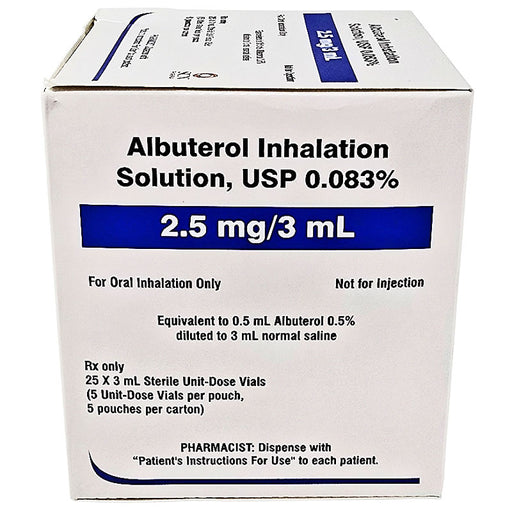
Original price $ 29.95Current price $ 14.50Albuterol Nebulizer Solution 0.83%, 2.5mg/3 mL Inhalation 3 mL x 25/Box (RX)
No reviewsOptimize Your Breathing – Powerful Relief from Asthma and COPD Albuterol Nebulizer Solution 0.83%, 2.5mg/3mL by Sun Pharmaceuticals delivers rapid,...
View full details🔒 Medical License Required -
 Sale 20%
Original price $ 79.00Current price $ 63.00
Sale 20%
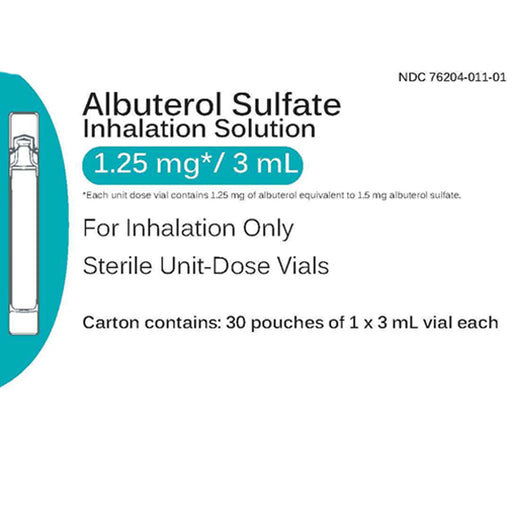
Original price $ 79.00Current price $ 63.00Albuterol Sulfate for Inhalation 1.25 mg Sterile Unit Dose Vials 3 mL x 25/Box (Rx)
No reviewsAlbuterol sulfate for inhalation 1.25 mg is an inhalation agent used to treat bronchospasm in people with chronic obstructive pulmonary disease (CO...
View full details🔒 Medical License Required -
 Sale 26%
Original price $ 94.95Current price $ 69.95
Sale 26%
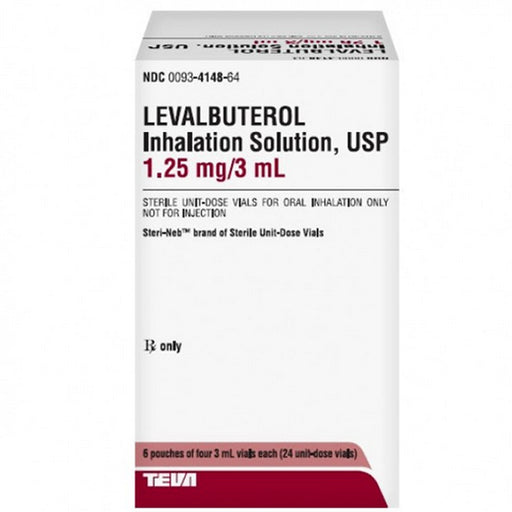
Original price $ 94.95Current price $ 69.95Levalbuterol Inhalation Solution 1.25mg Nebulizer Vial 3 mL x 30/Box - Teva (Rx)
No reviewsLevalbuterol Inhalation Solution 1.25 mg via nebulizer vial 3 mL is used to treat and prevent bronchospasm in individuals with reversible obstructi...
View full details🔒 Medical License Required -
 Sale 29%
Original price $ 59.95Current price $ 42.80
Sale 29%
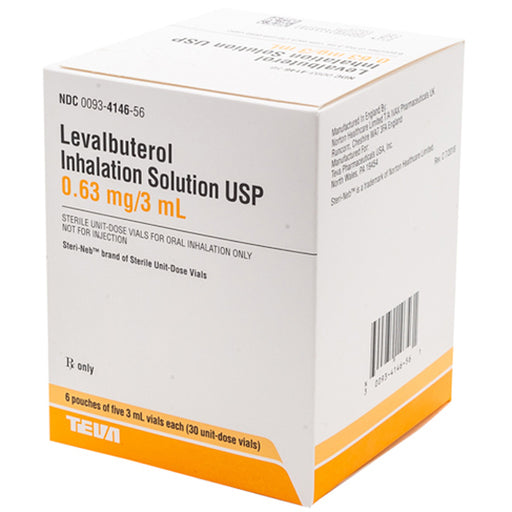
Original price $ 59.95Current price $ 42.80Levalbuterol Inhalation Solution 0.63mg Nebulizer Vial 3 mL x 30/Box - Teva (Rx)
No reviewsLevalbuterol inhalation solution 0.63mg treats and prevents bronchospasm in adults and children 4 years of age and older with reversible obstructiv...
View full details🔒 Medical License Required -
 Sale 33%
Original price $ 45.00Current price $ 29.95
Sale 33%
Original price $ 45.00Current price $ 29.95Ipratropium Bromide and Albuterol Sulfate Inhalation Solution 0.5 mg/3 mg Per mL, 30/Box (RX)
No reviewsBreathe Easier, Live Better: Your #1 Choice for Severe Asthma and COPD Rescue Are you searching for fast, long-lasting relief from shortness of bre...
View full details🔒 Medical License Required -
 Sale 28%
Original price $ 31.75Current price $ 22.95
Sale 28%
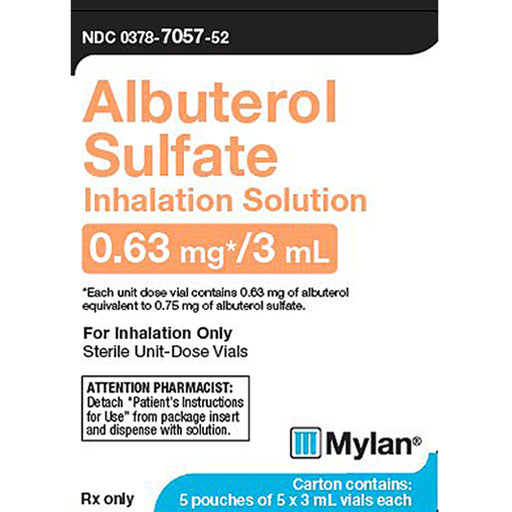
Original price $ 31.75Current price $ 22.95Albuterol Sulfate for Inhalation 0.63 mg Ampules 3 mL x 25/Box - Mylan (Rx)
No reviewsAlbuterol sulfate for inhalation 0.63 mg is an inhalation agent used to treat bronchospasm in people with chronic obstructive pulmonary disease (CO...
View full details🔒 Medical License Required -
 Sale 27%
Original price $ 99.95Current price $ 73.00
Sale 27%
Original price $ 99.95Current price $ 73.00Budesonide Inhalation Suspension 0.5 mg / 2 mL, 30 Vilas Per Box by Amneal (RX)
No reviewsFast-Acting Asthma and COPD Relief with Budesonide Inhalation Suspension Budesonide Inhalation Suspension by Amneal Pharmaceuticals is a prescripti...
View full details🔒 Medical License Required -
 Sale 31%
Original price $ 115.95Current price $ 79.95
Sale 31%
Original price $ 115.95Current price $ 79.95Budesonide Inhalation Suspension 0.25 mg/2 mL Single Unit-Dose Vials, 30/Box (RX)
No reviewsTrusted Inhaled Corticosteroid for Asthma, Wheezing, and Chronic Lung Disease in Children and Adults Achieve long-lasting asthma control and superi...
View full details🔒 Medical License Required -
 Sale 36%
Original price $ 69.95Current price $ 45.00
Sale 36%
Original price $ 69.95Current price $ 45.00Budesonide Inhalation Suspension 0.5 mg/2 mL Nebulizer Solution 0.5 mL x 30 Vials (RX)
No reviewsBudesonide Inhalation Suspension (0.5 mg/2 mL Nebulizer Solution) Budesonide inhalation suspension is a corticosteroid (inhaled steroid) formulatio...
View full details🔒 Medical License Required -
 Sale 35%
Original price $ 48.95Current price $ 32.00
Sale 35%
Original price $ 48.95Current price $ 32.00Sodium Chloride Inhalation 7% Unit Dose 4 mL Ampule Vials, 60 Count (Rx)
No reviewsSodium Chloride for Inhalation 7% is a sterile, aqueous solution of sodium chloride for inhalation. The solution is used to help loosen and remove ...
View full details🔒 Medical License Required -
 Sale 37%
Original price $ 19.95Current price $ 12.50
Sale 37%
Original price $ 19.95Current price $ 12.50Ipratropium Bromide and Albuterol 0.5mg/3mg Nebulizer Solution 3 mL x 30/Box (RX)
No reviewsFast-Acting Dual Bronchodilator for Effective Respiratory Relief Optimize your breathing and lung function with Ipratropium Bromide and Albuterol I...
View full details🔒 Medical License Required -
 Sale 32%
Original price $ 139.95Current price $ 95.00
Sale 32%
Original price $ 139.95Current price $ 95.00Arformoterol Tartrate Nebulizer Solution Inhalation 15 mcg/2 mL 30/Pack (RX) Refrigerated
No reviewsArformoterol Tartrate Arformoterol tartrate is a long-acting inhaled bronchodilator (a β₂-adrenergic agonist) used for maintenance treatment of chr...
View full details🔒 Medical License Required -
 Sale 36%
Original price $ 49.95Current price $ 32.00
Sale 36%
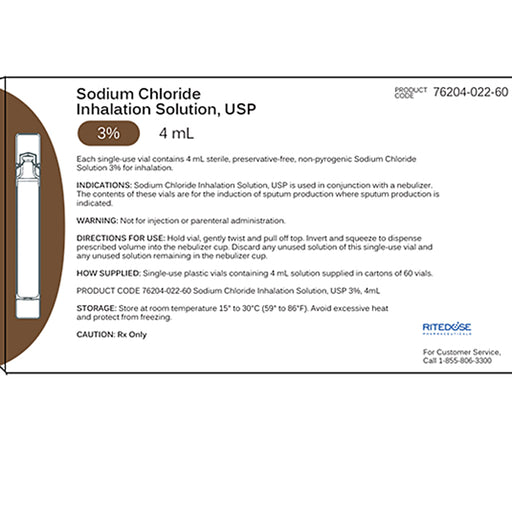
Original price $ 49.95Current price $ 32.00Ritedose Sodium Chloride 0.9% Inhalation Solution 3%, 4mL x 60 Vials Per Carton
No reviewsRitedose Sodium Chloride 0.9% Inhalation Solution 3%, 4mL x 60 Vials Per Carton. Sodium chloride 0.9% inhalation solution 3% is a sterile, non-pyro...
View full details🔒 Medical License Required -
 Sale 35%
Original price $ 399.95Current price $ 259.00
Sale 35%
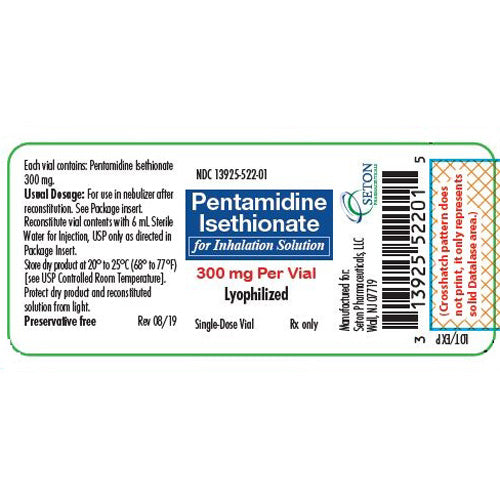
Original price $ 399.95Current price $ 259.00Pentamidine Isethionate 300 mg for Inhalation Solution by Seton Pharma (RX)
No reviewsPentamidine Isethionate 300 mg for Inhalation Solution is primarily used for the prophylactic treatment and prevention of Pneumocystis pneumonia (P...
View full details🔒 Medical License Required -
 Sale 26%
Original price $ 67.95Current price $ 49.95
Sale 26%
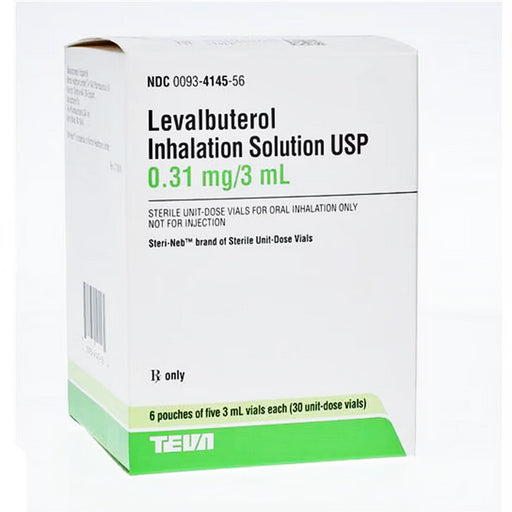
Original price $ 67.95Current price $ 49.95Levalbuterol Inhalation Solution 0.31 mg Nebulizer Vial 3 mL x 30/Box - Teva
No reviewsLevalbuterol inhalation solution is a bronchodilator that is used to treat bronchospasm in adults and children six years of age and older. It is av...
View full details🔒 Medical License Required -
 Sale 21%
Original price $ 37.95Current price $ 29.95
Sale 21%
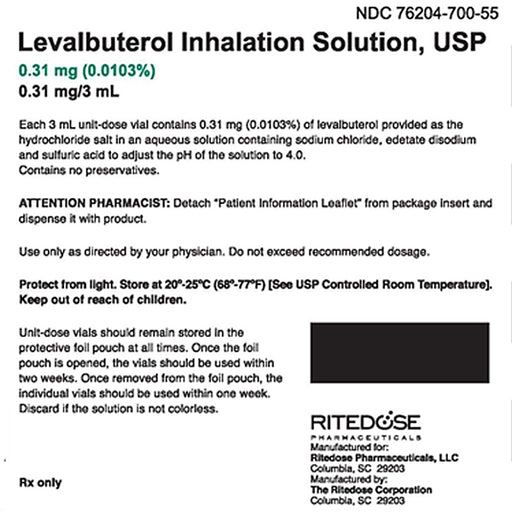
Original price $ 37.95Current price $ 29.95Levalbuterol Inhalation Solution 0.31 mg Nebulizer Vial 3 mL x 30/Box - Ritedose
No reviewsLevalbuterol inhalation solution is a bronchodilator that is used to treat bronchospasm in adults and children six years of age and older. It is av...
View full details🔒 Medical License Required -
 Sale 19%
Original price $ 169.95Current price $ 137.00
Sale 19%
Original price $ 169.95Current price $ 137.00Arformoterol Tartrate Inhalation Solution 15 mcg Per 2 mL Ampules 30 Count (RX)
No reviewsArformoterol Tartrate Inhalation Solution 15 mcg per 2 mL ampules are used for the long-term management of chronic obstructive pulmonary disease (C...
View full details🔒 Medical License Required


People Also Searched For
Nebulizer Solutions (Inhalation Therapy Liquids)
Nebulizer solutions are sterile liquid medications or diluents that are aerosolized into a fine mist by a nebulizer machine for inhalation into the lungs. They are used to treat various respiratory conditions because the aerosolized medication can travel deep into the airways and lungs. A nebulizer converts the solution into droplets small enough to be inhaled (usually via a mouthpiece or mask). This direct-delivery method is especially helpful for young children or anyone who cannot use a handheld inhaler effectively.
Mechanism: The nebulizer solution (often containing medication plus saline) is placed into the nebulizer cup. Compressed air or ultrasonic vibrations then generate a breathable mist. The patient inhales normally while the device is operating, allowing the drug to deposit throughout the bronchial tree. Because nebulization delivers medication directly to bronchial receptors, onset can be relatively rapid for bronchodilators, while anti-inflammatory drugs act over days to weeks of regular use.
Uses
Nebulized solutions are used in many airway diseases where inhaled therapy is indicated. Common uses include:
- Asthma: Both acute relief and long-term control. Nebulized bronchodilators (e.g. albuterol) are used for acute wheezing or exacerbations. Inhaled corticosteroids (e.g. budesonide suspension) are used daily to suppress chronic inflammation in persistent asthma (especially in young children who use a nebulizer).
- Chronic Obstructive Pulmonary Disease (COPD): Nebulized therapies help relieve bronchospasm and improve airway patency in COPD exacerbations, including inhaled anticholinergics or beta-agonists.
- Cystic Fibrosis & Bronchiectasis: Mucus-thinning and antibiotic solutions are commonly inhaled. For example, hypertonic saline (3–7%) nebulization helps hydrate and loosen thick mucus in cystic fibrosis and bronchiectasis, and inhaled antibiotics (tobramycin, colistin) target chronic lung infections in these diseases.
- Respiratory Infections: As adjunct treatment in diseases like pneumonia or bronchiolitis, nebulizer solutions (saline or medications like racemic epinephrine) can ease breathing. In children with viral croup, a single dose of nebulized epinephrine is sometimes used to reduce airway swelling.
- Exercise-Induced Symptoms: On a prescription basis, a bronchodilator solution before exercise can prevent asthma symptoms.
- Palliative/Wheezing Disorders: In nebulized therapy for conditions like bronchiolitis, severe cough with sputum, etc., nebulized saline or bronchodilators may provide symptomatic relief.
Overall, nebulizer treatment is indicated whenever direct lung delivery of medication is needed. It is NOT used as an emergency reliever for an ongoing asthma attack (nebulized bronchodilators can be used in acute attacks, but steroids in nebulizers are preventive).
Common Types of Nebulizer Solutions
Nebulizer solutions can be pure diluents (like sterile saline) or solutions containing an active medication. Key categories include:
- Saline Solutions (Isotonic or Hypertonic): Sterile 0.9% sodium chloride (normal saline) is used as a diluent or to humidify and thin airway secretions. Higher-strength saline (e.g. 3%, 7%) is used as a mucolytic, especially in cystic fibrosis, to help mobilize mucus. Nebulized saline itself can help patients cough up sputum and is often mixed with medications. It is also used to rinse or humidify the airways.
- Bronchodilators: Medications that relax airway smooth muscle. The classic example is albuterol (salbutamol) inhalation solution (typically 2.5 mg/3 mL), a short-acting β₂-agonist that “opens” bronchi in asthma or COPD exacerbations. Another is levalbuterol (the R-enantiomer of albuterol) available in nebulized form. These are used for rapid relief of bronchospasm. Adrenergic bronchodilators are often combined with anticholinergics (see below) in a single nebulization solution.
- Anticholinergics: Ipratropium bromide is a nebulized anticholinergic bronchodilator. It inhibits vagal impulses to the airway, causing bronchodilation. It is indicated for bronchospasm in chronic lung disease and is often given together with a beta-agonist. For example, in severe asthma/COPD attacks, ipratropium nebulizer (0.5 mg) is used alongside albuterol. (It has a slower onset than β-agonists and helps maintain opening of airways.)
- Inhaled Corticosteroids: Suspensions of corticosteroids (e.g. budesonide 0.25–1 mg/2 mL, or dexamethasone) can be nebulized for anti-inflammatory effect. These are mainly used for maintenance therapy in asthma or wheezing disorders, not for immediate relief. Budesonide Respules are a common example. They reduce airway inflammation over time, decreasing asthma symptoms and exacerbations. Nebulized steroids must be taken regularly (often twice daily) for best effect.
- Mucolytics and Mucokinetics: Beyond saline, other agents are used to thin mucus. For cystic fibrosis, dornase alfa (Pulmozyme) is a DNAse enzyme given by nebulization to break down thick DNA-containing sputum. N-acetylcysteine (NAC) is a mucolytic that can be nebulized to reduce mucus viscosity. (NAC also has antioxidant effects on airway lining fluid.) These improve clearance of pulmonary secretions.
- Inhaled Antibiotics: Certain pulmonary infections are treated by inhaled antibiotics. Examples include tobramycin or aztreonam lysinate nebulization for chronic Pseudomonas infection in cystic fibrosis. These solutions deliver high local drug concentrations to the lungs.
- Other Agents: Rarely, a physician may order other nebulized drugs: epinephrine for acute croup (as racemic epinephrine), furosemide nebulization (sometimes used off-label in refractory pulmonary edema), or inhaled heparin in specific settings. Nebulized anesthetics or inhaled antivirals are under research.
Each nebulizer solution comes either as a unit-dose vial (single-use) or a multi-dose vial with preservatives, but in clinical practice single-use doses are preferred to prevent contamination. Sterile water should never be used; only FDA-approved sterile solutions or medications are safe to nebulize.
Administration
A nebulizer treatment typically proceeds as follows:
- Preparation: Wash hands. Assemble the nebulizer (jet or mesh type) per instructions. Use a new sterile vial of solution (e.g. 3–5 mL) – common sizes are 2 mL, 3 mL, or 4 mL.
- Filling: Open the unit-dose vial and pour the entire contents into the nebulizer cup. Do not mix multiple drugs unless specifically prescribed to be combined. If a viscous medication (like dornase alfa) is prescribed, it is already premixed appropriately.
- Inhalation: Attach the mouthpiece or mask. Sit upright. Start the nebulizer device (air compressor or mesh vibration). Breathe normally through the mouthpiece/mask – inhaling deeply occasionally to ensure delivery to lower airways. Continue until the medication is gone (usually 5–15 minutes). One normally breathes steadily; pauses or coughing during treatment are common.
- Post-Treatment: After nebulizing a corticosteroid or antibiotic, rinse and spit the mouthwash (or gargle) every time to remove any residual medication and prevent oral irritation or infection. Clean the nebulizer parts according to the manufacturer’s instructions (rinse with sterile water and air-dry) to avoid contamination.
Tips: Use the nebulizer on a stable surface. Keep the head still and slightly tilted back to aid delivery. It may help to sit in front of a mirror or have someone observe the mist flow to know when it’s finished.
Side Effects and Adverse Reactions
Because nebulizer solutions act locally in the lungs and airways, most side effects are local or related to the specific drug:
- Bronchodilators (Albuterol, Ipratropium): Commonly cause tremors, nervousness, and tachycardia (especially albuterol) due to β2-agonist effects. Headache and throat irritation can occur. Ipratropium may cause dry mouth, blurred vision (if it contacts the eyes), or urinary retention (anticholinergic effects). Rarely, paradoxical bronchospasm (tightening of airways) can happen with any inhaled bronchodilator.
- Inhaled Corticosteroids: The most frequent issues are local: oral thrush (white patches in the mouth), hoarseness, sore throat, and cough. These occur because residual steroid on the oropharynx can promote yeast growth. Rinsing the mouth after use greatly reduces this risk. Systemic side effects (like adrenal suppression or growth retardation) are possible only with very high doses or prolonged therapy; they are rare with standard nebulized doses. At high chronic doses, signs of Cushing’s syndrome or decreased bone density could nevertheless emerge. Patients should be monitored on long-term therapy.
- Nebulized Saline: Generally well tolerated. Some patients cough or feel throat irritation as saline is inhaled. Hypertonic saline (3–7%) can sometimes provoke bronchospasm; clinicians often pre-medicate with a bronchodilator or start with a lower concentration in sensitive patients. Allergic reactions to saline are extremely rare (saline contains only salt).
- Mucolytics: Dornase alfa and NAC can cause hoarseness and throat irritation. Some patients feel a bitter taste from NAC. Iodine allergy is irrelevant for SF (sulfite preservatives might provoke asthma in susceptible patients).
- Inhaled Antibiotics: May cause cough, bronchospasm, or wheezing (slow the inhalation if this happens). Local irritation is common, but systemic toxicity is minimized by inhalation. Patients on nebulized aminoglycosides should still have periodic hearing and kidney checks, although blood levels are typically low.
- General: All nebulizer solutions must be used cautiously in patients with acute lung infections or tuberculosis, as steroids could worsen infections. Nebulization can sometimes spread contagious pathogens (source: infection control context), so machines should be cleaned and patients isolated as needed. Proper cleaning prevents bacterial contamination of the device.
If any severe reactions (difficulty breathing, rash, swelling) occur during a nebulizer treatment, stop the treatment and seek medical attention. Report any side effects to a doctor; in the U.S., serious reactions can be reported to FDA MedWatch.
Precautions and Contraindications
- Proper Equipment: Use only a nebulizer device that meets specifications (e.g. overlaps with oxygen tubing or compressor). A mouthpiece is preferred over a mask for older children/adults to reduce drug loss; infants may need a mask. Follow the manufacturer’s instructions for assembly. Only respirable solutions (sterile, preservative-free or specifically formulated for inhalation) should be nebulized – do not use tap water or non-sterile liquids. Always verify the solution is clear and at room/body temperature.
- Dosing and Mixing: Use the dose prescribed. Do not mix multiple vials or medications in the nebulizer cup unless guided by a physician. (Some powers combine albuterol+ipratropium or add saline to increase volume.) Follow the rule: “Unit-dose vials are for single use only.” Dispose of any unused solution after each treatment.
- Cleaning: Strictly clean and disinfect the nebulizer and accessories after each use to prevent contamination. Incorrect cleaning can lead to bacterial or fungal infections in the lungs. Replace tubing and masks periodically per guidelines.
- Monitoring: Patients (especially children) on daily nebulized steroids should have periodic pediatric check-ups to monitor growth and adrenal function. Anyone experiencing reduced efficacy (worsening asthma control) should be re-evaluated.
- Drug Interactions: Generally, systemic interactions are limited, but remember that nebulized steroids add systemically when combined with oral steroids or certain drugs. Medical providers will account for total steroid dose from all sources.
- Pregnancy/Breastfeeding: While inhaled drugs have less systemic exposure, many nebulizer medications cross the placenta or into breast milk. For example, albuterol and ipratropium are categories C/B respectively; budesonide is Category B. These are often still used in pregnancy if needed for asthma control (uncontrolled asthma risks are higher). Nonetheless, discuss all medications with a doctor if pregnant or nursing.
- Pediatrics: Nebulizer therapy is very common in pediatrics since young children can’t usually coordinate inhalers. Dosing is often weight-based for drugs like albuterol (e.g. 0.15 mg/kg). Equipment should have appropriately sized masks.
- Elderly: Older adults may have difficulty with the force required to breathe normally, so ensure they have appropriate assistance or a suitable device. Monitor for cardiac effects of bronchodilators, since tachycardia can stress the heart.
Summary
Nebulizer solutions are sterile medications or saline preparations designed for inhalation into the lungs via a nebulizer device. They are an effective way to deliver respiratory drugs—bronchodilators (albuterol, ipratropium), inhaled steroids (budesonide), mucolytics (saline, NAC, DNAse), antibiotics (tobramycin)—directly to the airways in conditions like asthma, COPD, cystic fibrosis and others. Proper administration requires correct nebulizer use and cleaning. Side effects are mostly local (thrush, cough, tachycardia) and depend on the medication nebulized. Overall, nebulized therapy allows medications to reach deep lung tissues, providing symptom relief while minimizing systemic exposure, especially useful in children and severe disease.