
Filters
Availability
Price
$
-
$
$0
$395
Vendor
Collection
Tags
- Aesthetic Supplies MedSpa Supplies & Cosmetic Surgery Supplies (4)
- BD Vacutainer (44)
- blood collection (18)
- Blood tubes (2)
- Clot Activator (6)
- Serum tube (1)
- Serum Tubes (6)
- Venous Blood Collection Tubes (14)
- Venous Tubes (2)
- draw blood (1)
- needle (1)
- needle free (1)
- tube holder (1)
- Vacutainer Tube Holder (1)
- 8.5 mL blood collection tube (1)
- blood collection supplies (1)
- Chemistry Panels (4)
- clinical lab blood draw tube (1)
- hospital blood tubes (1)
- lab testing serum tubes (1)
- Phlebotomy Supplies (1)
- red top (1)
- Serology (2)
- serum separator tube (1)
- SST blood collection tube (1)
- SST tube (1)
- Vacutainer SST (1)
- Activated Partial Thromboplastin Time (1)
- APTT (1)
- Citrate Blood Collection (1)
- Citrate Collection Tubes (1)
- Citrate Tubes (1)
- Coagulation (1)
- Coagulation Citrate Tubes (1)
- fibrinogen (1)
- Prothrombin Time (1)
- PT/INR tube (1)
- Sodium Citrate (1)
- Tube for Coagulation (1)
- Vacutainer Plus (2)
- 367815 (1)
- anticoagulant (1)
- BD Vacutainer Plus (1)
- Plastic Serum Tubes (1)
- Rapid Serum Tube (RST) (1)
- Serum Blood Collection (2)
- Serum Blood Tubes (1)
- BD Hemogard (9)
- EDTA (2)
- EDTA Tubes (3)
- Hemogard Closure (11)
- K2 EDTA (3)
- Plastic Tube (5)
- Potassium Ethylene Diamine Tetra Acetic acid (2)
- Chemistry test (1)
- Conventional Closure (2)
- Flow cytometry (1)
- Green Tubes (1)
- Hematology (2)
- Heparin Tubes (5)
- Sodium Heparin (3)
- Sodium Heparin Additive (2)
- Toxicology (3)
- Eclipse blood collection needle (1)
- Needle Holder (1)
- EDTA Additive (1)
- PST Venous (1)
- Blood banking (1)
- Blood Group Typing (1)
- Specialty Tubes (1)
- Adapter (1)
- indwelling catheter (1)
- IV Access Device (1)
- IV Access Tube (1)
- Multiple Sample Adapter (1)
- Vacutainer Adaptor (1)
- Separator Gel Additive (1)
- Serum Separation Transport (3)
- SST Tubes (6)
- Lithium Heparin (4)
- Lithium Heparin Additive (3)
- Plasma Determinations (3)
- Blood Donor Screening (4)
- Infectious Disease Testing (4)
- test blood (1)
- Colect Blood Sample (1)
- Red Top (1)
- red top tube (1)
- Red Tubes (1)
- Sample Collection (1)
- Serum Blood Collection Tubes (1)
- Blood Tubes No Additive (1)
- Polyethylene Terephthalate (1)
- Secondary Tube (2)
- Arterial Blood Gases (2)
- Electrolyte Testing (2)
- Blood Crossmatching (2)
- Blood Smears (2)
- Blood Typing (2)
- Collecting Whole Blood (1)
- Complete Blood Count (2)
- Hemoglobin A1c (2)
- Hematology Tests (1)
- Vacutainer Specialty (1)
- Z Tube (1)
- Plasma Tube (1)
- Serum clot activator (1)
- Trace Element (1)
- Trace Element Testing (1)
- Capillary (2)
- Capillary Blood Collection Tubes (1)
- capillary tubes (1)
- Chemistry Tests (1)
- Endocrinology (1)
- Microgard Closure (3)
- Microtainer Tubes (3)
- Red Blood Cells (1)
- Serum Separator Additive (1)
- Blood Sampling (1)
- PST Blood Collection Tubes (1)
- PST Tubes (1)
- Chemistry Testing (2)
- Fluoride Tubes (2)
- Potassium Oxalate (1)
- sodium fluoride (1)
- Conical Tubes (1)
- Ethyl Paraben (2)
- Sodium Propionate (2)
- urinalysis (4)
- Urinalysis Testing (3)
- Urinalysis Tube (3)
- Boric Acid (1)
- C&S Preservative (1)
- Preservative Tubes (1)
- Sodium Borate (1)
- Sodium Formate (1)
- test urine (3)
- Urine Tubes (1)
- Blood Collection Tube Caps (1)
- Seal Caps (1)
- Test Tube Caps (1)
- autoclavable (1)
- Centrifugation (1)
- Chemicals (1)
- Experiments (1)
- Laboratory (2)
- Laboratory Supplies (2)
- Microbiology (1)
- Research (1)
- Samples (1)
- Sterility (1)
- BD Tubes (1)
- Thrombin Based (1)
- Fluoride Blood Collection Tubes (1)
- Diagnostic (1)
- Laboratories (2)
- Plastic Tubes (1)
- Urine Collection (1)
- Urine Test Tubes (1)
- Yellow Tube (1)
- Blood Collection Holder (1)
- Prevent HT (1)
- 13 mm Caps (1)
- Blood Drawing Tubes (1)
- Blood Tube Caps (1)
- Flange Plug Caps (1)
- Plastic Culture Tubes (1)
- Test tube Caps (1)
- Tube Closure (1)
- Glycolytic Inhibitor (1)
- Automated Process (1)
- Microtainer MAP Microtube (1)
- Capillary Tubes (1)
- Clotting (1)
- Diagnosis (1)
- Microtainer Brand Tubes (2)
- plasma (1)
- Preserve Blood Specimens (1)
- Capillary Blood Specimens (1)
- Transport Blood (1)
- Urinalysis Tubes (1)
- Urine Testing (1)
- Analysis (1)
- Infections (1)
- Kidney (1)
- Sediment (1)
- ACD Solution (1)
- Acid Citrate Dextrose (1)
- Blood samples (1)
- DNA and Genetic Studies: (1)
- HLA Typing (1)
- Platelet Function Tests (1)
Vacutainer Tubes for Blood Collection & Testing
Vacutainer Tubes
Vacutainer tubes (often called evacuated blood collection tubes) are the standard devices used to draw and transport blood specimens for laboratory testing. Each tube is a sterile glass or plastic container sealed with a colored rubber stopper under vacuum. When the stopper’s seal is pierced by a blood-drawing needle, the internal vacuum automatically pulls in a fixed volume of blood. This closed-tube system has largely replaced older syringe-and-tube methods, because the vacuum ensures a precise blood volume and minimizes handling.
The colored stopper on a Vacutainer indicates the tube’s additive (if any). Different colors correspond to different preservatives or reagents for various tests. For example, a lavender-top tube contains EDTA anticoagulant for whole blood (hematology) tests, a light-blue tube contains sodium citrate for coagulation studies, and a red or gold stopper (with clot activator) yields clotted blood (serum) for chemistry panels. Because each tube’s vacuum is calibrated to its additive, the correct blood-to-additive ratio is guaranteed.
In practice, Vacutainers are used with a needle holder to collect multiple samples in one venipuncture. After drawing, tubes are capped and gently inverted (if they have anticoagulant) before laboratory processing. The one-time-use, closed design reduces contamination or hemolysis risk. Today, vacutainer tubes are ubiquitous in hospitals and clinics for routine blood tests – from complete blood counts to metabolic panels – providing a safe, standardized way to collect blood.
The name “Vacutainer” comes from BD (Becton Dickinson), which popularized this closed vacuum system, but the term is now used generically for any evacuated collection tube. These tubes are color-coded by stopper (cap) color to indicate the tube’s additive (anticoagulant, clot activator, etc.) or test type. For example, common Vacutainer colors include red (plain tube, no additive, for serum), lavender/purple (EDTA anticoagulant, for hematology like CBC), green (heparin anticoagulant, for plasma chemistry), gray (fluoride/oxalate, for glucose testing), and blue (sodium citrate, for coagulation assays). The stopper color (and often a printed label) ensures the correct additive and volume are used for each laboratory test. In short, Vacutainer tubes provide a safe, standardized way to collect and transport blood samples for virtually all routine blood tests.
Types of Vacutainer Tubes
Vacutainer tubes are specialized collection tubes used in phlebotomy to collect and store blood samples for testing and analysis. Each type of tube is designed for specific tests and contains different additives. Here are some common types of Vacutainer tubes:
Red Top: No additives. Used for serum collection in chemistry tests.
Gold or Tiger Top (SST): Contains gel for serum separation and a clot activator. Used for chemistry panels and serology tests.
Light Blue Top: Contains sodium citrate as an anticoagulant. Used for coagulation studies, like PT and APTT.
Green Top: Contains heparin (either sodium or lithium). Used for plasma or whole blood determinations in chemistry.
Lavender or Purple Top: Contains EDTA as an anticoagulant. Used for hematology tests, like complete blood counts (CBC).
Gray Top: Contains potassium oxalate as an anticoagulant and sodium fluoride as a glycolytic inhibitor. Used for glucose and lactate testing.
Pink Top: Contains EDTA. Similar to the lavender tube but used specifically for blood bank tests.
Yellow Top (SPS): Contains sodium polyanethol sulfonate. Used for blood cultures.
Yellow Top (ACD): Contains acid citrate dextrose. Used for HLA phenotyping and DNA testing.
Each tube is color-coded based on the additives it contains, and it is crucial to use the appropriate tube for the test being conducted to ensure accurate and reliable results.
Vacutainer tubes are sterile, evacuated glass or plastic tubes used to draw blood samples. They are single-use and supplied by needle holders in a closed system (minimizing exposure risk). Each tube’s stopper color indicates its additive (anticoagulants, clot activators, gels, etc.) tailored to specific tests. After collection, the tubes are capped and can be stored or sent for analysis of serum, plasma or whole blood. “Vacutainer” was originally a BD brand name for these tubes, but the term is commonly used for any evacuated blood collection tube of this type.
Vacutainer Tubes – Blood Collection Guide
Vacutainer tubes (originally a BD brand) are sterile, evacuated (vacuum-sealed) blood collection tubes used in phlebotomy. When a needle punctures a patient’s vein, the vacuum automatically draws in a precise volume of blood. Each tube has a color-coded stopper indicating its contents: either a clot activator, anticoagulant, preservative or none. The color tells lab staff exactly what additive is inside (or if it’s plain for serum). For example, lavender or purple tops contain the anticoagulant EDTA (which binds calcium and preserves whole blood cells), so they are used for hematology tests like CBCs. In short, vacutainer tubes are categorized by stopper color to ensure the correct sample processing and accurate test results.
Color Coding & Uses of Common Tubes
Below are some standard vacutainer tube stoppers and their typical uses (manufacturer colors can vary slightly):
- Red-top (plain) – No additive (or sometimes clot activator). Allows blood to clot naturally, yielding serum. Used for many chemistry tests (e.g. hormones, drug levels) where serum is needed.
- Gold/“Tiger-top” (SST) – Clot activator plus a gel separator. After clotting, the gel forms a barrier between cells and serum. Widely used for routine chemistry panels (electrolytes, liver/kidney tests, lipids, etc.) because it gives clean serum.
- Light Blue – Contains sodium citrate (3.2% or 3.8%). Chelates calcium, preventing clotting. Used specifically for coagulation studies (e.g. PT/INR, aPTT, fibrinogen) because one can re-add calcium in the lab to test clotting function. Tubes must be filled to the proper volume (fill ratios are critical) to ensure the correct blood-to-additive ratio.
- Green (light or dark) – Contains heparin (sodium or lithium; sometimes gel). Heparin inhibits clotting by inactivating thrombin. Used when plasma is needed for chemistry tests or STAT labs (e.g. ammonia, ketones) and for blood gases/ionized calcium. Dark green tubes have sodium heparin and light-green tubes have lithium heparin (with gel separator). Both yield plasma for rapid testing (often used in emergency panels).
- Lavender (Purple) – Contains EDTA (K2EDTA). Strong calcium chelator that preserves cell morphology. Used for whole blood hematology tests (complete blood count/CBC, hemoglobin A1c) and many blood bank tests. It prevents clotting and preserves red/white cells well. (Because EDTA binds calcium so tightly, these tubes must be filled correctly and inverted gently to mix.)
- Pink – Also contains K2EDTA, but the stopper is pink. It’s essentially the same additive as lavender, but the pink-topped vacutainer is specifically used in transfusion medicine (blood bank). For example, type & screen and crossmatch samples are drawn in pink-top tubes. The pink tube is biohazard-labeled and ensures correct handling for transfusion.
- Gray – Contains potassium oxalate and sodium fluoride. The oxalate anticoagulant prevents clotting, while fluoride inhibits glycolysis. This tube is used for blood glucose testing (fasting glucose, glucose tolerance tests) and sometimes blood alcohol levels, because the fluoride preserves glucose in the sample for up to 24 hours.
(Other specialized tubes exist – e.g. Royal Blue tops for trace metal analysis, Tan EDTA tops for lead, Black tops for ESR – but the colors above cover the most common lab uses.)
Important: When drawing blood into multiple tubes, phlebotomists follow the recommended order of draw to prevent additive carryover (e.g. filling citrate tubes before EDTA tubes). Each tube’s instructions should be checked, but the color code itself ensures the collected sample goes to the correct test. In practice, a “Vacutainer tube guide” or chart is often kept in labs or on venipuncture carts to remind staff of the color–additive associations and typical test uses.
Vacutainer Tube Storage Best Practices
Vacutainer (evacuated) blood collection tubes must be stored under controlled conditions to preserve the vacuum seal and additives. Improper storage can weaken the vacuum or degrade tube components, causing under-filled draws or contaminated samples. Key guidelines include:
-
Temperature and Humidity: Store tubes at approximately room temperature. Industry sources recommend roughly 4–25 °C (40–77 °F). Do not freeze tubes – temperatures near or below 0 °C can crack the glass/plastic or compromise the seal. Likewise, avoid excessive heat above ~25 °C, which can deform stoppers or gel separators. Keep the storage area dry: relative humidity should be low (e.g. <85%) and away from damp or wet environments (moisture can damage tube materials and seals).
-
Light and Location: Do not expose tubes to direct sunlight or strong heat sources. Sunlight and heat (from heaters, radiators, direct air vents, etc.) can degrade tube plastics, stoppers, or separation gels. Store them in a cool, dry space away from windows or heating ducts. Many labs keep unopened tubes in ambient storage rooms or controlled-temperature cabinets. If possible, maintain them in the manufacturer’s stated temperature range (often printed on the box).
-
Handling and Packaging: Leave tubes sealed in their original packaging until use. The original foil or box protects them from dust, light and physical damage. Once opened, store tubes upright in a rack or holder. This keeps the vacuum seal intact and prevents accidental leakage or contamination of additives. Do not shake, drop or jostle tubes when handling – physical shock can crack the glass or break the stopper seal. Organized storage (using tube racks or partitioned boxes) helps avoid stacking or crowding, which can also stress tubes. Keep caps firmly in place at all times, and only remove them immediately before collection.
-
Shelf Life and Rotation: Always check and respect the expiration date on vacutainer tubes. Tubes do expire: over time the plastic/rubber stoppers can degrade and the vacuum will weaken. Use an explicit first-in/first-out (FIFO) system so older stock is used first . An out-of-date tube may under-fill (it can draw at least 90% of volume when new, but far less if expired). Discard any tube past its expiration, or any that show particulate contamination or visible damage. (For example, if you see sediment, cracks, or loose fragments inside a tube, do not use it.)
-
Additional Considerations: In certain environments, extra precautions apply. For example, facilities at high altitude (above ~1500–2000 meters or ~5000 ft) should use special “high-altitude” tubes with extra vacuum, because standard tubes will draw less blood as ambient pressure drops. Also note that tubes containing separator gel or clot activators are especially sensitive to storage conditions: extreme heat can alter the gel or additives, and freezing can damage glass or cause additives to precipitate.
In summary, always store vacutainer tubes sealed, upright, and in a cool, dry place as specified by the manufacturer. Follow FIFO rotation and never use tubes beyond their expiry. Proper storage—i.e. moderate temperature (≈4–25 °C), low humidity (< 85%), no direct sunlight, and stable handling—will preserve the tube vacuum and additive integrity. This ensures accurate blood draws and reliable lab results
-
 Sale 39%
Original price $ 64.95Current price $ 39.70
Sale 39%
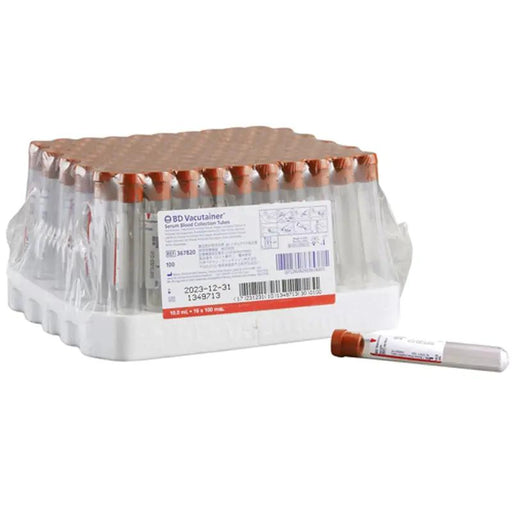
Original price $ 64.95Current price $ 39.70Serum Blood Collection Tubes 10 mL BD Vacutainer 16 mm x 100 mm, 100/box
BDNo reviewsBD Vacutainer Serum Blood Collection Tubes are used to collect blood samples that will be processed to obtain serum. These tubes typically contain ...
View full details -
 Sale 34%
Original price $ 22.95Current price $ 15.20
Sale 34%
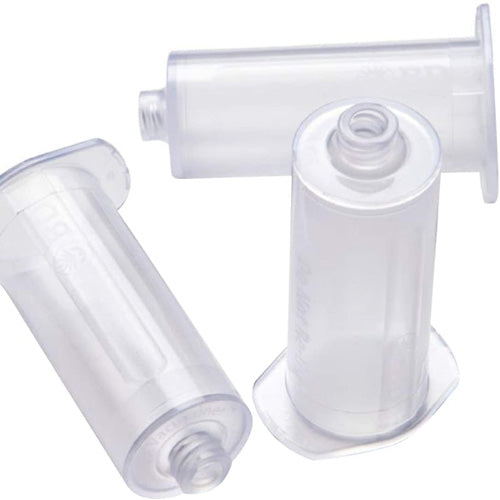
Original price $ 22.95Current price $ 15.20Blood Collection Tube Holder Standard Size For 13 mm and 16 Diameter Tubes 250/bag
Dynarex1 reviewBlood Collection Tube Holders have a slim, easy to handle design, enhancing the users control and flexibility. These tube holders are made of a tra...
View full details -
 Sale 18%
Original price $ 94.95Current price $ 77.80
Sale 18%
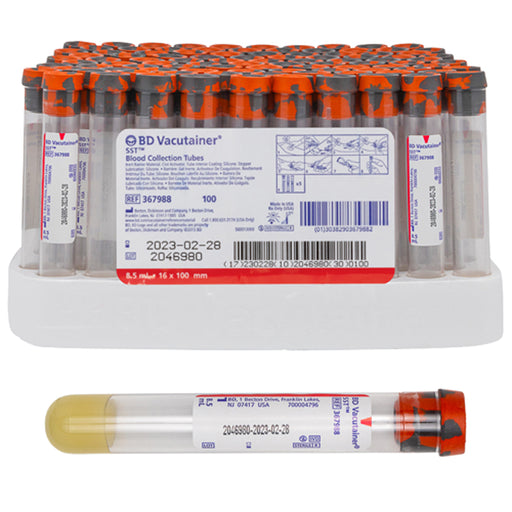
Original price $ 94.95Current price $ 77.80SST Venous Blood Collection Tubes BD Vacutainer with Red Tops, 8.5 mL 16 mm x 100 mm, 100/Box
BD2 reviewsThe Gold Standard for Serum Separator Tube (SST) Blood Draws Maximize the accuracy and safety of your lab diagnostics with the #1 doctor-recommende...
View full details -
 Sale 35%
Original price $ 67.95Current price $ 44.00
Sale 35%
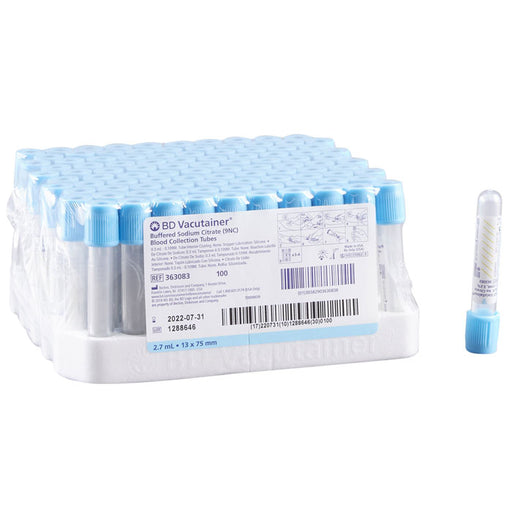
Original price $ 67.95Current price $ 44.00Citrate Blood Collection Tubes BD Vacutainer 2.7 mL with Hemogard Closure 13mm x 75 mm, 100/Tray
BDNo reviewsVacutainer Blue Top Tube for PT/INR, Coagulation, & Hemostasis Testing Ensure reliable and precise coagulation results in every blood draw with...
View full details -
 Sale 35%
Original price $ 52.00Current price $ 34.00
Sale 35%
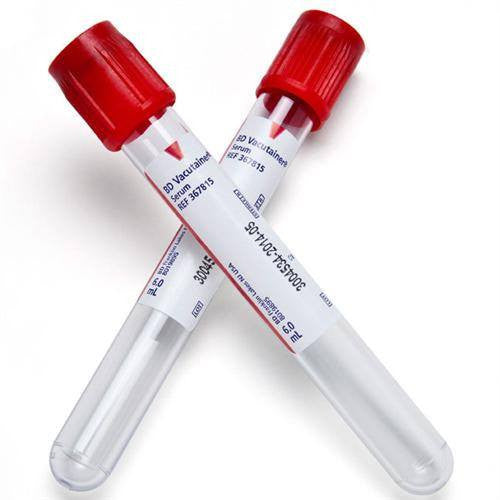
Original price $ 52.00Current price $ 34.00Venous Serum Blood Collection Tubes, BD Vacutainer Plus Red Top Tube with Clot Activator 6 mL Hemogard Closure 100/Box
BD1 reviewThe Ultimate Blood Collection Tube for Precise Serum Results, Laboratory Safety, and Efficient Workflow Experience superior accuracy and safety in ...
View full details -
 Sale 39%
Original price $ 39.95Current price $ 24.50
Sale 39%
Original price $ 39.95Current price $ 24.50EDTA Blood Collection Tubes 3 mL BD 367856 Vacutainer with Hemogard Closure 13mm x 75mm, 100/box
BDNo reviewsEDTA Blood Collection Tubes are used primarily for hematology tests. These tubes contain ethylenediaminetetraacetic acid (EDTA) as an anticoagulant...
View full details -
 Sale 30%
Original price $ 149.95Current price $ 104.50
Sale 30%
Original price $ 149.95Current price $ 104.50Sodium Heparin 10 mL Blood Collection Tubes, BD Vacutainer 16 mm x 100 mm, 100/box
BDNo reviewsSodium Heparin 10 mL blood collection tubes are used for collecting blood samples for tests that require plasma or whole blood. Sodium heparin acts...
View full details -
 Sale 37%
Original price $ 59.95Current price $ 38.00
Sale 37%
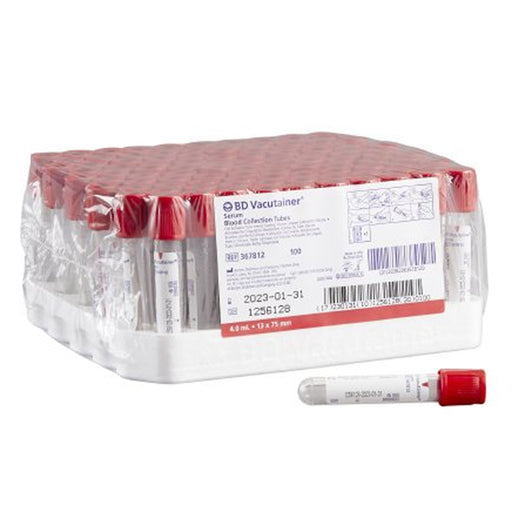
Original price $ 59.95Current price $ 38.00Serum Blood Collection Tubes BD 367812 Vacutainer Plus with Clot Activator 13 X 75mm 4 mL, Red
BDNo reviewsSerum Blood Collection Tubes are used for the collection and handling of blood specimens to be used in various diagnostic tests. Once the blood is ...
View full details -
 Sale 33%
Original price $ 44.95Current price $ 30.00
Sale 33%
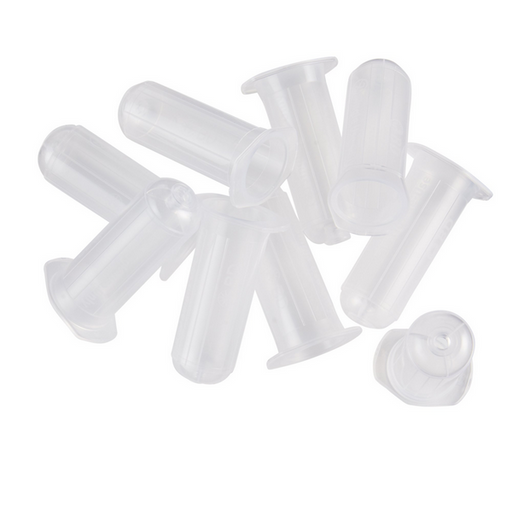
Original price $ 44.95Current price $ 30.00BD 364815 Vacutainer Clear Single-Use Tube Holder, 250/pk
BD1 reviewThe BD Vacutainer one-use tube holder is compatible with the entire BD Vacutainer blood collection system: the BD Vacutainer Eclipse blood collect...
View full details -
 Sale 23%
Original price $ 59.95Current price $ 46.00
Sale 23%
Original price $ 59.95Current price $ 46.00Venous Blood Collection Tubes BD Vacutainer with K2 EDTA Additive, 13 x 75 mm, 4 mL (Lavender), 100/box
BDNo reviewsVenous Blood Collection Tubes with K2 EDTA (dipotassium ethylenediaminetetraacetic acid) are primarily used for hematology tests. The K2 EDTA acts ...
View full details -
 Sale 14%
Original price $ 345.00Current price $ 295.00
Sale 14%
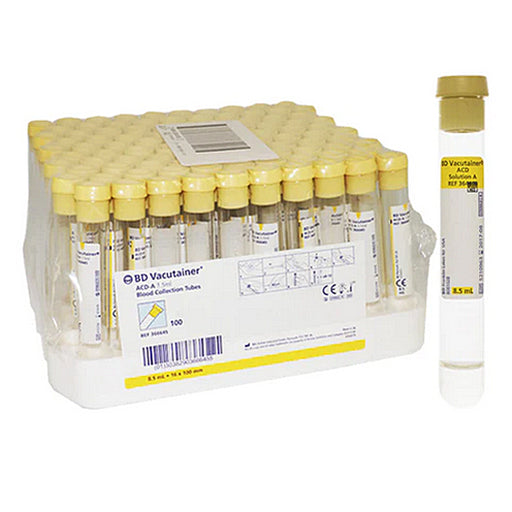
Original price $ 345.00Current price $ 295.00BD 364606 Vacutainer Specialty 8.5 mL Blood Collection Tubes 16mm x 100mm, 100/box
BD3 reviewsBD 364606 Vacutainer® Glass Blood Collection Tubes for Blood Group Typing, HLA Phenotyping and Paternity Testing, 16 x 100mm, 8.5mL Draw Volume, Pa...
View full details -
 Sale 35%
Original price $ 3.95Current price $ 2.58
Sale 35%
Original price $ 3.95Current price $ 2.58BD Vacutainer Luer-Lok Access Device with Pre-Attached Multiple Sample Adapter
BDNo reviewsThe BD Vacutainer® Luer-Lok™ Access Device is engineered for sterile, secure, and efficient specimen sampling. Designed with a reliable threaded lo...
View full details -
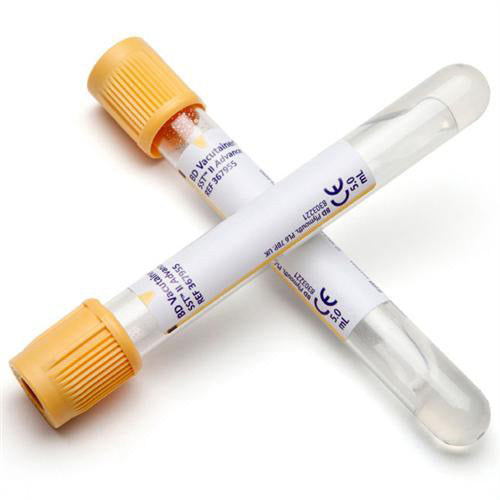 Sale 26%
Original price $ 65.95Current price $ 48.50
Sale 26%
Original price $ 65.95Current price $ 48.50SST Blood Collection Tubes with Clot Activator and Separator Gel Additive for 3.5 mL 13mm x 75mm with Hemogard Closure, 100/box
BDNo reviewsHeparin SST (Serum Separator Tube) Blood Collection Tubes with a clot activator and separator gel are used to collect and process blood samples for...
View full details -
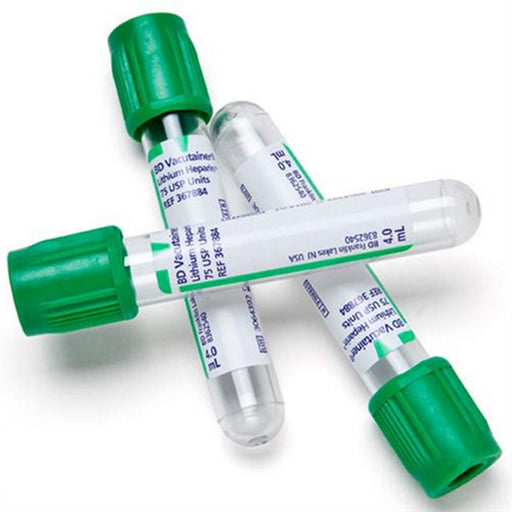 Sale 39%
Original price $ 129.95Current price $ 79.00
Sale 39%
Original price $ 129.95Current price $ 79.00Heparin Blood Collection Tubes with Lithium Heparin Additive 10 mL by BD Vacutainer 16mm x 100mm, 100/box
BDNo reviewsHeparin Blood Collection Tubes with Lithium Heparin are used primarily for plasma determinations in clinical chemistry. The lithium heparin acts as...
View full details -
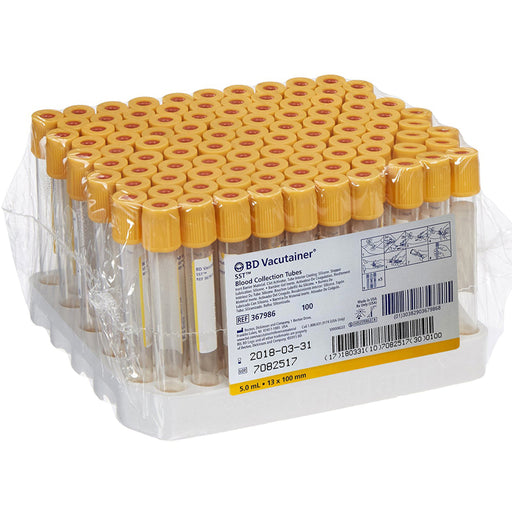 Sale 22%
Original price $ 79.95Current price $ 62.00
Sale 22%
Original price $ 79.95Current price $ 62.00BD Vacutainer SST Blood Collection Tubes 5 mL 13mm x 100mm, 100/box
BDNo reviewsBD 367986 Vacutainer SST Blood Collection Tubes add efficiency and safety to laboratory workflow. The prepared plastic tubes are used for blood s...
View full details -
 Sale 16%
Original price $ 225.00Current price $ 189.00
Sale 16%
Original price $ 225.00Current price $ 189.00Venous Blood Collection Tubes 10 mL BD Vacutainer Glass 16mm x 100mm, 100/box
BDNo reviewsThe Gold Standard for Reliable Blood Draws Empower your clinic, hospital, or laboratory with the highest quality blood collection solution trusted ...
View full details -
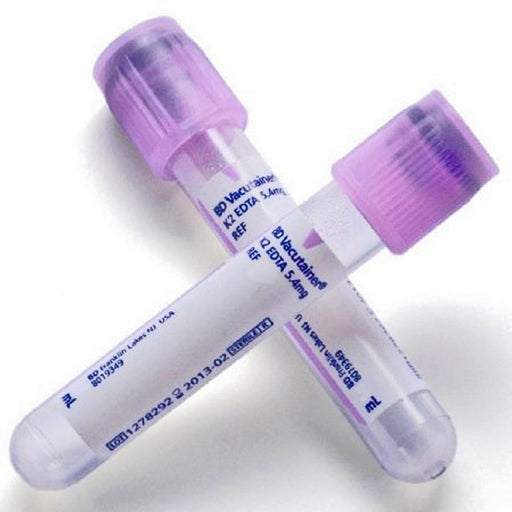 Sale 37%
Original price $ 125.00Current price $ 79.00
Sale 37%
Original price $ 125.00Current price $ 79.00BD Vacutainer EDTA Blood Collection Tubes 10 mL with Hemogard Closure 16mm x 100 mm, 100/box
BDNo reviewsBD 366643 Vacutainer EDTA 10 mL Tubes are plastic sample tubes for collecting whole blood. These collection tubes are coated on the inside with...
View full details -
 Sale 28%
Original price $ 75.95Current price $ 55.00
Sale 28%
Original price $ 75.95Current price $ 55.00BD Vacutainer No Additive (Z) 6 mL Blood Collection Tubes 13mm x 100mm, 100/box
BDNo reviewsBD Vacutainer® No Additive (Z) Plus Venous Blood Collection Tube Discard Tube Plain 13 X 100 mm 6 mL is a type of blood collection tube used in hea...
View full details -
 Sale 25%
Original price $ 64.95Current price $ 49.00
Sale 25%
Original price $ 64.95Current price $ 49.00EDTA Blood Collection Tubes BD Vacutainer 6 mL with Hemogard Closure 13mm x 100mm, 100/box
BDNo reviewsEDTA Blood Collection Tubes are used mainly for hematology tests. The EDTA acts as an anticoagulant by binding calcium ions, preventing blood from ...
View full details -
 Sale 26%
Original price $ 129.95Current price $ 96.00
Sale 26%
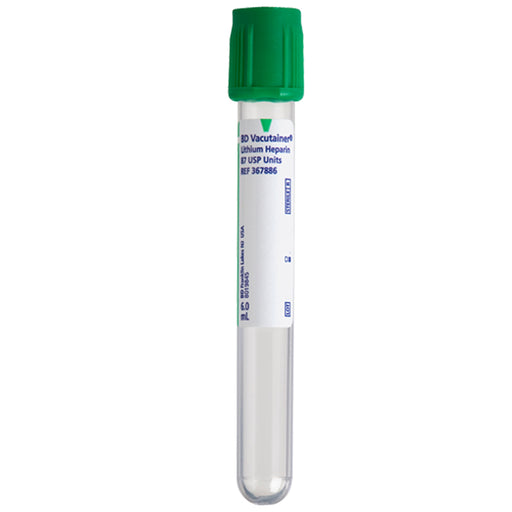
Original price $ 129.95Current price $ 96.00Lithium Heparin Blood Collection Tubes 6 mL BD Vacutainer, Green Cap, 13mm x 75mm, 100/box
BDNo reviewsLithium Heparin Blood Collection Tubes are used for collecting blood samples that require plasma for analysis. Lithium heparin acts as an antico...
View full details -
 Sale 33%
Original price $ 69.95Current price $ 47.00
Sale 33%
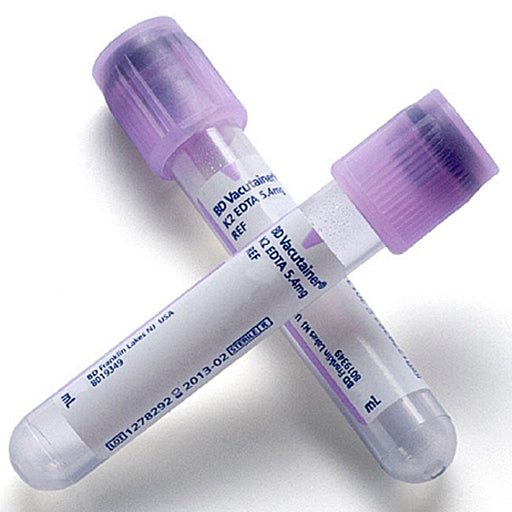
Original price $ 69.95Current price $ 47.00EDTA Blood Collection Tubes 2 mL BD Vacutainer 13mm x 75mm, 100/box
BDNo reviewsEDTA Blood Collection Tubes with K2 EDTA additive are used primarily for hematology tests. The K2 EDTA acts as an anticoagulant by binding calcium ...
View full details -
 Sale 37%
Original price $ 69.95Current price $ 44.00
Sale 37%
Original price $ 69.95Current price $ 44.00K2 EDTA Blood Collection Tubes 6 mL BD Vacutainer 13mm x 75mm, 100/box
BDNo reviewsK2 EDTA Blood Collection Tubes are used primarily for hematology tests. The K2 EDTA acts as an anticoagulant by binding calcium, preventing bloo...
View full details -
 Sale 27%
Original price $ 95.00Current price $ 69.00
Sale 27%
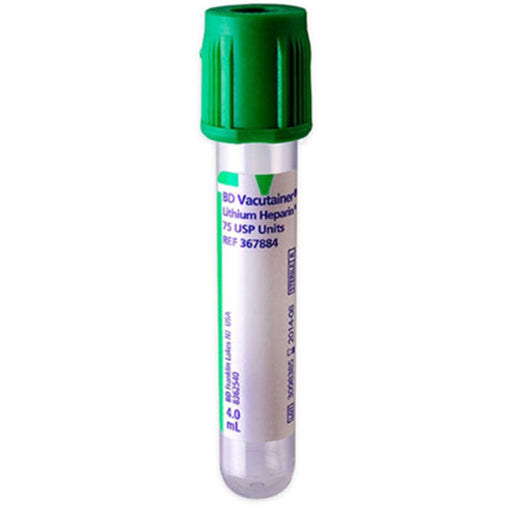
Original price $ 95.00Current price $ 69.00BD 367884 Vacutainer Lithium Heparin 4 mL Blood Collection Tubes 13mm x 75mm, 100/box
BDNo reviewsBD 367884 Vacutainer® Plastic Heparin Tubes are used for plasma determinations in chemistry. The Tubes have lithium or sodium heparin spray-coate...
View full details -
 Sale 38%
Original price $ 55.00Current price $ 34.00
Sale 38%
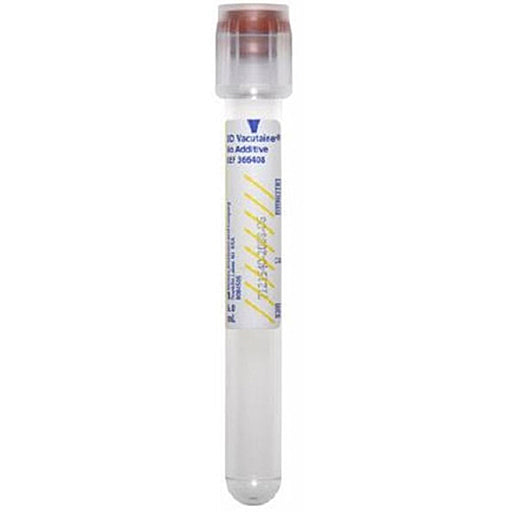
Original price $ 55.00Current price $ 34.00BD 366703 Vacutainer Specialty 3 mL No Additive (Z) Tube 13mm x 75mm, 100/box
BDNo reviewsThe BD Vacutainer No Additive (Z) Tube is a serum blood collection tube that does not contain an additive. The tube is designed for serum separatio...
View full details -
 Sale 30%
Original price $ 69.95Current price $ 48.95
Sale 30%
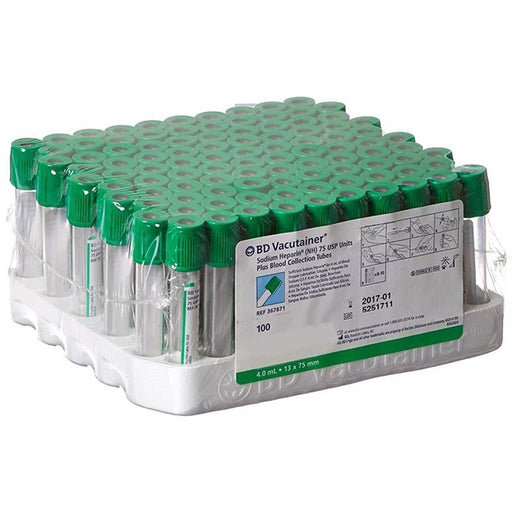
Original price $ 69.95Current price $ 48.95BD Vacutainer Lithium Heparin Blood Collection Tubes 13mm x 75mm, 100/box
BD1 reviewBD 366664 Vacutainer Lithium Heparin Blood Collection Tubes 13mm x 75mm. BD Vacutainer Heparin Tubes are spray-coated with Lithium heparin 37 USP ...
View full details -
 Sale 36%
Original price $ 149.95Current price $ 96.00
Sale 36%
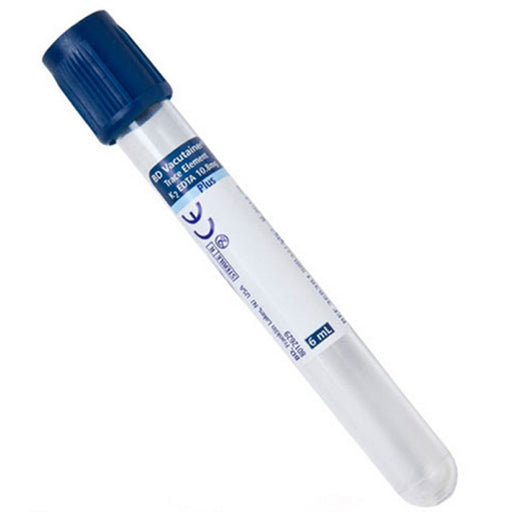
Original price $ 149.95Current price $ 96.00BD Vacutainer SPC Plus 6 mL Blood Collection Tubes for Trace Element Testing 13mm x 100mm, 100/box
BDNo reviewsBD Vacutainer SPC Plus 6 mL Blood Collection Tubes are a type of blood collection tube manufactured by BD (Becton, Dickinson and Company) for use...
View full details -
 Sale 28%
Original price $ 129.95Current price $ 94.00
Sale 28%
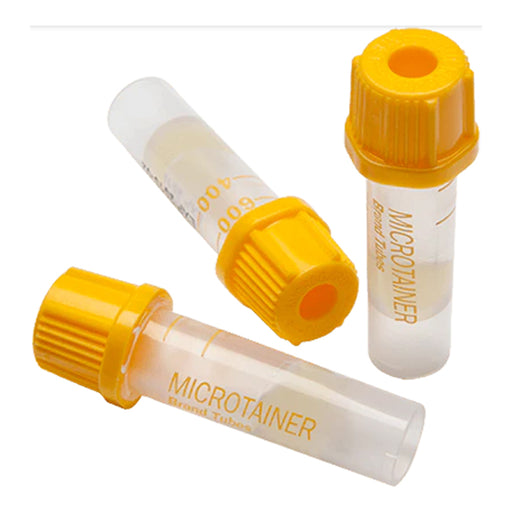
Original price $ 129.95Current price $ 94.00Microtainer SST Capillary Blood Collection Tubes with Serum Separator Additive and Microgard Closure 15.3 x 46mm, 50/box
BDNo reviewsMicrotainer SST (Serum Separator Tube) Capillary Blood Collection Tubes with a serum separator additive are designed for collecting small blood sam...
View full details -
 Sale 31%
Original price $ 115.00Current price $ 79.00
Sale 31%
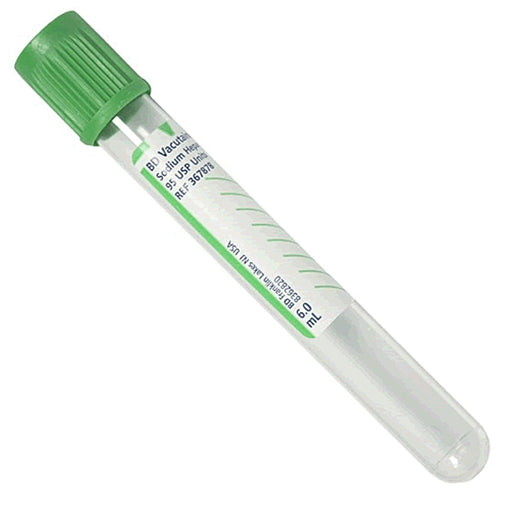
Original price $ 115.00Current price $ 79.00Sodium Heparin Blood Collection Tubes 6 mL BD Vacutainer, Green Cap, 13mm x 100mm, 100/box
BDNo reviewsSodium Heparin Blood Collection Tubes are used for collecting blood samples where plasma is required for testing. Sodium heparin acts as an anticoa...
View full details -
 Sale 29%
Original price $ 99.00Current price $ 69.95
Sale 29%
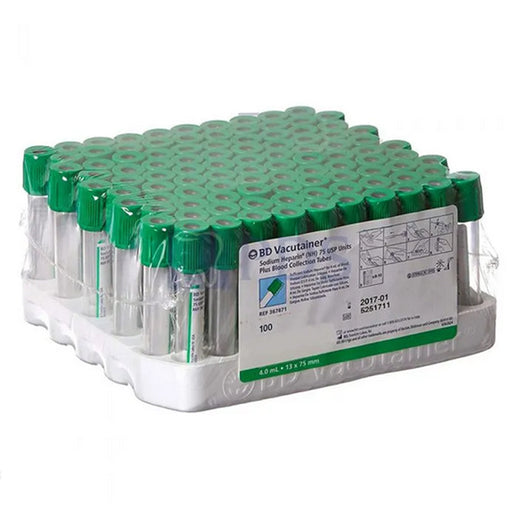
Original price $ 99.00Current price $ 69.95BD Vacutainer Sodium Heparin 4 mL Blood Collection Tubes 13mm x 75mm 100/Pack
BDNo reviewsBD 367871 Vacutainer® Plastic Heparin Tubes are used for plasma determinations in chemistry. The Tubes have a sodium heparin spray-coated at inne...
View full details -
 Sale 14%
Original price $ 99.95Current price $ 86.00
Sale 14%
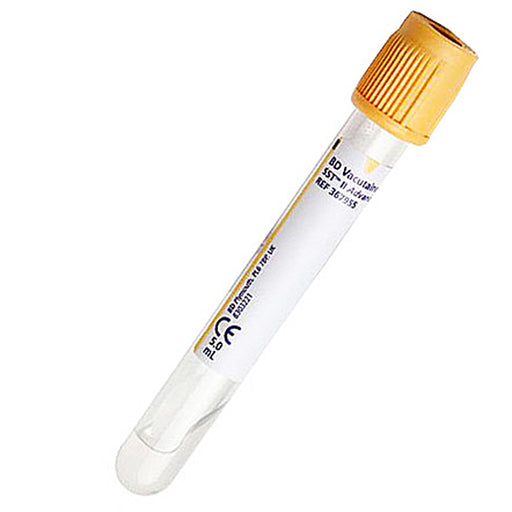
Original price $ 99.95Current price $ 86.00BD Vacutainer SST Blood Collection Tubes 4 mL 13mm x 100mm, 100/box
BDNo reviewsBD 367977 Vacutainer SST Blood Collection Tubes add efficiency and safety to laboratory workflow. The prepared plastic tubes are used for blood s...
View full details -
 Sale 20%
Original price $ 78.95Current price $ 63.00
Sale 20%
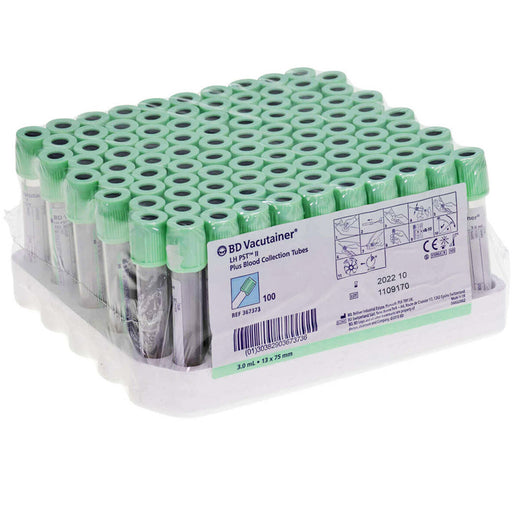
Original price $ 78.95Current price $ 63.00BD Vacutainer PST Blood Collection Tubes 3 mL 13mm x 75mm, 100/box
BD1 reviewBD 367960 Vacutainer PST Blood Collection Tubes 3 mL 13mm x 75mm, 100/box. BD Vacutainer® PST™ Tubes contain spray-coated lithium heparin and a...
View full details -
 Sale 22%
Original price $ 72.95Current price $ 57.00
Sale 22%
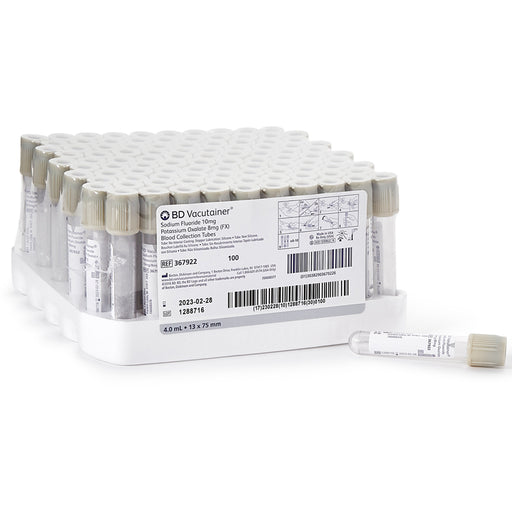
Original price $ 72.95Current price $ 57.00BD Vacutainer Fluoride Blood Collection Tubes 4 mL with Hemogard Closure 13mm x 75mm, 100/box
BDNo reviewsBD 367922 Vacutainer Fluoride Blood Collection Tubes 4 mL with Hemogard Closure 13mm x 75mm. BD Vacutainer Venous Blood Collection Tube Glucose ...
View full details -
 Sale 31%
Original price $ 129.95Current price $ 89.95
Sale 31%
Original price $ 129.95Current price $ 89.95BD 364992 Vacutainer Urinalysis Conical Preservative Tubes 16 x 100mm, 8.0 mL, 100/box
BD1 reviewThe BD Vacutainer Urinalysis Conical Preservative Tubes, product number 364992, are crafted to preserve and maintain urine sample integrity for acc...
View full details -
 Sale 35%
Original price $ 129.95Current price $ 84.00
Sale 35%
Original price $ 129.95Current price $ 84.00BD 364951 Vacutainer Urinalysis C&S Preservative Tubes 13x75mm, 4.0 mL, 100/box
BDNo reviewsThe BD Vacutainer Urinalysis C&S Preservative Tubes, product number 364951, are expertly engineered to preserve urine samples for culture and s...
View full details -
 Sale
from $ 23.20
Sale
from $ 23.20Universal Polyethylene Snap Caps for Blood Collection Tubes, Fits Most 12mm, 13mm and 16mm Tubes, 1000 Per Bag
McKessonNo reviewsUniversal Polyethylene Snap Caps for Blood Collection Tubes are plastic lids designed to fit most 12mm, 13mm, and 16mm blood collection tubes. Thes...
View full details -
 Sale 34%
Original price $ 67.95Current price $ 45.00
Sale 34%
Original price $ 67.95Current price $ 45.00Test Tube 12 x 75 mm Plain 5 mL Without Closure Polypropylene Tubes 1000/Bag
McKessonNo reviewsTest Tube 12 x 75 mm Plain 5 mL Without Closure Polypropylene Tubes are primarily used in laboratory settings for conducting experiments, mixing, a...
View full details -
 Sale 21%
Original price $ 325.00Current price $ 258.00
Sale 21%
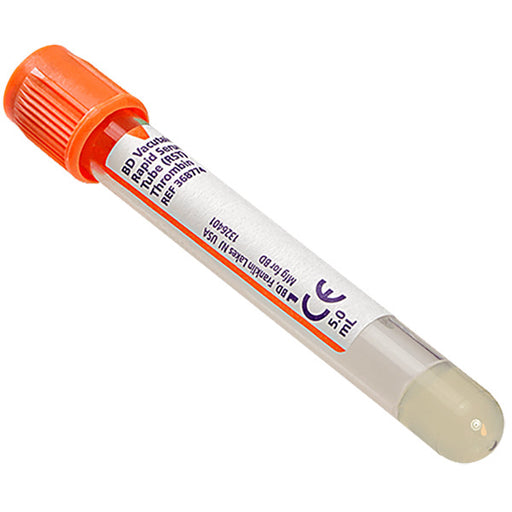
Original price $ 325.00Current price $ 258.00BD Vacutainer Rapid Serum Tubes (RST) Blood Collection Tubes 8 mL 13mm x 100mm, 100/box
BDNo reviewsBD 368774 Vacutainer Rapid Serum Tubes (RST) Blood Collection Tubes 8 mL 13mm x 100mm. The BD Vacutainer ® Rapid Serum Tube (RST) is a new and ...
View full details -
 Sale
Low Stock
$ 79.00
Sale
Low Stock
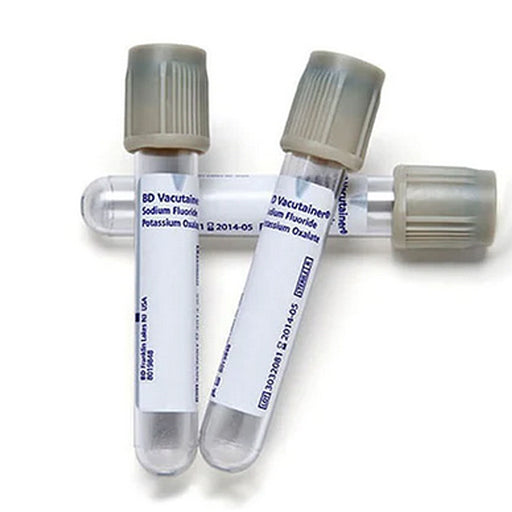
$ 79.00BD Vacutainer Fluoride Blood Collection Tubes 2 mL with Conventional Stopper 13mm x 75mm, 100/box
BDNo reviewsBD 367587 Vacutainer SST Fluoride Blood Collection Tubes add efficiency and safety to laboratory workflow. The prepared plastic tubes are used f...
View full details -
 Sale 23%
Original price $ 59.95Current price $ 46.00
Sale 23%
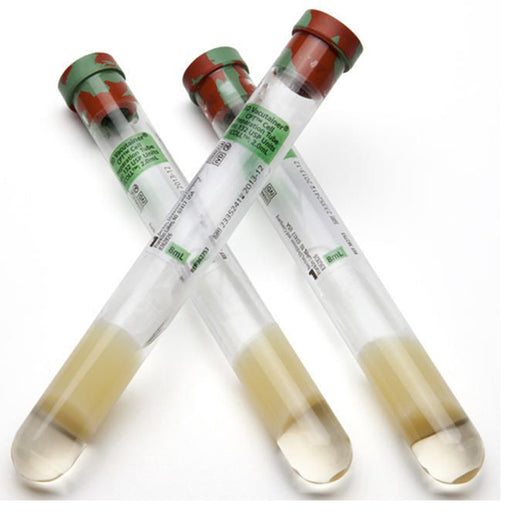
Original price $ 59.95Current price $ 46.00BD 366704 Vacutainer Specialty 3 mL Blood Collection Tubes with No Additives 13mm x 75mm, 100/box
BDNo reviewsThe BD Vacutainer No Additive tube is a serum blood collection tube that does not contain an additive. The tube is designed for serum separations. ...
View full details -
 Sale 17%
Original price $ 475.00Current price $ 395.00
Sale 17%
Original price $ 475.00Current price $ 395.00BD 364979 Vacutainer Plus Urinalysis Tubes 16 x 100mm, 10.0 mL, 1000/Case
BDNo reviewsBD Vacutainer Plus Urinalysis Tubes are specifically engineered to collect and store urine specimens securely. The tubes maintain sample integrity...
View full details -
 Sale 34%
Original price $ 37.95Current price $ 24.95
Sale 34%
Original price $ 37.95Current price $ 24.95Blood Collection Tube Holders, Universal Fit, Clear, Non-Stackable, Multi-Sample 13 mm and 16 mm (250 Per Bag)
McKessonNo reviewsBlood collection tube holders are medical devices used to hold multiple blood collection tubes securely in place during a blood draw procedure. The...
View full details -
 Sale
from $ 22.95
Sale
from $ 22.95Blood Test Tubes Closure Polyethylene Flanged Plug Caps 13 mm For Use with 13 mm Blood Drawing Tubes
McKessonNo reviewsBlood test tube closure polyethylene flanged plug caps are small plastic caps designed to fit onto the open end of 13 mm blood drawing tubes. These...
View full details -
 Sale 35%
Original price $ 85.00Current price $ 55.00
Sale 35%
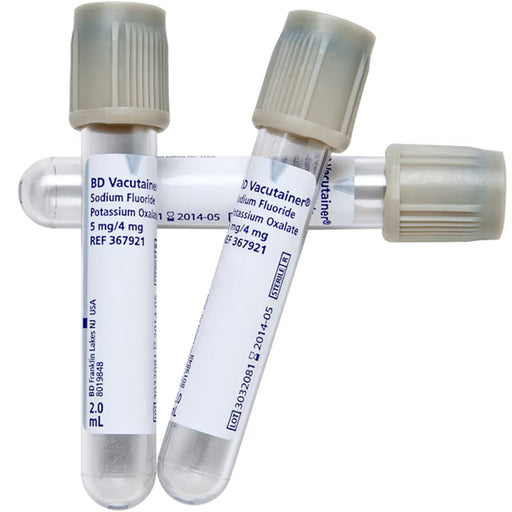
Original price $ 85.00Current price $ 55.00BD Vacutainer Fluoride Blood Collection Tubes 2 mL with Hemogard Closure 13mm x 75mm, 100/box
BDNo reviewsBD 367921 Vacutainer Fluoride Blood Collection Tubes 2 mL with Hemogard Closure 13mm x 75mm with glycolytic inhibitor, 5.0 mg sodium fluoride, 4...
View full details -
 Sale 25%
Original price $ 159.95Current price $ 119.95
Sale 25%
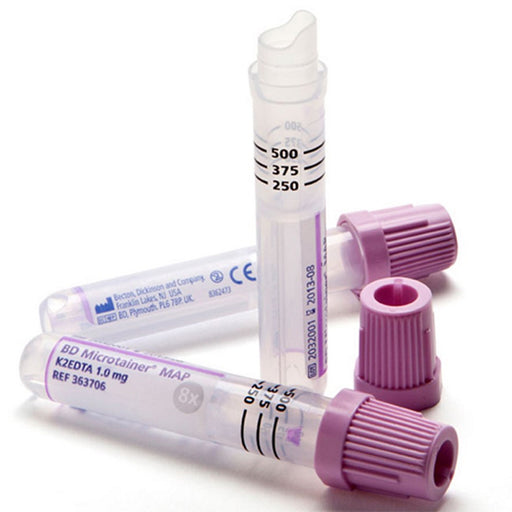
Original price $ 159.95Current price $ 119.95BD Microtainer MAP Microtube for Automated Process 13x75mm, 50/box
BDNo reviewsBD 366706 Microtainer MAP Microtube for Automated Process is a sterile, single-use, plastic microtube that is specifically designed for use in auto...
View full details -
 Sale 31%
Original price $ 129.95Current price $ 89.95
Sale 31%
Original price $ 129.95Current price $ 89.95BD Microtainer SST Amber Capillary Blood Collection Tubes with Clot Activator & Separator Gel and Microgard Closure 15.3 x 46mm, 50/box
BDNo reviewsBD Microtainer SST Capillary Blood Collection Tubes with Clot Activator & Separator Gel and Microgard Closure are designed for efficient capill...
View full details -
 Sold out
Original price $ 125.95Current price $ 89.95
Sold out
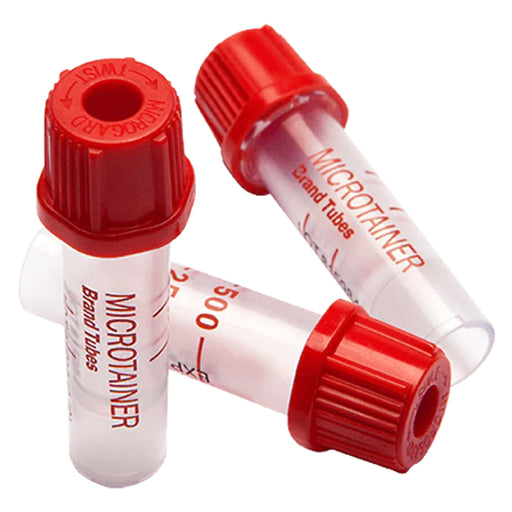
Original price $ 125.95Current price $ 89.95BD 365963 Microtainer Tubes Silicon Coated with Microgard Closure 15.3 x 46mm, 50/box
BDNo reviewsThe BD 365963 Microtainer Tubes Silicon Coated with Microgard Closure is a device that is used to collect and store blood. The tubes are made of si...
View full details -
 Sale 29%
Original price $ 139.95Current price $ 99.95
Sale 29%
Original price $ 139.95Current price $ 99.95BD 365017 Vacutainer Plus Urinalysis Tubes 16 x 100mm, 8.0 mL, 100/box
BDNo reviewsThe BD Vacutainer Plus Urinalysis Tubes with Chlorhexidine, Ethyl Paraben, and Sodium Propionate Additive, product number 365017, are designed for ...
View full details -
 Sale 33%
Original price $ 105.00Current price $ 69.95
Sale 33%
Original price $ 105.00Current price $ 69.95BD 364980 Vacutainer Plus Urinalysis Conical Urine Tubes 16x100mm, 8.0 mL, 100/box
BDNo reviewsBD 364980 Vacutainer Plus Urinalysis Conical Urine Tubes, sized 16x100mm and holding 8.0 mL, are specialized for precise urine collection and analy...
View full details


People Also Searched For
Vacutainer Tubes for Blood Collection & Testing by BD
Vacutainer Tubes for Blood Collection & Testing to BD Vacutainer
Vacutainer Tubes for Blood Collection & Testing to Blood Collection Tubes
Vacutainer Tubes for Blood Collection & Testing to blood collection
Vacutainer Tubes for Blood Collection & Testing to Test tubes
Vacutainer Tubes for Blood Collection & Testing to Venous Blood Collection Tubes
Vacutainer Tubes for Blood Collection & Testing to Hemogard Closure
Vacutainer Tubes for Blood Collection & Testing to BD Hemogard
Vacutainer Tubes for Blood Collection & Testing to Clot Activator
Vacutainer Tubes for Blood Collection & Testing to Serum Tubes
Vacutainer Tubes
Vacutainer tubes (often called evacuated blood collection tubes) are the standard devices used to draw and transport blood specimens for laboratory testing. Each tube is a sterile glass or plastic container sealed with a colored rubber stopper under vacuum. When the stopper’s seal is pierced by a blood-drawing needle, the internal vacuum automatically pulls in a fixed volume of blood. This closed-tube system has largely replaced older syringe-and-tube methods, because the vacuum ensures a precise blood volume and minimizes handling.
The colored stopper on a Vacutainer indicates the tube’s additive (if any). Different colors correspond to different preservatives or reagents for various tests. For example, a lavender-top tube contains EDTA anticoagulant for whole blood (hematology) tests, a light-blue tube contains sodium citrate for coagulation studies, and a red or gold stopper (with clot activator) yields clotted blood (serum) for chemistry panels. Because each tube’s vacuum is calibrated to its additive, the correct blood-to-additive ratio is guaranteed.
In practice, Vacutainers are used with a needle holder to collect multiple samples in one venipuncture. After drawing, tubes are capped and gently inverted (if they have anticoagulant) before laboratory processing. The one-time-use, closed design reduces contamination or hemolysis risk. Today, vacutainer tubes are ubiquitous in hospitals and clinics for routine blood tests – from complete blood counts to metabolic panels – providing a safe, standardized way to collect blood.
The name “Vacutainer” comes from BD (Becton Dickinson), which popularized this closed vacuum system, but the term is now used generically for any evacuated collection tube. These tubes are color-coded by stopper (cap) color to indicate the tube’s additive (anticoagulant, clot activator, etc.) or test type. For example, common Vacutainer colors include red (plain tube, no additive, for serum), lavender/purple (EDTA anticoagulant, for hematology like CBC), green (heparin anticoagulant, for plasma chemistry), gray (fluoride/oxalate, for glucose testing), and blue (sodium citrate, for coagulation assays). The stopper color (and often a printed label) ensures the correct additive and volume are used for each laboratory test. In short, Vacutainer tubes provide a safe, standardized way to collect and transport blood samples for virtually all routine blood tests.
Types of Vacutainer Tubes
Vacutainer tubes are specialized collection tubes used in phlebotomy to collect and store blood samples for testing and analysis. Each type of tube is designed for specific tests and contains different additives. Here are some common types of Vacutainer tubes:
Red Top: No additives. Used for serum collection in chemistry tests.
Gold or Tiger Top (SST): Contains gel for serum separation and a clot activator. Used for chemistry panels and serology tests.
Light Blue Top: Contains sodium citrate as an anticoagulant. Used for coagulation studies, like PT and APTT.
Green Top: Contains heparin (either sodium or lithium). Used for plasma or whole blood determinations in chemistry.
Lavender or Purple Top: Contains EDTA as an anticoagulant. Used for hematology tests, like complete blood counts (CBC).
Gray Top: Contains potassium oxalate as an anticoagulant and sodium fluoride as a glycolytic inhibitor. Used for glucose and lactate testing.
Pink Top: Contains EDTA. Similar to the lavender tube but used specifically for blood bank tests.
Yellow Top (SPS): Contains sodium polyanethol sulfonate. Used for blood cultures.
Yellow Top (ACD): Contains acid citrate dextrose. Used for HLA phenotyping and DNA testing.
Each tube is color-coded based on the additives it contains, and it is crucial to use the appropriate tube for the test being conducted to ensure accurate and reliable results.
Vacutainer tubes are sterile, evacuated glass or plastic tubes used to draw blood samples. They are single-use and supplied by needle holders in a closed system (minimizing exposure risk). Each tube’s stopper color indicates its additive (anticoagulants, clot activators, gels, etc.) tailored to specific tests. After collection, the tubes are capped and can be stored or sent for analysis of serum, plasma or whole blood. “Vacutainer” was originally a BD brand name for these tubes, but the term is commonly used for any evacuated blood collection tube of this type.
Vacutainer Tubes – Blood Collection Guide
Vacutainer tubes (originally a BD brand) are sterile, evacuated (vacuum-sealed) blood collection tubes used in phlebotomy. When a needle punctures a patient’s vein, the vacuum automatically draws in a precise volume of blood. Each tube has a color-coded stopper indicating its contents: either a clot activator, anticoagulant, preservative or none. The color tells lab staff exactly what additive is inside (or if it’s plain for serum). For example, lavender or purple tops contain the anticoagulant EDTA (which binds calcium and preserves whole blood cells), so they are used for hematology tests like CBCs. In short, vacutainer tubes are categorized by stopper color to ensure the correct sample processing and accurate test results.
Color Coding & Uses of Common Tubes
Below are some standard vacutainer tube stoppers and their typical uses (manufacturer colors can vary slightly):
- Red-top (plain) – No additive (or sometimes clot activator). Allows blood to clot naturally, yielding serum. Used for many chemistry tests (e.g. hormones, drug levels) where serum is needed.
- Gold/“Tiger-top” (SST) – Clot activator plus a gel separator. After clotting, the gel forms a barrier between cells and serum. Widely used for routine chemistry panels (electrolytes, liver/kidney tests, lipids, etc.) because it gives clean serum.
- Light Blue – Contains sodium citrate (3.2% or 3.8%). Chelates calcium, preventing clotting. Used specifically for coagulation studies (e.g. PT/INR, aPTT, fibrinogen) because one can re-add calcium in the lab to test clotting function. Tubes must be filled to the proper volume (fill ratios are critical) to ensure the correct blood-to-additive ratio.
- Green (light or dark) – Contains heparin (sodium or lithium; sometimes gel). Heparin inhibits clotting by inactivating thrombin. Used when plasma is needed for chemistry tests or STAT labs (e.g. ammonia, ketones) and for blood gases/ionized calcium. Dark green tubes have sodium heparin and light-green tubes have lithium heparin (with gel separator). Both yield plasma for rapid testing (often used in emergency panels).
- Lavender (Purple) – Contains EDTA (K2EDTA). Strong calcium chelator that preserves cell morphology. Used for whole blood hematology tests (complete blood count/CBC, hemoglobin A1c) and many blood bank tests. It prevents clotting and preserves red/white cells well. (Because EDTA binds calcium so tightly, these tubes must be filled correctly and inverted gently to mix.)
- Pink – Also contains K2EDTA, but the stopper is pink. It’s essentially the same additive as lavender, but the pink-topped vacutainer is specifically used in transfusion medicine (blood bank). For example, type & screen and crossmatch samples are drawn in pink-top tubes. The pink tube is biohazard-labeled and ensures correct handling for transfusion.
- Gray – Contains potassium oxalate and sodium fluoride. The oxalate anticoagulant prevents clotting, while fluoride inhibits glycolysis. This tube is used for blood glucose testing (fasting glucose, glucose tolerance tests) and sometimes blood alcohol levels, because the fluoride preserves glucose in the sample for up to 24 hours.
(Other specialized tubes exist – e.g. Royal Blue tops for trace metal analysis, Tan EDTA tops for lead, Black tops for ESR – but the colors above cover the most common lab uses.)
Important: When drawing blood into multiple tubes, phlebotomists follow the recommended order of draw to prevent additive carryover (e.g. filling citrate tubes before EDTA tubes). Each tube’s instructions should be checked, but the color code itself ensures the collected sample goes to the correct test. In practice, a “Vacutainer tube guide” or chart is often kept in labs or on venipuncture carts to remind staff of the color–additive associations and typical test uses.
Vacutainer Tube Storage Best Practices
Vacutainer (evacuated) blood collection tubes must be stored under controlled conditions to preserve the vacuum seal and additives. Improper storage can weaken the vacuum or degrade tube components, causing under-filled draws or contaminated samples. Key guidelines include:
-
Temperature and Humidity: Store tubes at approximately room temperature. Industry sources recommend roughly 4–25 °C (40–77 °F). Do not freeze tubes – temperatures near or below 0 °C can crack the glass/plastic or compromise the seal. Likewise, avoid excessive heat above ~25 °C, which can deform stoppers or gel separators. Keep the storage area dry: relative humidity should be low (e.g. <85%) and away from damp or wet environments (moisture can damage tube materials and seals).
-
Light and Location: Do not expose tubes to direct sunlight or strong heat sources. Sunlight and heat (from heaters, radiators, direct air vents, etc.) can degrade tube plastics, stoppers, or separation gels. Store them in a cool, dry space away from windows or heating ducts. Many labs keep unopened tubes in ambient storage rooms or controlled-temperature cabinets. If possible, maintain them in the manufacturer’s stated temperature range (often printed on the box).
-
Handling and Packaging: Leave tubes sealed in their original packaging until use. The original foil or box protects them from dust, light and physical damage. Once opened, store tubes upright in a rack or holder. This keeps the vacuum seal intact and prevents accidental leakage or contamination of additives. Do not shake, drop or jostle tubes when handling – physical shock can crack the glass or break the stopper seal. Organized storage (using tube racks or partitioned boxes) helps avoid stacking or crowding, which can also stress tubes. Keep caps firmly in place at all times, and only remove them immediately before collection.
-
Shelf Life and Rotation: Always check and respect the expiration date on vacutainer tubes. Tubes do expire: over time the plastic/rubber stoppers can degrade and the vacuum will weaken. Use an explicit first-in/first-out (FIFO) system so older stock is used first . An out-of-date tube may under-fill (it can draw at least 90% of volume when new, but far less if expired). Discard any tube past its expiration, or any that show particulate contamination or visible damage. (For example, if you see sediment, cracks, or loose fragments inside a tube, do not use it.)
-
Additional Considerations: In certain environments, extra precautions apply. For example, facilities at high altitude (above ~1500–2000 meters or ~5000 ft) should use special “high-altitude” tubes with extra vacuum, because standard tubes will draw less blood as ambient pressure drops. Also note that tubes containing separator gel or clot activators are especially sensitive to storage conditions: extreme heat can alter the gel or additives, and freezing can damage glass or cause additives to precipitate.
In summary, always store vacutainer tubes sealed, upright, and in a cool, dry place as specified by the manufacturer. Follow FIFO rotation and never use tubes beyond their expiry. Proper storage—i.e. moderate temperature (≈4–25 °C), low humidity (< 85%), no direct sunlight, and stable handling—will preserve the tube vacuum and additive integrity. This ensures accurate blood draws and reliable lab results