
Filters
Availability
Price
$
-
$
$0
$449
Vendor
- Armstrong (1)
- Ritedose Pharmaceuticals (3)
- Lupin Pharma (1)
- Prasco Labs (1)
- Sandoz (1)
- GlaxoSmithKline (1)
- Teva Pharmaceuticals (3)
- Mylan Pharmaceuticals (2)
- Sun Pharmaceuticals (2)
- Quagen Pharma (1)
- American Health Packaging (1)
- Amneal Pharmaceuticals (2)
- Boehringer Ingelheim (1)
- Lifestar Pharma (1)
- Hikma (1)
- Rising Pharmaceuticals (1)
Collection
Tags
- 01727-0074-00 (1)
- Aerosol Inhaler (9)
- Air Breathing Apparatus (1)
- albuterol (10)
- Albuterol inhalation (10)
- albuterol sulfate (15)
- Albuterol Sulfate Inhaler (7)
- Amstrong Pharma (1)
- Asthma (6)
- asthma attack (2)
- Asthma Inhaler (12)
- Asthma Medication (8)
- Asthma Medicine (1)
- Asthma Nebulizer (3)
- Asthma Relief Medicine (5)
- Asthma Treatment (10)
- Asthma treatments (6)
- Breathing Exerciser (1)
- Bronchospasm (2)
- doctor-only (23)
- Inhalation (4)
- Treat Asthma (5)
- Bronchodilators (6)
- Childrens Nebulizer Machine (1)
- Emergency Medical Supplies (3)
- Nebulizer Machines (1)
- Nebulizers (3)
- pediatric nebulizer machine (1)
- Portable nebulizer machine (1)
- Proventil Nebules (2)
- Aerosol medication (2)
- Albuterol 90 mcg (1)
- Airway inflammation (1)
- budesonide (5)
- Budesonide Inhalation (5)
- Chronic Obstructive Pulmonary Disease (1)
- Chronic obstructive pulmonary disease (COPD) (3)
- Corticosteroids (1)
- Formoterol (1)
- Long-acting beta-agonist (1)
- Symbicort (1)
- Treat COPD (7)
- Albuterol Sulfate HFA (1)
- Ampules (4)
- HFA Inhaler (1)
- aerosol (1)
- albuterol inhalation (1)
- Inhalation medication (1)
- ou-exclude (2)
- Ventolin HFA Inhaler (1)
- allergic asthma (1)
- Anti-Inflammatory (1)
- asthma medicine (2)
- Asthma treatment for children (1)
- asthma vials (1)
- Best nebulizer solution (1)
- Breathing treatment medication (1)
- Bronchial (1)
- Bronchial inflammation solution (1)
- Budesonide nebulizer solution (1)
- Budesonide Vials (1)
- Chronic asthma (1)
- chronic bronchial asthma (1)
- Inhaled corticosteroid (1)
- Inhaled corticosteroid for asthma (1)
- Nebulizer medicine (1)
- respiratory medication (1)
- Respiratory Relief (1)
- Teva budesonide inhalation (1)
- Unit-dose (1)
- Abuderol (4)
- ProAir (1)
- ProAir HFA (1)
- ProAir RespiClick (1)
- Obstructive Airway Disease (1)
- albuterol liquid (1)
- albuterol sulfate syrup (1)
- Albuterol Syrup (1)
- asthma relief syrup (1)
- bronchospasm treatment (1)
- children’s asthma medication (1)
- COPD medicine (1)
- cough relief syrup (1)
- oral albuterol (1)
- prescription albuterol syrup (1)
- salbutamol oral solution (1)
- wheezing medicine (1)
- Albuterol Sulfate Solution (1)
- Inhalation Powder (1)
- 00115-1689-74 (1)
- airway disease (1)
- airway inflammation (1)
- allergy management (1)
- Amneal (1)
- Amneal Budesonide (1)
- anti-inflammatory respiratory medication (1)
- asthma control (1)
- breathing relief (1)
- breathing support (1)
- Budesonide 0.5% (1)
- chronic asthma inhaler (1)
- COPD therapy (1)
- corticosteroid inhalation (1)
- inhaled corticosteroid (1)
- long-term asthma solution (1)
- lung inflammation (1)
- Nebulizer Solution (2)
- pediatric asthma (1)
- persistent asthma (1)
- prescription inhaler (1)
- Respiratory Health (2)
- Atrovent HFA (1)
- Atrovent HFA Inhaler (1)
- COPD Relief (2)
- Ipratropium bromide (1)
- Ipratropium Inhaler (1)
- Metered Doses (1)
- Arformoterol (1)
- Arformoterol Tartrate (1)
- 4733-50703 (1)
- 4733-50703-49 (1)
- Albutero Solution (1)
- Albuterol inhalation solution (1)
- Asthma treatment medication (1)
- breathlessness relief (1)
- Bronchodilator nebulizer solution (1)
- COPD respiratory therapy (1)
- nebulizer medication (1)
- Nebulizer prescription medication (1)
- Nebulizer solution for asthma (1)
- Pediatric asthma relief (1)
- Pharmacy Compounding (1)
- Respiratory Therapy (1)
- Wheezing (1)
- 90 mcg albuterol inhaler (1)
- Albuterol MDI inhaler (1)
- Bronchodilator inhaler for asthma (1)
- COPD inhaler (1)
- Emergency inhaler (1)
- Fast acting asthma inhaler (1)
- Inhaler for asthma attack (1)
- Prescription inhaler for asthma (1)
- Rescue inhaler (1)
- Shortness of breath treatment (1)
- Albuterol Tablets (1)
Asthma Inhalers
Asthma Inhalers
Asthma inhalers are portable devices that deliver medication directly into the lungs to treat or prevent asthma symptoms. By sending medicine straight into the bronchial tubes, inhalers can quickly open narrowed airways and typically cause fewer systemic side effects than oral or injected drugs. Inhalers are a cornerstone of asthma care for both acute relief and long-term control of the disease.
Asthma inhalers are essential, FDA-approved respiratory medications trusted by pulmonologists, allergists, pediatricians, and primary care doctors worldwide. Inhalers are the #1 fast-acting and maintenance treatment for asthma attacks, chronic asthma, wheezing, shortness of breath, exercise-induced bronchospasm, and airway inflammation in children, teens, and adults. Our wide selection of inhalers ensures every patient finds the best asthma medicine for rapid relief and long-term control.
Uses
- Acute Asthma Attacks: Relief from wheezing, coughing, chest tightness, and shortness of breath.
- Chronic Asthma Management: Daily prevention of symptoms and reduction of airway inflammation.
- Exercise-Induced Asthma: Protects airways during sports or physical activity.
- COPD Symptom Relief: Key therapy in chronic obstructive pulmonary disease for overlap patients.
- Allergy-Related Asthma: Effective for managing allergic triggers in spring, pollen, pet dander, and environmental exposures.
Types of Inhaler Devices
Asthma medications are delivered by several types of inhaler devices, each with its own mechanism:
- Metered-Dose Inhalers (MDIs) – These are small pressurized canisters that spray a measured dose of medicine when you press down on the device. Many MDIs use a propellant to push the medication out. Some MDIs include dose counters so you can see how many sprays (puffs) remain. They are often used with a spacer (holding chamber) to make inhalation easier; a spacer holds the released medicine in a small chamber for the user to breathe in slowly, which is especially helpful for children or anyone who has trouble timing their breath.
- Dry Powder Inhalers (DPIs) – These devices contain medication in dry powder form. The patient releases a dose by breathing in sharply through the mouthpiece. This deep, fast inhalation draws the powdered medicine into the lungs. DPIs require good coordination and lung effort and are usually breath-actuated (no propellant).
- Soft Mist Inhalers – These inhalers use a spring mechanism (no chemical propellant) to generate a slow-moving mist of medication. The mist is emitted more slowly than an MDI spray, which can improve lung delivery by giving the patient more time to inhale deep into the lungs.
- Nebulizers – These are larger, tabletop or handheld machines that turn liquid asthma medicine into a fine mist to inhale through a mask or mouthpiece. Nebulizers take longer (typically 5–10 minutes) to deliver a dose, but they allow the lungs to absorb the medication with normal breathing. They are often used for young children, elderly patients, or during severe asthma attacks when an inhaler might be difficult to use.
Types of Asthma Inhaler Medications
Inhalers can also be classified by the medication they deliver. Broadly, there are rescue (quick-relief) inhalers and controller (preventive) inhalers:
-
Short-Acting Bronchodilators (Rescue Inhalers): These contain fast-acting medicines (usually β₂-agonists) that rapidly relax the tight muscles around the airways. For example, albuterol (also called salbutamol; brand names Ventolin, ProAir, etc.) is a common SABA used for quick relief. Such inhalers act within minutes to open airways and relieve symptoms like wheezing, coughing, and shortness of breath. They are often color-coded blue in many health systems. Rescue inhalers are used only when needed for sudden symptoms or before exercise, and they do not treat the underlying inflammation. Everybody with asthma should carry a rescue inhaler at all times, because attacks can come on suddenly.
-
Inhaled Corticosteroids (Controller Inhalers): These anti-inflammatory agents (for example, fluticasone, budesonide) are the most effective long-term asthma controllers. They are taken regularly (usually daily) to reduce swelling and irritation in the airway walls. With ongoing use, inhaled steroids lower the frequency and severity of asthma attacks. They typically take weeks to reach full effect and provide no immediate relief of an acute attack. Over time, however, they can eliminate symptoms in many patients; with proper use of a controller inhaler, many people become totally symptom-free and rarely need a rescue inhaler.
-
Long-Acting Bronchodilators (LABAs): These medications (such as salmeterol and formoterol) relax airway muscles for many hours. By FDA recommendation, LABAs are only used in conjunction with an inhaled steroid (never alone). In practice, LABA drugs are combined with corticosteroids in single-inhaler products.
-
Combination (ICS/LABA) Inhalers: These contain both a corticosteroid and a long-acting bronchodilator. For example, fluticasone/salmeterol (Advair, Seretide) or budesonide/formoterol (Symbicort) merge anti-inflammatory and bronchodilator therapies. Combination inhalers can simplify treatment for patients whose asthma is not controlled by a steroid alone. Some treatment plans use a single combination inhaler both for daily maintenance and as-needed relief (a strategy called “MART”).
-
Other Inhaled Medications: Alternative bronchodilators, such as anticholinergic drugs (e.g. ipratropium bromide, brand name Atrovent), are also available in inhaler form. Short-acting anticholinergics can provide relief similar to SABAs, though they are used less commonly in asthma. For very severe asthma not controlled by inhalers, additional treatments (like biologic injections) exist, but these are not inhalers.
Using Asthma Inhalers Effectively
Proper technique is key to getting medication deep into the lungs. For an MDI, the patient typically shakes the inhaler, exhales fully, then presses the canister down while inhaling slowly, and finally holds the breath for about 5–10 seconds to let the medicine settle in the lungs. A spacer can greatly help: it attaches to the inhaler and holds the medication cloud so the user can inhale it at a comfortable pace. DPIs require a fast, deep inhalation to draw the powder out. Nebulizers involve normal breathing through a mask or mouthpiece while the machine aerosolizes the liquid medicine over several minutes.
A few important tips: Always carry your rescue inhaler and use it at the first sign of symptoms. Follow your doctor’s instructions about how many puffs to use. Many inhalers (especially MDIs) have dose counters or dose indicators to help track remaining medication. After using a corticosteroid inhaler, rinse your mouth or brush your teeth – this helps wash away any leftover steroid and prevents local side effects. Inhaled steroids can sometimes cause oral thrush (a yeast infection in the mouth) if residues remain; rinsing greatly reduces this risk.
Popular Brands and Generics
Rescue (Reliever) Inhalers:
- Albuterol (Salbutamol): ProAir HFA, Ventolin HFA, Proventil HFA, generic albuterol inhaler
- Levalbuterol: Xopenex HFA
Maintenance (Controller) Inhalers:
- Fluticasone: Flovent HFA, Arnuity Ellipta, generic fluticasone inhaler
- Budesonide: Pulmicort Flexhaler, generic budesonide
- Beclomethasone: Qvar RediHaler
- Mometasone: Asmanex Twisthaler
- Ciclesonide: Alvesco
Combination Inhalers (ICS/LABA):
- Fluticasone/Salmeterol: Advair Diskus, AirDuo RespiClick, Wixela Inhub (generic Advair)
- Budesonide/Formoterol: Symbicort
- Mometasone/Formoterol: Dulera
Long-Acting Bronchodilators & Other Options:
- Tiotropium: Spiriva Respimat
- Formoterol, Salmeterol, Olodaterol, Indacaterol (as monotherapy or in combos)
Alternative Forms:
- Nebulizer Solutions for severe cases or young children unable to use inhalers
Dosages
- Albuterol Rescue Inhalers: 90 mcg/puff (inhalation, up to 2 puffs every 4–6 hours as needed)
- ICS Maintenance Inhalers: Multiple strengths (e.g., fluticasone 44–220 mcg/puff, budesonide 90–180 mcg/inhalation)
- Combination Inhalers: Various dosing based on severity and doctor’s recommendation
- Nebulizer Solutions: Typical vial sizes are 2.5 mg/3 mL for albuterol; maintenance solution dosed per doctor
Always follow your physician’s instructions for proper dosing and frequency.
Precautions
- Proper Inhaler Technique: Incorrect usage can reduce effectiveness; ask your healthcare provider or pharmacist for a demonstration.
- Monitor for Side Effects: Possible effects include shakiness, rapid heartbeat, sore throat, hoarseness, oral thrush, cough, and headache.
- Rinse Mouth After Use: Especially with steroid inhalers to prevent oral thrush (fungal infection).
- Do Not Exceed Prescribed Dose: Overuse of rescue inhalers may signal poor asthma control and risk of severe attack—seek medical attention if needed frequently.
- Regular Medication Review: Have your asthma plan and inhaler use reviewed regularly by your provider.
- Storage: Keep inhalers at room temperature, away from excessive heat or moisture, and check expiration dates.
Breathe better and stay protected with the world’s leading Asthma Inhalers—doctor-recommended, FDA-approved, and trusted for fast relief, long-term control, and total respiratory health. Order your asthma inhaler now from top pharmacy brands or consult your healthcare provider for the safest, most effective airway solution for you or your family!
-
 Sale 52%
Original price $ 34.95Current price $ 16.80
Sale 52%
Original price $ 34.95Current price $ 16.80Albuterol Inhaler 90 mcg Aerosol 200 Metered Inhalations (RX)
ArmstrongNo reviewsAlbuterol Inhaler 90 mcg Aerosol offers fast, reliable, and effective relief of acute asthma symptoms and bronchospasm caused by reversible obstruc...
View full details🔒 Medical License Required -
 Sale 38%
Original price $ 29.95Current price $ 18.50
Sale 38%
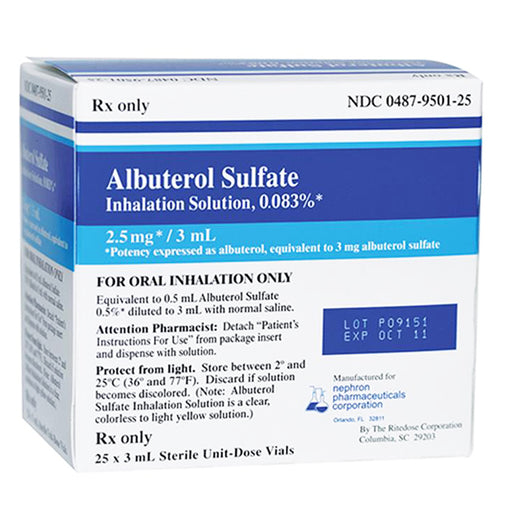
Original price $ 29.95Current price $ 18.50Albuterol Sulfate 0.083% Inhalation Nebulizer Solution 2.5 mg/3 ml by Ritedose 25/Box (Rx)
Ritedose Pharmaceuticals96 reviewsFast-Acting Relief for Asthma, COPD, and Bronchospasm – Professional-Grade Albuterol Nebulizer Solution Breathe easier and faster with Albuterol Su...
View full details🔒 Medical License Required -
 Sale 40%
Original price $ 49.95Current price $ 29.95
Sale 40%
Original price $ 49.95Current price $ 29.95Albuterol Sulfate Inhaler Inhalation Solution 90 mcg Dosage, Aerosol 200 Metered Inhalations (Rx)
Lupin PharmaNo reviewsFast, Effective Bronchodilator for Asthma, COPD & Bronchitis – Instant Relief from Wheezing, Shortness of Breath, and Chest Tightness Experienc...
View full details🔒 Medical License Required -
 Sale 14%
Original price $ 395.00Current price $ 339.00
Sale 14%
Original price $ 395.00Current price $ 339.00Budesonide Formoterol Furnarate Dhydrate Aerosol Inhaler 160/4.5 mcg for COPD & Asthma (RX)
Prasco LabsNo reviewsIntroducing the Budesonide Formoterol Aerosol Inhaler 160/4.5 mcg by Prasco Labs – your partner in effective respiratory management. Designed for i...
View full details🔒 Medical License Required -
 Sale 13%
Original price $ 79.00Current price $ 68.85
Sale 13%
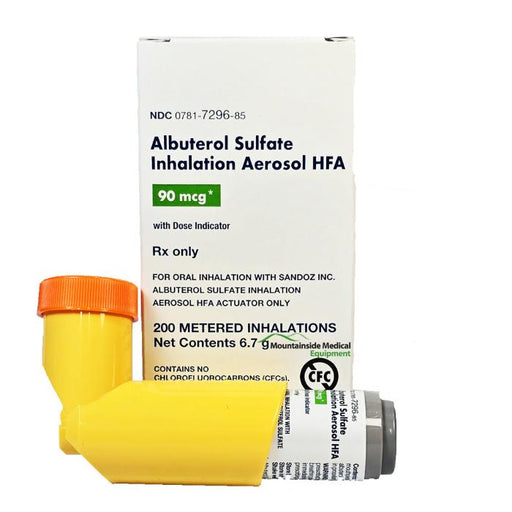
Original price $ 79.00Current price $ 68.85Albuterol Sulfate Inhaler Aerosol HFA 90 mcg 200 Metered Inhalations (RX)
Sandoz2 reviewsAlbuterol Sulfate Inhaler Aerosol HFA 90 mcg is used to relieve bronchospasm in individuals with reversible obstructive airway diseases, such as as...
View full details🔒 Medical License Required -
 Sale 35%
Original price $ 129.95Current price $ 84.00
Sale 35%
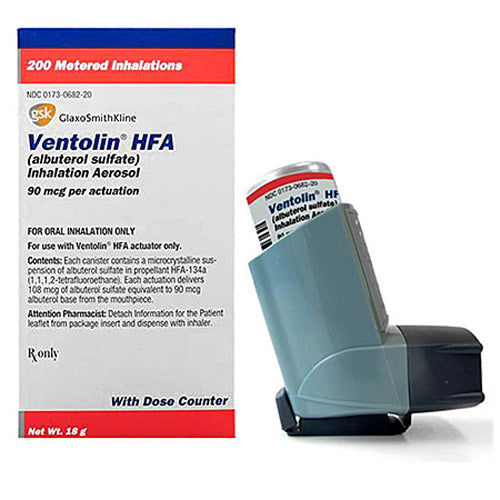
Original price $ 129.95Current price $ 84.00Ventolin HFA Inhaler 90 mcg, 18 gm (Rx)
GlaxoSmithKlineNo reviewsVentolin HFA Inhaler is an albuterol inhaler for asthma with a built-in dose counter. Ventolin HFA Inhaler (albuterol sulfate inhalation aerosol) i...
View full details🔒 Medical License Required -
 Sale 29%
Original price $ 119.95Current price $ 85.00
Sale 29%
Original price $ 119.95Current price $ 85.00Budesonide Inhalation Suspension 0.5mg / 2 mL Single Unit-Dose Vials (Rx) 30 Individually wrapped
Teva PharmaceuticalsNo reviews#1 Doctor-Recommended Inhaled Corticosteroid for Asthma Treatment & Respiratory Relief Unlock optimal breathing for your child or yourself with...
View full details🔒 Medical License Required -
 Sale 20%
Original price $ 489.00Current price $ 389.00
Sale 20%
Original price $ 489.00Current price $ 389.00Budesonide Inhalation Suspension 0.25 mg / 2 mL Single Unit-Dose Vials (Rx) 30 Individually wrapped
Teva PharmaceuticalsNo reviewsBudesonide Inhalation Suspension 0.25mg/2 mL Single Unit-Dose Vials are a medication used to treat asthma in both adults and children. This medicat...
View full details🔒 Medical License Required -
 Sale
$ 59.99
Sale
$ 59.99Albuterol Sulfate for Inhalation 1.25 mg Ampules by Mylan 3 mL x 25/Box (Rx)
Mylan PharmaceuticalsNo reviewsAlbuterol sulfate for inhalation 1.25 mg is an inhalation agent used to treat bronchospasm in people with chronic obstructive pulmonary disease (CO...
View full details🔒 Medical License Required -
 Sale 29%
Original price $ 139.95Current price $ 98.75
Sale 29%
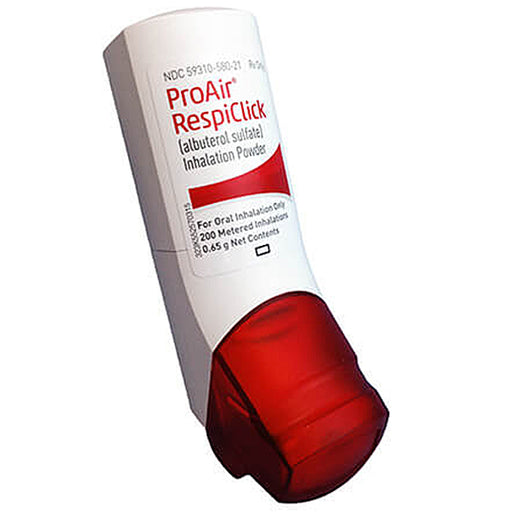
Original price $ 139.95Current price $ 98.75ProAir RespiClick (Albuterol Sulfate) 90 mcg Inhalation Powder Inhaler 200 Metered Doses (RX)
Teva PharmaceuticalsNo reviewsProAir RespiClick is a breath-activated, dry powder inhaler that delivers 90 micrograms of albuterol sulfate per actuation. It is designed to help ...
View full details🔒 Medical License Required -
 Sale 37%
Original price $ 19.95Current price $ 12.50
Sale 37%
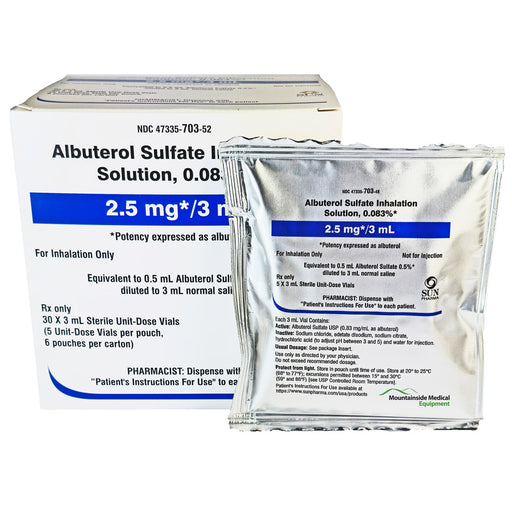
Original price $ 19.95Current price $ 12.50Albuterol Sulfate Inhalation Solution 0.083% USP 3 mL, 30 Count (Rx)
Sun PharmaceuticalsNo reviewsAlbuterol Sulfate Inhalation Solution is used to treat and prevent bronchospasm in individuals with reversible obstructive airway disease, such as ...
View full details🔒 Medical License Required -
 Sale 25%
Original price $ 74.95Current price $ 56.00
Sale 25%
Original price $ 74.95Current price $ 56.00Albuterol Syrup Oral Solution 2 mg Per 5 mL Dosage 473 mL (Rx)
Quagen PharmaNo reviewsFast-Acting Asthma & Bronchospasm Relief For Children & Adults Regain easy, comfortable breathing with Albuterol Sulfate Syrup 2 mg per 5 m...
View full details🔒 Medical License Required -
 Sale
$ 12.95
Sale
$ 12.95Albuterol inhalation Solution 0.083%, 3mL, 25/Box (Rx)
Ritedose PharmaceuticalsNo reviewsAlbuterol inhalation Solution 0.083%, 3mL (also known as salbutamol) is used to treat wheezing and shortness of breath caused by breathing problems...
View full details🔒 Medical License Required -
 Sale 21%
Original price $ 27.95Current price $ 22.00
Sale 21%
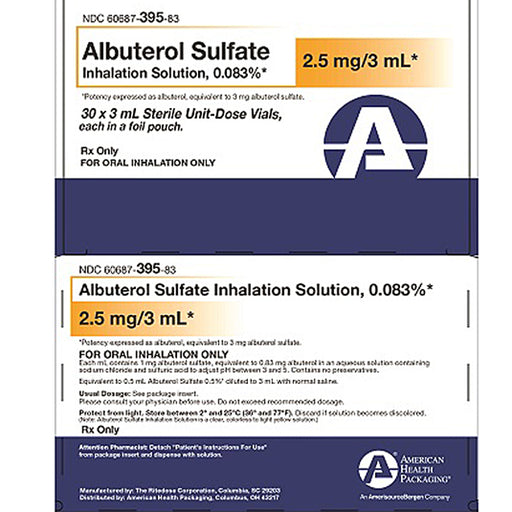
Original price $ 27.95Current price $ 22.00Albuterol Sulfate Inhalation Solution 0.083%, 3mL, 25/Box (Rx)
American Health PackagingNo reviewsAlbuterol inhalation Solution 0.083%, 3mL is a bronchodilator used to treat bronchospasm in patients with reversible obstructive airway disease. It...
View full details🔒 Medical License Required -
 Sale 20%
Original price $ 79.00Current price $ 63.00
Sale 20%
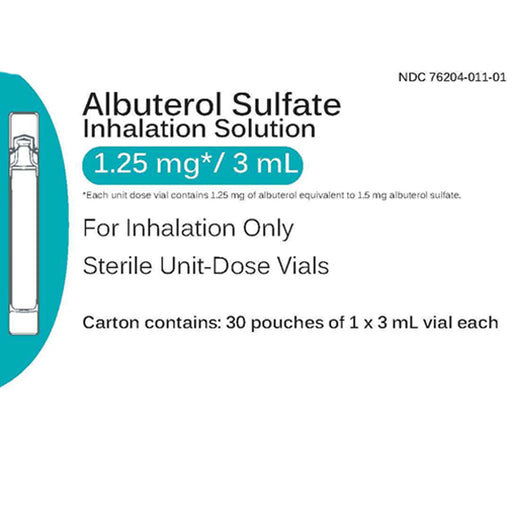
Original price $ 79.00Current price $ 63.00Albuterol Sulfate for Inhalation 1.25 mg Sterile Unit Dose Vials 3 mL x 25/Box (Rx)
Ritedose PharmaceuticalsNo reviewsAlbuterol sulfate for inhalation 1.25 mg is an inhalation agent used to treat bronchospasm in people with chronic obstructive pulmonary disease (CO...
View full details🔒 Medical License Required -
 Sale 28%
Original price $ 31.75Current price $ 22.95
Sale 28%
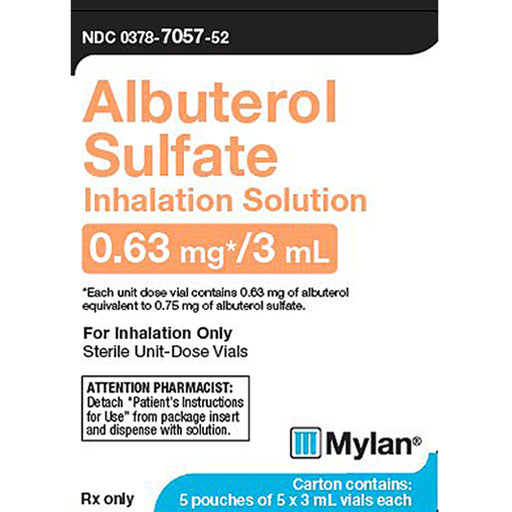
Original price $ 31.75Current price $ 22.95Albuterol Sulfate for Inhalation 0.63 mg Ampules 3 mL x 25/Box - Mylan (Rx)
Mylan PharmaceuticalsNo reviewsAlbuterol sulfate for inhalation 0.63 mg is an inhalation agent used to treat bronchospasm in people with chronic obstructive pulmonary disease (CO...
View full details🔒 Medical License Required -
 Sale 31%
Original price $ 115.95Current price $ 79.95
Sale 31%
Original price $ 115.95Current price $ 79.95Budesonide Inhalation Suspension 0.25 mg/2 mL Single Unit-Dose Vials, 30/Box (RX)
Amneal PharmaceuticalsNo reviewsTrusted Inhaled Corticosteroid for Asthma, Wheezing, and Chronic Lung Disease in Children and Adults Achieve long-lasting asthma control and superi...
View full details🔒 Medical License Required -
 Sale 27%
Original price $ 99.95Current price $ 73.00
Sale 27%
Original price $ 99.95Current price $ 73.00Budesonide Inhalation Suspension 0.5 mg / 2 mL, 30 Vilas Per Box by Amneal (RX)
Amneal PharmaceuticalsNo reviewsFast-Acting Asthma and COPD Relief with Budesonide Inhalation Suspension Budesonide Inhalation Suspension by Amneal Pharmaceuticals is a prescripti...
View full details🔒 Medical License Required -
 Sale 23%
Original price $ 579.95Current price $ 449.00
Sale 23%
Original price $ 579.95Current price $ 449.00Atrovent HFA Ipratropium Bromide Aerosol Inhaler 17 mcg, 200 Metered Doses
Boehringer IngelheimNo reviewsAtrovent HFA, which contains ipratropium bromide, is an inhalation aerosol used to treat bronchospasms associated with chronic obstructive pulmonar...
View full details🔒 Medical License Required -
 Sale 19%
Original price $ 169.95Current price $ 137.00
Sale 19%
Original price $ 169.95Current price $ 137.00Arformoterol Tartrate Inhalation Solution 15 mcg Per 2 mL Ampules 30 Count (RX)
Lifestar PharmaNo reviewsArformoterol Tartrate Inhalation Solution 15 mcg per 2 mL ampules are used for the long-term management of chronic obstructive pulmonary disease (C...
View full details🔒 Medical License Required -
 Sale 62%
Original price $ 29.95Current price $ 11.50
Sale 62%
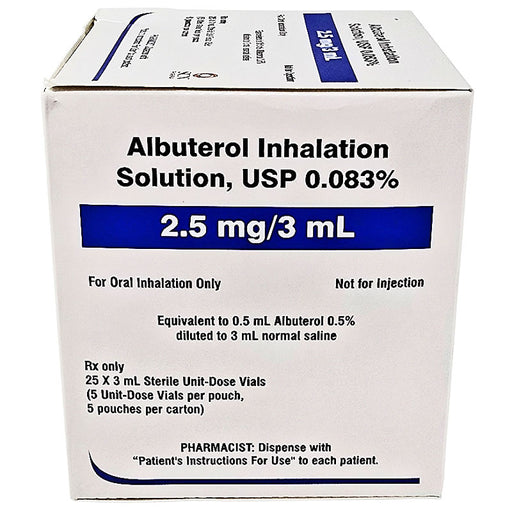
Original price $ 29.95Current price $ 11.50Albuterol Nebulizer Solution 0.83%, 2.5mg/3 mL Inhalation 3 mL x 25/Box (RX)
Sun PharmaceuticalsNo reviewsOptimize Your Breathing – Powerful Relief from Asthma and COPD Albuterol Nebulizer Solution 0.83%, 2.5mg/3mL by Sun Pharmaceuticals delivers rapid,...
View full details🔒 Medical License Required -
 Sale 25%
Original price $ 39.95Current price $ 29.95
Sale 25%
Original price $ 39.95Current price $ 29.95Albuterol Sulfate Inhaler 90 mcg Aerosol 6.7 Gram 200 Doses (Rx)
HikmaNo reviewsFast-Acting Inhaler for Asthma, COPD, and Bronchospasm Relief Get rapid, reliable relief from asthma attacks, wheezing, and shortness of breath wit...
View full details🔒 Medical License Required -
 Sale 43%
Original price $ 129.00Current price $ 74.00
Sale 43%
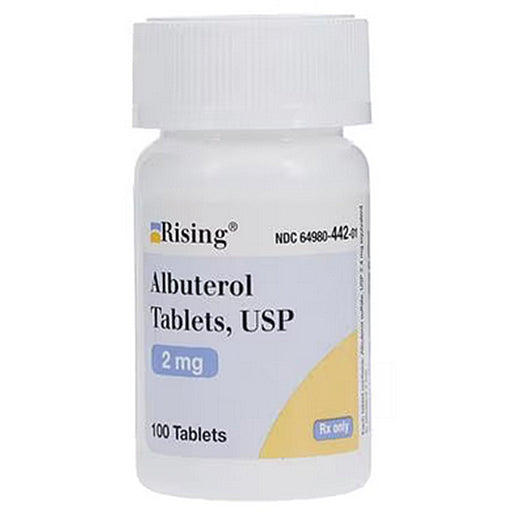
Original price $ 129.00Current price $ 74.00Albuterol Sulfate Tablets 2 mg, 100/Bottle (Rx)
Rising PharmaceuticalsNo reviewsAlbuterol sulfate tablets, a bronchodilator, are used to prevent and relieve bronchospasm in patients with chronic obstructive pulmonary disease, i...
View full details🔒 Medical License Required


People Also Searched For
Asthma Inhalers to doctor-only
Asthma Inhalers to albuterol sulfate
Asthma Inhalers to albuterol
Asthma Inhalers to Asthma Inhaler
Asthma Inhalers to Albuterol inhalation
Asthma Inhalers to Asthma Treatment
Asthma Inhalers to Aerosol Inhaler
Asthma Inhalers to Asthma Medication
Asthma Inhalers to Albuterol Sulfate Inhaler
Asthma Inhalers to Asthma Treatment Inhaler
Asthma Inhalers
Asthma inhalers are portable devices that deliver medication directly into the lungs to treat or prevent asthma symptoms. By sending medicine straight into the bronchial tubes, inhalers can quickly open narrowed airways and typically cause fewer systemic side effects than oral or injected drugs. Inhalers are a cornerstone of asthma care for both acute relief and long-term control of the disease.
Asthma inhalers are essential, FDA-approved respiratory medications trusted by pulmonologists, allergists, pediatricians, and primary care doctors worldwide. Inhalers are the #1 fast-acting and maintenance treatment for asthma attacks, chronic asthma, wheezing, shortness of breath, exercise-induced bronchospasm, and airway inflammation in children, teens, and adults. Our wide selection of inhalers ensures every patient finds the best asthma medicine for rapid relief and long-term control.
Uses
- Acute Asthma Attacks: Relief from wheezing, coughing, chest tightness, and shortness of breath.
- Chronic Asthma Management: Daily prevention of symptoms and reduction of airway inflammation.
- Exercise-Induced Asthma: Protects airways during sports or physical activity.
- COPD Symptom Relief: Key therapy in chronic obstructive pulmonary disease for overlap patients.
- Allergy-Related Asthma: Effective for managing allergic triggers in spring, pollen, pet dander, and environmental exposures.
Types of Inhaler Devices
Asthma medications are delivered by several types of inhaler devices, each with its own mechanism:
- Metered-Dose Inhalers (MDIs) – These are small pressurized canisters that spray a measured dose of medicine when you press down on the device. Many MDIs use a propellant to push the medication out. Some MDIs include dose counters so you can see how many sprays (puffs) remain. They are often used with a spacer (holding chamber) to make inhalation easier; a spacer holds the released medicine in a small chamber for the user to breathe in slowly, which is especially helpful for children or anyone who has trouble timing their breath.
- Dry Powder Inhalers (DPIs) – These devices contain medication in dry powder form. The patient releases a dose by breathing in sharply through the mouthpiece. This deep, fast inhalation draws the powdered medicine into the lungs. DPIs require good coordination and lung effort and are usually breath-actuated (no propellant).
- Soft Mist Inhalers – These inhalers use a spring mechanism (no chemical propellant) to generate a slow-moving mist of medication. The mist is emitted more slowly than an MDI spray, which can improve lung delivery by giving the patient more time to inhale deep into the lungs.
- Nebulizers – These are larger, tabletop or handheld machines that turn liquid asthma medicine into a fine mist to inhale through a mask or mouthpiece. Nebulizers take longer (typically 5–10 minutes) to deliver a dose, but they allow the lungs to absorb the medication with normal breathing. They are often used for young children, elderly patients, or during severe asthma attacks when an inhaler might be difficult to use.
Types of Asthma Inhaler Medications
Inhalers can also be classified by the medication they deliver. Broadly, there are rescue (quick-relief) inhalers and controller (preventive) inhalers:
-
Short-Acting Bronchodilators (Rescue Inhalers): These contain fast-acting medicines (usually β₂-agonists) that rapidly relax the tight muscles around the airways. For example, albuterol (also called salbutamol; brand names Ventolin, ProAir, etc.) is a common SABA used for quick relief. Such inhalers act within minutes to open airways and relieve symptoms like wheezing, coughing, and shortness of breath. They are often color-coded blue in many health systems. Rescue inhalers are used only when needed for sudden symptoms or before exercise, and they do not treat the underlying inflammation. Everybody with asthma should carry a rescue inhaler at all times, because attacks can come on suddenly.
-
Inhaled Corticosteroids (Controller Inhalers): These anti-inflammatory agents (for example, fluticasone, budesonide) are the most effective long-term asthma controllers. They are taken regularly (usually daily) to reduce swelling and irritation in the airway walls. With ongoing use, inhaled steroids lower the frequency and severity of asthma attacks. They typically take weeks to reach full effect and provide no immediate relief of an acute attack. Over time, however, they can eliminate symptoms in many patients; with proper use of a controller inhaler, many people become totally symptom-free and rarely need a rescue inhaler.
-
Long-Acting Bronchodilators (LABAs): These medications (such as salmeterol and formoterol) relax airway muscles for many hours. By FDA recommendation, LABAs are only used in conjunction with an inhaled steroid (never alone). In practice, LABA drugs are combined with corticosteroids in single-inhaler products.
-
Combination (ICS/LABA) Inhalers: These contain both a corticosteroid and a long-acting bronchodilator. For example, fluticasone/salmeterol (Advair, Seretide) or budesonide/formoterol (Symbicort) merge anti-inflammatory and bronchodilator therapies. Combination inhalers can simplify treatment for patients whose asthma is not controlled by a steroid alone. Some treatment plans use a single combination inhaler both for daily maintenance and as-needed relief (a strategy called “MART”).
-
Other Inhaled Medications: Alternative bronchodilators, such as anticholinergic drugs (e.g. ipratropium bromide, brand name Atrovent), are also available in inhaler form. Short-acting anticholinergics can provide relief similar to SABAs, though they are used less commonly in asthma. For very severe asthma not controlled by inhalers, additional treatments (like biologic injections) exist, but these are not inhalers.
Using Asthma Inhalers Effectively
Proper technique is key to getting medication deep into the lungs. For an MDI, the patient typically shakes the inhaler, exhales fully, then presses the canister down while inhaling slowly, and finally holds the breath for about 5–10 seconds to let the medicine settle in the lungs. A spacer can greatly help: it attaches to the inhaler and holds the medication cloud so the user can inhale it at a comfortable pace. DPIs require a fast, deep inhalation to draw the powder out. Nebulizers involve normal breathing through a mask or mouthpiece while the machine aerosolizes the liquid medicine over several minutes.
A few important tips: Always carry your rescue inhaler and use it at the first sign of symptoms. Follow your doctor’s instructions about how many puffs to use. Many inhalers (especially MDIs) have dose counters or dose indicators to help track remaining medication. After using a corticosteroid inhaler, rinse your mouth or brush your teeth – this helps wash away any leftover steroid and prevents local side effects. Inhaled steroids can sometimes cause oral thrush (a yeast infection in the mouth) if residues remain; rinsing greatly reduces this risk.
Popular Brands and Generics
Rescue (Reliever) Inhalers:
- Albuterol (Salbutamol): ProAir HFA, Ventolin HFA, Proventil HFA, generic albuterol inhaler
- Levalbuterol: Xopenex HFA
Maintenance (Controller) Inhalers:
- Fluticasone: Flovent HFA, Arnuity Ellipta, generic fluticasone inhaler
- Budesonide: Pulmicort Flexhaler, generic budesonide
- Beclomethasone: Qvar RediHaler
- Mometasone: Asmanex Twisthaler
- Ciclesonide: Alvesco
Combination Inhalers (ICS/LABA):
- Fluticasone/Salmeterol: Advair Diskus, AirDuo RespiClick, Wixela Inhub (generic Advair)
- Budesonide/Formoterol: Symbicort
- Mometasone/Formoterol: Dulera
Long-Acting Bronchodilators & Other Options:
- Tiotropium: Spiriva Respimat
- Formoterol, Salmeterol, Olodaterol, Indacaterol (as monotherapy or in combos)
Alternative Forms:
- Nebulizer Solutions for severe cases or young children unable to use inhalers
Dosages
- Albuterol Rescue Inhalers: 90 mcg/puff (inhalation, up to 2 puffs every 4–6 hours as needed)
- ICS Maintenance Inhalers: Multiple strengths (e.g., fluticasone 44–220 mcg/puff, budesonide 90–180 mcg/inhalation)
- Combination Inhalers: Various dosing based on severity and doctor’s recommendation
- Nebulizer Solutions: Typical vial sizes are 2.5 mg/3 mL for albuterol; maintenance solution dosed per doctor
Always follow your physician’s instructions for proper dosing and frequency.
Precautions
- Proper Inhaler Technique: Incorrect usage can reduce effectiveness; ask your healthcare provider or pharmacist for a demonstration.
- Monitor for Side Effects: Possible effects include shakiness, rapid heartbeat, sore throat, hoarseness, oral thrush, cough, and headache.
- Rinse Mouth After Use: Especially with steroid inhalers to prevent oral thrush (fungal infection).
- Do Not Exceed Prescribed Dose: Overuse of rescue inhalers may signal poor asthma control and risk of severe attack—seek medical attention if needed frequently.
- Regular Medication Review: Have your asthma plan and inhaler use reviewed regularly by your provider.
- Storage: Keep inhalers at room temperature, away from excessive heat or moisture, and check expiration dates.
Breathe better and stay protected with the world’s leading Asthma Inhalers—doctor-recommended, FDA-approved, and trusted for fast relief, long-term control, and total respiratory health. Order your asthma inhaler now from top pharmacy brands or consult your healthcare provider for the safest, most effective airway solution for you or your family!