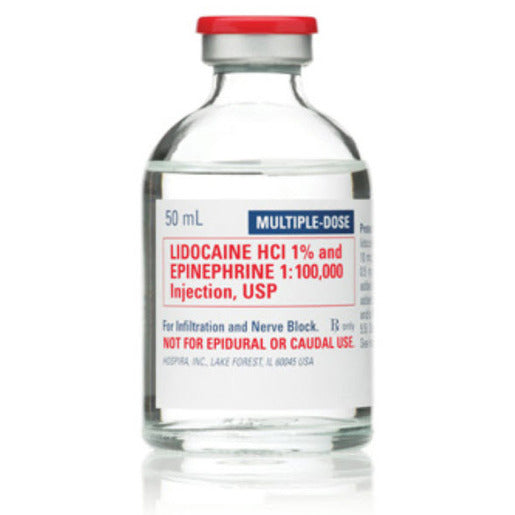
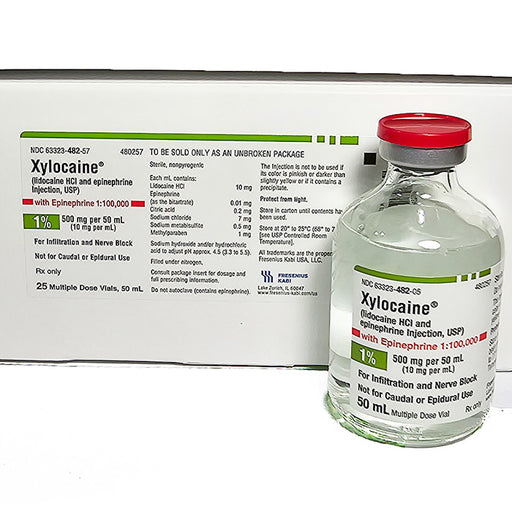
Lidocaine 1% with Epinephrine 1:100,000 Injection is a local anaesthetic solution used primarily in medical and dental procedures to numb a specific area and reduce bleeding.
Lidocaine 1% and Epinephrine 1:100,000 Injection (500 mg/50 mL, 50 mL) is used as a local anaesthetic to manage pain and control bleeding during surgical, dental, and medical procedures. Lidocaine acts by blocking nerve signals, providing numbness and reducing discomfort. Epinephrine, as a vasoconstrictor, prolongs the anaesthetic effect and decreases bleeding by constricting blood vessels. This combination is highly effective for procedures where extended anaesthesia and minimal bleeding are critical, optimizing surgical field visibility and enhancing patient comfort.
*** CURRENT EXPIRATION : JUNE 2026 ***
Uses
- Local anaesthesia in dental procedures (tooth extractions, fillings)
- Minor surgical, dermatological, or medical procedures needing local numbness and a bloodless field
Breakdown of the Solution
1. Lidocaine 1%
- Lidocaine is a local anaesthetic.
- 1% means 10 mg of lidocaine per mL of solution.
- Blocks sodium channels in nerves, preventing pain signals from travelling.
2. Epinephrine 1:100,000
- Epinephrine (adrenaline) is a vasoconstrictor.
- 1:100,000 means there is 0.01 mg (10 micrograms) of epinephrine per mL of solution (i.e., 1 gram in 100,000 mL).
- Constricts blood vessels, which:
- Reduces bleeding at the site
- Prolongs and enhances the numbing effect of lidocaine
- Reduces systemic absorption, lowering the risk of lidocaine toxicity
Concentration and Formulation:
Lidocaine Concentration: 1% (10 mg/mL)
Epinephrine Concentration: 1:100,000
Packaging:
Volume: 50 mL per vial
Type: Multiple-dose glass vial
Package Configuration: Available in trays, with 25 vials per tray.
Indications:
- Local or Regional Anaesthesia: Used in various surgical and dental procedures to numb a specific area while decreasing blood flow to the site, aiding in field clarity and reducing systemic absorption.
- Prolongation of Effects: The addition of epinephrine helps in prolonging the anaesthesia effect by slowing lidocaine absorption into the bloodstream.
Administration:
Typically administered via infiltration or nerve block techniques by healthcare professionals.
Safety and Precautions:
- Contraindications: Known hypersensitivity to amide-type local anaesthetics and epinephrine-containing products.
- Warnings and Precautions: Careful monitoring is required to avoid systemic toxic reactions to lidocaine and cardiovascular reactions due to epinephrine. Use cautiously in patients with cardiovascular disease or those taking MAO inhibitors or tricyclic antidepressants.
- Adverse Reactions: Though generally well-tolerated, may cause localized reactions like redness or swelling, and rarely systemic responses like heart palpitations or serious allergic reactions.
Storage:
- Store at controlled room temperature and protect from light. Do not freeze.
This combination injectable is pivotal in ensuring effective local anaesthesia with reduced bleeding and prolonged anaesthesia duration, adding significantly to procedural success while prioritizing patient comfort and safety.
- Product: Lidocaine 1% with Epinephrine 1:100,000 Injection USP — local anaesthetic solution for infiltration and nerve block anaesthesia
- Manufacturer: Pfizer Injectables | NDC: 0409-3178-03
- Format: 50 mL multiple-dose glass vial, supplied in trays of 25 vials
- Key action: Lidocaine blocks sodium channels to prevent pain signal transmission; epinephrine at 1:100,000 produces vasoconstriction, extending anaesthesia duration and reducing procedural bleeding
- Primary use cases: Dental procedures (extractions, fillings, root canal), minor surgical and dermatological procedures, wound repair, nerve blocks, medspa pre-procedure numbing, EMS field analgesia
- Rx status: Prescription only — valid professional license required for purchase
- Current expiration: 5/31/2026 (confirmed from manufacturer at time of listing)
| Specification | Detail |
|---|---|
| NDC | 0409-3178-03 |
| Manufacturer | Pfizer Injectables |
| Lidocaine Concentration | 1% (10 mg/mL) |
| Epinephrine Concentration | 1:100,000 (0.01 mg/mL; 10 mcg/mL) |
| Total Lidocaine per Vial | 500 mg |
| Total Epinephrine per Vial | 0.5 mg |
| Vial Volume | 50 mL |
| Vial Type | Multiple-dose glass vial |
| Package Configuration | 25 vials per tray |
| Administration Route | Infiltration or nerve block injection (by a qualified healthcare professional) |
| Storage | Controlled room temperature (20°C–25°C / 68°F–77°F); protect from light; do not freeze |
| Expiration (Current Lot) | 5/31/2026 |
| Rx Status | Prescription only (Rx) |
- Dental procedures: Intended to support local anaesthesia for tooth extractions, crown preparations, root canal procedures, periodontal surgery, and fillings requiring extended numbing duration
- Minor surgical and dermatological procedures: Intended to support infiltration anaesthesia for laceration repair, shave and punch biopsies, cyst excisions, and Mohs surgery preparation, where a bloodless field improves procedural visibility
- Nerve block techniques: Suitable for regional infiltration and peripheral nerve block by qualified practitioners; the 1% concentration is particularly appropriate for larger-volume field blocks where the 2% formulation would reach dose ceilings at lower volumes
- Emergency medicine and EMS: Multi-dose 50 mL vial format suited to high-throughput procedural environments for wound management and field analgesia
- Aesthetic and medspa procedures: Intended to support pre-procedure local numbing for minimally invasive cosmetic treatments; vasoconstriction also reduces post-injection bruising in superficial tissue
- Maximum adult dose reference: 7 mg/kg lidocaine with epinephrine, not to exceed 500 mg per procedure — equivalent to the full contents of one 50 mL vial of this formulation (per FDA prescribing information for lidocaine HCl with epinephrine USP)
This product is intended for use by qualified healthcare professionals or under the guidance of a licensed medical provider. It is not a substitute for professional medical advice, diagnosis, or treatment.
- Contraindicated in: Patients with known hypersensitivity to amide-type local anaesthetics (lidocaine, mepivacaine, bupivacaine, prilocaine) or to epinephrine-containing products; patients with sulphite sensitivity should be assessed before use, given the presence of sodium metabisulfite preservative
- Cardiovascular precautions: Use with caution in patients with significant cardiovascular disease, cardiac arrhythmias, or hypertension; epinephrine may cause increased heart rate, elevated blood pressure, and cardiac excitability
- Drug interactions: Exercise caution in patients taking MAO inhibitors or tricyclic antidepressants — these drugs may potentiate the vasopressor effect of epinephrine; beta-blockers may produce severe hypertension in the presence of epinephrine
- Toxicity monitoring: Signs of lidocaine systemic toxicity include circumoral numbness, tinnitus, dizziness, CNS excitation, and, in severe cases, seizure or cardiovascular depression; resuscitative equipment should be available when administering local anaesthetics
- Inadvertent intravascular injection: Aspirate before injection to reduce risk; intravascular injection bypasses the vasoconstriction protection of epinephrine and can precipitate rapid systemic toxicity
- Multi-dose vial handling: Once entered, apply a beyond-use date per USP <797> guidance (typically 28 days at controlled room temperature); date and initial each vial at first puncture; discard if contamination is suspected
- Storage warning: Do not freeze — freezing can cause precipitation and compromise epinephrine concentration integrity; protect from light at all times
This product is intended for use by qualified healthcare professionals or under the guidance of a licensed medical provider. It is not a substitute for professional medical advice, diagnosis, or treatment.
- Rx verification required: This is a prescription-only (Rx) product under federal law; a valid medical, dental, veterinary, or applicable professional license must be provided and verified before order fulfilment — Mountainside Medical confirms licensure before shipping Rx products
- First-order discount: New customers receive 5% off their first purchase — applies to this product when ordered by a newly registered licensed professional account
- Free shipping threshold: Orders over $100 ship free within the United States
- Bulk and wholesale pricing: The 25-vial tray configuration is designed for high-volume clinical procurement; for pricing on quantities beyond standard tray orders, contact the sales team directly at sales@mountainside-medical.com or call +1 (888) 687-4334
- Current lot expiration: 5/31/2026 — confirmed from manufacturer at time of listing; expiration is disclosed transparently to support clinical inventory planning
- Geographic availability: Ships within the United States; US-licensed healthcare professionals only
Rx Only: This product is a prescription medication (Rx) under federal law. It may only be dispensed and purchased by or on the order of a licensed healthcare professional. Mountainside Medical Equipment verifies professional licensure before fulfilment of all Rx orders.
For Professional Use Only: This product is intended for use by qualified healthcare professionals or under the guidance of a licensed medical provider. It is not intended for self-administration or consumer use. It is not a substitute for professional medical advice, diagnosis, or treatment.
Content Accuracy: Product information, clinical references, and dosing parameters provided on this page are for informational purposes only and are based on FDA prescribing information and referenced clinical literature available at the time of publication. Healthcare professionals should consult current prescribing information, institutional protocols, and applicable clinical guidelines before clinical use.
Expiration Disclosure: The expiration date stated (5/31/2026) reflects information provided by the manufacturer at the time of listing. Customers are responsible for confirming expiration at the time of receipt and managing inventory accordingly.
YMYL Notice: This page contains medical and pharmaceutical product information that falls within YMYL (Your Money or Your Life) content categories. All factual claims have been referenced against FDA prescribing information and peer-reviewed clinical literature. This content has been prepared with input from qualified medical and pharmaceutical knowledge sources. Mountainside Medical recommends that all clinical decisions be made by qualified licensed professionals in accordance with current evidence-based guidelines.
-
What is lidocaine 1% with epinephrine 1:100,000 used for?
Lidocaine 1% with epinephrine 1:100,000 is used as a local anesthetic for dental procedures (including tooth extractions, fillings, and root canal treatment), minor surgical and dermatological procedures (such as laceration repair, shave biopsies, and cyst excisions), peripheral nerve blocks, and pre-procedure numbing in aesthetic and medspa settings. The epinephrine component acts as a vasoconstrictor, reducing bleeding at the procedural site and prolonging the duration of anesthesia. For use by licensed healthcare professionals only.
-
How long does lidocaine 1% with epinephrine last?
With epinephrine at 1:100,000, the effective duration of lidocaine anesthesia is approximately 2 to 4 hours for infiltration techniques, compared to roughly 30 to 60 minutes for plain lidocaine without epinephrine. Duration varies depending on the injection site, tissue vascularity, volume administered, and individual patient factors. Nerve block techniques may achieve longer durations than infiltration in some anatomical locations.
-
What is the maximum dose of lidocaine with epinephrine?
Per FDA prescribing information for lidocaine hydrochloride with epinephrine injection USP, the maximum recommended dose in healthy adults is 7 mg/kg of lidocaine, not to exceed an absolute ceiling of 500 mg per procedure. For a 70 kg adult, this equates to approximately 490 mg — or 49 mL of this 1% (10 mg/mL) formulation. Dose should be reduced in elderly patients, those with hepatic impairment, and those with significant cardiovascular disease. Pediatric dosing requires weight-based calculation per current clinical references.
-
What is the difference between lidocaine 1% and lidocaine 2% with epinephrine?
Both formulations contain epinephrine at 1:100,000 concentration, so bleeding control and anesthesia duration are comparable. The difference is lidocaine concentration: 1% contains 10 mg/mL, while 2% contains 20 mg/mL. The 1% formulation allows a larger injectable volume before reaching the maximum dose ceiling, making it more suitable for wide-area infiltration, field blocks, and larger wound repairs. The 2% formulation delivers the same dose in a smaller volume, which is advantageous for targeted nerve blocks — such as inferior alveolar blocks in dental procedures — where volume minimisation is preferred.
-
Is a license required to purchase this product?
Yes. Lidocaine 1% with Epinephrine 1:100,000 Injection is classified as Rx only under federal law. Purchase requires a valid medical, dental, veterinary, or other applicable professional license. Mountainside Medical verifies licensure prior to fulfilling all Rx orders. For questions about the licensing verification process, contact the sales team at sales@mountainside-medical.com or call +1 (888) 687-4334.
-
What does the epinephrine concentration 1:100,000 mean?
A concentration of 1:100,000 means there is 1 gram of epinephrine dissolved in 100,000 mL of solution — equivalent to 0.01 mg (10 micrograms) per mL. In this 50 mL vial, that equates to 0.5 mg of epinephrine total. This is a low-concentration vasoconstrictive dose, sufficient to produce local vasoconstriction and prolong anesthetic duration without the systemic cardiovascular effects associated with higher epinephrine concentrations used in emergency resuscitation.
-
How should opened multiple-dose vials of this product be stored and labelled?
Opened multiple-dose vials should be stored at controlled room temperature (20°C to 25°C / 68°F to 77°F), protected from light, and never frozen. Per USP General Chapter <797> guidance, a beyond-use date of 28 days from initial entry is typically applied to opened multi-dose vials stored at controlled room temperature, unless the manufacturer's labelling specifies otherwise. Each vial should be dated and initialled at first puncture and discarded if contamination is suspected or if the beyond-use date has passed.
-
What is the NDC for this product and who is the manufacturer?
The NDC for this product is 0409-3178-03. It is manufactured by Pfizer Injectables. This information can be cross-referenced with the FDA NDC database for formulary compliance, billing, and institutional procurement records.
Lidocaine 1% with Epinephrine 1:100,000 Injection is a local anaesthetic solution used primarily in medical and dental procedures to numb a specific area and reduce bleeding.
Lidocaine 1% and Epinephrine 1:100,000 Injection (500 mg/50 mL, 50 mL) is used as a local anaesthetic to manage pain and control bleeding during surgical, dental, and medical procedures. Lidocaine acts by blocking nerve signals, providing numbness and reducing discomfort. Epinephrine, as a vasoconstrictor, prolongs the anaesthetic effect and decreases bleeding by constricting blood vessels. This combination is highly effective for procedures where extended anaesthesia and minimal bleeding are critical, optimizing surgical field visibility and enhancing patient comfort.
*** CURRENT EXPIRATION : JUNE 2026 ***
Uses
- Local anaesthesia in dental procedures (tooth extractions, fillings)
- Minor surgical, dermatological, or medical procedures needing local numbness and a bloodless field
Breakdown of the Solution
1. Lidocaine 1%
- Lidocaine is a local anaesthetic.
- 1% means 10 mg of lidocaine per mL of solution.
- Blocks sodium channels in nerves, preventing pain signals from travelling.
2. Epinephrine 1:100,000
- Epinephrine (adrenaline) is a vasoconstrictor.
- 1:100,000 means there is 0.01 mg (10 micrograms) of epinephrine per mL of solution (i.e., 1 gram in 100,000 mL).
- Constricts blood vessels, which:
- Reduces bleeding at the site
- Prolongs and enhances the numbing effect of lidocaine
- Reduces systemic absorption, lowering the risk of lidocaine toxicity
Concentration and Formulation:
Lidocaine Concentration: 1% (10 mg/mL)
Epinephrine Concentration: 1:100,000
Packaging:
Volume: 50 mL per vial
Type: Multiple-dose glass vial
Package Configuration: Available in trays, with 25 vials per tray.
Indications:
- Local or Regional Anaesthesia: Used in various surgical and dental procedures to numb a specific area while decreasing blood flow to the site, aiding in field clarity and reducing systemic absorption.
- Prolongation of Effects: The addition of epinephrine helps in prolonging the anaesthesia effect by slowing lidocaine absorption into the bloodstream.
Administration:
Typically administered via infiltration or nerve block techniques by healthcare professionals.
Safety and Precautions:
- Contraindications: Known hypersensitivity to amide-type local anaesthetics and epinephrine-containing products.
- Warnings and Precautions: Careful monitoring is required to avoid systemic toxic reactions to lidocaine and cardiovascular reactions due to epinephrine. Use cautiously in patients with cardiovascular disease or those taking MAO inhibitors or tricyclic antidepressants.
- Adverse Reactions: Though generally well-tolerated, may cause localized reactions like redness or swelling, and rarely systemic responses like heart palpitations or serious allergic reactions.
Storage:
- Store at controlled room temperature and protect from light. Do not freeze.
This combination injectable is pivotal in ensuring effective local anaesthesia with reduced bleeding and prolonged anaesthesia duration, adding significantly to procedural success while prioritizing patient comfort and safety.
- Product: Lidocaine 1% with Epinephrine 1:100,000 Injection USP — local anaesthetic solution for infiltration and nerve block anaesthesia
- Manufacturer: Pfizer Injectables | NDC: 0409-3178-03
- Format: 50 mL multiple-dose glass vial, supplied in trays of 25 vials
- Key action: Lidocaine blocks sodium channels to prevent pain signal transmission; epinephrine at 1:100,000 produces vasoconstriction, extending anaesthesia duration and reducing procedural bleeding
- Primary use cases: Dental procedures (extractions, fillings, root canal), minor surgical and dermatological procedures, wound repair, nerve blocks, medspa pre-procedure numbing, EMS field analgesia
- Rx status: Prescription only — valid professional license required for purchase
- Current expiration: 5/31/2026 (confirmed from manufacturer at time of listing)
| Specification | Detail |
|---|---|
| NDC | 0409-3178-03 |
| Manufacturer | Pfizer Injectables |
| Lidocaine Concentration | 1% (10 mg/mL) |
| Epinephrine Concentration | 1:100,000 (0.01 mg/mL; 10 mcg/mL) |
| Total Lidocaine per Vial | 500 mg |
| Total Epinephrine per Vial | 0.5 mg |
| Vial Volume | 50 mL |
| Vial Type | Multiple-dose glass vial |
| Package Configuration | 25 vials per tray |
| Administration Route | Infiltration or nerve block injection (by a qualified healthcare professional) |
| Storage | Controlled room temperature (20°C–25°C / 68°F–77°F); protect from light; do not freeze |
| Expiration (Current Lot) | 5/31/2026 |
| Rx Status | Prescription only (Rx) |
- Dental procedures: Intended to support local anaesthesia for tooth extractions, crown preparations, root canal procedures, periodontal surgery, and fillings requiring extended numbing duration
- Minor surgical and dermatological procedures: Intended to support infiltration anaesthesia for laceration repair, shave and punch biopsies, cyst excisions, and Mohs surgery preparation, where a bloodless field improves procedural visibility
- Nerve block techniques: Suitable for regional infiltration and peripheral nerve block by qualified practitioners; the 1% concentration is particularly appropriate for larger-volume field blocks where the 2% formulation would reach dose ceilings at lower volumes
- Emergency medicine and EMS: Multi-dose 50 mL vial format suited to high-throughput procedural environments for wound management and field analgesia
- Aesthetic and medspa procedures: Intended to support pre-procedure local numbing for minimally invasive cosmetic treatments; vasoconstriction also reduces post-injection bruising in superficial tissue
- Maximum adult dose reference: 7 mg/kg lidocaine with epinephrine, not to exceed 500 mg per procedure — equivalent to the full contents of one 50 mL vial of this formulation (per FDA prescribing information for lidocaine HCl with epinephrine USP)
This product is intended for use by qualified healthcare professionals or under the guidance of a licensed medical provider. It is not a substitute for professional medical advice, diagnosis, or treatment.
- Contraindicated in: Patients with known hypersensitivity to amide-type local anaesthetics (lidocaine, mepivacaine, bupivacaine, prilocaine) or to epinephrine-containing products; patients with sulphite sensitivity should be assessed before use, given the presence of sodium metabisulfite preservative
- Cardiovascular precautions: Use with caution in patients with significant cardiovascular disease, cardiac arrhythmias, or hypertension; epinephrine may cause increased heart rate, elevated blood pressure, and cardiac excitability
- Drug interactions: Exercise caution in patients taking MAO inhibitors or tricyclic antidepressants — these drugs may potentiate the vasopressor effect of epinephrine; beta-blockers may produce severe hypertension in the presence of epinephrine
- Toxicity monitoring: Signs of lidocaine systemic toxicity include circumoral numbness, tinnitus, dizziness, CNS excitation, and, in severe cases, seizure or cardiovascular depression; resuscitative equipment should be available when administering local anaesthetics
- Inadvertent intravascular injection: Aspirate before injection to reduce risk; intravascular injection bypasses the vasoconstriction protection of epinephrine and can precipitate rapid systemic toxicity
- Multi-dose vial handling: Once entered, apply a beyond-use date per USP <797> guidance (typically 28 days at controlled room temperature); date and initial each vial at first puncture; discard if contamination is suspected
- Storage warning: Do not freeze — freezing can cause precipitation and compromise epinephrine concentration integrity; protect from light at all times
This product is intended for use by qualified healthcare professionals or under the guidance of a licensed medical provider. It is not a substitute for professional medical advice, diagnosis, or treatment.
- Rx verification required: This is a prescription-only (Rx) product under federal law; a valid medical, dental, veterinary, or applicable professional license must be provided and verified before order fulfilment — Mountainside Medical confirms licensure before shipping Rx products
- First-order discount: New customers receive 5% off their first purchase — applies to this product when ordered by a newly registered licensed professional account
- Free shipping threshold: Orders over $100 ship free within the United States
- Bulk and wholesale pricing: The 25-vial tray configuration is designed for high-volume clinical procurement; for pricing on quantities beyond standard tray orders, contact the sales team directly at sales@mountainside-medical.com or call +1 (888) 687-4334
- Current lot expiration: 5/31/2026 — confirmed from manufacturer at time of listing; expiration is disclosed transparently to support clinical inventory planning
- Geographic availability: Ships within the United States; US-licensed healthcare professionals only
Rx Only: This product is a prescription medication (Rx) under federal law. It may only be dispensed and purchased by or on the order of a licensed healthcare professional. Mountainside Medical Equipment verifies professional licensure before fulfilment of all Rx orders.
For Professional Use Only: This product is intended for use by qualified healthcare professionals or under the guidance of a licensed medical provider. It is not intended for self-administration or consumer use. It is not a substitute for professional medical advice, diagnosis, or treatment.
Content Accuracy: Product information, clinical references, and dosing parameters provided on this page are for informational purposes only and are based on FDA prescribing information and referenced clinical literature available at the time of publication. Healthcare professionals should consult current prescribing information, institutional protocols, and applicable clinical guidelines before clinical use.
Expiration Disclosure: The expiration date stated (5/31/2026) reflects information provided by the manufacturer at the time of listing. Customers are responsible for confirming expiration at the time of receipt and managing inventory accordingly.
YMYL Notice: This page contains medical and pharmaceutical product information that falls within YMYL (Your Money or Your Life) content categories. All factual claims have been referenced against FDA prescribing information and peer-reviewed clinical literature. This content has been prepared with input from qualified medical and pharmaceutical knowledge sources. Mountainside Medical recommends that all clinical decisions be made by qualified licensed professionals in accordance with current evidence-based guidelines.
-
What is lidocaine 1% with epinephrine 1:100,000 used for?
Lidocaine 1% with epinephrine 1:100,000 is used as a local anesthetic for dental procedures (including tooth extractions, fillings, and root canal treatment), minor surgical and dermatological procedures (such as laceration repair, shave biopsies, and cyst excisions), peripheral nerve blocks, and pre-procedure numbing in aesthetic and medspa settings. The epinephrine component acts as a vasoconstrictor, reducing bleeding at the procedural site and prolonging the duration of anesthesia. For use by licensed healthcare professionals only.
-
How long does lidocaine 1% with epinephrine last?
With epinephrine at 1:100,000, the effective duration of lidocaine anesthesia is approximately 2 to 4 hours for infiltration techniques, compared to roughly 30 to 60 minutes for plain lidocaine without epinephrine. Duration varies depending on the injection site, tissue vascularity, volume administered, and individual patient factors. Nerve block techniques may achieve longer durations than infiltration in some anatomical locations.
-
What is the maximum dose of lidocaine with epinephrine?
Per FDA prescribing information for lidocaine hydrochloride with epinephrine injection USP, the maximum recommended dose in healthy adults is 7 mg/kg of lidocaine, not to exceed an absolute ceiling of 500 mg per procedure. For a 70 kg adult, this equates to approximately 490 mg — or 49 mL of this 1% (10 mg/mL) formulation. Dose should be reduced in elderly patients, those with hepatic impairment, and those with significant cardiovascular disease. Pediatric dosing requires weight-based calculation per current clinical references.
-
What is the difference between lidocaine 1% and lidocaine 2% with epinephrine?
Both formulations contain epinephrine at 1:100,000 concentration, so bleeding control and anesthesia duration are comparable. The difference is lidocaine concentration: 1% contains 10 mg/mL, while 2% contains 20 mg/mL. The 1% formulation allows a larger injectable volume before reaching the maximum dose ceiling, making it more suitable for wide-area infiltration, field blocks, and larger wound repairs. The 2% formulation delivers the same dose in a smaller volume, which is advantageous for targeted nerve blocks — such as inferior alveolar blocks in dental procedures — where volume minimisation is preferred.
-
Is a license required to purchase this product?
Yes. Lidocaine 1% with Epinephrine 1:100,000 Injection is classified as Rx only under federal law. Purchase requires a valid medical, dental, veterinary, or other applicable professional license. Mountainside Medical verifies licensure prior to fulfilling all Rx orders. For questions about the licensing verification process, contact the sales team at sales@mountainside-medical.com or call +1 (888) 687-4334.
-
What does the epinephrine concentration 1:100,000 mean?
A concentration of 1:100,000 means there is 1 gram of epinephrine dissolved in 100,000 mL of solution — equivalent to 0.01 mg (10 micrograms) per mL. In this 50 mL vial, that equates to 0.5 mg of epinephrine total. This is a low-concentration vasoconstrictive dose, sufficient to produce local vasoconstriction and prolong anesthetic duration without the systemic cardiovascular effects associated with higher epinephrine concentrations used in emergency resuscitation.
-
How should opened multiple-dose vials of this product be stored and labelled?
Opened multiple-dose vials should be stored at controlled room temperature (20°C to 25°C / 68°F to 77°F), protected from light, and never frozen. Per USP General Chapter <797> guidance, a beyond-use date of 28 days from initial entry is typically applied to opened multi-dose vials stored at controlled room temperature, unless the manufacturer's labelling specifies otherwise. Each vial should be dated and initialled at first puncture and discarded if contamination is suspected or if the beyond-use date has passed.
-
What is the NDC for this product and who is the manufacturer?
The NDC for this product is 0409-3178-03. It is manufactured by Pfizer Injectables. This information can be cross-referenced with the FDA NDC database for formulary compliance, billing, and institutional procurement records.
Frequently Asked Questions (FAQs) for Lidocaine 1% with Epinephrine 1% Injection
-
What is Lidocaine 1% with Epinephrine 1% Injection used for?
Lidocaine 1% with Epinephrine 1% Injection is a local anesthetic solution commonly used to numb tissue in a specific area during surgical, dental, or medical procedures. The addition of epinephrine reduces bleeding and prolongs the anesthetic effect.
-
How does Lidocaine with Epinephrine work?
Lidocaine blocks nerve signals in the area where it is injected, providing local anesthesia. Epinephrine causes blood vessels to constrict, reducing bleeding in the area and allowing the effects of lidocaine to last longer.
-
Are there any side effects of Lidocaine 1% with Epinephrine 1% Injection?
Possible side effects include redness, swelling, dizziness, changes in heart rate, or allergic reactions. Serious side effects are rare but require immediate medical attention.
-
Who can administer Lidocaine 1% with Epinephrine 1% Injection?
This medication should only be administered by licensed healthcare professionals who are trained in the proper use of local anesthetics.
-
Is a prescription required for Lidocaine 1% with Epinephrine 1% Injection?
Yes, a valid prescription and appropriate licensing are required to purchase and use this medication.
-
How should Lidocaine 1% with Epinephrine 1% Injection be stored?
Store the injection at controlled room temperature, away from direct light and moisture, following the manufacturer's guidelines. Mountainside Medical Equipment supplies proper storage instructions with each purchase.
-
Can I find Lidocaine 1% with Epinephrine 1% Injection near me?
Yes, you can find Lidocaine 1% with Epinephrine 1% Injection near you by ordering from Mountainside Medical Equipment. They offer nationwide shipping to licensed healthcare providers and facilities.
-
Where can I buy Lidocaine 1% with Epinephrine 1% Injection online?
You can buy Lidocaine 1% with Epinephrine 1% Injection online from Mountainside Medical Equipment. Their website provides a secure ordering process for qualified medical professionals and facilities.
-
What is the shelf life of Lidocaine 1% with Epinephrine 1% Injection?
Shelf life varies by manufacturer, but the expiration date is clearly marked on each vial or packaging. Always check before use, and store as directed by Mountainside Medical Equipment.
-
How do I ensure I am purchasing authentic and safe Lidocaine 1% with Epinephrine 1% Injection?
Order only from reputable suppliers like Mountainside Medical Equipment to ensure you receive genuine, FDA-approved products with proper documentation and quality assurance.