Calmoseptine Ointment
Calmoseptine is an over-the-counter moisture-barrier ointment used to soothe and protect irritated skin, especially in the anal/perianal area. It contains a mixture of ingredients (lanolin, petrolatum, zinc oxide, menthol, etc.) that together form a protective coating on the skin. In practice, Calmoseptine is applied topically to relieve or prevent skin irritation from moisture, minor cuts, scrapes, burns, and other mild injuries. For example, WebMD notes that Calmoseptine “is applied to the skin to help relieve or prevent skin irritation” (from things like minor cuts or diarrhea) and that it “creates a barrier to protect your skin”.
Calmoseptine ointment is a barrier ointment that is used to protect the skin from moisture and irritants. It is a non-sensitizing, non-irritating, and non-stinging ointment that is safe to use on sensitive skin. It forms a protective barrier on the skin that helps to prevent moisture loss and irritation. The ointment is also effective in relieving itching and burning sensations.
Active Ingredients and Actions
Calmoseptine’s active ingredients and their typical roles are as follows (dailymed.nlm.nih.gov) (dailymed.nlm.nih.gov):
-
Lanolin (15.7%) – a protective emollient (moisture barrier) that soothes and seals skin.
-
Petrolatum (24%) – another occlusive (protective) agent, similar to petroleum jelly, that prevents moisture loss.
-
Zinc oxide (20.6%) – a mild astringent and skin protectant (also found in diaper rash creams) that helps form a physical barrier and reduce irritation.
-
Menthol (0.44%) – a counter-irritant analgesic that produces a cooling sensation and can soothe itching or pain.
In Calmoseptine’s labeling, lanolin, petrolatum, and zinc oxide are described mainly as protectants, while menthol is the analgesic (pain-relieving) component. Additional inactive ingredients (like calamine, thymol/chlorothymol, phenol, glycerin, sodium bicarbonate) further help cool, protect, or mildly disinfect the skin. In fact, Calmoseptine’s manufacturer notes that menthol may increase local blood flow (vasodilation) to aid healing, and that antiseptic components (e.g. thymol, phenol) can help prevent secondary infections
Uses
Calmoseptine is intended for external use on minor skin irritations and as a perianal protectant. Official sources list a wide range of uses, including:
-
Perianal discomfort – for relief of itching, burning, or pain in the anorectal area (such as hemorrhoids, anal fissures, and rectal itching). Calmoseptine is labeled as an anorectal protectant/analgesic. It is applied after bowel movements to soothe and protect irritated skin around the anus.
-
Diaper rash and incontinence – to protect and heal irritated skin caused by wetness, urine, or stool (diaper rash in infants or incontinent adults). The product was originally developed for diaper rash and is still widely used for this purpose.
-
Minor wounds and skin irritations – to soothe and shield minor cuts, scrapes, burns, or sunburn (first-degree). It forms a barrier on small wounds to keep out moisture and contaminants.
-
Skin folds and moisture-prone areas – to protect skin in areas prone to chafing or moisture (such as skin folds, under breasts, or around feeding/drainage tubes). It helps prevent fungal or bacterial issues in chronically moist areas.
-
Dermatitis and rashes – to relieve itching and irritation from eczema, contact dermatitis (e.g. poison ivy/oak), insect bites, and psoriasis. Its cooling menthol can ease itching, while the barrier helps protect inflamed skin.
In summary, Calmoseptine is a multipurpose skin protectant. The manufacturer and medical references both note its use in settings such as hospitals and home care for anything from diaper rash and pressure ulcers to feeding-tube sites, fistulas, and even lymphedema-related skin issues. Healthcare providers also report using it under compression bandages or to protect skin around stomas (e.g. ileostomy/colostomy).
Directions for Use
Calmoseptine is applied directly to the affected skin. Standard directions include:
-
Cleanse the area gently with mild soap and warm water. Rinse well.
-
Dry thoroughly by patting with a soft cloth or air-drying.
-
Apply a thin layer of calmoseptine to the irritated area. (Do not insert the ointment inside the rectum or vagina.)
-
Reapply up to 4–6 times per day, or after each bowel movement or episode of skin wetness.
Always read the product label. For children under 12, it’s best to consult a doctor before use. Wash hands before and after applying (unless treating the hands) Do not bandage over the ointment tightly—Calmoseptine is meant to sit on the skin as a protective coating.
Warnings and Precautions
-
External use only: Keep Calmoseptine out of the eyes, mouth, and nose. If some gets in eyes or is accidentally ingested, rinse well and seek medical advice.
-
Allergy warning: Some people can be allergic to lanolin or other ingredients. If rash or severe irritation develops, stop use. The label cautions that “certain persons can develop allergic reactions to ingredients in this product”.
-
Not for deep or infected wounds: Do not apply to open, deep, or puncture wounds, animal bites, infected skin lesions, or severe burns. It is intended only for minor surface irritation.
-
If symptoms persist: Limit use to no more than 7 days at a time (unless directed by a physician). Stop and consult a doctor if condition worsens or does not improve within 7 days, or if bleeding, swelling, or infection occurs.
-
Keep out of reach of children: Use sparingly and supervise use in children. If a child eats any (even a small amount), call a poison control center immediately.
-
Pregnancy/Breastfeeding: There are no known major risks, but as with any medicine, discuss use during pregnancy or breastfeeding with a doctor.
According to Drugs.com and product labeling, you should tell all your healthcare providers if you use Calmoseptine. While topical absorption is low, it’s wise to inform doctors in case it affects other skin treatments.
Side Effects
Calmoseptine has relatively few side effects when used as directed. The most commonly reported reactions are local and mild. According to WebMD, “common side effects may include skin redness, warmth, or irritation” at the application site. In other words, if it stings or feels burning, it is usually mild and temporary.
Less commonly, a person may experience an allergic reaction (such as swollen skin, hives, or rash) to any ingredient. WebMD and Drugs.com note that severe allergic reactions can occur. Watch for symptoms like trouble breathing, tight throat, facial swelling, or widespread rash – these require immediate medical attention. If you suspect an allergy, discontinue use and see a doctor.
No significant drug–drug interactions are known with Calmoseptine (since it is used topically, very little of the ingredients enters the bloodstream). However, always mention its use to your healthcare provider so they have a complete picture of your treatments.
Storage and Availability
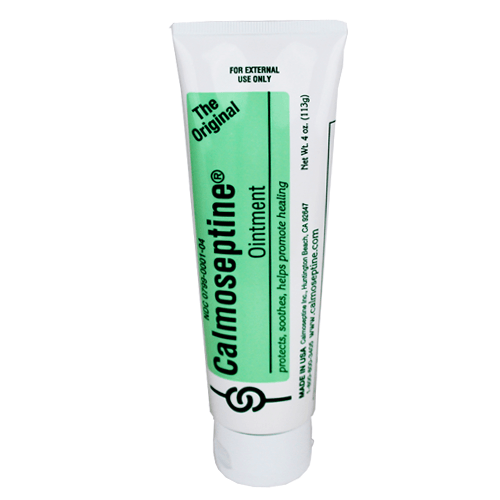
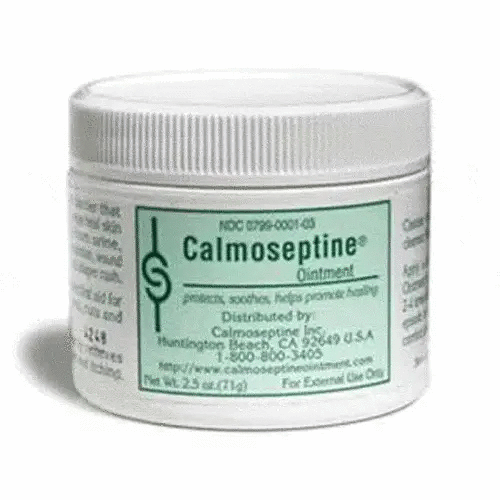
Calmoseptine is available over the counter in tubes, jars, and sample packets (e.g. 0.125 oz packets, 2.5 oz jars, 4 oz tubes). It is sold under the brand name Calmoseptine, but equivalent generic “menthol/zinc oxide topical ointment” preparations are also marketed by other companies. Some alternate brand names include Caladryl with menthol, Calazime, Risazin, etc. The generic name is “menthol and zinc oxide ointment and paste”.
Store Calmoseptine at room temperature (about 68–77°F or 20–25°C). The manufacturer recommends keeping it between 59°F and 86°F (15–30°C). Protect from extreme heat or freezing, and do not use it after the expiration date on the package.
Summary
In sum, Calmoseptine Ointment is a topical moisturizing barrier product that combines zinc oxide, menthol, lanolin, and petrolatum to protect and soothe irritated skin. It is commonly used for comfort and protection of perianal skin (diaper rash, hemorrhoids, anal fissures, etc.) as well as for a variety of minor skin irritations and dermatologic conditions. When applied as directed, it can temporarily ease itching and pain while forming a protective layer over the affected area. Always follow package directions and consult a healthcare provider if you have any concerns or if symptoms do not improve.
Disclaimer: This information is provided for educational purposes and is not medical advice. For personal health issues or before using a new medication, please consult a qualified healthcare professional.
Active Ingredients: Menthol (0.44%) which acts as a External Analgesic, first aid antiseptic and Zinc Oxide (20.625%) which acts as a Skin Protectant and moisture barrier.
Inactive Ingredients: Calamine, Chlorothymol, Glycerin, Lanolin, Phenol, Sodium Bicarbonate, and Thymol.
Brand: Calmoseptine
Product Number: 000104