Heparin Sodium Injection (40,000 Units)
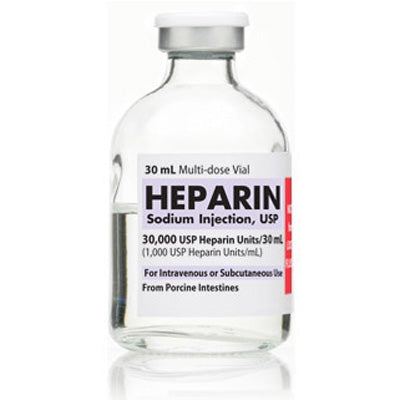
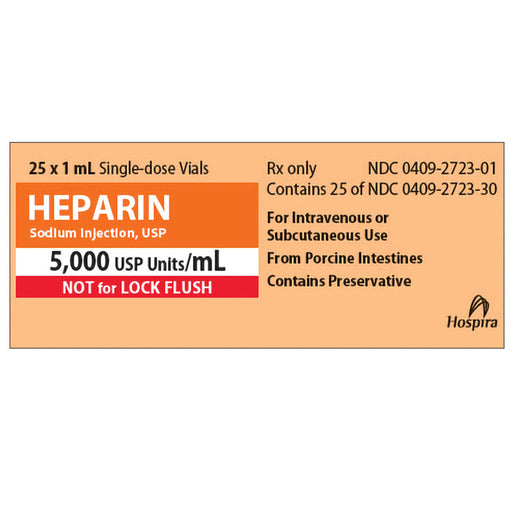
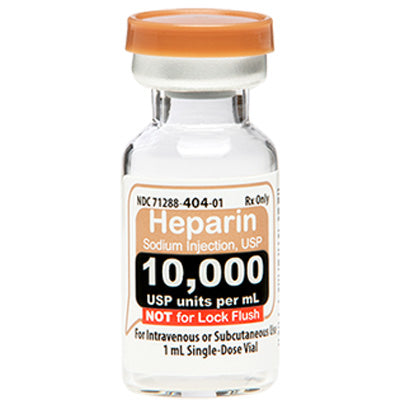
Heparin sodium injection is a powerful anticoagulant (blood thinner) given by a healthcare professional. It comes as a liquid injection for intravenous (IV) infusion or subcutaneous (under-the-skin) injection. Its strength is measured in “units” of activity (USP units), not milligrams. A 40,000-unit vial is a very high-strength preparation typically used in hospitals to prepare infusions or multiple doses.
Heparin works by enhancing antithrombin III, a natural blood protein, which then inactivates key clotting factors (notably thrombin/FIIa and Factor Xa). This interrupts the clotting cascade and prevents existing clots from growing, as well as the formation of new clots. Because of this mechanism, heparin is used in many clinical settings where clot prevention or treatment is needed.
Indications (When It’s Used)
According to official prescribing information, heparin sodium injection is indicated for preventing and treating a variety of thromboembolic conditions. Key uses include:
-
Venous thrombosis and pulmonary embolism – prevention and treatment: Helps prevent blood clots in the deep veins (DVT) and lungs (PE) or treat them if they occur.
-
Postoperative clot prevention: Given to patients undergoing major abdominal or thoracic surgery (and others at high risk) to prevent DVT/PE after surgery.
-
Atrial fibrillation with embolization: Prevents stroke or systemic embolism in patients with irregular heartbeat that can throw clots.
-
Consumptive coagulopathies (DIC): Used in acute or chronic disseminated intravascular coagulation, a condition of abnormal clotting and bleeding.
-
Clot prevention during procedures: Acts as an anticoagulant during arterial or cardiac surgery, blood transfusions, extracorporeal circulation (e.g. heart-lung bypass), and dialysis, to prevent clotting in the equipment.
-
Peripheral arterial embolism: Prevention and treatment of clots in the arterial circulation of the limbs.
In short, heparin injection is used any time a physician needs to quickly thin the blood to prevent dangerous clots.
Administration and Dosage
Heparin injection must be given by a healthcare professional. It can be administered as:
- An IV bolus (a rapid injection into a vein), or
- A continuous IV infusion (mixed into IV fluids), or
- A subcutaneous injection (usually in the abdominal fat).
The exact dose depends on the patient’s weight, the condition being treated, and lab tests (like aPTT/anti-Xa levels). For example, a common prophylactic regimen is an IV bolus of ≈5,000 units followed by 10,000–20,000 units subcutaneously every 8–12 hours. In full anticoagulation therapy, one might start similarly and then continue a continuous infusion (e.g. 20,000–40,000 units per 24 h) adjusted by blood tests. All dosing must be prescribed and monitored by clinicians.
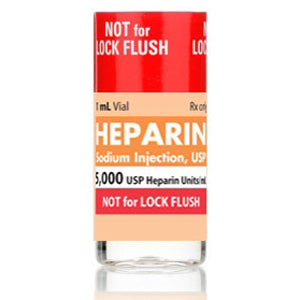
Heparin comes in various concentrations (for example, 1,000 U/mL or 5,000 U/mL vials). A “40,000-unit” vial could correspond to 4 mL at 10,000 U/mL or 8 mL at 5,000 U/mL, etc. Large multi-dose vials (like 50,000 U in 10 mL) are used to prepare these doses. Careful calculation and labeling are crucial to avoid errors, since 40,000 units is a potent dose.
Side Effects and Precautions
Because heparin inhibits clotting, the main side effect is bleeding. Patients on heparin often bruise easily, and any unusual bleeding (e.g. nosebleeds, blood in urine or stool, prolonged bleeding from cuts) can be a sign of overdose. Hemorrhage can occur in any organ, so clinicians monitor closely. Other side effects include injection-site reactions (pain, bruising, or irritation) and mild liver enzyme elevations.
A serious adverse effect is heparin-induced thrombocytopenia (HIT), an immune reaction that dramatically lowers platelet counts and paradoxically can cause new clots. This usually shows up days after starting heparin; patients are monitored with platelet counts.
Major precautions include:
-
Contraindication with active bleeding: Heparin should not be used if there is uncontrolled bleeding (unless being used as part of DIC treatment). Examples include gastrointestinal bleeding, hemorrhagic stroke, or severe trauma.
-
Severe thrombocytopenia or bleeding disorders: Don’t give heparin if platelet levels are already critically low or in certain blood dyscrasias.
-
History of HIT or heparin allergy: Patients who had HIT or allergic reactions to heparin (often pork-derived) should never receive it. Also avoid concurrent use of drugs like thrombolytics or certain antiplatelets that further increase bleeding risk.
-
Special populations: Use caution (often lower doses) in the elderly, those with liver or kidney impairment, and during pregnancy (heparin does not cross the placenta, which is why it’s preferred in pregnant patients who need anticoagulation.
If a serious bleeding event occurs, protamine sulfate (an IV medication in hospitals) can quickly reverse heparin’s effect. Each 1 mg of protamine neutralizes roughly 100 U of heparin.
Key Points
- Heparin sodium injection 40,000 U is a high-strength blood thinner used in hospitals to prevent or treat dangerous blood clots.
- It is only given by medical professionals (IV or subcut) with exact dosing tailored to the patient. Patients on heparin need careful monitoring.
- The biggest risk is bleeding. Watch for any unusual bleeding or bruising. Laboratory tests (like clotting times) are often used to adjust the dose.
-
Do not use heparin without medical supervision. Always double-check concentrations and use as directed. Report any side effects immediately to a doctor.
Disclaimer: The information below is for general knowledge and is not medical advice. Always follow a healthcare provider’s instructions and consult a professional for personal guidance.
 Skip to content