Gold-Standard Buffer for Emergency, Critical Care, and Cardiac Code Response
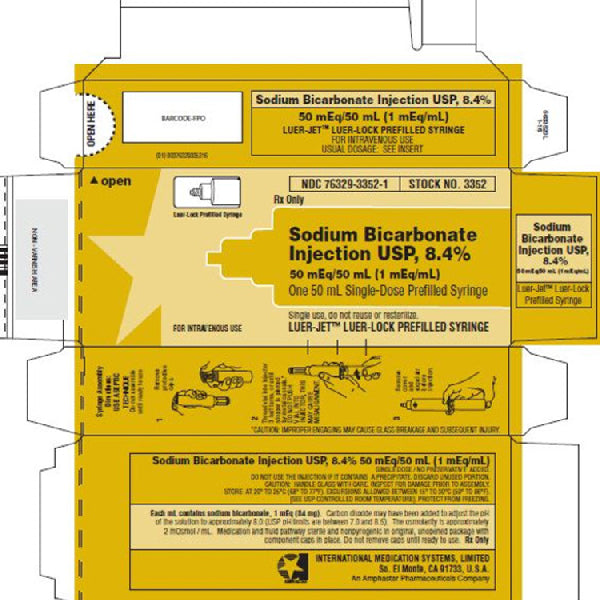
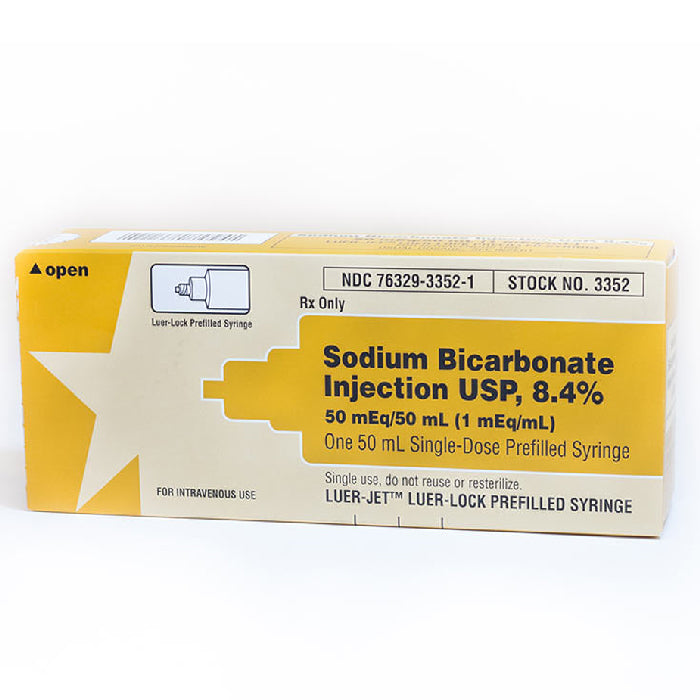
Sodium Bicarbonate 8.4% Prefilled Syringe by International Medication Systems is the trusted, hospital-grade solution for rapid correction of severe metabolic acidosis, cardiac arrest, drug toxicity, renal failure, and critical electrolyte imbalances. Each 50 mL Luer-Jet Luer-Lock syringe delivers precise, sterile dosing for immediate IV administration—essential for every crash cart, emergency department, ICU, and EMS protocol.
International Medication Systems 3352 Sodium Bicarbonate 8.4% Luer-Jet Prefilled Syringes 50 mL is a highly effective and widely used medication for the treatment of various medical conditions and emergencies. Sodium Bicarbonate 8.4% Syringes are mainly used for restoring and maintaining the normal pH balance of the blood and body fluids in cases of acidosis, which is caused by conditions such as diabetic ketoacidosis and lactic acidosis. The unique Luer-Jet design of these prefilled syringes allows for easy and accurate administration of the medication, making it a favorite among healthcare professionals. The benefits of using Sodium Bicarbonate 8.4% Syringes are numerous, including rapid and precise correction of acidosis, prevention of further tissue damage, and improved patient outcomes. These prefilled syringes also offer convenience and portability, making them ideal for use in emergency situations and critical care units. With its proven effectiveness and ease of use, International Medication Systems 3352 Sodium Bicarbonate 8.4% Luer-Jet Prefilled Syringes 50 mL has become a trusted choice for healthcare providers worldwide.
Order Sodium Bicarbonate 8.4% Medication Luer-Jet Prefilled Syringes 50 mL — The Emergency Buffer Solution for Crash Carts, ICU, and EMS
Be prepared for any code, acidosis, or toxicologic crisis with the gold-standard, hospital-trusted sodium bicarbonate prefilled syringe. Fast, accurate, and reliable—keep every cart, tray, or advanced life support bag equipped and ready.
NDC: 76329-3352-01 | UPC: 376329335216 Prescription required. Professional/Clinical use only.
Uses and Applications
Sodium Bicarbonate Injection 8.4% is indicated for:
- Immediate treatment of life-threatening metabolic acidosis: Cardiac arrest, diabetic ketoacidosis, renal failure, or severe lactic acidosis.
- Cardiac arrest (as part of ACLS protocols): To correct acidemia, hyperkalemia, or tricyclic antidepressant overdose.
- Acid neutralization in overdose: TCA (tricyclic antidepressant), aspirin, barbiturate, or other toxin-induced acidosis.
- Adjunct treatment of hyperkalemia: Temporarily reduces serum potassium.
- Correction of severe acid-base disturbances in surgery, sepsis, or trauma.
- ICU, operating room, crash cart, and EMS advanced life support use.
Not for routine alkalinization or mild acidosis; for emergency & critical care use only.
How to Use
- Visually inspect the prefilled syringe for clarity and absence of particulates.
- Remove syringe from packaging and attach a Luer-lock compatible IV needle or extension.
- Administer slowly via a large bore IV or central line—avoid small peripheral veins due to hypertonicity.
- Confirm IV patency to avoid extravasation; monitor site during infusion.
- For emergencies: May be given as a rapid IV push under ACLS/ALS protocols.
- Repeat blood gas/electrolyte assessment per protocol after administration.
For professional hospital, EMS, or ICU use only.
Dosage and Administration
Standard Adult Dosing:
- Metabolic Acidosis/Cardiac Arrest:
- Initial dose: 1 mEq/kg IV push (typically 50 mEq = 50 mL syrup)
- May repeat in 10 minutes; dose adjusted to patient acid-base status
- Tricyclic Antidepressant (TCA) Overdose/Drug Toxicity:
- 1–2 mEq/kg IV bolus; repeat as needed for QRS prolongation or persistent acidosis
- Hyperkalemia:
- 50–100 mEq IV over 2–5 minutes (alongside other therapies)
Pediatric Dosing:
- Dosing: 1 mEq/kg IV push; dilute to 4.2% for neonates/infants
Dosing individualized by weight, clinical scenario, and arterial blood gas (ABG) status. Monitor for overcorrection and alkalosis.
Drug Interactions
- Calcium salts (calcium chloride or gluconate): Precipitation risk—never mix in same IV line.
- Catecholamines (epinephrine, norepinephrine): High pH solution may inactivate if co-administered.
- Other medications: Alkalinization changes bioavailability of weak acid/weak base drugs (may accelerate excretion of barbiturates, salicylates, etc.).
- Potassium supplements: Effects on serum potassium must be carefully monitored.
Use dedicated IV line whenever feasible and consult pharmacy on compatibility.
Side Effects
Common Side Effects
- Local IV irritation, swelling, phlebitis at injection site
- Hypokalemia, hypocalcemia due to rapid correction
- Mild metabolic alkalosis with repeated/large doses
- Fluid overload in susceptible patients
Serious/Rare Side Effects
- Metabolic alkalosis (confusion, muscle twitching, arrhythmias, seizures)
- Pulmonary edema or CHF exacerbation (due to large sodium load)
- Hypernatremia (especially with repeated boluses)
- Tetany or cramping
- Tissue necrosis from extravasation
Discontinue immediately and manage if extravasation or signs of overcorrection occur.
 Skip to content