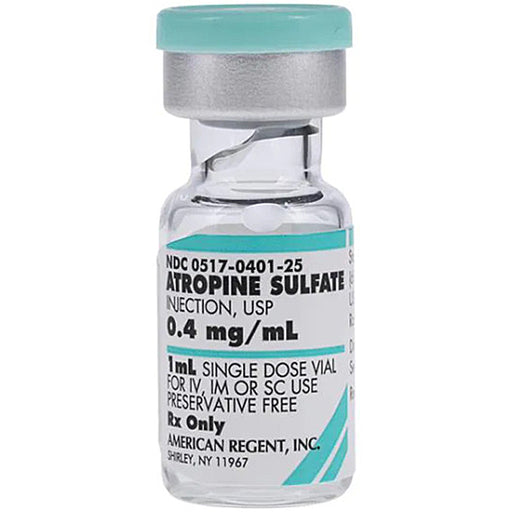
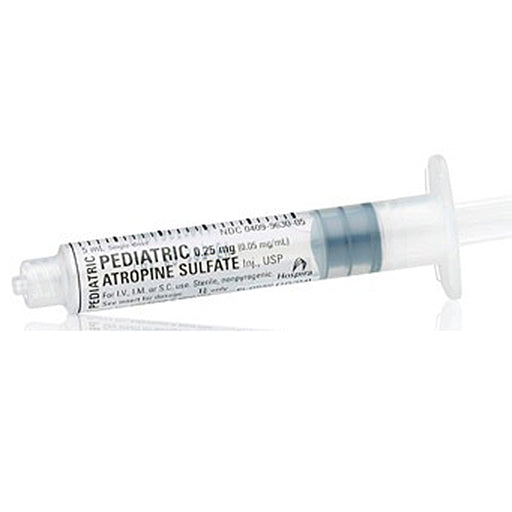
Atropine Sulfate (Injection)
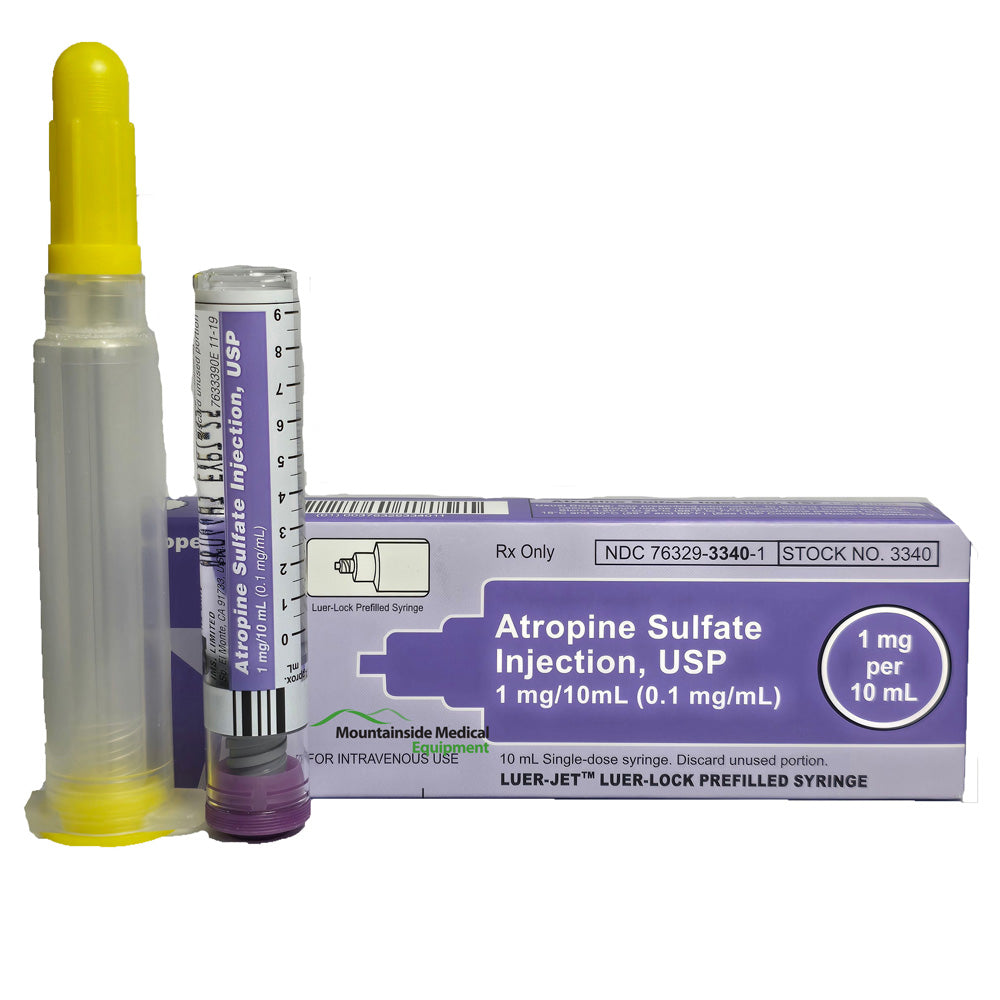
Atropine sulfate is a potent anticholinergic (antimuscarinic) drug used in emergency medicine. It blocks acetylcholine at muscarinic receptors throughout the body, thus inhibiting parasympathetic (vagal) activity. In practical terms, atropine increases heart rate and dries secretions. It is formulated for intravenous (or IM) use – often as a 0.1 mg/mL injection (typically 1 mg in a 10 mL prefilled syringe). According to official prescribing information, “Atropine is a muscarinic antagonist indicated for temporary blockade of severe or life threatening muscarinic effects”. In short, atropine counters dangerous vagal responses, whether in the heart (bradycardia) or elsewhere (excess secretions, bronchospasm, etc.).
Mechanism of Action
Atropine is a competitive antagonist at muscarinic acetylcholine receptors. By blocking muscarinic receptors (especially M2 receptors in the heart and M3 in glands), atropine prevents acetylcholine’s effects. This leads to removal of parasympathetic tone: the heart rate rises, secretions (saliva, bronchial mucus) decrease, pupils dilate (mydriasis), bronchial smooth muscle relaxes, and gastrointestinal motility slows. For example, statpearls explains that atropine “functions as a competitive, reversible antagonist of muscarinic receptors,” causing parasympathetic inhibition so that sympathetic effects (like tachycardia) predominate. This direct “vagolytic” action is why atropine can rapidly reverse acute bradycardia or asystole by blocking the vagus nerve’s slowing influence on the heart.
Indications and Uses
Atropine is used in critical care and toxicology settings. Its main FDA-approved roles are to treat life-threatening muscarinic overstimulation. Clinically this includes:
-
Symptomatic bradycardia/heart block: Atropine is first-line for unstable bradycardia or AV block due to high vagal tone. For example, in advanced cardiac life support (ACLS), IV atropine (0.5–1 mg) is given for symptomatic sinus bradycardia or bradyasystolic arrest. The label notes a 1 mg IV dose for bradyasystolic cardiac arrest, repeatable every 3–5 minutes if needed. (ACLS guidelines often start at 0.5 mg, but official labeling and many protocols allow 1 mg.)
-
Organophosphate/muscarine poisoning: Atropine is the key antidote for cholinergic pesticide or nerve agent poisoning, and muscarinic mushroom toxicity. Large repeated doses (typically 2–3 mg IV or IM, often much higher in severe cases) are given until pulmonary and secretory symptoms abate. In practice, doses may be titrated to effect (occasionally up to tens of milligrams).
-
Antisialagogue / Preanesthetic use: Atropine can be used to reduce excessive salivation and secretions or prevent vagal reflexes during surgery/intubation. A small dose (about 0.4–0.6 mg IV) is given before anesthesia to dry the airway and stabilize heart rate. (It is often used in pediatric intubations to prevent post-induction bradycardia, since children are more vagal.)
-
Cardiac arrest (asystole/PEA): In asystolic or PEA cardiac arrest with a suspected bradycardic/vagal component, atropine (1 mg IV push) may be tried, per ACLS protocols.
Statpearls confirms these uses, noting atropine’s FDA indications include anti-vagal (bradycardia) effects, antidote for organophosphates, and reduction of vagal tone/secretions. Off-label, atropine also clears secretions in intubated patients or pretreatment for bradycardia (e.g. during eye surgery). It is not effective in β-blocker overdose or non-vagal causes of bradycardia (glucagon is preferred there), but otherwise can be lifesaving in cholinergic crises and severe bradyarrhythmias.
Dosing and Administration
Adult Dosing (IV/IM)
-
Symptomatic bradycardia or heart block: Give 0.5–1 mg IV. Repeat every 3–5 minutes as needed, up to about 3 mg total. This is most effective for sinus bradycardia and AV nodal block. (Some guidelines use 0.5 mg as first dose, but the product label uses 1 mg for arrest.)
-
Organophosphate/muscarinic poisoning: Give 2–3 mg IV (or IM), repeat every 20–30 minutes. Titrate to effect (clearance of secretions, improved breathing); doses may exceed 10–20 mg total if needed.
-
Antisialagogue (vagal prophylaxis): Give 0.5–1 mg IV or IM about 30–60 minutes before surgery or intubation. This dose drys secretions and blunts reflex bradycardia.
-
Cardiac arrest (asystole/PEA with bradycardia): Give 1 mg IV push; may repeat per ACLS guidelines if there is a continued vagal component.
-
Pediatric dosing: Typically 0.01–0.03 mg/kg IV (minimum 0.1 mg), repeat as needed. (In children, bradycardia is often due to hypoxia, so atropine is used only after airway/ventilation issues are addressed.)
Administration notes: Inspect the solution before use; it should be clear. Use aseptic technique. Onset is rapid (IV), peak effect in minutes. Do not mix atropine with other drugs in the same syringe or IV line unless compatibility is confirmed. The injection may be given IV push over several seconds, or IM if IV access is not available (onset is slower IM).
Key Dosage References
The official prescribing information and clinical sources align: e.g., one summary states “Bradycardia: 1 mg every 3–5 minutes (3 mg max)”, anti-sialagogue 0.5–1 mg q1–2 h, and “Organophosphate poisoning: 2–3 mg every 20–30 minutes (may require doses up to 20 mg)”. These guidelines reflect ACLS and toxicology protocols (repeating atropine doses until desired effect).
Side Effects and Precautions
Atropine’s side effects are exactly its expected anticholinergic effects. The most common adverse effects are dry mouth, blurred vision (due to dilated pupils), photophobia, tachycardia, and flushed, warm skin. Constipation, urinary retention, and decreased sweating (anhidrosis) can also occur, especially in elderly patients. (In overdose or poisoning, these effects intensify – pupils become fully dilated, skin very hot and dry, agitation or delirium may ensue.)
Important precautions: Because atropine increases heart rate and cardiac workload, use caution in patients with coronary artery disease, angina, or heart failure (excessive tachycardia can worsen ischemia). Acute angle-closure glaucoma is a contraindication: pupil dilation can precipitate a dangerous rise in intraocular pressure. Likewise, atropine should be used cautiously if urinary retention or prostatic hypertrophy is present (it can worsen outflow obstruction). Gastrointestinal or urinary obstruction (e.g. paralytic ileus, pyloric stenosis) are also cautions due to reduced motility. Pregnancy/lactation: Atropine crosses the placenta and may cause fetal tachycardia, but no birth defects have been observed. It can be given if clearly needed during pregnancy. ACOG advises that vigorous treatment of maternal bradycardia (e.g. during obstetric procedures) should not withhold atropine. Atropine appears in breast milk in small amounts; mothers should be monitored for reduced infant feeding or drowsiness if used chronically.
Monitoring: Patients on IV atropine (especially older or cardiac patients) should have ECG monitoring due to risk of arrhythmias. Monitor heart rate, blood pressure, and signs of ischemia. In organophosphate poisoning, monitor secretions and mental status to assess if atropine dosing is adequate. Check urinary output, as atropine’s antidiuresis can lead to fluid retention or dilute hyponatremia during infusion.
Storage and Handling
Atropine sulfate injection is supplied as a clear, colorless solution (e.g. 0.1 mg/mL in a glass syringe). Store at controlled room temperature – generally 20–25°C (68–77°F) (short excursions 15–30°C are allowed). Protect from light, and do not freeze. Do not use past the expiration date. Each syringe or vial is single-use: discard any opened, unused portion. Before administration, inspect visually to confirm clarity and no particulate matter.
Atropine sulfate is a fast-acting muscarinic blocker used in emergencies to counteract life-threatening vagal effects. By blocking parasympathetic tone, it raises pulse and dries secretions. Typical uses are for symptomatic bradycardia (ACLS), asystolic arrest, organophosphate/muscarinic poisoning, and pre-anesthetic anti-vagal premedication. Adult IV dosing is usually 0.5–1 mg (repeat as needed), and much larger repeated doses are used in poisonings. Side effects (dry mouth, tachycardia, blurred vision) reflect its anticholinergic action so use caution in glaucoma, urinary retention, and cardiac disease. Proper storage (room temperature) and dilution (already premixed) ensure safe administratio. In sum, atropine sulfate injection is an essential emergency drug for reversible cholinergic crises and severe bradycardia, provided in ready-to-use sterile syringes.
Uses and Applications
Atropine Sulfate is indicated for:
- Treatment of symptomatic bradycardia (slow heart rate) including sinus bradycardia, AV nodal block, and asystole as per ACLS/CPR protocols.
- Antidote for organophosphate or carbamate insecticide poisoning and nerve agent exposure (cholinergic crisis).
- Pre-anesthetic use: Decreases secretions and prevents reflex bradycardia during surgery.
- Treatment of atrioventricular (AV) block at the nodal level
- Adjunct in the management of asthma and certain poisonings (when anticholinergic is needed)
Indispensable for hospitals, advanced life support (ALS) teams, EMS, operating rooms, disaster preparedness, and military field medical kits.
How to Use
- Visually inspect solution for clarity and absence of particles.
- Remove prefilled syringe from sterile packaging.
- Attach a needle or secure to Luer-lock IV/IO access device as appropriate.
- Administer dose IV or IO push as per medical guidelines; may also be given IM in field toxicology emergencies.
- Monitor patient for ECG, vitals, and desired response.
- Single use only—discard after use.
FOR PROFESSIONAL HEALTHCARE/EMS ONLY.
Dosage and Administration
- Symptomatic Bradycardia/ACLS:
- Adult: 0.5 mg (5 mL) rapid IV/IO push; may repeat every 3–5 min as needed (max total dose: 3 mg/30 mL)
- Pediatric: 0.02 mg/kg rapid IV/IO (min single dose 0.1 mg, max single dose 0.5 mg [child] or 1 mg [adolescent])
- Organophosphate/Nerve Agent Poisoning:
- Adult: 2–6 mg IV/IM initially, repeat every 5–10 min as needed until secretions dry and ventilation improves; higher/frequent doses may be required for severe exposure.
- Pediatric: 0.05 mg/kg IV/IM, repeat as necessary.
- Pre-anesthesia: 0.4–0.6 mg IM/IV/SC 30–60 minutes before induction
Dosing individualized by weight, clinical condition, and medical protocol. Always confirm dose per latest guidelines.
Drug Interactions
- Other anticholinergic/antimuscarinic drugs: Additive effects (e.g., antihistamines, tricyclic antidepressants, phenothiazines)
- Cholinergic drugs: Counteracted by atropine
- Amantadine, quinidine, antipsychotics: Potentiation of anticholinergic side effects
- Glucagon (bradycardia management): Compatible; no direct interaction
Monitor for additive anticholinergic toxicity in polypharmacy patients.
Side Effects
Common Side Effects
- Dry mouth, blurred vision, photophobia
- Tachycardia (fast heart rate), palpitations
- Flushing, dry skin
- Urinary retention, constipation
- Restlessness, dizziness
Serious/Rare Side Effects
- Ventricular fibrillation or asystole (rare, especially in high dose or cardiac instability)
- Hyperthermia (especially in children)
- Severe confusion, hallucinations, delirium (elderly or very large dose)
- Hypersensitivity/anaphylaxis (very rare)
- Acute glaucoma attack (avoid in angle closure glaucoma)
Observe all patients for CNS, cardiac, and anticholinergic toxicity.
 Skip to content