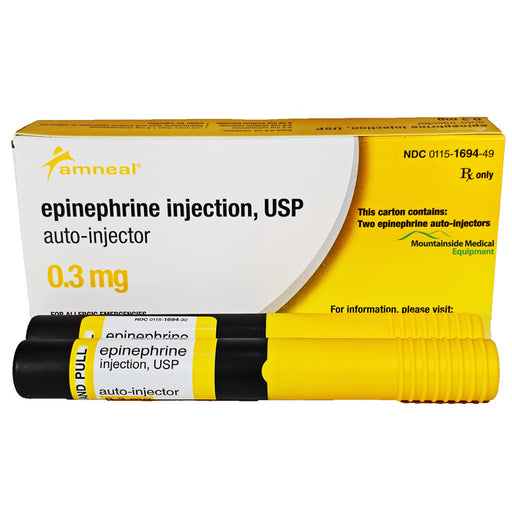
Epinephrine Auto-Injector Jr, 0.15 mg
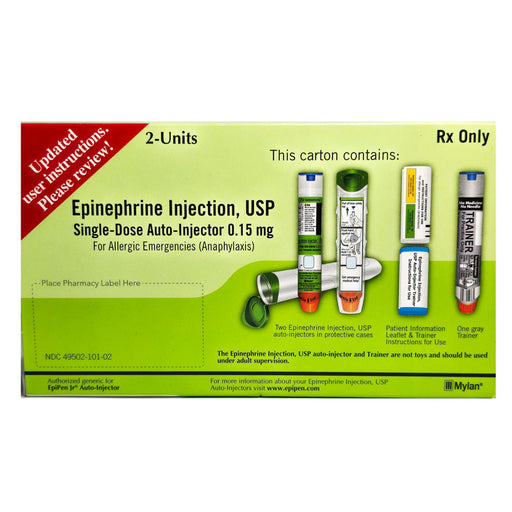
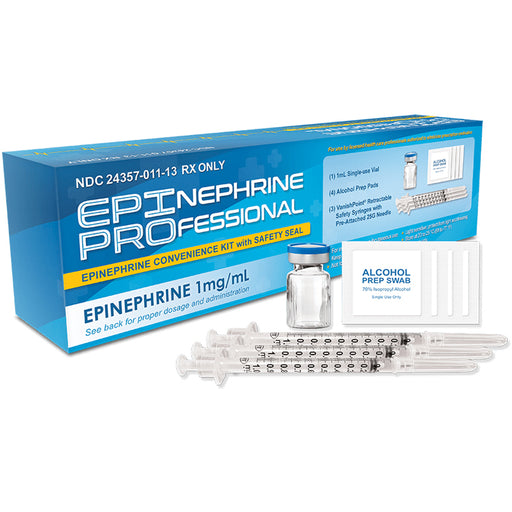
Epinephrine (also called adrenaline) is the first-line treatment for life-threatening allergic reactions (anaphylaxis). The EpiPen Jr auto-injector contains 0.15 mg epinephrine (1:2000 solution, 0.3 mL) for intramuscular use. (A 0.3 mg dose in 0.3 mL is sold as the adult EpiPen.) Epinephrine is a potent sympathomimetic (alpha and beta agonist) that reverses anaphylaxis by constricting blood vessels (raising blood pressure, reducing airway and facial swelling) and relaxing bronchial smooth muscle (opening airways).
-
Indications: Immediate emergency treatment of severe allergic reactions (anaphylaxis) to insect stings/bites, foods, medications, latex, etc., as well as idiopathic or exercise-induced anaphylaxis. EpiPen Jr is intended for patients at increased risk of anaphylaxis (history of serious allergies) who weigh approximately 7.5–25 kg (about 16–55 lb). (Children above ~25 kg should use the 0.3 mg adult dose.) Selection of Jr (0.15 mg) vs adult (0.3 mg) is typically by weight (~0.01 mg/kg); for example, one guideline recommends 0.15 mg for 15–30 kg body weight. Adrenaline/epinephrine is endorsed by all allergy/anaphylaxis guidelines as the first-line therapy.
-
Dosage & administration: IM injection in thigh is given at the first sign of anaphylaxis (difficulty breathing, swelling, hives, wheezing, hypotension, etc.). Hold the auto-injector firmly against the lateral thigh (through clothing if needed) for ~3–10 seconds to deliver 0.3 mL (=0.15 mg). An initial dose should be given immediately upon recognizing anaphylaxis symptoms. If symptoms do not improve (or worsen) after 5–15 minutes, a second dose may be administered using another EpiPen Jr. (Frequently, patients are prescribed and carry two devices in case a repeat dose is needed.) Always activate emergency services (911) immediately after injection – even if symptoms seem to improve, because advanced care is necessary. Patients (and caregivers) should be trained on proper use and instructed to sit or lie down with legs raised (unconscious patients to recovery position) after injection.
-
Mechanism: Epinephrine acts on α₁-receptors (vasoconstriction – reverses low blood pressure, hives, swelling) and β-receptors (β₂–bronchodilation – relieves wheezing/bronchospasm; β₁ – increases heart rate). It also reduces edema of the throat and counters gastrointestinal symptoms by relaxing smooth muscle. Its onset is rapid (minutes) but short-lived, which is why immediate medical evaluation is still required.
-
Safety/Contraindications: In true anaphylaxis, epinephrine has no absolute contraindications – delaying or skipping it can be fatal. (The presence of sulfites or cardiovascular disease is not a reason to withhold epinephrine in an emergency.) Caution is noted if a patient has heart disease, arrhythmias, or is on certain drugs (digitalis, beta-blockers), but these conditions are not contraindications in life-threatening reactions. Because the formulation contains sodium metabisulfite, true sulfite-allergic patients are warned that a reaction is possible, but experts still advise using epinephrine regardless in a true emergency.
-
Side effects: When given for anaphylaxis, most side effects are transient and self-limited. Common effects include tachycardia, palpitations, nervousness, tremor, headache, dizziness, sweating, and nausea/vomiting. In patients with underlying heart conditions or on sensitizing drugs, adrenaline can provoke arrhythmias or angina, but these risks are accepted in anaphylaxis. (If an overdose or IV injection accidentally occurs, cerebrovascular events can result.) Local injection cautions: Only inject into the thigh. Injection into fingers, hands, or feet can cause severe vasoconstriction and ischemia; in such cases, vasodilators may be needed. Do NOT inject intravenously or into the buttocks. (If accidental limb injection occurs, quickly seek help – warm the area and have providers inject phentolamine if recommended.)
-
Storage: The auto-injector should be kept in its protective case at room temperature (15–30 °C/59–86 °F) and protected from light. Do not freeze. Inspect the solution periodically – it should be clear and colorless. If the epinephrine has darkened (pink/brown), or after expiration, replace it. Most devices have a printed expiry date.
Key Point: EpiPen Jr (0.15 mg epinephrine) is a single-use emergency injection for pediatric anaphylaxis (approximately 15–30 kg). It should be used immediately when anaphylaxis symptoms occur. Patients should always carry two auto-injectors, because a second dose may be needed. After administration, immediate medical evaluation is mandatory.
EpiPen Jr Weight and Age
Dose: Each EpiPen Jr contains 0.15 mg of epinephrine.
Weight range: Indicated for children weighing about 15–30 kg (33–66 lbs). (Children above ~30 kg [≈66 lbs] should use the adult 0.3 mg EpiPen.)
Age: There is no fixed age cutoff – dosing is strictly weight-based. In practice this covers pediatric patients from toddler/preschool age through the preteen years (roughly up to ~10–12 years, depending on body size). Once a child’s weight exceeds about 30 kg, clinicians switch to the adult 0.3 mg dose.
Children <15 kg: EpiPen Jr is not FDA‐approved below ≈15 kg. Smaller children require alternative dosing. For example, some auto-injectors (Auvi-Q 0.1 mg) are labeled for use down to 7.5 kg. In the absence of a lower-dose autoinjector, some clinicians may use 0.15 mg off-label in children down to ~10 kg, but this is beyond official guidelines and must be done with extreme caution. (Studies have shown that the standard 12.7 mm needle can hit the femur in many children under 15 kg.
Other guidelines: Note regional differences in labeling. For example, the UK/EU summary says EpiPen Jr is for 7.5–25 kg. Nevertheless, the crucial point is weight – children up to ~30 kg get the 0.15 mg device, and heavier patients receive the 0.3 mg adult dose.
Epinephrine Auto-Injector 0.15 mg Instructions
EpiPen Jr is an FDA-approved auto-injector containing 0.15 mg epinephrine (1:2000) for emergency treatment of anaphylaxis (severe allergic reaction) in children (roughly 15–30 kg body weight). It should be carried by anyone with known serious allergies. At the first sign of anaphylaxis (wheezing, throat swelling, hives, etc.), use EpiPen Jr immediately, as epinephrine is life-saving in anaphylaxis. There are no contraindications in anaphylaxis – epinephrine should not be delayed for any reason.
Key Instructions for Use: The following steps describe how to administer EpiPen Jr. Practice these steps before an emergency, and always have two auto-injectors on hand (a second dose is often needed).
-
Step 1: Remove from Case. Take the green EpiPen Jr auto-injector out of its protective carrying case.
-
Step 2: Remove Safety Cap. Flip off and remove the blue safety cap by pulling it straight up – do not twist or bend it. Ensure the orange needle end is pointing downward and do not cover it with your fingers (to avoid accidental injection).
-
Step 3: Inject into Thigh. Place the orange tip against the middle of the outer thigh (can be through clothing if necessary). Push firmly so that the needle is driven in and you hear a “click” (the device will “pop,” indicating activation). Continue to hold the EpiPen Jr firmly in place for a full 3 seconds so that the full dose is delivered. (If you don’t hear or feel the click, the dose may not have been delivered – see the device status below.)
-
Step 4: Remove and Check. Lift the injector straight out from the thigh. The orange safety sheath should slide over the needle, indicating injection is complete. If any needle is visible, do not reuse that device. Dispose of the used injector (needle down) in a sharps container if available.
-
Step 5: After Administration – Get Emergency Help. Call 911 or seek emergency care immediately, even if symptoms improve. You may use the second EpiPen Jr (or an adult EpiPen, if prescribed) 5–15 minutes later if symptoms persist or recur. Continuously monitor breathing and alert responders to the location of the used injector(s). (Bring the used injector with you to the hospital for reference.)
Important Notes & Precautions:
-
Training: Before an emergency, you and caregivers should review the instructions. A practice/trainer device is often provided for training (it has a gray body and no needle) and should be used to practice injection technique.
-
Carry Two Doses: Always have two EpiPen Jr on hand. About 20% of anaphylactic episodes require a second dose.
-
Proper Injection Site: Only inject into the middle of the outer thigh as directed. Do not inject into fingers, toes, hands, or feet (risk of severe vasoconstriction and loss of blood flow). The injection can be given through pants or other clothing if needed.
-
Single Use: Each EpiPen Jr auto-injector is single-use only. Do not attempt to reuse it. After use (or if expired/damaged), replace it immediately.
-
Storage: Keep EpiPen Jr at room temperature (15–30°C) and protect from light. Do not freeze. Check expiry dates regularly; replace expired units.
-
Follow-Up: Even after injecting epinephrine, all patients must receive prompt medical evaluation due to possible symptom recurrence (biphasic reaction) or complications.
Each EpiPen Jr delivers 0.15 mg of epinephrine (into thigh muscle) – this dose is calibrated for pediatric patients. It starts working within minutes to relieve airway constriction, raise blood pressure, and reduce swelling. Always use EpiPen Jr only for anaphylaxis or very severe allergic reactions. For mild allergic reactions (rash only), medical advice should guide use.
Uses & Applications
Epinephrine Jr Auto-Injector 0.15 mg is indicated for:
- Immediate emergency treatment of life-threatening allergic reactions (anaphylaxis) in children and infants weighing 15–30 kg (33–66 lbs).
- Allergic reactions caused by:
- Foods (peanuts, nuts, eggs, milk, seafood, soy, etc.)
- Insect stings and bites (bees, wasps, hornets)
- Medications (antibiotics, aspirin, others)
- Latex or unknown allergens
- On-the-go protection for school, daycare, travel, playgrounds, sports, summer camp, or anywhere allergens may be present.
Instructions on How to Use Epinephrine Jr Auto-Injector 0.15 mg
- Recognize signs of anaphylaxis: Sudden difficulty breathing, wheezing, throat/tongue swelling, hives, vomiting, or collapse.
- Remove from protective case.
- Pull off blue safety release.
- Place orange tip on the outer mid-thigh: Inject through clothing if necessary.
- Push down firmly until a click is heard: Hold in place for 3 seconds.
- Remove injector and massage area for 10 seconds.
- Call 911 immediately: Child must be evaluated by emergency healthcare professionals after any use.
- Administer second injector if symptoms persist or return before emergency help arrives (as directed by physician).
Practice with a trainer pen to ensure confidence. Always have a backup injector on hand.
Drug Interactions
- Monoamine oxidase inhibitors (MAOIs), tricyclic antidepressants: May increase risk of high blood pressure or heart rhythm changes.
- Beta-blockers: May reduce effectiveness of epinephrine and increase blood pressure effects.
- Cardiac glycosides, diuretics, antiarrhythmics: Can potentiate heart rhythm disturbances.
- Other Asthma or Allergy Medications: Generally used together in emergencies; consult your provider.
Always inform your child’s healthcare team about any other medications.