Immediate Treatment for Hypoglycemia and Emergency Blood Sugar Restoration
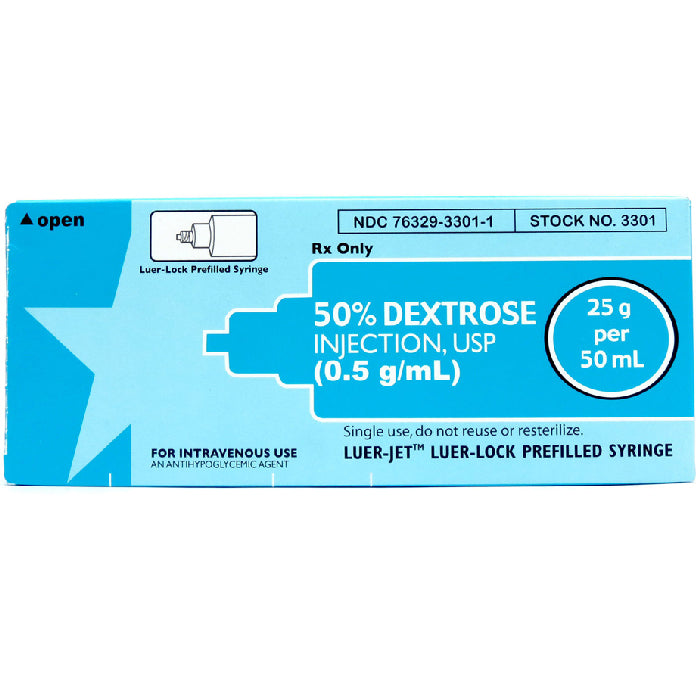
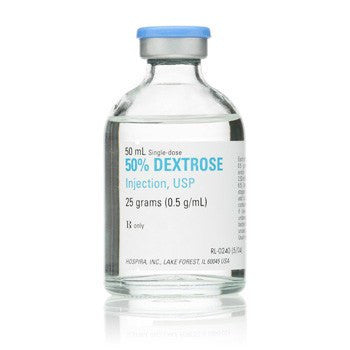
Dextrose 50% Prefilled Syringe by International Medication Systems is the gold-standard, ready-to-use hypertonic glucose solution trusted by hospitals, EMS, emergency rooms, and critical care teams. Each 50 mL Luer-Jet Luer-Lock syringe delivers an exact 25 grams of D50W for rapid IV administration—crucial for life-threatening hypoglycemia, insulin shock, or as an emergency carbohydrate source in altered mental status. Pharmaceutically precise, sterile, and preservative-free, this D50 syringe is essential for any crash cart, code blue kit, or ambulance.
Uses
Dextrose 50% Prefilled Syringes are indicated for:
-
Immediate treatment of severe hypoglycemia (low blood sugar) in adults and older children
-
Altered mental status of unknown diabetic cause—to rule out/treat hypoglycemia in unconscious, seizing, or non-responsive patients
- Insulin shock or diabetic emergencies
-
Emergency carb source for perioperative, trauma, or ICU patients unable to take oral/enteral glucose
-
Adjunctive therapy in some hyperkalemia protocols (administered with insulin to stabilize serum potassium)
- Part of code blue, EMS, and advanced life support (ALS/ACLS) kits
Order Dextrose 50% Prefilled Syringes (D50W Syringe) – Fastest Solution for Emergency Hypoglycemia Rescue
Equip your crash carts, ambulances, and emergency rooms with the gold-standard IV glucose solution trusted by professionals for effective hypoglycemia reversal—D50W Prefilled Syringe by International Medication Systems.
NDC: 76329-3302-01 | UPC: 376329330211 Prescription required. Professional and institutional use only.
Uses and Applications
Dextrose 50% Prefilled Syringes are indicated for:
- Immediate treatment of severe hypoglycemia (low blood sugar) in adults and older children
- Altered mental status of unknown diabetic cause—to rule out/treat hypoglycemia in unconscious, seizing, or non-responsive patients
- Insulin shock or diabetic emergencies
- Emergency carb source for perioperative, trauma, or ICU patients unable to take oral/enteral glucose
- Adjunctive therapy in some hyperkalemia protocols (administered with insulin to stabilize serum potassium)
- Part of code blue, EMS, and advanced life support (ALS/ACLS) kits
Not for routine nutrition; exclusively for acute IV use in emergencies.
How to Use
- Confirm diagnosis of hypoglycemia with bedside glucose testing if time allows.
- Inspect syringe for clarity and integrity.
- Remove from packaging, attach to a Luer-Lock-compatible IV line, IV catheter, or IO device.
- Administer the full syringe as a slow IV push (preferably via a large, patent vein). Rapid administration is often warranted in critical hypoglycemia.
- Monitor for phlebitis/infiltration. Flush line post-dose.
- Recheck blood glucose 5–10 minutes after administration and continue monitoring per protocol.
- If no response, consider repeating or alternative management based on blood glucose levels and clinical response.
FOR PROFESSIONAL USE ONLY.
Dosage and Administration
Adults (Emergency Hypoglycemia):
- Typical dose: 25 grams = 50 mL of D50W IV push
- Repeat as needed after reassessment (total dose varies based on response and cause)
Pediatrics and Infants:
- D10W or D25W preferred; D50W usually diluted to avoid vein damage
- Recommended pediatric dosing: 0.2–0.5 g/kg IV (0.4–1 mL/kg D50W; typically diluted 1:1 with sterile water or saline)
- Do not administer undiluted D50W to neonates/infants
Follow institutional protocols for maximum single dose and repetition interval. High concentrations can cause local tissue injury if extravasated—monitor closely.
Drug Interactions
- Insulin and oral hypoglycemics: Pharmacological antagonism (correction of hypoglycemia)
- Potassium-lowering protocols: Administered with insulin in hyperkalemia to prevent hypoglycemia
- Thiazide diuretics, corticosteroids: May cause additional hyperglycemia
- Monitor for interactions in polypharmacy elderly, ICU, and diabetic patients
Always review patient’s medication list and consult with a pharmacist for complex situations.
Side Effects
Common Side Effects
- Local phlebitis, pain, redness, or swelling at injection site
- Hyperglycemia (overcorrection especially if diabetic)
- Fluid overload (with repeated dosing or in renal/cardiac impairment)
- Tissue necrosis with extravasation (vesicant)
Serious/Rare Side Effects
- Pulmonary edema in susceptible patients
- Thrombosis or embolism (from hyperosmolar solution)
- Electrolyte disturbances (esp. if repeated large doses)
If extravasation occurs: Stop infusion immediately and treat per protocol (possible hyaluronidase/local management required).