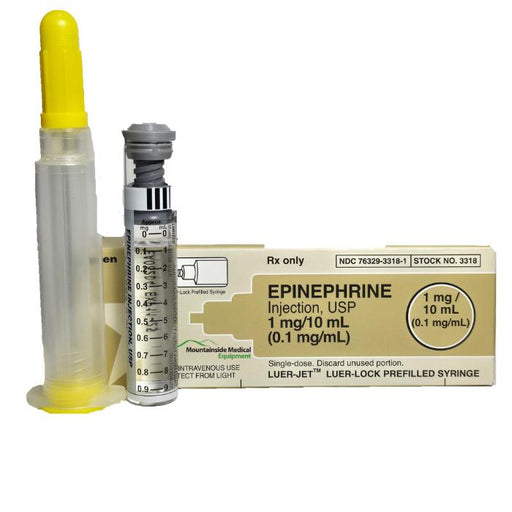
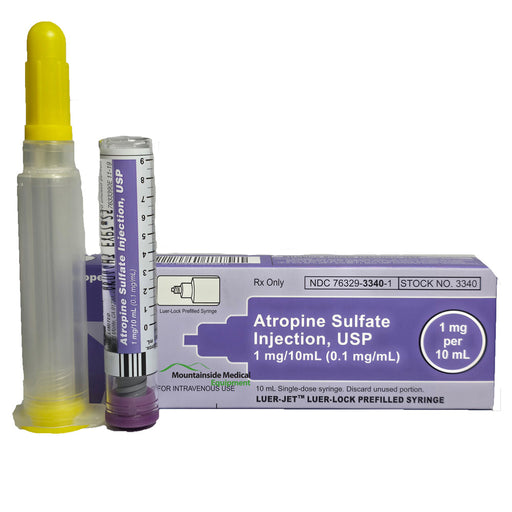
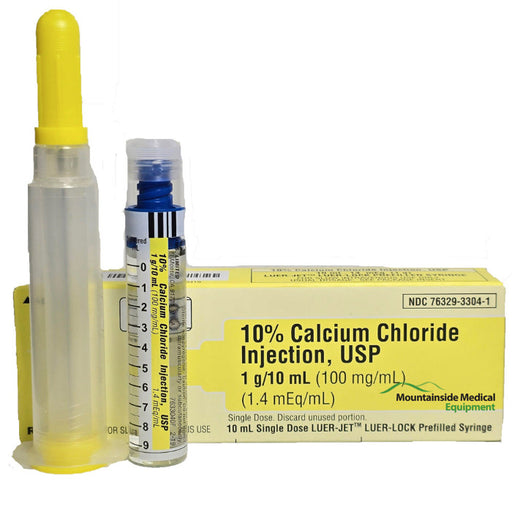
Naloxone prefilled syringe refers to a ready-to-use syringe that comes pre-loaded with naloxone solution, intended for quick administration during an opioid overdose emergency. Naloxone itself is a medication that rapidly reverses the effects of opioids (such as heroin, fentanyl, or prescription painkillers) by binding to opioid receptors and blocking or displacing the opioid molecules. This antidote can restore normal breathing in a person whose breathing has slowed or stopped due to an overdose.
Current Expiration : October 2026
Uses:
- Life-Saving Opioid Overdose Treatment
- Crucial for Fentanyl, Heroin, Prescription Painkiller Overdose
- Restores Normal Breathing Until Emergency Help Arrives
- Prevents Fatalities and Severe Brain Injury
- Integral Part of Harm Reduction and Public Health Programs
When we say “prefilled syringe,” it means the syringe is already filled by the manufacturer with a specific dose of naloxone, so a rescuer doesn’t have to draw up the medication from a vial. It’s essentially naloxone in an injectable form, packaged for immediate use. Prefilled syringes are designed to make naloxone administration simpler and faster for both medical professionals and everyday people who might be responding to an overdose.
Key features of a Naloxone Prefilled Syringe:
-
Pre-Measured Dose: The syringe contains a set amount of naloxone, often a standard dose such as 2 mg in 2 mL or 1 mg in 1 mL of solution (concentrations can vary by product). Because the dose is pre-measured, the user doesn’t need to worry about calculating or measuring the medication in the moment – they simply use the syringe as instructed. This reduces the chance of dosing errors and saves valuable time when responding to an overdose.
-
Administration Routes: A naloxone prefilled syringe is typically intended for injection into a muscle (intramuscular, e.g., into the outer thigh or shoulder) or under the skin (subcutaneous), though in hospital settings it can be given intravenously. In community overdose kits, the most common use of a prefilled naloxone syringe is intramuscular injection. The syringe often comes with a needle or the kit includes a separate needle that you attach. To use it, you would remove safety caps, insert the needle into the person’s thigh (through clothing if necessary), and push the plunger to inject the medication. Naloxone usually works within 2-3 minutes to start reversing respiratory depression.
-
Intranasal Use with Adapter: Some naloxone prefilled syringes are also used for intranasal administration (through the nose) by adding a special atomizer tip. In many community programs, naloxone is supplied as a prefilled syringe (typically 2 mg of naloxone in 2 mL) plus a mucosal atomization device that attaches to the syringe. In an overdose, the responder twists the atomizer onto the syringe, then sprays half the dose up one nostril and half up the other. The liquid is atomized into a fine mist that is absorbed through the nasal lining. This method allows bystanders to give naloxone without using a needle. (Note: More recently, single-step nasal spray devices like Narcan® have become popular, but the prefilled syringe + atomizer is still used in many kits because it’s cost-effective and easy to assemble.)
-
Ease of Use in Emergencies: The whole point of a prefilled syringe is to be quick and straightforward:
- There’s no need to draw medicine from a vial (which can be tricky in a high-stress situation).
- The plunger is ready to push and deliver the naloxone.
- Some products have clear markings and often even come with brief instructions in the kit. In some cases, the syringe might be a specially designed auto-injector (like the now-discontinued Evzio®, which would talk the user through the steps); but typically “prefilled syringe” refers to a more basic design that you operate manually.
- These syringes are portable and usually included in opioid overdose rescue kits distributed to opioid users, their friends/family, first responders, and community organizations. They often have a shelf-life of a year or more and should be stored at room temperature (not extreme heat or freezing) and protected from light.
-
Examples of Prefilled Naloxone Syringes:
- One example is the “needle-free” intranasal kit: a 2 mL prefilled naloxone syringe (concentration 1 mg/mL) that is used with a nasal atomizer. Many public health programs have used this format.
- Another example is ZIMHI™, a more recently approved product (in the U.S.) which is a prefilled single-dose syringe intended for intramuscular injection, containing a 5 mg dose of naloxone in 0.5 mL. It’s designed for layperson use with minimal steps (pull off cap, inject into thigh muscle, push plunger). This provides a higher dose of naloxone for potent synthetic opioid overdoses.
- In some countries, there are prefilled syringes with naloxone that come with standard luer-lock fittings, often used by medical personnel or included in first aid kits (for example, a 1 mL prefilled syringe with 1 mg naloxone HCl for hospital use, or a 2 mL syringe with 2 mg for community use).
-
Comparison to Other Naloxone Forms: Besides prefilled syringes, naloxone also comes in:
-
Vials or ampoules (small bottles) which require drawing the medication into a syringe manually. This is common in hospitals and EMS but less convenient for untrained people.
-
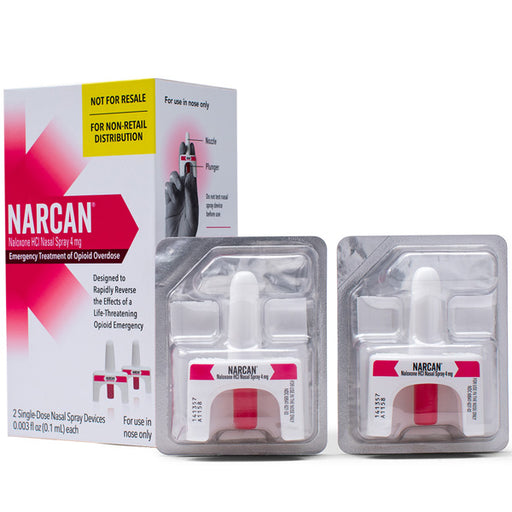
Nasal sprays (like Narcan® Nasal Spray or generic naloxone nasal spray) which are ready-to-use devices you spray into one nostril—these are easy to use but typically more expensive per dose.
-
Auto-injectors (like the Evzio® device, which was a talking injector pen with naloxone) – very user-friendly but costly; not as widely available now due to price issues.
The prefilled syringe lies somewhat in between the basic vial method and the high-tech auto-injector – it’s relatively inexpensive and straightforward, requiring a little more user action than an autoinjector, but far less than drawing from a vial. Its big advantage is speed and simplicity when every second counts.
A naloxone prefilled syringe is a life-saving emergency medication device: it’s naloxone in a syringe that’s already filled to the correct dose, allowing rapid injection (often into a muscle) or nasal administration (with an adapter) to counteract opioid overdoses. It's a crucial tool in the effort to reduce fatal overdoses, designed to be user-friendly so that even non-medical individuals can administer naloxone quickly when someone’s life is at risk from opioids.
Naloxone Prefilled Syringe (2 mg) – Dosage Information:
A naloxone prefilled syringe with 2 mg of naloxone is designed to deliver a standard dose for treating an opioid overdose. The dose is pre-measured at 2 milligrams (mg) of naloxone, which is within the recommended range for initial emergency management of an adult opioid overdose. Here’s how that dosage is generally used:
-
For Adults (Opioid Overdose): The typical initial dose of naloxone in a serious overdose situation is 0.4 mg to 2 mg administered as soon as possible. A 2 mg prefilled syringe provides the upper end of this initial dosing range, meaning it delivers a relatively robust dose intended to reverse the effects of opioids and restore breathing. In practice:
- If you are using the 2 mg prefilled syringe for intramuscular (IM) injection (or subcutaneous injection), you would inject the entire 2 mg dose (usually into a large muscle like the outer thigh or upper arm). The prefilled syringe simplifies this – you remove any safety caps, attach a needle if it’s not already attached, plunge it into the muscle, and push the plunger to deliver all 2 mg of naloxone.
- If the prefilled syringe is being used with a nasal atomizer (intranasal route), the 2 mg in 2 mL of solution is typically sprayed as 1 mg into one nostril and 1 mg into the other nostril. The kit’s instructions usually say to assemble the mucosal atomizer device on the syringe, then spray half the syringe up one side of the nose, and the remaining half up the other side. This yields the full 2 mg dose delivered across both nostrils. (Note: 2 mg total intranasal is a commonly recommended dose; newer nasal spray products like Narcan deliver 4 mg per dose, but many community kits still use the 2 mg dose with an atomizer effectively.)
-
Onset of Action and Re-dosing: After giving the 2 mg naloxone, you should see a response within 2 to 3 minutes if the person’s condition is due to opioid overdose. Signs of improvement would include increased breathing rate, improved consciousness, and pupils widening. If no response is observed after about 2-3 minutes, it may be necessary to give another dose of naloxone. In practical terms, this means:
- If you have a second 2 mg prefilled syringe available, administer that second syringe (via IM injection or intranasally, same as before). Repeat dosing can be done every 2 to 3 minutes as needed until the person starts breathing or emergency medical help takes over.
- There is typically no absolute maximum total dose of naloxone in an emergency; use what is needed. Protocols often say that if 10 mg of naloxone (e.g. five 2-mg doses given sequentially with no effect) has been given and there’s still no response, one should reconsider whether opioids are the cause of the unconsciousness, But in most cases, one or two doses will produce a response if opioids are involved.
-
Post-administration and Monitoring: Because naloxone’s effects can wear off in 30-90 minutes and some opioids last longer, it’s crucial to call emergency services immediately when an overdose is suspected, even after giving naloxone. The 2 mg dose may revive the person, but they could slip back into overdose once the naloxone wears off, especially if a long-acting opioid (like methadone or extended-release oxycodone) or a very potent opioid (like fentanyl) is involved. Emergency responders can provide additional care and more naloxone if needed (sometimes a continuous IV infusion in the hospital for long-acting opioids. While waiting for help, if the person is revived, keep them under observation. If they have not regained consciousness enough to stay awake and breathe normally, be prepared to give the next naloxone dose when the window (2-3 minutes after the last dose) arrives.
-
Special Considerations:
- Route of administration: The 2 mg prefilled syringe can be used intramuscularly, subcutaneously, or intranasally (with an atomizer). It is not typically given IV by laypersons, but in a hospital setting, 2 mg can be diluted and titrated IV as needed. Medical professionals often start with smaller IV doses (like 0.4 mg increments) to minimize withdrawal symptoms, especially if the patient has opioid dependence. However, in a community emergency, giving the full 2 mg IM or intranasally is appropriate because the priority is to restore breathing.
- Pediatric use: For children, naloxone dosing is usually weight-based. The recommended initial pediatric dose is 0.01 mg/kg IV/IM (which is 10 micrograms per kg). This may be followed by 0.1 mg/kg if the smaller dose is ineffective. A full 2 mg dose might be excessive for a small child; for example, a 10 kg toddler would get 0.1 mg as an initial dose, not 2 mg. Thus, a 2 mg prefilled syringe is formulated for adult or adolescent use. In an emergency with a child, if only a 2 mg syringe is available, the general advice is still to administer naloxone (because an opioid overdose is life-threatening), but medical guidance would be to give a fraction of the dose if possible. EMS personnel typically carry 0.4 mg auto-injectors or vials to draw pediatric doses. For laypeople, the scenario of a small child overdosing is uncommon, and if it occurs, paramedics should be involved as soon as possible.
- Repeat Doses and Aftercare: Often, overdose kits come with two naloxone syringes precisely because repeat dosing may be required. After one dose, if the person is still unresponsive or only partially responsive (e.g., breathing is still very slow or shallow), give the second dose at the 2-3 minute mark. Once the person is breathing, even if groggy, place them in the recovery position (on their side, to keep the airway clear) and stay with them until EMS arrives. Be aware that naloxone can precipitate acute withdrawal symptoms in someone who is opioid-dependent: after a 2 mg dose, if they wake up, they might be confused, agitated, nauseated, or vomiting. These symptoms, while uncomfortable, are not life-threatening; the important thing is that they are breathing. Try to reassure them and explain that naloxone was given to help them.
- Naloxone has a strong safety profile. If an unconscious person turns out not to have opioids in their system, giving naloxone will typically not harm them significantly. They might experience some side effects (rarely, things like agitation or increased blood pressure), but nothing compared to the risk of not treating an opioid overdose. So if you suspect an opioid overdose, it’s better to administer the naloxone 2 mg dose than to hesitate.
-
Storage and Preparation: Naloxone prefilled syringes (2 mg) should be stored at room temperature (59°F to 77°F / 15°C to 25°C) and protected from light. Check the expiration date regularly – replace it when expired. There is usually no assembly required beyond attaching a needle or nasal atomizer. Some kits use a Luer-lock prefilled syringe where you twist on a separate needle or atomizer; others might have an integrated needle. Make sure you know which type your kit contains and how to deploy it. During an emergency, remove any packaging, attach the device if needed, expel any air bubbles if instructed (though in an emergency, tiny bubbles in an IM injection aren’t critical), and administer.
Summary of Dosage: A naloxone prefilled syringe containing 2 mg of naloxone is intended as one complete dose for an opioid overdose victim. Administer the full contents:
- Intramuscularly/Subcutaneously: inject the 2 mg into muscle or fatty tissue.
- Intranasally (with atomizer): spray 1 mg into each nostril (total 2 mg). If the person does not respond within ~2 minutes, give another 2 mg dose (using a new syringe/atomizer). Multiple doses can be given back-to-back (every 2-3 minutes) until the person revives or emergency medical services take over. Always seek emergency medical help, as naloxone’s effect is temporary and the person will need further care. The 2 mg dose is effectively a “standard” strong initial dose that is often sufficient to reverse opioid-induced respiratory depression, though potent opioids or heavily sedated individuals may require additional doses.
How to Use Naloxone
Naloxone Prefilled Syringe Administration (For Opioid Overdose)
- Check unresponsiveness: Shake, shout, and check breathing.
- Call emergency services (911) immediately.
- Remove cap from syringe and attach needle (as directed). No mixing required.
- Inject naloxone 2 mg (2 mL) into muscle (thigh, buttock, shoulder) or subcutaneously. May also administer intravenously if trained.
- If using as an intranasal alternative, use an atomizer (not included).
- Monitor breathing and responsiveness: If no response in 2–3 minutes, administer additional doses as necessary and continue rescue breathing or CPR until medical help arrives.
- Stay with person until emergency help arrives—opioid effects can return as naloxone wears off.
Always read the included package insert and follow emergency protocols.