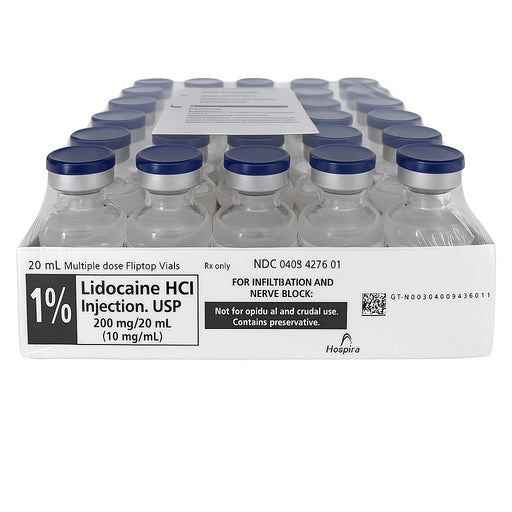
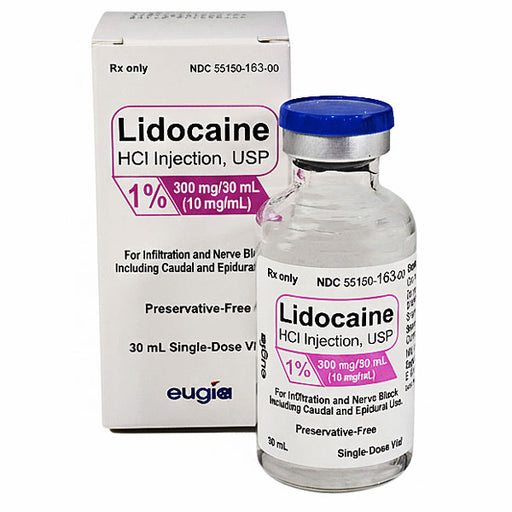
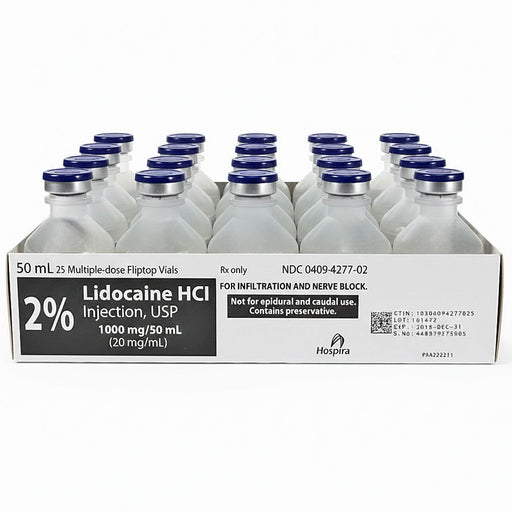
Lidocaine 2% for Injection is a local anesthetic used to numb specific areas of the body during minor surgical procedures, dental work, or labor and delivery. It works by blocking nerve signals, providing temporary relief from pain and discomfort. Additionally, Lidocaine 2% can be used as an anti-arrhythmic agent to stabilize the heart’s rhythm during acute ventricular arrhythmias. Administered intravenously or subcutaneously, it offers quick onset of action, making it crucial in emergency and surgical settings for effective pain management and cardiac care.
Lidocaine 2% Injection by Pfizer is a local anesthetic used to numb tissue in a specific area, providing pain relief during minor surgical procedures, dental work, or other medical interventions. It works by blocking nerve signals in the body, thereby preventing the brain from processing pain sensations at the treatment site. This injection is also utilized to treat certain cardiac arrhythmias, as it stabilizes the cardiac membrane. Proper administration and dosage are crucial to minimize potential side effects such as dizziness or allergic reactions.
Active Ingredient: Lidocaine Hydrochloride 2%
Concentration: 20 mg/mL
Dosage Form: Injectable solution
Volume: 5 mL
Packaging: Single-dose glass vial
Properties and Indications:
Mechanism of Action: Lidocaine works by blocking sodium channels in neuronal cell membranes, which inhibits nerve impulse initiation and conduction, resulting in localized numbing.
Indications: This medication is typically indicated for local or regional anesthesia during surgical procedures, dental work, and near the pummeling of veins during intravenous procedures or the insertion of medical instrumentation in certain emergency and surgical scenarios.
Administration:
-
Route of Administration: Injectable.
-
Suitable Sites for Injection: Administered via intradermal, subcutaneous, or peripheral intravenous routes, depending on the specific need and medical procedure.
Safety and Precautions: -
Contraindications: Known hypersensitivity to lidocaine or other amide-type local anesthetics.
- Warnings and Precautions: To avoid adverse reactions, adhere strictly to prescribed dosages. Overdose or intravascular-injection can lead to systemic toxic reactions, affecting the central nervous or cardiovascular systems.
- Adverse Reactions: Potential side effects include localized discomfort at the injection site, systemic toxicity symptoms like dizziness, lightheadedness, feelings of apprehension, or less common systemic reactions.
Storage:
-
Suitable Storage Conditions: Keep the vials at controlled room temperature, protected from light and moisture.
-
Purpose of Lidocaine Use Focus: Ideal is flexibility in meeting specific anesthetic needs due to its rapid onset of action and biexponential range highly safe within prescribed therapeutic domain, emphasizing compelling profile design toward outpatient procedures which aren't excess aggressive degrees harnessed verso-toxic effects inline stabilised formulations.
Lidocaine 2% for Injection is a local anesthetic used to numb specific areas of the body during minor surgical procedures, dental work, or labor and delivery. It works by blocking nerve signals, providing temporary relief from pain and discomfort. Additionally, Lidocaine 2% can be used as an anti-arrhythmic agent to stabilize the heart’s rhythm during acute ventricular arrhythmias. Administered intravenously or subcutaneously, it offers quick onset of action, making it crucial in emergency and surgical settings for effective pain management and cardiac care.

Lidocaine 2% Injection by Pfizer is a local anesthetic used to numb tissue in a specific area, providing pain relief during minor surgical procedures, dental work, or other medical interventions. It works by blocking nerve signals in the body, thereby preventing the brain from processing pain sensations at the treatment site. This injection is also utilized to treat certain cardiac arrhythmias, as it stabilizes the cardiac membrane. Proper administration and dosage are crucial to minimize potential side effects such as dizziness or allergic reactions.

Active Ingredient: Lidocaine Hydrochloride 2%
Concentration: 20 mg/mL
Dosage Form: Injectable solution
Volume: 5 mL
Packaging: Single-dose glass vial
Properties and Indications:
Mechanism of Action: Lidocaine works by blocking sodium channels in neuronal cell membranes, which inhibits nerve impulse initiation and conduction, resulting in localized numbing.
Indications: This medication is typically indicated for local or regional anesthesia during surgical procedures, dental work, and near the pummeling of veins during intravenous procedures or the insertion of medical instrumentation in certain emergency and surgical scenarios.
Administration:
-
Route of Administration: Injectable.
-
Suitable Sites for Injection: Administered via intradermal, subcutaneous, or peripheral intravenous routes, depending on the specific need and medical procedure.
Safety and Precautions: -
Contraindications: Known hypersensitivity to lidocaine or other amide-type local anesthetics.
- Warnings and Precautions: To avoid adverse reactions, adhere strictly to prescribed dosages. Overdose or intravascular-injection can lead to systemic toxic reactions, affecting the central nervous or cardiovascular systems.
- Adverse Reactions: Potential side effects include localized discomfort at the injection site, systemic toxicity symptoms like dizziness, lightheadedness, feelings of apprehension, or less common systemic reactions.
Storage:
-
Suitable Storage Conditions: Keep the vials at controlled room temperature, protected from light and moisture.
-
Purpose of Lidocaine Use Focus: Ideal is flexibility in meeting specific anesthetic needs due to its rapid onset of action and biexponential range highly safe within prescribed therapeutic domain, emphasizing compelling profile design toward outpatient procedures which aren't excess aggressive degrees harnessed verso-toxic effects inline stabilised formulations.
FAQs for Lidocaine Injections
-
What Is a Lidocaine Injection Used For?
Lidocaine injection is widely used for: Numbing specific areas before procedures (e.g., dental work, skin surgery) Blocking nerve pain (nerve block injections, epidurals) Relieving muscle/joint pain Treating heart rhythm problems (as an antiarrhythmic agent)
-
Lidocaine Dosage and Administration
Typical dose depends on site and procedure (consult your healthcare provider). Administered intradermally, subcutaneously, or intramuscularly. NEVER self-inject without medical supervision!
-
How long does lidocaine last if injected?
Lidocaine typically provides pain relief for 1 to 3 hours, depending on the dose, injection site, and individual response.
-
Why do numbing injections hurt so bad?
The initial sting may be due to needle insertion or the acidic pH of the solution. Discomfort is brief and quickly followed by numbness.
-
Can lidocaine cause vomiting?
Yes, nausea and vomiting are potential but uncommon side effects of lidocaine.
-
Where should you NOT inject lidocaine?
Avoid injecting into arteries, infected areas, or near major nerves. Use extreme caution around the spinal cord and head/neck.
-
How painful is a lidocaine injection?
Most patients feel a quick pinch or burning lasting just a few seconds.
-
What kind of pain is lidocaine good for?
Lidocaine is highly effective for acute pain, minor surgery, nerve pain, and dental pain.
-
How much time does a lidocaine injection take to work?
Lidocaine starts numbing the area within 1 to 3 minutes after injection.
-
Is lidocaine an opioid?
No, lidocaine is a local anesthetic, NOT an opioid. It does not cause addiction.
-
What happens if lidocaine hits a nerve?
It may cause temporary numbness, tingling, or rarely, nerve injury if directly injected.
-
Does lidocaine injection make you sleepy?
Lidocaine usually does not cause drowsiness at standard doses but high doses can lead to CNS effects.
-
Will lidocaine raise your blood pressure?
Lidocaine does not normally raise blood pressure; however, overdoses can affect heart function.
-
How long does lidocaine stay in your bloodstream?
Lidocaine is metabolized within 1.5 to 2 hours, but traces can remain longer based on dose and liver function.
-
What does lidocaine do to the heart?
Lidocaine is used to treat arrhythmias; in rare cases, overdose can cause heart problems.
-
How deep does a lidocaine injection go?
Depends on purpose: subcutaneous, intradermal, or deeper (nerve blocks).
-
What is the major side effect of lidocaine?
Major side effect: Toxicity, including seizures, arrhythmias, and CNS depression at very high doses.
-
Can you drive after a lidocaine injection?
Yes, if you are alert and not sedated. Ask your doctor if unsure, especially after large doses.