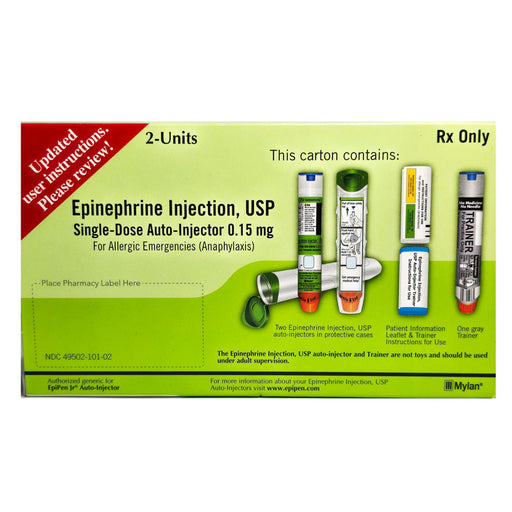
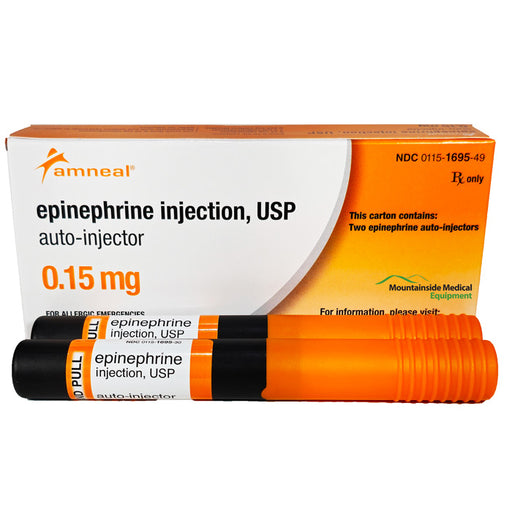
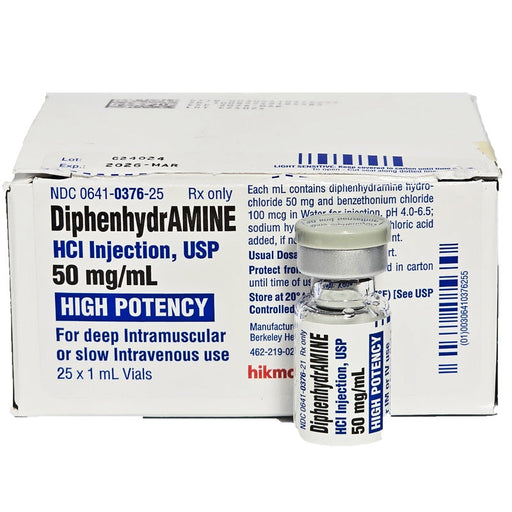
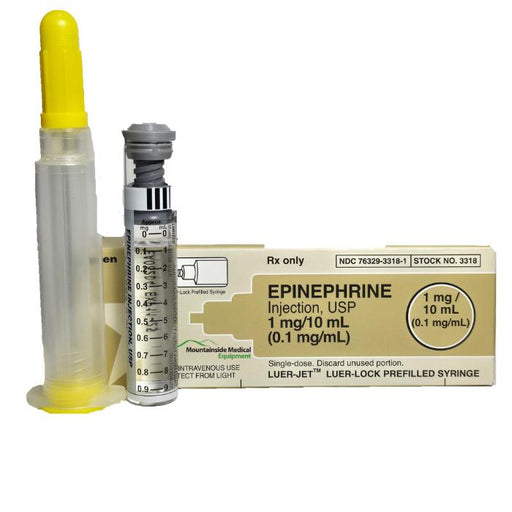
An epinephrine auto-injector (0.3 mg) is a pre-filled, spring-loaded device (often called an “EpiPen”) containing a single dose of 0.3 milligrams of epinephrine (adrenaline). Each injector holds 0.3 mL of a 1:1000 epinephrine solution (0.3 mg epinephrine) and is intended for emergency use. Epinephrine is a fast-acting sympathomimetic (alpha- and beta-adrenergic agonist) that rapidly reverses severe allergic reactions. The 0.3 mg dose is generally used for adults and older children weighing roughly ≥30 kg (≥66 lb). (For smaller children, a 0.15 mg “Junior” auto-injector is available.).
Purpose (Indication): Epinephrine auto-injectors are indicated for the emergency treatment of severe allergic (anaphylactic) reactions. In anaphylaxis (from insect stings, foods, drugs, etc.), epinephrine quickly constricts dilated blood vessels and relaxes airways, reversing the dangerous drop in blood pressure and opening breathing passages. According to official prescribing information, epinephrine 0.3 mg is “indicated in the emergency treatment of allergic reactions (Type I) including anaphylaxis”. (In hospitals, epinephrine injections may also be used for conditions like severe asthma or shock, but the auto-injector form is specifically for out-of-hospital allergic emergencies.)How it works: Epinephrine stimulates α-adrenergic receptors (causing vasoconstriction, raising blood pressure and reducing swelling) and β-adrenergic receptors (relaxing bronchial muscles to improve breathing). It also stabilizes the mast cells that release allergy mediators. The net effect is to rapidly reverse symptoms like throat swelling, wheezing, hives, low blood pressure, and fainting that occur during anaphylaxis.Administration: The auto-injector is designed for self (or caregiver) use during a crisis. Injection site: directly into the anterolateral thigh muscle (the outer middle of the thigh), even through clothing if necessary. The device holds a single dose (do not attempt to reuse it). You should hold it firmly against the thigh for the recommended time (usually ~3 seconds) to deliver the full dose. The instructions emphasize immediate activation at the first sign of anaphylaxis. Additional notes:Weight-based dosing: The 0.3 mg injector is recommended for patients ≥30 kg (66 lb). For children 15–30 kg (33–66 lb), a 0.15 mg injector (“EpiPen Jr”) is recommended. Do not use the 0.3 mg device on small children (it would overdose them).Single dose: Each auto-injector is single-use. If symptoms persist or recur after 5–15 minutes and emergency help has not yet arrived, a second injection (using a new device) may be given according to guidelines.After injection: Seek emergency medical help immediately (call 911) even if symptoms seem to improve. Official labeling warns that epinephrine auto-injection is a supportive therapy – patients must still get hospital evaluation. In practice, EMS should be activated right after use.
Epinephrine Auto-Injector Uses:
-
Anaphylaxis: Severe allergic reactions from insect stings, foods (shellfish, peanuts, etc.), drugs, latex, etc. Auto-injectors should be carried by anyone at risk of anaphylaxis.
-
Other allergic emergencies: Sudden asthma exacerbations with severe wheezing (as directed by a doctor).
- (By contrast: intravenous epinephrine in hospital is used for cardiac arrest and other critical scenarios, but that requires medical staff.)
Contraindications/Precautions:
In a life-threatening emergency, there are no absolute contraindications to using epinephrine. Do not withhold it from someone whose life is endangered. However, use caution in patients with heart disease, high blood pressure, or thyroid problems, as epinephrine can trigger chest pain or arrhythmias in susceptible people. Important warnings:
-
Injection site: Only inject into the thigh. Do not inject intravenously, into the buttock, hands, feet or digit – this can cause severe complications.
-
Training: Users should be trained with a practice device. A common mistake is not holding the injector firmly enough. When administering to a child, hold the leg firmly to prevent movement.
-
Emergency care: Always use epinephrine in conjunction with immediate medical care. It buys time but is not a substitute for going to the hospital.
The auto-injector is only for severe (systemic) allergic emergencies, not for mild symptoms. It is designed for immediate use on-the-spot – for example, when someone starts wheezing and collapsing after eating an allergen or after a bee sting. After administering epinephrine, one must still call emergency services (911) for transport to a hospital, because further medical care may be needed.
Epinephrine Auto-Injector vs EpiPen®
Both devices deliver 0.3 mg of epinephrine (adrenaline) for emergency treatment of anaphylaxis. In fact, U.S. regulators regard Teva’s generic epinephrine injector as “therapeutically equivalent” to EpiPen. In practice, the active drug and dose are identical, so they work the same way in the body. For example, Teva notes its generic injector “has the same active ingredient that is used in EpiPen”, and the product labeling confirms both are indicated for severe allergic reactions (anaphylaxis).
-
Active ingredient & indications: Both contain 0.3 mg epinephrine (1:1000 concentration) in a pre-filled auto-injector. They are used identically – injected into the outer thigh for life-threatening allergic reactions. Teva’s website explicitly states its generic uses the “same active ingredient” and is FDA-approved as an equivalent alternative to EpiPen. The official prescribing information for epinephrine 0.3 mg (auto-injector) indicates it is approved for “emergency treatment of allergic reactions (Type I) including anaphylaxis”. In short, there is no difference in medication or approved use between the two – only in branding.
-
Device design & labeling: EpiPen® is a brand-name device (with distinctive orange/blue coloring and “EPIPEN” labeling). Generic autoinjectors use the same basic mechanism but may differ cosmetically. In fact, Mylan’s own authorized generic version of EpiPen is physically identical to the branded device – Mylan reports it has the “exactly the same design” as EpiPen, differing only in label color. News coverage notes that for the authorized generic “the pen will be the same, but the packaging might be a different color or carry just the ‘epinephrine auto-injectors’ title”. Other manufacturers’ generics (like Teva’s) also use very similar pen-shaped injectors. They may have slightly different safety-cap arrangements (for example, some generics use a twist-off cap on the bottom instead of the EpiPen-style pull-off cap), but the injection procedure is essentially the same.
-
Brand name vs generic labeling: “EpiPen 0.3 mg” is a trademarked product name. A generic product will typically be labeled “epinephrine injection, USP, auto-injector 0.3 mg” (without the EpiPen name). Aside from the name and color scheme, the generics meet the same standards. (Authorized generics often look almost identical to EpiPens except for the text on the label.
-
Cost & availability: The big practical difference historically has been price. Brand-name EpiPens were priced very high (for example, a 2-pack rose from about $100 in 2007 to ~$600 by 2016. By contrast, when generics arrived their list price was much lower. Mylan’s authorized generic and Teva’s generic each launched at roughly $300 per 2-pack. (Actual out-of-pocket cost depends on insurance/coupon, but generics were introduced at about half the brand price.) These lower-cost options are FDA-approved alternatives, not inferior products – they contain the same epinephrine dose.
-
Practical interchangeability: Because they are FDA-approved equivalents, clinicians and pharmacists treat generic auto-injectors and EpiPen as interchangeable. In emergency use, either device will inject 0.3 mg epinephrine into the thigh with the same effect. The only real differences are superficial (packaging, color, company name) and in cost. In summary, an “epinephrine auto-injector 0.3 mg” generic is the same treatment as an EpiPen 0.3 mg, just sold under a different label.
Epinephrine Auto-Injector Uses
An epinephrine auto-injector (such as an EpiPen® 0.3 mg) is a emergency, life-saving treatment for anaphylaxis, a severe allergic reaction. It delivers a pre-measured dose of epinephrine (adrenaline) into the thigh muscle. Epinephrine is the first-line therapy for anaphylaxis because it quickly reverses the dangerous symptoms of an allergic shock. It is indicated whenever a person shows signs of a severe (Type I) allergic reaction threatening the airway or blood pressure.
-
Allergic Reactions (Anaphylaxis): Epinephrine auto-injectors are used for any sudden, severe allergic reaction. Common causes include:
- Food allergies: (e.g. peanuts, tree nuts, shellfish, eggs, dairy) – carries a high risk of anaphylaxis.
- Insect stings/bites: (e.g. bee, wasp, hornet, fire ant) can trigger anaphylactic shock.
- Medication or chemical allergies: (e.g. antibiotics like penicillin, vaccines, latex, contrast dyes) that cause widespread allergic reactions.
- Other allergens: (venom immunotherapy injections, foods introduced during exercise, etc.) can also cause anaphylaxis.
- Idiopathic or exercise-induced anaphylaxis: severe reactions with no identifiable cause or triggered by exercise are treated the same way.
In each of these cases, epinephrine is administered immediately at the first sign of anaphylaxis. Typical warning signs include throat tightening or swelling, difficulty breathing or swallowing, wheezing or hives combined with low blood pressure (lightheadedness, fainting)
Epinephrine Auto-Injector 0.3 mg Adult Strength is indicated for:
-
Emergency treatment of severe allergic reactions (anaphylaxis):
- Foods (e.g., peanuts, shellfish, tree nuts)
- Insect stings or bites (e.g., bees, wasps, hornets)
- Medications (e.g., antibiotics, aspirin, contrast dyes)
- Latex or unknown allergens
-
Prevention of life-threatening airway, breathing, and circulatory symptoms during anaphylaxis
-
Immediate interventions in schools, workplaces, public areas, or anywhere allergens may be encountered
Once injected, epinephrine quickly counteracts anaphylaxis by constricting blood vessels (raising blood pressure and reducing swelling) and relaxing airway muscles (opening the lungs). This reversal of the life-threatening effects – such as airway closure and shock – is why epinephrine is “the drug of choice” in these emergencies. (Indeed, delaying epinephrine is associated with much worse outcomes.
Epinephrine Auto-Injector Dosage and Administration
- Recommended Adult Dose:
- 0.3 mg epinephrine injected into the outer thigh (intramuscular), repeated every 5-15 minutes as needed.
- For Individuals >30 kg (66 lbs):
- Use 0.3 mg adult-strength pen.
- If symptoms persist:
- Use second auto-injector and seek emergency care.
Always have two pens available. Train family, friends, and coworkers in correct use.
Instructions on How to Use the Epinephrine Auto-Injector
- Identify symptoms of anaphylaxis: Trouble breathing, wheezing, swelling, hives, weak pulse, or severe allergic reaction.
- Remove safety cap: Pull off the blue safety release.
- Place the orange tip on the outer mid-thigh: Can inject through clothing if necessary.
- Push down firmly: Hold for 3 seconds until the window shows red and a click is heard.
- Remove the pen: Massage the injection area for 10 seconds.
- Call 911 immediately: Even if symptoms improve, seek emergency medical help.
- Give second dose (using second injector) if symptoms return or persist after 5-15 minutes, as directed by your provider.
Disposal: Place the used injector in a sharps container; do not reuse.
- Monoamine Oxidase Inhibitors (MAOIs) and Tricyclic Antidepressants: Increase epinephrine effects; may increase cardiovascular side effects.
- Beta-blockers: May reduce effectiveness of epinephrine, increase risk of hypertension and bradycardia.
- Digoxin, Diuretics, and anti-arrhythmic drugs: Caution; can increase arrhythmia risk.
- Antihistamines and Corticosteroids: No known negative interaction with emergency use.
Always inform your healthcare provider of all medications you take.